Factotum
Henry Chinaski is invented, drawn from Charles: Bukowski's alter ego in his twenties: rejected by the draft, unable to hold a job for long, drinking steadily, and writing stories nobody will print.
American poet and novelist of Los Angeles rooming houses, racetracks and the post office, who quit his job to write when a publisher offered him a hundred dollars a month. He came to Paris once, in September 1978, drank his way through a live television book programme and walked off the set — and French television has been replaying it ever since.
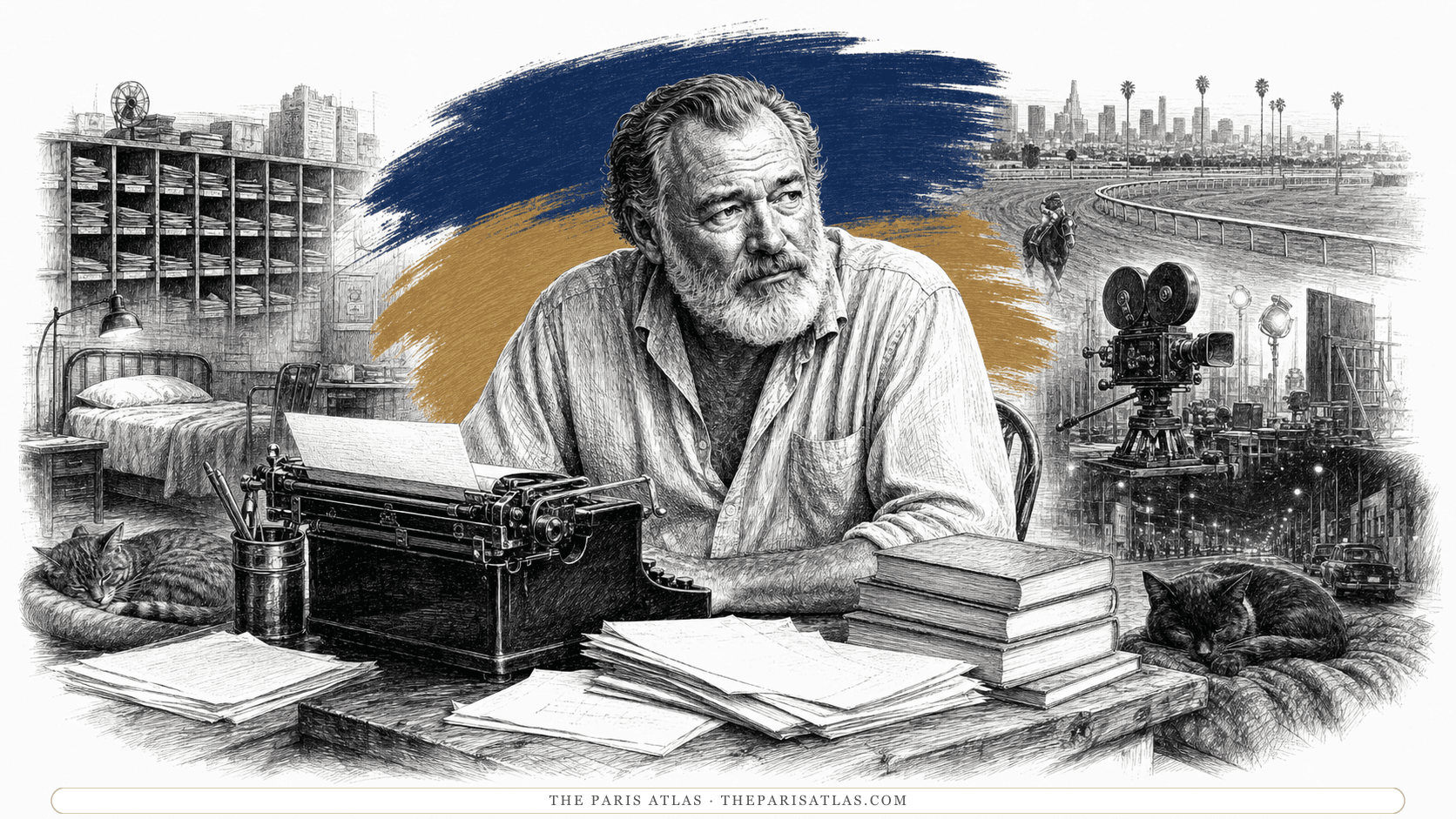
Charles Bukowski (16 August 1920 – 9 March 1994), born Heinrich Karl Bukowski, was a German-born American poet, novelist, short-story writer and columnist who wrote about the bottom of American working life from inside it: rented rooms, racetracks, bars, factories, bad jobs, failed relationships, and the years he spent sorting mail for the United States Post Office in Los Angeles.
Few twentieth-century writers made so much literature from apparently unliterary lives. Bukowski wrote about postal clerks, gamblers, drunks, prostitutes, warehouse workers, unemployed men, lonely apartment dwellers, failed artists, and people living from one paycheck or drink to the next. His principal fictional alter ego, Henry Chinaski, allowed him to repeatedly transform his own experiences into novels including Post Office, Factotum, Women, Ham on Rye and Hollywood.
His first book, the poetry chapbook Flower, Fist and Bestial Wail, appeared in October 1960. His first novel, Post Office, followed in 1971. More than forty-five volumes of poetry and prose were published during his lifetime, with a large body of additional work appearing after his death. For much of his life Bukowski existed far outside the American literary establishment; his eventual rise came through little magazines, underground newspapers, small presses, and particularly John Martin's Black Sparrow Press. Paradoxically, his reputation became enormous in Europe — especially Germany and France — before the American mainstream fully absorbed him.
His best-known books include Post Office (1971), Factotum (1975), Love Is a Dog from Hell (1977), Women (1978), Ham on Rye (1982), Hollywood (1989), The Last Night of the Earth Poems (1992), and Pulp (1994).
Paris played only a short part in that life, but an unusually well-documented one. In September 1978, Bukowski spent roughly a week in Paris with Linda Lee and the photographer Michael Montfort. He stayed at the Hôtel des Saints-Pères, submitted to an exhausting schedule of French interviews, walked through Saint-Germain-des-Prés, drank at Le Rouquet, passed Saint-Sulpice, appeared disastrously on Bernard Pivot's Apostrophes, and ended the night at La Coupole. The journey became part of the photographic travel book Shakespeare Never Did This.
Bukowski was born in Andernach, in Germany's Rhineland, on 16 August 1920, and was baptized Heinrich Karl Bukowski later that month. His mother, Katharina Fett, was German. His father, Heinrich Bukowski, was an American serviceman of German and Polish ancestry who had remained in Germany after the First World War. The family emigrated to the United States in 1923, sailing from Bremen to New York before continuing to California, where they lived first with relatives in Pasadena before settling in Los Angeles — the city that would become inseparable from his work.[1][2]
His German birth retained significance throughout his life: he remained widely read in Germany long before he became conventionally famous in America, and he eventually returned to his birthplace as an adult. But Bukowski's Los Angeles was almost never Hollywood's Los Angeles. He wrote instead about rooming houses, cheap apartments, liquor stores, buses, racetracks, downtown streets, factories, post offices, and neighborhoods where people worked because rent was due rather than because work supplied identity or fulfillment. Los Angeles became not simply his setting but one of his principal subjects.
Bukowski's childhood was deeply shaped by his father, who demanded obedience and repeatedly beat him with a leather razor strop — sometimes for offenses as small as leaving a single blade of grass uncut while mowing the lawn. Bukowski later transformed these experiences into Ham on Rye, his 1982 autobiographical novel of childhood and adolescence. The violence taught Bukowski an early lesson about authority: people with power often used it simply because they could. His mother, Katharina, was generally unable or unwilling to protect him.[3]
The experience helps explain one of the persistent currents running through Bukowski's work. Teachers, bosses, supervisors, police officers, editors, landlords, fathers, and institutions continually attempt to impose rules upon individuals. Bukowski's characters rarely believe these authorities possess any inherent moral superiority. Resistance might accomplish nothing. But submission is worse.
Adolescence brought another source of humiliation. Bukowski developed an unusually severe case of acne vulgaris, with painful boils and lesions covering much of his face and body; the treatment itself could be painful, and the condition left permanent scarring. Already shy, awkward and frequently bullied, he became still more isolated, and he later wrote openly about being rejected by girls and feeling physically grotesque. The future public performer famous for drinking in front of crowds grew from a teenager who often preferred hiding from them.[3]
Around thirteen, however, a friend introduced him to alcohol in the friend's father's wine cellar. Bukowski remembered the effect almost as a revelation: drinking temporarily silenced the fear and self-consciousness that otherwise dominated social situations. Alcohol would remain both pleasure and catastrophe for the rest of his life.
Bukowski's other escape was the Los Angeles Public Library. He was not temperamentally suited to formal academic life, but he became an obsessive independent reader, and he later described pulling books from library shelves hoping to find writers who sounded genuinely alive rather than merely respectable. He read hard and unfashionably — John Fante, Knut Hamsun, Louis-Ferdinand Céline, Fyodor Dostoevsky, Sherwood Anderson, the early Ernest Hemingway, D. H. Lawrence, Robinson Jeffers, and Chinese poets such as Li Po — and late in life he summarized his literary ancestry in a letter:
I once read almost everything. My influences are Dostoevski, Nietzsche, Schopenhauer, Hamsun, Céline, Jeffers, Hemingway, Sherwood Anderson, Gorky.[4]
Dostoevsky came first on Bukowski's own list. His characters' humiliation, irrationality, poverty, gambling, desperation, and sudden psychological reversals offered an obvious model for a writer interested in people whose behavior refused respectable explanations. Hamsun's Hunger was especially important: the novel follows an impoverished, proud, self-destructive would-be writer wandering through Kristiania while poverty and his own irrational behavior repeatedly sabotage him.
The connection from Hamsun to Bukowski would later run through another writer. Bukowski discovered John Fante's [Ask the Dust](book:ask-the-dust) in the library and experienced one of the decisive literary recognitions of his life. Fante's Arturo Bandini — a fictional creation — was a poor, arrogant, funny, lonely aspiring writer wandering Depression-era Los Angeles, convinced of his own literary destiny while routinely humiliating himself. Bukowski recognized a literary world much closer to his own life than the polished fiction he had been reading, and he eventually called Fante his literary “god.” Decades later, once Bukowski had become successful, he told John Martin about the nearly forgotten book, and Black Sparrow brought Ask the Dust back into print in 1980 with Bukowski's introduction — one of the major forces behind Fante's rediscovery. The literary lineage is unusually clear: Knut Hamsun to John Fante to Charles Bukowski.
Céline provided another crucial model. [Journey to the End of the Night](book:journey-to-the-end-of-the-night) demonstrated that vulgar speech, poverty, disgust, dark comedy, urban life, and contempt for respectable illusions could sustain major literature; of the writers Bukowski named himself, Céline is perhaps the closest stylistic relative to his low-life first-person fiction. Hemingway offered another lesson: the short, flat sentence. Bukowski spent decades mocking Hemingway's mythology and criticizing aspects of his writing, but the debt remained visible. Admiration and antagonism could coexist.
Bukowski attended Los Angeles City College from 1939 to 1941, studying journalism and related subjects without completing a degree. After the United States entered the Second World War he left Los Angeles and began wandering: New York, Philadelphia, New Orleans, Atlanta and other cities became part of the life he later transformed into Factotum. He worked whatever jobs he could find — warehouses, factories, stockrooms, shipping departments, service work — positions that seemed designed primarily to exchange a worker's finite hours for enough money to survive until the next shift.[5]
Bukowski's first significant professional publication came in the March–April 1944 issue of Story, edited by Whit Burnett, which printed his short story “Aftermath of a Lengthy Rejection Slip” — an appropriate title for a writer who had already accumulated a substantial collection of rejection notices. A second publication followed. Then almost nothing. By 1946, Bukowski had become discouraged enough by rejection that he later described himself as having given up on a literary career, and a decade of heavy drinking followed.
The story became part of Bukowski's mythology: the young writer abandons literature, disappears into bars and cheap rooms, survives bad work and bad relationships, and eventually returns to writing carrying all of that experience with him. As with most Bukowski mythology, the reality was somewhat less tidy — he had not magically stopped thinking like a writer. But he did largely disappear from professional literary publication. A serious health crisis eventually interrupted those years of drinking.
In 1954, Bukowski suffered a severe internal hemorrhage caused by a bleeding ulcer and spent approximately nine days in Los Angeles County Hospital. He believed he had nearly died. Afterward, he returned intensely to writing, particularly poetry, and at roughly thirty-five began the literary phase that would continue until his death. Little magazines gradually started accepting the poems. The first book followed in October 1960, when Hearse Press published Flower, Fist and Bestial Wail in an edition of only about 200 copies.
Bukowski's relationships became another major source of material. One of the most important was Jane Cooney Baker, an older woman with whom he had an intense and destructive relationship through the 1940s and 1950s; her drinking matched or exceeded his own. Her death in 1962 affected Bukowski deeply, and versions of Jane recur throughout his poetry and fiction.
He briefly married the poet and editor Barbara Frye in the 1950s. Later he became involved with the poet Frances Smith; their daughter, Marina Louise Bukowski, was born on 7 September 1964. Other relationships — including those with the poet and sculptor Linda King, Pamela “Cupcakes” Miller, and later Linda Lee Beighle — would likewise enter the fiction.
Bukowski's transformation of real women into literary characters remains one of the most contested aspects of his work. The portrayals can be tender, funny, vicious, sexually explicit, selfish, and cruel. The books make little attempt to protect either Bukowski or the people around him.
The longest period of conventional employment in Bukowski's life came from the United States Postal Service. He worked first as a substitute letter carrier and later, beginning in the late 1950s, as a postal clerk at the Terminal Annex downtown. The stability helped him pay rent and child support but exhausted him.[6]
Bukowski was not simply complaining that work was difficult. His deeper objection was that institutional work consumed time, and time was the one resource that could not be recovered. Managers, disciplinary hearings, schedules, supervisors, repetitive sorting, attendance rules, and endless regulations became material for the novel Post Office. Before he could write it, however, somebody had to make leaving possible.
That person was John Martin, a Los Angeles office-supply manager and serious rare-book collector who had discovered Bukowski's poetry in small magazines and become convinced he was dealing with an important American writer. The two began corresponding in 1965 and met the following year. In 1965 Martin sold his valuable private book collection to the University of California, Santa Barbara for $50,000, using the money to help establish what became Black Sparrow Press; he continued working his day job while developing the press, and he began publishing Bukowski.[7]
By 1969 Bukowski was forty-nine and still working nights at the post office. Martin made him an extraordinary offer: leave the Post Office and write full time, and Martin would guarantee him $100 a month. Martin was himself earning about $500 a month at his office-supply job when the arrangement began — meaning he was essentially offering Bukowski a fifth of his own salary. Bukowski calculated his minimal expenses and accepted. He left the post office in early 1970, and within weeks Martin received the manuscript of Bukowski's first novel.[8]
Before his novels made him internationally famous, Bukowski reached readers through newspapers. Beginning in the late 1960s he wrote the column “Notes of a Dirty Old Man” for the underground newspaper Open City, and when that publication disappeared, the column continued elsewhere, including the Los Angeles Free Press.
The form suited him perfectly: he could mix autobiography, fiction, drunken anecdote, satire, sex, neighborhood observation, rage, and deliberately unreliable storytelling without worrying about conventional literary structure. The pieces helped create the public “dirty old man” persona that became both useful and burdensome. Bukowski had found a character he could sell. The problem was that the character was himself.
Post Office appeared in 1971. Its narrator, Henry Chinaski, became Bukowski's fictional alter ego — not precisely Charles Bukowski, but Bukowski simplified, exaggerated, reordered, and made available for repeated literary use. Through him, Bukowski could turn different periods of his own life into a loose autobiographical sequence:
The novels should not be read as literal autobiography. Chronology changes, people are combined, events are exaggerated, and comic invention frequently overtakes documentary accuracy. But the emotional and experiential foundation is unmistakably Bukowski's. He was writing autobiographical fiction, not sworn testimony.
Factotum followed in 1975. It returns to wartime America and follows Chinaski from one abandoned job to another. He works because he has to, quits because he can, gets fired, drinks, finds another job, loses that one, and moves on.[9]
The novel presents work without the usual American mythology surrounding it. Jobs do not build character. Employment does not necessarily confer dignity. The person performing a task may know perfectly well that the task is pointless. Bukowski's subject is what happens when somebody needs money badly enough to work but never badly enough to believe in the work.
Bukowski developed one of the most immediately recognizable styles in modern American literature. His style is deceptively simple, relying heavily on short declarative sentences, ordinary and colloquial vocabulary, spoken rhythms, direct dialogue, black humor, autobiographical anecdote, abrupt transitions, and minimal exposition.
His poetry often arranges similarly straightforward language into narrow lines, creating an impression of speed and terseness even when the language itself is sentimental or conversational. He generally resisted elaborate metaphor and what he considered literary showing-off, preferring concrete incidents, recognizable voices, and the rhythms of ordinary speech.
Bukowski's characteristic effect, however, depends heavily on timing. A scene may begin as an ordinary or mundane anecdote, become funny, then cruel or grotesque, and end unexpectedly in sadness or tenderness — often before the emotion has time to become comfortable. Some of his best writing depends on these abrupt shifts in tone.
The apparent simplicity should not be mistaken for accident or lack of craft. Bukowski revised his work, submitted constantly, maintained an enormous correspondence with editors, and wrote across several decades with remarkable persistence. His long publishing career, surviving manuscripts, and extensive correspondence reveal sustained literary discipline behind prose that often gives the impression of simply recording whatever happened to him. His apparent casualness was itself a carefully developed style.
Bukowski eventually created a public character almost as recognizable as Chinaski: the dirty old man. He drank, he gambled, he insulted people, he fought, he wrote about sex, and he claimed not to care what literary society thought of him. The persona was useful — it sold books.
His reputation has always been contested. The writing contains misogyny, violence, degrading sexual language, drunkenness, and male fantasies that many readers find repellent. Some critics interpret the exaggerated masculinity as partly satirical — Chinaski is often ridiculous, selfish, frightened, physically failing, jealous, and defeated rather than heroic. Other readers argue that satire does not erase the cruelty of the portrayals. Both responses are part of Bukowski's critical history.
What is difficult to deny is that the persona increasingly obscured the private writer who spent enormous amounts of time alone, listened obsessively to classical music, cared deeply about cats, wrote thousands of letters, revised his work, worried about death, and maintained an enormous working discipline. The public image of the drinker was not invented, but neither was the private discipline of the writer.
One part of Bukowski's life the public caricature often ignores is his deep love of classical music. He listened while writing: Bach, Beethoven, Brahms, Mahler, Mozart, Sibelius, Shostakovich and other composers appear throughout his poems and letters. The music provided another model for artistic seriousness. Bukowski could spend an afternoon at the racetrack and a night drinking beer, then return home and type while listening to Mahler. There was no contradiction in his mind. The two versions are the same man.
Bukowski never lived in Paris. His connection to the city is one documented week in September 1978, an hour of live television that France has been replaying ever since, and a long working relationship with a Paris-based filmmaker that outlasted the trip by a decade.
Bukowski's reputation arrived from what seemed to American literary culture like the wrong direction. He became particularly successful in Germany, the country of his birth. France became especially important in 1977 and 1978, when competing French publishers began translating and promoting him: editions from Les Humanoïdes Associés and Le Sagittaire — including Contes de la folie ordinaire, “Tales of Ordinary Madness,” and L'Amour est un chien de l'enfer — established Bukowski for French readers before he had comparable mainstream prestige in the United States. French publishers treated him less like an obscure American small-press poet and more like a cult celebrity. That reputation brought him to Paris.[10]
Bukowski never lived in Paris like Ernest Hemingway, Henry Miller, or William S. Burroughs. But describing his Paris connection as simply one hour on French television understates what happened. His most famous public appearance in Paris lasted about an hour; his documented Paris stay lasted roughly a week. In September 1978, Bukowski came to France with Linda Lee and the photographer Michael Montfort for an intense promotional trip organized around the growing French readership of his work, and the week ultimately gave Paris a surprisingly complete little Bukowski itinerary.
Bukowski and Linda Lee stayed at the Hôtel des Saints-Pères, 65 rue des Saints-Pères, in the sixth arrondissement — the hotel still operates at the same address. Instead of allowing Bukowski to enjoy Paris quietly, his publishers arranged an exhausting series of press interviews; the publisher Raphaël Sorin later recalled that Bukowski was kept almost continuously occupied with journalists for about eight days, and many of the interviews took place inside the hotel itself.[11]
One of the most memorable was with the French underground writer and journalist Alain Pacadis, who placed a portable cassette recorder on a table in the hotel's patio, ordered beer, and talked with Bukowski about alcohol, drugs, prostitutes, music, celebrity and the forthcoming television appearance. Bukowski joked that he planned to drink heavily on television. It turned out not to be much of a joke. The hotel functioned as his base for the entire promotional week, which gives it a much stronger place in Bukowski's Paris story than the television studio alone.[11]
On the day of the television broadcast, Bukowski escaped the publicity schedule long enough to walk through Saint-Germain-des-Prés with the photographer Sophie Bassouls. The Bibliothèque nationale de France preserves Bassouls's photographs of Bukowski from that exact date, 22 September 1978.[12]
Bassouls later remembered Bukowski becoming unexpectedly emotional about the literary history of the neighborhood. He was particularly interested in places associated with Ernest Hemingway, whose Paris mythology clearly meant something to him even though Bukowski could be dismissive of Hemingway as a writer. The image is interesting because Bukowski's public persona depended partly upon contempt for literary pretension; yet in Paris he was visibly conscious of walking through the physical landscape occupied by earlier writers.
During the walk, Bukowski and Bassouls stopped at Le Rouquet, 188 boulevard Saint-Germain, where Bukowski drank white wine — Bassouls remembered one glass, perhaps two. The café survives, and the evidence for the visit is unusually specific: a named café, a known date, a photographer who was physically accompanying him, and surviving photographs from the outing.[11]
They continued toward Place Saint-Sulpice and the Église Saint-Sulpice. Bassouls remembered Bukowski as a poor walker — not because the route was difficult, but because he constantly stopped to inspect whatever caught his attention. From there they went to the apartment of the Le Monde literary critic Edgar Reichmann for yet another interview, during which a bottle of whisky reportedly disappeared rapidly. Bukowski still had a live television program to do that evening. The walk offers a much quieter Paris Bukowski than the television footage that later swallowed the entire trip. The calm afternoon in Saint-Germain contrasted sharply with the chaotic Apostrophes appearance that followed only a few hours later.
That evening Bukowski sat down on the set of Apostrophes, the weekly books program presented by the journalist Bernard Pivot — broadcast live on Antenne 2 from the rue Cognacq-Jay studios in the seventh arrondissement on Friday, 22 September 1978, beginning at 21:40 and running about seventy-five minutes. The Institut national de l'audiovisuel records the episode under the title En marge de la société ? and lists the guests: Charles Bukowski, Marcel Mermoz, Gaston Ferdière, Catherine Paysan and François Cavanna.[13]
The INA catalogue itself labels the episode with the descriptor “incident (Bukowski drunk)” and records that he drank heavily during the broadcast and ended the program intoxicated. Early in the program he was capable of discussing his work coherently, including his attempt to make ugly realities interesting through writing. As the broadcast continued he drank, interrupted the other guests, and became increasingly difficult to translate. The novelist Catherine Paysan found herself sitting beside him; he put a hand on or near her knee, and she responded: “Ça, c'est le pompon” — roughly, “well, that takes the biscuit.” The writer François Cavanna, increasingly infuriated by Bukowski interrupting the discussion, tried to silence him. Then came the line that entered French television history:[14]
Bukowski! I'm going to put my fist in your face!
Bukowski ! Je vais te foutre mon poing dans la gueule ![13]
Bukowski eventually removed his earpiece, stood with difficulty, and left the set before the program had finished. The broadcast immediately became part of his mythology. Bernard Pivot himself never forgot the episode: he dated it precisely when looking back over his career and continued retelling the Bukowski encounter long afterward. The clip has become one of the most replayed episodes in the history of French literary television.[15][16]
The story has been improved in the retelling for nearly fifty years, and that distinction is worth preserving. Later accounts add details: three bottles of white wine or Sancerre, or bottles of Alsatian white brought to the studio; Bukowski drinking directly from the bottle; Pivot ordering him removed; a confrontation with security outside; Bukowski producing a small pocketknife — a gesture the publisher Raphaël Sorin, who told the story, characterized as largely theatrical. Some of these details come from named participants and therefore should not simply be dismissed. But they are not all equivalent kinds of evidence.
The safest core of the story comes from the surviving broadcast and the INA documentation: Bukowski drank heavily; he became visibly intoxicated; he behaved intrusively toward Catherine Paysan; Cavanna angrily told him to be quiet and threatened to punch him; Bukowski removed his earpiece; and he left before the program was over. The knife and the count of bottles belong to later eyewitness recollections rather than the television archive itself — even whether Bukowski technically walked off or was removed shifts depending upon who is telling the story. Those distinctions are worth preserving rather than collapsing fifty years of retelling into one dramatic anecdote.[14]
Bukowski's night did not end with Apostrophes. While Pivot's television team reportedly went to Brasserie Lipp, Bukowski's group headed across Paris to La Coupole, the famous brasserie at 102 boulevard du Montparnasse, joined by Jean-François Bizot — founder of the magazine Actuel and one of Bukowski's earliest French translators. According to people interviewed about the night, at around 2 a.m. customers gave Bukowski a standing ovation. The television disaster had effectively made him a celebrity overnight.[11]
The episode contains a peculiar reversal. Bukowski had spent decades being rejected by respectable literary culture. Then he appeared drunk on the most prestigious literary television program in France, behaved horribly, walked off, went drinking in Montparnasse — and was applauded.
The European travel became Shakespeare Never Did This, originally published by City Lights in 1979 with photographs by Michael Montfort. The book mixes travel writing, autobiography, photographs, publishers, readings, drinking, hotel rooms, France, Germany, and Bukowski's return to his birthplace of Andernach.
There is one chronological wrinkle worth keeping clear. Bukowski made an earlier trip to Germany in 1978, and the book telescopes or combines material from more than one European journey that year — the narrative can make separate trips feel like a single seamless France-to-Germany itinerary. So the safest formulation is that the September 1978 Paris promotional visit became part of the material collected in Shakespeare Never Did This. Paris remains firmly documented; the exact travel chronology simply should not be flattened unnecessarily.
Bukowski's relationship with France did not end when he flew home. The Paris-based filmmaker Barbet Schroeder became fascinated by Bukowski and spent years attempting to finance a feature film built around his screenplay. During that period, Schroeder repeatedly filmed Bukowski talking about literature, sex, violence, women, drinking, death, childhood, work, and writing.
Those recordings became The Charles Bukowski Tapes, a French production of fifty filmed segments totaling nearly four hours, created from Schroeder's extended conversations with Bukowski while the two were developing Barfly. The collaboration eventually produced Barfly in 1987, and the Centre Pompidou later screened The Charles Bukowski Tapes as part of its Schroeder retrospective — another substantial connection to French cultural life beyond the notorious television appearance.[17]
The same year as the Paris trip, Bukowski published Women. The novel follows Chinaski after literary recognition has transformed his circumstances. He is no longer the ignored postal employee: women know who he is, readers invite him places, he gives poetry readings, he has money. The irony is that success does not make him better at living.
The novel's sexual politics remain deeply controversial, but Women is crucial to understanding the later Bukowski because it asks what happens when a persona built around failure suddenly succeeds.
Ham on Rye, published in 1982, returned to Bukowski's childhood and adolescence. The novel describes paternal violence, economic insecurity, school, bullying, acne, alienation, sexuality, and the discovery of alcohol.[18]
It is often regarded as one of his strongest novels because it provides the psychological background for the adult Chinaski persona. The aggressive, hard-drinking outsider of the later books emerges from a frightened and isolated child attempting to protect himself from humiliation.
Bukowski met Linda Lee Beighle in 1976. She ran a health-food restaurant and had interests dramatically different from the self-destructive world associated with Bukowski, but the relationship endured and became the most stable partnership of his later life. Around 1980 Bukowski moved to San Pedro, the harbor district at the southern end of Los Angeles, where he enjoyed considerably more financial security than he had during the De Longpre Avenue years: a better house, a BMW, better wine, and eventually a computer in place of the manual typewriter.
But the basic literary world remained intact — racetracks, cats, writers, drinking, age, death, work, women, and the persistent mystery of why some people keep creating while others stop. Bukowski and Linda Lee married in 1985.
Bukowski had begun developing a screenplay with Barbet Schroeder around the end of the 1970s, fictionalizing his early Los Angeles drinking life through Henry Chinaski. Funding took years. At one point Sean Penn wanted to play Chinaski but insisted that Dennis Hopper direct; Bukowski refused to abandon Schroeder, who had spent years trying to get the picture made. The eventual film starred Mickey Rourke as Henry and Faye Dunaway as Wanda, with Bukowski himself making a brief appearance. Barfly was released in 1987 and brought Bukowski to a much larger mainstream audience.
He then performed the most Bukowskian maneuver possible: he turned the irritating experience of watching Hollywood make a film about his own life into another autobiographical novel. Hollywood appeared in 1989.
By this point, the contradiction between Bukowski's image and his actual working life had become enormous. The persona suggested chaos; the bibliography suggests discipline. He wrote constantly — letters, poems, stories, novels, columns, screenplays, thousands upon thousands of pages. His partnership with Black Sparrow lasted for the rest of his life.
When John Martin retired in 2002, the rights to Bukowski, John Fante, and Paul Bowles were sold to Ecco, an imprint of HarperCollins, and much of the remainder of the Black Sparrow backlist went to the publisher David R. Godine. Black Sparrow's list was divided among publishers in 2002 rather than simply sold wholesale to one New York house.
Bukowski continued writing into old age. His later poetry is often quieter than the work that established the legend. Cats appear constantly; so do mortality, memory, writing itself, old friends, horse racing, classical music, his computer, and astonishment at having survived. The body becomes unreliable, fame becomes absurd. The racetrack remains, the music remains, writing remains.
The writer who had once seemed determined to kill himself through alcohol became surprisingly interested in staying alive. The Last Night of the Earth Poems appeared in 1992 and contains some of his strongest writing about age and mortality.
Bukowski developed leukemia during his final years and fought it for approximately a year, continuing to write while undergoing treatment. He had recently completed his final novel, Pulp — an eccentric parody of detective fiction in which death itself becomes one of the principal characters. He died at San Pedro Peninsula Hospital in California on 9 March 1994, aged seventy-three, and Pulp appeared the same year. His funeral incorporated Buddhist rites, arranged by Linda Lee, and he was buried at Green Hills Memorial Park in Rancho Palos Verdes, overlooking the Los Angeles harbor region. His gravestone bears the words:[19]
DON'T TRY.
The phrase is often misunderstood as advice not to work. Bukowski meant almost the opposite: creation should not be forced as a performance, and if the impulse was genuine, it would become unavoidable. Few biographies make the point as forcefully as his own. He spent decades rejected, unpublished, badly paid, scarred, drunk, employed in jobs he hated, and convinced that nobody important was waiting for him. He kept writing anyway.
Bukowski's reputation remains divided. To admirers, he removed literary pretension from poetry and made room for lives that American literature routinely ignored. To detractors, the simplicity can become simplistic, the drunken persona repetitive, and the sexual politics deeply ugly. The debate has not diminished his readership. His influence appears throughout underground poetry, spoken-word culture, autobiographical fiction, alternative publishing, music, and later writing about working-class life — the writer Sesshu Foster has described encountering Bukowski's work as a young writer and recognizing in it the violent, indifferent Los Angeles he himself knew — and his cultural admirers extended well beyond literature, to Tom Waits, Sean Penn, Bono, Harry Dean Stanton, and numerous musicians and actors.[18]
Bukowski is also routinely linked with dirty realism, although the label fits imperfectly: his work shares the movement's stripped language and focus on ordinary lives, but his exaggerated persona, grotesque comedy, and lyrical sentimentality often make him much less minimalist than writers such as Raymond Carver. His influence is easy to imitate badly — thousands of writers copied the alcohol, short lines, profanity, sex, and apparent casualness. What was harder to reproduce was the timing: Bukowski could make a joke turn into grief in a sentence.
Perhaps his most important literary legacy is the proof that subject matter does not become literature because it is respectable. A post office can be literature. A cheap room can be literature. A horse race can be literature. A factory can be literature. Being broke can be literature. So can embarrassment. Bukowski's art depended upon the belief that nothing human became unworthy of writing merely because polite culture preferred not to look at it.
There is an irony in what happened afterward. In 2006 Linda Lee Bukowski donated a major collection of his papers to the Huntington Library, and in 2010 the Huntington mounted a major Bukowski exhibition — thousands of pieces of manuscripts, correspondence, photographs, drawings, books, and personal objects inside one of America's major research libraries. The outsider became an archive. The failed writer became a bestseller. The postal clerk became required reading. And the man who thought nobody wanted him arrived in Paris and discovered that an entire country was waiting.
Bukowski published for thirty-four years, most of it with the small Los Angeles house Black Sparrow Press, and the catalogue below is the whole of it: six novels, more than forty books of poetry, the columns and stories, the letters, and a long tail of chapbooks printed in editions of a few hundred. The books with pages here are linked; the rest are listed for the record.[20]
These volumes select or reorganize previously published material rather than representing entirely new bodies of work.
These later collections gather Bukowski's poetry and prose around particular subjects.
Small-press pamphlets and broadsides, most printed in editions of a few hundred and many of them now collector's items rather than reading copies.
Photography and artist books
Manuscript and facsimile volumes
Books shared with other writers
Born Heinrich Karl Bukowski in Andernach, Germany, on 16 August, the son of an American father and German mother; baptized later that month.
The family emigrates to the United States, sailing from Bremen to New York, and settles in the Los Angeles area after a first stay with relatives in Pasadena.
Grows up in Los Angeles under an abusive father. Develops severe acne that leaves permanent facial scars, discovers alcohol at around thirteen, and becomes an obsessive library reader.
Enrolls at Los Angeles City College.
Leaves college and begins the wandering period through wartime America that eventually supplies much of the material for Factotum.
Story, edited by Whit Burnett, publishes “Aftermath of a Lengthy Rejection Slip” in its March–April issue.
Later describes himself as giving up on becoming a writer after years of rejection. A long period of heavy drinking and irregular employment follows.
Suffers a near-fatal internal hemorrhage from a bleeding ulcer and spends about nine days in Los Angeles County Hospital; returns intensely to writing afterward, increasingly concentrating on poetry.
Briefly marries the poet and editor Barbara Frye. Returns to work for the United States Postal Service in Los Angeles in the late 1950s, as a clerk at the Terminal Annex downtown.
Hearse Press publishes Flower, Fist and Bestial Wail, Bukowski's first book, in October, in an edition of about 200 copies.
Jane Cooney Baker dies. Bukowski writes repeatedly about her loss.
Loujon Press publishes It Catches My Heart in Its Hands.
His daughter Marina Louise Bukowski is born on 7 September to Bukowski and the poet Frances Smith.
John Martin sells his rare-book collection to the University of California, Santa Barbara for $50,000 and begins establishing Black Sparrow Press; Bukowski and Martin begin corresponding, and meet the following year.
Writes the column “Notes of a Dirty Old Man” for the underground newspaper Open City, and after its demise for other papers including the Los Angeles Free Press.
Martin offers Bukowski $100 a month for life if he will leave the Post Office and write full time. Bukowski, forty-nine and working nights, accepts.
Quits the postal service in January and rapidly completes his first novel.
Post Office is published.
Erections, Ejaculations, Exhibitions and General Tales of Ordinary Madness appears from City Lights.
Factotum is published.
Meets Linda Lee Beighle, who runs a health-food restaurant.
Publishes Love Is a Dog from Hell. Competing French publishers — Les Humanoïdes Associés and Le Sagittaire — begin introducing his work aggressively to French readers.
Publishes Women. Makes European journeys including Germany and, in September, the Paris promotional visit with Linda Lee and the photographer Michael Montfort, staying at the Hôtel des Saints-Pères, where journalists — Alain Pacadis among them — interview him almost continuously for about eight days.
Walks through Saint-Germain-des-Prés with the photographer Sophie Bassouls, stops at Le Rouquet, passes Saint-Sulpice, and visits the critic Edgar Reichmann. That evening, appears live on Bernard Pivot's Apostrophes on Antenne 2: drinks heavily, behaves intrusively toward Catherine Paysan, is confronted by François Cavanna, and leaves the set before the broadcast ends. Ends the night at La Coupole, where customers reportedly give him a standing ovation around 2 a.m.
Shakespeare Never Did This appears from City Lights with photographs by Michael Montfort, drawing upon Bukowski's 1978 European travels.
Moves to San Pedro. Black Sparrow republishes John Fante's Ask the Dust with Bukowski's introduction, helping revive Fante's reputation.
Publishes Ham on Rye.
Barbet Schroeder films the fifty conversations that become The Charles Bukowski Tapes while the two develop Barfly.
Marries Linda Lee.
Barfly, directed by Schroeder from Bukowski's screenplay and starring Mickey Rourke and Faye Dunaway, is released.
Publishes Hollywood, fictionalizing the making of Barfly.
Publishes The Last Night of the Earth Poems.
Dies of leukemia at San Pedro Peninsula Hospital on 9 March, aged seventy-three, after continuing to write through a year of treatment. His final novel, Pulp, appears shortly after his death. He is buried at Green Hills Memorial Park in Rancho Palos Verdes under the words DON'T TRY.
John Martin retires. Ecco acquires the publishing rights to Bukowski, John Fante, and Paul Bowles, while much of the remaining Black Sparrow list passes to David R. Godine.
Linda Lee Bukowski donates a major collection of his papers to the Huntington Library.
The Huntington mounts a major Bukowski exhibition — the lifelong outsider inside one of America's major research institutions.
What matters most is how well you walk through the fire.
Some people never go crazy. What truly horrible lives they must lead.
your life is your life / don't let it be clubbed into dank submission.
Henry Chinaski is invented, drawn from Charles: Bukowski's alter ego in his twenties: rejected by the draft, unable to hold a job for long, drinking steadily, and writing stories nobody will print.

Henry Chinaski is invented, drawn from Charles: Bukowski's alter ego as a child and adolescent — beaten at home, isolated at school, and disfigured by acne before he finds drink and the public library.

Henry Chinaski is invented, drawn from Charles: Bukowski's alter ego, here writing the screenplay Bukowski actually wrote — the novel's events follow the making of Barfly closely.

Henry Chinaski is invented, drawn from Charles: The narrator, and Bukowski's fictional alter ego across five novels. He carries mail, sorts it, drinks, plays the horses, and records the job with a flatness that is the book's whole method.

Henry Chinaski is invented, drawn from Charles: Bukowski's alter ego, here in his fifties and newly famous — the first of the novels in which Chinaski has money, readers and a reputation rather than a day job.
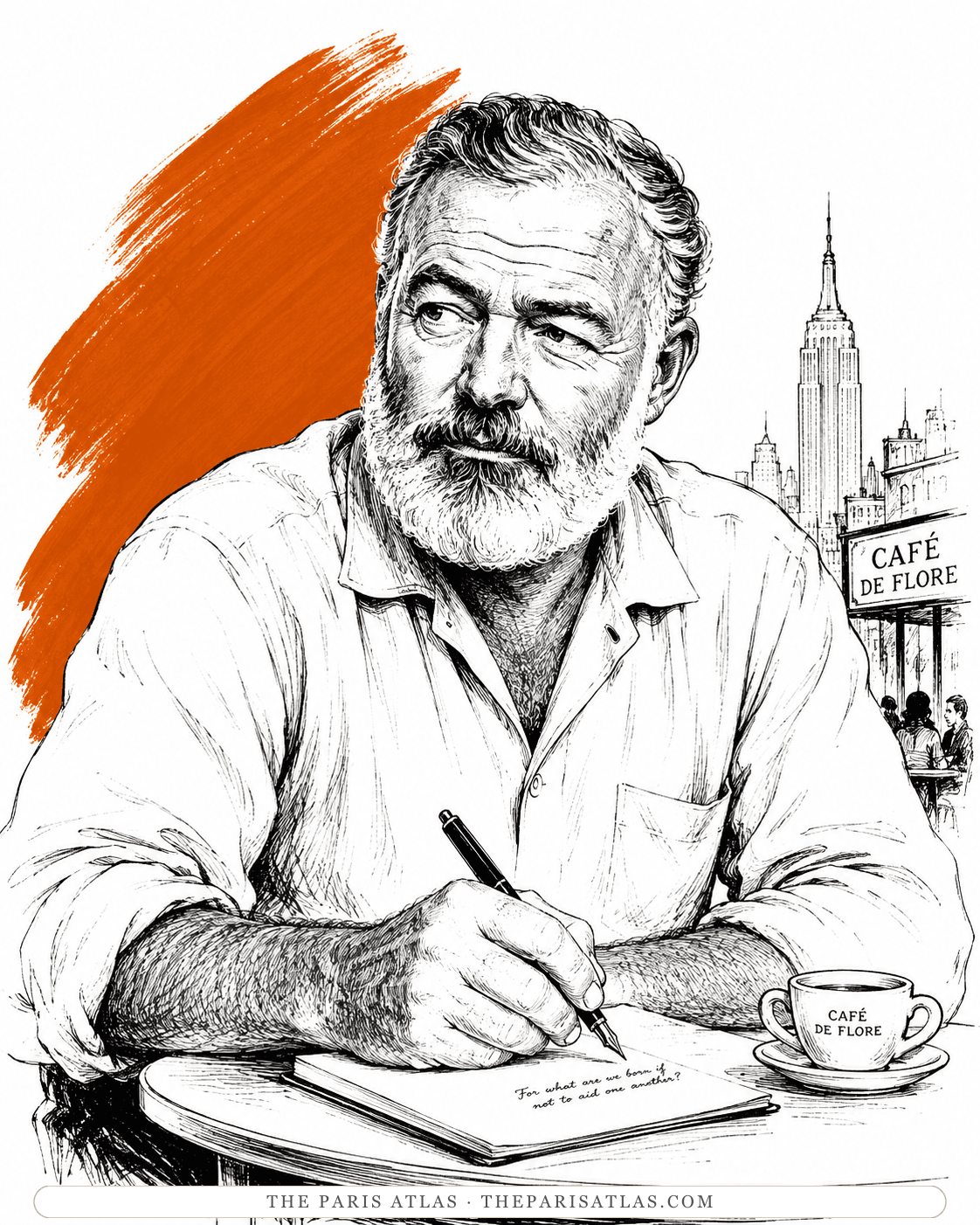
Named by Bukowski among his influences in a letter of his last years, alongside Dostoevsky, Celine and Sherwood Anderson. The short flat sentence is the inheritance; Bukowski also spent decades needling the Hemingway legend in print, which is its own form of debt.
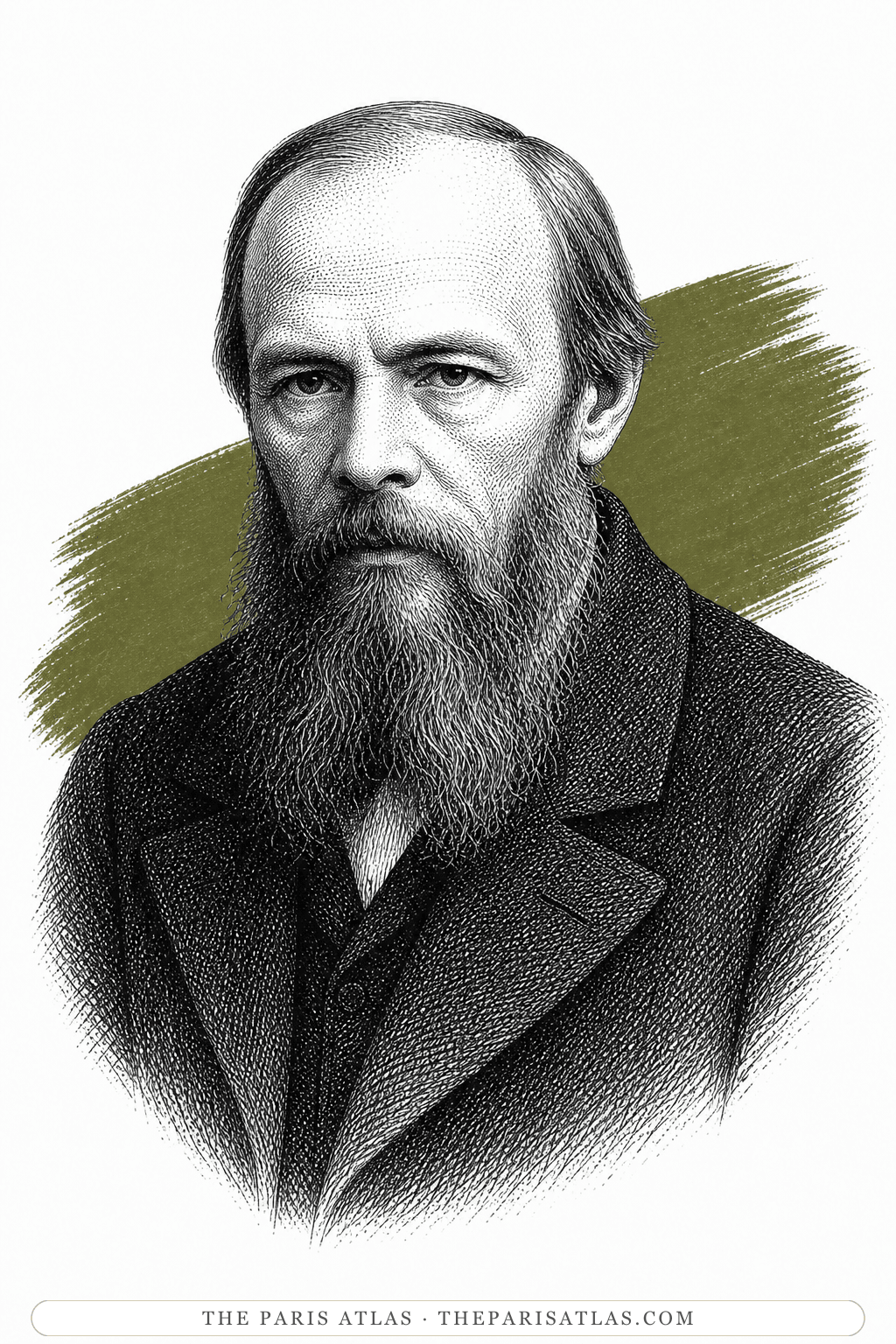
First on the list Bukowski gave of his own reading, in a letter of his later years: "I once read almost everything. My influences are Dostoevski, Nietzsche, Schopenhauer, Hamsun, Celine, Jeffers, Hemingway, Sherwood Anderson, Gorky."
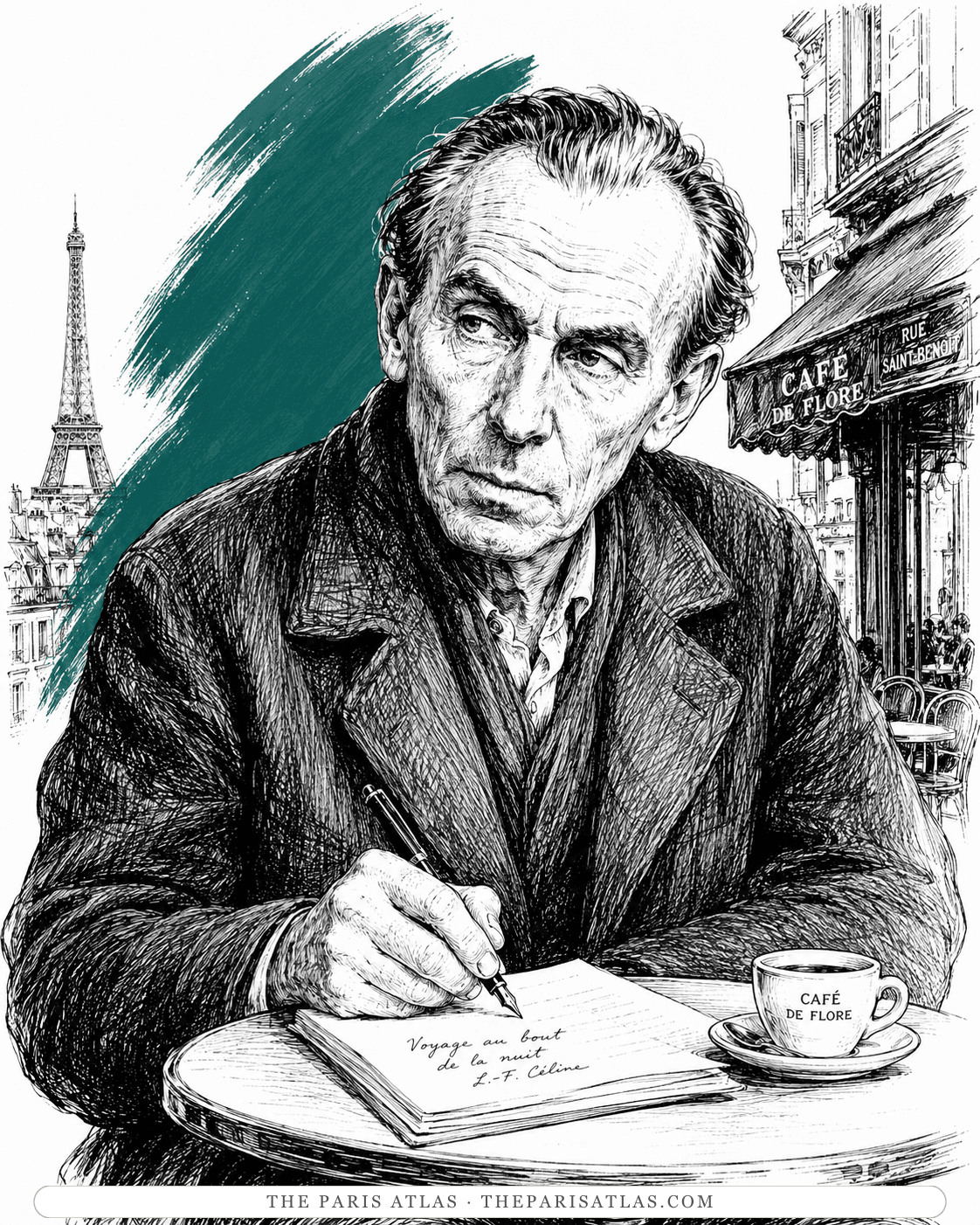
Bukowski named him. Writing to a correspondent late in life, he set down a list: "I once read almost everything. My influences are Dostoevski, Nietzsche, Schopenhauer, Hamsun, Celine, Jeffers, Hemingway, Sherwood Anderson, Gorky." Journey to the End of the Night, Celine's 1932 novel of a Paris underclass told in gutter speech, is the closest thing Bukowski's own low-life first person has to a model.
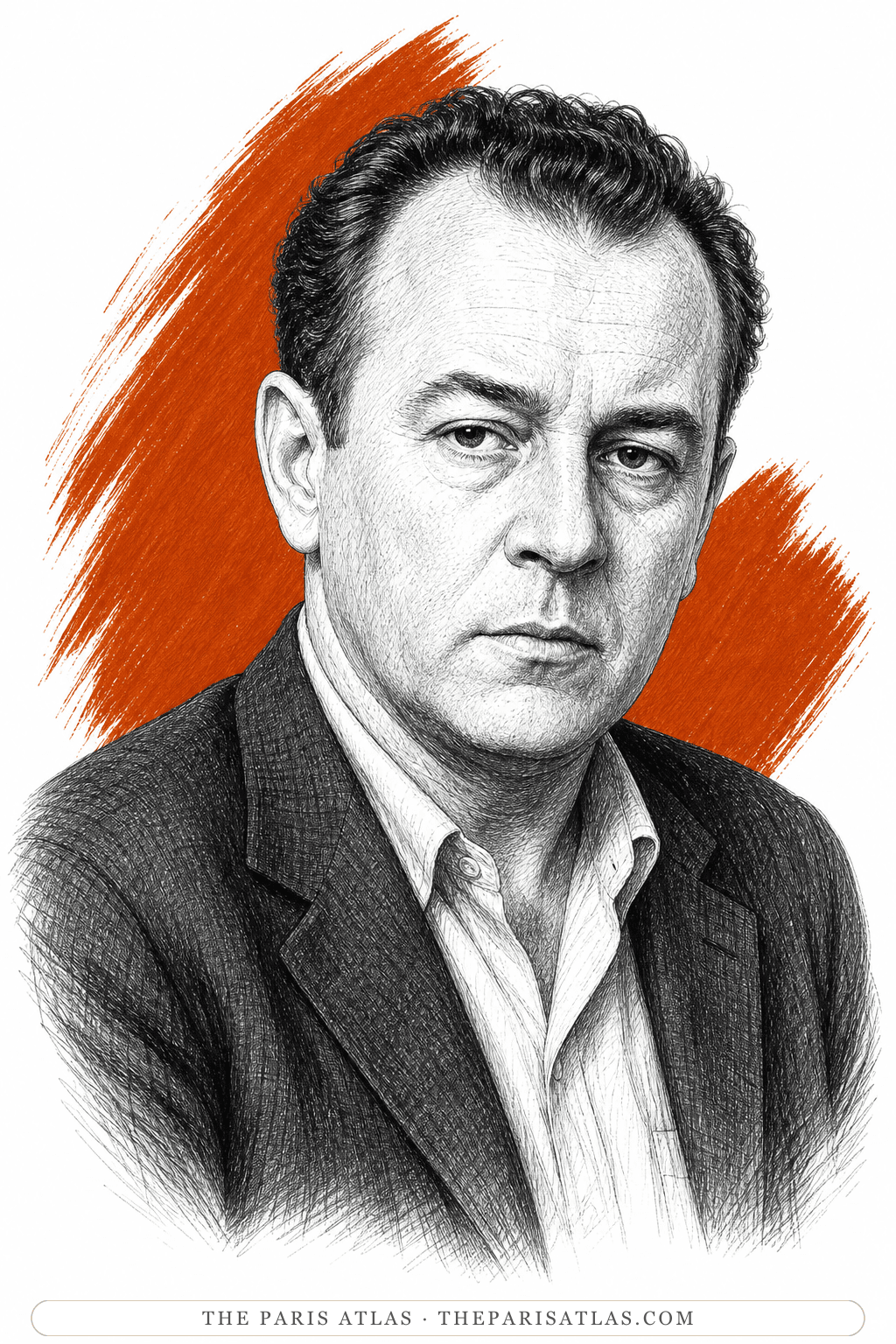
Bukowski described Fante as a lifelong influence, brought Ask the Dust to Black Sparrow publisher John Martin, and introduced the press's 1980 edition.

Bukowski's first book: a 200-copy chapbook that took thirty months to appear and did not sell out for years.

Bukowski's first full-length poetry collection: 777 copies hand-printed in a New Orleans apartment by Jon and Louise Webb.

The second Loujon Press book: 3,100 signed copies, hand-made in New Orleans, with artwork by the painter Noel Rockmore.

Bukowski's first book of prose — a stapled 500-copy pamphlet that sold for a dollar and introduced Henry Chinaski.

The second prose pamphlet: an autobiographical account of a hemorrhoid operation, published a year after the first.

The first Bukowski book from Black Sparrow Press — 45 poems, 800 paperbound copies, and the start of the partnership of his life.

A 400-copy Glendale chapbook of eighteen poems — four of which have never been reprinted anywhere since.

The underground newspaper column that invented the public Bukowski — autobiography, fiction and provocation with no editor in the way.

The collection that carries the elegies for Jane — Bukowski's grief poems for the great love of his rooming-house years.

A selection of Bukowski chosen by another editor to introduce him to strangers: eighty stapled pages, four hundred copies, printed in Madison, Wisconsin.

Nine poems cut from The Days Run Away during editing, rescued into the last of the early Bukowski chapbooks.
Charles Bukowski quit the post office in January 1970 and handed his publisher this novel within weeks. It is the job, turned into literature.

The first big Bukowski story collection — published by Ferlinghetti's City Lights, dedicated to Linda King, and later split into two famous volumes.

The first poetry collection of the full-time years — published the year after Post Office, with the title poem about a mockingbird and a cat.

The first Black Sparrow story collection: twenty-seven stories of the buried life, folding in the two rare 1960s prose pamphlets.

Eighteen years of poems in one volume — the in-print gateway to the three rare early collections, plus a section of new work.
Henry Chinaski across wartime America, one abandoned job at a time — the American work ethic, refused politely and then not politely.

The poems of the Women years: desire, wreckage and the typewriter, in the collection whose title became Bukowski shorthand.
What happens when a persona built on failure suddenly succeeds: Chinaski, famous at last, and no better at living.

The 1978 European tour in prose and photographs — the Paris week, the Apostrophes disaster, and the return to Andernach, told by the man at the center.

The poems between Women and Ham on Rye, under the longest and most quoted title Bukowski ever put on a book.

The poems between Play the Piano Drunk and Ham on Rye, named for the flowering shrub in the San Pedro garden years.
The childhood behind the persona: the beatings, the acne, the library, and the first drink — Bukowski's most sustained novel.

The stories that made France love him first — half of the notorious 1972 collection, under the title the world kept.

The late story collection: drinking, women, gambling and writing, compressed to the bone — the book that named a punk band.

Thirty-eight stories, and the half of the 1972 City Lights omnibus that kept the wildest material.

One story, illustrated by Robert Crumb — 376 copies signed by both men, and the start of a collaboration that outlasted Bukowski.

Ten years of letters between Charles Bukowski in Los Angeles and the Canadian poet Al Purdy, printed as photographs of the originals with Bukowski's drawings still on them.

The poems of the early 1980s: success arrived, the past not gone, and a writer measuring one against the other.

The screenplay published three years before the film existed, in a small edition Bukowski illustrated himself.

The second Crumb collaboration: one story about an aging comedian who has lost whatever he had.

The mid-1980s poems: the San Pedro years, the cats, the childhood resurfacing, and the loneliness given its full name in the title.

One short story published on its own as a book, illustrated throughout by Bukowski, with eleven copies carrying an original drawing done by hand.

The revised script with photographs from the set — and 140 copies signed by Bukowski, Mickey Rourke, Faye Dunaway and the director.

256 pages rescued from the scarce early pamphlets — the closest thing to a complete early Bukowski.
Bukowski watched Hollywood film his life, then did the most Bukowskian thing possible: he turned the experience into another novel.

Eighty poems and twenty stories shuffled together, published the year Bukowski turned seventy and named for it.

A decade of portrait poems, issued as a numbered double number of the Wormwood Review — the little magazine that printed Bukowski for decades.

The final collection published in his lifetime — age, cats, the computer, the dead, and 'Bluebird', the poem where the armor opens.

The letters of the post-office decade: an unknown poet writing to small-magazine editors while sorting mail for a living.

497 pages arranged by the period of life each piece describes, not by publication date — a life told through its own writing.

Bukowski's last novel: a detective story dedicated to bad writing, finished while he was dying, with Death herself as the client.

The second volume of letters: the years Bukowski left the post office, published his first novel, and became a writer people had heard of.

The first posthumous book, published two years after his death — poems and stories mixed the way Septuagenarian Stew had mixed them.

The posthumous archive begins in earnest: previously unpublished poems from the reserve Bukowski left behind, three years after his death.

Bukowski's last journals, 1991 to 1993, with twelve drawings by Robert Crumb.

The posthumous volume whose title became the most-quoted Bukowski sentence — 416 pages of poems spanning 1970 to 1990.

The last volume of letters, running to the year he died — the San Pedro decades, the film work, and the illness at the end.

189 previously unpublished poems running from the early 1980s to 1994, the year Bukowski died.

The last Bukowski book published under the Black Sparrow Press imprint, one year before the press closed.

Seven years of letters with the artist Sheri Martinelli — one of the few people Bukowski argued with about art rather than performing for.

The first posthumous Bukowski volume published by Ecco, after Black Sparrow Press closed in 2002.

Thirty-four interviews across thirty years, from an unknown in a Hollywood apartment to a famous man beside a San Pedro pool.

143 previously unpublished poems from the archive, a decade into the posthumous program.

The letters Bukowski wrote to his uncle in Andernach, the German town where he was born, published there by a Bukowski society ten years after his death.

A posthumous collection whose title jokes on a famous Yeats line — evidence of how widely read the supposedly artless Bukowski was.

A posthumous collection published twelve years after Bukowski's death, near the end of the archive series.

The one-volume door into the poetry: four decades selected by John Martin, the publisher who paid Bukowski to quit the post office.

Announced as the last of the archive collections — though two more followed it.

The first story Bukowski published and the last one he wrote, in the same book — forty-six years of work recovered from magazines nobody kept.

The volume that actually closed the archive series, two years after the one announced as final.

Thirty-nine recovered pieces, including Bukowski reviewing his own first book and assessing Ginsberg, Creeley and Zukofsky.

The columns the first book left out — nine years of underground newspaper writing, gathered after his death.

The first of Abel Debritto's thematic gatherings: every poem and passage Bukowski wrote about cats, in 128 pages.

Bukowski on how to write, assembled from two thousand pages of unpublished letters.

An illustrated story Bukowski wrote in 1947 and never published, followed by the newspaper column and the work he sold to men's magazines in the 1980s.

Fifty years of love poems in 224 pages, published two weeks before Valentine's Day 2016 — though the contents are far harder than that suggests.

240 pages chosen as the shortest complete answer to the question of what Bukowski wrote.

98 poems printed as Bukowski typed them — the first collection in twenty-five years to reproduce the manuscripts unaltered.

The other book about writing: stories, essays, interviews and introductions, edited by the scholar who recovered his uncollected prose.

The subject he is most famous for, gathered across 272 pages: the drinking that fed the writing and put him in hospital.
An American poet and novelist, born in Germany in 1920 and raised in Los Angeles, who wrote about rooming houses, bars, racetracks and low-paid work from inside them. His first book, the chapbook Flower, Fist and Bestial Wail, appeared in October 1960, and his first novel, Post Office, in 1971, and he went on to more than forty-five volumes, nearly all of them from Black Sparrow Press. He died in San Pedro, California, in 1994.
On 22 September 1978 he was a guest on Apostrophes, the live weekly books programme presented by Bernard Pivot. He drank steadily through the broadcast, interrupted the other guests, put a hand on the knee of the novelist Catherine Paysan — who replied, smiling, "ça c'est le pompon" — and was told twice by his fellow guest François Cavanna to shut up, the second time with an offer of a punch in the face. He then removed his earpiece and walked off the set while the programme was still on air.
That detail belongs to the retellings rather than to the record. The French broadcast archive documents the drinking, the hand on Catherine Paysan's knee, Cavanna's two outbursts and the unsteady exit from the set. The knife in the street, and the count of bottles emptied on air, come from later accounts and are not part of what the archive holds.
No. He was a visitor, not a resident: one documented stay of roughly a week in September 1978, based at the Hôtel des Saints-Pères, with a photographed walk through Saint-Germain-des-Prés, a glass of white wine at Le Rouquet, the Apostrophes broadcast, and a 2 a.m. ovation at La Coupole. He left no Paris address and no café years — but the week is unusually well documented, and it came at the moment France was turning him into an international celebrity.
It is Bukowski's first novel, published in 1971, and it comes straight out of the job he had just left: the sorting, the delivery rounds, the supervisors and the futility of the United States Post Office in Los Angeles. He wrote it after the publisher John Martin offered him a hundred dollars a month to quit and write full time.
Published in 1975, it follows Henry Chinaski — Bukowski's recurring narrator — through wartime America, city to city, odd job to odd job. A factotum is a general handyman who does whatever needs doing, and Chinaski always needs money but never badly enough to keep a job for long.
John Martin was a Los Angeles office-supply manager who sold his rare-book collection to the University of California, Santa Barbara for fifty thousand dollars and used the money to start a publishing house. Black Sparrow Press printed Bukowski for the rest of his life, along with John Fante and Paul Bowles, and closed in 2002 when the list was sold on. The hundred dollars a month Martin promised Bukowski is why the novels exist.
His readership grew in Germany, the country of his birth, before it grew at home, and it grew in France after a single televised evening in 1978 made him a name that people who had never read him could repeat. In the United States the literary establishment kept him at arm's length for decades, treating a poet of rooming houses and racetracks as a curiosity rather than a writer.
Influenced by
Named by Bukowski among his influences in a letter of his last years, alongside Dostoevsky, Celine and Sherwood Anderson. The short flat sentence is the inheritance; Bukowski also spent decades needling the Hemingway legend in print, which is its own form of debt.
Influenced by
First on the list Bukowski gave of his own reading, in a letter of his later years: "I once read almost everything. My influences are Dostoevski, Nietzsche, Schopenhauer, Hamsun, Celine, Jeffers, Hemingway, Sherwood Anderson, Gorky."
Influenced by
Bukowski named him. Writing to a correspondent late in life, he set down a list: "I once read almost everything. My influences are Dostoevski, Nietzsche, Schopenhauer, Hamsun, Celine, Jeffers, Hemingway, Sherwood Anderson, Gorky." Journey to the End of the Night, Celine's 1932 novel of a Paris underclass told in gutter speech, is the closest thing Bukowski's own low-life first person has to a model.
Influenced by
Bukowski described Fante as a lifelong influence, brought Ask the Dust to Black Sparrow publisher John Martin, and introduced the press's 1980 edition.
The sources below include biographies, scholarly essays, interviews, and primary materials that informed this page. They reflect both the historical record and ongoing critical conversations about Charles Bukowski and their work.

Short critical biography in Reaktion's Critical Lives series; source for the birth name.
Biography from the Academy of American Poets: birth, the lost decade, the post office, the books.
His own letters, including the list of writers he named as his influences.
Chronological record of Bukowski's life, residences, publications, work, relationships, and travels.

Major profile: childhood, the post-office years, John Martin's offer, and literary success.
Obituary of the publisher John Martin, with the founding of Black Sparrow Press and the hundred-dollar offer.
History of Black Sparrow Press: Martin's collection, the $50,000 UCSB sale, and the early relationship with Bukowski.
Catalogue record and synopsis for Factotum.
Essay on Bukowski's drinking that traces the reputation growing in Germany before America.
Reconstruction of the September 1978 Paris week from interviews with Raphaël Sorin, Sophie Bassouls, and Hôtel des Saints-Pères staff: the hotel, the Pacadis interview, the Saint-Germain walk, Le Rouquet, Saint-Sulpice, the Reichmann visit, and La Coupole.
The library's catalogue record for Sophie Bassouls's photographs of Bukowski in Paris, 22 September 1978.

The presenter's book-length interview about his career, which dates the Bukowski episode.
Pivot's later recollection of the same evening, filed under Bukowski's name.
The Charles Bukowski Tapes: fifty filmed segments from Schroeder's conversations with Bukowski during the making of Barfly.
Obituary, including the leukemia and the final year of writing.
Bibliographical record identifying Flower, Fist and Bestial Wail as the first book and dating it to October 1960.
John Fante, Ask the Dust, and Bukowski's role in Fante's rediscovery.
The library's record of the Charles Bukowski Papers: manuscripts, correspondence, photographs, and ephemera.
Contemporary account of John Martin's retirement and the division of the Black Sparrow catalogue in 2002.
Web source consulted for documented facts and historical context presented on the Charles Bukowski page.
These references anchor the page in the documented record and in the scholarly conversations around Charles Bukowski. Every claim on this page traces back to one or more of the works listed here.
 Explore more resources