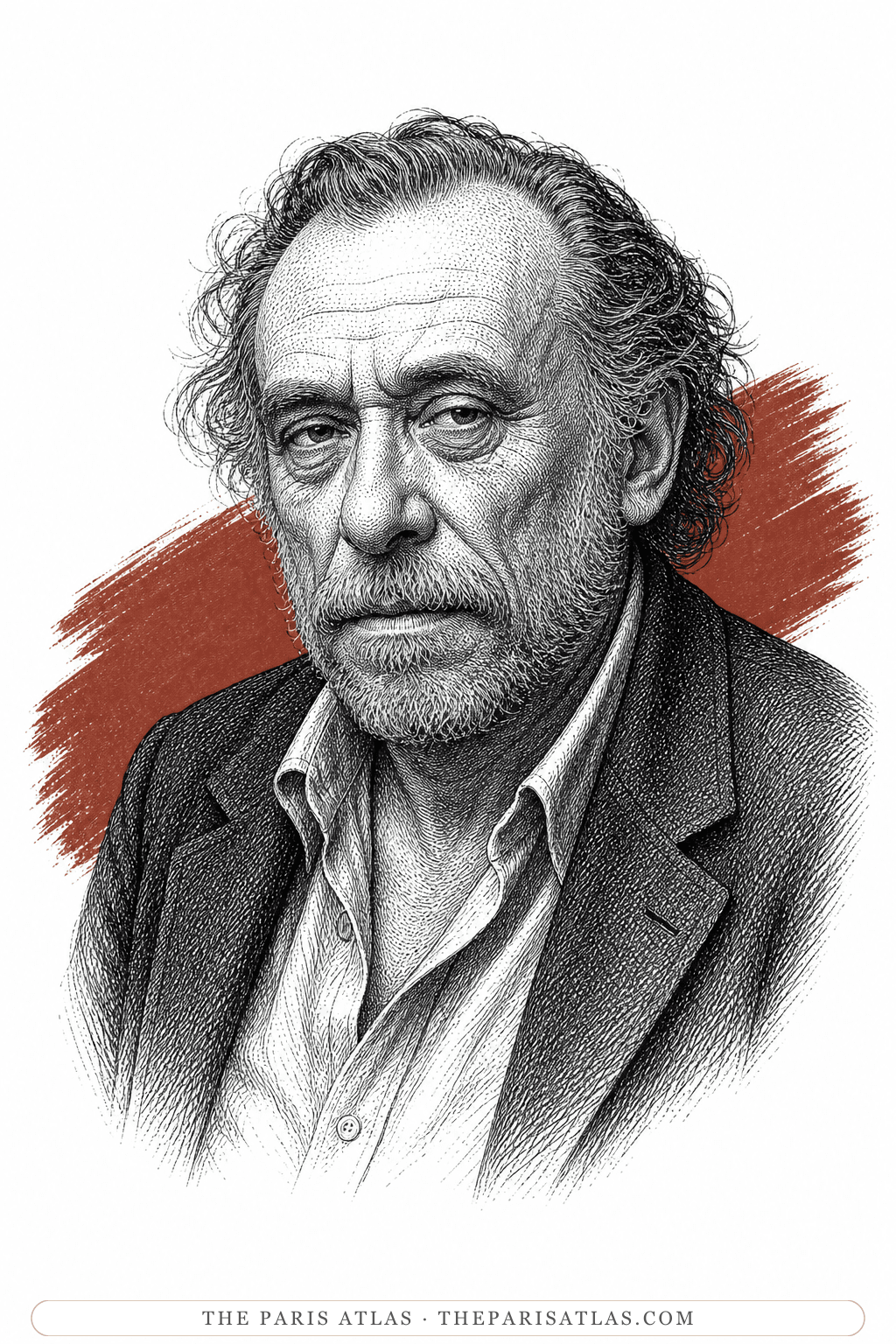

The Last Night of the Earth Poems
The final collection Bukowski assembled himself, covering the same late years.
Read our take
189 previously unpublished poems running from the early 1980s to 1994, the year Bukowski died.
Open All Night, published by Black Sparrow Press in 2000, gathers 189 previously unpublished Charles Bukowski poems from the archive he left at his death — work running from the early 1980s up to 1994, the year he died. Of the posthumous volumes it is the one that reaches furthest into the final years: the settled life in San Pedro, the illness of the final years, the racetrack afternoons, and the writing he kept at until the end. The title phrase, open all night, describes the bars, diners and streets that filled his early books — subjects he was still writing about at the end of his life. Its poems were altered before printing, like the rest of the series — the writer Michael Phillips documented this in 2013, and restored editions now print the manuscripts.
This was among the last Bukowski volumes Black Sparrow itself produced: John Martin wound the press down in 2002, and the posthumous series moved to Ecco with the rest of the catalogue. The Last Night of the Earth Poems (1992) was the last collection Bukowski assembled himself, from the same years. Reading the two books together shows which late poems Bukowski chose to publish and which ones stayed in the archive until editors chose them after his death.
In “all that,” remembered New York is reduced to a summer evening's fire escapes, resting residents and red geraniums. Repetition lets the flowers spread across the poem just as they spread across the windows, turning ordinary housing into a collective picture. The speaker then insists that the scene should be seen rather than discussed, even though words have brought it into view. That modest contradiction is central to the poem's pleasure: it makes an argument for attention without claiming to improve the people or explain their lives. Their rest is enough to notice.
The swimming episode in “2 buddies” makes friendship a defense of ordinary participation. Red removes his prosthetic arm to swim, and the narrator challenges the boys who mock him by insisting that the public pool belongs to everyone. Yet the memory does not leave Red in the role of someone merely protected: in the subsequent fights, the narrator admits that Red is more effective than he is. This reversal unsettles a simple rescuer's story. Beneath the aggressive recollection lies a modest wish, repeatedly frustrated by newcomers, to use a shared place without harassment.
Archive poems running to 1994 itself — the posthumous series' closest approach to the end of the life.
The same late subjects The Last Night of the Earth Poems chose, here in the poems that stayed behind.
The volume’s range lets readers follow recurring late concerns across many poems rather than through a single famous piece.
1980s–1994
The span of the archive poems, running to the year of Bukowski's death.
2000
Black Sparrow Press publishes the collection.
2002
John Martin winds down Black Sparrow; the posthumous series continues at Ecco.


The final collection Bukowski assembled himself, covering the same late years.
Read our take
The posthumous volume before it, spanning the two earlier decades of the archive.
Read our take
The next volume of the series, the last with Black Sparrow's name on it.
Read our takeA posthumous collection of 189 previously unpublished Charles Bukowski poems, issued by Black Sparrow Press in 2000. The poems run from the early 1980s to 1994, the year he died.
To the final year. Of the posthumous volumes, this one reaches furthest into the last stretch of the life — the illness years included.
The posthumous volumes carry a documented editing question: 2013 manuscript comparisons showed substantial alterations, and Abel Debritto's restored editions — backed by Bukowski's widow Linda Lee Bukowski — print the manuscripts unrevised.
Open all night describes the bars, diners and streets of Bukowski's early books. He was still writing about them in his last years, and these late poems gave the collection its name.
Yes — Ecco keeps it in print under the original Black Sparrow ISBN.
Explore authors with a similar voice, perspective, and influence.
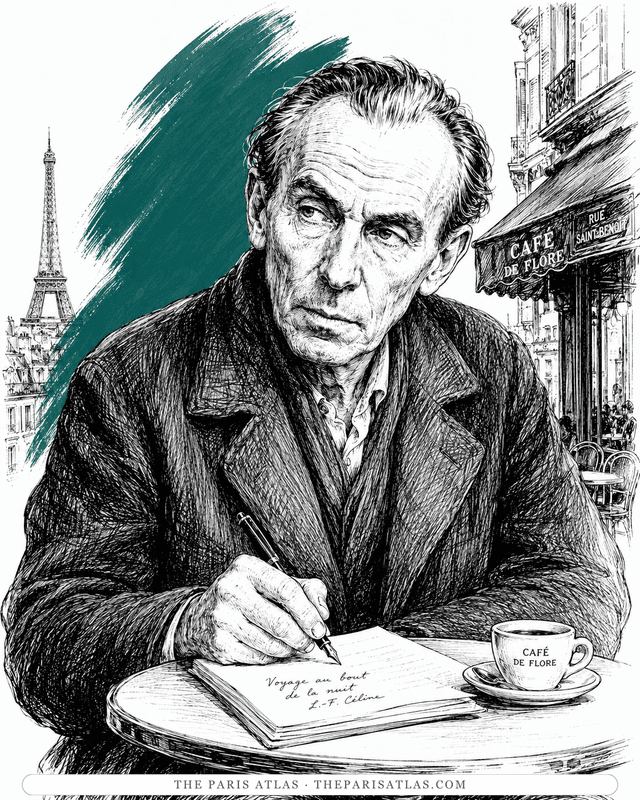
The doctor of the Paris slums who wrote the century's blackest, funniest novel — and changed the sound of French prose.
View author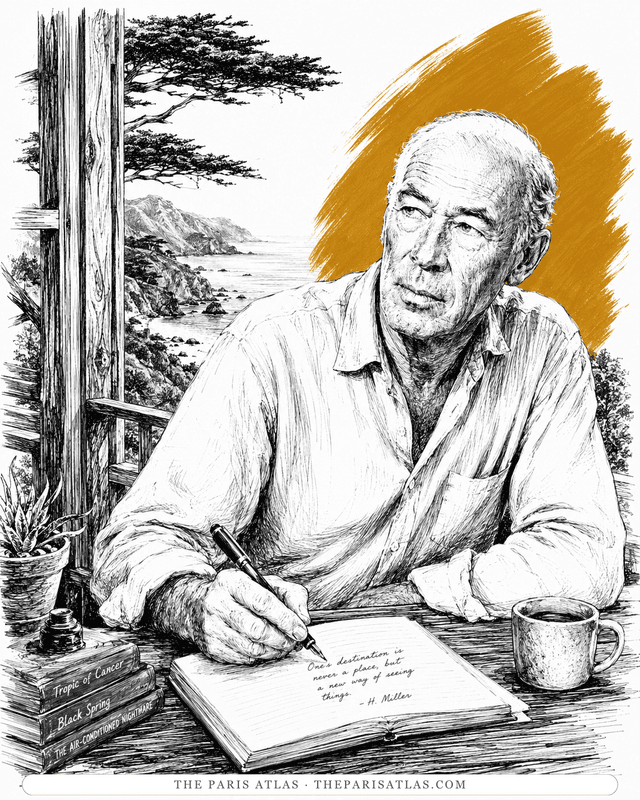
The Brooklyn dropout who arrived in Paris broke at thirty-eight and wrote the exuberant, banned books that ended American censorship.
View author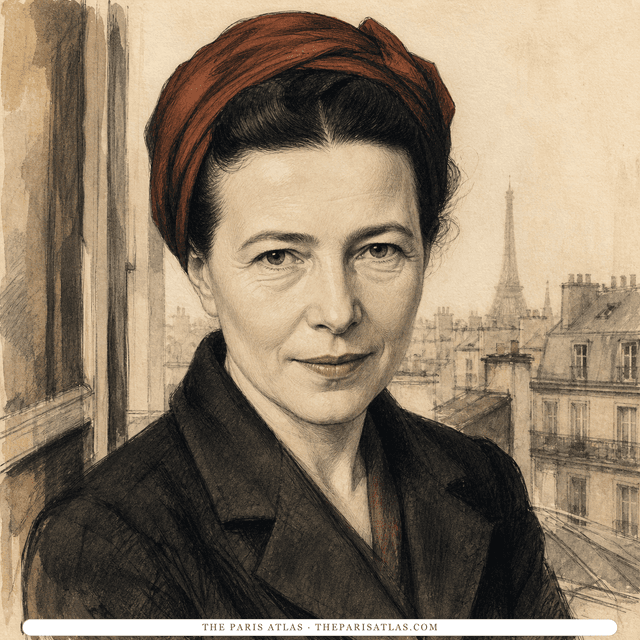
French writer and philosopher whose novels, memoirs, and social analysis examined freedom, gender, responsibility, aging, and the material conditions that shape a life.
View authorThe sources below include the primary text, editions, scholarship, archival materials, and other records that informed this page. They document Open All Night, its publication, and its place in literary history.

The primary text represented by this page, used for descriptions of the work’s contents and for any quoted passages shown here.

Complete permission-marked text of all that, attributed to Open All Night.
Complete 2 buddies in the public 2009 ebook preview; reading is focused on the swimming episode.
Collection membership and the specialist bibliography's earlier poem dates; not a manuscript collation.
Publication year, the 189-poem span, and the late Black Sparrow chronology.

The documented editing of the posthumous poems and the restored editions.
Critical account of the posthumous program.
Official record used to verify names, dates, institutional details, or other factual information on this page.
The primary text is the baseline reference for every book page. Additional references document publication history, interpretation, and historical context where that evidence is available.
 Explore more resources