
Henry Chinaski across wartime America, one abandoned job at a time — the American work ethic, refused politely and then not politely.
71 Charles Bukowski titles: 1 novel, 17 story collections, 2 plays and screenplays, 8 memoirs and travel books, 7 volumes of correspondence, 3 volumes of nonfiction, and 33 books of poems. They are listed below by form, earliest first, and every one links to its own page.
Start with Post Office, the first novel: short, fast, and the front door to Henry Chinaski, the fictional alter ego who carries most of Bukowski's fiction. Read Ham on Rye second — the childhood that explains everything — then Factotum and Women. For the poetry, one volume answers most needs: The Pleasures of the Damned, the career-spanning selection; Love Is a Dog from Hell is the collection to go deeper with.
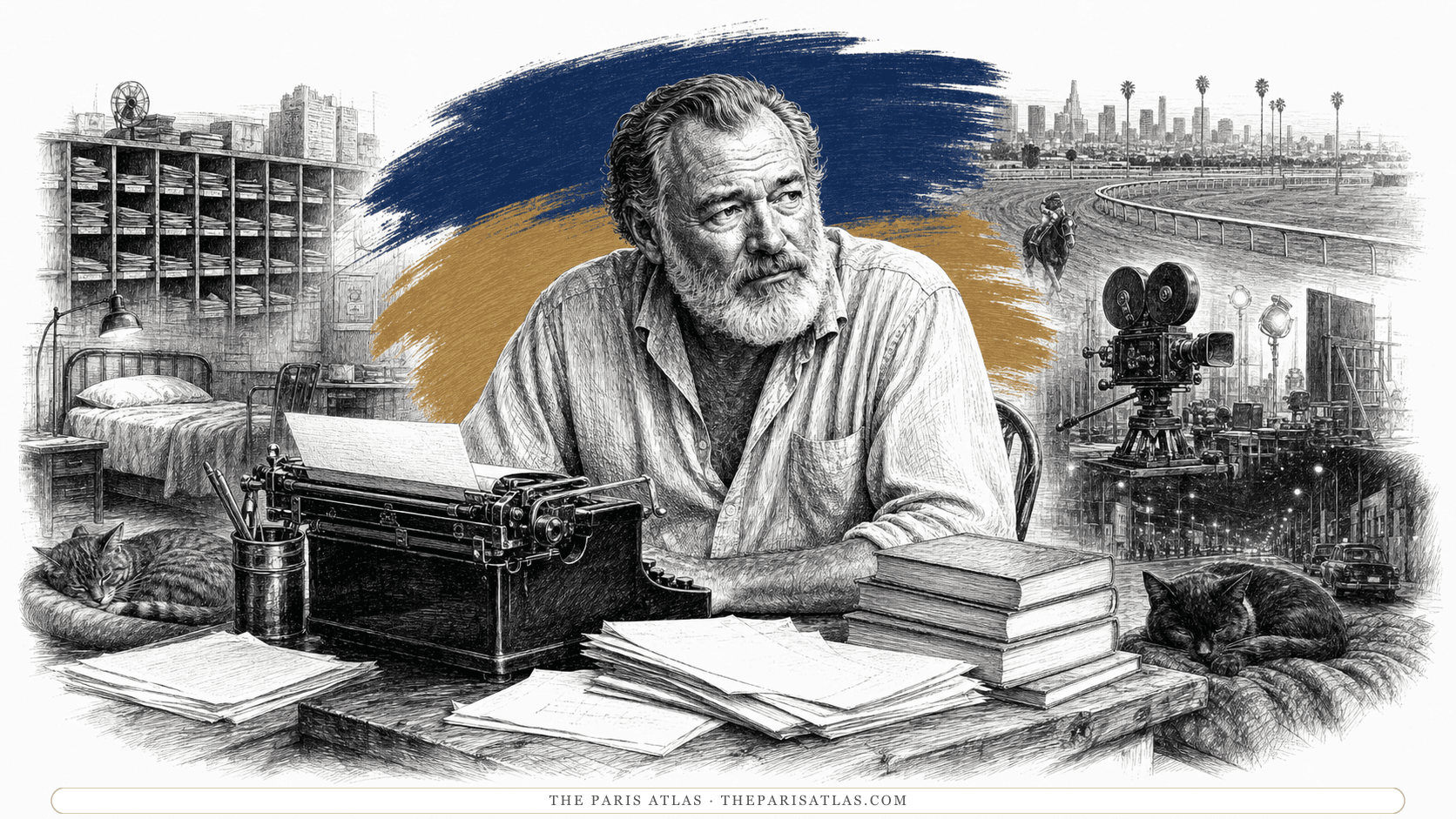
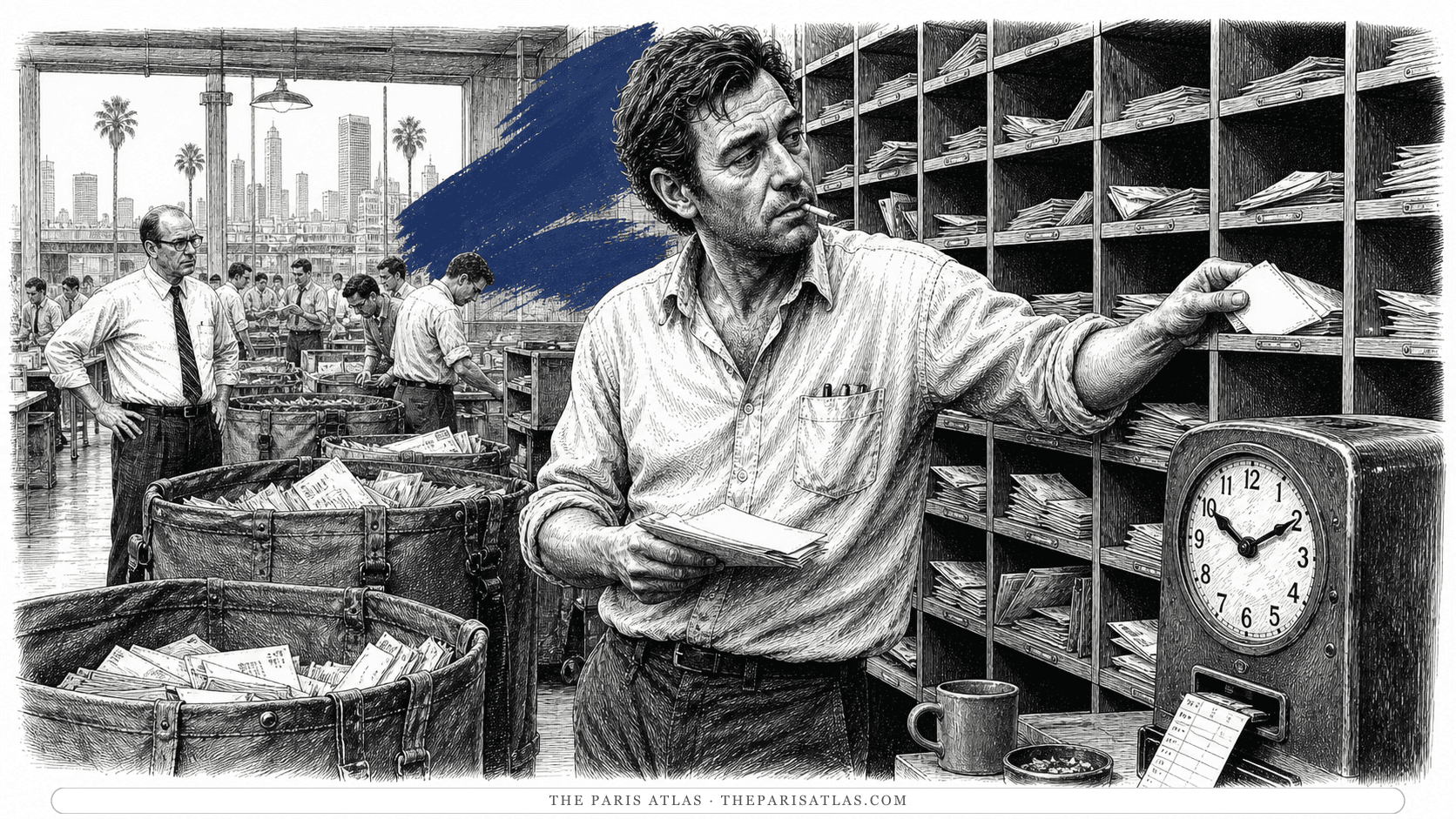
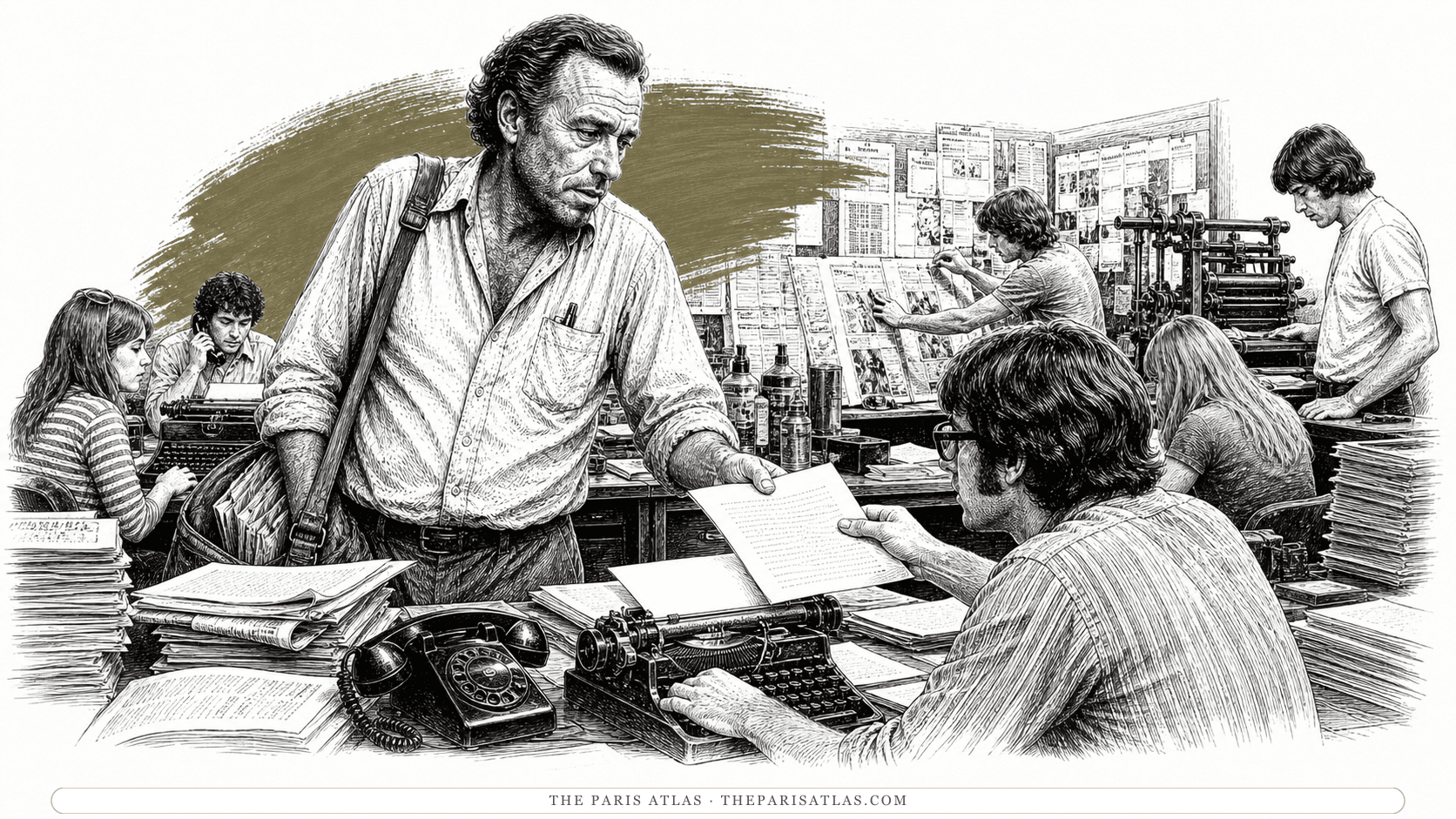
Henry Chinaski across wartime America, one abandoned job at a time — the American work ethic, refused politely and then not politely.

Bukowski's first book of prose — a stapled 500-copy pamphlet that sold for a dollar and introduced Henry Chinaski.

The second prose pamphlet: an autobiographical account of a hemorrhoid operation, published a year after the first.

A selection of Bukowski chosen by another editor to introduce him to strangers: eighty stapled pages, four hundred copies, printed in Madison, Wisconsin.

The first big Bukowski story collection — published by Ferlinghetti's City Lights, dedicated to Linda King, and later split into two famous volumes.

The first Black Sparrow story collection: twenty-seven stories of the buried life, folding in the two rare 1960s prose pamphlets.

The stories that made France love him first — half of the notorious 1972 collection, under the title the world kept.

The late story collection: drinking, women, gambling and writing, compressed to the bone — the book that named a punk band.

Thirty-eight stories, and the half of the 1972 City Lights omnibus that kept the wildest material.

One story, illustrated by Robert Crumb — 376 copies signed by both men, and the start of a collaboration that outlasted Bukowski.

The second Crumb collaboration: one story about an aging comedian who has lost whatever he had.

One short story published on its own as a book, illustrated throughout by Bukowski, with eleven copies carrying an original drawing done by hand.

Eighty poems and twenty stories shuffled together, published the year Bukowski turned seventy and named for it.

497 pages arranged by the period of life each piece describes, not by publication date — a life told through its own writing.

The first posthumous book, published two years after his death — poems and stories mixed the way Septuagenarian Stew had mixed them.

The first story Bukowski published and the last one he wrote, in the same book — forty-six years of work recovered from magazines nobody kept.

Thirty-nine recovered pieces, including Bukowski reviewing his own first book and assessing Ginsberg, Creeley and Zukofsky.

An illustrated story Bukowski wrote in 1947 and never published, followed by the newspaper column and the work he sold to men's magazines in the 1980s.

The screenplay published three years before the film existed, in a small edition Bukowski illustrated himself.

The revised script with photographs from the set — and 140 copies signed by Bukowski, Mickey Rourke, Faye Dunaway and the director.

The underground newspaper column that invented the public Bukowski — autobiography, fiction and provocation with no editor in the way.

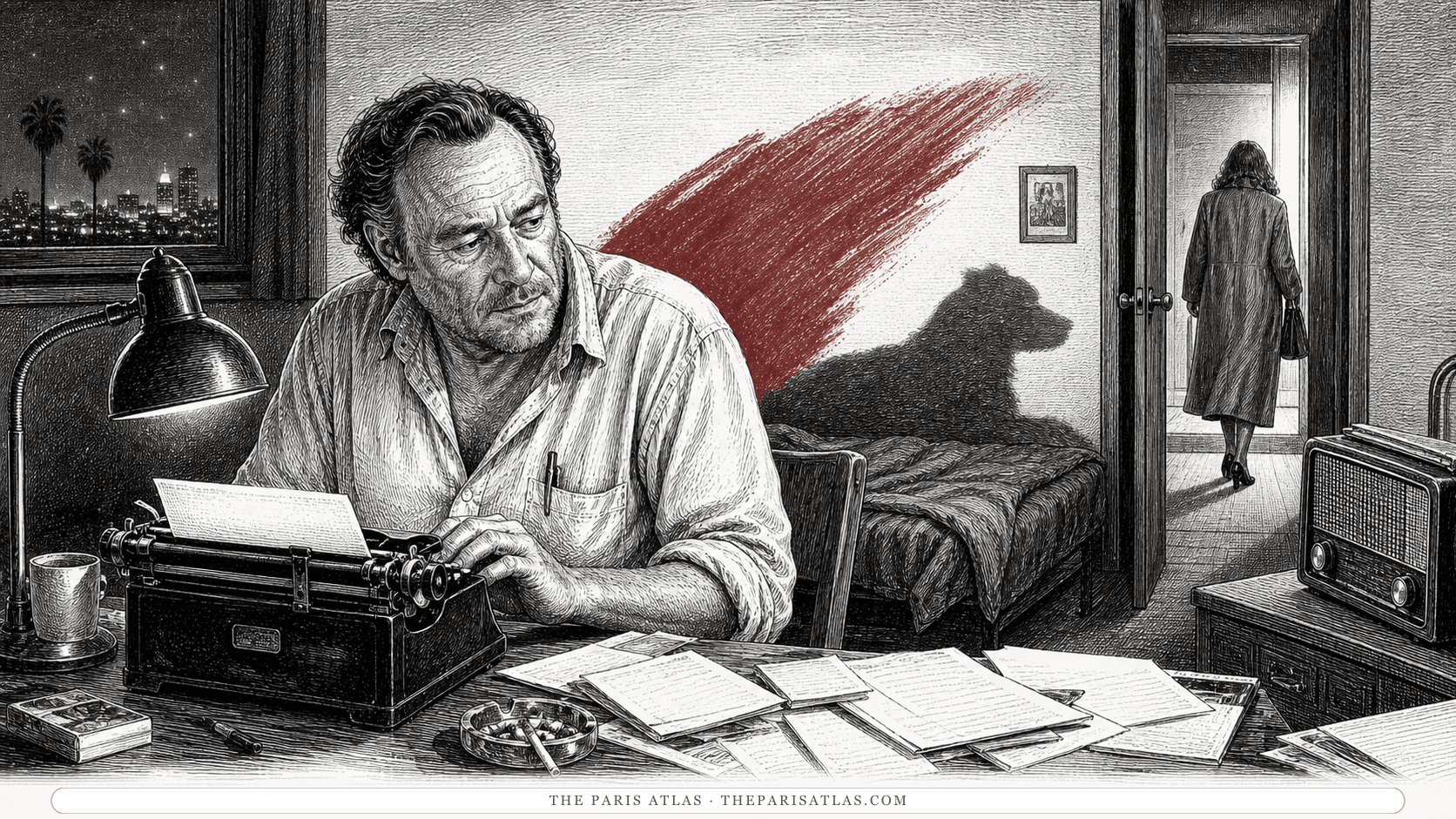
Charles Bukowski quit the post office in January 1970 and handed his publisher this novel within weeks. It is the job, turned into literature.

What happens when a persona built on failure suddenly succeeds: Chinaski, famous at last, and no better at living.

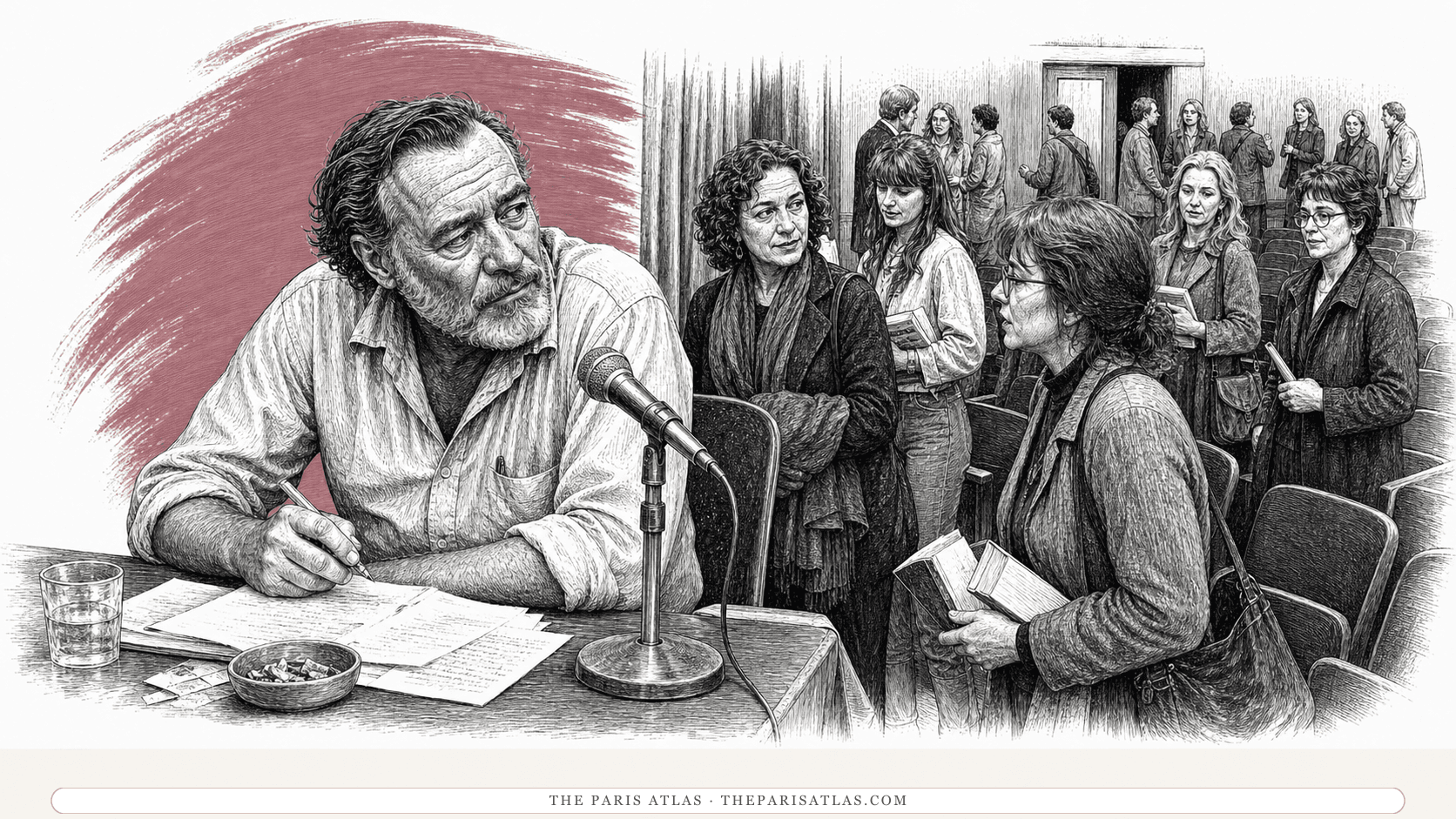
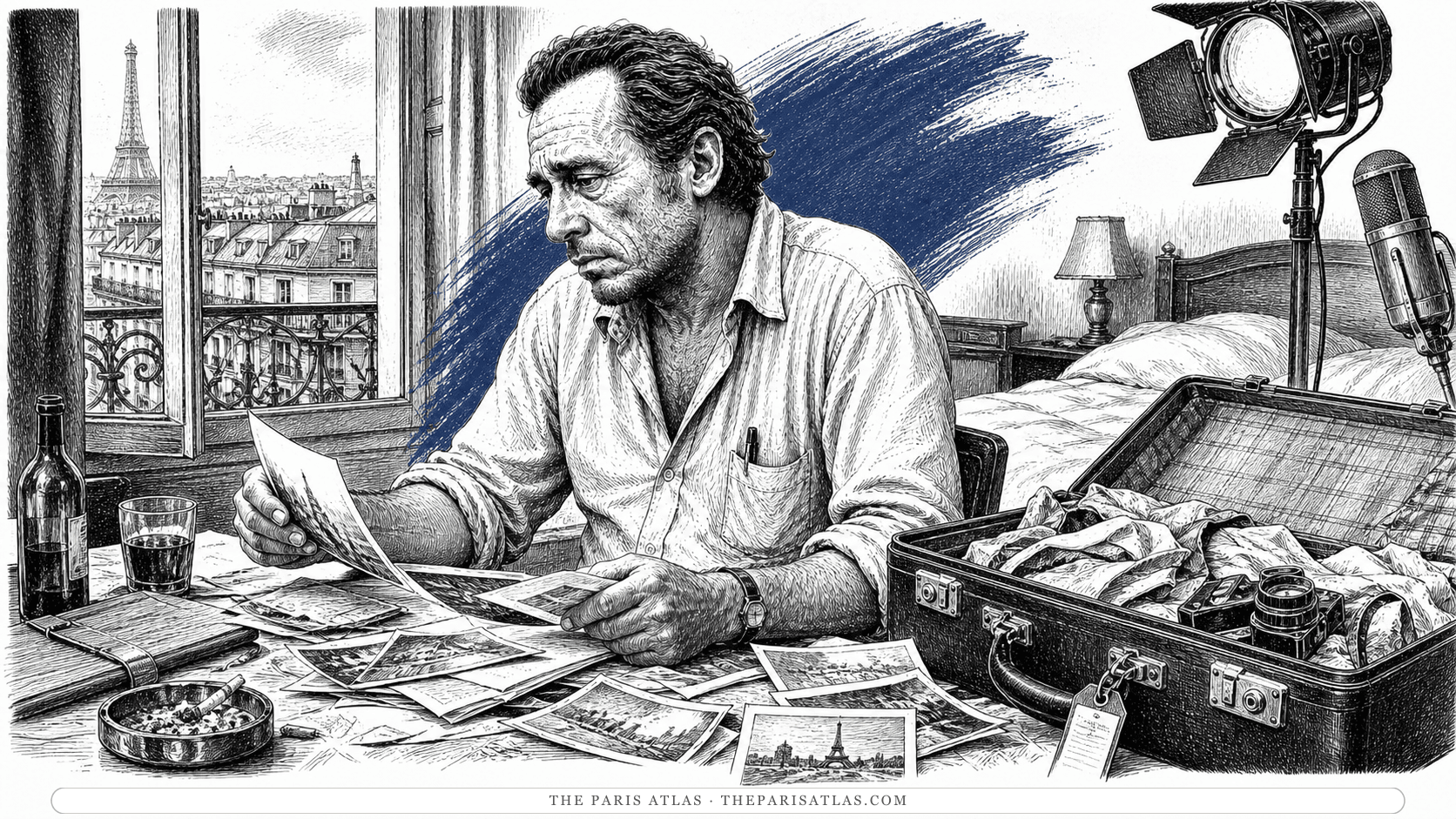
The 1978 European tour in prose and photographs — the Paris week, the Apostrophes disaster, and the return to Andernach, told by the man at the center.

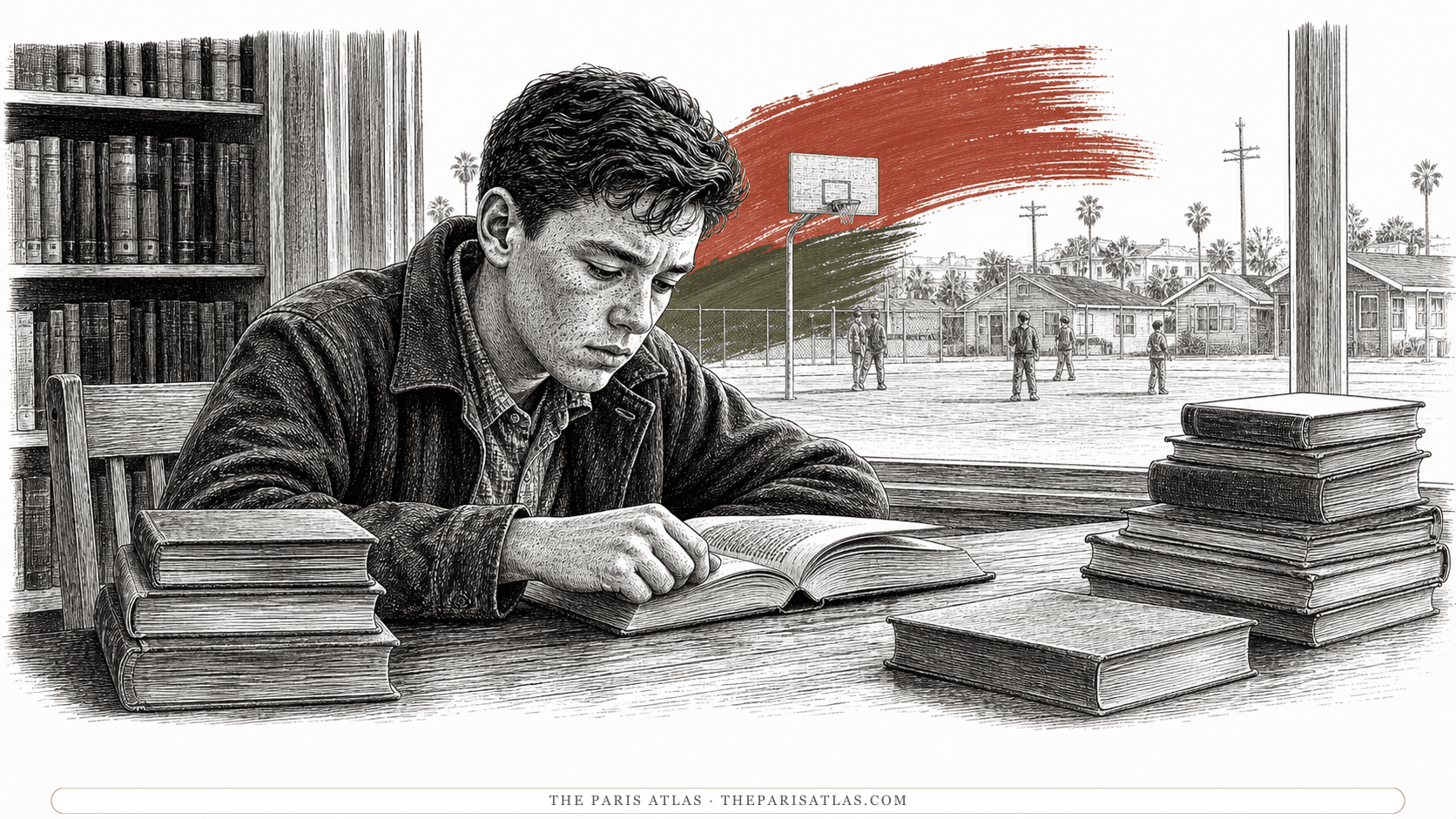
The childhood behind the persona: the beatings, the acne, the library, and the first drink — Bukowski's most sustained novel.

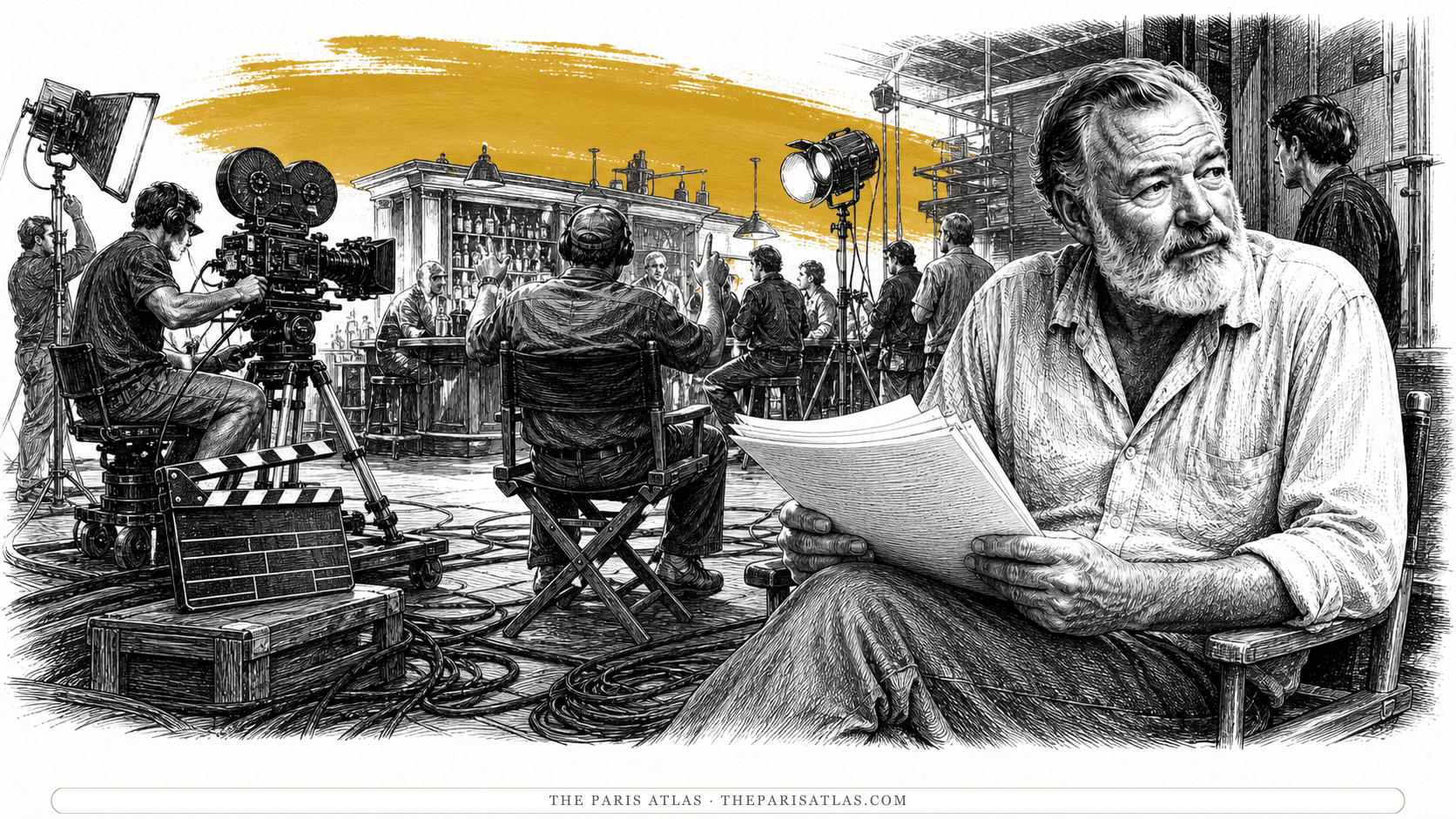
Bukowski watched Hollywood film his life, then did the most Bukowskian thing possible: he turned the experience into another novel.

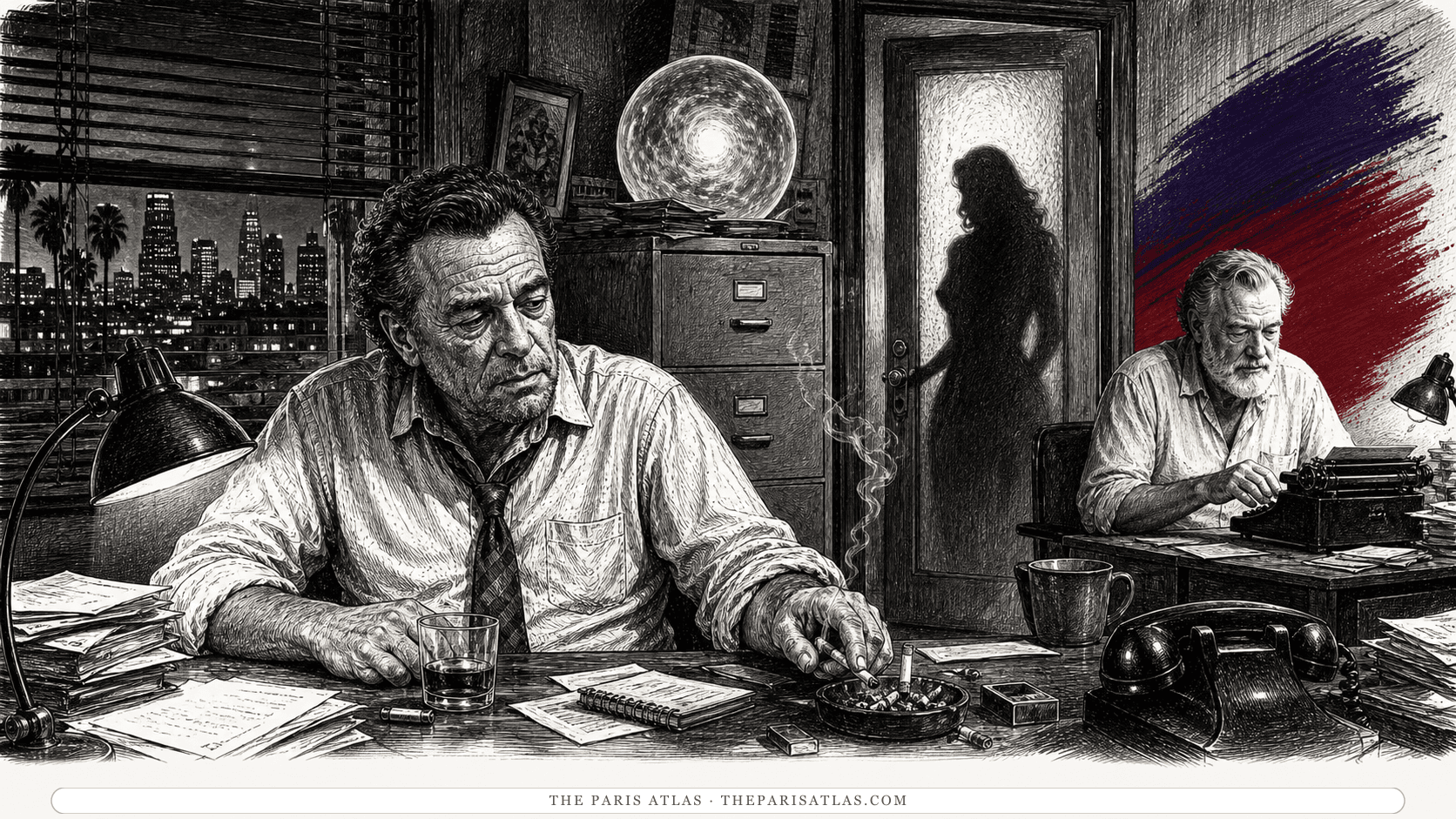
Bukowski's last novel: a detective story dedicated to bad writing, finished while he was dying, with Death herself as the client.

Bukowski's last journals, 1991 to 1993, with twelve drawings by Robert Crumb.

Ten years of letters between Charles Bukowski in Los Angeles and the Canadian poet Al Purdy, printed as photographs of the originals with Bukowski's drawings still on them.

The letters of the post-office decade: an unknown poet writing to small-magazine editors while sorting mail for a living.

The second volume of letters: the years Bukowski left the post office, published his first novel, and became a writer people had heard of.

The last volume of letters, running to the year he died — the San Pedro decades, the film work, and the illness at the end.

Seven years of letters with the artist Sheri Martinelli — one of the few people Bukowski argued with about art rather than performing for.

The letters Bukowski wrote to his uncle in Andernach, the German town where he was born, published there by a Bukowski society ten years after his death.


Thirty-four interviews across thirty years, from an unknown in a Hollywood apartment to a famous man beside a San Pedro pool.

The columns the first book left out — nine years of underground newspaper writing, gathered after his death.

The other book about writing: stories, essays, interviews and introductions, edited by the scholar who recovered his uncollected prose.

Bukowski's first book: a 200-copy chapbook that took thirty months to appear and did not sell out for years.

Bukowski's first full-length poetry collection: 777 copies hand-printed in a New Orleans apartment by Jon and Louise Webb.

The second Loujon Press book: 3,100 signed copies, hand-made in New Orleans, with artwork by the painter Noel Rockmore.

The first Bukowski book from Black Sparrow Press — 45 poems, 800 paperbound copies, and the start of the partnership of his life.

A 400-copy Glendale chapbook of eighteen poems — four of which have never been reprinted anywhere since.

The collection that carries the elegies for Jane — Bukowski's grief poems for the great love of his rooming-house years.

Nine poems cut from The Days Run Away during editing, rescued into the last of the early Bukowski chapbooks.

The first poetry collection of the full-time years — published the year after Post Office, with the title poem about a mockingbird and a cat.

Eighteen years of poems in one volume — the in-print gateway to the three rare early collections, plus a section of new work.

The poems of the Women years: desire, wreckage and the typewriter, in the collection whose title became Bukowski shorthand.

The poems between Women and Ham on Rye, under the longest and most quoted title Bukowski ever put on a book.

The poems between Play the Piano Drunk and Ham on Rye, named for the flowering shrub in the San Pedro garden years.

The poems of the early 1980s: success arrived, the past not gone, and a writer measuring one against the other.

The mid-1980s poems: the San Pedro years, the cats, the childhood resurfacing, and the loneliness given its full name in the title.

256 pages rescued from the scarce early pamphlets — the closest thing to a complete early Bukowski.

A decade of portrait poems, issued as a numbered double number of the Wormwood Review — the little magazine that printed Bukowski for decades.

The final collection published in his lifetime — age, cats, the computer, the dead, and 'Bluebird', the poem where the armor opens.

The posthumous archive begins in earnest: previously unpublished poems from the reserve Bukowski left behind, three years after his death.

The posthumous volume whose title became the most-quoted Bukowski sentence — 416 pages of poems spanning 1970 to 1990.

189 previously unpublished poems running from the early 1980s to 1994, the year Bukowski died.

The last Bukowski book published under the Black Sparrow Press imprint, one year before the press closed.

The first posthumous Bukowski volume published by Ecco, after Black Sparrow Press closed in 2002.

143 previously unpublished poems from the archive, a decade into the posthumous program.

A posthumous collection whose title jokes on a famous Yeats line — evidence of how widely read the supposedly artless Bukowski was.

A posthumous collection published twelve years after Bukowski's death, near the end of the archive series.

The one-volume door into the poetry: four decades selected by John Martin, the publisher who paid Bukowski to quit the post office.

Announced as the last of the archive collections — though two more followed it.

The volume that actually closed the archive series, two years after the one announced as final.

The first of Abel Debritto's thematic gatherings: every poem and passage Bukowski wrote about cats, in 128 pages.

Fifty years of love poems in 224 pages, published two weeks before Valentine's Day 2016 — though the contents are far harder than that suggests.

240 pages chosen as the shortest complete answer to the question of what Bukowski wrote.

98 poems printed as Bukowski typed them — the first collection in twenty-five years to reproduce the manuscripts unaltered.

The subject he is most famous for, gathered across 272 pages: the drinking that fed the writing and put him in hospital.
Your progress
The first novel and the fastest read: eleven years of postal drudgery turned into comedy. Most readers should begin here.
His most sustained book — the childhood behind the persona. Begin here if you want the depth before the jokes.
The one-volume selection, 1951–1993, chosen by his lifelong publisher John Martin. The standing answer to 'which poetry book should I buy'.
The middle-period collection and the usual first single volume: desire and wreckage, 1974–1977.
The quieter mid-1980s collection: memory, cats, and solitude as a working condition.
The last collection of his lifetime, and the summit of the late work. 'Bluebird' lives here.
The wildest stories, and the book France knew him by before America caught up.
The 1978 European tour — including the Paris week and the Apostrophes broadcast — in prose and photographs.
The final novel: a detective-fiction parody with Lady Death as the client, finished while he was dying.
1972 — originally half of Erections, Ejaculations, Exhibitions and General Tales of Ordinary Madness; split under this title in 1983.
Start with Post Office, then Ham on Rye, then Factotum and Women. The novels share a narrator — Henry Chinaski, Bukowski's fictional alter ego — and were published out of life-order, so either publication order or the life order works; the life order (Ham on Rye, Factotum, Post Office, Women, Hollywood) reads as one continuous story.
Ham on Rye is the most common critical answer — his most sustained and controlled novel. Post Office is the best entry point, and The Last Night of the Earth Poems is the peak of the poetry.
The Pleasures of the Damned, the career-spanning selection chosen by his publisher John Martin, is the single volume to own. Among individual collections, Love Is a Dog from Hell is the usual first choice.
Closely but not literally. Henry Chinaski is a fictional exaggeration of his author: the post office, the wandering, the fame and the film production all happened to Bukowski, but chronology shifts, people are combined, and events are heightened. He was writing autobiographical fiction, not testimony.
More than forty-five volumes of poetry and prose in his lifetime, nearly all from Black Sparrow Press, with a large body of work appearing after his death in 1994. The shelf here carries the six novels and the collections a reader actually needs; most of the remaining volumes are further poetry.
Shakespeare Never Did This, the 1979 travel book with Michael Montfort's photographs, draws on the 1978 European travels that included the Paris week and the drunken Apostrophes broadcast — told from Bukowski's side of the table.
The sources below include bibliographies, archives, publisher records, and scholarship used to verify the Charles Bukowski catalogue and publication order.

Web source consulted for documented facts and historical context presented on the Charles Bukowski books page.
Web source consulted for documented facts and historical context presented on the Charles Bukowski books page.

Archival evidence used to document the historical record connected to Charles Bukowski books.
Web source consulted for documented facts and historical context presented on the Charles Bukowski books page.
These references document which titles belong in the bibliography and when they appeared. The recommended reading order remains an editorial judgment by The Paris Atlas.
 Explore more resources
Newsletter
We will tell you when this guide adds a book, review, or new reading-order recommendation.