
Shakespeare Never Did This
The account of the 1978 European trip, on which Bukowski returned to Andernach.
Read our take
The letters Bukowski wrote to his uncle in Andernach, the German town where he was born, published there by a Bukowski society ten years after his death.
Los Angeles–Andernach collects the letters Charles Bukowski sent from California to his uncle Heinrich in Andernach am Rhein, the German town where Bukowski was born in 1920. The Charles Bukowski Society edited the book and Ariel-Verlag published it in 2004, for the tenth anniversary of his death. It runs to eighty-five pages and prints German and English together, with the German translated by Rainer Wehlen. Every other book of Bukowski's letters collects what he wrote to editors, publishers and other writers; this one collects what he wrote to a relative.
Bukowski's family left Andernach for the United States in 1923, when he was two years old, and he grew up in Los Angeles. Almost everything published about his life is American: the post office, the rented rooms, the racetrack, San Pedro. The German side of it survives mainly in this correspondence, which stayed with the family in Andernach rather than in an American archive.
He went back once. In 1978 he travelled to Europe for a reading in Hamburg and a television appearance in Paris, and visited Andernach on the same trip; he wrote the journey up as Shakespeare Never Did This.
In a publicly reproduced passage from a March 1977 letter, Bukowski tells his uncle that Linda Lee looks forward to seeing him, says he has long been proud of his German origins, and anticipates returning. The verbs point forward: the letter is not yet an account of the 1978 visit but an attempt to imagine a meeting across the distance. For a writer so firmly associated with Los Angeles, Andernach is not merely an item in a birth record here. He addresses someone still living there and makes the return a shared prospect.
Another sentence from the correspondence, reproduced in an Andernach account, sends Bukowski’s affection toward both his uncle and the town ‘where I began my life.’ The repeated direction gives a person and a place parallel weight. The birthplace is connected to a living addressee rather than treated as a solitary origin myth. This edition presents the original letters in facsimile opposite German translations. The English words and the material trace of their journey remain visible together. These selected lines and the book’s format do not establish the tone of every letter.
A family correspondence, which none of the other Bukowski letters volumes carry.
Edited in Germany, printed in two languages, and kept by the family in the town he was born in.
The bilingual presentation lets readers compare the letters with their German translation.
1920
Bukowski is born in Andernach am Rhein on 16 August.
1923
The family emigrates to the United States and settles in Los Angeles.
1978
Bukowski returns to Andernach on the European trip that becomes Shakespeare Never Did This.
1994
Bukowski dies in San Pedro, California, in March.
2004
Ariel-Verlag publishes the letters for the Charles Bukowski Society, ten years after his death.

The account of the 1978 European trip, on which Bukowski returned to Andernach.
Read our take

The novel of the Los Angeles childhood that followed the family's move from Germany.
Read our takeA collection of Charles Bukowski's letters to his uncle Heinrich in Andernach, Germany. The Charles Bukowski Society edited it and Ariel-Verlag published it in 2004.
Bukowski was born there, in the Rhineland, on 16 August 1920. His family emigrated to the United States in 1923, when he was two.
It prints German and English together across eighty-five pages. Rainer Wehlen made the German translation.
Screams from the Balcony, Living on Luck and Reach for the Sun collect letters to editors, publishers and other writers. This one collects letters to a member of his family.
Yes, in 1978. He read in Hamburg, appeared on French television in Paris, and visited Andernach; the trip became the book Shakespeare Never Did This.
Explore authors with a similar voice, perspective, and influence.
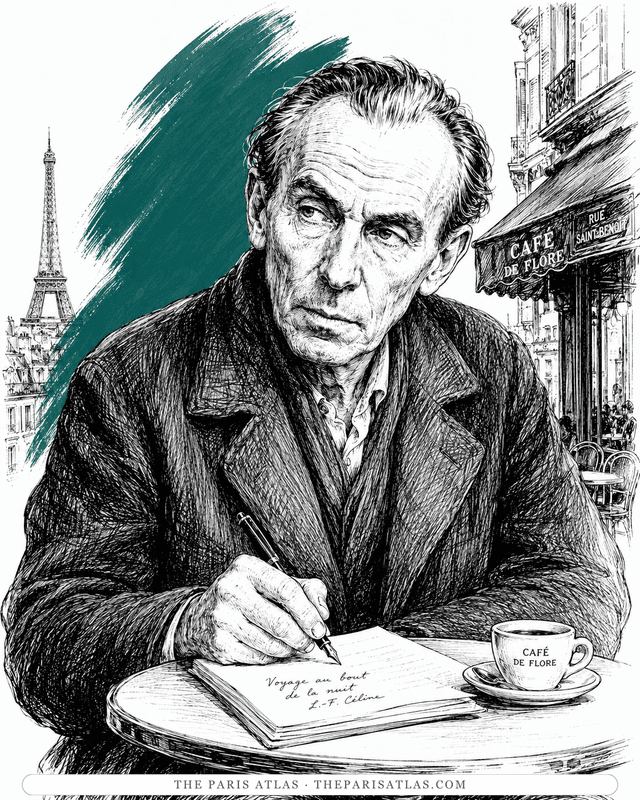
The doctor of the Paris slums who wrote the century's blackest, funniest novel — and changed the sound of French prose.
View author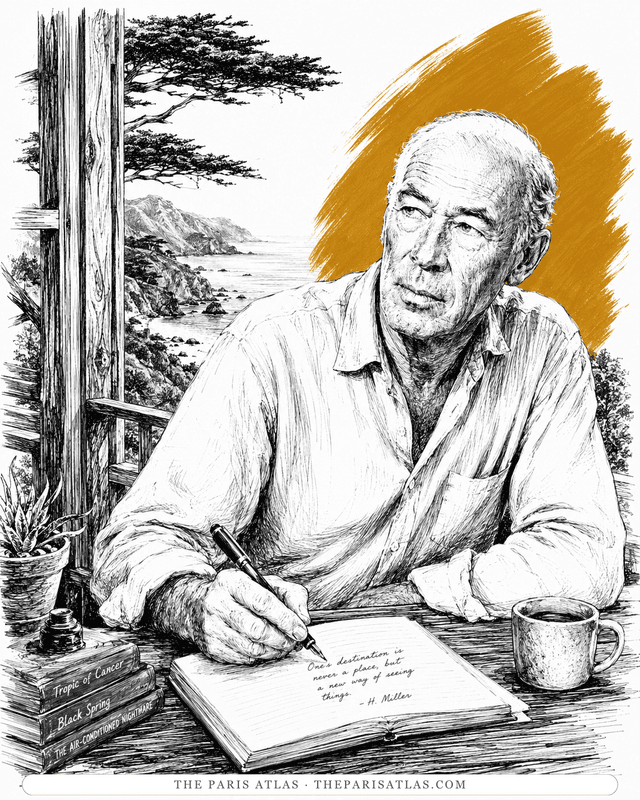
The Brooklyn dropout who arrived in Paris broke at thirty-eight and wrote the exuberant, banned books that ended American censorship.
View author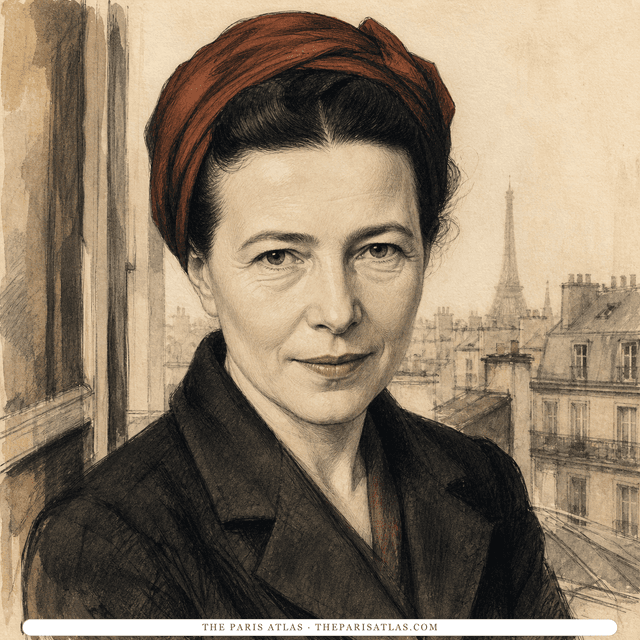
French writer and philosopher whose novels, memoirs, and social analysis examined freedom, gender, responsibility, aging, and the material conditions that shape a life.
View authorThe sources below include the primary text, editions, scholarship, archival materials, and other records that informed this page. They document Los Angeles–Andernach, its publication, and its place in literary history.


The primary text represented by this page, used for descriptions of the work’s contents and for any quoted passages shown here.
A specialist-forum reader quotes a March 1977 letter to Uncle Heinrich about Linda Lee, German origins and a hoped-for return. The passage was not collated with the original letter or Ariel edition.
A local Andernach account reproduces one sentence from Bukowski’s letter to Uncle Heinrich; the date and full letter are not supplied or independently checked.
A detailed edition description identifies original letters reproduced as facsimiles opposite German translations and dates the later correspondence; used for the printed form only.

The German National Library record: title, editor, translator, publisher, place, year, page count, the two languages, and the tenth-anniversary occasion.
The Andernach birth and the family's move to Los Angeles.
The 1978 European trip and the return to Andernach.
The German origins and their place in the biography.
The primary text is the baseline reference for every book page. Additional references document publication history, interpretation, and historical context where that evidence is available.
 Explore more resources