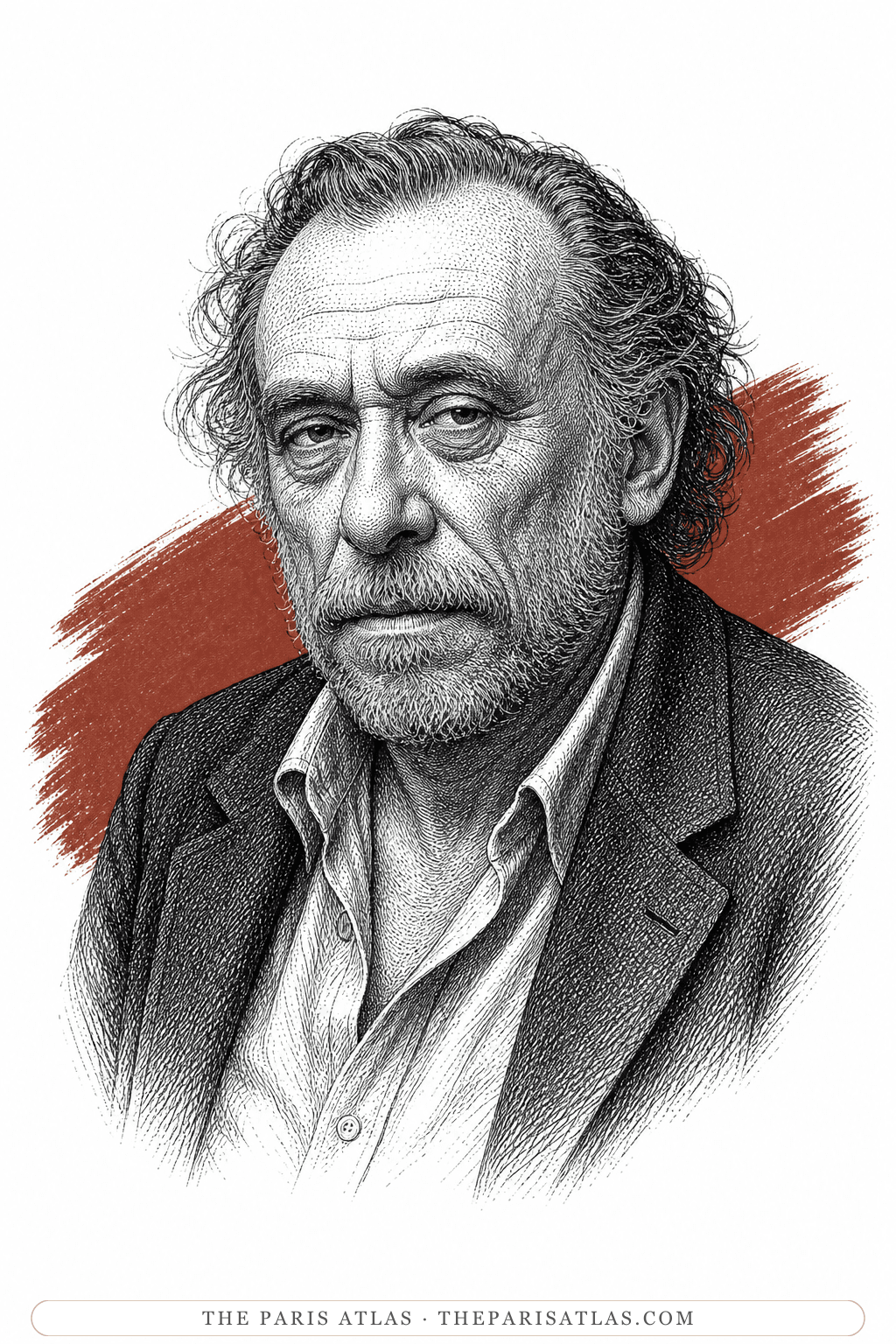

Portions from a Wine-Stained Notebook
The first of Calonne's City Lights recovery volumes, from 2008.
Read our take
An illustrated story Bukowski wrote in 1947 and never published, followed by the newspaper column and the work he sold to men's magazines in the 1980s.
The Bell Tolls for No One, published by City Lights in 2015, is the fourth collection of Charles Bukowski's uncollected prose edited by the scholar David Stephen Calonne. It runs to 305 pages and is arranged to cross his whole working life: it opens with an illustrated story from 1947 that had never been printed, moves through installments of Notes of a Dirty Old Man, the column he wrote for underground newspapers, and ends with the hard-boiled pieces he wrote for glossy adult magazines in the 1980s. Bukowski was twenty-six or twenty-seven when he wrote the first piece and in his sixties when he wrote the last.
Calonne had already edited three City Lights volumes of work that had never been collected: Portions from a Wine-Stained Notebook in 2008, Absence of the Hero in 2010, and More Notes of a Dirty Old Man in 2011. This is the fourth. By 2015 the easy recoveries were gone, and what remained was in places that took real searching — a manuscript nobody had printed, magazine issues held in few libraries.
The order of the contents lets a reader compare the two ends directly. The unpublished 1947 story and the magazine work of the 1980s are separated by nearly forty years and by the difference between writing for nothing and being paid well, and the manner of the writing changes far less than either of those would suggest.
In A Kind, Understanding Face, the lawn becomes a measure the neighbors can read more readily than Ralph himself. Once it grows, their talk makes him respectable again: work, upbringing and a tidy yard seem to explain him. His death exposes how little those assurances disclosed. The story’s final return to the neglected lawn is especially bleak because attention returns to the property while its inhabitant remains a mystery. Repeated reports of what was supposedly understood never give readers secure access to his thoughts.
The unfinished waxing starts as a small joke that changes meaning as the column continues. Mick’s elaborate preparations keep replacing the work itself, yet the narrator remembers him tending an injured face with unexpected gentleness. That care makes the failed bargain a poor measure of the friendship. When Mick dies, the earlier comic details become things the narrator can no longer recover by visiting him. The column ends by doubting what art is worth, even as its own storytelling keeps this awkward, exasperating companion present.
Written before almost anything else that survives, illustrated by Bukowski, and printed here for the first time.
The unpublished apprentice piece, the underground column, and the paid magazine work of the 1980s, in that order.
The movement between underground columns and later magazine stories makes changes of audience part of the collection’s interest.
1947
Bukowski writes the illustrated story that opens the book; it goes unpublished for sixty-eight years.
1967
Notes of a Dirty Old Man begins in the underground paper Open City.
2015
City Lights publishes the volume on 28 July, edited by David Stephen Calonne.

The first of Calonne's City Lights recovery volumes, from 2008.
Read our take

The third, from 2011, gathering further installments of the column.
Read our take
The 1969 book that first selected from the column this volume returns to.
Read our takeA collection of Charles Bukowski's uncollected prose published by City Lights in 2015 and edited by David Stephen Calonne. It gathers work from 1947 through the 1980s across 305 pages.
An illustrated story Bukowski wrote in his mid-twenties that had never been printed. It opens the book.
It is the fourth and last of them. Calonne edited Portions from a Wine-Stained Notebook in 2008, Absence of the Hero in 2010 and More Notes of a Dirty Old Man in 2011 before this one.
In glossy adult magazines in the 1980s, which paid Bukowski for prose after he had become well known.
Not here. Post Office or Ham on Rye first, then the earlier City Lights collections. This book gathers what was left over after those, and it helps to already know the writing it is filling in around.
Explore authors with a similar voice, perspective, and influence.
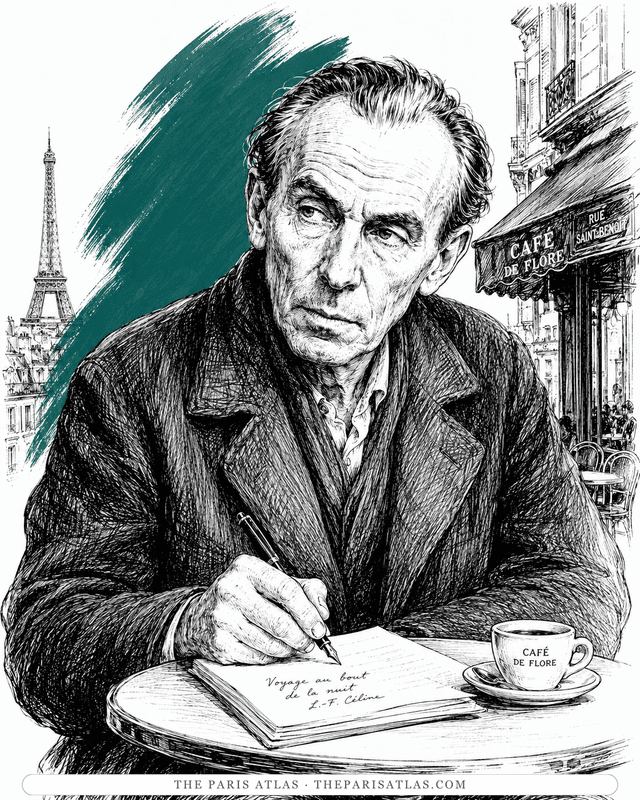
The doctor of the Paris slums who wrote the century's blackest, funniest novel — and changed the sound of French prose.
View author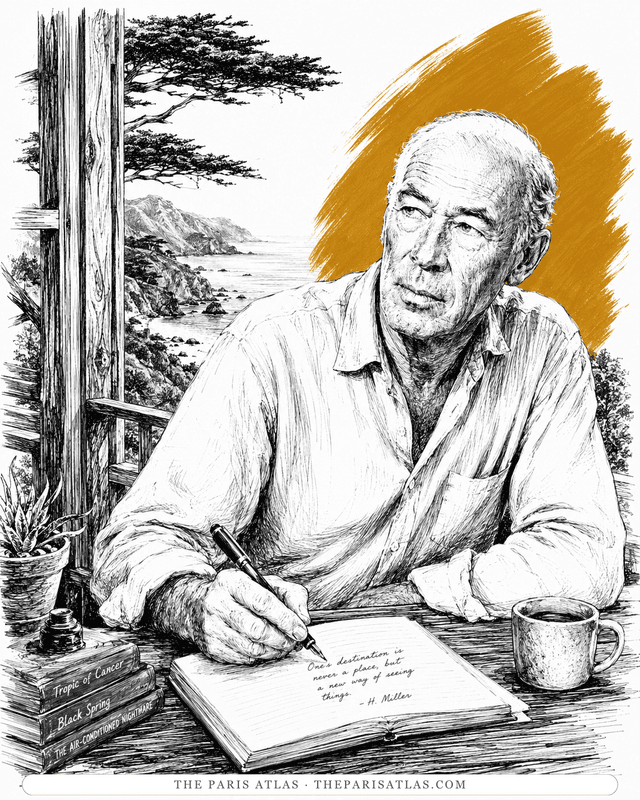
The Brooklyn dropout who arrived in Paris broke at thirty-eight and wrote the exuberant, banned books that ended American censorship.
View author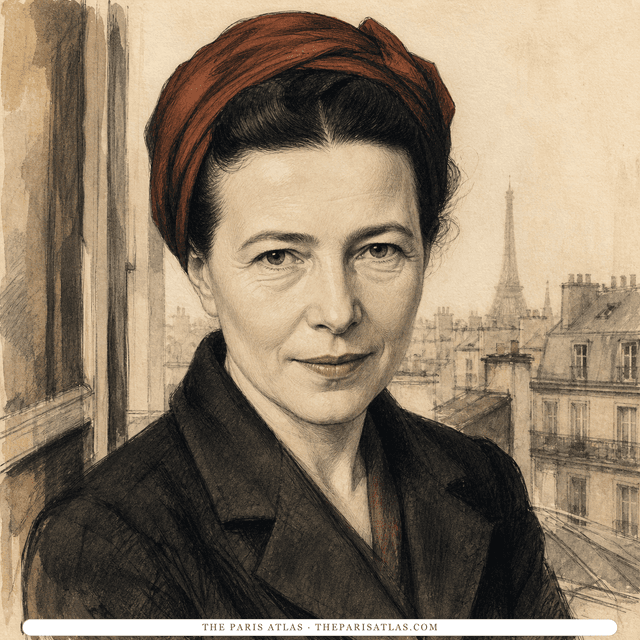
French writer and philosopher whose novels, memoirs, and social analysis examined freedom, gender, responsibility, aging, and the material conditions that shape a life.
View authorThe sources below include the primary text, editions, scholarship, archival materials, and other records that informed this page. They document The Bell Tolls for No One, its publication, and its place in literary history.


Edition record: publisher, publication date, page count and ISBN.

The publisher's description of the contents and the span the book covers.
The editor's own critical biography, and the magazine career the volume recovers.
Publication chronology of the uncollected-prose volumes.
Publisher-posted primary excerpt for the two illustrated-scene readings.
The primary text is the baseline reference for every book page. Additional references document publication history, interpretation, and historical context where that evidence is available.
 Explore more resources