


Notes of a Dirty Old Man
The underground newspaper column that invented the public Bukowski — autobiography, fiction and provocation with no editor in the way.
- 1969
About Charles Bukowski
The story, briefly
Spoiler-freeNotes of a Dirty Old Man, first published by Essex House in 1969 and kept in print by City Lights, collects the columns Charles Bukowski wrote for the Los Angeles underground newspaper Open City beginning in 1967. The column gave him a weekly deadline and no editorial supervision, and he used the freedom to mix autobiography, fiction, drunken anecdote, satire, sex and deliberately unreliable storytelling in whatever proportions the week suggested. It is where the public 'dirty old man' persona was invented — the character Bukowski found he could sell, whose cost was that the character was himself.
The story, in more detail
The pieces run short and hit fast: racetrack economics, barroom philosophy, sexual misadventure, literary opinion delivered as insult, and stretches of plain memoir that arrive without warning between provocations. When Open City folded, the column moved on — including to the Los Angeles Free Press — but this collection preserves its first and defining run.
Themes and analysis
Visitors after dark
The account of readers arriving at the door makes publication a social encounter rather than a solitary achievement. The narrator’s voice has invited recognition, but the resulting attention exceeds what he wants. Conversation and shared drinks sit beside a distant reader’s money and advice about his habits: different readers imagine different relationships with the person behind the column. His aside about having too many visitors qualifies the convivial scene. Writing creates company while making the boundary between a public persona and a private life harder to maintain.
The uninvited doctor
The former psychiatrist offers a different response to the same writing: he presents himself as someone who can help its author. The narrator’s abrupt dismissal ends the exchange before the visitor can define that help. Set beside the drinking visitors, the refusal distinguishes chosen companionship from an unsolicited intervention. It also preserves the narrator’s control of the story, since the visitor gets one speech and no reply. The episode stages a struggle over who may interpret the writer; it does not independently establish either person’s motives or condition.
Why we recommend it
The persona's birth certificate
Everything the public Bukowski became was prototyped in these columns, in public, week by week.
Underground press history
The collection doubles as a record of the late-1960s Los Angeles underground papers and the freedom they briefly offered.
A voice whose claims need questioning
The mixture of fiction and autobiography makes the narrator’s self-presentation part of the reading, not a guarantee that every anecdote happened.
What this book explores
Timeline
1967
The column begins in the underground newspaper Open City while Bukowski is still a postal clerk.
1969
Essex House publishes the collection; Open City folds and the column moves on, including to the Los Angeles Free Press.
1973
City Lights takes the book over and keeps it in print.
Book editions
Paperback
- Paperback
- Essex House
- 1969

- Paperback
- City Lights Books
- 1973
- 9780872860742
Reader reviews
Readers may also like


Notes of a Dirty Old Man: frequently asked questions
What is Notes of a Dirty Old Man?
A collection of the weekly columns Charles Bukowski wrote for the Los Angeles underground newspaper Open City from 1967, first published as a book by Essex House in 1969 — autobiography, fiction, satire and provocation mixed without editorial supervision.
Is Notes of a Dirty Old Man fiction or memoir?
Both, deliberately unlabeled. Plain memoir sits between invented episodes and exaggerated anecdote, and the column never tells the reader which is which.
Where did the 'dirty old man' persona come from?
From this column's title and its weekly performances. The persona sold books for the rest of Bukowski's life; the collections and biographies since have spent decades separating it from the disciplined writer underneath.
When did the column run?
It began in Open City in 1967 and moved to other papers, including the Los Angeles Free Press, after Open City folded in 1969 — the year the columns became this book.
Should this be my first Bukowski book?
No — start with the novel Post Office. The columns reward readers who already know the life they keep referring to.
Who published Notes of a Dirty Old Man first?
Essex House, a Los Angeles erotica imprint, in 1969 — four years before the City Lights edition most readers know. Essex House existed for barely two years.
How big was the first printing?
28,000 copies, with a $1,000 advance. Nothing Bukowski had published before came close: his 1960 debut was 200 copies.
If you like Charles Bukowski
Explore authors with a similar voice, perspective, and influence.
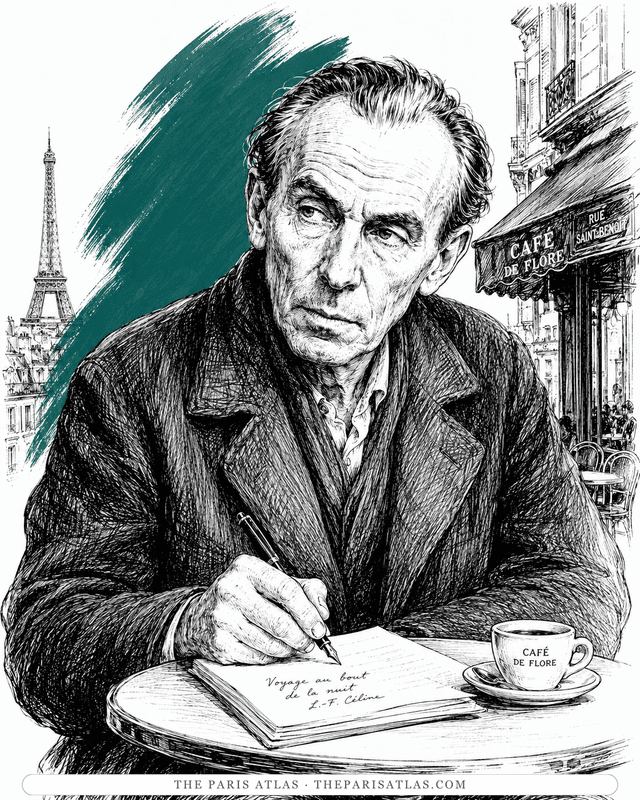
Louis-Ferdinand Céline
The doctor of the Paris slums who wrote the century's blackest, funniest novel — and changed the sound of French prose.
View author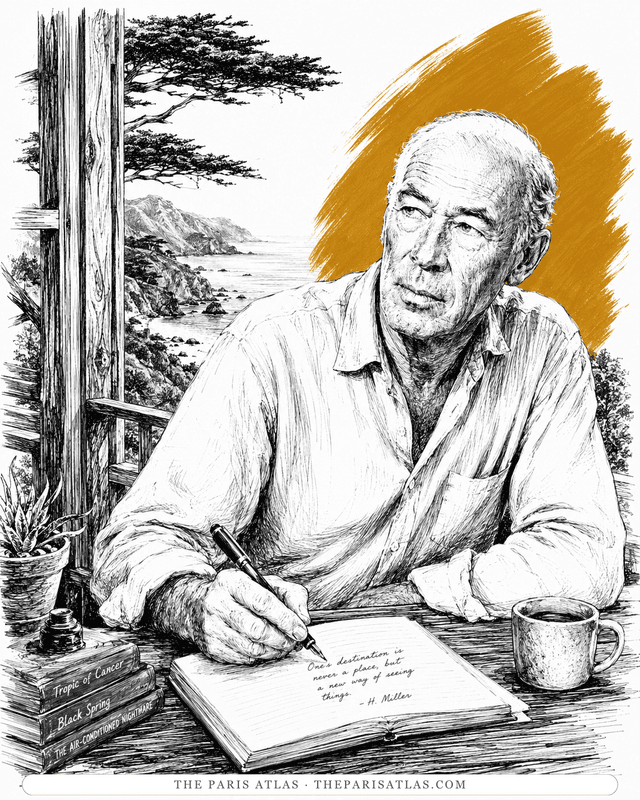
Henry Miller
The Brooklyn dropout who arrived in Paris broke at thirty-eight and wrote the exuberant, banned books that ended American censorship.
View author
Simone de Beauvoir
French writer and philosopher whose novels, memoirs, and social analysis examined freedom, gender, responsibility, aging, and the material conditions that shape a life.
View author
References
References
The sources below include the primary text, editions, scholarship, archival materials, and other records that informed this page. They document Notes of a Dirty Old Man, its publication, and its place in literary history.


1Notes of a Dirty Old Man
NovelCharles Bukowski, 1969Used forThe primary text represented by this page, used for descriptions of the work’s contents and for any quoted passages shown here.
2Charles Bukowski (Poetry Foundation)
WebsiteUsed forBiographical and bibliographic backbone: the career arc, the Black Sparrow relationship, and the book's place in it.
3Charles Bukowski timeline (bukowski.net)
WebsiteUsed forPublication dates, publishers, and chronology checked against the bukowski.net timeline.
4Charles Bukowski: books and chapbooks (Verdant Press checklist)
WebsiteUsed forBibliographic details cross-checked against the Verdant Press checklist.

5Notes of a Dirty Old Man — edition record
Official recordOpen Library, Internet ArchiveUsed forOfficial record used to verify names, dates, institutional details, or other factual information on this page.
6Notes of a Dirty Old Man — publisher’s quoted passage about readers
EssaysCity Lights Publishers (distributed by Perlego), 2013Used forPublished analysis and historical context used in preparing the Notes of a Dirty Old Man page.
i
Why these sources are here
The primary text is the baseline reference for every book page. Additional references document publication history, interpretation, and historical context where that evidence is available.
 Explore more resources