


Erections, Ejaculations, Exhibitions and General Tales of Ordinary Madness
The first big Bukowski story collection — published by Ferlinghetti's City Lights, dedicated to Linda King, and later split into two famous volumes.
- 1972
About Charles Bukowski
The story, briefly
Spoiler-freeErections, Ejaculations, Exhibitions and General Tales of Ordinary Madness, published by City Lights in 1972, was the first major collection of Charles Bukowski's short stories — the wild prose he had been pouring into underground newspapers and magazines, gathered into one thick paperback by Lawrence Ferlinghetti's San Francisco house. Ferlinghetti, the poet and City Lights founder, was among the first publishers to treat Bukowski seriously as a story writer, and the book carries a dedication to Linda King, the poet and sculptor Bukowski was involved with in those years. In 1983 City Lights divided the collection into two volumes that both remain in print — Tales of Ordinary Madness and The Most Beautiful Woman in Town — which is how most readers have met these stories since.
The story, in more detail
The collection is the prose counterpart of the Notes of a Dirty Old Man column: stories written fast for the underground press, ranging from autobiography barely fictionalized to flat-out invention, with the fictional alter ego Henry Chinaski moving through many of them. Its title announced the register and dared bookstores to stock it. The 1983 split preserved the contents while retiring the omnibus, so the 1972 paperback has become the collectible form of stories that never left print — the rare case of a book that is simultaneously superseded and the original.
Themes and analysis
At the street corner
Mariana Rissi Azevedo’s account of “25 Bums in Rags” places the street-corner gathering between Hank’s gambling loss and a badly paid newspaper-distribution job. His resistance to employment does not remove the need for money; it leaves him exposed to work he finds both exhausting and embarrassing. That embarrassment is sharper because he must deliver in his own neighborhood, where he can be recognized. Read alongside the passage Azevedo quotes about his reliance on luck, the episode unsettles his self-image as someone outside ordinary obligations. Refusing the worker’s identity does not produce economic independence.
The cellophane wrapper
The cigar passage quoted by Azevedo makes that dependence intimate. Hank reclines while Kathy brings his purchases, pours his drink and prepares the cigar. The small act of peeling its wrapper becomes part of his affectionate appraisal of her, but the attention remains organized around his comfort. Azevedo reads this imbalance as a limit of the portrait: Kathy appears chiefly through what she provides, rather than through an independently developed inner life. The tenderness in Hank’s voice therefore need not be dismissed to notice what it leaves out. His gratitude reveals his needs more fully than hers.
Why we recommend it
The stories, at full scale
The underground-newspaper prose in one volume — the unfiltered version of the world the novels order into narrative.
A Beat-house Bukowski
The one major Bukowski book from City Lights: the meeting point of the underground press and the Beat publishing tradition.
The original arrangement of the stories
Reading the omnibus shows how the material appeared before it was divided into two later collections.
What this book explores
Timeline
1967–1972
The stories appear in underground newspapers and magazines alongside the Notes of a Dirty Old Man column.
1972
City Lights publishes the omnibus collection.
1983
City Lights divides it into Tales of Ordinary Madness and The Most Beautiful Woman in Town.
Book editions

- Paperback
- City Lights
- 1972
- 9780872860612
Reader reviews
Readers may also like

South of No North
The Black Sparrow story collection of the following year — the quieter selection from the same world.
Read our take
Notes of a Dirty Old Man
The underground-press column whose prose energy these stories share.
Read our take
Erections, Ejaculations, Exhibitions and General Tales of Ordinary Madness: frequently asked questions
What is Erections, Ejaculations, Exhibitions and General Tales of Ordinary Madness?
The first major collection of Charles Bukowski's short stories, published by City Lights in 1972 — the underground-newspaper prose of the late 1960s and early 1970s gathered into one paperback.
Why is it hard to find under that title?
In 1983 City Lights divided it into two volumes, Tales of Ordinary Madness and The Most Beautiful Woman in Town, both still in print. The original omnibus was retired and became a collector's item.
Who published it, and why does that matter?
Lawrence Ferlinghetti's City Lights, the San Francisco house of the Beats. Ferlinghetti was among the first to treat Bukowski's stories as a major body of work, at a time when Black Sparrow was chiefly publishing his poetry.
Who is the book dedicated to?
Linda King, the poet and sculptor with whom Bukowski had a famously stormy relationship in the early 1970s.
Is Henry Chinaski in these stories?
In many of them. Chinaski is a fictional alter ego of the author, and the stories move between his voice, near-autobiography, and outright invention.
Where were these stories published before the book?
In underground newspapers including the Berkeley Barb and Open City, in men's magazines such as Adam, and in small literary reviews. The 1972 book gathered them for the first time.
If you like Charles Bukowski
Explore authors with a similar voice, perspective, and influence.
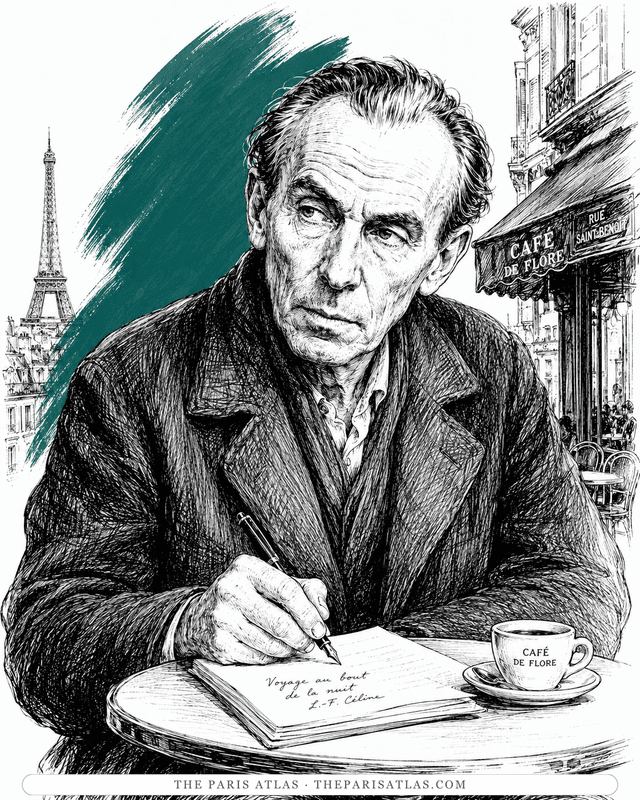
Louis-Ferdinand Céline
The doctor of the Paris slums who wrote the century's blackest, funniest novel — and changed the sound of French prose.
View author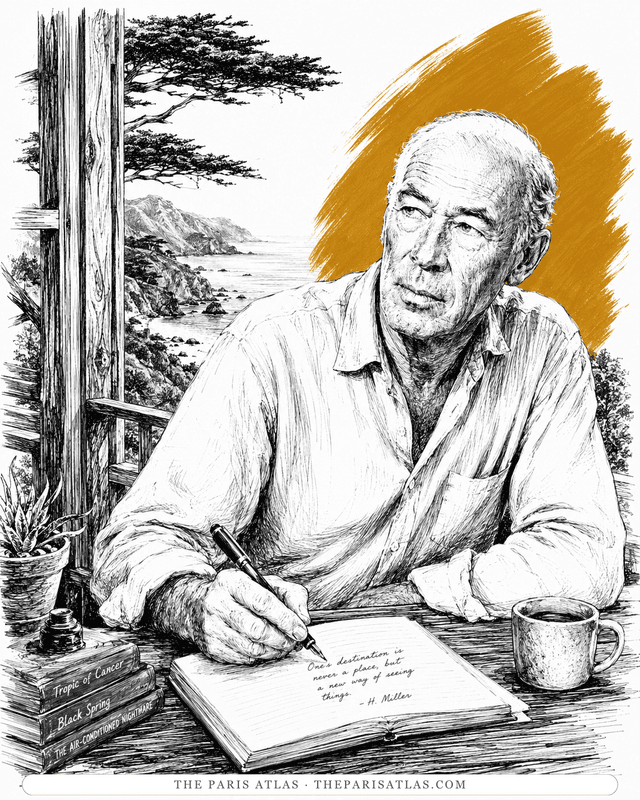
Henry Miller
The Brooklyn dropout who arrived in Paris broke at thirty-eight and wrote the exuberant, banned books that ended American censorship.
View author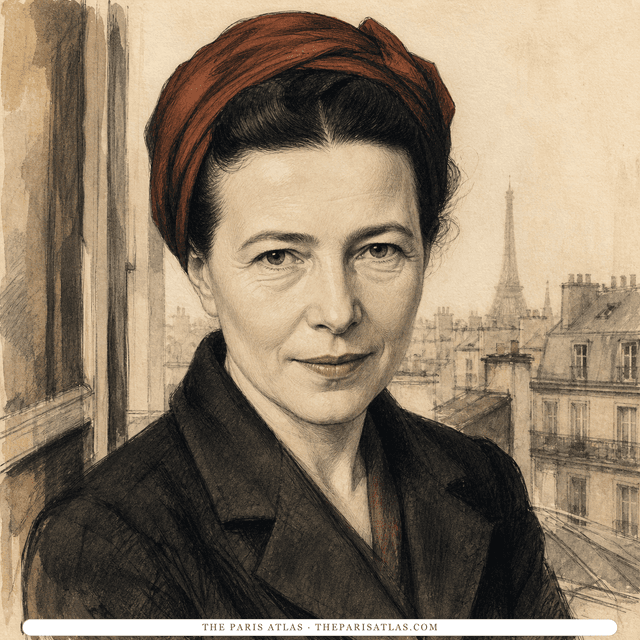
Simone de Beauvoir
French writer and philosopher whose novels, memoirs, and social analysis examined freedom, gender, responsibility, aging, and the material conditions that shape a life.
View author
References
References
The sources below include the primary text, editions, scholarship, archival materials, and other records that informed this page. They document Erections, Ejaculations, Exhibitions and General Tales of Ordinary Madness, its publication, and its place in literary history.

1Erections, Ejaculations, Exhibitions and General Tales of Ordinary Madness
NovelCharles Bukowski, 1972Used forThe primary text represented by this page, used for descriptions of the work’s contents and for any quoted passages shown here.
2Charles Bukowski
BiographyReaktion Books, 2012Used forThe City Lights relationship and the underground-press years the stories come from.
3Erections, Ejaculations, Exhibitions, and General Tales of Ordinary Madness
WebsiteWikipediaUsed forPublication history, the Linda King dedication, and the 1983 two-volume split.
4Charles Bukowski timeline (bukowski.net)
WebsiteUsed forThe collection's place in the chronology and the underground-press years.
5Charles Bukowski: books and chapbooks (Verdant Press checklist)
WebsiteUsed forBibliographic details checked against the checklist.

6Women from the Point of View of the Bukowskian Narrator: The Representation of the Feminine Universe in Erections, Ejaculations, Exhibitions and General Tales of Ordinary Madness — MA thesis
NonfictionUniversidade Estadual Paulista (UNESP), 2015Used forSection 4.1, pages 96–99: critical discussion and quoted passages from 25 Bums in Rags, including the street corner and cigar passage. These relevant thesis pages were visually checked. The analysis explicitly attributes Azevedo's account; no full-story, first-edition, or independent biographical verification is claimed.
7Erections, Ejaculations and General Tales of Ordinary Madness — collection contents
WebsiteCharles Bukowski Poem and Story DatabaseUsed forSpecialist contents confirm 25 Bums in Rags begins on page 89 in the 1972 City Lights collection. Used for membership, not to verify every chronology entry in the database.
i
Why these sources are here
The primary text is the baseline reference for every book page. Additional references document publication history, interpretation, and historical context where that evidence is available.
 Explore more resources