

Love Is a Dog from Hell
The middle-period collection to go deeper into after the survey.
Read our take
The one-volume door into the poetry: four decades selected by John Martin, the publisher who paid Bukowski to quit the post office.
The Pleasures of the Damned, published by Ecco in 2007, is the standard one-volume selection of Charles Bukowski's poetry, spanning 1951 to 1993 and chosen by John Martin — the Black Sparrow Press founder whose hundred-dollar-a-month guarantee freed Bukowski from the post office in 1970. It runs from the apprentice decades through the desire-driven middle collections to the elegiac late poems, and for readers who want one book of the poetry rather than a shelf, it is the book. The selection carries the best-known pieces alongside Martin's argument, made in the choosing, that his author was a disciplined body of work and not a barroom act.
The selection's arc is the career: the early poems written in furnished rooms while little magazines said no; the breakthrough middle work of the 1970s, where the anecdote-driven line found its form; and the late poems of San Pedro, where mortality replaced desire as the organizing subject. Read front to back, it makes the case for Bukowski as a poet first — the novels the side project, the poems the life's work.
“The Burning of the Dream” remembers a library that shelters both a body and an ambition. Borrowed books offer an education while stamps and paper make submitting stories a practical struggle, and rejection exposes the speaker’s early overconfidence. His lists of authors are not a settled canon: he later admits that circumstances shape his judgments. The remembered library therefore holds an education in taste as well as a place to stay. Returning to news of the fire, the poem mourns the conditions that made becoming a writer imaginable, not simply books he admired.
“The Shoelace” makes a small failure frightening by placing it inside a continuing accumulation. Bills, faulty fixtures, bodily discomfort and insecure work interrupt one another in a list that denies the reader a clean pause. The snapped lace is not important in isolation; it arrives when there is already no time or patience left. Repeated conjunctions make the poem’s movement resemble another demand added to a day. Its final warning turns bending over a shoe into comic suspense. The extravagant claims about breakdown express the speaker’s pressure, not a literal rule about mental illness.
For 'which Bukowski poetry book should I buy', this is the standing recommendation: the range in a single spine, chosen by the man who published nearly all of it.
Martin's selection makes the case that the drunk persona hid a disciplined poet; reading it front to back, the case holds.
The broad selection lets readers trace changes in Bukowski’s voice and then choose which individual collections to explore.
1951–1993
The span of the poems selected — from the apprentice years to the final work.
2002
The Black Sparrow list moves to Ecco as John Martin retires.
2007
Ecco publishes Martin's one-volume selection.

The middle-period collection to go deeper into after the survey.
Read our take
The late collection the selection's final stretch is drawn from.
Read our take
The quieter mid-1980s collection between them.
Read our takeThe standard one-volume selection of Charles Bukowski's poetry, spanning 1951 to 1993, chosen by his lifelong publisher John Martin and published by Ecco in 2007, thirteen years after Bukowski's death.
For the poetry, yes — it is the usual single-volume recommendation. For the prose, start with the novel Post Office instead.
John Martin, the founder of Black Sparrow Press, who published Bukowski for the rest of his life after offering him $100 a month in 1969 to quit the post office and write.
The selection carries the widely shared pieces alongside four decades of less-circulated work; readers who arrived through a single famous poem will find its neighbors here.
Ecco published it in 2007. Bukowski had died in 1994; the selection is posthumous.
John Martin, who founded Black Sparrow Press around Bukowski in the 1960s and edited him for three decades. He worked from more than two thousand published poems.
550 pages and 271 poems — the largest single-volume selection of Bukowski's poetry.
Explore authors with a similar voice, perspective, and influence.
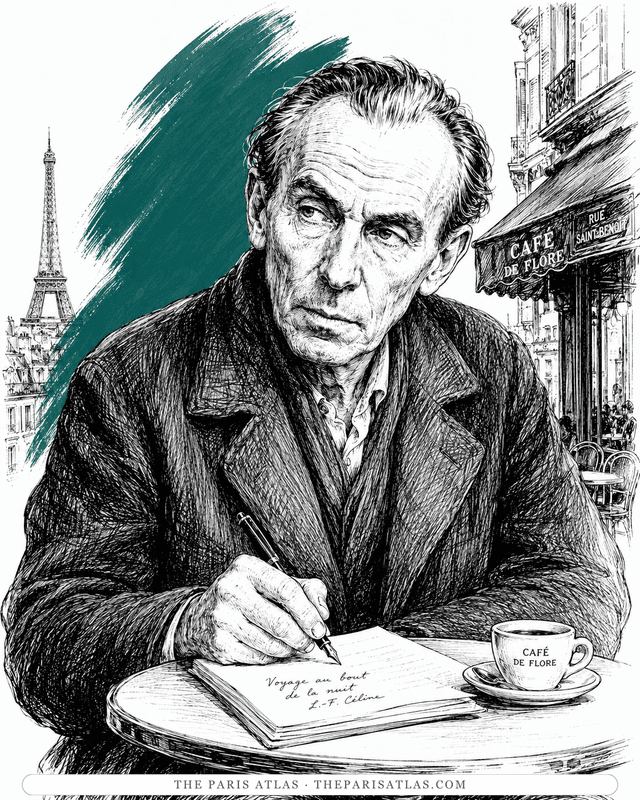
The doctor of the Paris slums who wrote the century's blackest, funniest novel — and changed the sound of French prose.
View author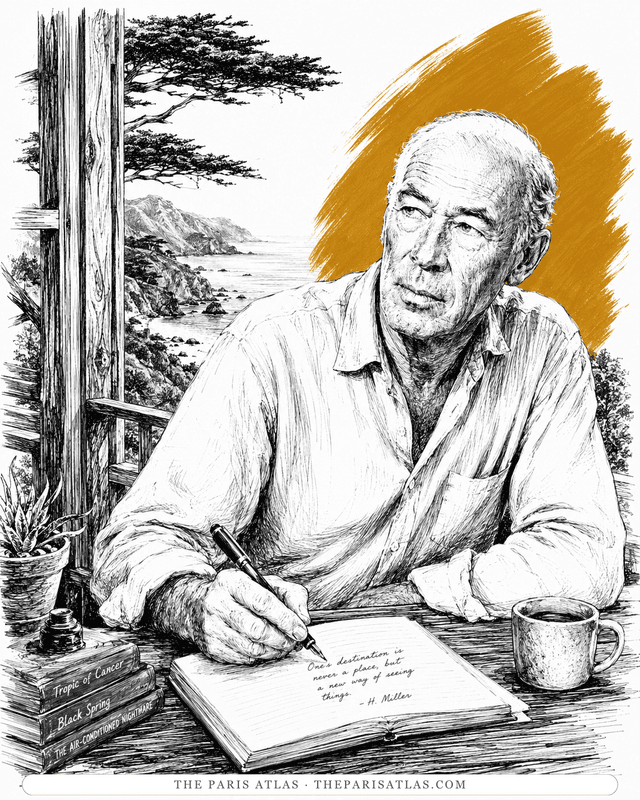
The Brooklyn dropout who arrived in Paris broke at thirty-eight and wrote the exuberant, banned books that ended American censorship.
View author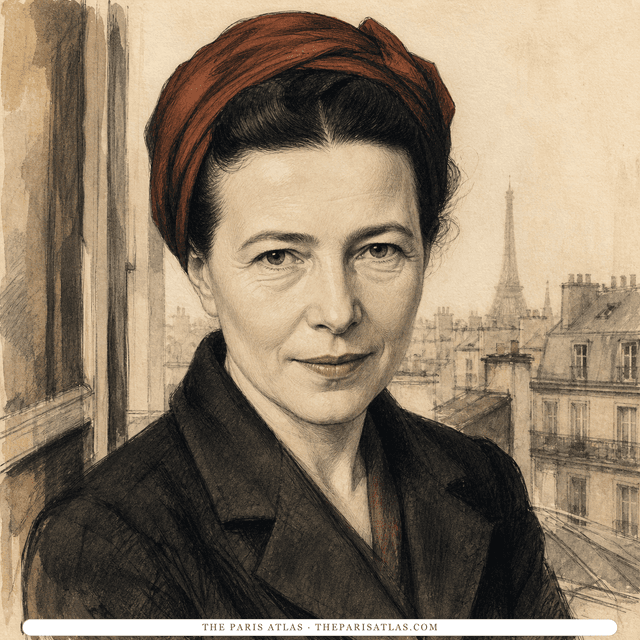
French writer and philosopher whose novels, memoirs, and social analysis examined freedom, gender, responsibility, aging, and the material conditions that shape a life.
View authorThe sources below include the primary text, editions, scholarship, archival materials, and other records that informed this page. They document The Pleasures of the Damned, its publication, and its place in literary history.


The primary text represented by this page, used for descriptions of the work’s contents and for any quoted passages shown here.
Biographical and bibliographic backbone: the career arc, the Black Sparrow relationship, and the book's place in it.
Publication dates, publishers, and chronology checked against the bukowski.net timeline.
Bibliographic details cross-checked against the Verdant Press checklist.

Official record used to verify names, dates, institutional details, or other factual information on this page.
English transcription of “The Burning of the Dream” in the library’s bilingual poetry post. Read as a poem, not independent evidence for the fire’s historical extent; no first-edition collation.
Complete online transcription of “The Shoelace.” Its language about breakdown is literary hyperbole, not clinical evidence.
Independent collection membership: “The Burning of the Dream,” p. 401, and “The Shoelace,” p. 232. Bibliographic evidence, not the source of the poem transcriptions.
The primary text is the baseline reference for every book page. Additional references document publication history, interpretation, and historical context where that evidence is available.
 Explore more resources