

Ham on Rye
The novel written inside this collection's window — the childhood these poems' survivor keeps measuring himself against.
Read our take
The poems of the early 1980s: success arrived, the past not gone, and a writer measuring one against the other.
War All the Time, published by Black Sparrow Press in 1984, collects Charles Bukowski's poems of 1981 to 1984 — the years of Ham on Rye, the settled San Pedro life with Linda Lee Beighle, and a scale of success nothing in the first fifty years of his life had prepared him for. The title states the collection's argument: that the fighting does not stop when the circumstances improve, it changes fronts. The poems measure the new comfort against the rooming houses and the post office, return again and again to the improbability of having survived into it, and keep the old subjects — the track, the typewriter, the bottle — running through the new life. It has stayed in print since publication.
The early 1980s were the years the life stabilized: the San Pedro house, the marriage to Linda Lee in 1985 just past this collection's window, the childhood finally faced in Ham on Rye in 1982. The poems carry that settling and distrust it at the same time — comfort experienced as an ambush by a man who had organized his writing around not having any. Ecco's current edition reissues the collection with a new descriptive subtitle on the cover; the book itself is the 1984 Black Sparrow collection, unchanged.
The first section of “Horsemeat” turns a short walk into a negotiation over companionship. The stranger keeps asking questions while the speaker answers briefly, increases his pace and finally uses the newsstands as an exit. Their interest in the same sport does not make conversation welcome. Yet the speaker’s contemptuous comparison tells us about his own hostility as well as his desire for privacy; it is not a neutral portrait of the stranger. When the man finds someone else to accompany, the scene closes on two incompatible ways of inhabiting the same public space.
In “Horsemeat II,” the carefully chosen empty restaurant cannot keep ordinary sociability away. The speaker moves his dinner to a distant booth when another customer sits beside him and chats with the waitress. His inventory of everything he carries, including himself, turns withdrawal into a comic physical performance. He also continues watching the customer and waitress after moving, so separation does not end his attention to them. The waitress’s question gives him an audience for the closing retort. His solitude emerges as something repeatedly staged and defended, not a condition the outside world simply grants him.
Few poets documented their own late arrival this closely — the improbability of comfort is the collection's running argument.
The poems from exactly the years the childhood novel was written — the two books light each other.
Memories of work and insecure housing remain active within poems written after Bukowski’s circumstances improved.
1981–1984
The poems are written in San Pedro, through the writing and publication of Ham on Rye.
1982
Ham on Rye is published in the middle of the collection's window.
1984
Black Sparrow Press publishes War All the Time.

The novel written inside this collection's window — the childhood these poems' survivor keeps measuring himself against.
Read our take
The collection before it, where the fame-and-comfort tension first appears.
Read our take
The next collection, deepening the same late-life register.
Read our take
The late masterpiece these poems are moving toward, where mortality takes over as the subject.
Read our takeCharles Bukowski's poems of 1981 to 1984 — success, the settled San Pedro life, and a past that would not stay past. The title is the argument: the fighting of the early life continues inside comfort, on different fronts.
Black Sparrow Press published it in 1984. Ecco keeps it in print; the current cover adds a descriptive subtitle, but the collection is the 1984 text.
The novel was written and published inside this collection's window, 1981 to 1984. Ham on Rye faces the childhood; these poems record the adult writing it, from inside a comfort he distrusted.
It is a strong second step. Love Is a Dog from Hell is the usual first collection; this one shows what the voice did when fame and stability arrived.
That the war does not end when circumstances improve. The poems keep finding the old fight — with landlords, with editors, with himself — continuing inside the new life.
It is more reflective. The subjects hold — the track, the typewriter, the drinking — but the poems spend more time arguing with themselves about success and age.
Explore authors with a similar voice, perspective, and influence.
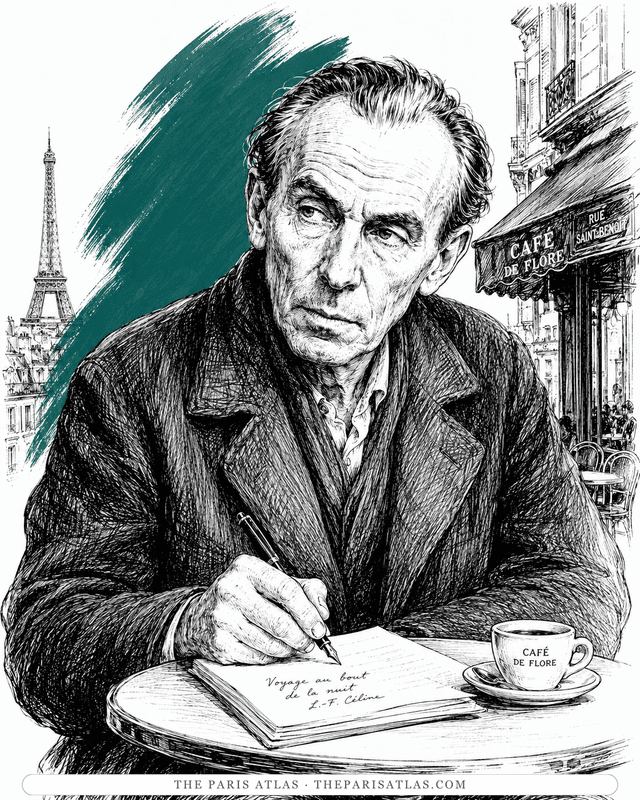
The doctor of the Paris slums who wrote the century's blackest, funniest novel — and changed the sound of French prose.
View author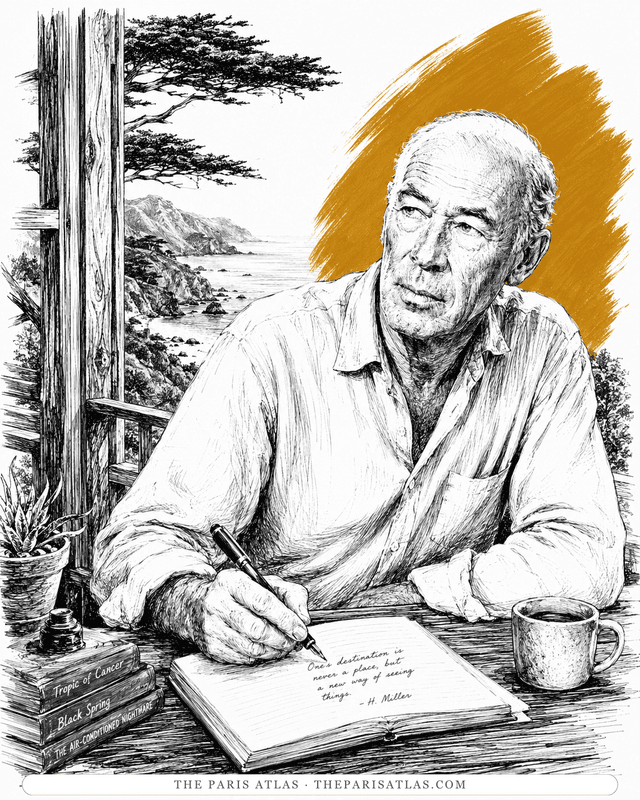
The Brooklyn dropout who arrived in Paris broke at thirty-eight and wrote the exuberant, banned books that ended American censorship.
View author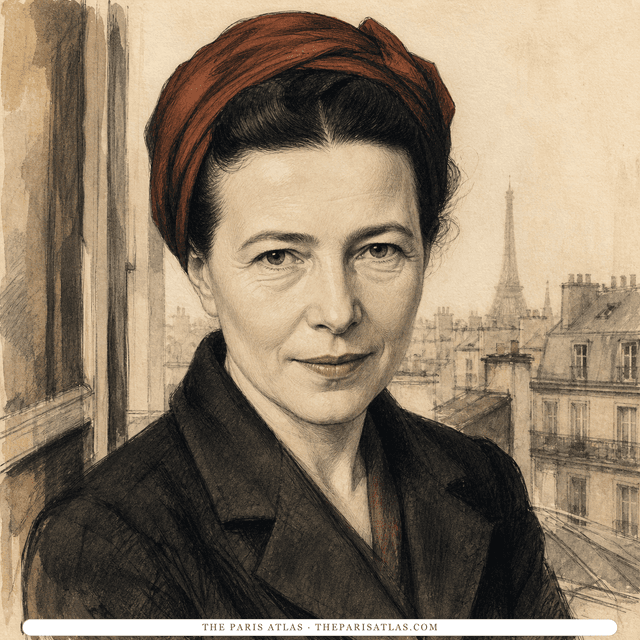
French writer and philosopher whose novels, memoirs, and social analysis examined freedom, gender, responsibility, aging, and the material conditions that shape a life.
View authorThe sources below include the primary text, editions, scholarship, archival materials, and other records that informed this page. They document War All the Time, its publication, and its place in literary history.


The primary text represented by this page, used for descriptions of the work’s contents and for any quoted passages shown here.

Publication year, publisher, and the collection's place in the chronology.
Bibliographic details checked against the checklist.
The San Pedro years and late success in the career arc.

Official record used to verify names, dates, institutional details, or other factual information on this page.
Public Ecco ebook preview containing complete sections I and II of Horsemeat. Section III is cut off and is not used in these readings; no whole-sequence or first-edition comparison is claimed.
The primary text is the baseline reference for every book page. Additional references document publication history, interpretation, and historical context where that evidence is available.
 Explore more resources