

South of No North
The first Black Sparrow story collection, a decade earlier — the other standard door into the short fiction.
Read our take
The late story collection: drinking, women, gambling and writing, compressed to the bone — the book that named a punk band.
Hot Water Music, published by Black Sparrow Press in 1983, is the second and last major collection of short stories Charles Bukowski assembled with Black Sparrow, a decade after South of No North. The stories are late Bukowski in prose: short, stripped, and fast, working the standing subjects — drinking, women, gambling, and writing itself — with the compression his poetry had arrived at in the same years. Published the year after Ham on Rye, it closes the run of his major story collections; the short prose after it appeared in posthumous gatherings. The collection has stayed in print since 1983, and its afterlife includes an unusual tribute: the Florida punk band Hot Water Music took its name from the book.
Where the 1972 City Lights omnibus is prose at full roar and South of No North is the buried life told patiently, Hot Water Music is the minimalist late style — stories pared the way the San Pedro-era poems are pared. Many run only a few pages. The book makes a natural pairing with the poetry collections around it, War All the Time especially: the same years, the same settled-but-unsettled life, the same economy.
The brief opening of “The Man Who Loved Elevators” begins with an ordinary interruption: a woman's voice delays Harry's journey before the doors close. Little explanation separates that everyday setting from the encounter to follow. Daniel Bigna reads the story's sexual aggression as desire detached from love, placing it within the collection's grotesque treatment of familiar social life. Seen through that account, the affectionate language of the title becomes troubling. The elevator promises movement, but its enclosed space also offers a setting for encounters without sustained intimacy.
In the opening of “The Death of the Father II,” the narrator's recent proximity to his father's house has meant passing it on the freeway, not visiting. Physical nearness measures estrangement rather than closeness. Bigna's account of the later scene extends that gap between relationship and possession: neighbors become interested in the dead man's belongings, and the quoted inventory records the house being emptied. Domestic objects produce a crowd where personal attachment has failed. The narrator's return to watering the garden gives this disturbance an unsettlingly ordinary frame.
With South of No North, one of the two standard entries to Bukowski's short fiction — this one from the late, compressed years.
The prose sibling of War All the Time: the same years and the same economy, in stories instead of lines.
The brief pieces let readers encounter different situations and voices without following a single long narrative.
1982
Ham on Rye is published; the late period is at its height.
1983
Black Sparrow Press publishes Hot Water Music — the last story collection Bukowski assembled himself.
2002
The Bukowski catalogue passes to Ecco, which keeps the book in print.

The first Black Sparrow story collection, a decade earlier — the other standard door into the short fiction.
Read our take
The poetry collection of the following year, from the same San Pedro desk and register.
Read our take

Short stories of drinking, women, gambling and writing — Charles Bukowski's standing subjects, told in the stripped late style. Black Sparrow Press published the collection in 1983.
South of No North (1973) is the buried-life stories told patiently; Hot Water Music is a decade later and faster — shorter stories, harder compression, the prose equivalent of the San Pedro poems.
Yes — the Florida band Hot Water Music took its name from this collection.
It is one of the two usual doors, with South of No North. Start here if you prefer the late minimalist voice; start there for the fuller 1960s-era stories.
Yes — continuously since 1983, currently from Ecco under the original Black Sparrow ISBN.
Thirty-six, including the paired 'The Death of the Father I' and 'II' — written the year after Ham on Rye had dealt with his father at novel length.
The stories are short, stripped and fast, with almost nothing between the event and the telling. That compression matches the poems Bukowski wrote in the same years.
Explore authors with a similar voice, perspective, and influence.
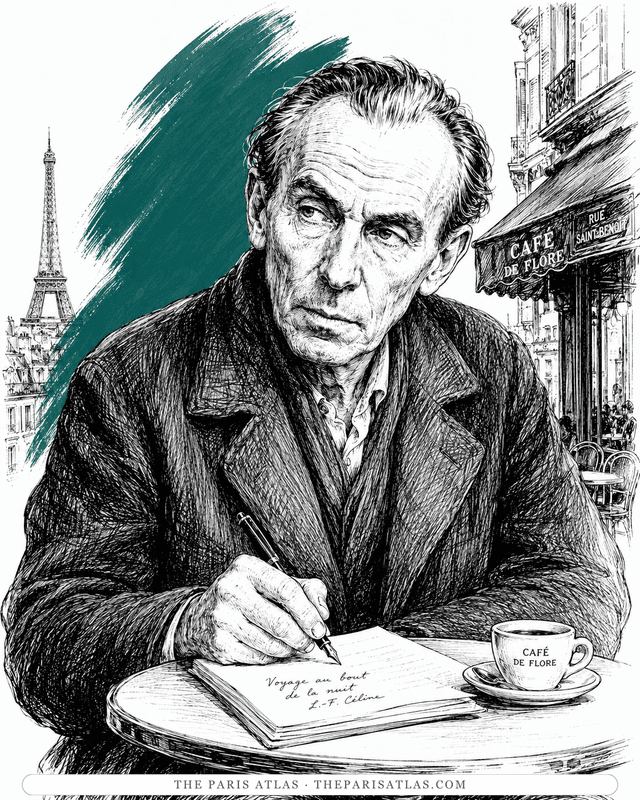
The doctor of the Paris slums who wrote the century's blackest, funniest novel — and changed the sound of French prose.
View author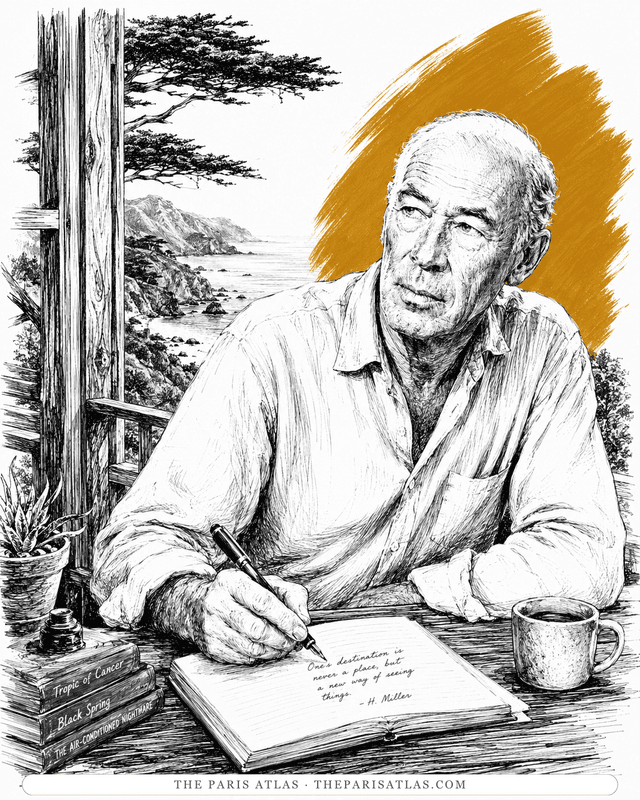
The Brooklyn dropout who arrived in Paris broke at thirty-eight and wrote the exuberant, banned books that ended American censorship.
View author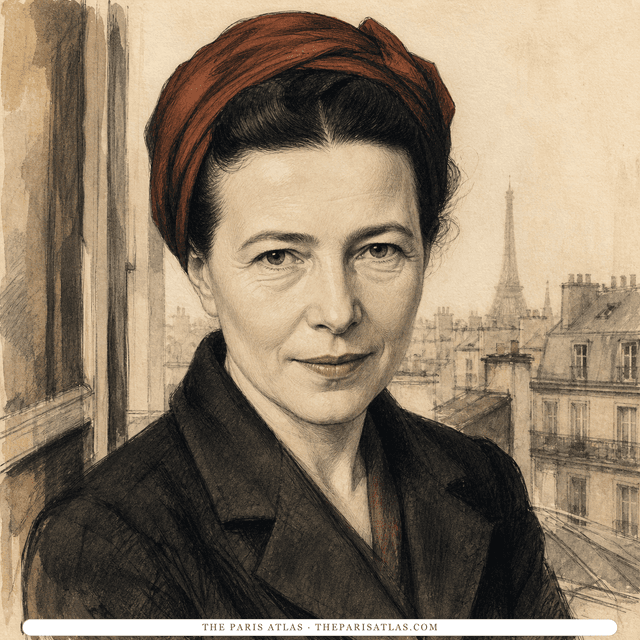
French writer and philosopher whose novels, memoirs, and social analysis examined freedom, gender, responsibility, aging, and the material conditions that shape a life.
View authorThe sources below include the primary text, editions, scholarship, archival materials, and other records that informed this page. They document Hot Water Music, its publication, and its place in literary history.


The primary text represented by this page, used for descriptions of the work’s contents and for any quoted passages shown here.
Chapter four, pp. 118 and 121: critical account and selected primary passages, checked against the university PDF; not complete stories.
Brief primary opening and collection membership; not the complete story.
Brief primary opening and collection membership; not the complete story.
Publication year and the collection's place in the late chronology.
Bibliographic details and edition ISBNs checked against the trade record.

Official record used to verify names, dates, institutional details, or other factual information on this page.
The primary text is the baseline reference for every book page. Additional references document publication history, interpretation, and historical context where that evidence is available.
 Explore more resources