

War All the Time
The Black Sparrow collection whose years the earliest of these poems share.
Read our take
A decade of portrait poems, issued as a numbered double number of the Wormwood Review — the little magazine that printed Bukowski for decades.
People Poems: 1982–1991 is a Charles Bukowski collection with an unusual form: it is a double issue of the Wormwood Review — numbers 122 and 123 of the Stockton, California little magazine — published in 1991 as a 96-page book in red paper wrappers, in an edition of 700 numbered copies, of which the first 70 were signed by Bukowski. The Wormwood Review had been publishing Bukowski steadily for decades, through every phase of the career, and the collection gathers a decade of his portrait poems: people watched, remembered and rendered, from 1982 to 1991. It stands at the edge of the lifetime bibliography — a magazine issue that is also a limited book, from the last years before The Last Night of the Earth Poems closed the run of lifetime collections.
The little magazines were where Bukowski's career began in the 1950s, and the Wormwood Review was the one that stayed. Issuing a decade of his people poems as a numbered double issue was a little magazine's version of a festschrift — the long relationship honored in the form the relationship had always taken. The book's hybrid status (magazine issue, numbered limited edition, trade-distributed with an ISBN) makes it a bridge between the collectible chapbook tradition of the 1960s and the ordinary bookstore Bukowski of the Black Sparrow years.
“My Friend, the Parking Lot Attendant” builds familiarity through repeated brief encounters rather than a continuous account of someone’s life. The attendant’s teasing challenges what the car and its passenger appear to say about success, while the speaker’s dry replies decline to defend his dignity. Their uneven exchanges make room for affection without a declaration of intimacy. Only when the attendant disappears from the routine does the speaker speculate about his future. That hopeful guess is not knowledge of where he went; it reveals how a recognizable presence can matter even when very little is known about him.
“Oh, Yes” initially seems to defend solitude, but its compressed argument shifts the pressure from company to time. Recognizing that being alone need not be the worst possibility offers little comfort if that recognition arrives after the chance to act on it. The ending makes delay, rather than solitude itself, the deepest fear. Read this way, the poem questions the usefulness of wisdom that comes too late without prescribing one ideal way to live. The empty bench gives that tension an imagined visual setting; the poem does not describe a park or a particular abandoned person.
Ten years of poems about people — the observational strand of late Bukowski, gathered in one place.
The form is the point: the magazine that carried him longest, issuing his people poems as a numbered book of its own.
The portrait poems give readers a way to examine whom Bukowski notices and how he turns an encounter or memory into a poem.
1982–1991
The span of the portrait poems the volume collects.
1991
The Wormwood Review issues the collection as numbers 122–123: 700 numbered copies, the first 70 signed.
1992
The Last Night of the Earth Poems, the final lifetime collection, follows.

The Black Sparrow collection whose years the earliest of these poems share.
Read our take
The 1986 collection from the middle of this book's decade.
Read our take
The final lifetime collection, published the year after.
Read our takeA Charles Bukowski collection published in 1991 as a double issue — numbers 122 and 123 — of the Wormwood Review, the Stockton, California little magazine. It gathers his portrait poems of 1982 to 1991 in a 96-page volume.
Both. It is formally a double number of the Wormwood Review, issued as a single bound volume in red wrappers with its own ISBN — a magazine issue in the shape of a book.
700 numbered copies, of which only the first 70 are signed by Bukowski.
The little magazine that published him longest — steadily, across four decades, from the years when little magazines were the only place his poems could appear.
At the very end of the lifetime poetry: 1991, the year before The Last Night of the Earth Poems, the final collection published while he lived.
Explore authors with a similar voice, perspective, and influence.
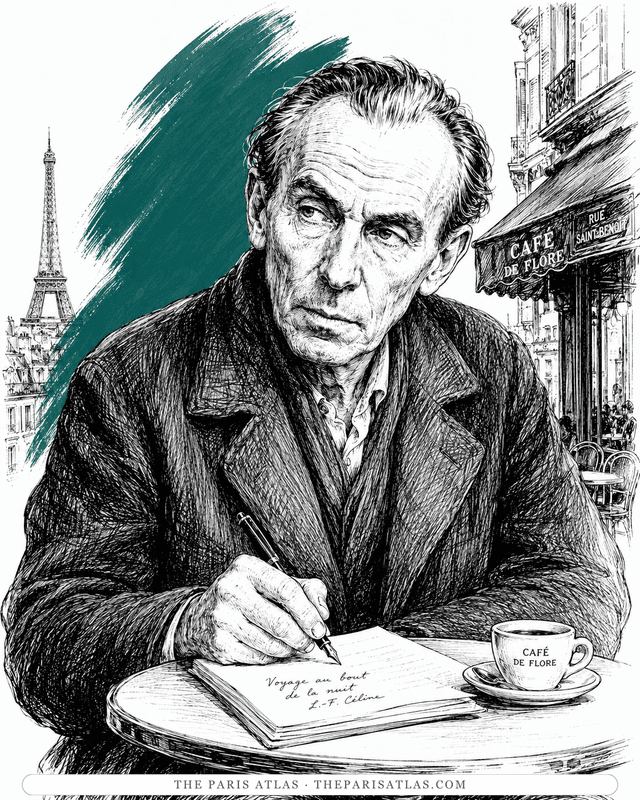
The doctor of the Paris slums who wrote the century's blackest, funniest novel — and changed the sound of French prose.
View author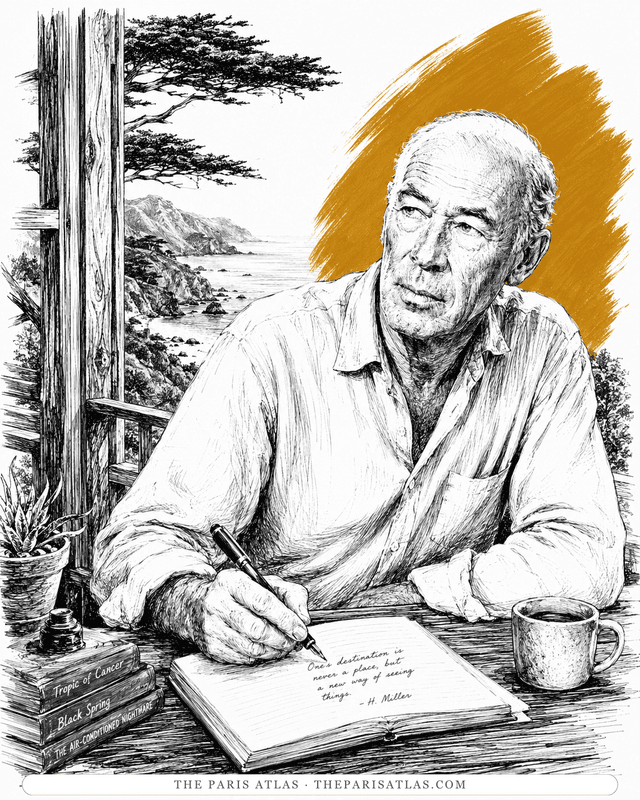
The Brooklyn dropout who arrived in Paris broke at thirty-eight and wrote the exuberant, banned books that ended American censorship.
View author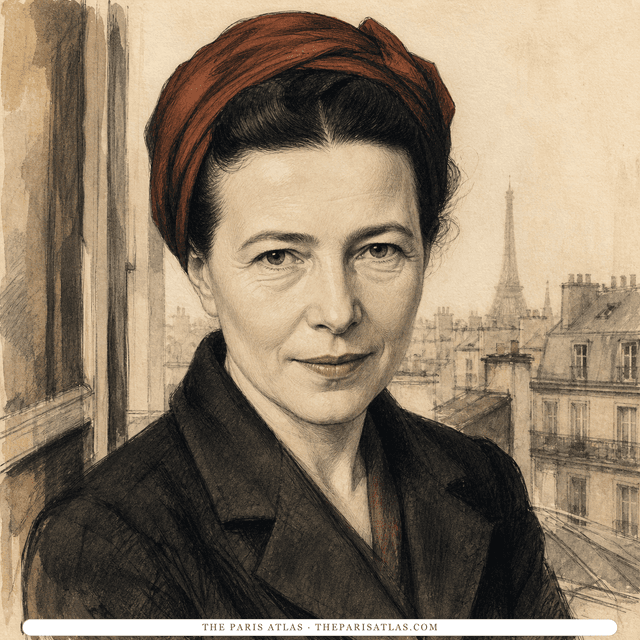
French writer and philosopher whose novels, memoirs, and social analysis examined freedom, gender, responsibility, aging, and the material conditions that shape a life.
View authorThe sources below include the primary text, editions, scholarship, archival materials, and other records that informed this page. They document People Poems, its publication, and its place in literary history.

The primary text represented by this page, used for descriptions of the work’s contents and for any quoted passages shown here.

The late career and the little-magazine relationships that produced the volume.
The Wormwood double-issue publication and its place in the late chronology.
Edition details — 700 numbered copies with the first 70 signed, red wrappers — checked against the trade record.

Official record used to verify names, dates, institutional details, or other factual information on this page.
Complete publicly displayed poem transcription. The reading uses the poem itself, not the hosting site’s accompanying generated analysis; original edition lineation is not established.
Complete publicly displayed poem transcription, used for the change from solitude to belated understanding. The illustrated bench is not a setting described in the poem.
Specialist contents list identifies My Friend, the Parking Lot Attendant on page 65 and Oh, Yes on page 96; used for collection membership, not independent composition-date verification.
The primary text is the baseline reference for every book page. Additional references document publication history, interpretation, and historical context where that evidence is available.
 Explore more resources