
Women
The previous chapter of the fame: the readings and the women before the movie people arrived.
Read our take
Bukowski watched Hollywood film his life, then did the most Bukowskian thing possible: he turned the experience into another novel.
Hollywood, published by Black Sparrow Press in 1989, is Charles Bukowski's comic novel about the making of Barfly, the 1987 film Barbet Schroeder directed from Bukowski's own screenplay. Henry Chinaski, Bukowski's fictional alter ego, is hired to write a movie about his early drinking years and then watches the machinery of film production — financing collapses, star egos, producers, endless meetings — grind toward an actual premiere. The industry's real figures appear under thin fictional names, and the novel doubles as a firsthand record of one of the strangest productions of the 1980s, written by its least impressed participant.
Chinaski, comfortable at last in his sixties, is talked into writing a screenplay about his younger self by a persistent French director — a fictionalized Barbet Schroeder, who in reality spent years keeping the Barfly project alive and once filmed himself threatening self-harm to force a studio's hand. The novel follows the production's whole absurd arc: money found and lost, actors attached and detached, and the premiere at which Chinaski watches his own life performed.
Around the film runs the late-Bukowski world: the harbor house, the wife, the wine, the racetrack, and the author's astonishment at respectability. The comedy is gentler than in the early books; the target is an industry too ridiculous to need exaggeration.
Henry Chinaski, now an established writer living quietly with his wife Sarah, is asked by a French director named Jon Pinchot to write a screenplay. He agrees, largely out of curiosity, and writes a film about his drinking years.
The novel follows what happens next: the financing that appears and vanishes, the producers, the agents, the actors, the endless meetings, and the slow discovery that a film is made by a hundred people who each want something different from it.
The film gets made and released. Chinaski watches it, is neither destroyed nor transformed by the experience, and goes home. The satire never tips into revenge.
At Marina del Rey, Chinaski turns a pleasant coastal view into an argument about belonging. He imagines the sailors untouched by ordinary work, then admits that he scarcely exists for them. The imbalance matters: his contempt cannot disturb their comfort. Even the unusually agreeable sand, water and breeze seem to him like privileges allocated to other people. Sarah's impatience with his alarm gives the scene a second perspective. His outsider stance may expose social distance, but it is also something he performs before entering the house.
After the meeting's prolonged talk, Sarah asks the practical question that its participants have not settled. Chinaski's brief refusal supplies the scene's punchline, but the preceding narration has already called this the first of many such gatherings. The reader therefore hears resistance from someone who will remain involved. His attraction to the hospitality also complicates the pose of complete refusal. By ending with private dialogue rather than an agreement, Bukowski makes entry into the film world feel hesitant and contradictory, not like a decisive conversion to a new career.
Success mellowed the voice without dulling it; the industry does the work of villainy on its own.
Barfly's making — one of the strangest of its decade — survives here in detail no biography matches, told from inside.
Chinaski’s distance from the production lets readers question what happens when a private history becomes an industry’s project.
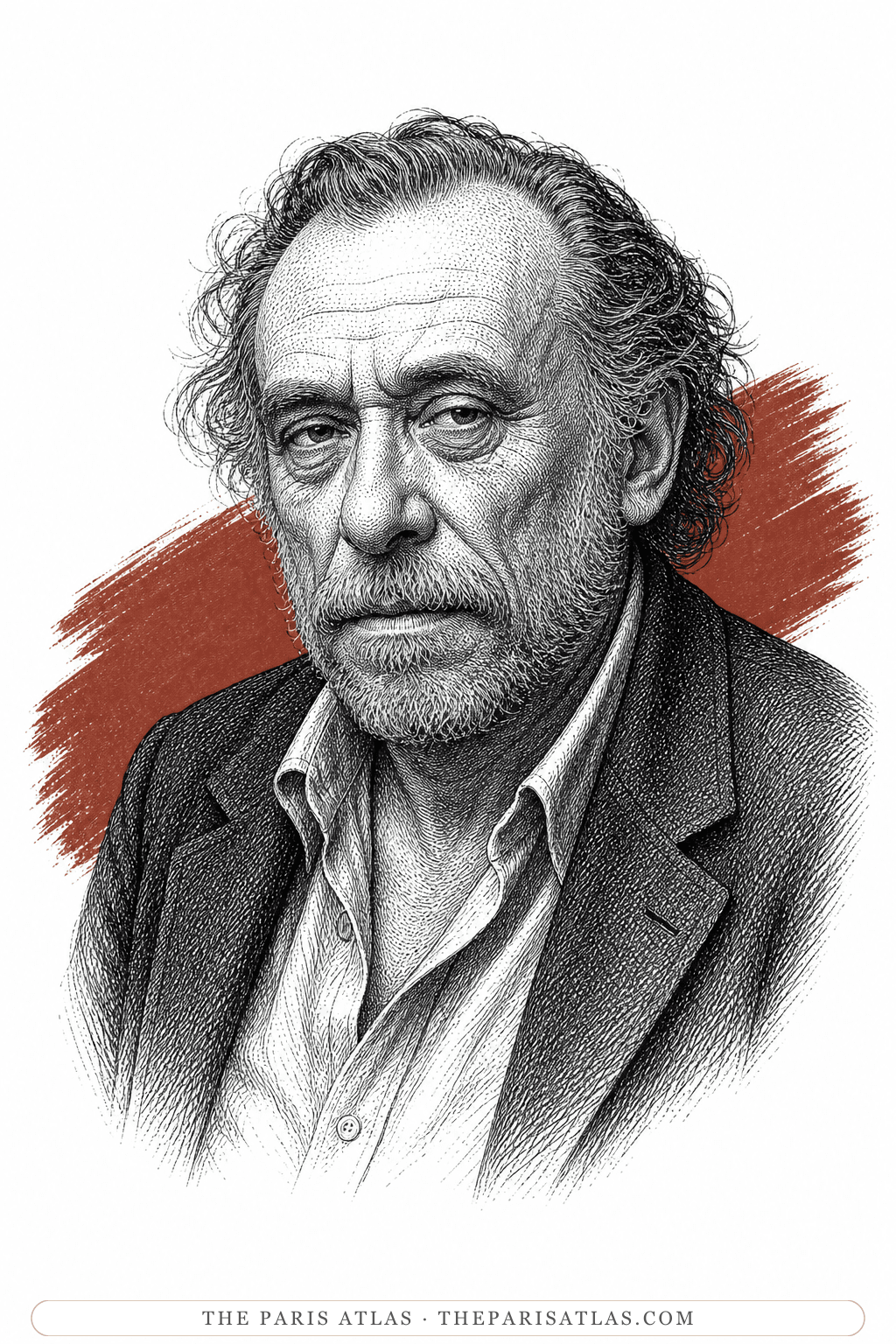
Bukowski's alter ego, here writing the screenplay Bukowski actually wrote — the novel's events follow the making of Barfly closely.
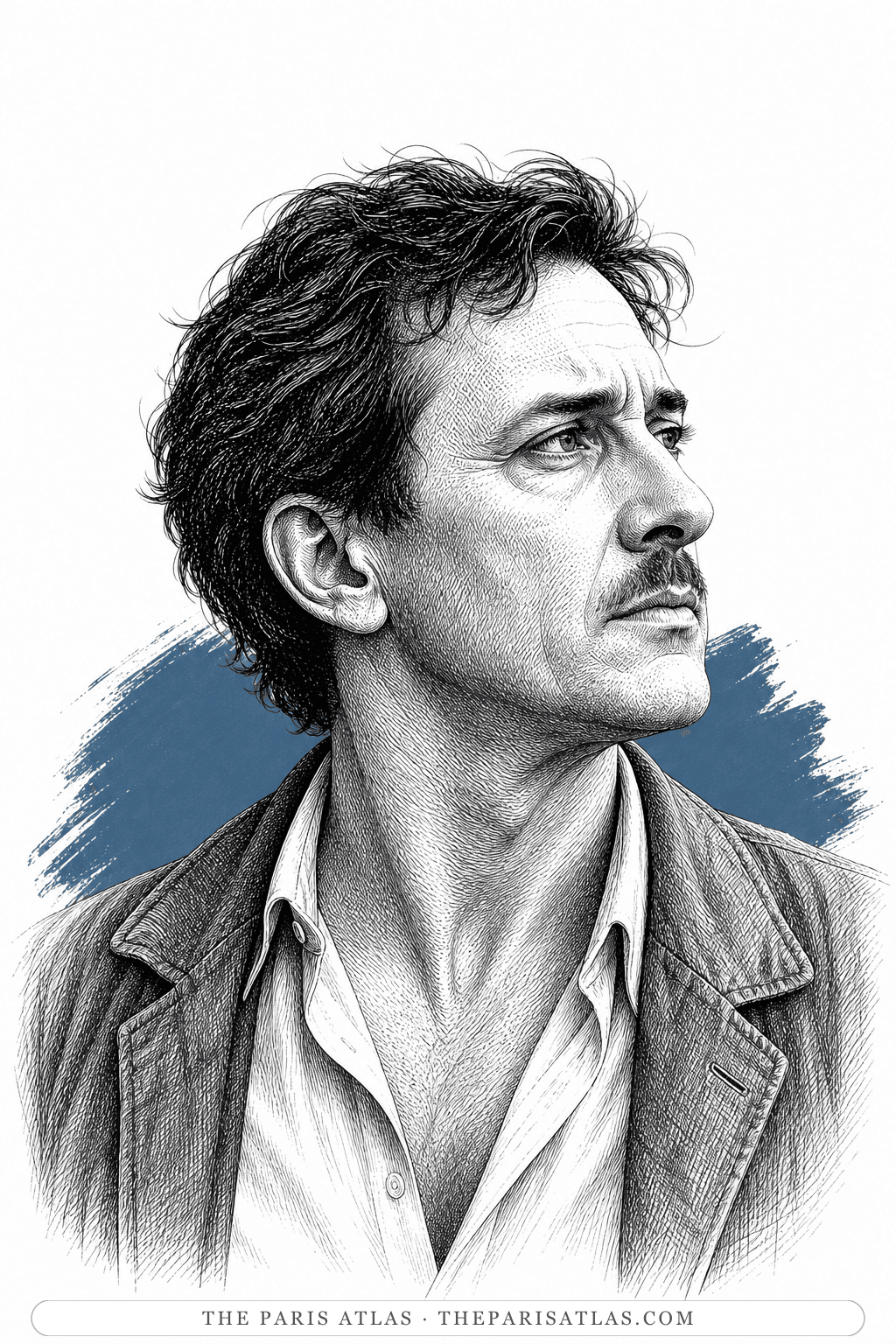
The French director who commissions the screenplay and spends years getting it financed. He stands for Barbet Schroeder, who directed Barfly.
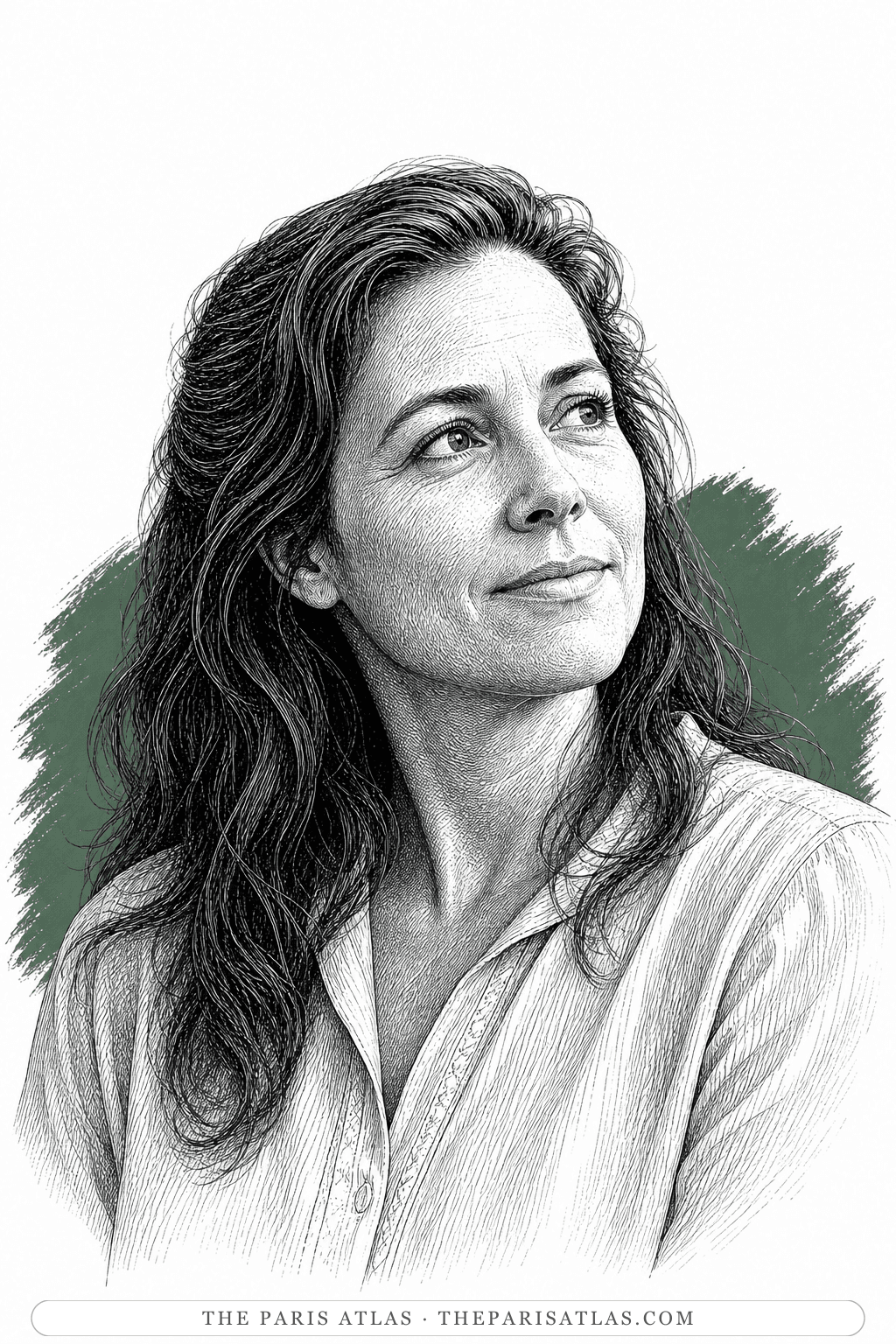
Chinaski's wife, steady through the Hollywood chaos. She stands for Linda Lee Bukowski.
1979–1986
Bukowski writes the Barfly screenplay for Barbet Schroeder; financing collapses and revives for years.
1987
Barfly is released, with Mickey Rourke and Faye Dunaway.
1989
Black Sparrow Press publishes Hollywood, the novel of the production.

The previous chapter of the fame: the readings and the women before the movie people arrived.
Read our take

The last novel: after the industry satire, a parody of pulp fiction with death itself as a character.
Read our takeThe 1989 novel fictionalizes the making of Barfly, the 1987 film written by Bukowski and directed by Barbet Schroeder. Henry Chinaski, Bukowski's fictional alter ego, writes a screenplay about his early drinking years and then watches the film industry turn it, absurdly, into an actual movie.
Yes — closely. The film in the novel is Barfly, and the director, stars and producers appear under thin fictional names. The production's real chaos, including years of collapsed financing, is the novel's plot.
No. The novel explains everything it mocks. Seeing the film afterward is the better order: the novel tells you what it cost.
The persistent French filmmaker is a fictionalized Barbet Schroeder, who really did spend years forcing Barfly into existence and later made The Charles Bukowski Tapes from his filmed conversations with the author.
Black Sparrow Press published it in 1989, two years after Barfly reached cinemas.
Yes — the making of Barfly, released in 1987, which Bukowski wrote and Barbet Schroeder directed. The novel renames the participants but follows the events.
The French director in the novel who commissions Chinaski's screenplay and spends years financing it. He stands for Barbet Schroeder.
Explore authors with a similar voice, perspective, and influence.
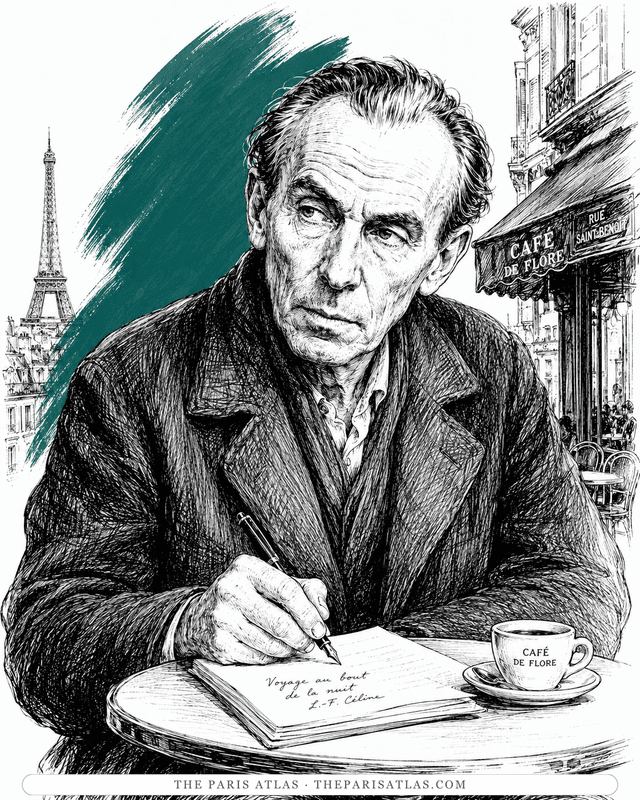
The doctor of the Paris slums who wrote the century's blackest, funniest novel — and changed the sound of French prose.
View author
The Brooklyn dropout who arrived in Paris broke at thirty-eight and wrote the exuberant, banned books that ended American censorship.
View author
French writer and philosopher whose novels, memoirs, and social analysis examined freedom, gender, responsibility, aging, and the material conditions that shape a life.
View authorThe sources below include the primary text, editions, scholarship, archival materials, and other records that informed this page. They document Hollywood, its publication, and its place in literary history.

Biographical and bibliographic backbone: the career arc, the Black Sparrow relationship, and the book's place in it.
Publication dates, publishers, and chronology checked against the bukowski.net timeline.
Bibliographic details cross-checked against the Verdant Press checklist.

Official record used to verify names, dates, institutional details, or other factual information on this page.
Both scene readings use the primary excerpt, not the reviewer's account of the film or author.
The primary text is the baseline reference for every book page. Additional references document publication history, interpretation, and historical context where that evidence is available.
 Explore more resources