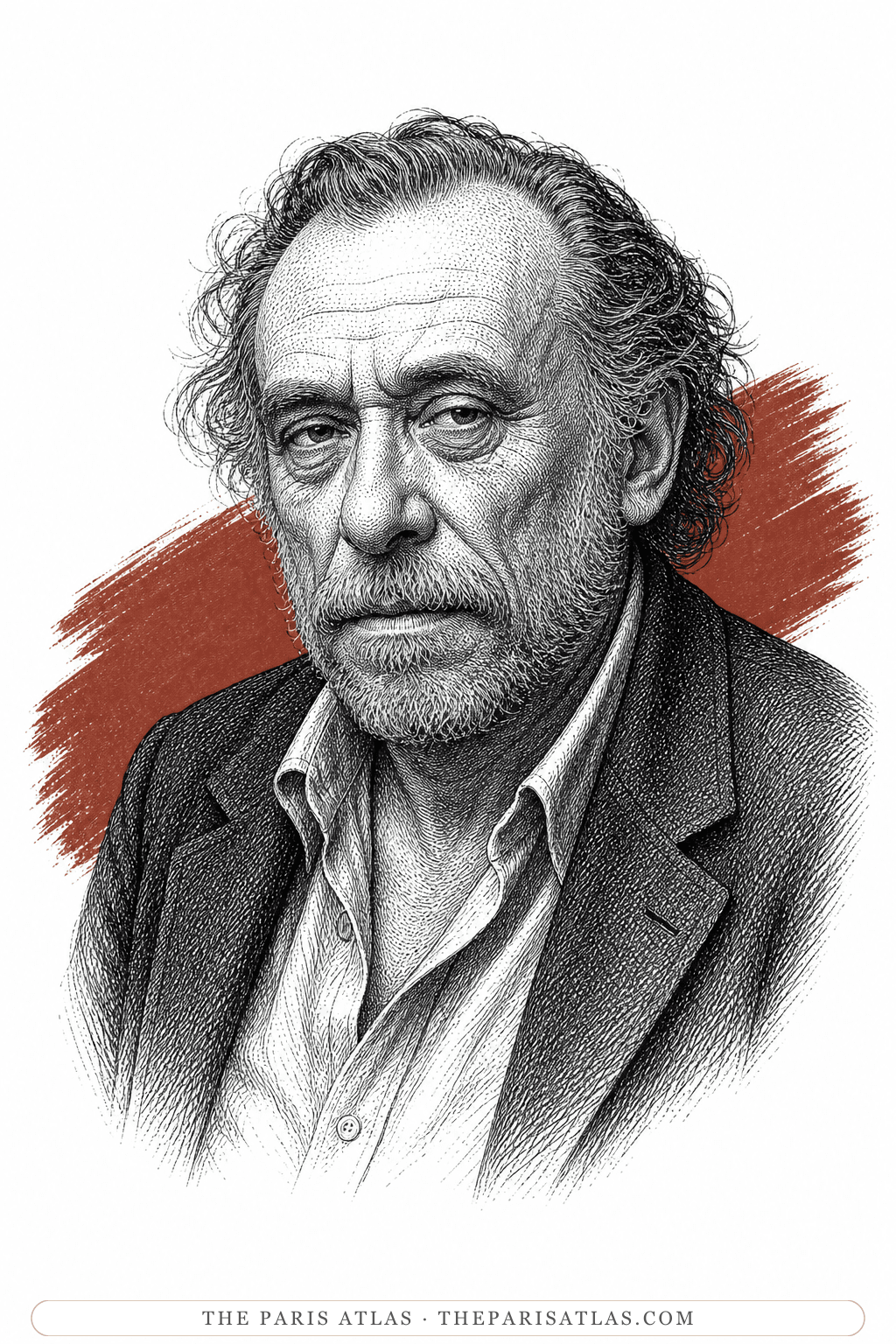

Post Office
The novel published the year before — the prose account of the life these poems come out of.
Read our take
The first poetry collection of the full-time years — published the year after Post Office, with the title poem about a mockingbird and a cat.
Mockingbird Wish Me Luck, published by Black Sparrow Press in 1972, is the first poetry collection Charles Bukowski produced after leaving the post office — the poems of a man in his early fifties who had finally become a full-time writer. Post Office had appeared the year before, and Notes of a Dirty Old Man had made him an underground-press name; these are the poems from the middle of that turn. The title comes from one of his best-known short poems, in which a mockingbird is taken by a cat, told with the flat patience that became his signature. The collection has stayed in print for fifty years in the standard Black Sparrow design.
The collection sits at the hinge of the career: after the post office, before the fame. The poems keep the rooming-house world of the 1960s books but the writer's circumstances were changing around them — a first novel published, a monthly stipend from John Martin, and the beginnings of the readership that the 1970s would multiply. The first printing followed the Black Sparrow pattern of the period: a trade edition alongside a small signed hardcover run, in Barbara Martin's plain typographic covers.
The leaking tap in The Shoelace is one irritation among many, so its force depends on the list around it. Broken fittings, expenses and unwelcome obligations accumulate faster than the speaker can separate them. Short lines repeatedly interrupt the syntax, making the catalogue feel less like an orderly inventory than another demand on attention. The escalating rhetoric also mixes minor inconveniences with serious harm, unsettling its own division between small and large troubles. Its extravagant conclusion dramatizes overwhelmed perception; it is not a clinical explanation of mental illness.
Chilled Green begins with an observer who seems ready to turn the woman's appearance and the afternoon heat into an image of degradation. A mid-poem invitation to look again reverses that first judgment: the woman and boy are calm, sharing their food. Happiness remains qualified rather than triumphant, and the heat has not gone away. The bright colors at the end make the same scene newly available to pleasure. Unlike the mounting distress of The Shoelace, this brief poem discovers relief by changing the observer's attention rather than the circumstances.
Poems from the exact turn between the post-office decades and the full-time writing life — the world of the novels, compressed.
"Mockingbird" is one of the shortest routes into what Bukowski does: an ordinary cruelty, watched exactly, refused a moral.
The brief account in the title poem demonstrates how a plainly told incident can carry feeling without a long explanation.
1970
Bukowski leaves the post office on John Martin's monthly stipend.
1971
Post Office, the first novel, is published.
1972
Black Sparrow Press publishes Mockingbird Wish Me Luck.

The novel published the year before — the prose account of the life these poems come out of.
Read our take
The previous collection, still anchored in the 1960s and the grief for Jane.
Read our take
The selected volume published two years later, which closes the early period this book opens out of.
Read our take
The next landmark collection, five years on, when fame had fully arrived.
Read our takeA 1972 poetry collection by Charles Bukowski, published by Black Sparrow Press — the first collection he assembled after leaving the post office to write full time.
From the poem "Mockingbird", in which a cat takes a mockingbird — one of Bukowski's most quoted short poems, told flat and without a moral.
At the hinge. Post Office had appeared in 1971, John Martin's stipend had freed him from the day job, and this is the first book of poems from the full-time writing life.
Most readers start with Love Is a Dog from Hell or The Days Run Away Like Wild Horses Over the Hills. This one rewards a reader who already knows the voice and wants the early-1970s poems.
Yes — Ecco keeps it in print in the standard Black Sparrow format, under the original ISBN.
Between the 1960s collections written around the post-office job and the fame-years books of the late 1970s. It is the first collection assembled entirely as a full-time writer.
Explore authors with a similar voice, perspective, and influence.
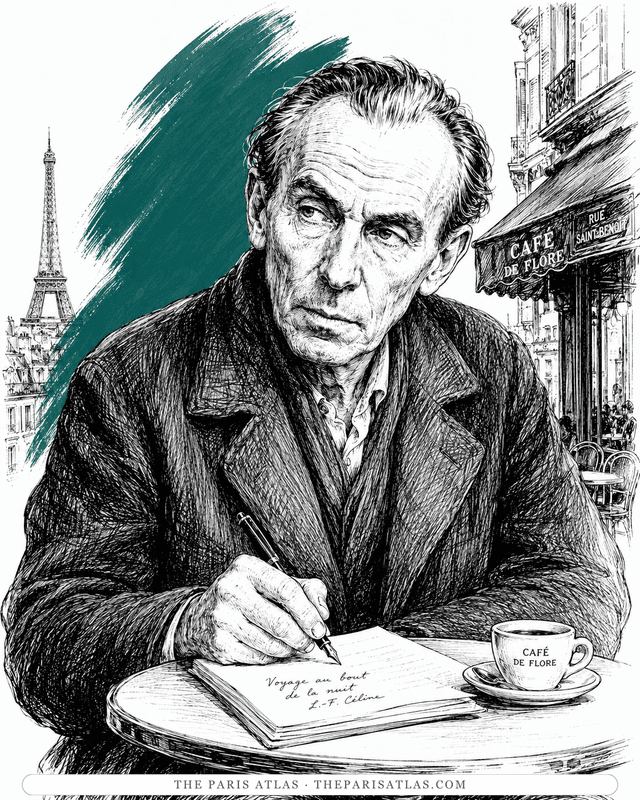
The doctor of the Paris slums who wrote the century's blackest, funniest novel — and changed the sound of French prose.
View author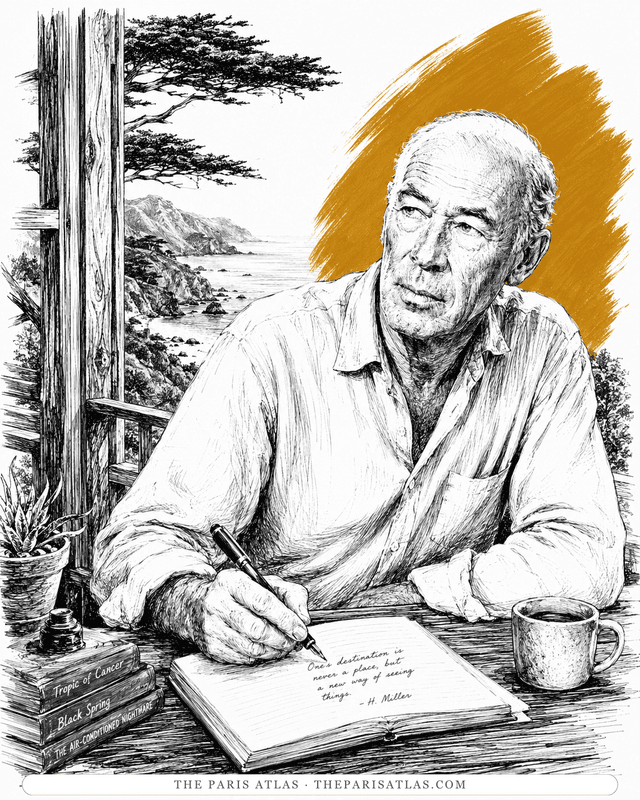
The Brooklyn dropout who arrived in Paris broke at thirty-eight and wrote the exuberant, banned books that ended American censorship.
View author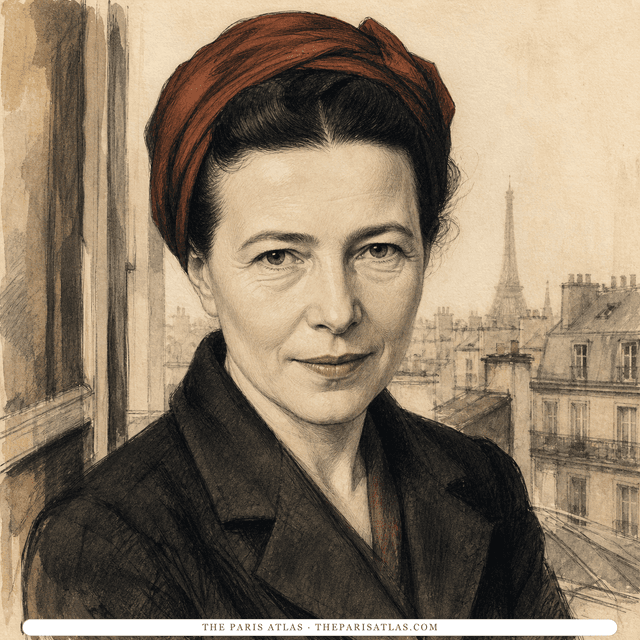
French writer and philosopher whose novels, memoirs, and social analysis examined freedom, gender, responsibility, aging, and the material conditions that shape a life.
View authorThe sources below include the primary text, editions, scholarship, archival materials, and other records that informed this page. They document Mockingbird Wish Me Luck, its publication, and its place in literary history.


The primary text represented by this page, used for descriptions of the work’s contents and for any quoted passages shown here.

Publication year, edition details, and the collection's place in the chronology.
Bibliographic details checked against the checklist.
The turn to full-time writing and the early Black Sparrow years.

Official record used to verify names, dates, institutional details, or other factual information on this page.
Complete displayed poem in a public third-party transcription; the leaky faucet belongs to its accumulating list, not a documented household incident.
Complete Chilled Green transcription within Kissing a Panther; the adjacent poems are separate works. No inspected first edition or poem-specific permission claim.
Specialist contents confirm The Shoelace and Chilled Green in this collection at pp. 114 and 117; bibliographic membership rather than primary text.
The primary text is the baseline reference for every book page. Additional references document publication history, interpretation, and historical context where that evidence is available.
 Explore more resources