
Open All Night
The posthumous volume before it — the archive's deepest reach into the final years.
Read our take
The last Bukowski book published under the Black Sparrow Press imprint, one year before the press closed.
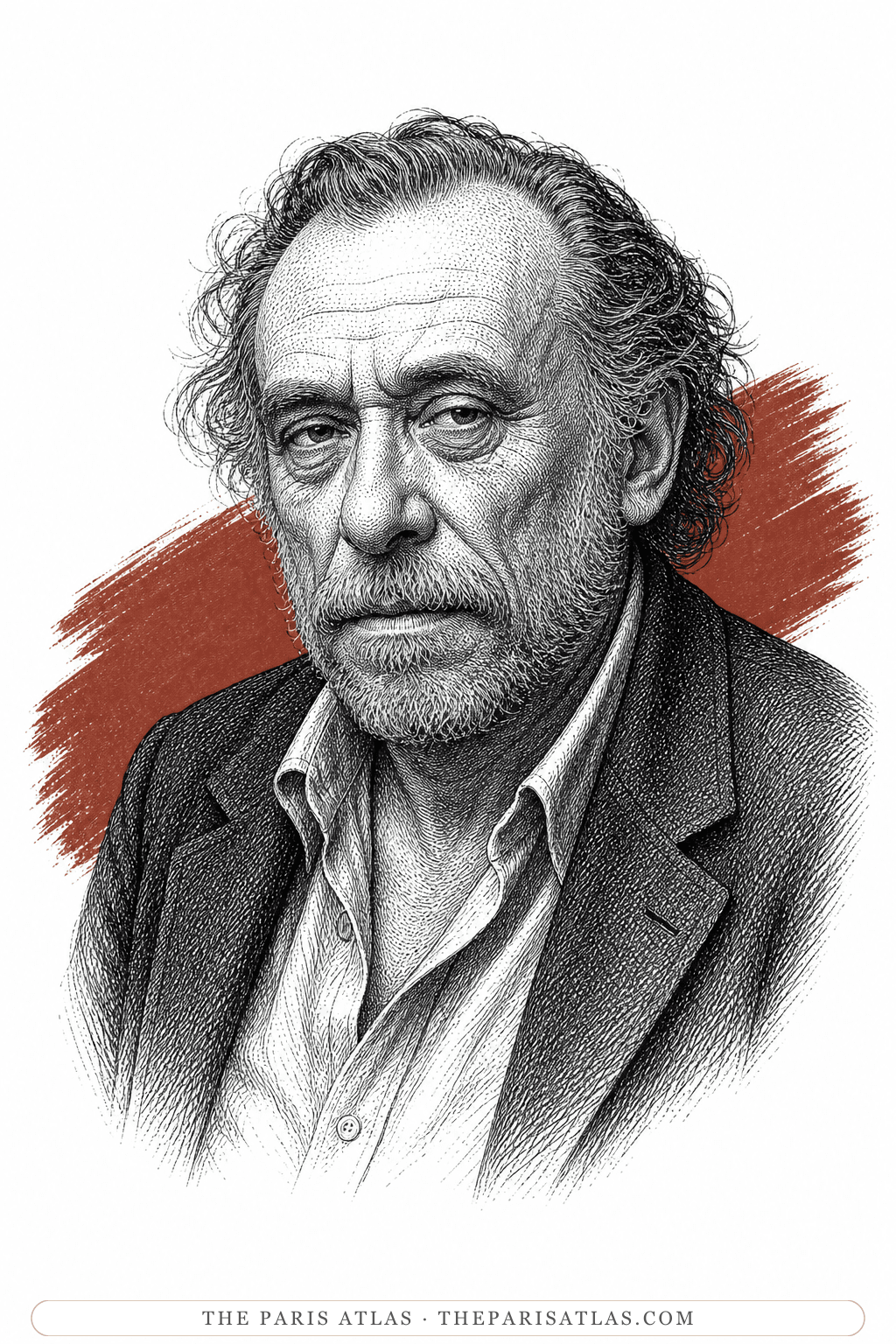
The Night Torn Mad with Footsteps, published in 2001, was the final volume of the posthumous Charles Bukowski series to appear under Black Sparrow Press's own imprint. John Martin — who had founded the press around Bukowski in the 1960s, paid him to leave the post office and write full time, and published him for thirty years — wound Black Sparrow down in 2002 and passed the catalogue to Ecco, which has kept this book in print since. The poems come from the same posthumous archive as the rest of the series, on the familiar late subjects: the city at night, the past, the typewriter, the racetrack. In 2013 the writer Michael Phillips showed that the posthumous volumes had been altered in editing; Abel Debritto's restored editions print the manuscripts as written.
The book marks the end of a publishing partnership. Black Sparrow built its identity on Bukowski, and Bukowski's career was built on the press: John Martin's editing, Barbara Martin's plain cover designs, and thirty years of steady publication. The last book the press published under its own imprint was a Bukowski collection, seven years after Bukowski died.
In “one writer’s funeral,” the strawberry truck measures a change that the formal ceremony cannot explain. Before the service, the narrator’s companion plans to buy fruit on the return journey; afterward, she asks to pass it by. The same roadside invitation now meets a different emotional need. Bukowski gives grief this small alteration of appetite rather than a grand declaration. The narrator’s inability to comfort Fante’s widow, followed by his rush to the racetrack, leaves mourning awkward and unfinished: familiar routines resume without proving that the loss has been absorbed.
The opening of “beagle” asks for restraint, not possession: the sleeping animal should be left alone. Even its dreams remain uncertain, and the speaker briefly allows that a human awake may be no more inwardly active. That qualification prevents the dog from becoming a simple emblem of wisdom assigned by its observer. Against the wind, moving blinds and disturbance outdoors, the warm lamplight gives the animal a protected space of its own. The quiet is valuable precisely because the surrounding world has not become quiet.
The final Bukowski book under the Black Sparrow name — the end of the thirty-year partnership between the writer and the press founded around him.
More poems from the unpublished archive, on the late subjects: the city at night, memory, the racetrack, the typewriter.
The poems connect the city at night with work and recollection, extending a setting associated with Bukowski’s earlier books.
2001
Black Sparrow Press publishes the collection — its last Bukowski volume.
2002
John Martin winds down the press; the Bukowski catalogue passes to Ecco.
2009
Ecco releases the collection as an ebook.

The posthumous volume before it — the archive's deepest reach into the final years.
Read our take
The next volume of the series — the first published by Ecco after Black Sparrow closed.
Read our take
The first Black Sparrow Bukowski, 1968 — the other end of the partnership this book closes.
Read our takeA posthumous collection of previously unpublished Charles Bukowski poems, published in 2001 — the last Bukowski volume to appear under Black Sparrow Press's own imprint before the press closed in 2002.
John Martin retired in 2002 after more than three decades running the press, selling the rights to Bukowski, John Fante and Paul Bowles to Ecco; much of the remaining list went to David R. Godine.
The posthumous volumes carry a documented editing question: 2013 manuscript comparisons showed substantial alterations, and Abel Debritto's restored editions — backed by Bukowski's widow Linda Lee Bukowski — print the manuscripts unrevised.
It is a Bukowski phrase, not a quotation from another writer. The poems in the book return often to the city at night, which is what the title describes.
Yes — Ecco has kept it in print since 2002 under the original Black Sparrow ISBN.
Explore authors with a similar voice, perspective, and influence.
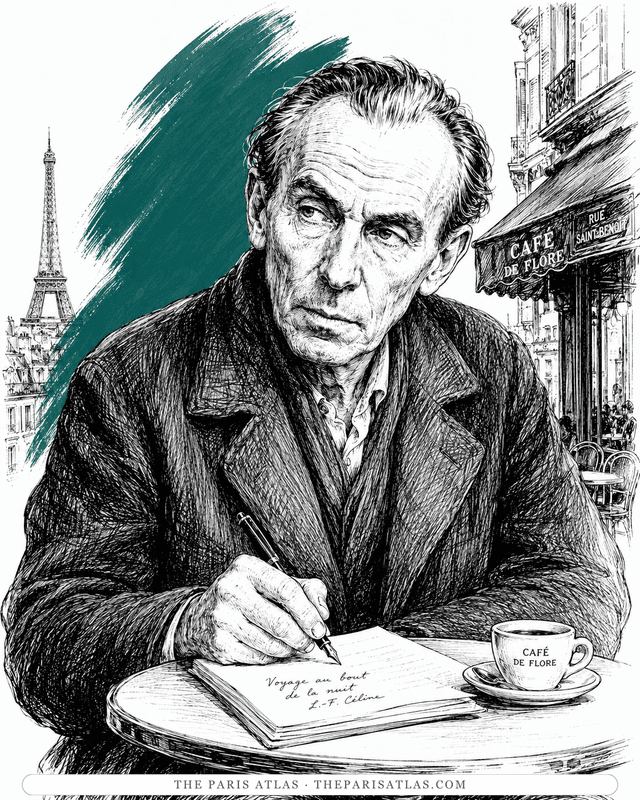
The doctor of the Paris slums who wrote the century's blackest, funniest novel — and changed the sound of French prose.
View author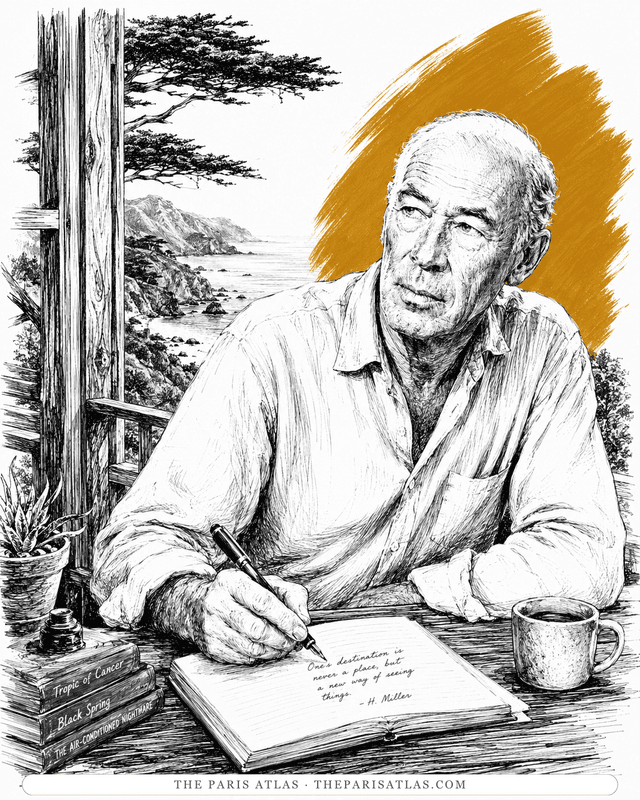
The Brooklyn dropout who arrived in Paris broke at thirty-eight and wrote the exuberant, banned books that ended American censorship.
View author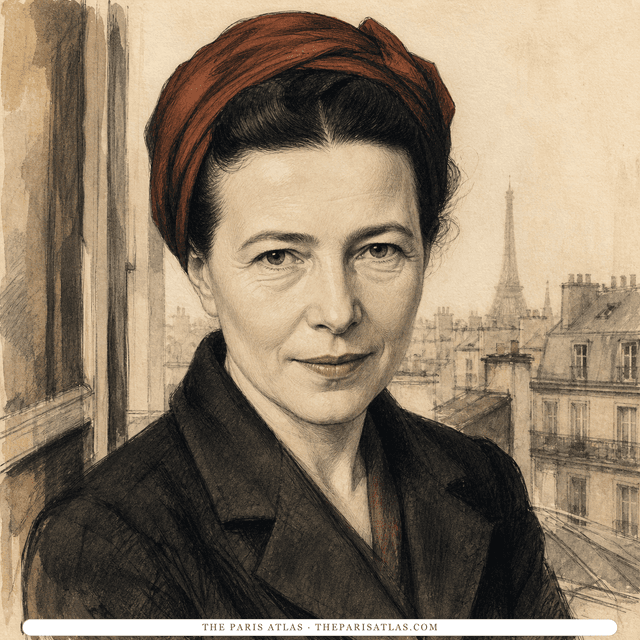
French writer and philosopher whose novels, memoirs, and social analysis examined freedom, gender, responsibility, aging, and the material conditions that shape a life.
View authorThe sources below include the primary text, editions, scholarship, archival materials, and other records that informed this page. They document The Night Torn Mad with Footsteps, its publication, and its place in literary history.


The primary text represented by this page, used for descriptions of the work’s contents and for any quoted passages shown here.

Publication year and the volume's place at the end of the Black Sparrow run.

The documented editing of the posthumous poems and the restored editions.
Critical account of the posthumous program.
Official record used to verify names, dates, institutional details, or other factual information on this page.
Web source consulted for documented facts and historical context presented on the The Night Torn Mad with Footsteps page.
Primary text included as part of the documented record for The Night Torn Mad with Footsteps.
The primary text is the baseline reference for every book page. Additional references document publication history, interpretation, and historical context where that evidence is available.
 Explore more resources