The Russian novelist who came to Paris twice in the 1860s, hated it with unusual precision, and wrote the result up as Winter Notes on Summer Impressions, a short, savage account of the French bourgeoisie that stands as the sharpest case ever made against the city by a writer passing through it.
5 books on our shelves
Details
Lived
1821–1881
Born
1821
Birthplace
Moscow
Died
1881
Place of death
St Petersburg
Nationality
Russian
Profession
Novelist, journalist and magazine editor
Major works
Crime and Punishment, The Idiot, Demons, The Brothers Karamazov, Notes from Underground, The Gambler
Roles
AuthorJournalistEditor
About Fyodor Dostoevsky
Fyodor Dostoevsky wrote Crime and Punishment, The Idiot, Demons and The Brothers Karamazov, and is one of the small group of nineteenth-century novelists whose books changed what the form was thought capable of. He was born in Moscow in 1821, sentenced to death in 1849 for belonging to a circle of political discussion, reprieved on the scaffold, and sent to four years of hard labour in Siberia. He came back to St Petersburg in the late 1850s and, with his brother Mikhail, started a magazine called Vremya — 'Time'.
He was never a Paris resident and never wanted to be. He came first in the summer of 1862, on his first journey outside Russia, and again in the late summer of 1863. What the city produced in him was not affection but an argument, published in 1863 as Winter Notes on Summer Impressions: a set of travel essays in which the Paris chapters take apart the French middle class — its worship of money, its performance of virtue, its pet names for its wives — with a contempt so specific it is still quoted.[1] This page is about a visitor who came, looked hard, and returned a verdict against the place.
The first journey out, 1862
Dostoevsky left St Petersburg for Berlin on 7 June 1862, by the Russian calendar then in use — the older Julian calendar, which in the nineteenth century ran twelve days behind the Western one, so that Russian dates of this period always look a little earlier than the same day elsewhere in Europe. He was forty. It was the first time he had been outside Russia, a late first journey for a European writer, and one he made after four years in a Siberian prison camp and four more of enforced provincial service. In roughly two and a half months he covered Berlin, Dresden, Cologne, Paris, London, Geneva, Genoa, Florence and Vienna. He wrote from Paris to Nikolai Strakhov, the critic who wrote for his magazine, in a letter dated 26 June by the Russian calendar, 8 July by the Western one. In London that July he met Alexander Herzen, the exiled Russian writer and publisher whose anti-government journal was smuggled back into Russia by the thousand.[2][3]
The book came out of an editorial request. His brother Mikhail, who was co-editor with him of the magazine Vremya, wrote on 18 June 1862 suggesting he send back travel impressions, and Dostoevsky took the idea up warmly. Winter Notes on Summer Impressions appeared in Vremya the following year, across the February and March numbers of 1863, signed with his own name.[3]
What Winter Notes actually says
The book is short and structured as eight chapters, and it is worth being exact about which city gets which. Chapter V is titled Ваал — Baal, the idol the Old Testament condemns people for worshipping in place of God — and it is about London, not Paris: the crowds, the Crystal Palace (the vast iron-and-glass exhibition hall then standing in south London), the Haymarket at night with its prostitutes, a mass of people so large that Dostoevsky reads it as a civilisation bowing down to the fact of itself. Paris is the subject of the three chapters that follow — Chapter VI, An Essay on the Bourgeois, meaning the propertied French middle class; Chapter VII, which continues it; and Chapter VIII, Bribri and Mabishe, named after the pet names bourgeois husbands and wives used for one another. Writers summarising the book often describe the Baal chapter as though it were about Paris. It is not: Baal is London. The distinction matters, because what Dostoevsky says about Paris is different, and worse.[1]
His London is a nightmare of scale. His Paris is a comedy of respectability. The Parisian bourgeois, in Dostoevsky's account, has made the accumulation of money into a moral system and then dressed it as virtue. He puts it directly: to pile up a fortune and own as many things as possible has become the chief code of morality, the catechism of the Parisian — a catechism being the list of questions and answers a child is drilled in at church. A Parisian, he adds, does not value himself at a penny if he feels his pockets are empty, and is entirely sincere about it. Everything in the city must be seen to shine with virtue, and so it does — the need for virtue in Paris, he writes, is unquenchable.[1]
What is liberté? Liberty. What liberty? An equal liberty for everyone to do whatever they like within the limits of the law. When can you do whatever you like? When you have a million. Does liberty give everyone a million? No.
Что такое liberté? Свобода. Какая свобода? Одинаковая свобода всем делать всё что угодно в пределах закона. Когда можно делать всё что угодно? Когда имеешь миллион. Дает ли свобода каждому по миллиону? Нет.[1]
That passage is the centre of the book. Dostoevsky takes the three words of the French republican motto — liberté, égalité, fraternité: liberty, equality, brotherhood — carved on public buildings all over the city, and asks what each is worth in practice. He finishes the thought as brutally as it can be finished: a man without a million is not the man who does whatever he likes, but the man to whom whatever others like is done.[1]
The last Paris chapter goes after bourgeois marriage. Its title, Bribri and Mabishe, is taken from the endearments a middle-class husband and wife use for each other — ma biche, 'my doe', from him, and bribri, a nonsense pet name with no meaning at all, back from her — and Dostoevsky uses them as evidence. He argues that the husband has arranged control of his wife's money thoroughly in his own favour, and that the tenderness is a decoration on a financial arrangement. He also notes, without kindness, that a Parisian may live and trade in Paris his whole life and never once see the sea.[1]
1863: the second visit
He came back in the late summer of 1863, and a letter of his survives written from Paris on 20 August by the Russian calendar, 1 September by the Western, describing a run of luck at the roulette tables of Wiesbaden, the German spa town with the casino where he gambled. He was travelling with Apollinaria Suslova, a young writer some twenty years his junior with whom he was involved, and the trip did not go as he had planned it. They went on into Italy, and from Rome, on 18 September by the Russian calendar, he wrote to Strakhov setting out the plot of a new story about a Russian abroad who has poured all his life, force and daring into the roulette wheel.[3][2]
That story became The Gambler, published in 1866. The scholarly commentary to his collected works states plainly that the novel's central relationship, the narrator's tormented love for Polina, the general's stepdaughter, repeats in many respects the difficult history of Dostoevsky and Suslova, and that specific plot elements, including Polina's infatuation with the Frenchman De Grieux and her wish to return money to him, are artistically transformed facts from Suslova's life, as her own diary attests.[3] His two European journeys thus produced both the essay against the West and the novel about a man destroyed abroad.
The angle, stated plainly
Dostoevsky has no Paris address, no café, no circle and no plaque. He passed through twice in the space of about fourteen months and never returned to the city. He belongs in an atlas of Paris for one reason: he wrote the most sustained hostile account of the place that any major novelist produced in the nineteenth century, and it is an account built on observation rather than ignorance. He noticed the fountains, the theatres, the shop counters, the wording on the public buildings and the names husbands call their wives, and he assembled them into a case. Readers who love the city have been arguing with Winter Notes on Summer Impressions ever since, which is the surest evidence that the book landed.
He went home to write the novels the book had cleared space for. Notes from Underground followed in 1864, Crime and Punishment in 1866, and The Brothers Karamazov in 1880. He died in St Petersburg in 1881.
Life events
1821
Born in Moscow.
— Joseph Frank, Dostoevsky: The Stir of Liberation, 1860–1865 (1986)
1862
Leaves St Petersburg for Berlin on 7 June (Russian calendar), beginning his first journey outside Russia at the age of forty.
— E. I. Kiyko, Commentary on Winter Notes on Summer Impressions, in Dostoevsky's Complete Works in 15 Volumes
1862
Writes to Nikolai Strakhov from Paris on 26 June (8 July by the Western calendar). The whole European tour takes about two and a half months.
— E. I. Kiyko, Commentary on Winter Notes on Summer Impressions, in Dostoevsky's Complete Works in 15 Volumes
1862
Meets the exiled Russian writer Alexander Herzen in London in July, and discusses his impressions of the West with him.
— E. I. Kiyko, Commentary on Winter Notes on Summer Impressions, in Dostoevsky's Complete Works in 15 Volumes
1862
His brother and co-editor Mikhail writes on 18 June proposing he send travel impressions back to their magazine Vremya; Dostoevsky takes up the idea.
— E. I. Kiyko, Commentary on Winter Notes on Summer Impressions, in Dostoevsky's Complete Works in 15 Volumes
1863
Winter Notes on Summer Impressions appears in Vremya, in numbers 2 and 3 — the February and March issues — signed Fyodor Dostoevsky. Chapter V, Baal, is about London, not Paris; Chapters VI to VIII are the attack on bourgeois Paris.
— E. I. Kiyko, Commentary on Winter Notes on Summer Impressions, in Dostoevsky's Complete Works in 15 Volumes; Fyodor Dostoevsky, Winter Notes on Summer Impressions (Зимние заметки о летних впечатлениях) (1863)
1863
Returns to Europe with Apollinaria Suslova; writes from Paris on 20 August (1 September) about winning at roulette in Wiesbaden.
— E. I. Kiyko, Commentary on Winter Notes on Summer Impressions, in Dostoevsky's Complete Works in 15 Volumes
1863
From Rome on 18 September, outlines to Strakhov the story of a Russian abroad consumed by the roulette table, the germ of The Gambler.
— E. I. Kiyko, Commentary on Winter Notes on Summer Impressions, in Dostoevsky's Complete Works in 15 Volumes
1864
Publishes Notes from Underground.
— Joseph Frank, Dostoevsky: The Stir of Liberation, 1860–1865 (1986)
1866
Publishes Crime and Punishment, and The Gambler, whose Polina draws on his relationship with Suslova.
— Joseph Frank, Dostoevsky: The Stir of Liberation, 1860–1865 (1986); E. I. Kiyko, Commentary on Winter Notes on Summer Impressions, in Dostoevsky's Complete Works in 15 Volumes
1880
Publishes The Brothers Karamazov.
— Joseph Frank, Dostoevsky: The Stir of Liberation, 1860–1865 (1986)
1881
Dies in St Petersburg.
— Joseph Frank, Dostoevsky: The Stir of Liberation, 1860–1865 (1986)
Who Fyodor Dostoevsky Inspired
People who found inspiration in Fyodor Dostoevsky’s work.
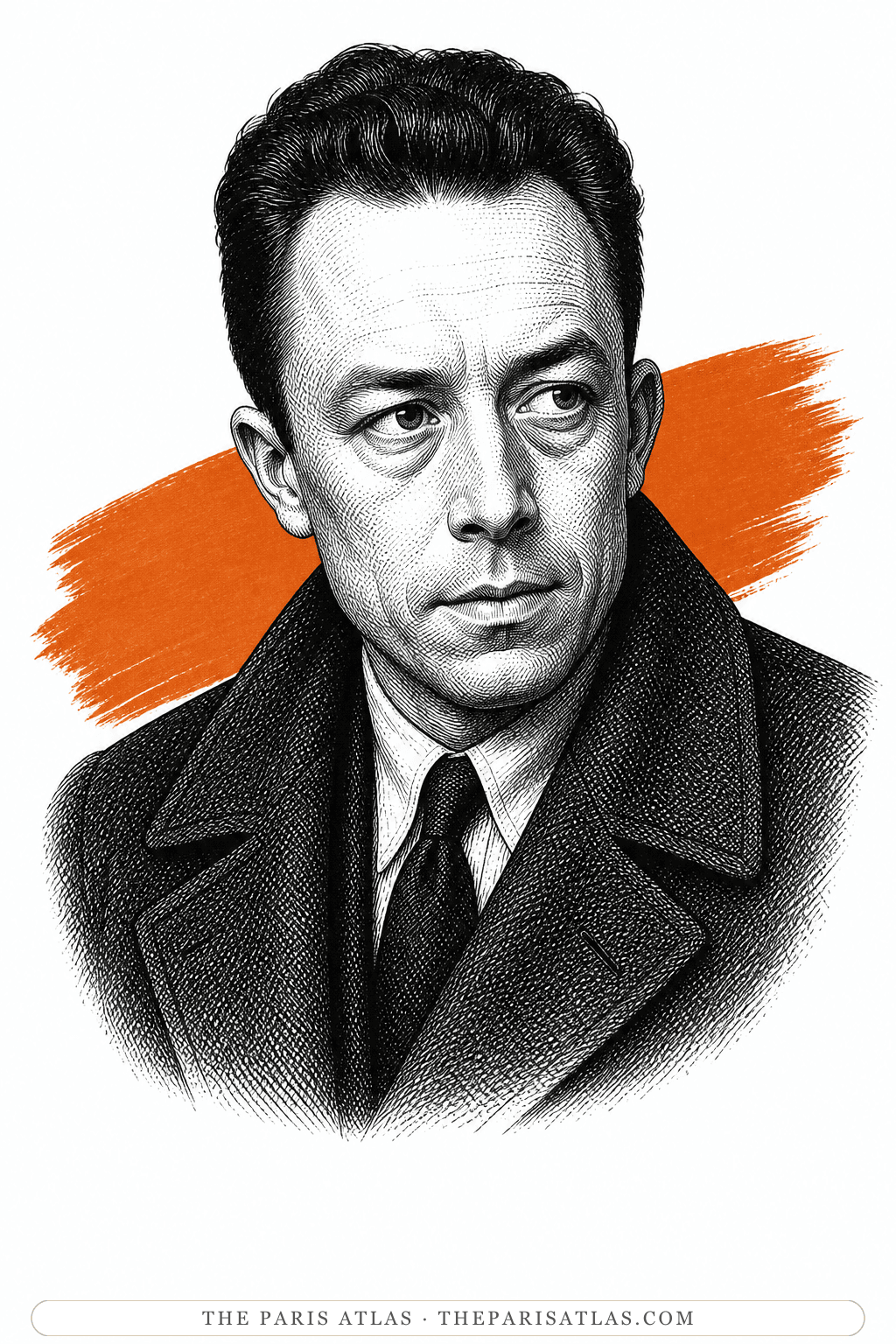
Camus argued with Dostoevsky for twenty years. The Myth of Sisyphus (1942) sets Kirilov of The Possessed beside Don Juan and the actor as a figure of the absurd, takes his suicide-to-prove-freedom seriously and refuses its conclusion. Then he staged him: Camus adapted Les Possédés for the theatre and directed his own version at the Théâtre Antoine in Paris in 1959, the last full year of his life. The sources document the reading and the adaptation directly; calling it influence is our reading of them, which is why the evidence is marked inferred.
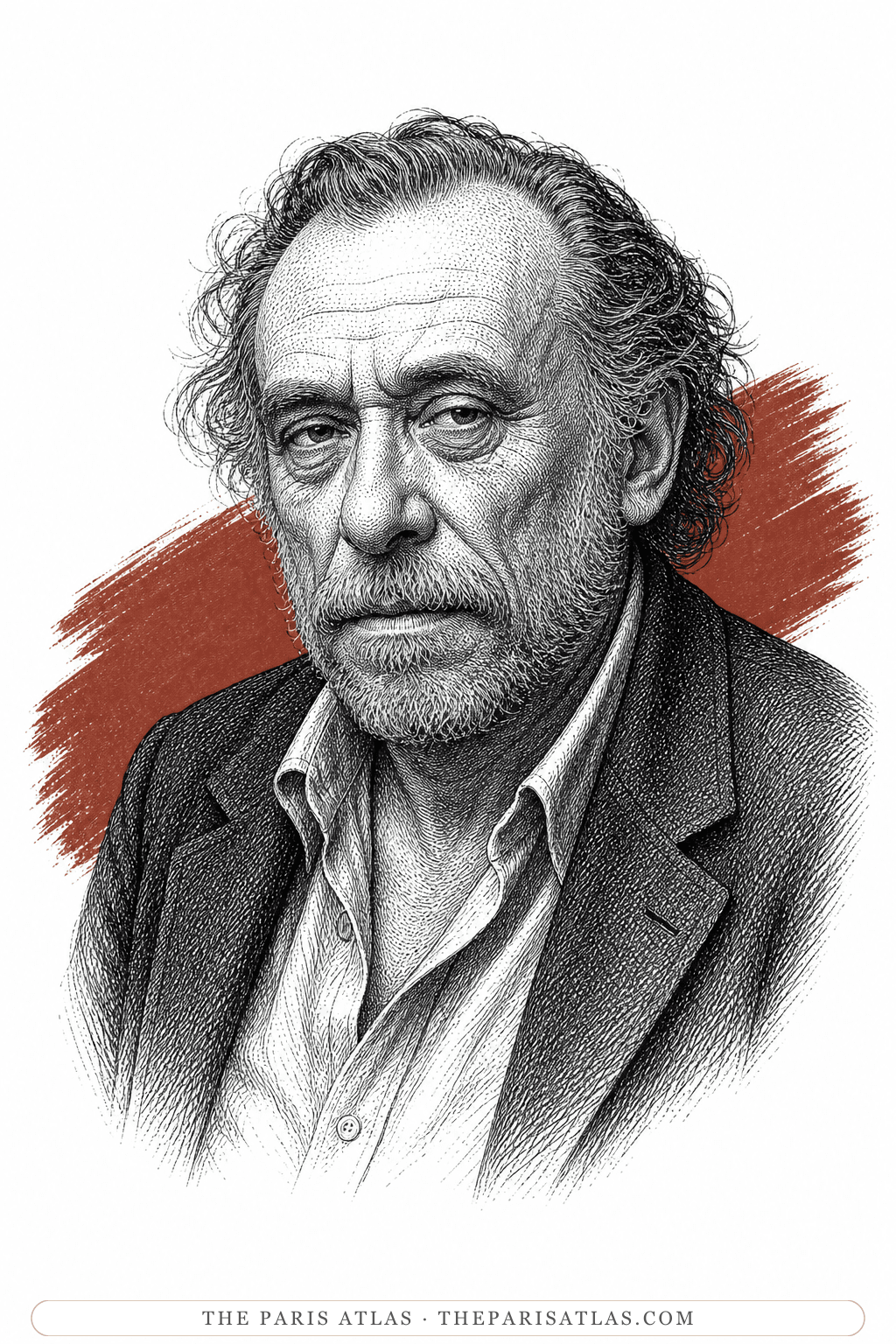
First on the list Bukowski gave of his own reading, in a letter of his later years: "I once read almost everything. My influences are Dostoevski, Nietzsche, Schopenhauer, Hamsun, Celine, Jeffers, Hemingway, Sherwood Anderson, Gorky."
— Charles Bukowski, Reach for the Sun: Selected Letters 1978–1994, Volume 3 (1999)
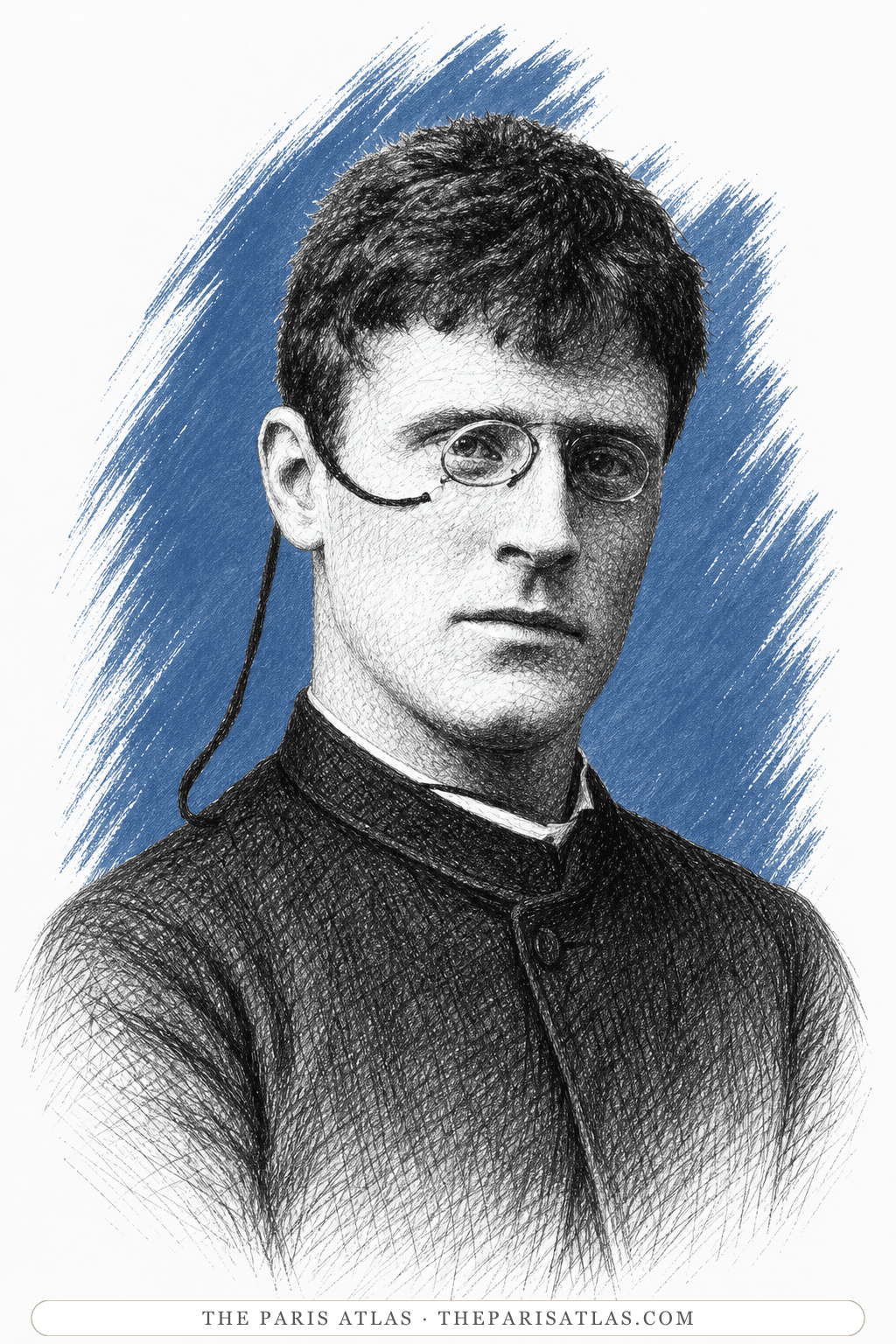
Hamsun identified Dostoevsky as the writer from whom he had learned the most; scholarship traces that influence through his treatment of poverty, irrational behavior, contradiction and guilt.
— Susan Reynolds, ‘The Mysteries of the Nerves in a Starving Body’: Knut Hamsun and Dostoevsky
A lonely young man meets a crying girl on a St Petersburg canal bank, falls in love with her over four summer nights, and helps her wait for someone else.
A penniless former student kills an old pawnbroker to prove a theory, then spends the rest of the novel being hunted by his own conscience and a patient detective.
A gentle, trusting prince comes home to St Petersburg from a Swiss clinic, falls between two women and a jealous merchant, and finds that goodness alone saves no one.
A greedy old father is murdered, one of his sons is tried for it, and the three brothers argue about God, guilt and freedom on the way to the verdict.
4.8
Questions about Fyodor Dostoevsky
Did Dostoevsky ever live in Paris?
No. He visited twice, in the summer of 1862 on his first trip outside Russia, and again in the late summer of 1863, and never lived there or returned afterwards. He kept no address in the city and belonged to no circle in it.
What is Winter Notes on Summer Impressions?
A short book of travel essays Dostoevsky published in 1863, in the February and March numbers of Vremya — 'Time' — the St Petersburg magazine he ran with his brother Mikhail. It records his first journey through Western Europe the previous summer and is mostly an argument rather than a description: a sustained attack on what he saw as the moral self-satisfaction of the French and English middle classes.
Is the 'Baal' chapter about Paris?
No, and this is often got wrong. Chapter V, titled Ваал — Baal, after the false god of the Old Testament — is about London: its crowds, the Crystal Palace (the enormous iron-and-glass exhibition hall then standing in south London), and the Haymarket, the London street where prostitutes gathered at night. Paris is the subject of Chapters VI, VII and VIII. Chapter VI is called An Essay on the Bourgeois — the bourgeoisie being the propertied middle class — and Chapter VIII is called Bribri and Mabishe, after two pet names husbands and wives used for each other.
What did Dostoevsky say about Paris?
That the Parisian middle class had turned money into a moral system. Piling up a fortune and owning as many things as possible, he wrote, had become the chief code of morality and the catechism of the Parisian, who does not value himself at a penny if his pockets are empty. He took the republican motto carved across the city — liberté, égalité, fraternité, liberty, equality and brotherhood — and argued that liberty in practice means the freedom to do as you like within the law, which requires a million francs; and that a man without a million is not one who does what he likes but one to whom things are done.
What does 'Bribri and Mabishe' mean?
They are the pet names a bourgeois husband and wife use for each other in Dostoevsky's account — ma biche, 'my doe', from the husband, and bribri in return. He used them as the title of his chapter on Paris marriage, arguing that the husband had organised control of his wife's money firmly in his own favour and that the affectionate language sat on top of a financial arrangement.
Who was Apollinaria Suslova?
A young Russian writer, about twenty years younger than Dostoevsky, with whom he was involved in the early 1860s and who travelled with him in Europe in 1863. The scholarly commentary to his collected works states that the relationship between the narrator and Polina in his novel The Gambler repeats in many respects the history of Dostoevsky and Suslova, and that details such as Polina's infatuation with the Frenchman De Grieux are transformed from Suslova's own life, as her diary records it.
Why is Dostoevsky in a Paris atlas if he disliked the city?
Because the dislike is the contribution. He is not here as a resident or a habitué but as the author of the most concentrated hostile account of Paris written by any major novelist of the nineteenth century — a book built from close observation of shops, theatres, fountains, public inscriptions and private endearments rather than from ignorance of the place.
Connections and Sources
Fyodor Dostoevsky’s connections to people, places, and works, with the sources behind each one.
Camus argued with Dostoevsky for twenty years. The Myth of Sisyphus (1942) sets Kirilov of The Possessed beside Don Juan and the actor as a figure of the absurd, takes his suicide-to-prove-freedom seriously and refuses its conclusion. Then he staged him: Camus adapted Les Possédés for the theatre and directed his own version at the Théâtre Antoine in Paris in 1959, the last full year of his life. The sources document the reading and the adaptation directly; calling it influence is our reading of them, which is why the evidence is marked inferred.
First on the list Bukowski gave of his own reading, in a letter of his later years: "I once read almost everything. My influences are Dostoevski, Nietzsche, Schopenhauer, Hamsun, Celine, Jeffers, Hemingway, Sherwood Anderson, Gorky."
— Charles Bukowski, Reach for the Sun: Selected Letters 1978–1994, Volume 3 (1999)
Hamsun identified Dostoevsky as the writer from whom he had learned the most; scholarship traces that influence through his treatment of poverty, irrational behavior, contradiction and guilt.
— Susan Reynolds, ‘The Mysteries of the Nerves in a Starving Body’: Knut Hamsun and Dostoevsky
References
References
The sources below include biographies, scholarly essays, interviews, and primary materials that informed this page. They reflect both the historical record and ongoing critical conversations about Fyodor Dostoevsky and their work.
1abcdefWinter Notes on Summer Impressions (Зимние заметки о летних впечатлениях)
Essays
Vremya; text from the academic Complete Works, Russian Virtual Library, 1863
Used for
The primary text, in the academic Complete Works; the source for every chapter title and quotation here.
These references anchor the page in the documented record and in the scholarly conversations around Fyodor Dostoevsky. Every claim on this page traces back to one or more of the works listed here.



 View source