Crime and Punishment
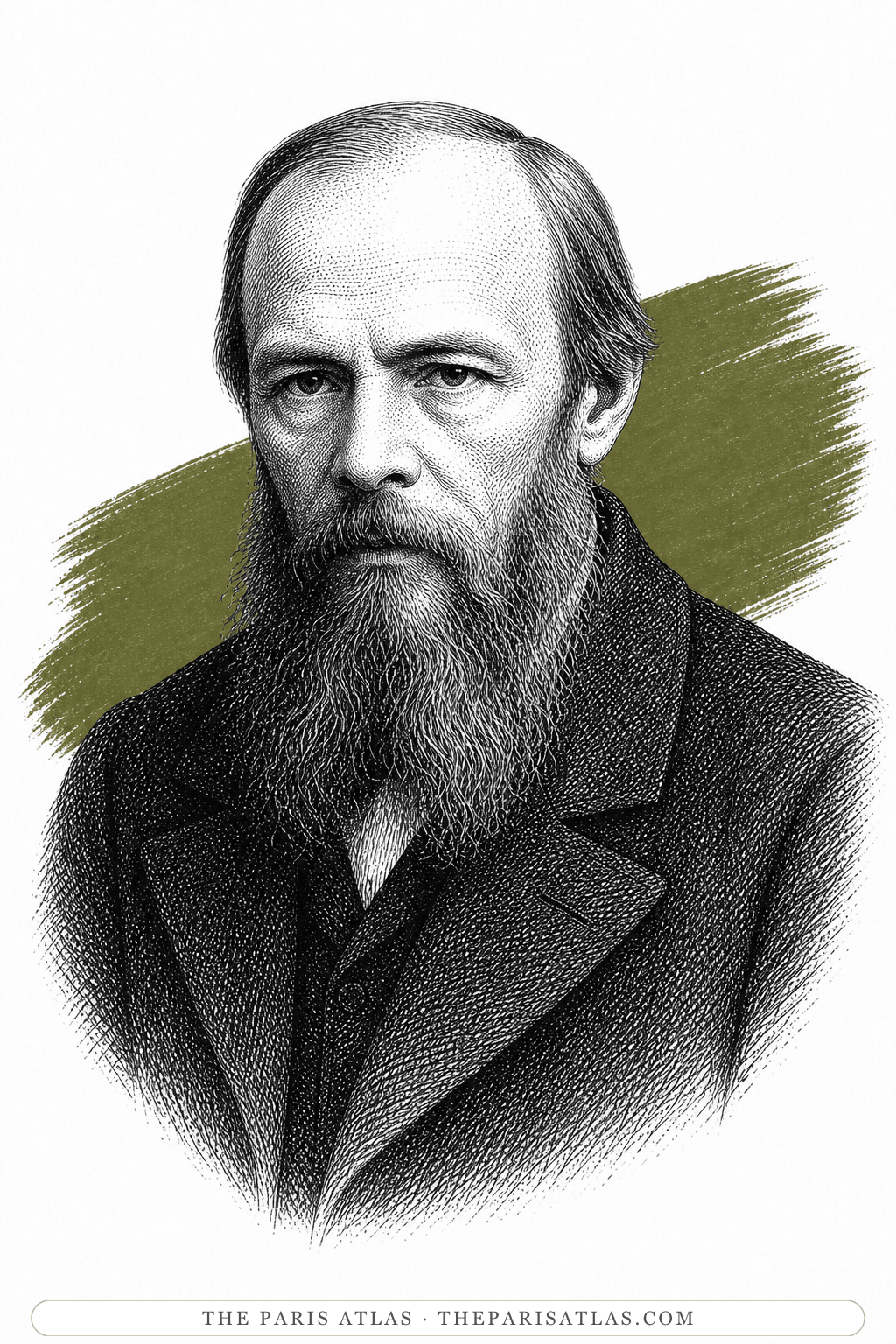
Fyodor Dostoevsky
Crime and Punishment
The novel before this one. Dostoevsky moved from a murderer to a saint, and both books end in Siberia or the clinic.
Read our takeThe Idiot
Fyodor Dostoevsky
A gentle, trusting prince comes home to St Petersburg from a Swiss clinic, falls between two women and a jealous merchant, and finds that goodness alone saves no one.
Prince Lev Myshkin is twenty-six, penniless and just back in Russia after years in a Swiss sanatorium for his epilepsy. He is so open and truthful that people call him an idiot. On the train into St Petersburg he meets Parfyon Rogozhin, a merchant's son obsessed with Nastasya Filippovna, a beautiful woman with a ruined reputation. Within a day Myshkin has seen her portrait, met her, and offered to marry her. For the rest of the novel he is torn between his pity for Nastasya and his love for Aglaya Epanchina, a proud general's daughter, while Rogozhin's jealousy grows toward a knife.
Fyodor Dostoevsky wrote The Idiot abroad. He left Russia with his young wife Anna Grigorievna in April 1867, with an advance from The Russian Messenger for a novel he had not yet planned. They went through Berlin, Dresden, Hamburg and Baden-Baden. He made his first notes for the book in Geneva in September 1867, kept writing in Vevey and Milan, and finished it in Florence.[1]
In a letter to his niece Sofia Ivanova of 1 (13) January 1868, Dostoevsky called the novel an old and much-loved idea that he had long been afraid to attempt. Its main idea, he wrote, was to portray a positively beautiful man, and nothing in the world was harder. He listed the writers who had tried. Cervantes had done it best with Don Quixote, Dickens less fully with Mr Pickwick, and Victor Hugo with Jean Valjean in Les Misérables.[1]
The Russian Messenger printed the novel through 1868, finishing in a supplement to the December issue. The last page carries the date the book was finished: 17 January 1869. Dostoevsky dedicated it to Sofia Ivanova. The first book edition had to wait until 1874, when Anna Grigorievna had set up her own small publishing business.[1]
The quotations here come from the English text on Project Gutenberg credited to Eva Martin, which is out of copyright. The Gutenberg catalogue notes that it may be a revision of Frederick Whishaw's translation of 1887. It spells the names in an older way: Muishkin, Rogojin, Nastasia Philipovna.[2]
The book opens on a damp November morning on the train from Warsaw to St Petersburg. Myshkin, poorly dressed and carrying a small bundle, talks with Rogozhin, who has just inherited a fortune from his father. Rogozhin tells him about Nastasya Filippovna. A clerk called Lebedev, who knows everyone's business, joins in.[2]
Myshkin calls on General Epanchin, whose wife is a distant relation. He charms the general's wife and her three daughters with stories from Switzerland, including an execution he saw in Lyons. He also sees a photograph of Nastasya Filippovna and is struck by her face. Her story is soon told. Afanasy Totsky, a rich landowner, took her in as an orphan girl and made her his mistress. Now he wants to marry and is offering 75,000 roubles to whoever will take her off his hands. Gavril Ivolgin, called Ganya, the general's ambitious secretary, is ready to accept.[2]
At Nastasya's birthday party that night, Myshkin tells her he would be honoured to marry her. Rogozhin bursts in with a gang of drunken friends and a packet of 100,000 roubles. Nastasya throws the packet into the fire and tells Ganya he can have it if he pulls it out with his bare hands. Ganya faints rather than do it. She pulls the money out herself, gives it to him, and leaves with Rogozhin.[2]
Six months later Myshkin, who has come into an inheritance of his own, visits Rogozhin's gloomy family house. Over the door hangs a copy of Hans Holbein's picture of the dead Christ in the tomb. The two men exchange crosses and call each other brothers. That evening Rogozhin follows Myshkin to his hotel and lifts a knife against him on the dark stairs. Myshkin has an epileptic fit, and the attack stops.[2]
The summer is spent at Pavlovsk, the resort outside St Petersburg where the Epanchins have a villa. Myshkin and Aglaya fall in love. The dying young man Ippolit reads a long confession aloud and tries to shoot himself, but his pistol fails. Nastasya Filippovna writes letters to Aglaya urging her to marry the prince. At last Aglaya goes to confront her, with Myshkin and Rogozhin there as witnesses.[2]
The two women insult each other until Nastasya dares Myshkin to choose. He hesitates, moved by Nastasya's state, and Aglaya runs out. Myshkin agrees to marry Nastasya. On the wedding day, in her bridal dress at the church door, she sees Rogozhin in the crowd and runs off with him.
Myshkin searches for them and finds Rogozhin, who takes him to his house. Nastasya lies dead on the bed under a sheet; Rogozhin has stabbed her. The two men spend the night beside the body. When the police break in next morning, Myshkin no longer recognises anyone. His illness has returned for good.
Rogozhin is tried and sentenced to fifteen years of hard labour in Siberia. Myshkin goes back to Dr Schneider's clinic in Switzerland. News of Aglaya comes by letter from Paris: she has married a Polish count, an exile, against her parents' wishes, and he turns out to be neither a count nor a political exile. The last words go to Mrs Epanchin, who visits the prince and dismisses all this Europe as foolery.
Dostoevsky set himself a problem in his letter to Sofia Ivanova. The only positively beautiful person he could think of was Christ. In literature he found Don Quixote, Mr Pickwick and Jean Valjean. The first two, he said, win the reader because they are also ridiculous, and the reader feels for them. Valjean wins sympathy through his terrible misfortune and the injustice done to him.
A French book had a hand in the prince too. The scholars of the Russian academic edition point to the French historian Ernest Renan's Life of Jesus, which came out in 1863. Dostoevsky mentions Renan three times in his notes for the novel. His working name for the hero at one stage was Prince Christ.
The title word meant more than stupid. In Russian, an idiot could be someone simple from birth, someone feeble-minded, or a holy fool, the wandering half-mad believer of Russian tradition. A pocket dictionary of the time glossed it as a meek person with no fits of rage, the kind people call a simpleton. Myshkin is called an idiot by nearly everyone at some point, usually just after he has said something true.
Hans Holbein the Younger painted The Body of the Dead Christ in the Tomb in 1521. Dostoevsky had read about it as a young man and wanted to see it. In August 1867, on the way to Geneva, he and Anna Grigorievna stopped in Basel for a day for that reason. The painting shocked him, and Anna Grigorievna later wrote that his reaction was the same as the prince's.
In the novel a copy of the painting hangs over a door in Rogozhin's house. Myshkin recognises it and says he saw the original abroad and could not forget it. Then he cries out that a man's faith might be ruined by looking at it, and Rogozhin, unexpectedly, agrees. A second Basel picture is behind Myshkin's story of an execution in Part I: Hans Fries's Beheading of John the Baptist, in the Basel art museum.
Myshkin's first long story is about a guillotine. He tells the Epanchins' footman that he saw an execution in France, at Lyons, and adds that Russia has no death penalty. Dostoevsky had himself been sentenced to be shot in 1849. The Russian editors note that he placed the execution abroad partly to keep the censors out of the story. France still guillotined criminals in public.
Paris is where characters go when the novel is finished with them. Totsky, the rich man who kept Nastasya, marries a French marquise and is taken off to Paris and then to Brittany. At the end, Evgenie Pavlovich writes from Paris with the news of Aglaya's marriage to a Polish count, which went wrong within six months.
Aglaya had a real model with a Paris future. In 1864 Dostoevsky printed the first stories of Anna Korvin-Krukovskaya in his magazine Epoch. He fell for her and proposed, but the proposal came to nothing. The Russian editors name her as the prototype of Aglaya. She later married Charles-Victor Jaclard, who took part in the Paris Commune of 1871.
The first translations came in 1887, when the novel appeared almost at once in English, French and Danish. The French version was Victor Derély's, published by Plon in Paris. Its preface was by the vicomte Eugène-Melchior de Vogüé, whose book Le Roman russe, on the Russian novelists, Plon had published the year before.
Towards the end of November, during a thaw, at nine o'clock one morning, a train on the Warsaw and Petersburg railway was approaching the latter city at full speed.
Yes—I saw an execution in France—at Lyons. Schneider took me over with him to see it.
It is difficult to judge when such beauty is concerned. I have not prepared my judgment. Beauty is a riddle.
Dostoevsky set out, in his own words, to portray a positively beautiful man. He named Don Quixote, Mr Pickwick and Victor Hugo's Jean Valjean as the models he was measuring himself against.
The birthday party where 100,000 roubles go into the fire is one of the most famous scenes in Russian fiction. So is the night vigil at the end.
Dostoevsky wrote the novel in Geneva, Vevey, Milan and Florence, and the book is full of the Europe he was living in.
The English text credited to Eva Martin is out of copyright and on Project Gutenberg as ebook 2638.
The last of an old princely family, epileptic, trusting and honest to the point of comedy. Back from four years in a Swiss clinic. Martin spells him Muishkin.
An orphan raised and then kept by the rich Totsky. Beautiful, proud and self-destructive, she believes she is ruined and punishes everyone for it, herself most.
A dark, passionate merchant's son who inherits a fortune and spends it on Nastasya Filippovna. Myshkin's rival and sworn brother. Martin spells him Rogojin.
The youngest and cleverest of General Epanchin's three daughters. She loves Myshkin and mocks him in the same breath.
General Epanchin's secretary, willing to marry Nastasya Filippovna for 75,000 roubles but not to put his hand in the fire. Martin calls him Gania.
A young man of seventeen or eighteen, dying of consumption, who reads out his own confession in Part III. Martin calls him Hippolyte.
A petty clerk who knows everyone's business, lies easily and lectures on the Book of Revelation. Myshkin's landlord in Pavlovsk.
The general's wife, a distant relation of Myshkin's: impulsive, loud and warm-hearted. The novel gives her its last words.
1867
Dostoevsky and Anna Grigorievna leave Russia in April. In August they stop in Basel to see Holbein's dead Christ. He makes his first notes for the novel in Geneva in September.
1868
The Russian Messenger begins printing the novel in January. In a letter to his niece Sofia Ivanova, Dostoevsky says the book's idea is to portray a positively beautiful man.
1869
Dostoevsky finishes the novel in Florence and dates it 17 January 1869. The last part appears in a supplement to the magazine's December 1868 issue.
1874
The first book edition appears, published through Anna Grigorievna's own publishing business.
1887
Translations appear in English, French and Danish. Plon in Paris publishes Victor Derély's French version with a preface by Eugène-Melchior de Vogüé.


Crime and Punishment
Fyodor Dostoevsky
The novel before this one. Dostoevsky moved from a murderer to a saint, and both books end in Siberia or the clinic.
Read our takeThe Brothers Karamazov
Fyodor Dostoevsky
Alyosha Karamazov is Myshkin's successor. The Russian academic edition names the prince as Alyosha's forerunner.
Read our take
The underground man is Myshkin's opposite: all spite where the prince is all openness.
Read our takeWhite Nights
Fyodor Dostoevsky
The Russian editors see the gentle dreamer of White Nights as one of the characters who led to Myshkin.
Read our take
Dostoevsky named Victor Hugo's Jean Valjean in his letter about the book as one of the few attempts at a truly good hero.
Read our takeA kind, honest young prince, Lev Myshkin, returns to St Petersburg from a Swiss clinic and is drawn into the lives of two women, the tormented Nastasya Filippovna and the proud Aglaya Epanchina, and a jealous rival, Rogozhin. His goodness cannot save any of them.
Partly because of his epilepsy, which left him simple as a child, and partly because he is so trusting and truthful that society thinks him a fool. In Russian the word could also suggest a holy fool.
From The Idiot, but not from Myshkin's own mouth on the page. In Part III the dying Ippolit mockingly asks whether it is true that the prince once said beauty would save the world.
Several small ones. Dostoevsky named Victor Hugo's Jean Valjean as a model for his good hero. Aglaya's real-life model later married a fighter in the Paris Commune. Inside the novel, Totsky leaves for Paris and the news of Aglaya's fate arrives in a letter from Paris. The first French translation was published in Paris in 1887.
Abroad, in Geneva, Vevey, Milan and Florence, between September 1867 and January 1869. He and his wife Anna Grigorievna had left Russia in April 1867.
Richard Pevear and Larissa Volokhonsky's (Vintage, 2003) and David McDuff's (Penguin, 2004) are widely used modern translations, and both are in copyright. An older English text credited to Eva Martin is free on Project Gutenberg, and Constance Garnett's translation is reprinted by Wordsworth.
Explore authors with a similar voice, perspective, and influence.
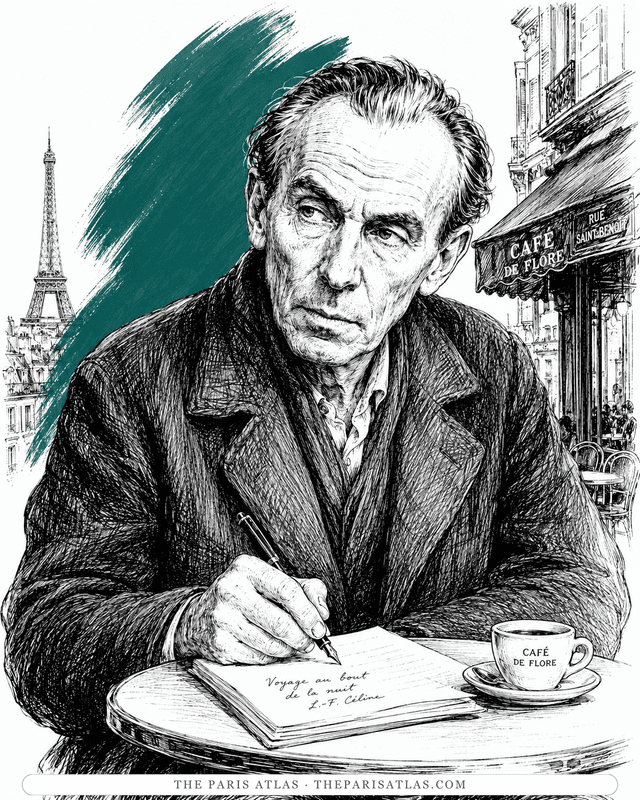
The doctor of the Paris slums who wrote the century's blackest, funniest novel — and changed the sound of French prose.
View author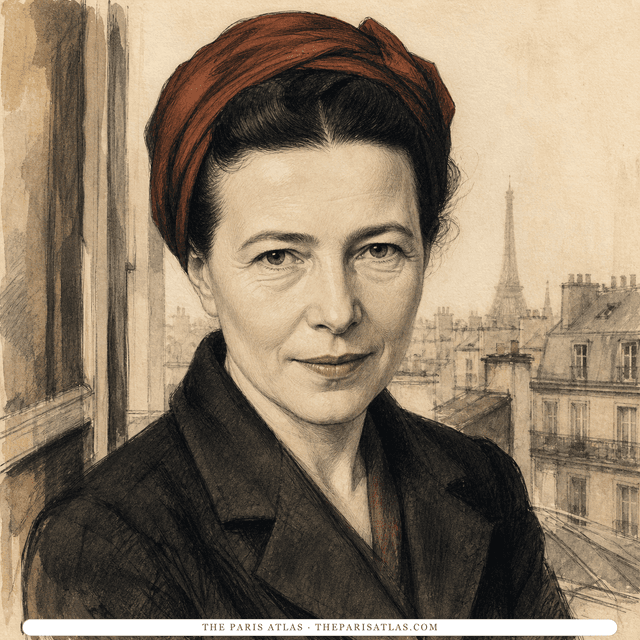
French writer and philosopher whose novels, memoirs, and social analysis examined freedom, gender, responsibility, aging, and the material conditions that shape a life.
View author
American novelist and composer whose expatriate fiction explores dislocation, unstable intimacy, fatalism, and North Africa.
View authorThe sources below include the primary text, editions, scholarship, archival materials, and other records that informed this page. They document The Idiot, its publication, and its place in literary history.

The scholarly commentary in the Russian academic edition: where and when the novel was written, the letter to Sofia Ivanova, Holbein and Basel, the prototypes, and the first translations.

The Bibliothèque nationale de France's digitised copy of the first French translation, Paris, 1887, with Vogüé's preface.
The Bibliothèque nationale de France's digitised copy of Vogüé's Le Roman russe, Paris, 1886, for its date and publisher.
Library catalogue records used to confirm each modern edition's ISBN, publisher, year and translator.
The primary text is the baseline reference for every book page. Additional references document publication history, interpretation, and historical context where that evidence is available.
 Explore more resources