
Depicted in its pages
Tropic of Cancer
The square's quiet, deserted evenings — one of the novel's stillest images of the Left Bank.
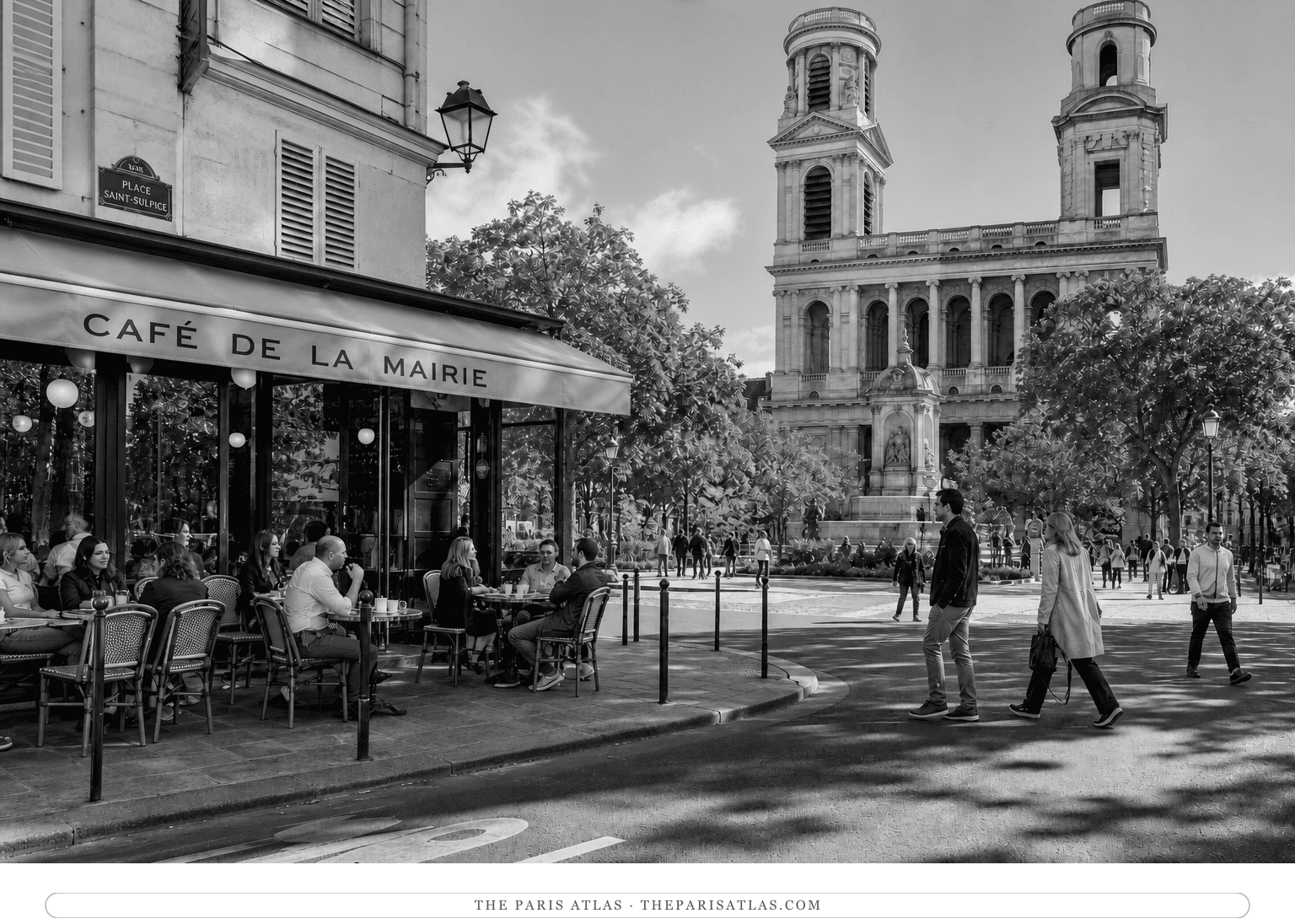
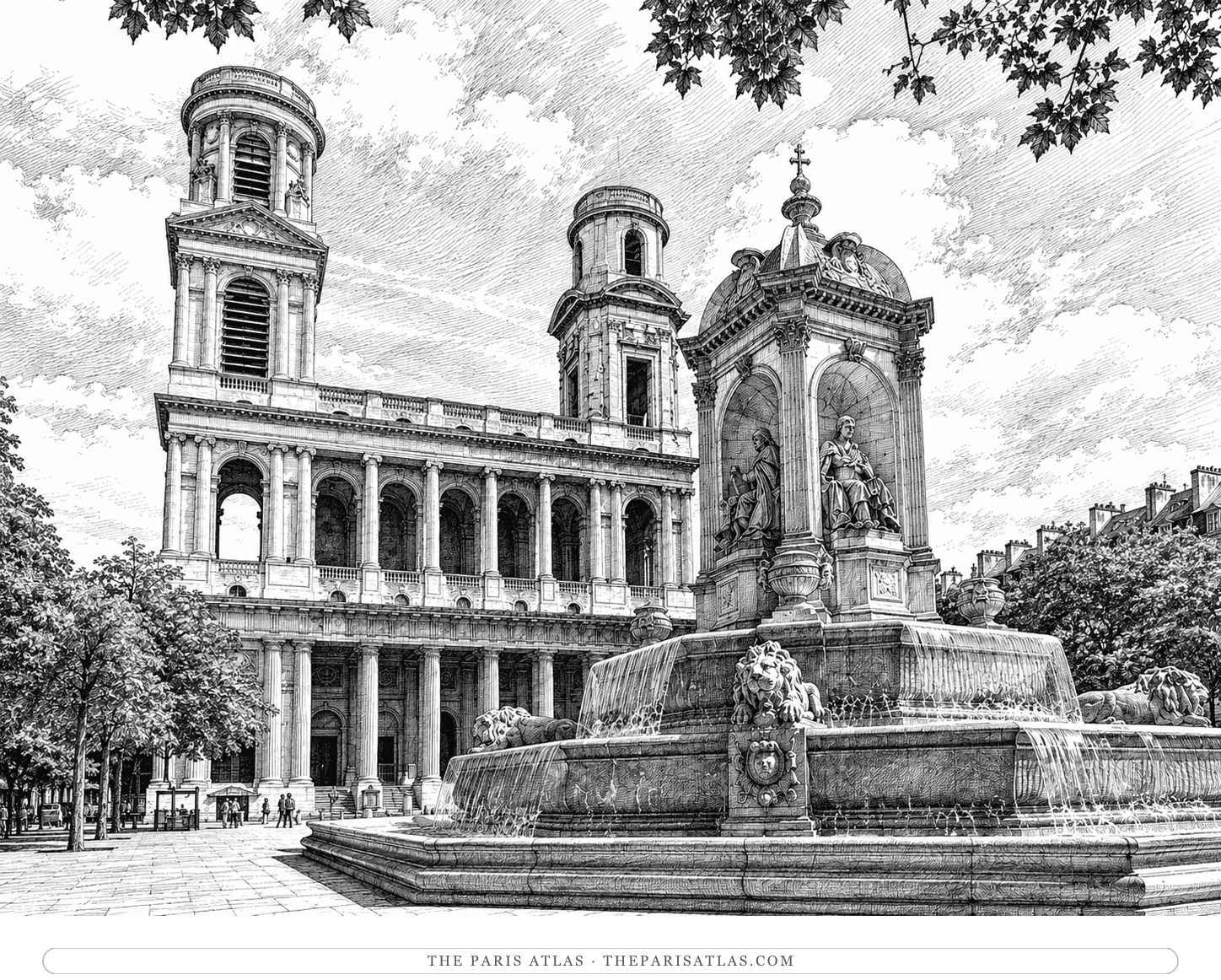
The quiet square between Saint-Germain and the Luxembourg — the fountain, the pigeons, the towered church, and a stillness three generations of writers noticed.
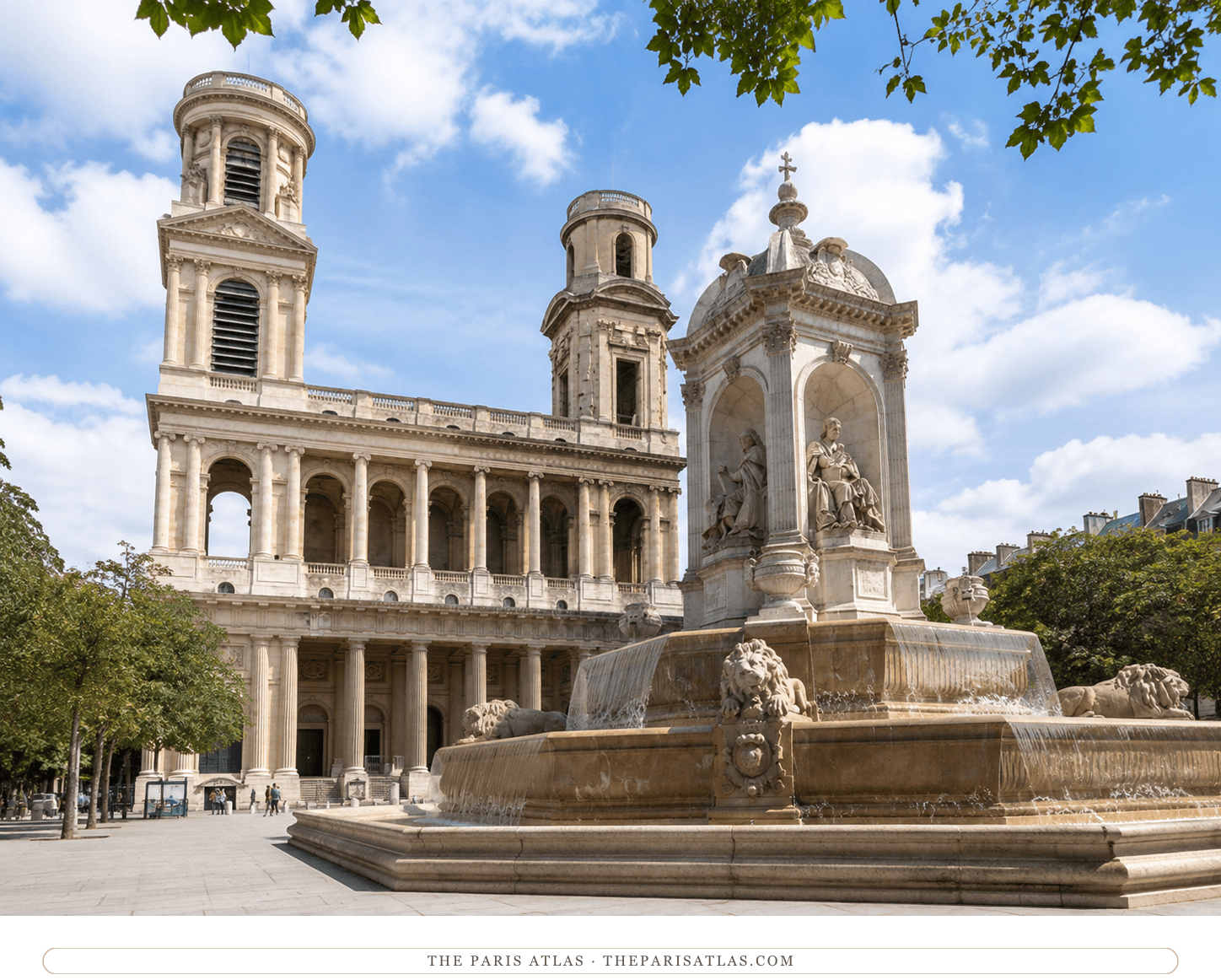
The square takes its name and its gravity from the church — Saint-Sulpice, nearly a century in the building, its mismatched towers looming over one of the calmest open spaces on the Left Bank. Visconti's fountain of four bishops arrived in the 1840s, the plane trees followed, and the square settled into the character every visitor remarks on: a pocket of provincial quiet a few minutes from the boulevard's noise.
That quiet is precisely what the writers kept noticing. Henry Miller, drifting broke through the quarter in the 1930s, registered the square's deserted evening calm in Tropic of Cancer. And the stillness has a supporting role in an earlier hunger: the narrow streets around Saint-Sulpice offered a route between the Luxembourg and the river where a man avoiding the smell of restaurants could walk without temptation — a geography A Moveable Feast readers know well.
The square has resisted its century better than most places in these pages: church, fountain, trees, and café all still in place. It remains what it was — the Left Bank's best room for doing nothing in.
The Place St. Sulpice, so quiet and deserted…
The church is begun; the square grows up before its west front.
Visconti's fountain of the four bishops takes the center of the square.
Miller's Paris — the square's evening emptiness makes it into Tropic of Cancer.
Unchanged in its essentials — the quarter's quietest public room.
Depicted in its pages
The square's quiet, deserted evenings — one of the novel's stillest images of the Left Bank.

Setting of the story
The square and its fountain are among the recognisable Paris locations in Nightwood, whose city is deliberately nocturnal and built around churches, hotels and late rooms.

Buried here · 1755
Montesquieu died in Paris on 10 February 1755 and was buried inside the church of Saint-Sulpice, which stands on the Place Saint-Sulpice.
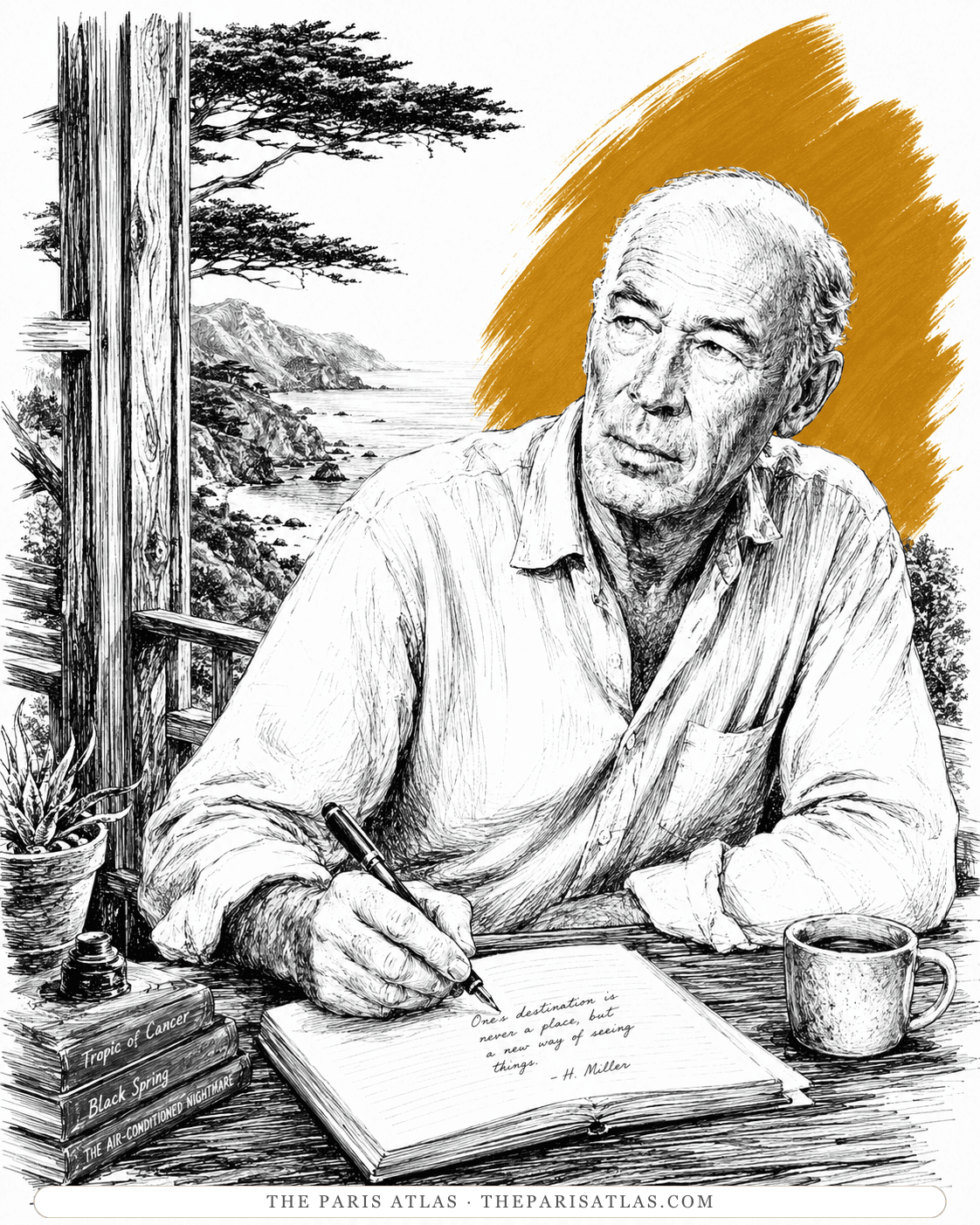
Henry Miller wrote about Place Saint-Sulpice in Tropic of Cancer.
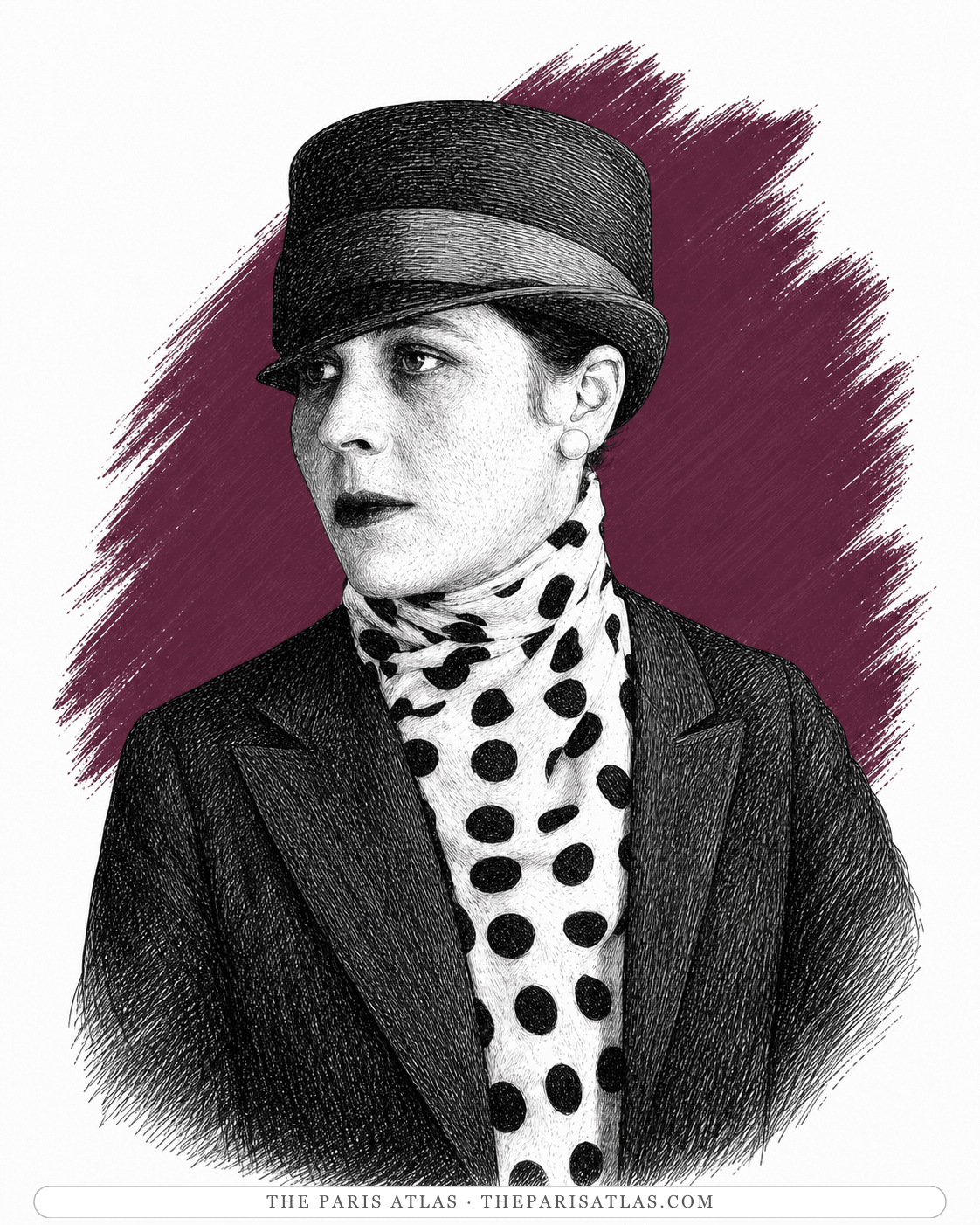
Djuna Barnes wrote about Place Saint-Sulpice in Nightwood.
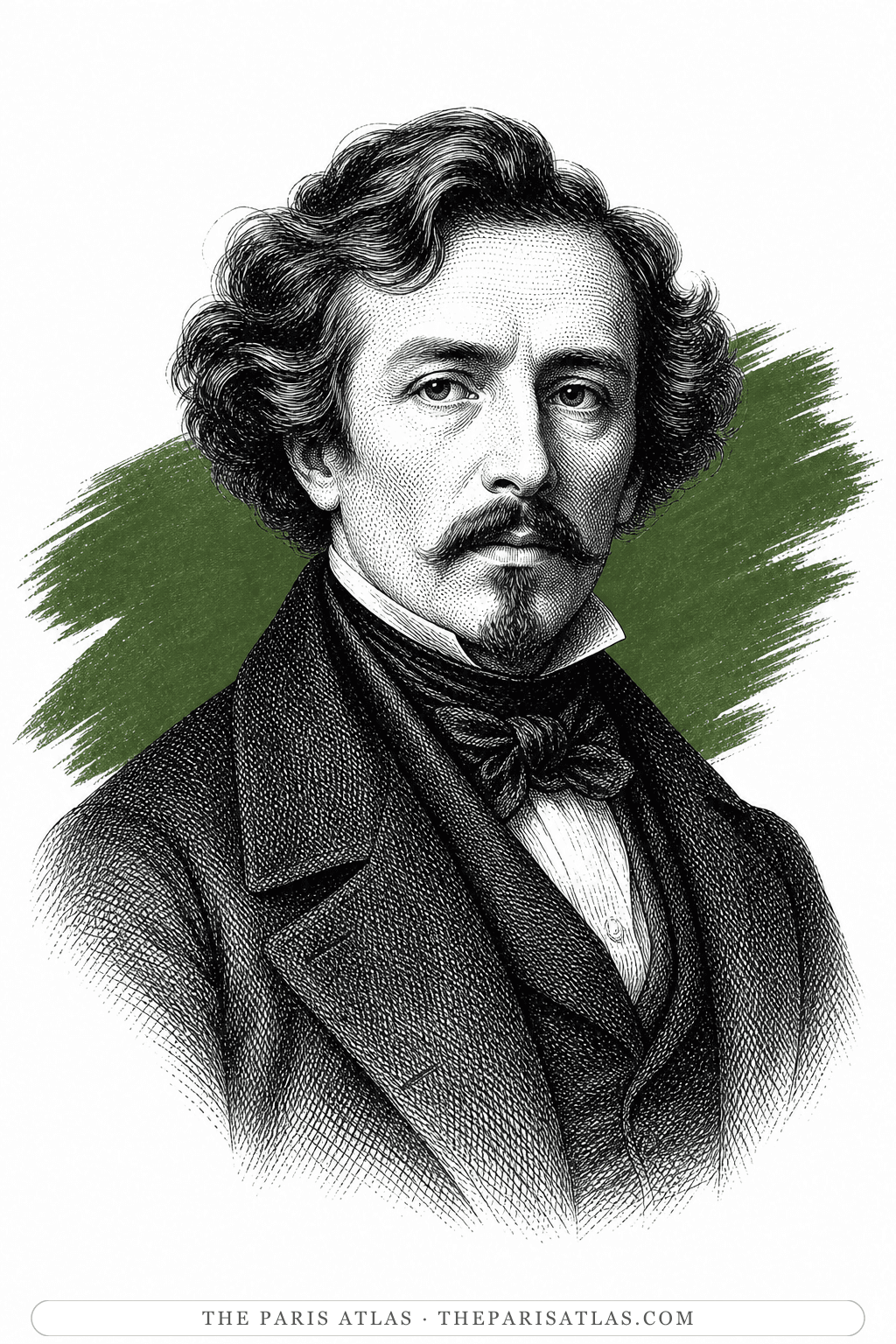
The murals in the Chapelle des Saints-Anges, inside the church that gives the square its name: Jacob Wrestling with the Angel, Heliodorus Driven from the Temple, and Saint Michael Defeating the Devil on the ceiling. Commissioned in 1847, painted with his assistant Pierre Andrieu, and inaugurated in August 1861.
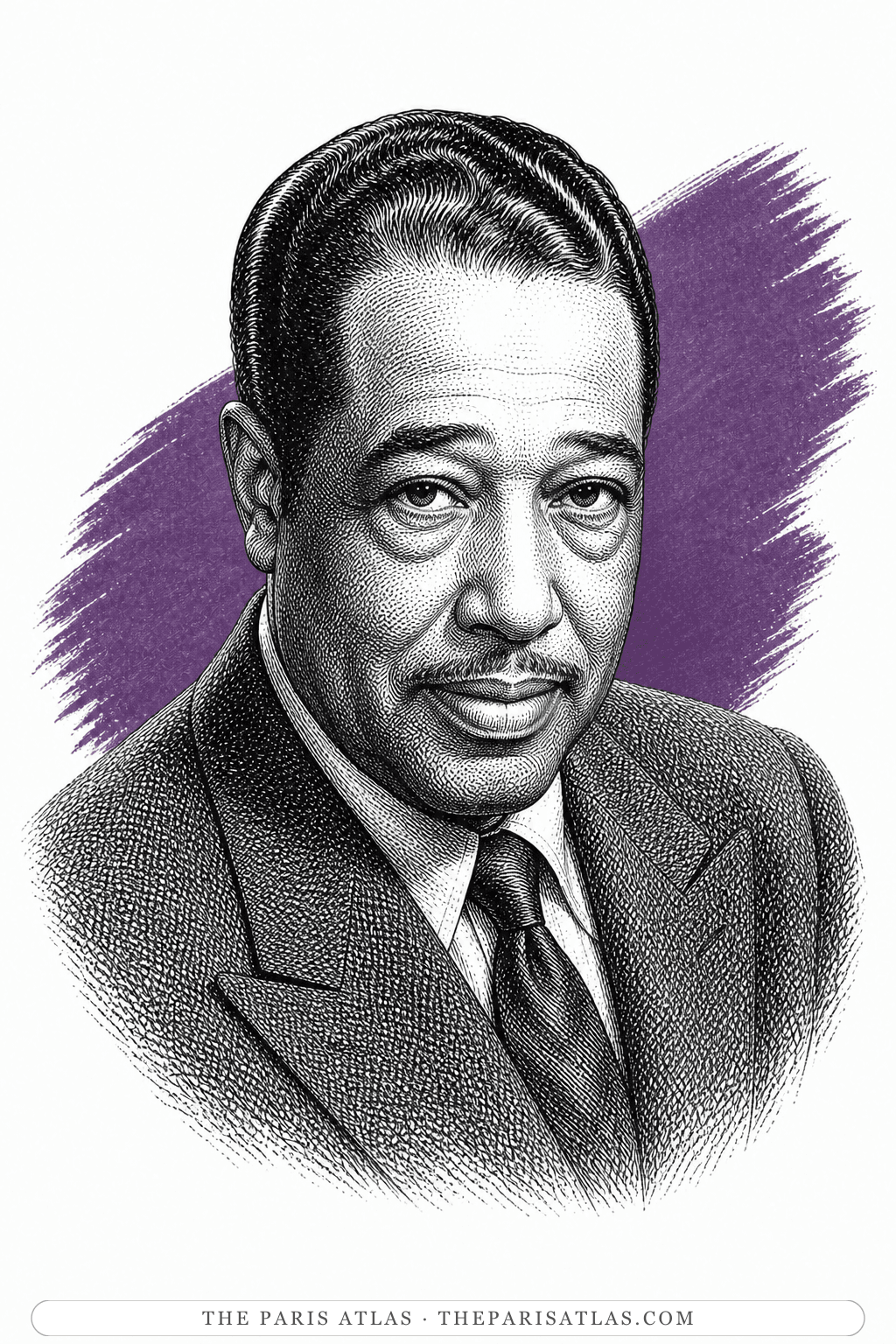
On the European tour of October and November 1969 Ellington gave one of his Sacred Concerts — a full evening of religious music for orchestra, choir and singers — inside the church of Saint-Sulpice, the seventeenth-century church that fills the north side of the square. His seventieth-birthday evening was celebrated afterwards at the Alcazar. The performance was in the church itself, not on the square.
Art & literary movement · c. 1790–1850
The argument that feeling, imagination and freedom belong at the centre of art rather than at its edges — settled in Paris, in the 1830s, in a theatre riot and at the Salon.
Enter the movement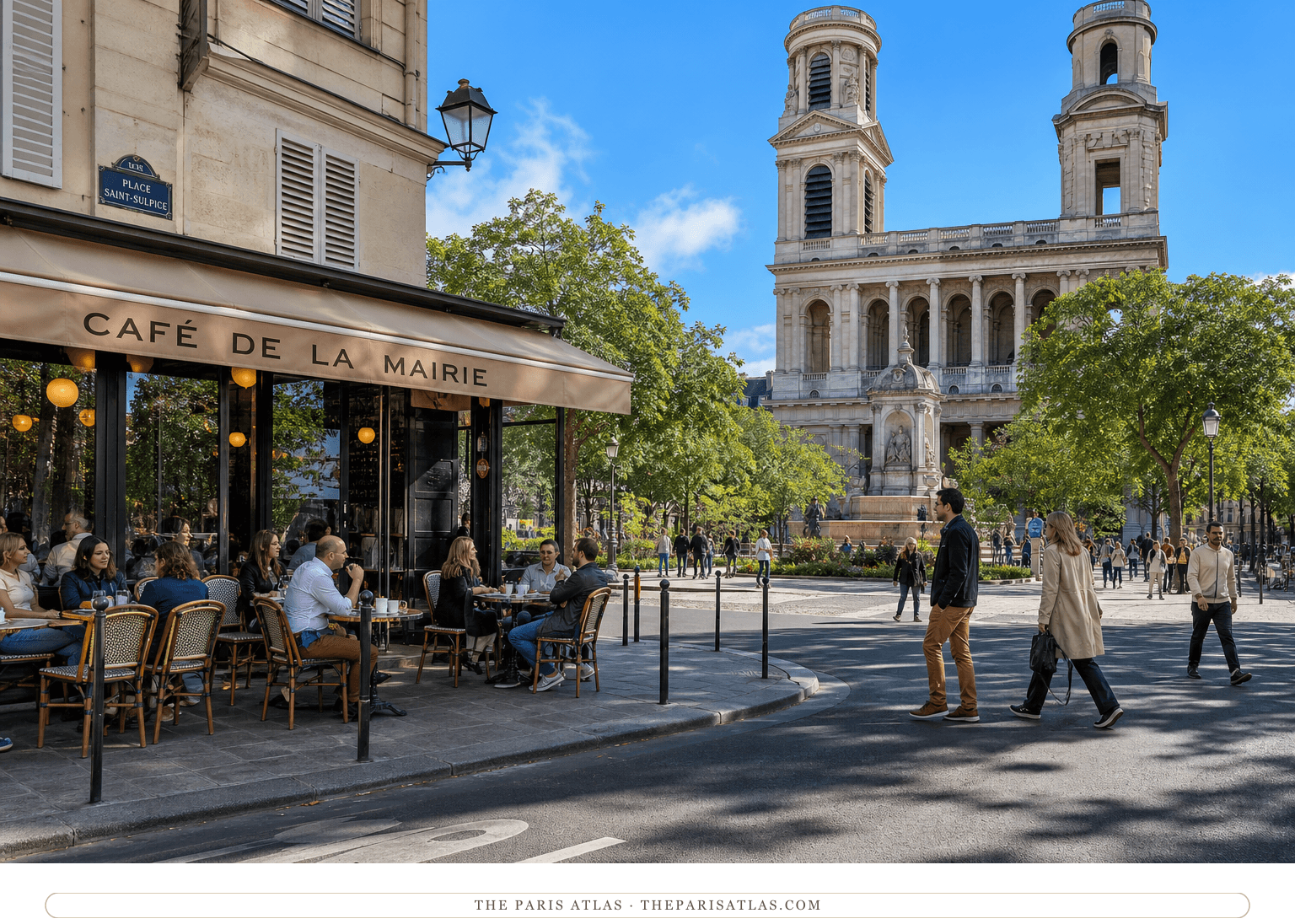
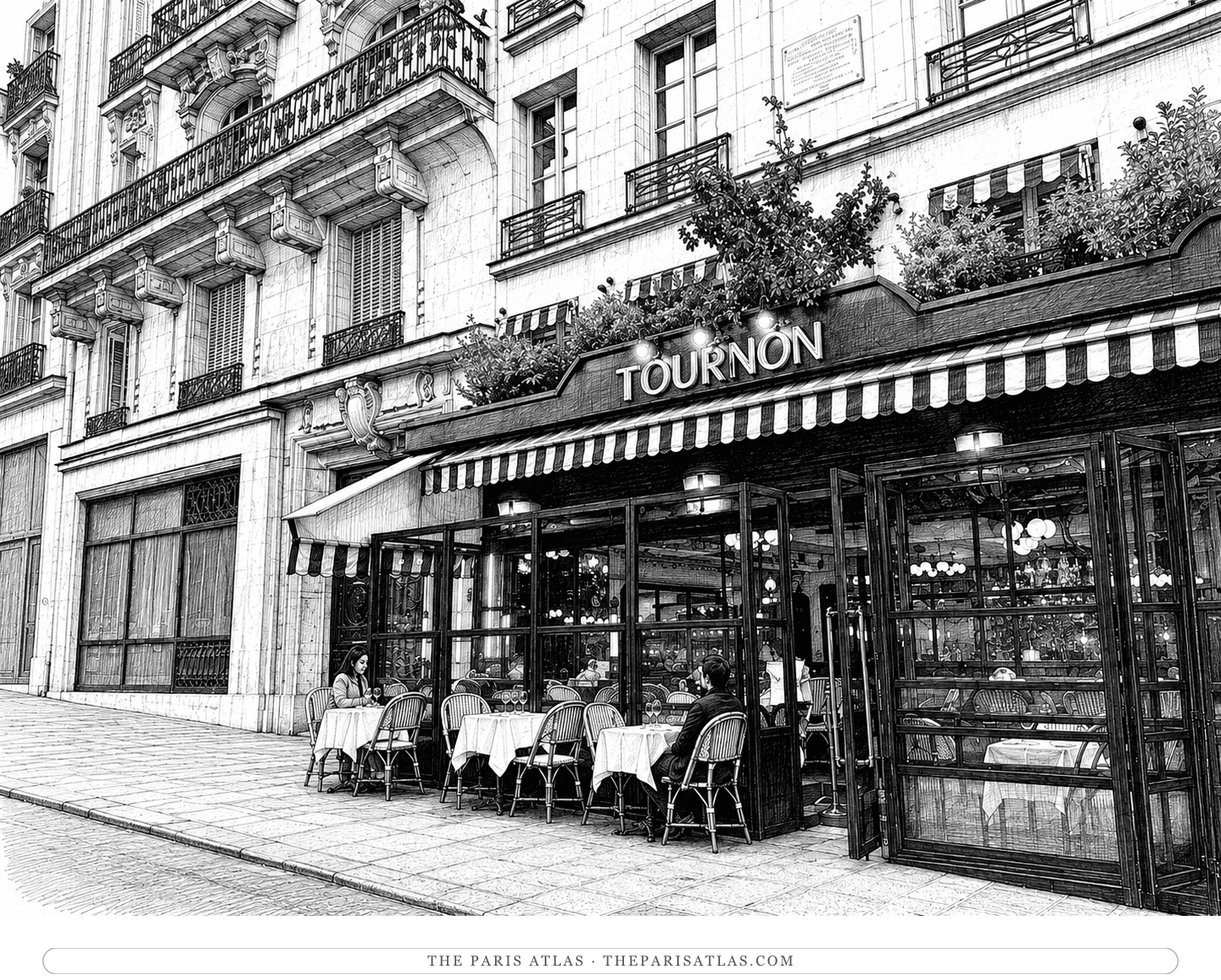
The café on the place Saint-Sulpice that appears in the Paris geography of Djuna Barnes's Nightwood — and which is still, unremarkably, a café.
Visit the place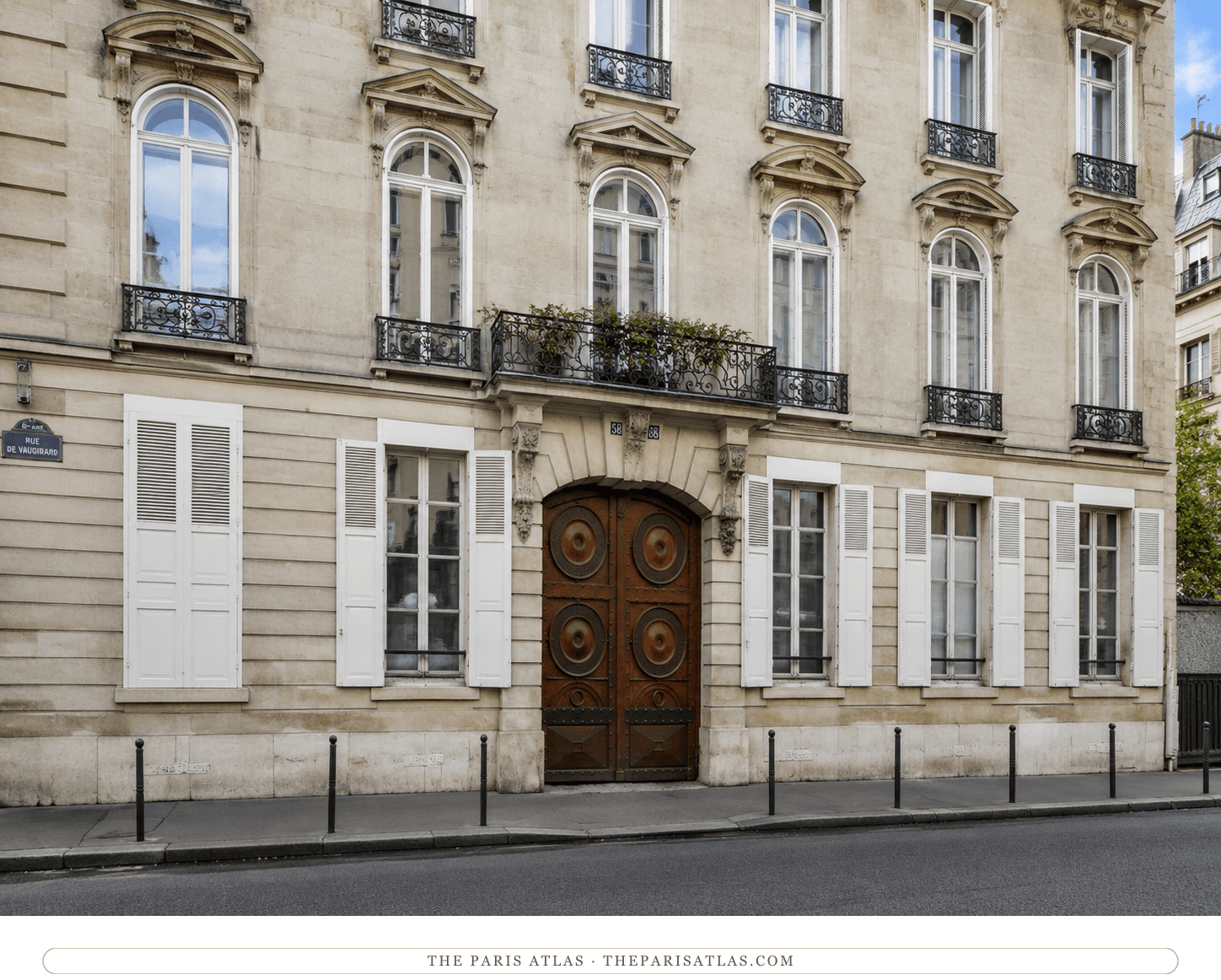
F. Scott and Zelda Fitzgerald's Left Bank apartment in the summer of 1928, facing the Luxembourg Gardens — the address of Zelda's ballet discipline and Scott's stalled novel.
Visit the place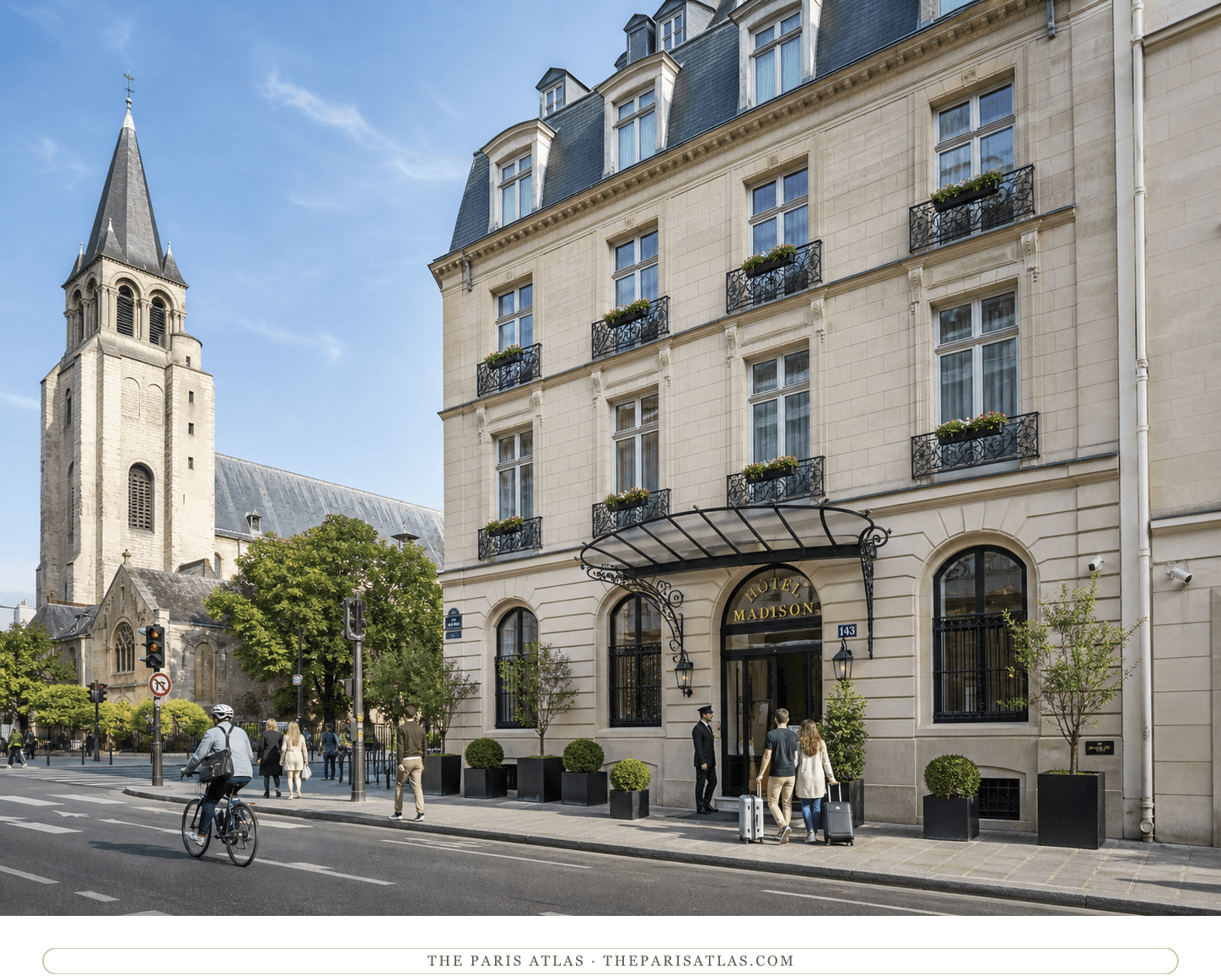
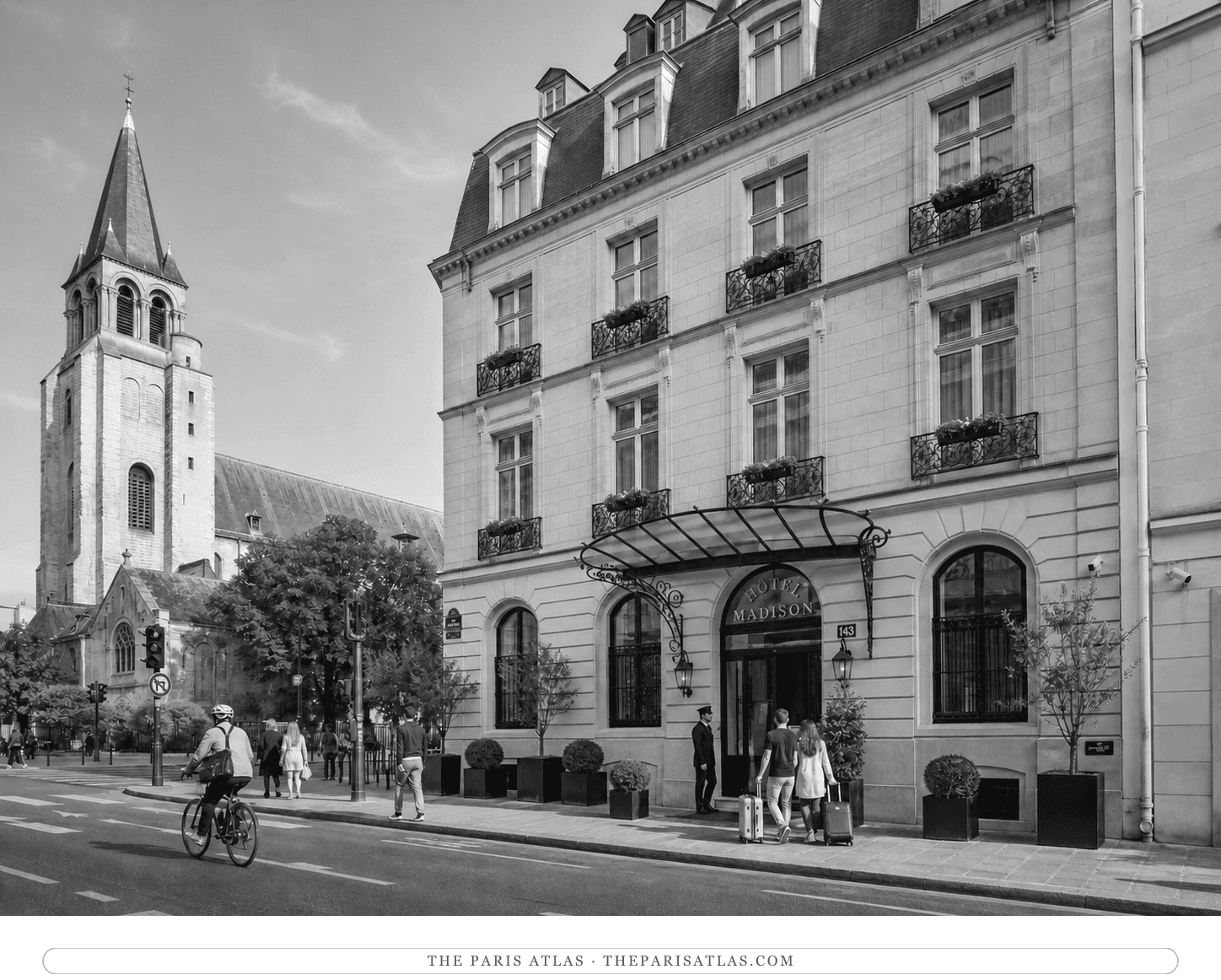
The hotel facing the church of Saint-Germain-des-Prés where Albert Camus lived from June 1940 — putting him, from the month Paris fell, at the centre of the quarter that would define postwar French intellectual life.
Visit the place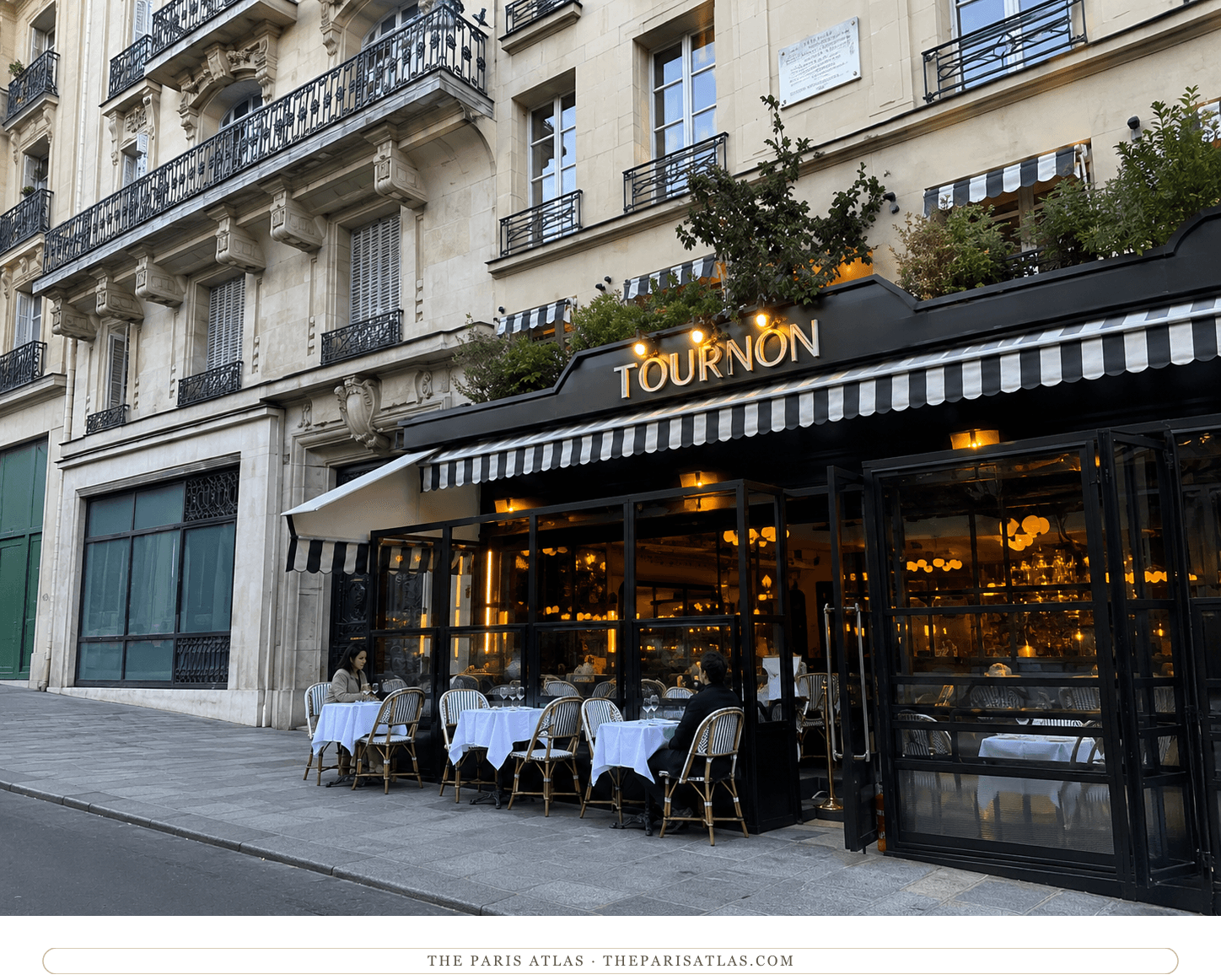
The café below the Senate that served as the unofficial headquarters of Black American writers in postwar Paris, with Richard Wright at the center and James Baldwin among the regulars.
Visit the placeThe sources below include histories, archival materials, scholarly research, and official records that informed this page. They document Place Saint-Sulpice, the people connected to it, and its place in Paris.


Primary text included as part of the documented record for Place Saint-Sulpice.

Map data used to verify addresses, geographic coordinates, and the placement associated with Place Saint-Sulpice.
Web source consulted for documented facts and historical context presented on the Place Saint-Sulpice page.
First-person evidence and historical context used in preparing the Place Saint-Sulpice page.
These references provide the documented foundation for this page's history and context. Claim-level citations remain attached to the specific claims they support.
 Explore more resources
Newsletter
The cafés, studios, and walk-up flats where the work was made — one story from the map in every letter.