The Paris AtlasCharting the artists, works, and places worth returning to.
  • Journalist
  • Illustrator
  • Author
  • Playwright
  • Poet
· American · 1892–1982

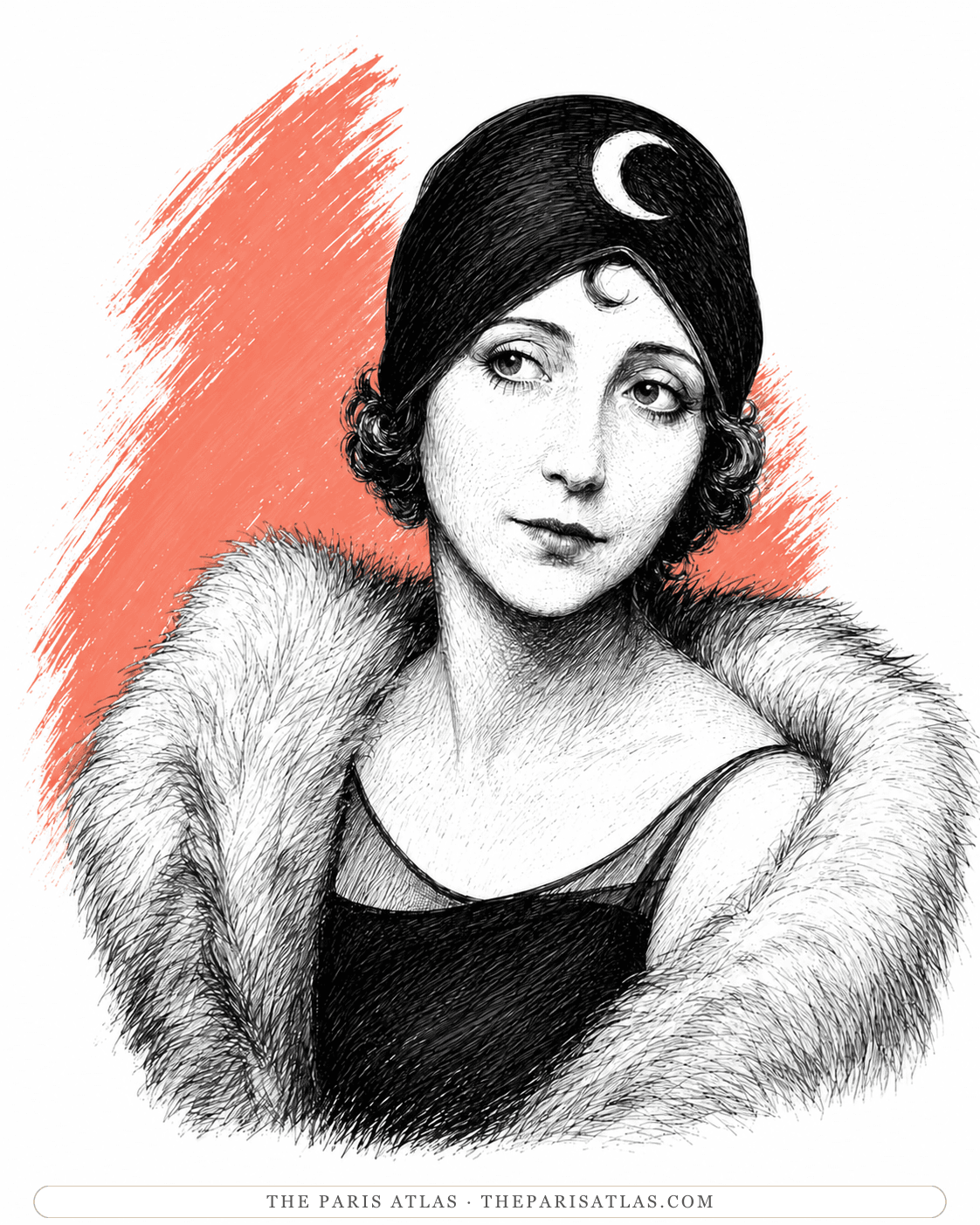
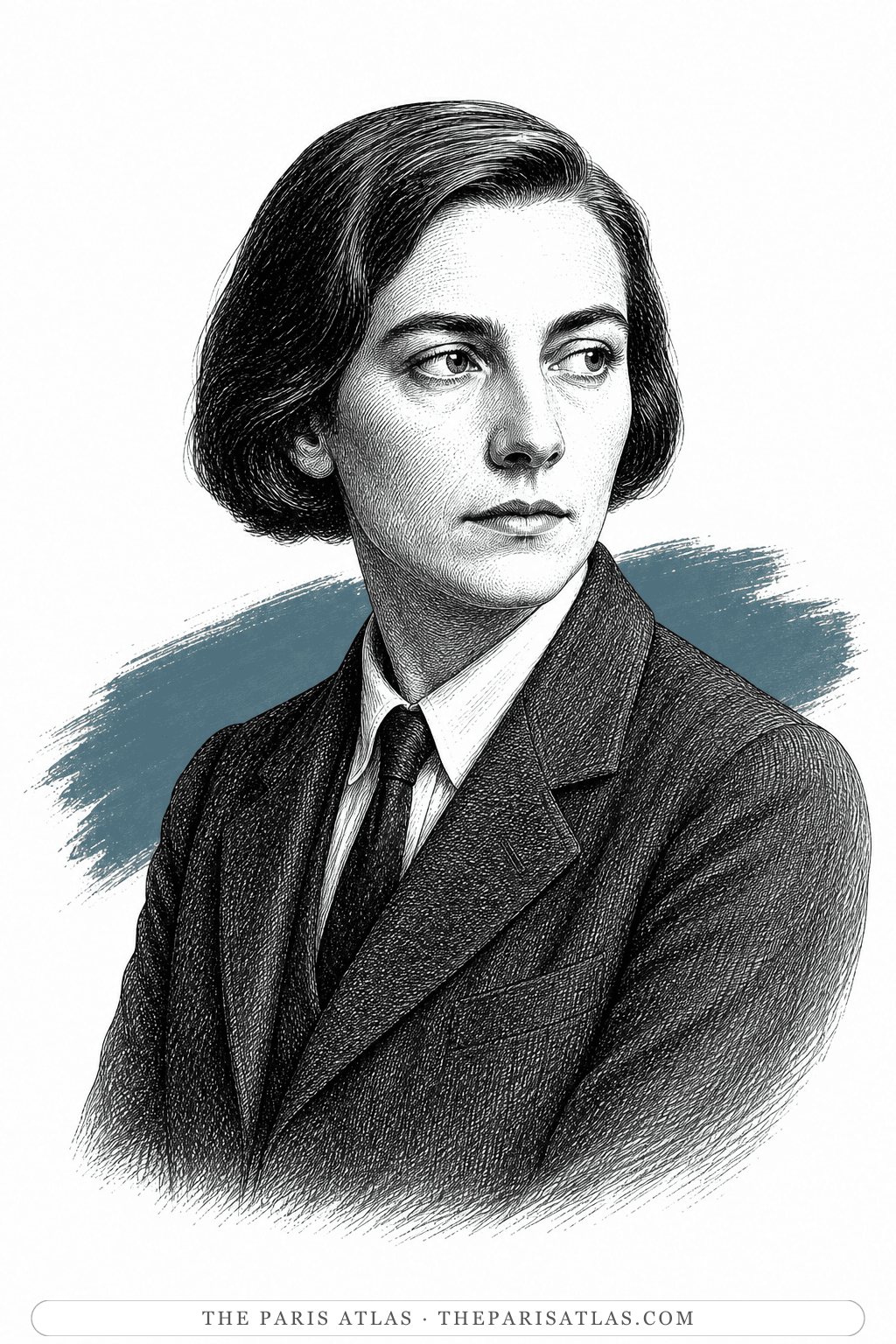
Djuna Barnes

American writer and illustrator (1892–1982). She was a New York newspaper reporter for eight years before she was a novelist, spent the 1920s and 1930s in Paris, and wrote Nightwood, the 1936 novel T. S. Eliot took to Faber and introduced.

3 books on our shelves

Details

Lived
1892–1982
Born
12 June 1892
Birthplace
Cornwall-on-Hudson, New York
Died
18 June 1982 · aged 90
Place of death
Greenwich Village, New York City
Nationality
American
Partner
Courtenay Lemon · 1917–1919Thelma Wood · c. 1921–1929
Roles
JournalistIllustratorAuthorPlaywrightPoet
Also known as
Lydia Steptoe · A Lady of Fashion

About Djuna Barnes

Djuna Barnes was an American writer, journalist and illustrator. Her reputation rests on one short novel, Nightwood, published by Faber in 1936 with an introduction by T. S. Eliot. She had been a working reporter for eight years before she wrote it.

She grew up at Cornwall-on-Hudson, on the Hudson River north of New York City, in a household her father ran on his own principles. He believed in polygamy and moved his mistress in alongside his wife and children. Barnes was taught at home, largely by her grandmother Zadel Barnes, herself a journalist and a suffrage campaigner, and she never went to school.

From 1913 she wrote and drew for the New York papers: the Brooklyn Daily Eagle first, then the New York Press, the Morning Telegraph, the Sun and the World. She was good at it. In 1914 she had herself force-fed so that she could describe what was being done to hunger-striking suffragists, and that article is still the best-known piece of her journalism. In 1921 McCall's sent her to Paris, and she stayed in Europe for most of the next two decades.

Paris gave her Thelma Wood, the American artist she lived with for about eight years, and the circle around Natalie Clifford Barney's salon on the rue Jacob, which she wrote up in 1928 as Ladies Almanack. Nightwood came out of the end of the relationship with Wood. Barnes returned to New York in 1939 and moved the following year into a one-room apartment at 5 Patchin Place in Greenwich Village, where she lived alone for forty-two years. She died there in 1982, six days after her ninetieth birthday.

The household at Cornwall-on-Hudson

Djuna Barnes was born on 12 June 1892 at Cornwall-on-Hudson, New York, the second child and only daughter of Wald Barnes and Elizabeth Chappell Barnes. Her father was a composer and painter who sold almost nothing. Her mother was a violinist. Her paternal grandmother, Zadel Barnes, lived with them.

Wald Barnes believed in polygamy and practised it at home: his mistress moved into the house with his wife and children. The children were educated inside that house rather than sent out of it, and the person who did most of the teaching was Zadel Barnes, who had worked as a journalist, campaigned for suffrage and temperance, and profiled Frances E. Willard in print. Barnes's only formal schooling was in art, two short spells of it, at the Pratt Institute in 1912 and 1913 and at the Art Students League of New York in 1915 and 1916.

What else happened in that house is disputed, and the disagreement is old. Phillip Herring's biography argues that Barnes was sexually abused as a girl, with her father responsible or aware. The evidence is her own writing, which returns to the material for sixty years without ever settling it, and the family's letters, including some from Zadel Barnes that Herring reads as improper. Other accounts read the same documents more cautiously. Nothing outside the family's own papers establishes what took place.

She wrote the house twice. Ryder, the novel of 1928, puts a version of her father on a farm with his mother, his wife, his mistress and eight children. The Antiphon, the verse play of 1958, returns to the same family thirty years later and is harder to read as anything else.

Eight years on the New York papers

Barnes moved to New York around 1912 and began selling articles the following year. She wrote and illustrated, which doubled what an editor could use her for, and she worked fast and steadily across most of the city's press.

  • Brooklyn Daily Eagle, from 1913 — her first regular outlet, features and drawings.
  • New York Press, the Morning Telegraph and the New York Sun, in the years that followed.
  • The World Magazine, the Sunday supplement that ran her longest stunt pieces.
  • Later, and often from Europe: Vanity Fair, McCall's, Charm, Smart Set and Theatre Guild Magazine, where she had a column.

The interviews are the part of the work that has aged best. She sat down with Alfred Stieglitz, Lillian Russell, Diamond Jim Brady, Florenz Ziegfeld, the evangelist Billy Sunday, the dancers Vernon and Irene Castle, and later with Coco Chanel and James Joyce. She was twenty-one when she started doing it.

She also did the other kind of assignment, the kind where the reporter is the story. She went up a building with the fire department and had herself rescued from an upper window, three times, for the photographs. She went into a cage with a gorilla.

How It Feels to Be Forcibly Fed

The World Magazine ran the piece on 6 September 1914. Suffragists on hunger strike were being fed through a tube against their will, in British prisons and then in American ones, and the procedure was defended publicly as medical care. Barnes arranged to have doctors do it to her, and wrote it up in the first person.

It is utterly impossible to describe the anguish of it.

Djuna Barnes, 'How It Feels to Be Forcibly Fed', The World Magazine, 6 September 1914

The article is usually filed as an act of solidarity, and the admiration in it for the women who had endured the same thing is real. Her suffrage journalism as a whole is less tidy. She had written pieces the year before that ridiculed suffragists and used the standard jokes about what the movement did to men. She also made a serious objection to Carrie Chapman Catt, the movement's most powerful American organiser, over the respectability she demanded of recruits and the women that requirement excluded.

Greenwich Village

The reporting paid for a life in Greenwich Village, which in those years held most of the people who would matter to her later. Her first book, The Book of Repulsive Women, a set of poems with her own drawings, appeared in 1915. She thought little of it afterwards, and called it "a disgusting little item".

She acted with the Provincetown Players and wrote for them, and three of her one-act plays were produced in 1919 and 1920. It was at the Provincetown Theatre in 1915 that she met Mina Loy, the English poet and painter, who would be her neighbour in Paris a decade later.

From 1917 to 1919 she lived with Courtenay Lemon, a socialist and theatre critic who later read plays for the Theatre Guild. The Harry Ransom Center, which holds his signature on the door of the Greenwich Village Bookshop, dates the relationship to those two years and calls it a love affair. He is often described instead as her common-law husband, and no marriage record has been produced.

Paris, 1921

McCall's sent her to Europe in 1921 to write about the expatriates. She stayed for most of twenty years, and the assignment turned into the working life she is remembered for.

The Joyce interview came almost immediately. Vanity Fair published it in 1922, the year Ulysses appeared, with her own drawing of him beside the text. She got him talking about his book, about the readers who would insist on finding a moral in it, and about the church he had refused to serve, and she wrote the piece as a portrait rather than a report.

Her fiction started appearing in the same rooms as everyone else's. Ford Madox Ford printed her twice in the transatlantic review, the magazine he edited from the Île Saint-Louis for exactly twelve issues in 1924: the story 'Aller et Retour' in the April number, and 'Gertrude Donovan'.

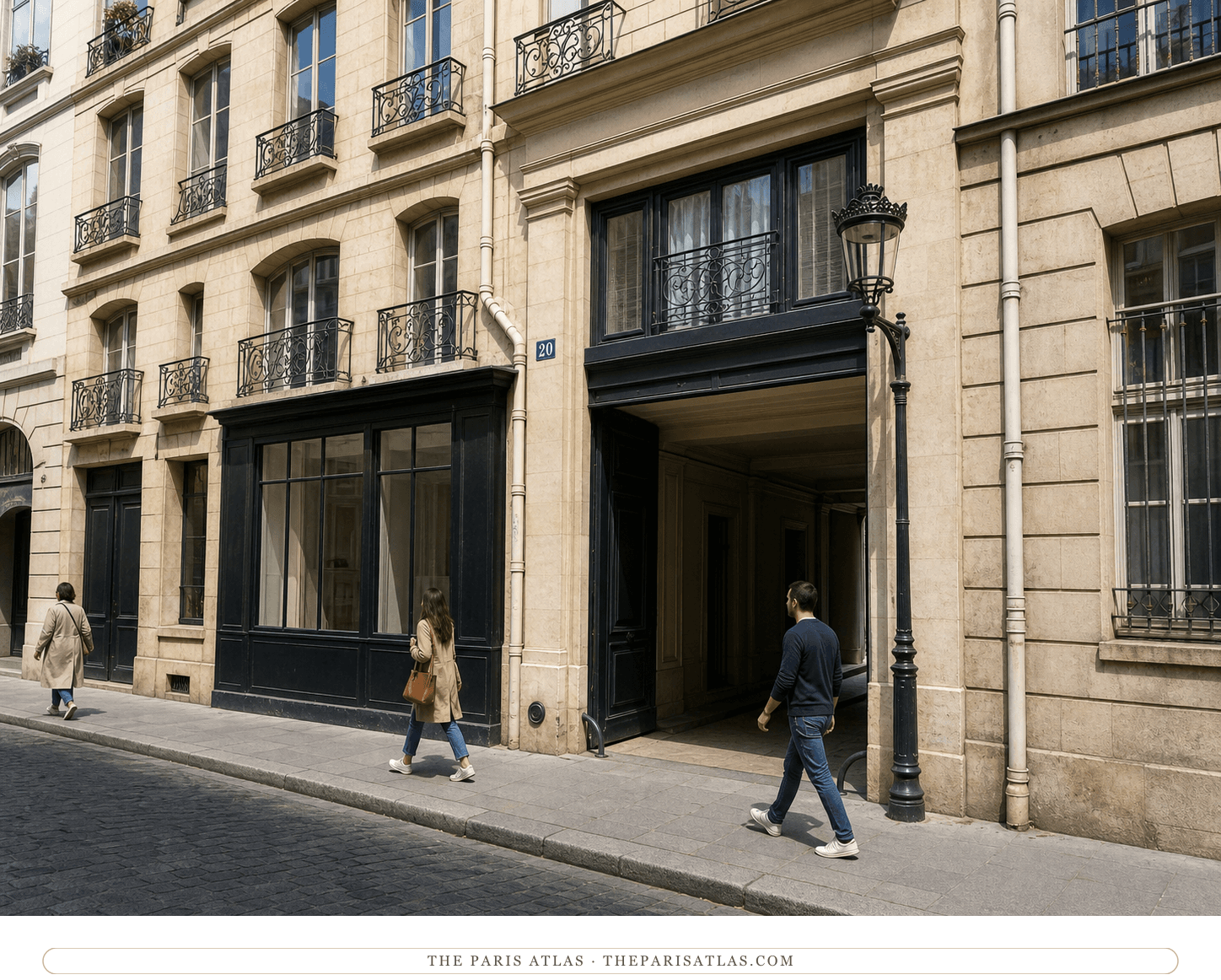
The circle that mattered most to her met on Fridays at Natalie Clifford Barney's house at 20 rue Jacob, in Saint-Germain-des-Prés, where Barney had a small pillared temple in the garden and ran a salon for more than sixty years. Barnes went with Mina Loy, who lived nearby. This is the Paris that the standard account of the Lost Generation tends to leave out: women, largely queer, meeting in an apartment rather than at a café table.

Thelma Wood, and the word she rejected

Thelma Wood was an American artist who worked in silverpoint, a difficult and unfashionable medium that leaves a line you cannot correct. She and Barnes met in Paris in 1921 or 1922 and lived together for about eight years. They were conspicuous in the quarter, Barnes in a black cloak with a stick, Wood in men's trousers.

It ended badly, over Wood's other affairs, at the end of the decade. Accounts date the break anywhere from 1928 to 1931. Barnes wrote Nightwood out of it, and said so: she described the novel as her life with Thelma. Wood read the book, recognised herself in Robin Vote, and stopped speaking to her.

Barnes belonged to the lesbian circle around Natalie Barney and wrote its comic history in Ladies Almanack. Nightwood is described by the NYC LGBT Historic Sites Project as the first American novel to address lesbian sexuality frankly, and it was read that way from the start. She had relationships with women and with men, and the longest of her life was with a woman.

She rejected the label anyway. That refusal is documented and belongs to the record of her, not to a later gloss on it. The sentence is a different matter. A line in which she says she was not a lesbian, she had simply loved Thelma, is quoted in nearly every account of her, and by 1993 it was established enough to be used as the title of a scholarly article on her sexuality. It comes down through her biographers, not through anything she wrote or was recorded saying; its wording changes from one printing to the next; and no occasion is given for it. It is therefore not quoted here as her words.

Ryder and Ladies Almanack, 1928

Horace Liveright published Ryder in New York in 1928. It follows Wendell Ryder, a patriarch on a farm with his mother, his wife, his mistress and eight children, and it is written as a pastiche of everything Barnes had read: Chaucer, the Bible, Rabelais, eighteenth-century chapbooks. The family is her own.

The Comstock laws made parts of it unmailable. Rather than let the Post Office cut the book, Barnes and her publisher cut it first and marked every excision: twelve passages replaced by asterisks, five drawings removed. Liveright agreed to print her foreword denouncing the arrangement. Ryder sold out a first printing of three thousand, reached a bestseller list briefly, and paid for a new apartment in Paris. It was reprinted once and then disappeared for decades.

Ladies Almanack came out the same year, privately, in Paris. It is a month-by-month almanac of Barney's circle, with Barney herself as Dame Evangeline Musset, written in mock-archaic English and illustrated by Barnes. The title page credits it to a lady of fashion. Barney paid for the edition: 1,050 copies, fifty of them coloured by hand by Barnes, sold partly on the street by the author and her friends. Its first audience was the group it was making fun of, and by most accounts they enjoyed it.

Nightwood, 1936

She wrote most of Nightwood in the early 1930s, some of it at Hayford Hall, the house in Devon that Peggy Guggenheim rented for two summers and filled with writers. Guggenheim remembered Barnes staying indoors all day and going out for ten minutes to walk in the rose garden.

Publishers turned the manuscript down. Emily Coleman, a novelist and Barnes's friend, kept pressing it on T. S. Eliot at Faber until he read it, and in 1936 Faber took it. Publication cost the book a good deal of its text. Coleman and Eliot cut material ranging from single words to passages three pages long, and Barnes agreed to the cuts without liking them. Cheryl J. Plumb's critical edition of 1995 restores what was removed and reproduces the surviving drafts.

Harcourt, Brace published it in New York in 1937 with an introduction by Eliot, which argued that the prose asked to be read the way poetry is read. That introduction is a large part of why the novel survived; it also fixed the terms on which it has been discussed ever since.

Eliot was not indulgent with her otherwise. Barnes showed him some of her poems a couple of years after Nightwood came out, and by Phillip Herring's account he told her he would give her a black eye if she wrote any more. They corresponded for the rest of his life. His letters were in a box beside her bed at the end of hers.

The Antiphon, and what came after

Faber published The Antiphon in 1958, a verse play in three acts about a family unmistakably like her own. English-language readers made little of it, and it has had almost no stage life in English.

It found one serious champion in an unlikely place. Dag Hammarskjöld, Secretary-General of the United Nations, translated the play into Swedish with Karl Ragnar Gierow, director of the Royal Dramatic Theatre in Stockholm, and corresponded with Barnes about it from 1958 onward. The foundation that holds his papers describes the work as difficult and done in his spare time. That translation was staged in Stockholm.

Two more books followed in twenty-four years: Spillway, a collection of stories, in 1962, and Creatures in an Alphabet, a set of rhymes, in 1982, the year she died.

Forty-two years at Patchin Place

Barnes came back to the United States in October 1939 and moved in September 1940 into a one-room apartment at 5 Patchin Place, a gated cul-de-sac off West 10th Street in Greenwich Village. She was forty-eight. She stayed for the rest of her life.

The last four decades were poor and mostly solitary. She drank heavily for years and then stopped, was ill often, and lived on very little, helped by friends. Peggy Guggenheim, who had known her since the early 1920s, was one of them, and the friendship lasted both their lives.

E. E. Cummings lived across the courtyard at No. 4 and used to check on her out of his window.

Are ya still alive, Djuna?

E. E. Cummings, across Patchin Place

She called herself the most famous unknown in the world. Nightwood stayed in print and on university reading lists through those decades, while she answered almost no letters and refused almost every visitor. Younger lesbian readers who had found the novel waited on the street outside the gate hoping to see her come out for her walk.

She died at 5 Patchin Place on 18 June 1982, aged ninety, six days after her birthday. Her papers, including the drafts, the correspondence with Eliot and the original artwork, went to the University of Maryland, where they remain.

Life events

  1. 1892

    Born at Cornwall-on-Hudson, New York, on 12 June, to Wald Barnes and Elizabeth Chappell Barnes.

    About Djuna Barnes — Djuna Barnes in Special Collections

  2. 1912–1916

    The only formal schooling she had: art at the Pratt Institute, then at the Art Students League of New York.

    About Djuna Barnes — Djuna Barnes in Special Collections

  3. 1913

    Begins working as a freelance reporter and illustrator, first for the Brooklyn Daily Eagle.

    About Djuna Barnes — Djuna Barnes in Special Collections

  4. 1914

    Has herself force-fed and writes it up for The World Magazine on 6 September, to describe what was being done to hunger-striking suffragists.

    Djuna Barnes, How It Feels to Be Forcibly Fed — The World Magazine, 6 September 1914 (1914); Djuna Barnes and the Women's Suffrage Movement (2021)

  5. 1915

    The Book of Repulsive Women, poems with her own drawings, is published. She meets Mina Loy at the Provincetown Theatre.

    Djuna Barnes — Mina Loy: Navigating the Avant-Garde

  6. 1917–1919

    Lives with the socialist and theatre critic Courtenay Lemon in Greenwich Village.

    Courtenay Lemon — The Greenwich Village Bookshop Door

  7. 1919–1920

    Three of her one-act plays are produced by the Provincetown Players.

    About Djuna Barnes — Djuna Barnes in Special Collections

  8. 1921

    McCall's sends her to Paris. She stays in Europe for most of the next twenty years, and meets Thelma Wood within months.

    Gaby Wood, 'Are ya still alive, Djuna?' — on Phillip Herring, Djuna: The Life and Work of Djuna Barnes, London Review of Books 18:13, 4 July 1996 (1996)

  9. 1922

    Interviews James Joyce for Vanity Fair, in the year Ulysses is published, and draws the portrait that runs with it.

    Djuna Barnes, James Joyce: A Portrait of the Man Who Is, at Present, One of the More Significant Figures in Literature — Vanity Fair, April 1922 (1922)

  10. 1924

    Ford Madox Ford prints 'Aller et Retour' in the April number of the transatlantic review, and 'Gertrude Donovan' later in the run.

    The Transatlantic Review (1924) — Index of Modernist Magazines

  11. 1928

    Ryder is published in New York with twelve passages replaced by asterisks and five drawings removed, and sells out its first printing. Ladies Almanack is printed privately in Paris in 1,050 copies, credited to a lady of fashion.

    Eliza Browning, Parables and the Picaresque: On Djuna Barnes's Ryder (2024); Ladies Almanack, by Djuna Barnes — edition note

  12. 1932–1933

    Writes much of Nightwood at Hayford Hall in Devon, the house Peggy Guggenheim rented for the summers.

    Peggy's Friends: Djuna Barnes

  13. 1936

    Faber publishes Nightwood, after Emily Coleman persuades T. S. Eliot to read it and he and Coleman cut the manuscript. Harcourt, Brace follows in New York in 1937 with Eliot's introduction.

    Nightwood: The Original Version and Related Drafts, edited by Cheryl J. Plumb — edition note; About Djuna Barnes — Djuna Barnes in Special Collections

  14. 1939–1940

    Returns to the United States in October 1939 and moves in September 1940 into 5 Patchin Place, Greenwich Village.

    About Djuna Barnes — Djuna Barnes in Special Collections

  15. 1958

    Faber publishes The Antiphon. Dag Hammarskjöld begins corresponding with her while translating it into Swedish with Karl Ragnar Gierow.

    About Djuna Barnes — Djuna Barnes in Special Collections; Discovering Hammarskjöld through what he left behind

  16. 1982

    Dies at 5 Patchin Place on 18 June, aged ninety, six days after her birthday.

    About Djuna Barnes — Djuna Barnes in Special Collections; Djuna Barnes Residence, 5 Patchin Place

People they knew

Documented connections — every one carries its source.

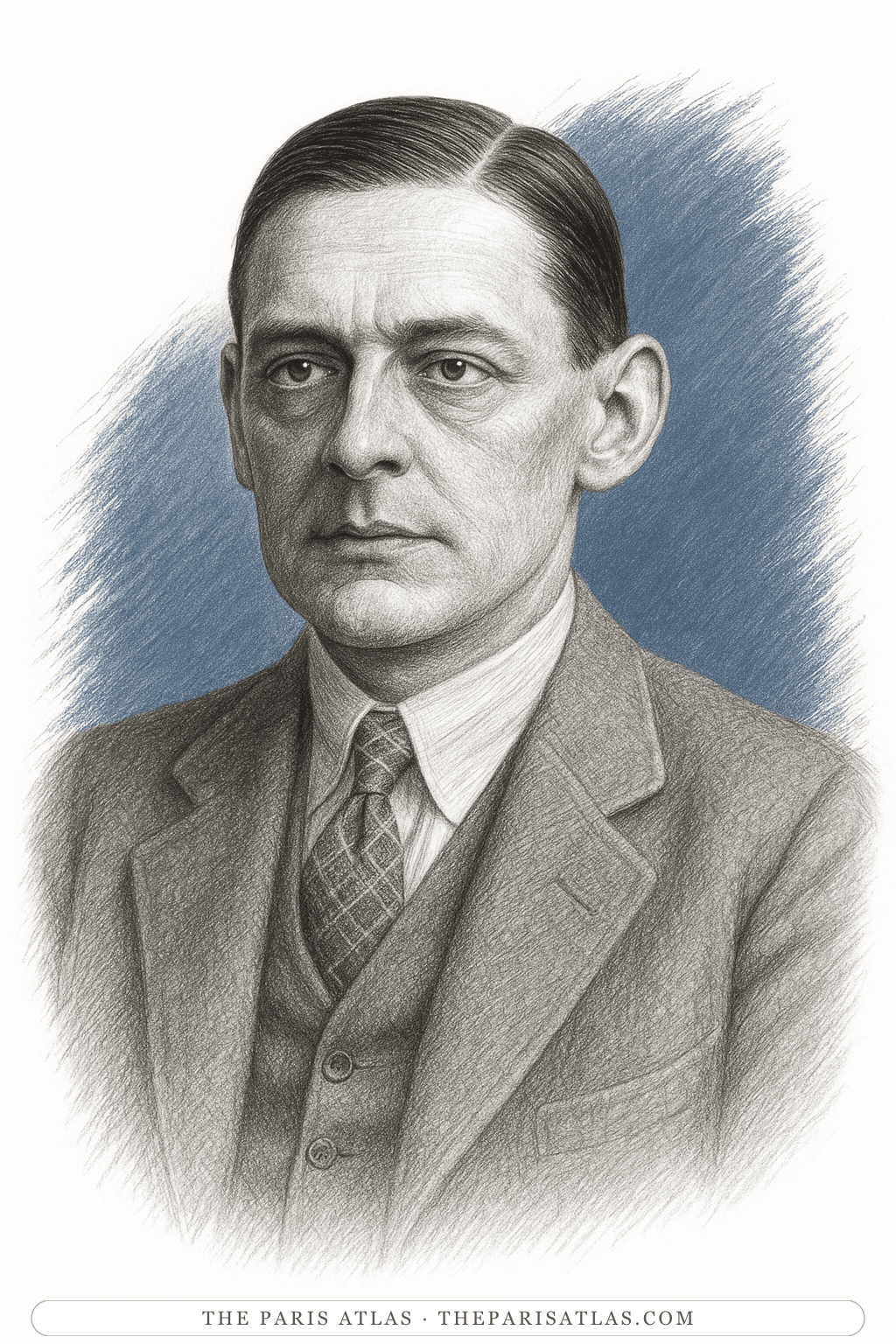
Illustrated portrait of T. S. Eliot

T. S. Eliot

  • Poet
  • Critic
  • Editor
  • +2

Collaborated with · 1935–1937

Author and editor. Emily Coleman pressed the manuscript of Nightwood on Eliot, who took it to the Faber board; he and Coleman cut material running from single words to passages three pages long, and Faber published the book in 1936. Eliot wrote the introduction carried by the American edition of 1937.
Nightwood: The Original Version and Related Drafts, edited by Cheryl J. Plumb — edition note; About Djuna Barnes — Djuna Barnes in Special Collections; Gaby Wood, 'Are ya still alive, Djuna?' — on Phillip Herring, Djuna: The Life and Work of Djuna Barnes, London Review of Books 18:13, 4 July 1996 (1996)

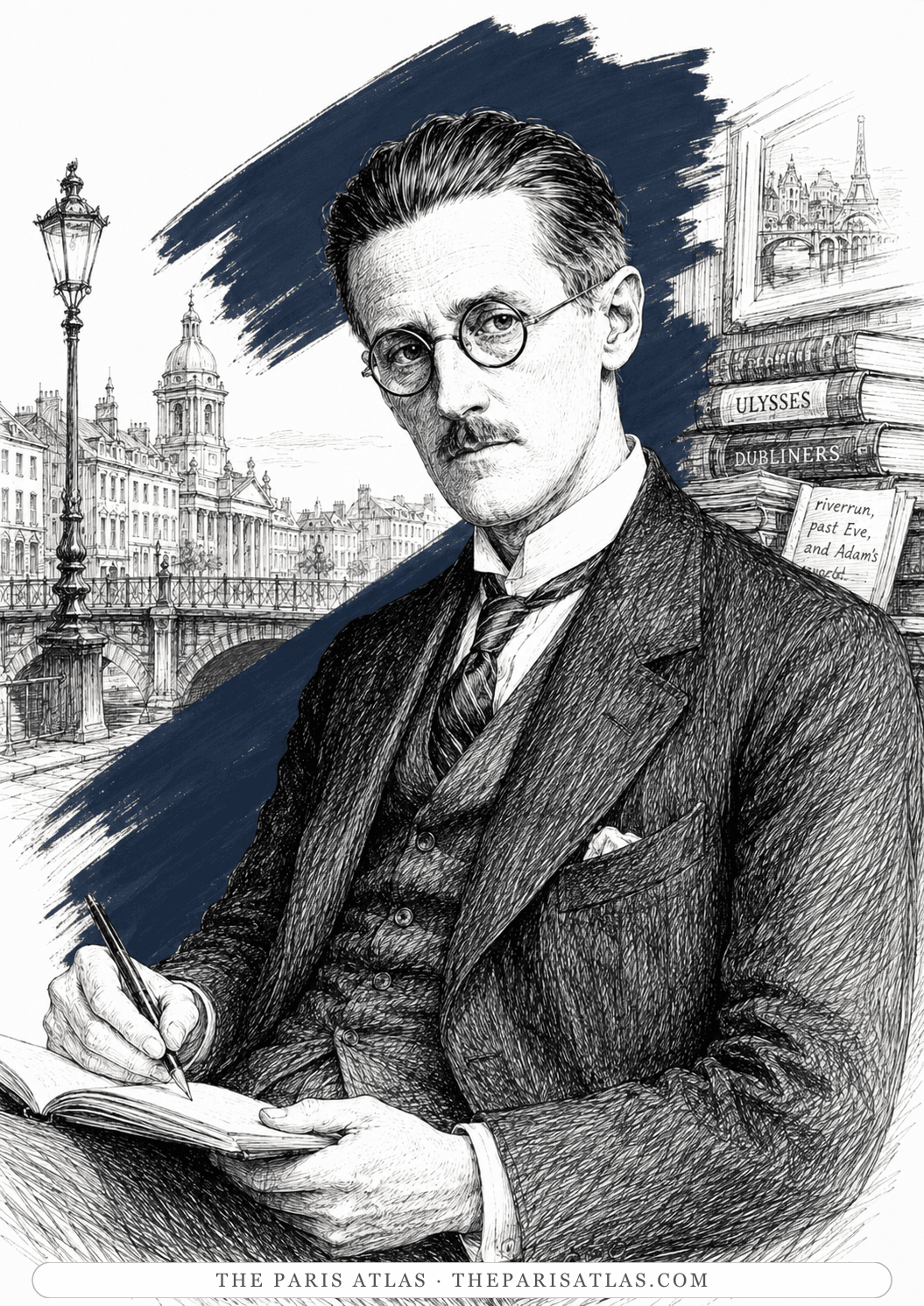
Illustrated portrait of James Joyce

James Joyce

  • Author
  • Poet

Met · 1922

Barnes interviewed Joyce in Paris for Vanity Fair in 1922, the year Ulysses was published, and drew the portrait of him that ran with the piece.

Djuna Barnes, James Joyce: A Portrait of the Man Who Is, at Present, One of the More Significant Figures in Literature — Vanity Fair, April 1922 (1922)

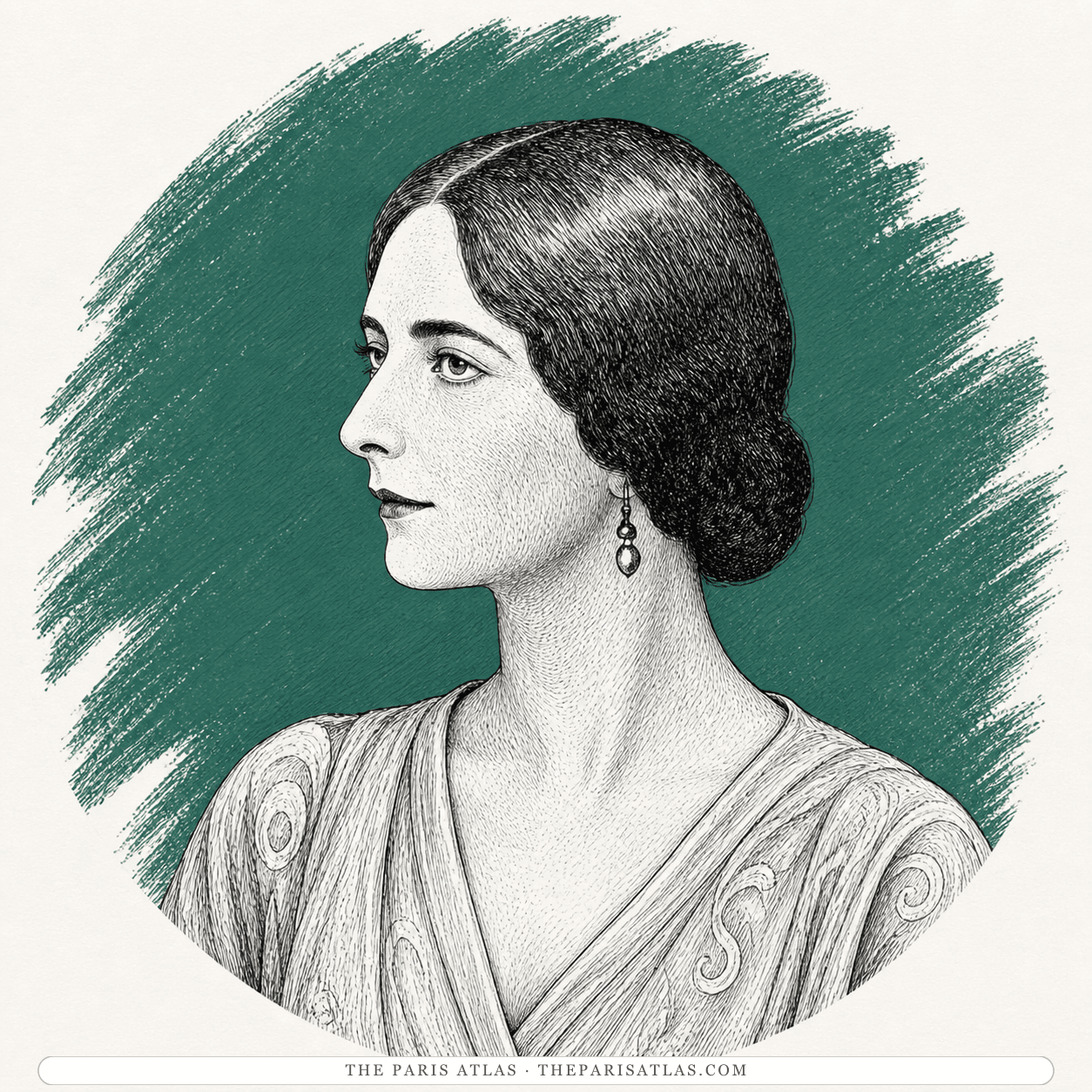
Illustrated portrait of Mina Loy

Mina Loy

  • Poet
  • Painter

Met · 1915

They met at the Provincetown Theatre in New York and were neighbours in Paris through the 1920s, going together to Natalie Clifford Barney's salon on the rue Jacob.

Djuna Barnes — Mina Loy: Navigating the Avant-Garde

Who drew from them

Influence running outward — the writers and artists who built on their work.

Illustrated portrait of Anaïs Nin

Anaïs Nin

Nin read Nightwood soon after it appeared and wrote to Barnes to say so, calling it the most beautiful thing she had read about women in love and admitting twice in the same letter that she was afraid to write at all; she had seen Barnes once in a café without knowing who she was. She printed the letter in her published diary, and a few pages later set the book as the mark for her own unwritten one, saying she wanted to do June better than Barnes did Nightwood. Nearly thirty years afterwards she named Barnes on the radio as the classic example of the poetic novel in English, and when the interviewer offered Virginia Woolf as a comparison she said Woolf had not influenced her and that reading Barnes had meant much more.

Anaïs Nin, The Diary of Anaïs Nin, Volume Two: 1934–1939 (1967), pp. 239-240, 268; Anaïs Nin interviewed by Frank Roberts on her diary and letters from Henry Miller (1965), 2:10-2:38

Movements

The artistic and literary currents this life ran through.

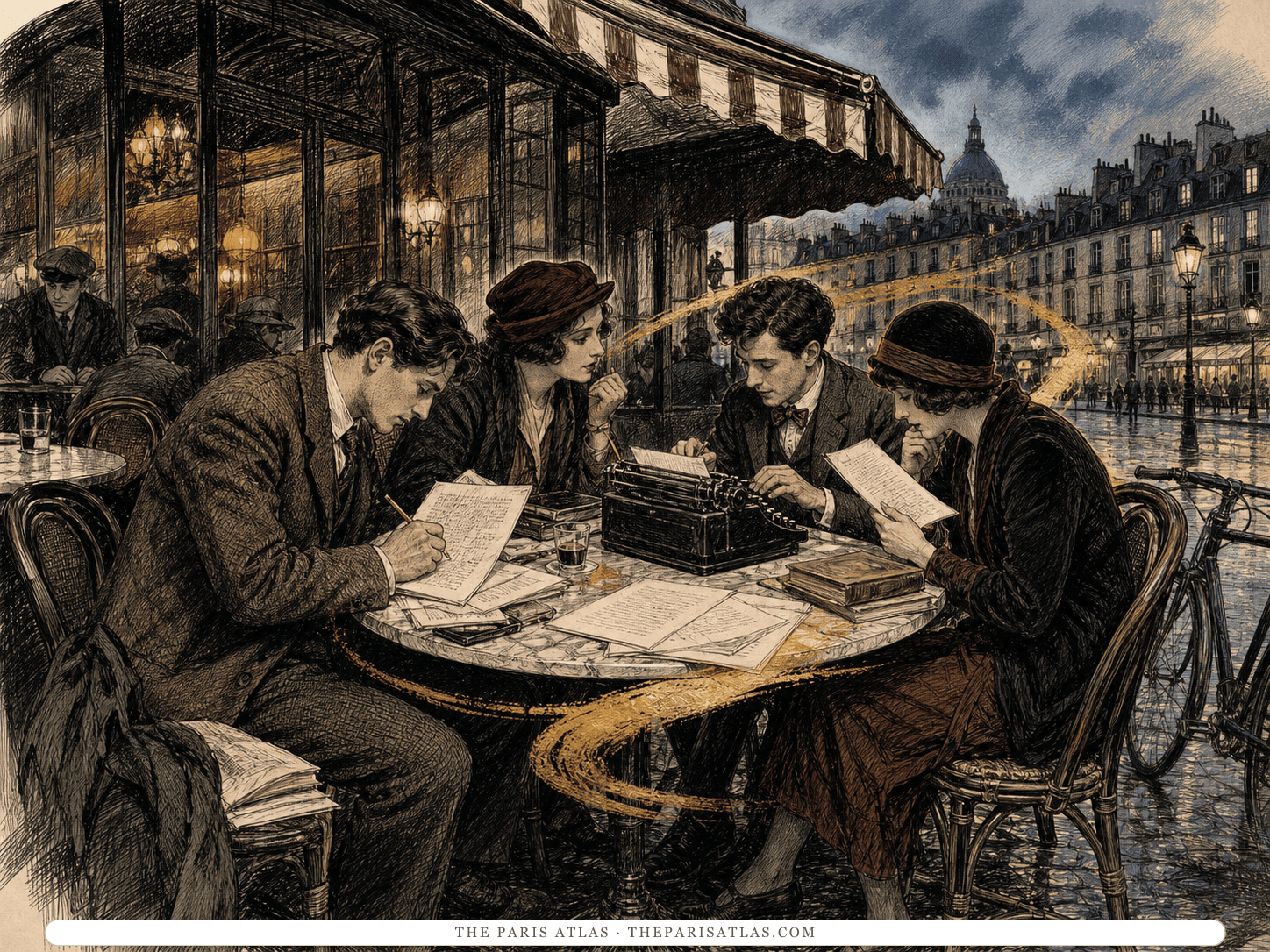
Pen-and-ink illustration of four young writers revising manuscripts around a typewriter at a Paris café in the 1920s

Literary generation · c. 1921–1929

The Lost Generation

McCall's sent her to Paris in 1921 and she stayed in Europe for most of the next two decades. Her Paris was the queer and nocturnal one, which is why she is usually named at the edge of this group rather than in the middle of it.

Djuna Barnes Residence, 5 Patchin Place; About Djuna Barnes — Djuna Barnes in Special Collections; Gaby Wood, 'Are ya still alive, Djuna?' — on Phillip Herring, Djuna: The Life and Work of Djuna Barnes, London Review of Books 18:13, 4 July 1996 (1996)

Books by Djuna Barnes

Cover of Ladies Almanack by Djuna Barnes

Modernist fiction

A mock almanac about the lesbian circle around the American writer Natalie Clifford Barney in 1920s Paris, written by Djuna Barnes in deliberately archaic English, printed privately in 1928 and sold by hand.

4.0
Cover of Ryder by Djuna Barnes

Modernist fiction

Djuna Barnes's first novel, published in New York in 1928 with twelve passages cut by her own publisher and replaced by rows of asterisks — a bawdy chronicle of a farm household run by one man, his mother, his wife and his mistress.

4.0
Cover of Nightwood by Djuna Barnes

Modernist fiction

The 1936 novel about a woman named Robin Vote and the four people who cannot stop following her — edited for Faber by T. S. Eliot, who cut about thirteen pages and then wrote the introduction.

4.5

Organizations

Honoured by · 1927

Académie des Femmes

Both sources name Barnes among the writers the Académie honoured, and both record that it raised the money to print her Ladies Almanack, which appeared privately in Paris in 1928 with Barney in it as Dame Evangeline Musset. Neither dates her evening, so the year here is the Académie's own and not a date for it.

Anne Charles, Barney Opens Her Paris Salon (2022), Summary of Event, read 2026-08-10; Anna Livia, Barney, Natalie Clifford (1876–1972), in Women in World History: A Biographical Encyclopedia (2002)

Published in · 1924

The Transatlantic Review

Ford Madox Ford printed two Djuna Barnes stories in the magazine's twelve-issue run of 1924: 'Aller et Retour' and 'Gertrude Donovan'. The Index of Modernist Magazines lists both under her name. The magazine never employed her; she was a contributor.

The Transatlantic Review (1924) — Index of Modernist Magazines, Contributors, read 2026-08-11

Questions about Djuna Barnes

Who was Djuna Barnes?

An American writer, journalist and illustrator (1892–1982). She reported for the New York papers from 1913, moved to Paris in 1921, and wrote the novel Nightwood, which Faber published in 1936 with an introduction by the poet T. S. Eliot.

What is Djuna Barnes best known for?

Nightwood (1936). Her other books are the novel Ryder and the privately printed Ladies Almanack, both from 1928, the verse play The Antiphon (1958), and the story collection Spillway (1962). Her New York journalism, collected long after her death, is read again now.

What is Nightwood about?

A love affair between two women and its collapse, told in Paris and Berlin between the wars. Nora Flood loves Robin Vote, who leaves her, and much of the book is given to the monologues of a disbarred doctor, Matthew O'Connor. Barnes described the novel as her life with Thelma Wood, the artist she had lived with in Paris for about eight years.

Did T. S. Eliot edit Nightwood?

Yes, and he published it. Barnes's friend Emily Coleman pressed the manuscript on Eliot at Faber until he read it; he took it to the firm's board and Faber brought it out in 1936. Coleman and Eliot together cut material from single words to passages three pages long. Eliot then wrote the introduction that the American edition carried in 1937, arguing that the prose asked to be read the way poetry is read.

Was Djuna Barnes a lesbian?

She rejected the word, and her longest relationship was with a woman. She lived with the artist Thelma Wood in Paris for about eight years from 1921, belonged to the lesbian circle around Natalie Clifford Barney's salon on the rue Jacob, and wrote both Ladies Almanack and Nightwood out of that world. She also had relationships with men, among them Courtenay Lemon in Greenwich Village.

The sentence usually quoted for the refusal, in which she says she was not a lesbian and had simply loved Thelma, comes down through her biographers rather than through anything she wrote or was recorded saying, and its wording varies between accounts. The refusal is documented; that particular wording is not, so it is not quoted here as hers.

Was Djuna Barnes married?

No marriage of hers is on record. She lived with the socialist and theatre critic Courtenay Lemon from 1917 to 1919 and he is often called her common-law husband, but the Harry Ransom Center, which holds his papers relating to the Greenwich Village Bookshop, describes the relationship as a love affair and gives no marriage.

What did Djuna Barnes write as a journalist?

Features, interviews and stunt reporting for most of the New York press between 1913 and 1921. She interviewed Alfred Stieglitz, Lillian Russell, Diamond Jim Brady, Florenz Ziegfeld and, later, Coco Chanel and James Joyce. For The World Magazine in 1914 she had herself force-fed, the procedure then being used on hunger-striking suffragists, and described it in the first person.

Why did Djuna Barnes go to Paris?

For an assignment. McCall's magazine sent her to Europe in 1921 to write about the American expatriates, and she stayed for most of the next twenty years. Within a year she had interviewed James Joyce for Vanity Fair and met Thelma Wood.

Where and when did Djuna Barnes die?

At home, at 5 Patchin Place in Greenwich Village, on 18 June 1982, aged ninety, six days after her birthday. She had lived in that one-room apartment since 1940 and had spent most of those forty-two years alone. Her papers are at the University of Maryland.

Sourced claims

Every connection the graph holds for Djuna, with the evidence behind it.

Influenced · 1937

Anaïs Nin

Nin read Nightwood soon after it appeared and wrote to Barnes to say so, calling it the most beautiful thing she had read about women in love and admitting twice in the same letter that she was afraid to write at all; she had seen Barnes once in a café without knowing who she was. She printed the letter in her published diary, and a few pages later set the book as the mark for her own unwritten one, saying she wanted to do June better than Barnes did Nightwood. Nearly thirty years afterwards she named Barnes on the radio as the classic example of the poetic novel in English, and when the interviewer offered Virginia Woolf as a comparison she said Woolf had not influenced her and that reading Barnes had meant much more.

Anaïs Nin, The Diary of Anaïs Nin, Volume Two: 1934–1939 (1967), pp. 239-240, 268; Anaïs Nin interviewed by Frank Roberts on her diary and letters from Henry Miller (1965), 2:10-2:38

Associated with · 1921–1939

The Lost Generation

McCall's sent her to Paris in 1921 and she stayed in Europe for most of the next two decades. Her Paris was the queer and nocturnal one, which is why she is usually named at the edge of this group rather than in the middle of it.

Djuna Barnes Residence, 5 Patchin Place; About Djuna Barnes — Djuna Barnes in Special Collections; Gaby Wood, 'Are ya still alive, Djuna?' — on Phillip Herring, Djuna: The Life and Work of Djuna Barnes, London Review of Books 18:13, 4 July 1996 (1996)

Collaborated with · 1935–1937

T. S. Eliot

Author and editor. Emily Coleman pressed the manuscript of Nightwood on Eliot, who took it to the Faber board; he and Coleman cut material running from single words to passages three pages long, and Faber published the book in 1936. Eliot wrote the introduction carried by the American edition of 1937.
Nightwood: The Original Version and Related Drafts, edited by Cheryl J. Plumb — edition note; About Djuna Barnes — Djuna Barnes in Special Collections; Gaby Wood, 'Are ya still alive, Djuna?' — on Phillip Herring, Djuna: The Life and Work of Djuna Barnes, London Review of Books 18:13, 4 July 1996 (1996)

Met · 1922

James Joyce

Barnes interviewed Joyce in Paris for Vanity Fair in 1922, the year Ulysses was published, and drew the portrait of him that ran with the piece.

Djuna Barnes, James Joyce: A Portrait of the Man Who Is, at Present, One of the More Significant Figures in Literature — Vanity Fair, April 1922 (1922)

Met · 1915

Mina Loy

They met at the Provincetown Theatre in New York and were neighbours in Paris through the 1920s, going together to Natalie Clifford Barney's salon on the rue Jacob.

Djuna Barnes — Mina Loy: Navigating the Avant-Garde

Honoured by · 1927

Académie des Femmes

Both sources name Barnes among the writers the Académie honoured, and both record that it raised the money to print her Ladies Almanack, which appeared privately in Paris in 1928 with Barney in it as Dame Evangeline Musset. Neither dates her evening, so the year here is the Académie's own and not a date for it.

Anne Charles, Barney Opens Her Paris Salon (2022), Summary of Event, read 2026-08-10; Anna Livia, Barney, Natalie Clifford (1876–1972), in Women in World History: A Biographical Encyclopedia (2002)

Published in · 1924

The Transatlantic Review

Ford Madox Ford printed two Djuna Barnes stories in the magazine's twelve-issue run of 1924: 'Aller et Retour' and 'Gertrude Donovan'. The Index of Modernist Magazines lists both under her name. The magazine never employed her; she was a contributor.

The Transatlantic Review (1924) — Index of Modernist Magazines, Contributors, read 2026-08-11

Sources and further reading

  • About Djuna Barnes — Djuna Barnes in Special Collections
  • Djuna Barnes and the Women's Suffrage Movement (2021)
  • Djuna Barnes, How It Feels to Be Forcibly Fed — The World Magazine, 6 September 1914 (1914)
  • Djuna Barnes, James Joyce: A Portrait of the Man Who Is, at Present, One of the More Significant Figures in Literature — Vanity Fair, April 1922 (1922)
  • Gaby Wood, 'Are ya still alive, Djuna?' — on Phillip Herring, Djuna: The Life and Work of Djuna Barnes, London Review of Books 18:13, 4 July 1996 (1996)
  • Peggy's Friends: Djuna Barnes
  • Djuna Barnes Residence, 5 Patchin Place
  • Nightwood: The Original Version and Related Drafts, edited by Cheryl J. Plumb — edition note
  • Eliza Browning, Parables and the Picaresque: On Djuna Barnes's Ryder (2024)
  • Ladies Almanack, by Djuna Barnes — edition note
  • The Transatlantic Review (1924) — Index of Modernist Magazines
  • Djuna Barnes — Mina Loy: Navigating the Avant-Garde
  • Courtenay Lemon — The Greenwich Village Bookshop Door
  • Discovering Hammarskjöld through what he left behind
  • Julie Taylor, Djuna Barnes: the 'lesbian' writer who rejected lesbianism (2017)
  • Frann Michel, 'I just loved Thelma': Djuna Barnes and the Construction of Bisexuality — The Review of Contemporary Fiction 13, no. 3 (Fall 1993), 53–61 (1993)
Browse all authors