The Paris AtlasCharting the artists, works, and places worth returning to.

James Joyce

Dublin's great exile — he left Ireland at twenty-two, carried the city with him through Trieste, Zurich, and Paris, and rebuilt it entire in Ulysses.

3 books on our shelves

In images

Details

Lived
1882–1941
Born
2 February 1882
Birthplace
Rathgar, Dublin
Died
13 January 1941 · aged 58
Place of death
Zurich, Switzerland
Nationality
Irish
Married
Nora Barnacle · 1931–1941
Children
Giorgio, Lucia
Roles
AuthorPoet
Also known as
James Augustine Aloysius Joyce · Sunny Jim

About James Joyce

James Joyce left Dublin in 1904, at twenty-two, with Nora Barnacle and a conviction that he could only write Ireland from outside it. The years of exile in Trieste and Zurich produced Dubliners (1914) and A Portrait of the Artist as a Young Man (1916), both dragged into print largely by the exertions of Ezra Pound, who had decided Joyce was a genius before most editors could finish his sentences. In 1920, at Pound's urging, Joyce stopped in Paris for a week on the way to London. He stayed twenty years.

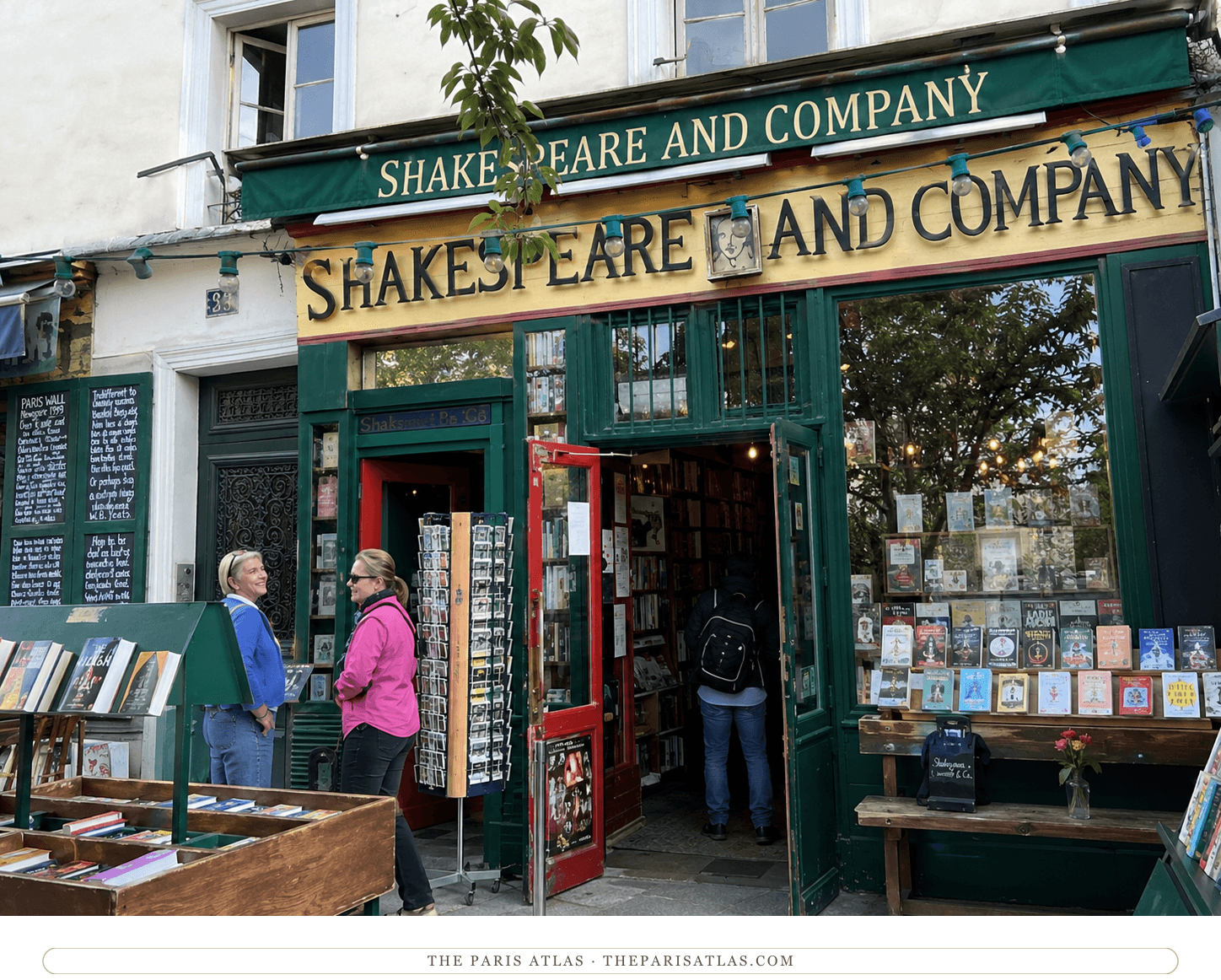
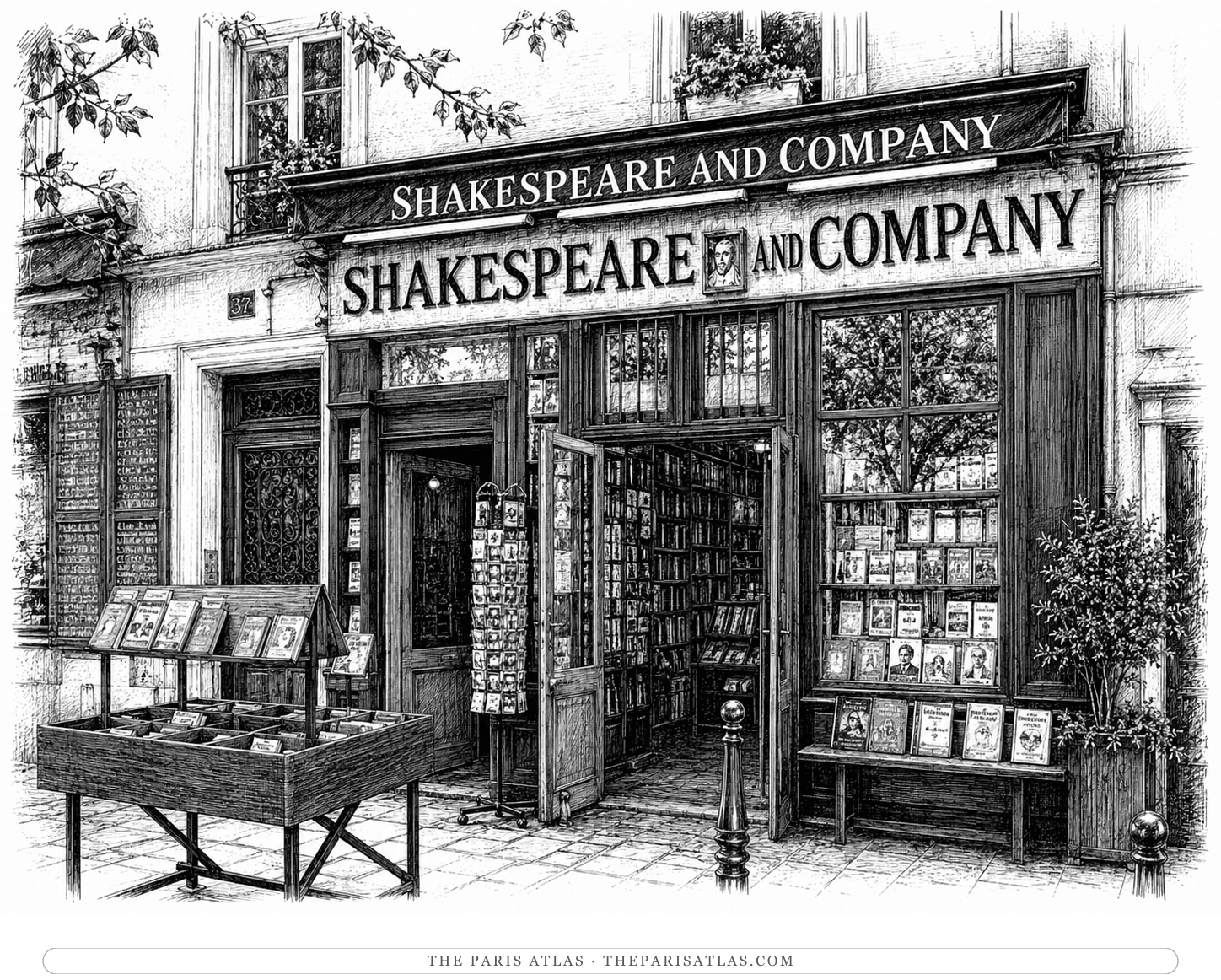
Ulysses made him the most famous banned author alive: serialized chapters had already been prosecuted in New York when Sylvia Beach's Shakespeare and Company published the complete book in 1922, from a bookshop at 12 rue de l'Odéon. In Paris he was the quarter's presiding legend — reading aloud in his thin clear voice at the shop's gatherings, holding court at family dinners, enduring a decade of eye operations — while the 'Work in Progress' that became Finnegans Wake (1939) appeared in pieces in Ford's transatlantic review and transition.

He fled the next war to Zurich, where he died in January 1941. The shelf he left is small — a story collection, two novels, the Wake, some poems — and the century built on top of it; every writer in these pages worked in the weather Ulysses made.

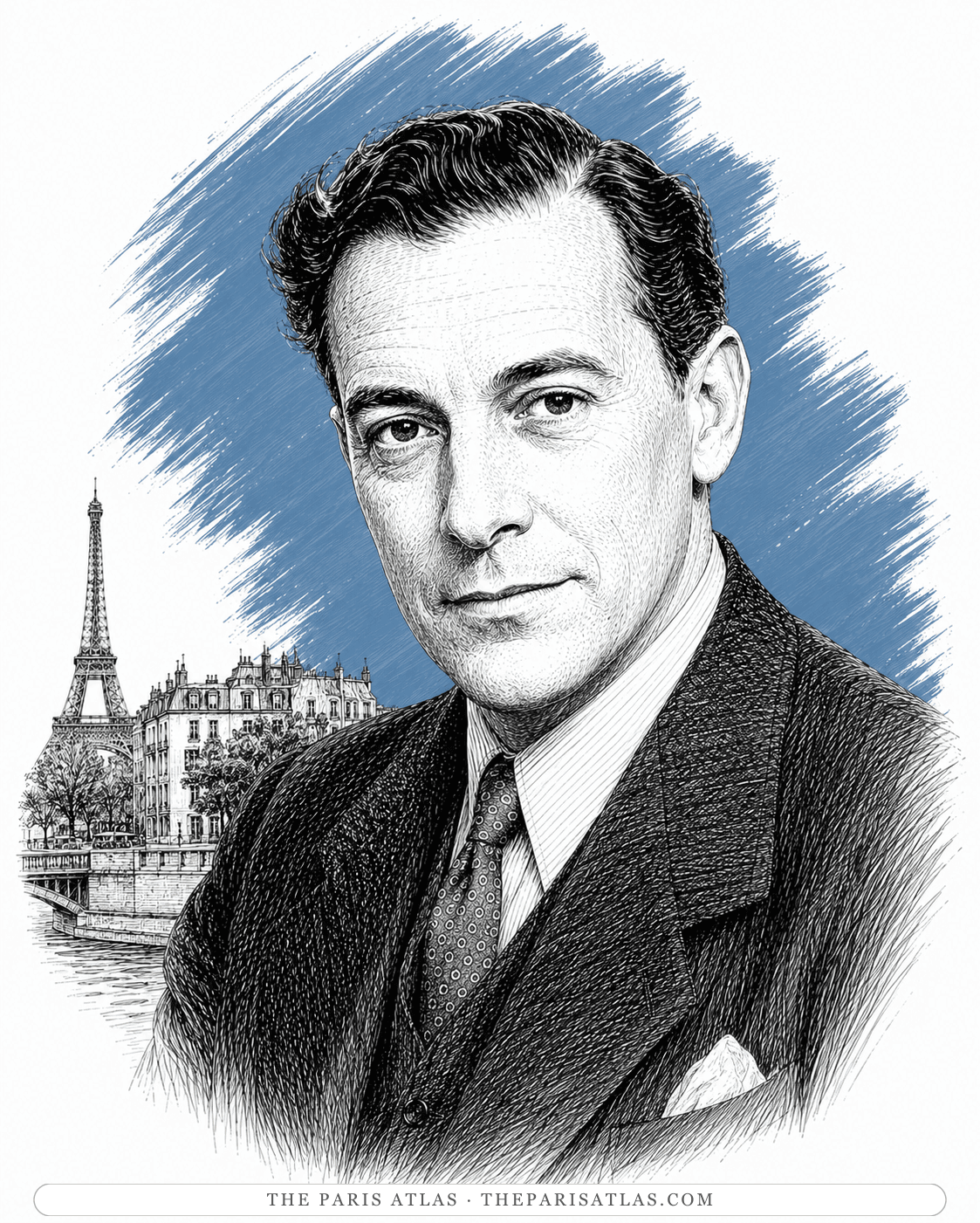
James Joyce, illustrated

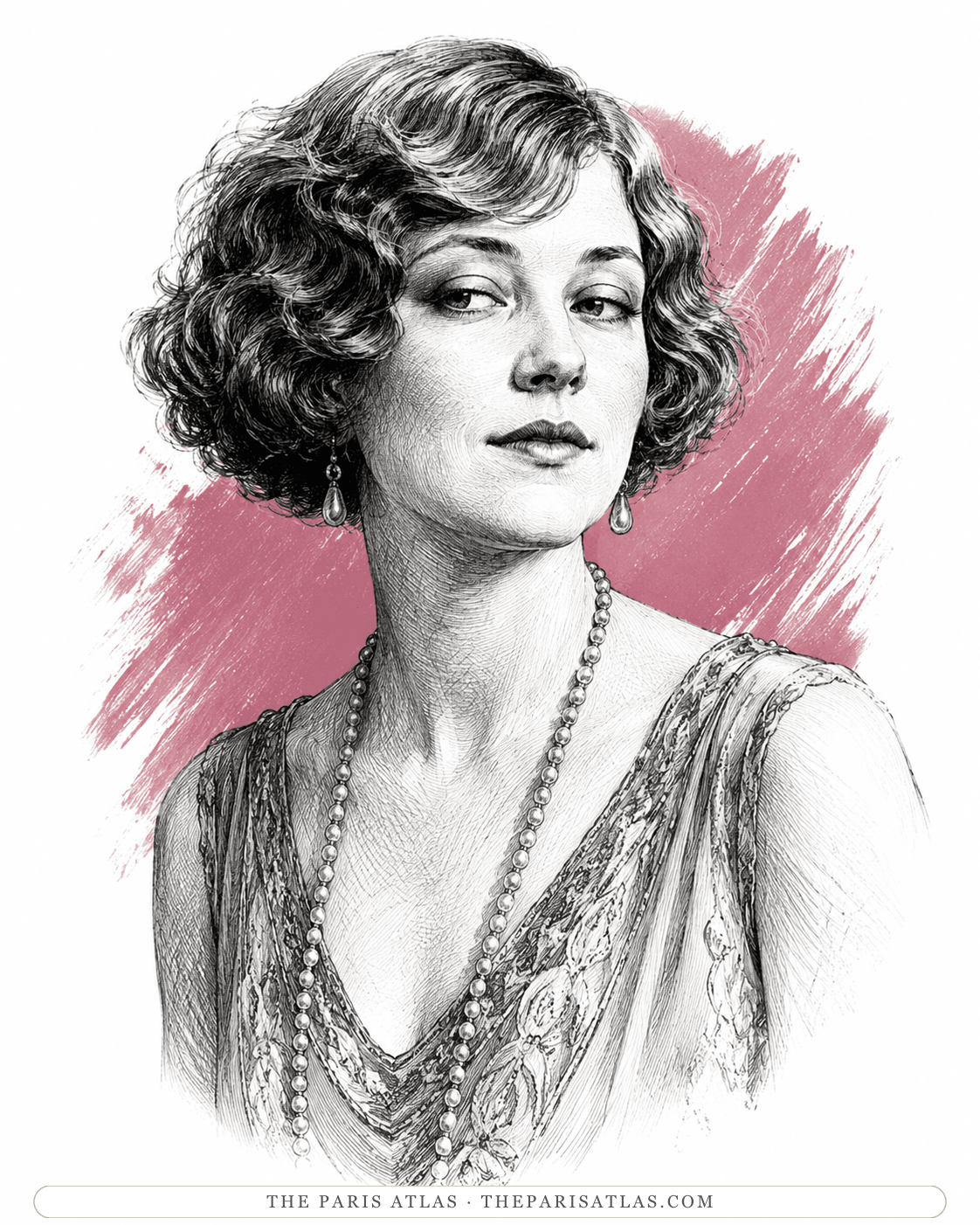
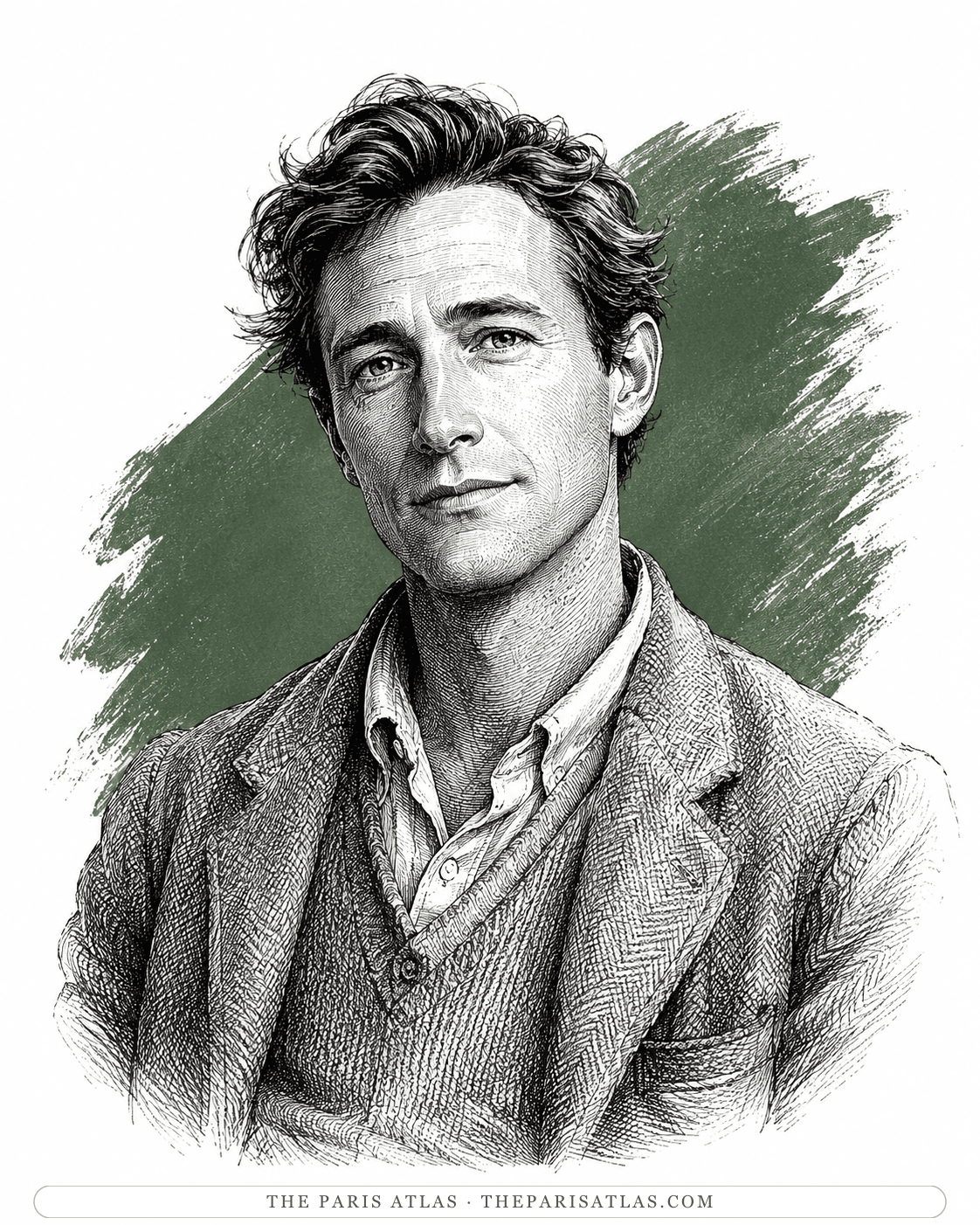
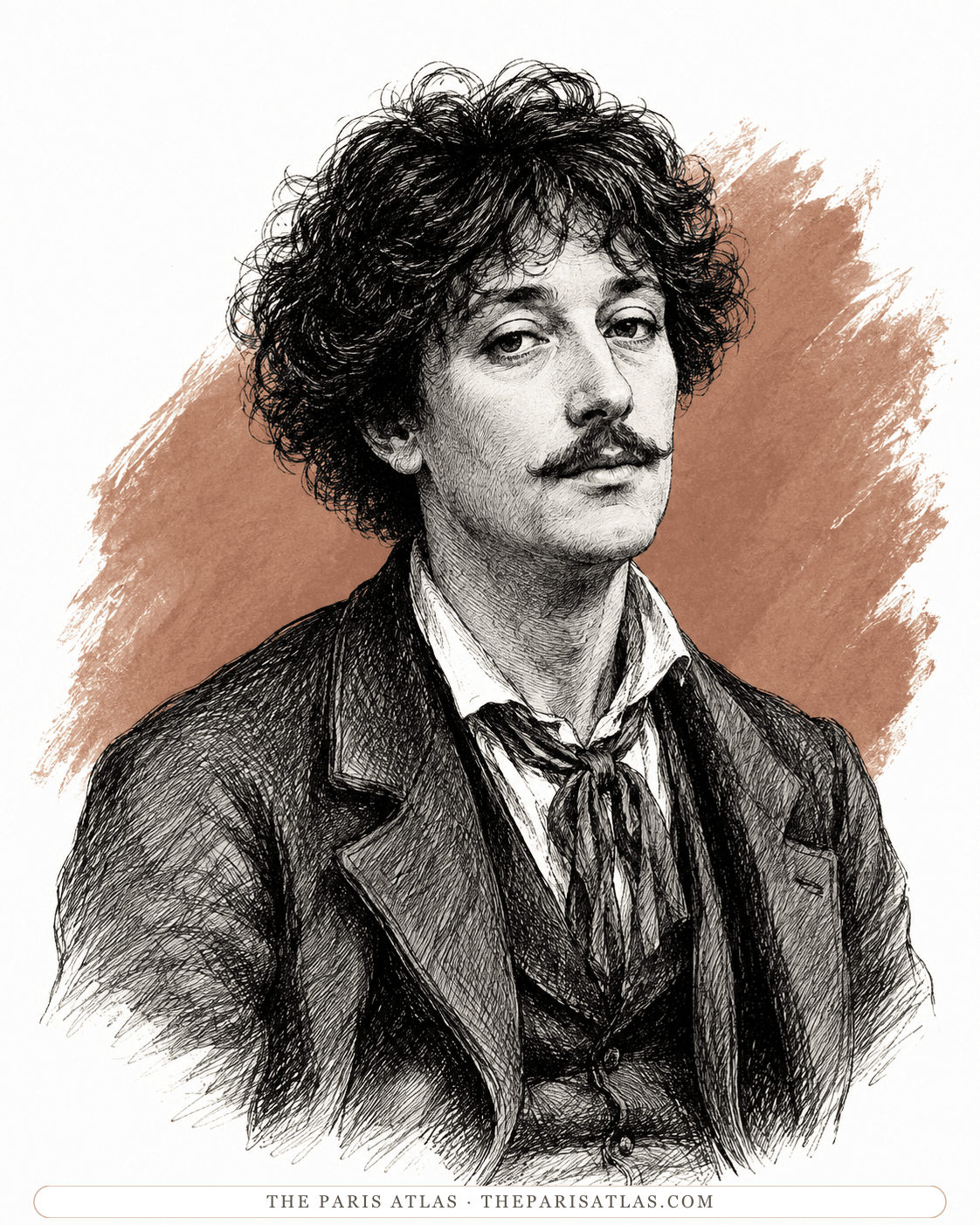
A few scenes from Joyce's Paris years, drawn for The Paris Atlas — illustrations, not photographs.

James Joyce on a bridge over the Seine.
James Joyce at a Paris café table.
James Joyce in conversation at a café.
James Joyce in a bookshop.
James Joyce reading proofs at the printer.
James Joyce reading in a library.
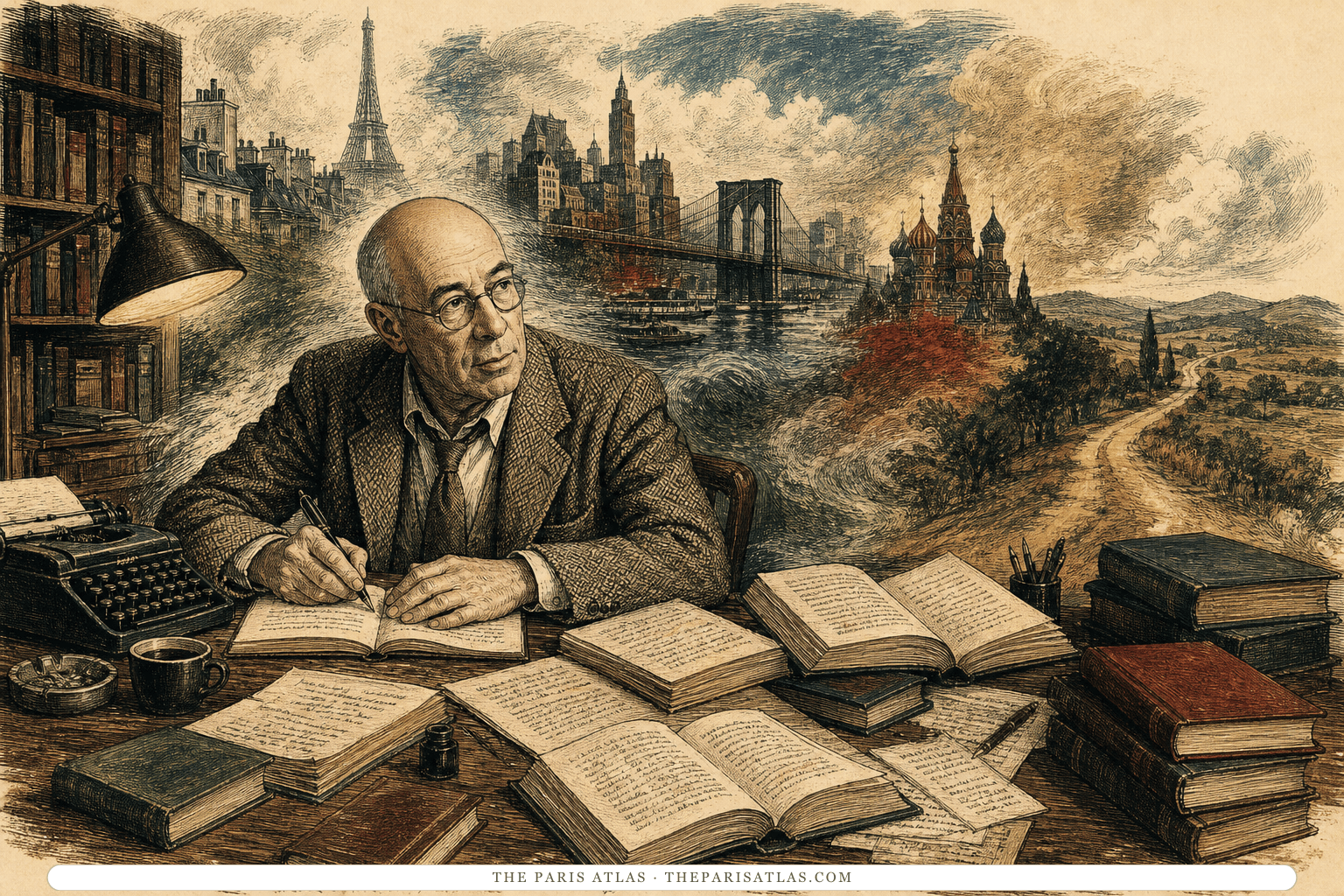
James Joyce writing at his desk.
James Joyce at the bookshop.
James Joyce at a café terrace.
James Joyce walking along the Seine.
James Joyce on a train.
James Joyce at the window, over the Paris rooftops.
Illustrations — The Paris Atlas

Life events

  1. 1882

    Born in Rathgar, Dublin, 2 February — a date he would spend a lifetime turning into an omen.

    Richard Ellmann, James Joyce (1959)

  2. 1904

    16 June: walks out with Nora Barnacle — the day Ulysses would immortalize. In October they leave Ireland together, more or less for good.

    Richard Ellmann, James Joyce (1959)

  3. 1905–1915

    Trieste: Berlitz English lessons, two children, and the nine-year war with printers over Dubliners (finally out in 1914).

    Richard Ellmann, James Joyce (1959)

  4. 1916

    A Portrait of the Artist as a Young Man, published from New York — the exile becomes a name.

  5. 1915–1919

    The Zurich war years; the eye troubles that will mean eleven operations begin.

  6. 1920

    Arrives in Paris at Pound's urging for a week's stopover; stays twenty years.

    Richard Ellmann, James Joyce (1959)

  7. 1922

    Ulysses, published by Sylvia Beach on his fortieth birthday — banned in the English-speaking world, and instantly the book every writer in Paris measured against.

    Sylvia Beach, Shakespeare and Company (1959); Richard Ellmann, James Joyce (1959)

  8. 1923–1939

    Seventeen years of Work in Progress — pages circulating, disciples transcribing, eyesight failing.

  9. 1931

    Marries Nora at a London registry office, for the estate's sake, twenty-seven years into the marriage.

  10. 1939

    Finnegans Wake, 4 May — the night-book finished at last.

  11. 1940

    Flees the fall of France back to Zurich.

  12. 1941

    Dies in Zurich after ulcer surgery, 13 January; buried at Fluntern cemetery, uphill from the zoo — within earshot, Nora liked to say, of the lions.

    Richard Ellmann, James Joyce (1959)

Featured in these books

Cover of A Moveable Feast by Ernest Hemingway

A Moveable Feast

by Ernest Hemingway

How James appears in its pages: Never a scene partner, only a sighting — glimpsed dining with his family at Michaud's back when the Hemingways couldn't afford to join him.

The full portrait — James Joyce in A Moveable Feast

Never a scene partner, only a sighting — glimpsed dining with his family at Michaud's back when the Hemingways couldn't afford to join him.

Who they are in the book

Spoiler-free

Joyce is the book's summit, mostly seen from below. Early on, the narrator and his wife walk past Michaud's and see the Joyce family dining inside — Joyce peering at the menu through thick glasses, the family speaking Italian — at a moment when eating at Michaud's is beyond the Hemingways' means. He is what the whole quarter is measuring itself against: Ulysses is the shop-talk standard, and Sylvia Beach's bookstore is half organized around him.

What Joyce wants — the work finished, the family fed, the eyes holding out — happens mostly offstage. His presence in the memoir is exactly calibrated to his presence in the young Hemingway's Paris: enormous, near, and just out of reach.

How the book draws them

  • The glimpseSlight and elegant, holding the menu close to read it — the book's clearest look at him, caught through the window of Michaud's.
  • The lensesThe thick glasses do the biographical work: the famously failing eyes, worn as plainly as the elegance, with the whole quarter quietly keeping track.
  • The householdThe family around the table, all speaking Italian — a self-contained republic dining out at the good restaurant.
  • The tableMichaud's is the expensive place: the Joyces dine inside while the narrator and his wife price the menu from the pavement — the era's pecking order, served as dinner.
  • The standingThe name every conversation bends around: banned twice-over at one salon, enshrined at the bookshop, and set as the standard the whole quarter measures itself against.
  • The bookshop causeUlysses is the house cause at Shakespeare and Company — published by Sylvia when no one else dared, and lent across the counter like contraband.

At a glance

In the book
'Joyce' — the era's presiding genius, glimpsed at Michaud's
Where he appears
Sightings and shop talk — Michaud's, Shakespeare and Company
The real person
James Augustine Aloysius Joyce · 1882–1941 · Dublin, Ireland
Their ending, and the commentary — spoilers aheadHow the book leaves them, and what the record says. Open when you're ready.

The two writers did eventually share tables — Hemingway elsewhere told stories of Joyce starting café arguments and stepping behind him with 'Deal with him, Hemingway' — but the memoir keeps Joyce at viewing distance, and the distance is the point: this is a book about being young and outside the window.

Joyce finished Finnegans Wake in 1939, left Paris ahead of the German advance, and died in Zurich in January 1941 after surgery — the same wartime winter that closed Sylvia Beach's shop. Of the era's Michaud's tableau, the memoir was written last and remembers everyone else.
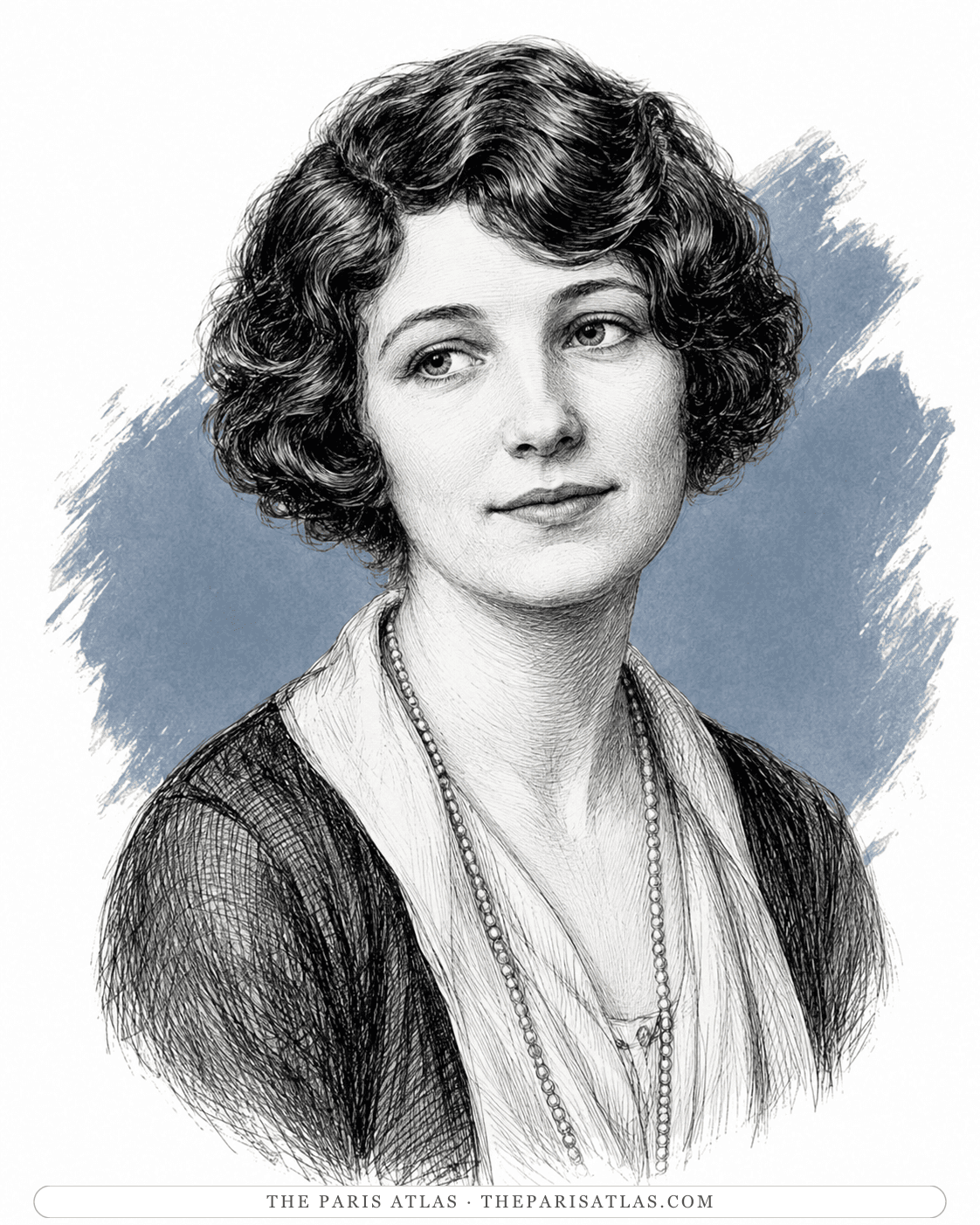
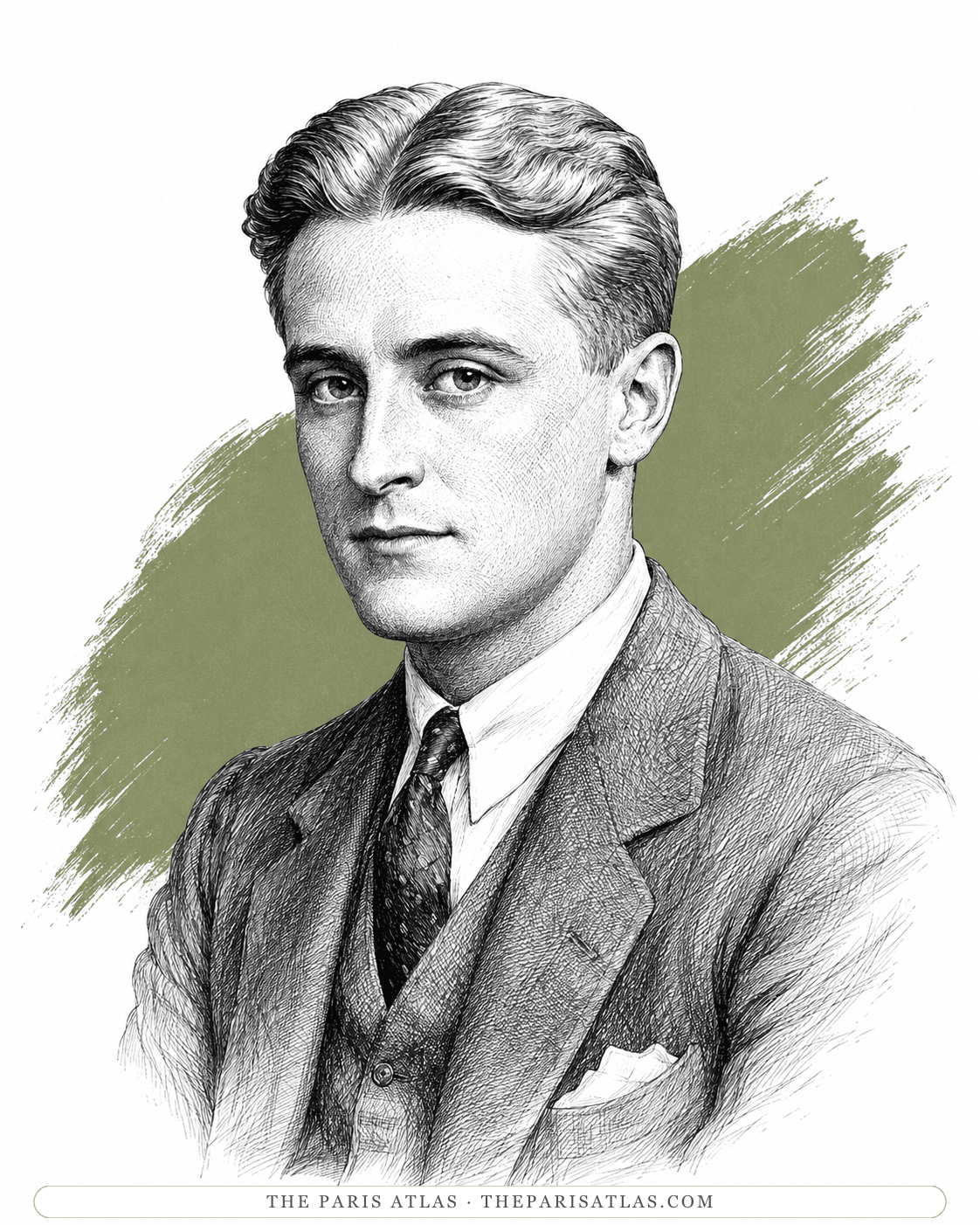
More people from A Moveable Feast

People they knew

Documented connections — every one carries its source.

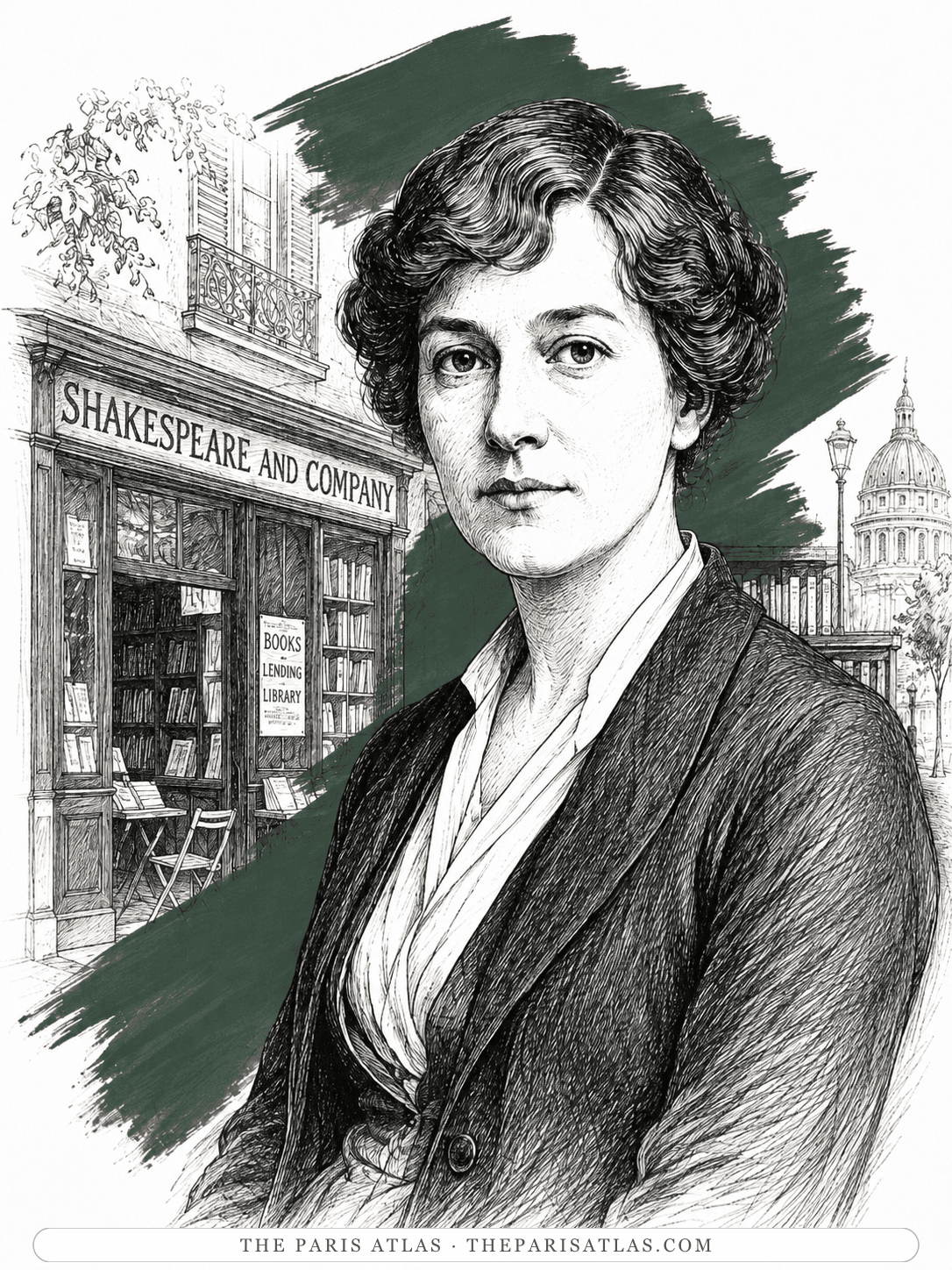
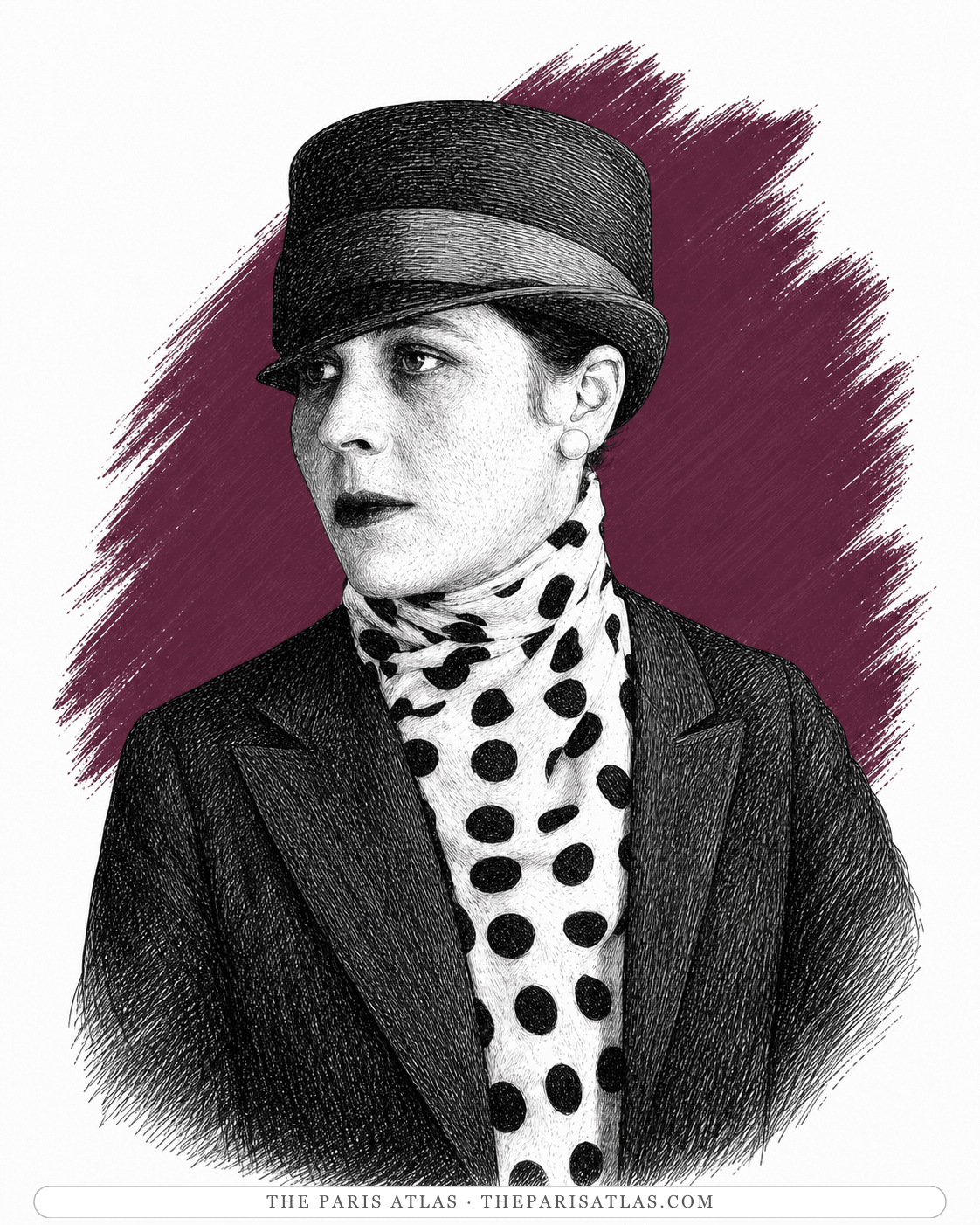
Illustrated portrait of Sylvia Beach

Sylvia Beach

  • Bookseller
  • Publisher
  • Author

Met · 1920

Introduced at a party in the summer of 1920; within two years the bookseller had become the publisher of Ulysses. Her memoir opens on the meeting, and the shop's history was never separable from him again.

Sylvia Beach, Shakespeare and Company (1959); Richard Ellmann, James Joyce (1959)

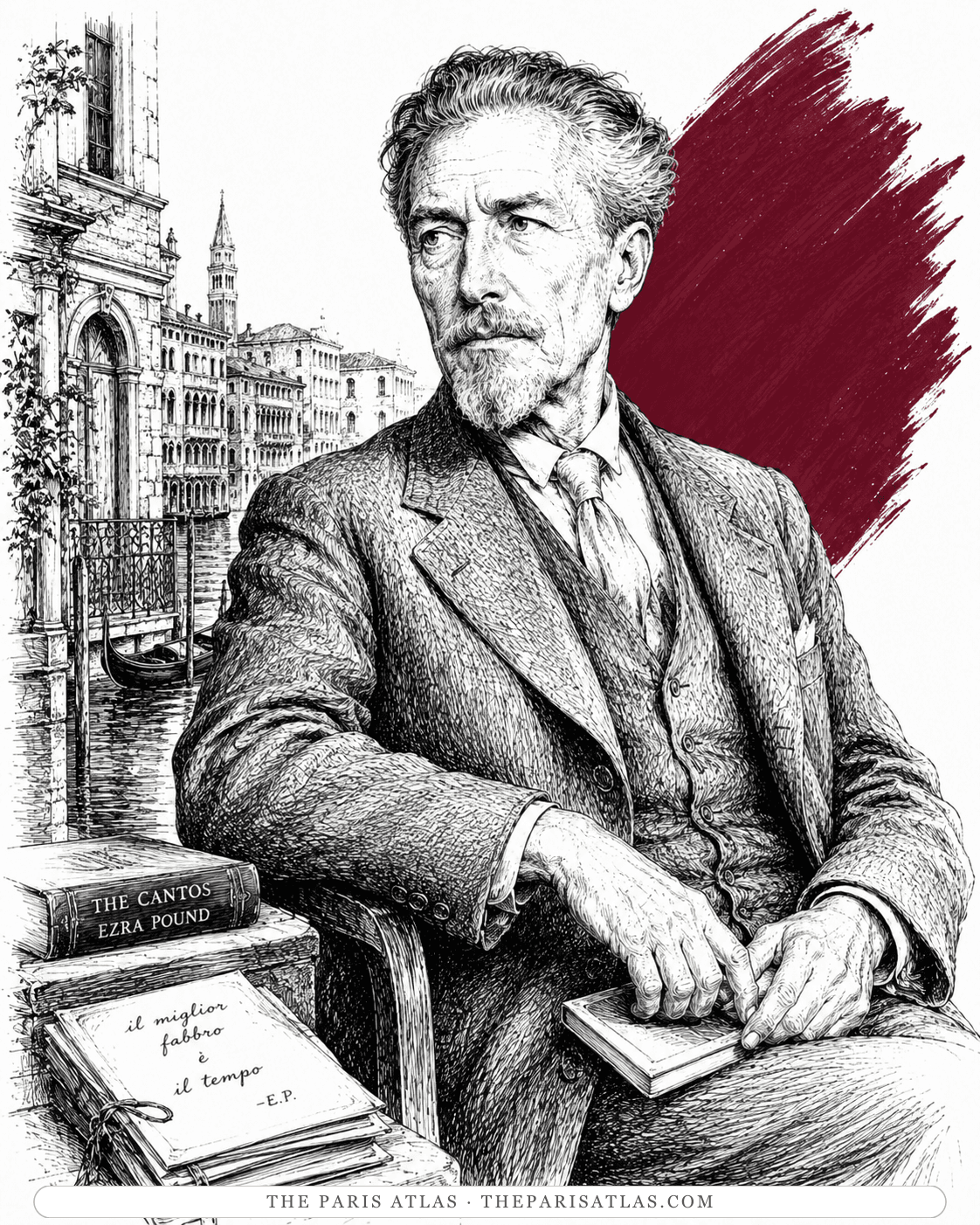
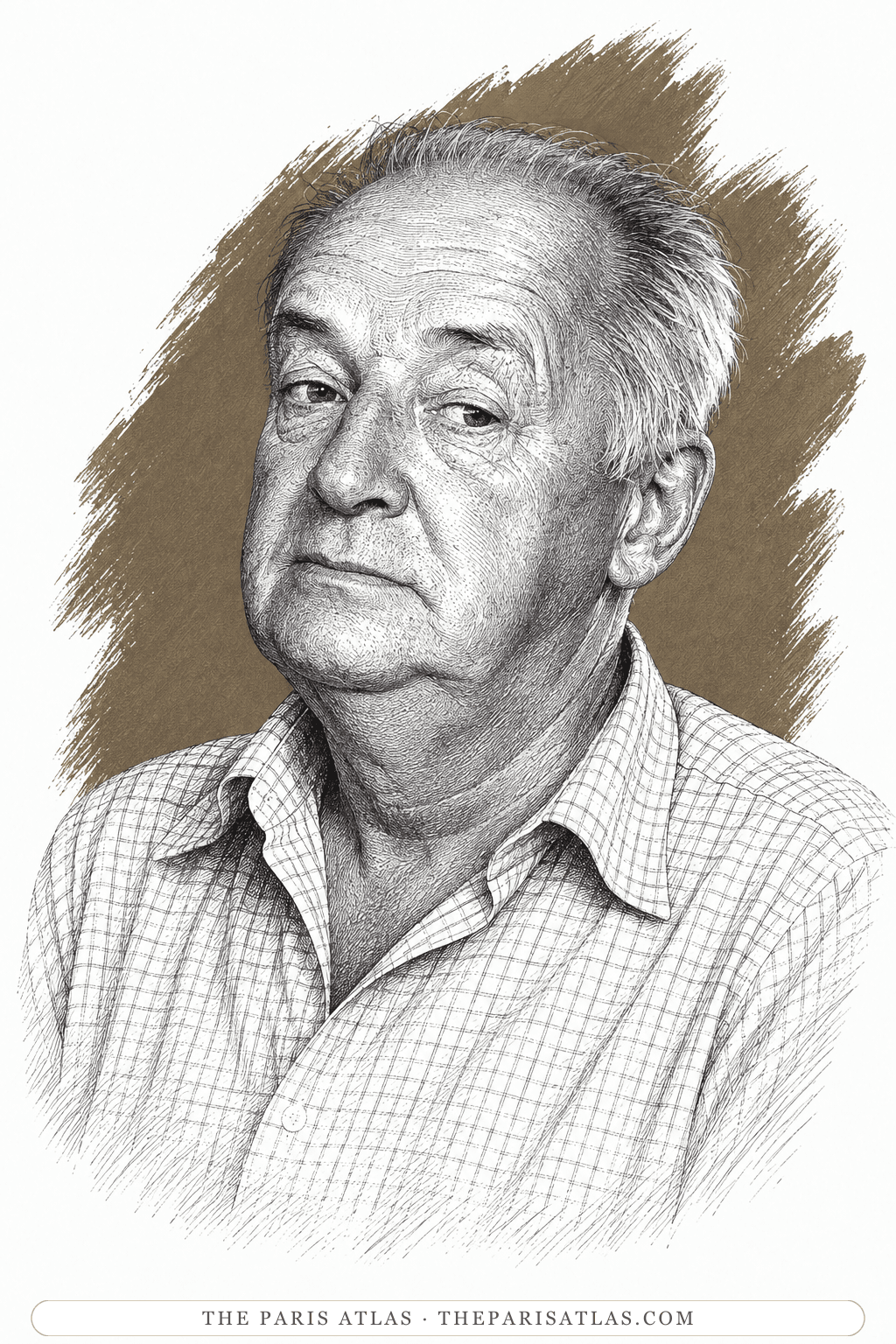
Illustrated portrait of Ezra Pound

Ezra Pound

  • Author
  • Poet
  • Editor
  • +1

Met · 1920

Pound championed Joyce for years by post — serializations, subsidies, publishers — before they finally met at Sirmione in 1920; it was Pound who pointed Joyce toward Paris weeks later.

Richard Ellmann, James Joyce (1959)

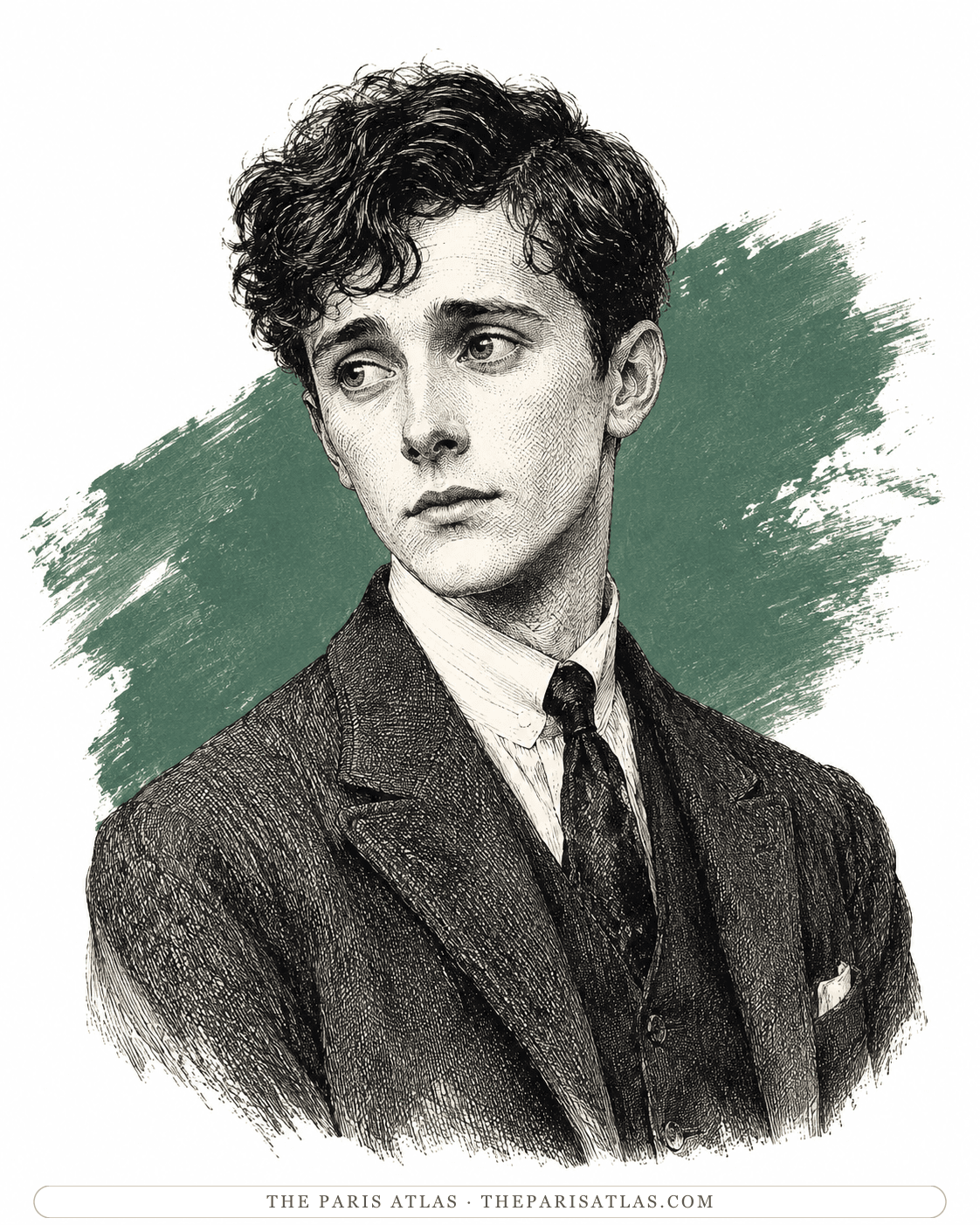
Illustrated portrait of George Antheil

George Antheil

  • Musician

Met

Joyce and Nora attended Antheil's riotous Paris concerts and remained friends with him for years; Joyce encouraged his Cyclops opera and gave him one of the coveted copies of the Ulysses schema. The opera was never completed.

The Morgan Library & Museum — One Hundred Years of James Joyce's Ulysses: George Antheil

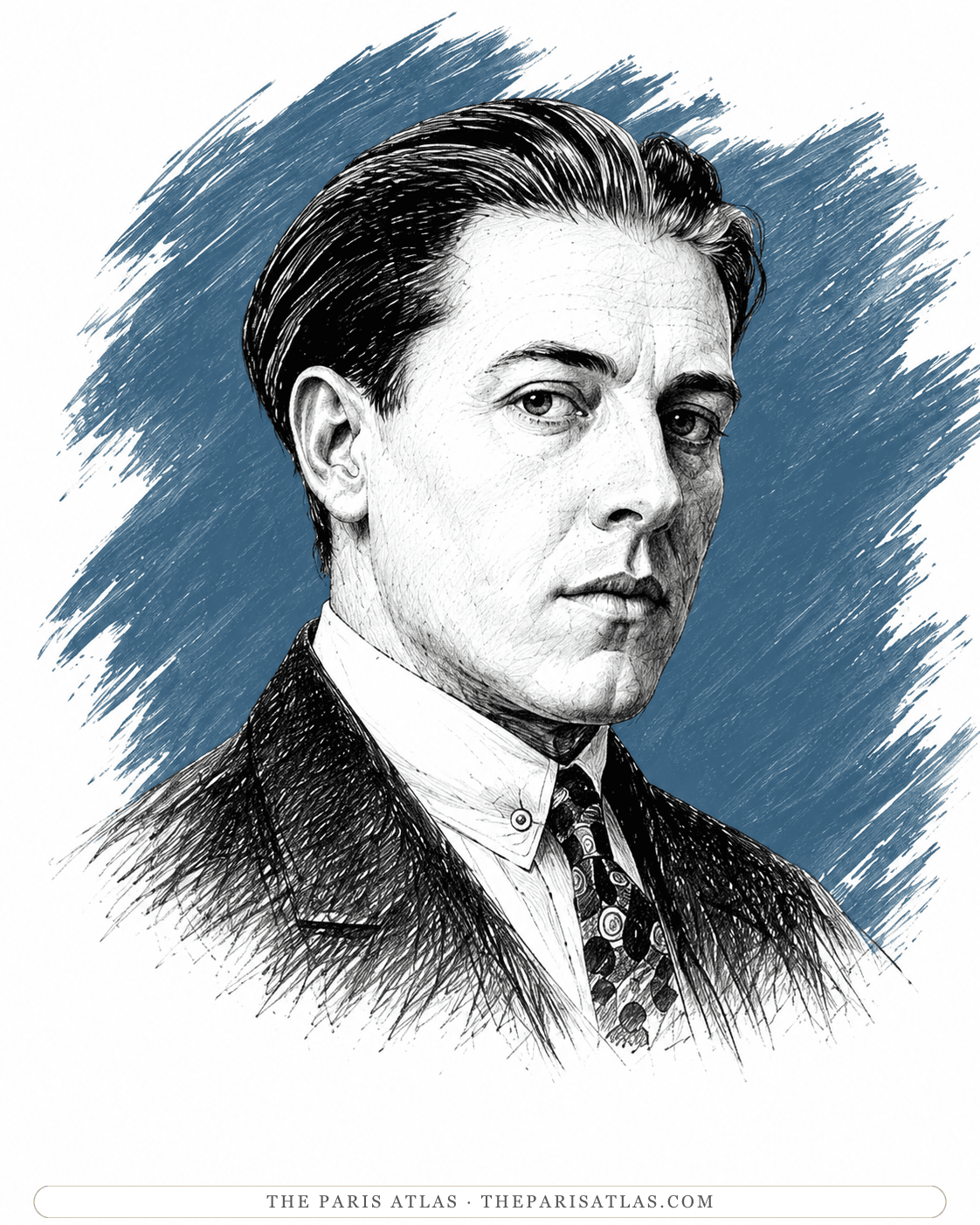
Illustrated portrait of John Quinn

John Quinn

  • Patron

Supported by

Quinn bought the fair-copy manuscript of Ulysses as it was being written — new income that let Joyce finish the novel — promoted him to American publishers, and stood as attorney for Anderson and Heap in the Little Review obscenity case.
The Morgan Library & Museum — One Hundred Years of James Joyce's Ulysses: John Quinn

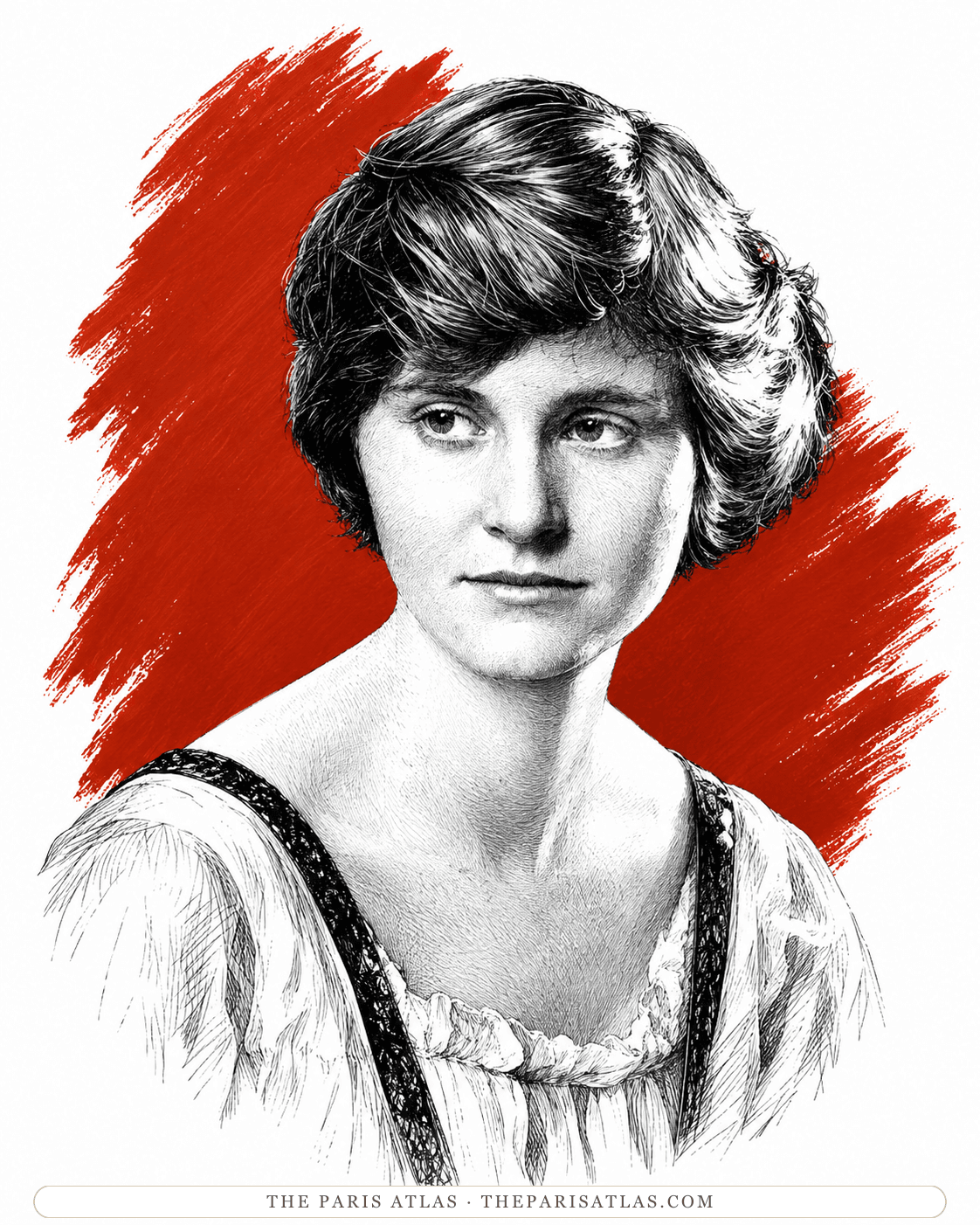
Illustrated portrait of Djuna Barnes

Djuna Barnes

  • Journalist
  • Illustrator
  • Author
  • +2

Met · 1922

Barnes interviewed Joyce in Paris for Vanity Fair in 1922, the year Ulysses was published, and drew the portrait of him that ran with the piece.
Djuna Barnes, James Joyce: A Portrait of the Man Who Is, at Present, One of the More Significant Figures in Literature — Vanity Fair, April 1922 (1922)

Movements

The artistic and literary currents this life ran through.
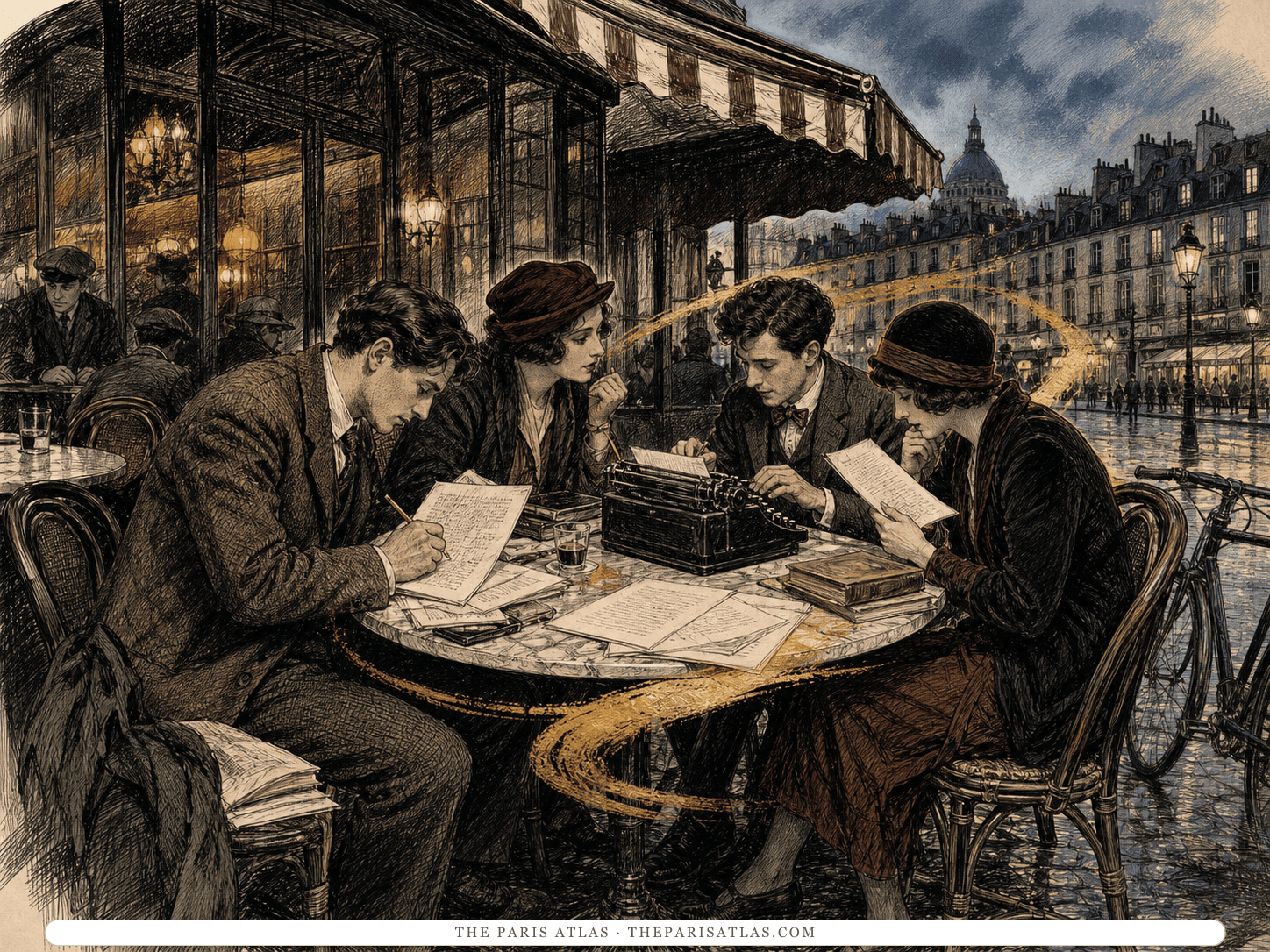
Pen-and-ink illustration of four young writers revising manuscripts around a typewriter at a Paris café in the 1920s

Literary generation · c. 1921–1929

The Lost Generation

Not one of the crowd but the crowd's measuring stick: published from inside the movement by Sylvia Beach, mentioned at every table, and the standard the generation wrote against for two decades.

Richard Ellmann, James Joyce (1959); Sylvia Beach, Shakespeare and Company (1959)

Start here

Cover of Ulysses by James Joyce

Ulysses

Straight to the summit — one Dublin day, eighteen styles, the century's central novel. Take it episode by episode, laugh when it's funny (often), and let a guide or an audiobook carry the hard stretches.

Books by James Joyce

Cover of Dubliners by James Joyce

Short stories

Fifteen short stories about ordinary people in Dublin — the first book by James Joyce, and a nine-year fight to get it printed.

4.6
Cover of Ulysses by James Joyce

Modernist fiction

One Dublin day, June 16th, 1904 — the novel that remade the form, published by a Paris bookshop when no one else would touch it.

4.7

Popular reading paths

Recommended starting order

Our editors' path for a first-time reader.

  1. 1.Ulysses
  2. 2.A Portrait of the Artist as a Young Man
  3. 3.Dubliners

Publication order

Watch the writer develop, book by book.

  1. 1.Dubliners
  2. 2.A Portrait of the Artist as a Young Man
  3. 3.Ulysses

Most popular first

Lead with the books readers loved most.

  1. 1.Ulysses
  2. 2.A Portrait of the Artist as a Young Man
  3. 3.Dubliners

James Joyce’s Places

The cataloged places connected to James Joyce — through the books, and through the documented record.

Places you can enter today appear first, followed by addresses to see from outside and sites that have vanished.

Guides featuring James Joyce

Take them with you.

Questions about James Joyce

Who was James Joyce?

An Irish writer (1882–1941), author of Ulysses. He left Dublin at twenty-two and carried the city with him through Trieste, Zurich, and Paris, rebuilding it in his fiction.

What is James Joyce best known for?

Ulysses (1922), his novel following a single Dublin day. It reworks Homer's Odyssey and is one of the defining works of literary modernism.

Where was Ulysses first published?

In Paris, by Sylvia Beach at Shakespeare and Company, on 2 February 1922 — after publishers in Britain and the United States considered the book unprintable. Her intervention showed that a small Paris institution could alter world literature.

Did James Joyce live in Paris?

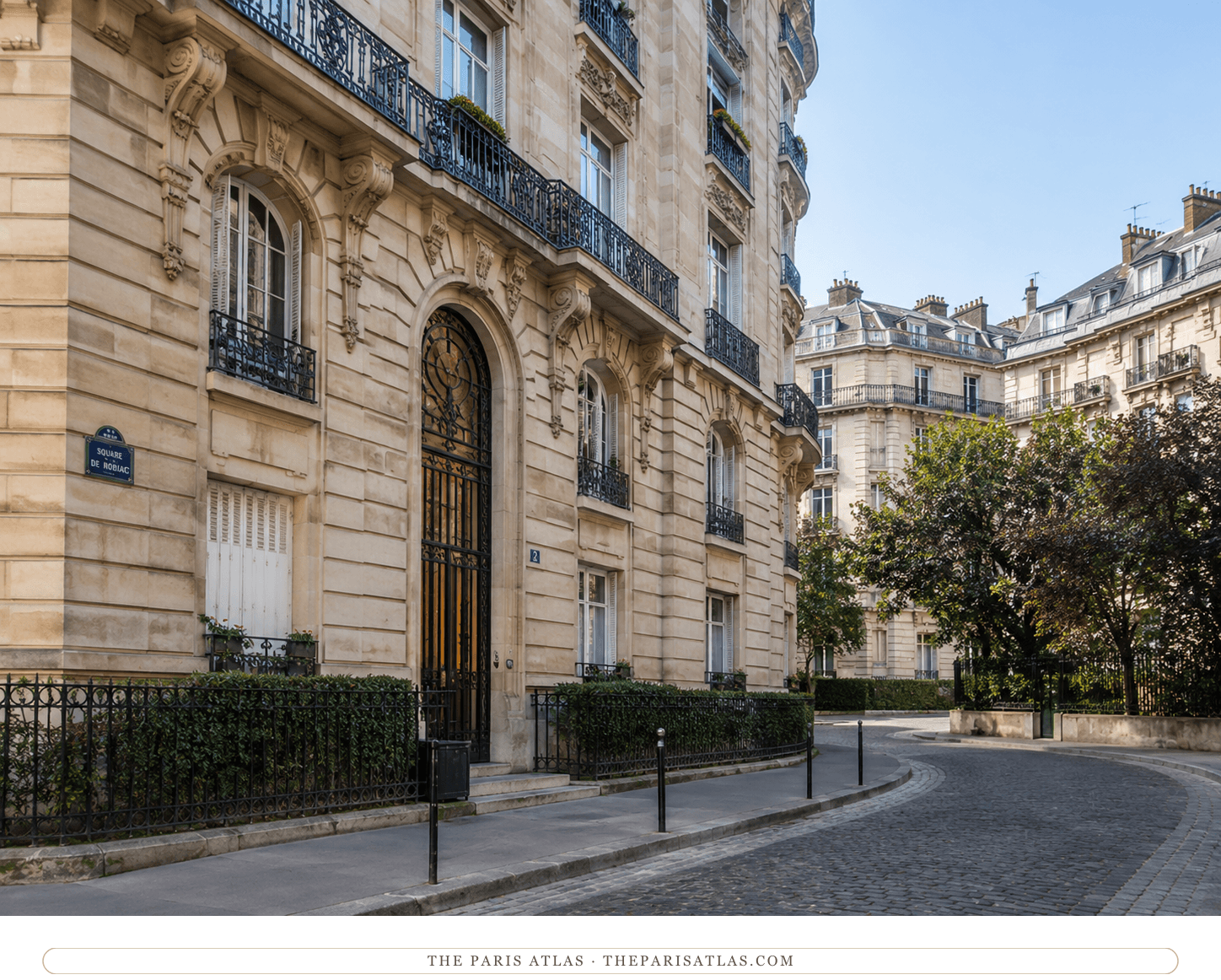
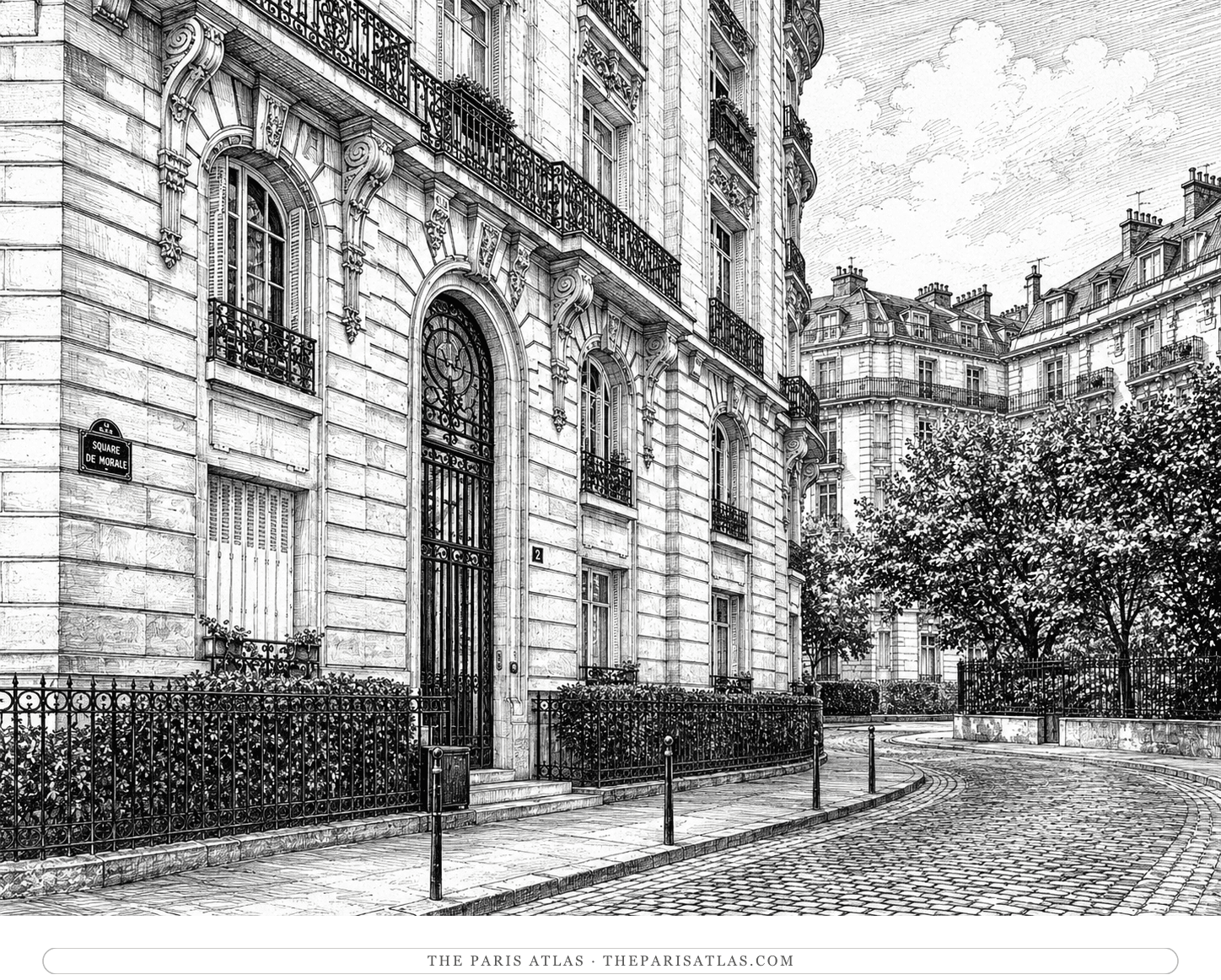
Yes. Ezra Pound pointed him toward Paris in 1920, and his longest home there was the flat at 2 Square de Robiac (1925–31), where he worked on the book that became Finnegans Wake.

How is Joyce connected to the Lost Generation?

He was not one of the crowd but its measuring stick — published from inside the circle by Sylvia Beach, mentioned at every café table, and the standard the younger writers wrote against for two decades.

Who supported Joyce financially?

The American collector John Quinn bought the fair-copy manuscript of Ulysses as it was being written, giving Joyce income to finish it, and Ezra Pound arranged serializations, subsidies, and publishers for years.

Sourced claims

Every connection the graph holds for James, with the evidence behind it.

Lived at · 1925–1931

2 Square de Robiac

The Joyce family's longest Paris home — the flat of the Work in Progress years, where Huddleston heard the 'twelve hundred hours' defense in the cool quiet study.

Richard Ellmann, James Joyce (1959); Sisley Huddleston, Paris Salons, Cafés, Studios (1928)

Frequented · 1920–1931

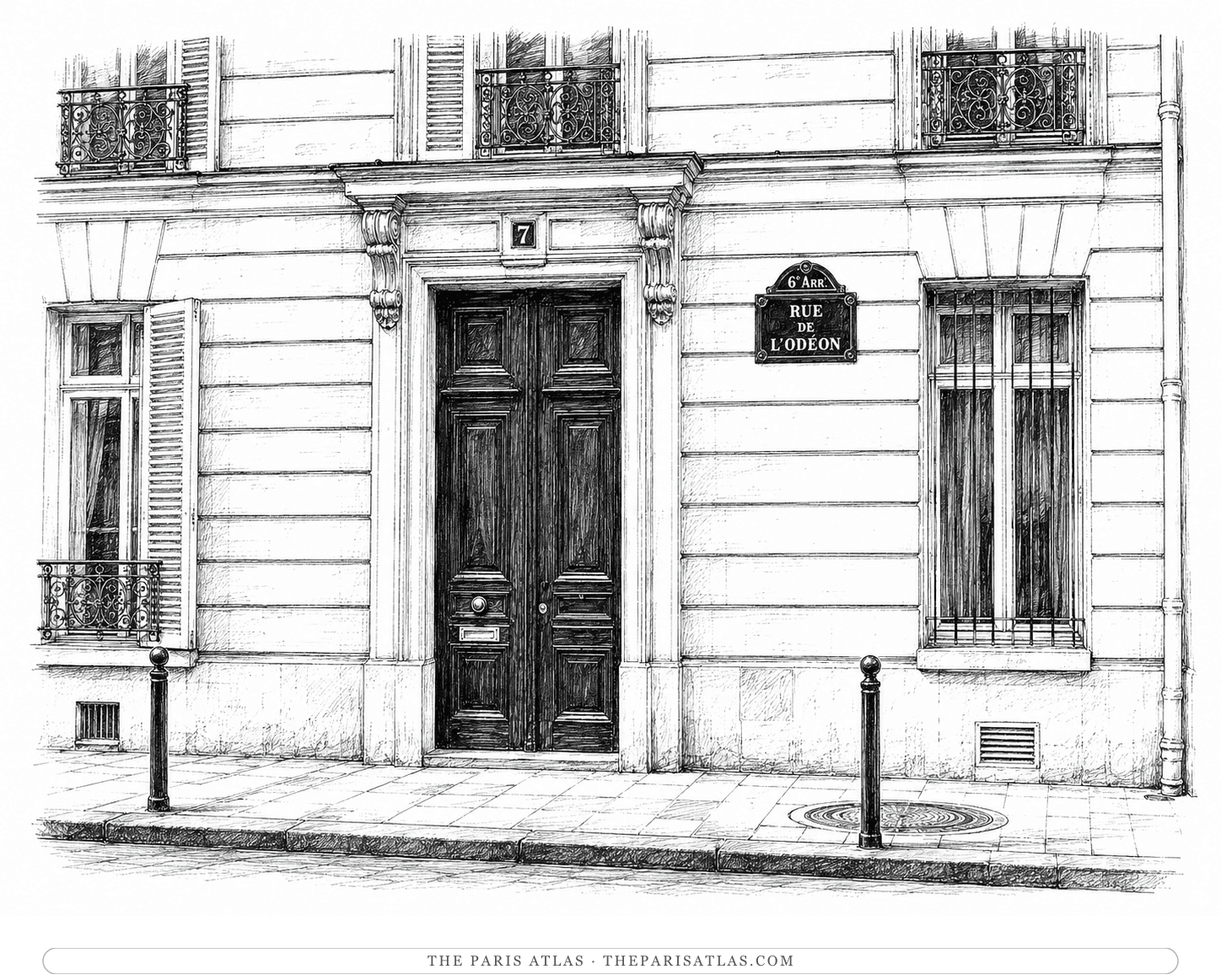
Shakespeare and Company (12 Rue de l'Odéon)

James Joyce's Paris headquarters — the shop published Ulysses, banked and posted for him, and hosted the readings where Huddleston heard the thin clear voice with its ever-changing mimicry.

Sylvia Beach, Shakespeare and Company (1959); Sisley Huddleston, Paris Salons, Cafés, Studios (1928)

Associated with · 1920–1939

The Lost Generation

Not one of the crowd but the crowd's measuring stick: published from inside the movement by Sylvia Beach, mentioned at every table, and the standard the generation wrote against for two decades.

Richard Ellmann, James Joyce (1959); Sylvia Beach, Shakespeare and Company (1959)

Frequented · 1921

La Maison des Amis des Livres

Joyce was in the room on 7 December 1921 when Larbaud read Ulysses to the packed shop, and remained part of the rue de l'Odéon circle; Monnier published the French Ulysse from the shop in 1929.

Richard Ellmann, James Joyce (1959); Sylvia Beach, Shakespeare and Company (1959)

Lived at

The Latin Quarter

Joyce had the loan of Valery Larbaud's flat at 71 rue du Cardinal Lemoine from June to October 1921, and finished Ulysses there. Ernest Hemingway moved in across the street at number 74 three months after Joyce left.

James Joyce and Valery Larbaud marble plaque, 71 rue du Cardinal Lemoine

Frequented

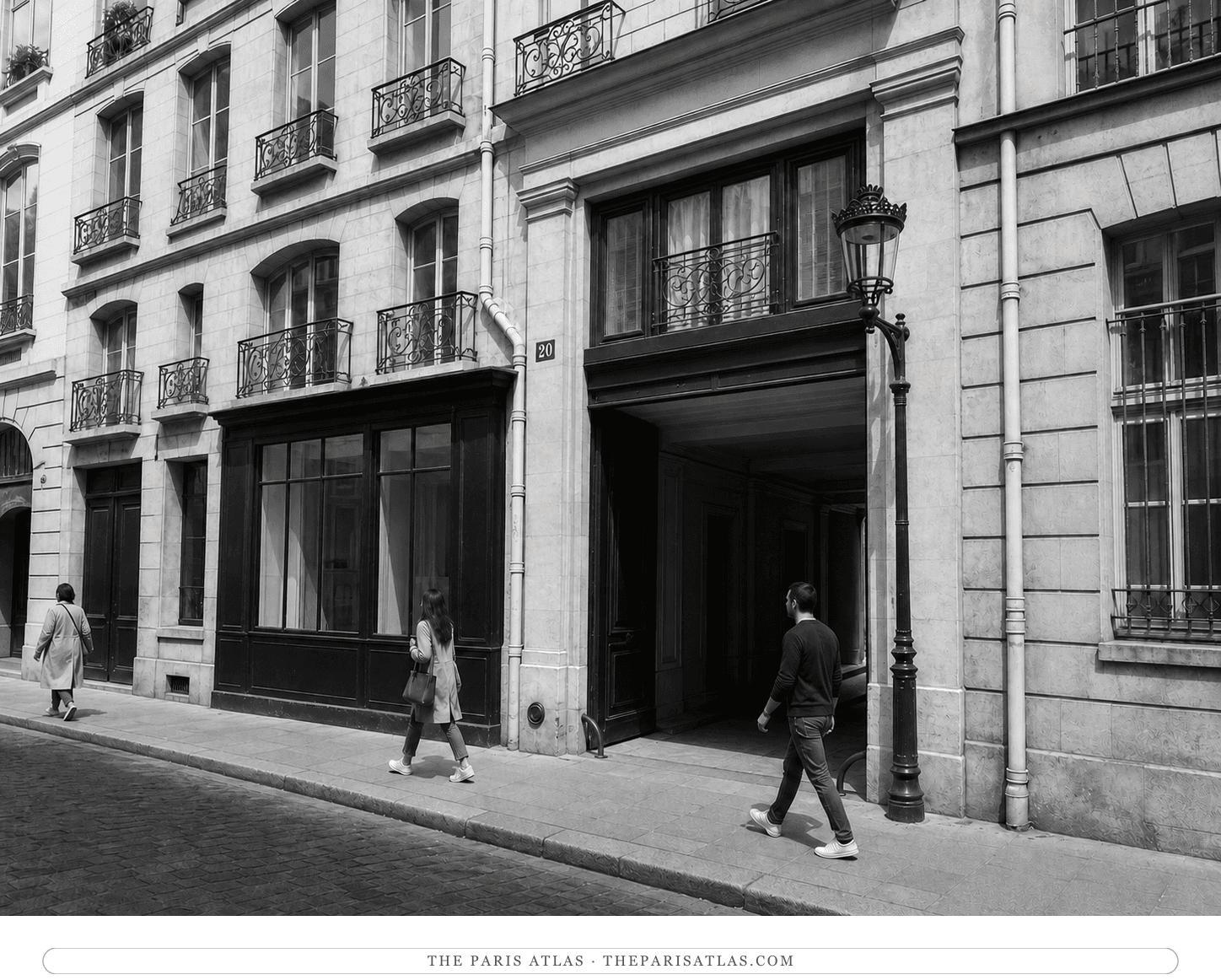
20 rue Jacob

Joyce is named as one of the writers who used the salon, which Barney ran expressly as a meeting point between American, British and French literature. Berthe Cleyrergue also lists him among the guests. No dates are recorded.

Baptiste Essevaz-Roulet and William Pesson, Le temple de l'amitié, rue Jacob à Paris, mythes et révélations (2008); Natalie Clifford Barney — French Women & Feminists in History: A Resource Guide; Gregory Stephenson, Conversations with Berthe Cleyrergue, Housekeeper to the Legendary Amazon, Nathalie Clifford Barney (2014)

Met · 1920

Sylvia Beach

Introduced at a party in the summer of 1920; within two years the bookseller had become the publisher of Ulysses. Her memoir opens on the meeting, and the shop's history was never separable from him again.

Sylvia Beach, Shakespeare and Company (1959); Richard Ellmann, James Joyce (1959)

Met · 1920

Ezra Pound

Pound championed Joyce for years by post — serializations, subsidies, publishers — before they finally met at Sirmione in 1920; it was Pound who pointed Joyce toward Paris weeks later.

Richard Ellmann, James Joyce (1959)

Met

George Antheil

Joyce and Nora attended Antheil's riotous Paris concerts and remained friends with him for years; Joyce encouraged his Cyclops opera and gave him one of the coveted copies of the Ulysses schema. The opera was never completed.

The Morgan Library & Museum — One Hundred Years of James Joyce's Ulysses: George Antheil

Supported by

John Quinn

Quinn bought the fair-copy manuscript of Ulysses as it was being written — new income that let Joyce finish the novel — promoted him to American publishers, and stood as attorney for Anderson and Heap in the Little Review obscenity case.

The Morgan Library & Museum — One Hundred Years of James Joyce's Ulysses: John Quinn

Met · 1922

Djuna Barnes

Barnes interviewed Joyce in Paris for Vanity Fair in 1922, the year Ulysses was published, and drew the portrait of him that ran with the piece.

Djuna Barnes, James Joyce: A Portrait of the Man Who Is, at Present, One of the More Significant Figures in Literature — Vanity Fair, April 1922 (1922)

Browse all authors