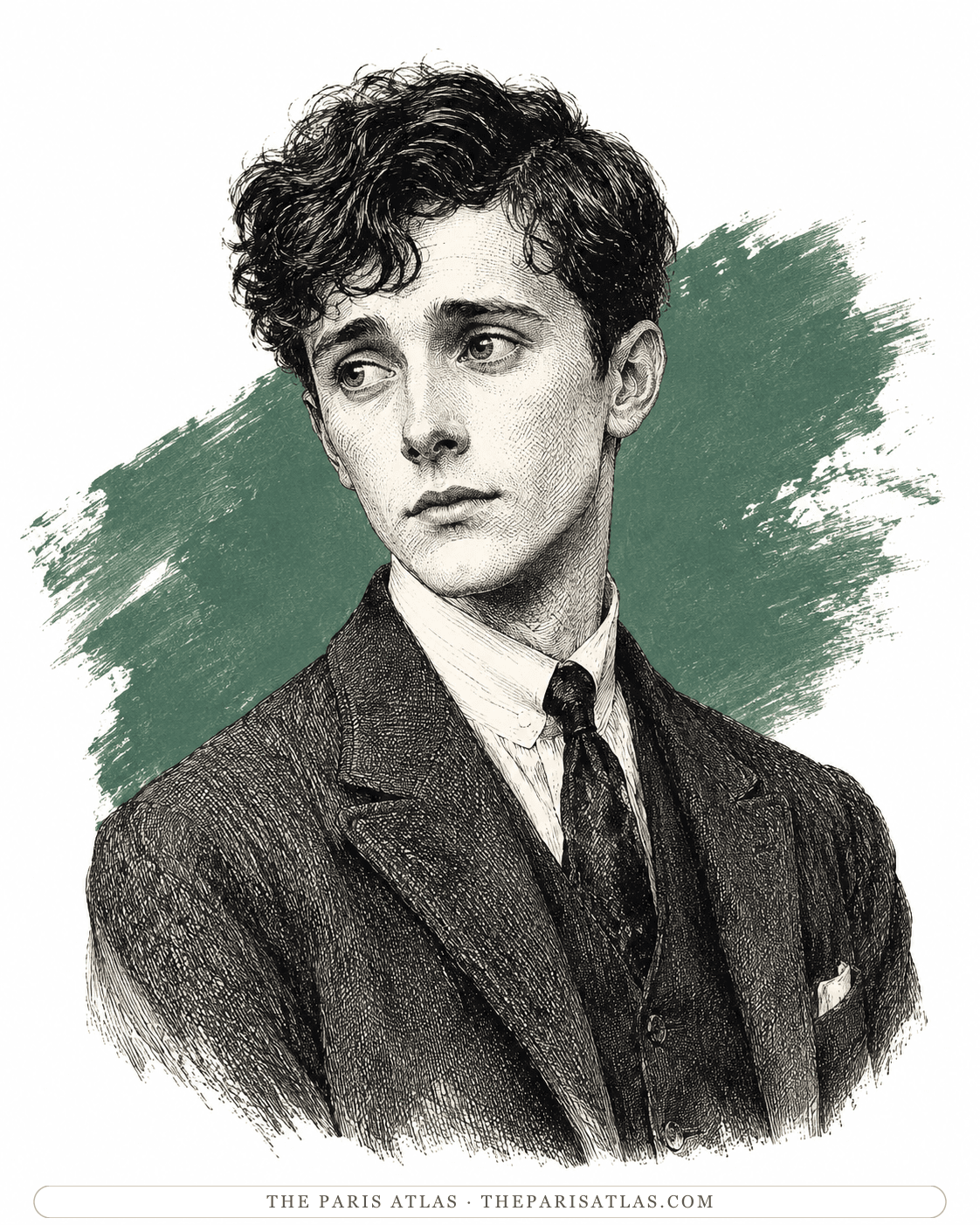
Ernest Walsh
Co-editor of the magazine This Quarter — the young poet of 'The Man Who Was Marked for Death.'
The book

At a glance
- 'Walsh' — poet and co-editor of This Quarter
- 'The Man Who Was Marked for Death'
- Ernest Walsh · 1895–1926 · Detroit, Michigan
Who they are in the book
Spoiler-freeWalsh arrives 'marked for death' — the chapter's phrase — a young poet visibly consumed by tuberculosis and living at a pace set by the diagnosis. With his co-editor Ethel Moorhead he runs This Quarter, one of the era's serious little magazines, which pays its contributors real money and publishes the narrator early. He is intense, theatrical about his doom, and — in the memoir's cold reading — an operator: the chapter's running suspicion is that Walsh has dangled a lucrative literary award before more than one hungry writer at once.
What Walsh wants is standing in literature before his time runs out, and the book weighs that ambition without mercy while conceding the magazine's quality. It is the memoir's most cynical chapter, and Hemingway aims the cynicism at himself too — he sits through the flattery feeling worked rather than praised, takes the lunch anyway, and says nothing.
How Ernest Walsh Is Portrayed
- The entranceFirst seen at Ezra Pound's studio, escorted by two blonde Americans in long mink coats who report admiringly that his poems fetch twelve hundred dollars apiece. The narrator, earning twelve dollars a page, does the arithmetic in silence.
- The lookDark, intense, and immaculately Irish, wearing his illness at full visibility — doomed with the legibility of a movie scene, and suspected of knowing exactly how the part reads.
- The styleOysters and cold white wine at the most expensive table in the quarter, with the praise poured as freely — hospitality the narrator sits through feeling less flattered than worked.
- The magazineThis Quarter is serious and it pays — properly and promptly, which was novel enough on the Left Bank to be remarked on. The book never disputes the quality, only the salesmanship.
- The partnershipThe venture runs on Ethel Moorhead's money and Walsh's charm, and the book is quietly clear about which partner supplies which.
- The comparisonsAt lunch the praise is pitched just past belief — company with the era's greatest names — and it is exactly the size of the compliment that sets off the narrator's alarm.
The chapter saves its verdict for a punchline set years later: running into Joyce on the Boulevard Saint-Germain, the narrator learns that the great prize This Quarter dangled before him had been promised to Joyce too — and, the two of them work out, to Pound and nearly everyone else worth flattering. Neither man manages to stay angry; the sheer audacity of the scheme, played on the era's best-defended egos, defeats them into something like admiration.
The mark was real: Walsh died of tuberculosis in October 1926, at thirty-one, having edited only the first issues of his magazine. His daughter with the writer Kay Boyle — who nursed him at the end and later memorialized him in her novel Year Before Last — was born five months after his death. Moorhead kept This Quarter alive and dedicated an issue to his memory.
The chapter's title told his story before the chapter did, and its fairness is still argued: Boyle's account of Walsh is a love letter where Hemingway's is an audit, and the two portraits share almost nothing but the cough. He is the only figure in the memoir whose ending arrives before his chapter does.
If you like A Moveable Feast


If you like Ernest Hemingway
Explore authors with a similar voice, perspective, and influence.

Louis-Ferdinand Céline
The other great stylist the Great War produced — where Hemingway cut the language down, Céline set it on fire. The same wound, opposite treatments.
View author
Henry Miller
Paris on no money a decade later, with the restraint removed. Miller called Hemingway's Paris a tourist's Paris; readers get to referee.
View author
Martha Gellhorn
War correspondent who covered the Spanish Civil War, D-Day, and conflicts across five more decades; Hemingway's third wife, 1940–1945.
View author