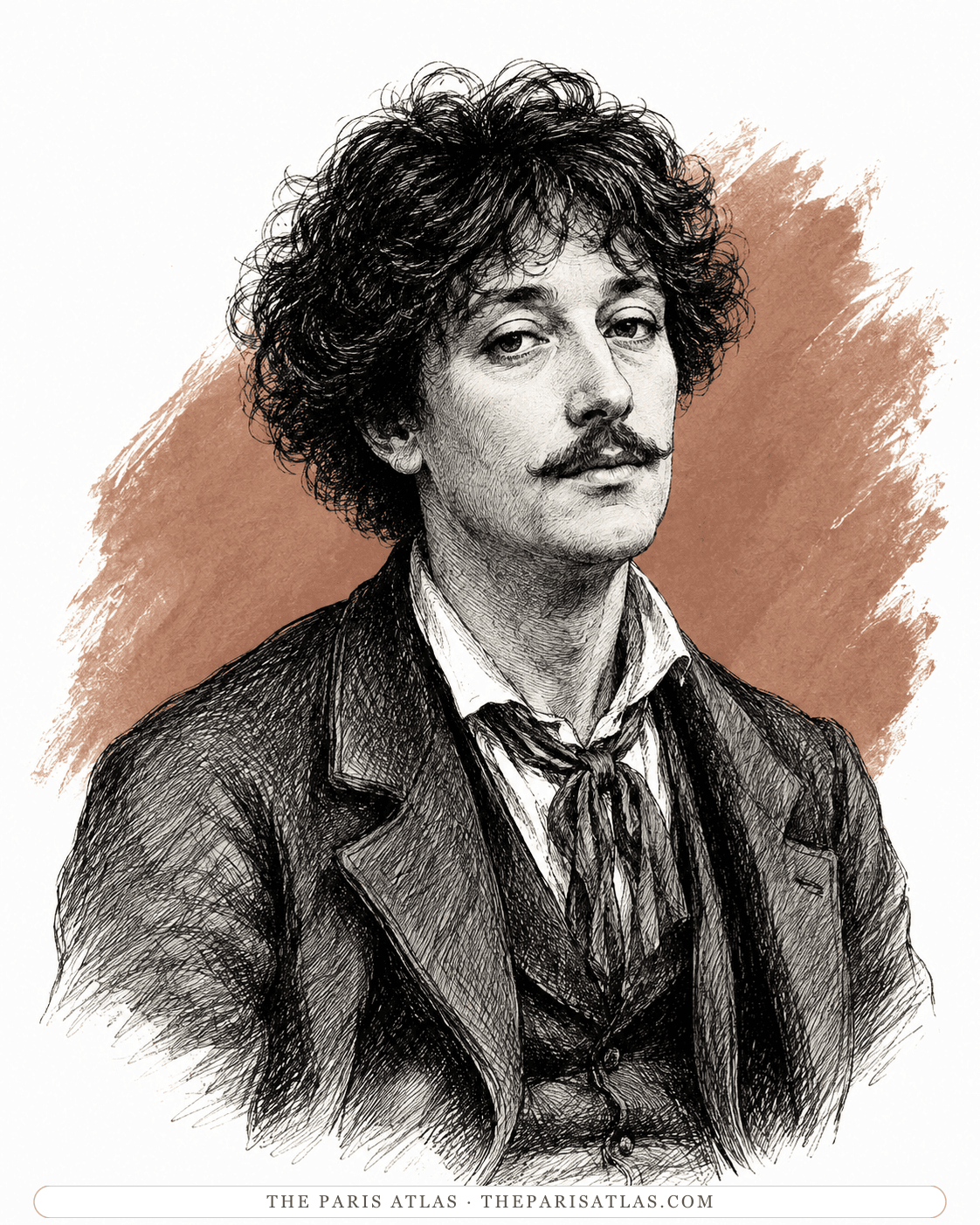
Jules Pascin
The painter holding court at the Dôme with his two models, on the good evening Hemingway chose to remember him by.
The book

At a glance
- 'Pascin' — the painter of Montparnasse
- 'With Pascin at the Dôme'
- Jules Pascin (born Julius Mordecai Pincas) · 1885–1930 · Vidin, Bulgaria
Who they are in the book
Spoiler-freePascin appears for a single evening, holding a table at the Café du Dôme with two model sisters and a bottle, and the chapter preserves him the way a sketch preserves a sitter: quick, exact, and in motion. He is Montparnasse's famous painter of women — successful, generous with drinks, and wickedly funny about his own appetites — and he needles the narrator cheerfully about choosing hunger and sentences over the pleasures on offer.
What Pascin wants is the whole night, every night, and the book lets him have this one. It is the memoir's clearest portrait of the other Paris — the painters' quarter across the boulevard from the writers' — and one of its shortest, warmest chapters.
How Jules Pascin Is Portrayed
- The conditionDeliberately, steadily drunk and talking sense the whole evening — the book is precise about the discipline inside the dissipation.
- The lookDark and compact under a tilted bowler, looking less like a serious painter than a Broadway type strayed out of the Nineties — which, the book notes, he could afford, being the real thing.
- The tableTwo model sisters share the banquette — the book sizes each up in one blunt line apiece — and Pascin assigns the roles himself: the friendly wise old painter, hosting the serious young writer.
- The invitationHe presses whiskey and dinner on the narrator, who holds out for a small beer and finally pleads supper at home with his légitime — his lawful wife — to slip loose of a night with no visible end.
- The trade talkHe talks painting and models the way the narrator talks sentences — shop talk between crafts, conducted entirely in jokes that are all serious underneath.
- The retinueThe sisters are studio employees and evening company both — the household economy of a successful Montparnasse painter, sketched in a single banquette.
The chapter carries its ending inside it: Hemingway closes by noting that Pascin took his own life in 1930, on the eve of a major exhibition of his work, and that afterward he liked to remember him as he was that night at the Dôme. Montparnasse's galleries closed for his funeral, and the whole quarter followed the procession.
That closing is the memoir's method in miniature: the narrator muses that the wit and the appetite may have been the cover over something darker, then chooses the good evening as the true one and lets the reader hold both. The chapter is often cited as the book's statement on how it wants all its dead remembered.
If you like A Moveable Feast


If you like Ernest Hemingway
Explore authors with a similar voice, perspective, and influence.
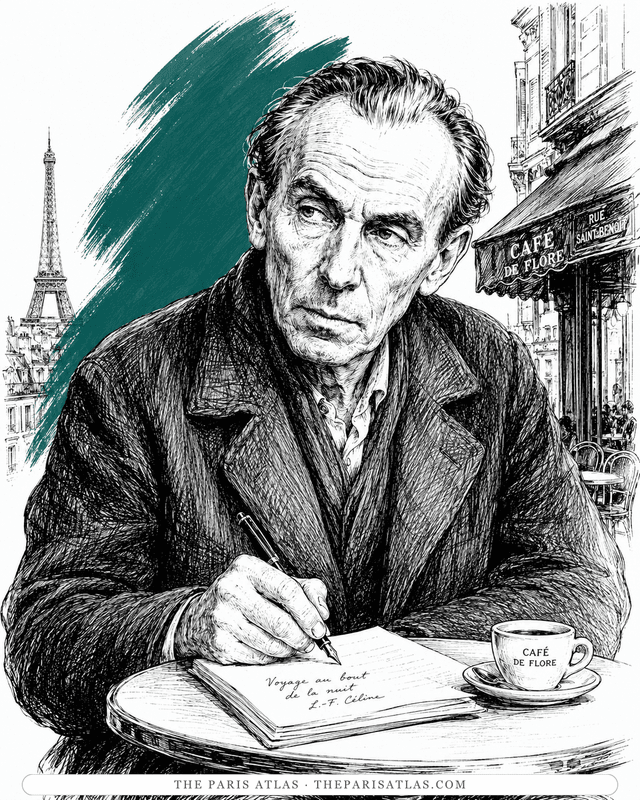
Louis-Ferdinand Céline
The other great stylist the Great War produced — where Hemingway cut the language down, Céline set it on fire. The same wound, opposite treatments.
View author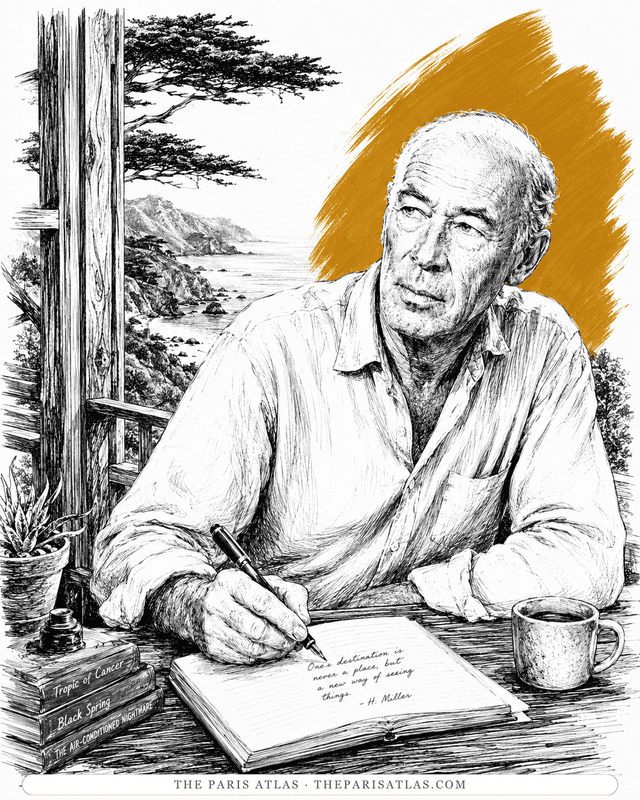
Henry Miller
Paris on no money a decade later, with the restraint removed. Miller called Hemingway's Paris a tourist's Paris; readers get to referee.
View author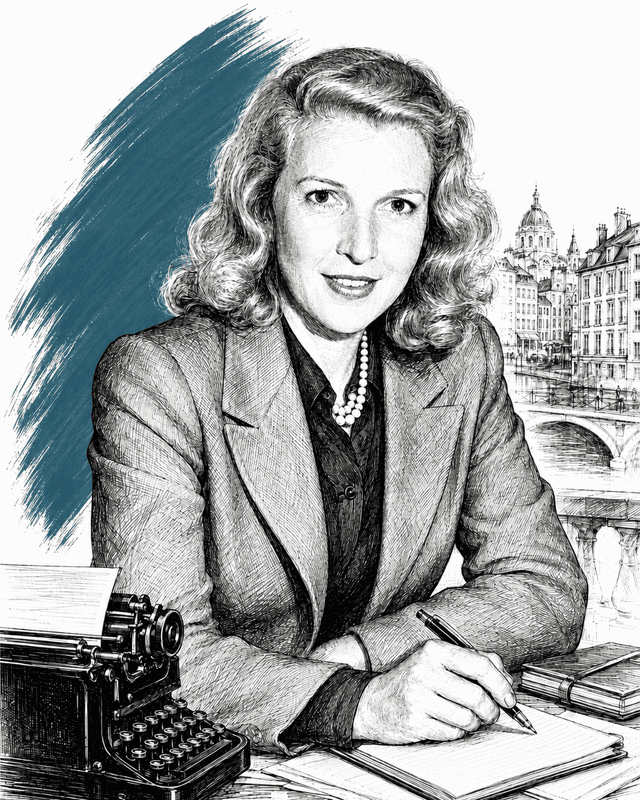
Martha Gellhorn
War correspondent who covered the Spanish Civil War, D-Day, and conflicts across five more decades; Hemingway's third wife, 1940–1945.
View author