The Paris AtlasCharting the artists, works, and places worth returning to.

Sylvia Beach

Founder of the original Shakespeare and Company, lender and publisher to the Lost Generation — the woman who put Ulysses into print.

1 book on our shelves

In images

Details

Lived
1887–1962
Born
14 March 1887
Birthplace
Baltimore, Maryland
Died
5 October 1962 · aged 75
Place of death
Paris, France
Nationality
American
Partner
Adrienne Monnier · 1917–1955
Roles
BooksellerPublisherAuthor
Also known as
Nancy Woodbridge Beach

About Sylvia Beach

Sylvia Beach was an American bookseller and publisher who ran Shakespeare and Company, the English-language bookshop and lending library in Paris that became the headquarters of expatriate writing between the wars. She was born in Baltimore on 14 March 1887 and died in Paris on 5 October 1962.

She is remembered above all for one decision. In 1921, when James Joyce could not get Ulysses published anywhere because courts and printers judged it obscene, Beach offered to publish it herself. She had never published a book. Ulysses appeared on 2 February 1922, Joyce's fortieth birthday, printed in Dijon and sold from her shop at 12 rue de l'Odéon.[1]

The shop mattered as much as the book. Beach ran it as a lending library where writers with no money could borrow what they could not buy, and Ernest Hemingway, F. Scott Fitzgerald, Ezra Pound, Gertrude Stein, Man Ray and Djuna Barnes all used it. She forwarded mail, lent money, found translators and introduced people to each other.

She closed the shop in December 1941, during the German occupation of Paris, and never reopened it. She was interned for six months in 1942. In 1959 she published a memoir, Shakespeare and Company, about the twenty-two years the shop was open.[2]

A minister's daughter from Baltimore

She was born Nancy Woodbridge Beach on 14 March 1887 in Baltimore, Maryland, the second of three daughters. Her father, Sylvester Woodbridge Beach, was a Presbyterian minister. She changed her own first name to Sylvia as a teenager and used it for the rest of her life.[3]

The family came to Paris in 1902, when her father was appointed assistant minister of the American Church. They stayed three years, and those years decided the rest of her life: she learned French and decided she wanted to live in France. The family then moved to Princeton, New Jersey, where her father took a congregation whose members included Woodrow Wilson, then president of the university.[4]

Coming back to Paris

Beach returned to Europe in her twenties and settled in Paris in 1916, while the First World War was still being fought. She was twenty-nine and had no career and no fixed plan. She joined the Volontaires Agricoles, a wartime farm-labour scheme, and spent months in the Touraine picking grapes, bundling wheat and grafting trees. In 1919 she and her sister Holly went to Serbia with a Red Cross mission, where Beach worked as a translator and secretary.[5]

What she did have was an idea about bookshops. She had been reading French writers and wanted to open a French bookshop in New York. She went looking for a literary magazine at a small shop on the rue de l'Odéon. After that visit she dropped the New York plan and decided to open an English-language bookshop in Paris instead.

Adrienne Monnier

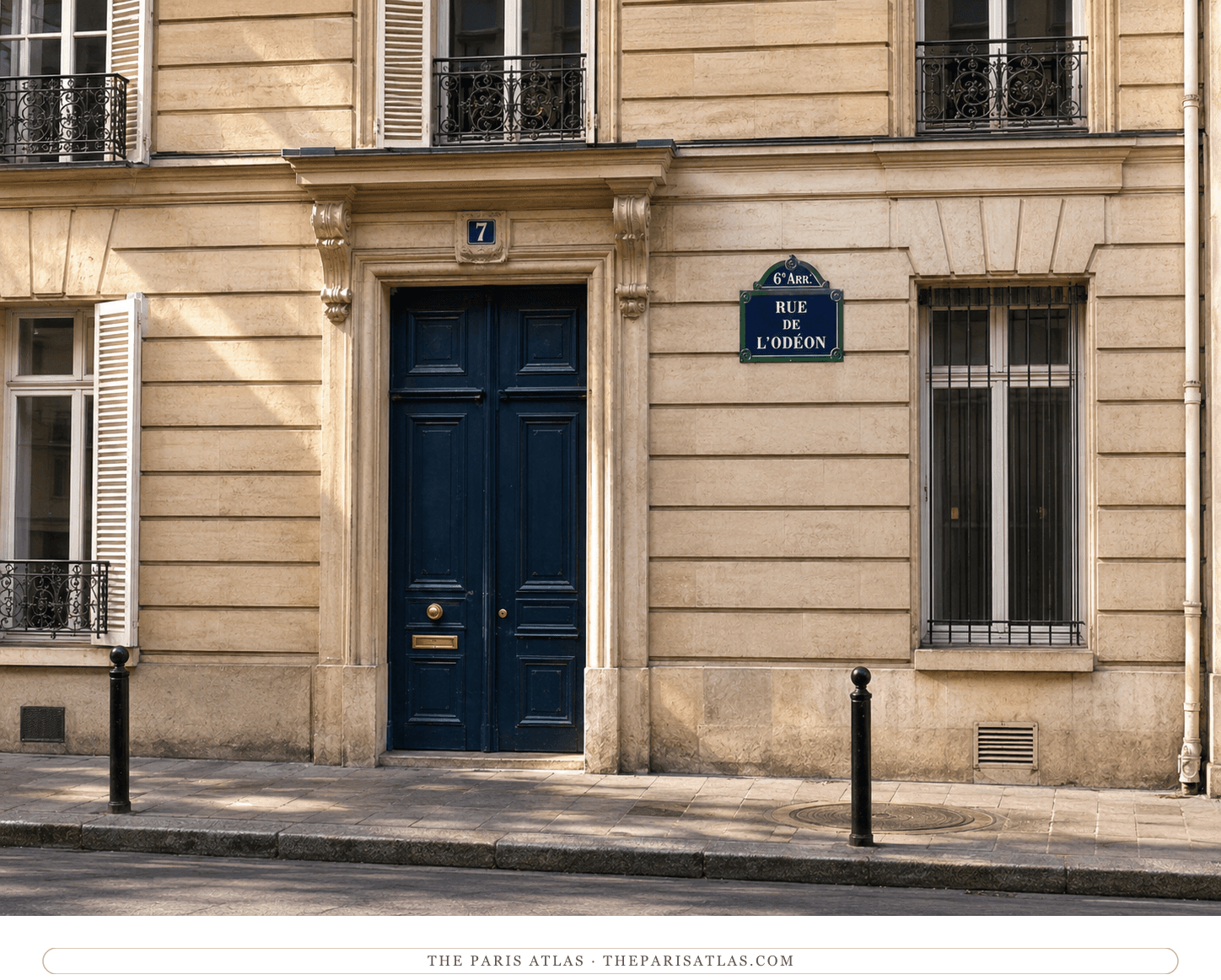
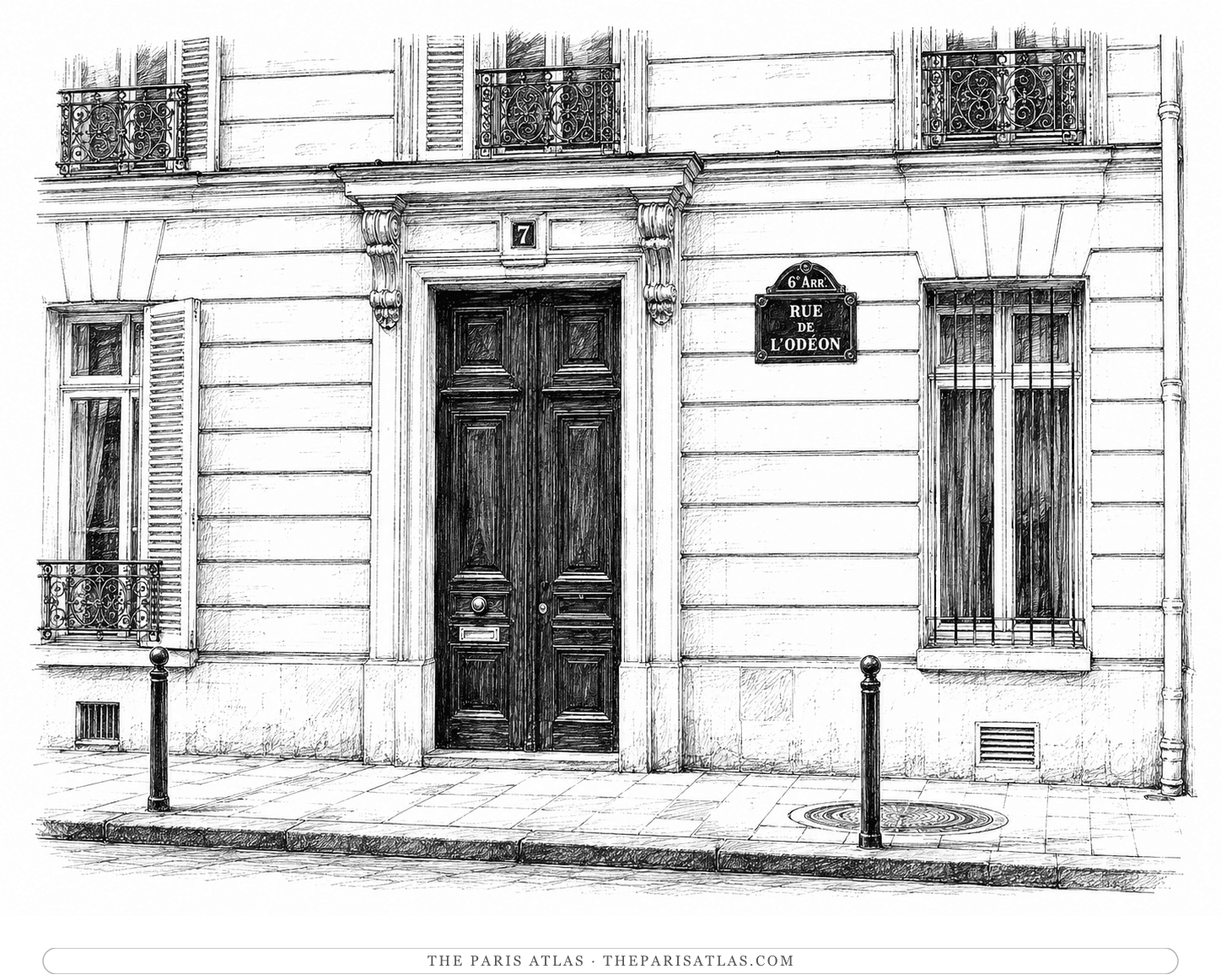
The shop was La Maison des Amis des Livres at 7 rue de l'Odéon, opened in 1915 by Adrienne Monnier. It was a bookshop and a lending library, and it was the center of a circle of French writers. Monnier and Beach met in 1917 and were partners, in life and in work, until Monnier's death.

Monnier showed Beach that a bookshop could be run as a literary institution rather than a business. She also gave practical help: how to build a lending library, where to find customers, which writers to court. When Beach opened her own shop, she opened it a few steps away, and eventually directly across the street.[5]

Opening Shakespeare and Company

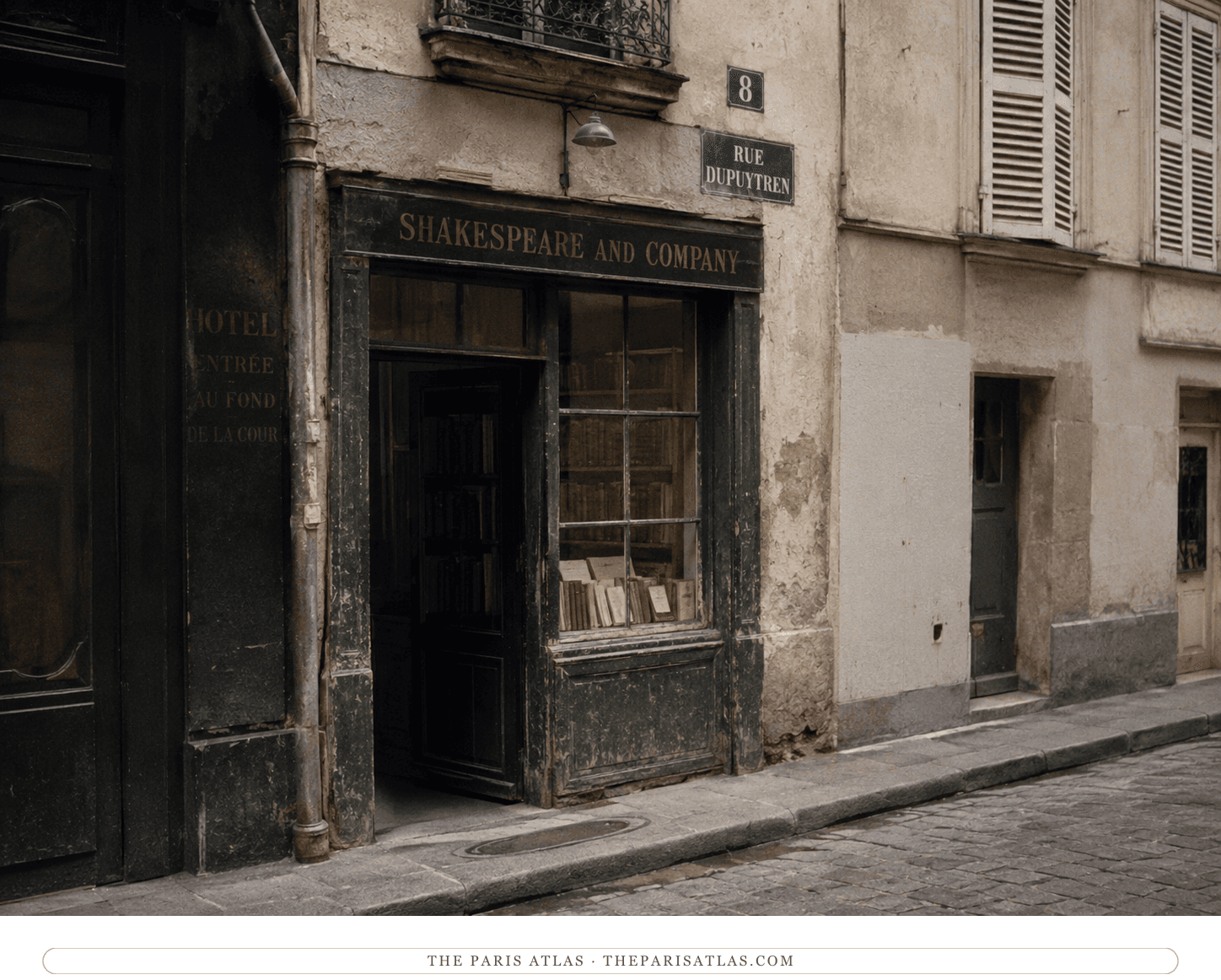
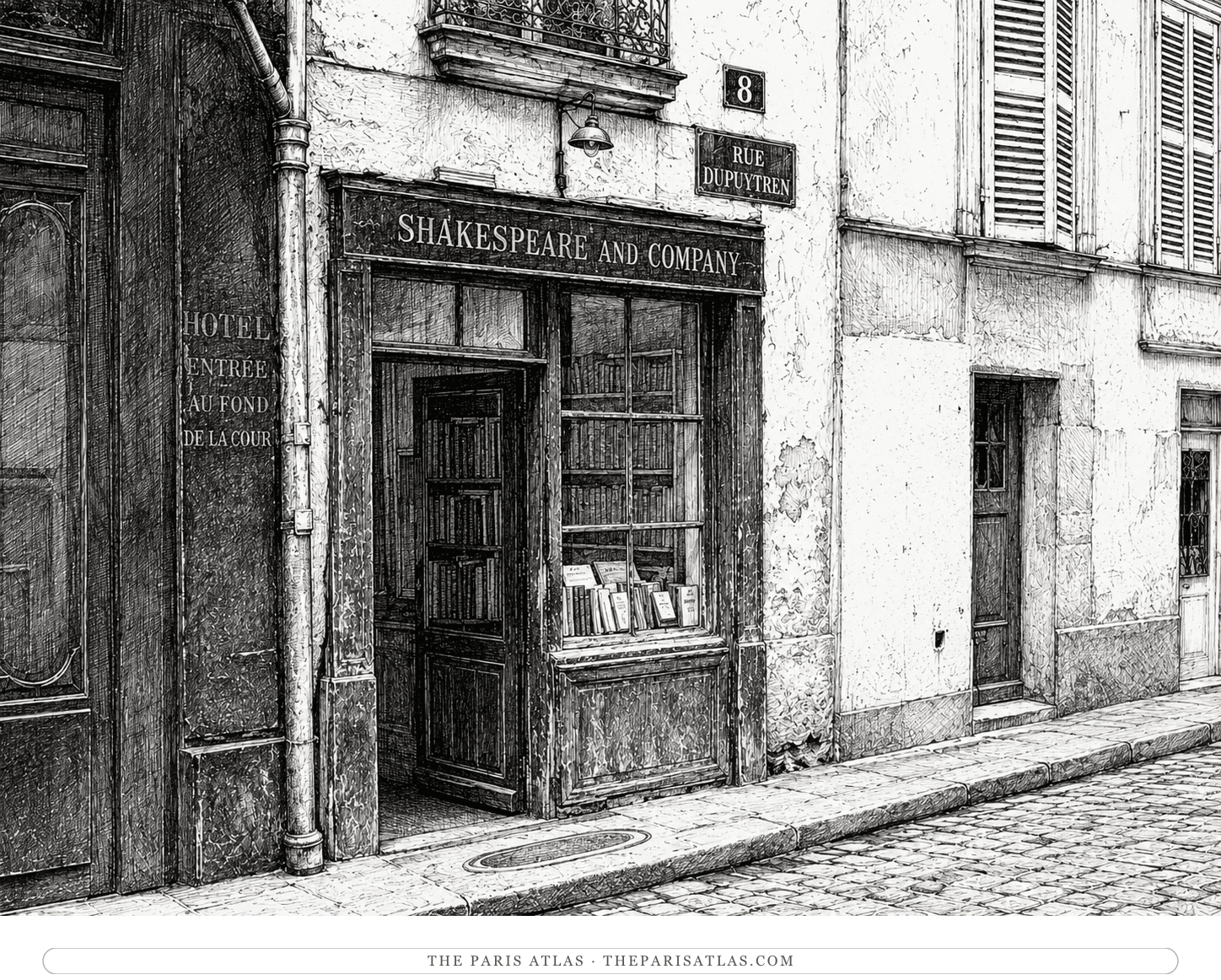
Beach opened Shakespeare and Company on 19 November 1919, at 8 rue Dupuytren. She had a small amount of money from her mother and a stock of English and American books that were hard to find in Paris.[6]

In May 1921 she moved to a larger space at 12 rue de l'Odéon, opposite Monnier's shop. The two bookshops faced each other across the street for twenty years, one selling French books and one English. Writers walked between them daily, and the rue de l'Odéon became the address where French and expatriate literary Paris met.[7]

The shop was a lending library as well as a bookstore. Members paid a subscription and borrowed books. Writers who could not afford to buy could read anyway, which is why so many of the people who used it were young and broke.[7]

What the shop actually did

Shakespeare and Company was an address, a bank, a post office and a club. Beach let writers use the shop as their mailing address, held their letters, cashed cheques, lent them money and put them up when they had nowhere to go. She introduced French writers to American ones and found translators for both.

Hemingway first came in during December 1921, and Beach gave him a lending-library card on trust. He described the shop in A Moveable Feast as the warmest place he knew in Paris in the years when he had no money, and said she let him borrow as many books as he liked without paying the deposit. Other regulars included F. Scott Fitzgerald, Ezra Pound, Gertrude Stein, Man Ray, Djuna Barnes and Bryher.

Meeting James Joyce

Beach met James Joyce at a party in July 1920. He was thirty-eight, had moved to Paris weeks earlier with his family, and was trying to finish Ulysses.

Parts of the novel had been appearing in an American magazine, The Little Review, until a New York court convicted the editors of publishing obscenity in 1921 and stopped the serialisation. No commercial publisher in Britain or the United States would touch the book after that, and printers refused it because they could be prosecuted too.

Publishing Ulysses

Beach offered to publish Ulysses herself. She had no experience of publishing, no capital and no distribution, so she used the only method available: she sold the book before it existed. Subscribers signed up in advance and their money paid the printer.

The printer was Maurice Darantière of Dijon, who agreed to set a book he could not read in a language he did not know, and who kept resetting it while Joyce added material to the proofs. The first edition ran to 1,000 copies in three grades: 100 signed copies on Dutch handmade paper, 150 on large vergé d'Arches, and 750 on ordinary paper.

Ulysses was published on 2 February 1922, Joyce's fortieth birthday. Beach had the first two copies brought from Dijon by train that morning so the date would be right.

Selling a banned book

Ulysses was banned in the United States and effectively banned in Britain, and the ban was enforced at the border. Customs officers seized copies. Buyers hid them in luggage. For more than a decade the Paris edition was the only one that existed, and readers in English-speaking countries got it by smuggling.

That situation lasted until 1933, when an American court ruled that Ulysses was not obscene and could be imported. The decision opened the book to ordinary publication in New York, and it ended Beach's position as the only source.

Joyce and the Random House contract

Beach supported Joyce for years. She published him, advanced him money, handled his correspondence, chased his royalties and absorbed the costs of his endless revisions.

In 1932 Joyce sold the American rights to Ulysses to Random House. Beach was not consulted and received nothing from the sale. She held the publishing rights to Ulysses and released them without payment so the American edition could go ahead. The friendship survived; the working relationship between publisher and author did not.

The shop between the wars

By the 1930s the shop was in financial difficulty. The Depression cut the number of Americans in Paris, and many of the writers who had made the shop famous went home. In 1936 André Gide organised a subscription society, the Friends of Shakespeare and Company, whose members paid to keep the shop open; French writers of the first rank subscribed to save an American bookshop. Beach kept it going on that, on sales, and on the loyalty of a smaller circle.

In twenty-two years the shop never turned a profit, and Beach lived plainly throughout.

Closing in December 1941

Germany occupied Paris in June 1940. Beach was American, which for the first eighteen months meant she was a neutral rather than an enemy, and she kept the shop open.

In December 1941 she closed it. The account she gave afterwards was that a German officer came in, demanded the copy of Finnegans Wake displayed in the window, and threatened to confiscate everything when she refused to sell it. She and a group of friends emptied the shop in a single afternoon — books, shelves, light fittings, the painted sign — and carried it all to an empty apartment upstairs. When the Germans came back there was nothing there.

Shakespeare and Company never reopened.

Internment

The United States entered the war in December 1941, which made Beach an enemy alien in occupied France. She was arrested in 1942 and interned at Vittel, in eastern France, for six months. She was released through the intervention of a friend with contacts in the Vichy administration.

She spent the rest of the occupation in Paris, mostly hidden, and kept her books hidden with her.

The liberation of the rue de l'Odéon

In August 1944, during the liberation of Paris, Hemingway arrived in the rue de l'Odéon with a group of armed men and announced that he had come to liberate the street. Beach came down and they embraced in front of the building. He then went up to the roof, in his account, to deal with snipers.

Hemingway and Beach both told the story afterwards, and their versions differ in detail. The accounts agree that Hemingway reached the rue de l'Odéon in August 1944, that Beach came down to meet him, and that the two had not seen each other since before the occupation.

After the shop

Beach did not reopen the bookshop after the war. She stayed in her apartment at 12 rue de l'Odéon, kept lending books to people who asked, wrote, and gave interviews and talks about the writers she had known.

Adrienne Monnier's health broke down in the 1950s. She developed Ménière's disease, which caused constant unbearable noise in her head, and after years of it she died by suicide on 19 June 1955, taking an overdose of sleeping tablets. She and Beach had been together for thirty-eight years. Beach called it the great sorrow of her last years.

The memoir

In 1959 Beach published Shakespeare and Company, her account of the shop's twenty-two years, with Harcourt, Brace in New York. She was seventy-two.

The memoir is written in plain, conversational prose. It is funny about her famous customers and precise about how the shop ran and what publishing Ulysses actually involved. It has stayed in print and remains the main first-hand source for the daily life of expatriate literary Paris.

Death and afterlife

Sylvia Beach died at her apartment at 12 rue de l'Odéon on 5 October 1962, aged seventy-five. Her papers, including the Ulysses correspondence and the lending library records, went to Princeton University, where they are still held and where scholars use them to reconstruct who read what in Paris in the 1920s.

In April 1964, on the four-hundredth anniversary of Shakespeare's birth, an American bookseller named George Whitman renamed his shop on the rue de la Bûcherie, near Notre-Dame, Shakespeare and Company in her honour. Beach gave the renaming her blessing. It is a different shop in a different building, opened in 1951 as Le Mistral, and it is still trading. The name is a memorial rather than a continuation.

Why Sylvia Beach matters

Beach published Ulysses in 1922 with no capital and no experience of publishing, after every commercial publisher in Britain and the United States had refused it. The novel is now considered one of the most important written in English, and it existed as a book only because she decided it should.

Her second contribution was the shop itself. For twenty-two years it was where these writers met each other, borrowed the books that formed them, collected their post and got their introductions. The writers now grouped together as the Lost Generation were connected largely through Beach, and she did that work daily for two decades.

Life events

  1. 1887

    Born Nancy Woodbridge Beach on 14 March in Baltimore, Maryland, the second of three daughters of the Presbyterian minister Sylvester Woodbridge Beach.

    — Sylvia Beach, Shakespeare and Company (1959)

  2. 1902

    The family moves to Paris, where her father serves as assistant minister of the American Church. Beach is fourteen and learns French.

    — Sylvia Beach, Shakespeare and Company (1959)

  3. 1905

    The family returns to the United States and settles in Princeton, New Jersey.

    — Sylvia Beach, Shakespeare and Company (1959)

  4. 1916

    Beach settles in Paris, aged twenty-nine, intending to open a French bookshop in New York.

  5. 1917

    Joins the Volontaires Agricoles and spends months in the Touraine picking grapes, bundling wheat and grafting trees.

  6. 1919

    Goes to Serbia with her sister Holly on a Red Cross mission, working as a translator and secretary.

    — Sylvia Beach, Shakespeare and Company (1959)

  7. 1917

    Meets Adrienne Monnier at her bookshop La Maison des Amis des Livres, 7 rue de l'Odéon. They become partners in life and work.

    — Sylvia Beach, Shakespeare and Company (1959)

  8. 1919

    Opens Shakespeare and Company at 8 rue Dupuytren on 19 November, as an English-language bookshop and lending library.

    — Sylvia Beach, Shakespeare and Company (1959)

  9. 1920

    Meets James Joyce at a party in July, weeks after he arrives in Paris.

    — Sylvia Beach, Shakespeare and Company (1959); Richard Ellmann, James Joyce (1959)

  10. 1921

    A New York court convicts the editors of The Little Review of obscenity for serialising Ulysses, ending any prospect of commercial publication.

    — Sylvia Beach, Shakespeare and Company (1959)

  11. 1921

    Moves the shop in May to larger premises at 12 rue de l'Odéon, opposite Monnier's shop. Offers to publish Ulysses herself and opens subscriptions to pay for it.

    — Sylvia Beach, Shakespeare and Company (1959)

  12. 1922

    Publishes Ulysses on 2 February, Joyce's fortieth birthday, printed by Maurice Darantière of Dijon in an edition of 1,000 copies.

    — Sylvia Beach, Shakespeare and Company (1959)

  13. 1922

    Ernest Hemingway arrives in Paris and joins the lending library. He later describes the shop in A Moveable Feast.

    — Sylvia Beach, Shakespeare and Company (1959); Ernest Hemingway, A Moveable Feast (1964)

  14. 1923

    Publishes Joyce's Pomes Penyeach and continues to act as his publisher, banker and secretary.

    — Sylvia Beach, Shakespeare and Company (1959)

  15. 1924

    The shop is the meeting point for the expatriate writers arriving in Paris, among them F. Scott Fitzgerald, Ezra Pound and Djuna Barnes.

  16. 1926

    Beach and Monnier organise a French translation programme for Joyce and other English-language writers.

  17. 1929

    Attends the French publication of the Ulysses translation, prepared under Joyce's supervision with Monnier's press.

  18. 1931

    The Depression cuts the number of Americans in Paris and the shop's income falls sharply.

  19. 1932

    Joyce sells the American rights to Ulysses to Random House. Beach, who held the publishing rights, is not consulted and receives nothing.

    — Sylvia Beach, Shakespeare and Company (1959); Richard Ellmann, James Joyce (1959)

  20. 1933

    A United States court rules that Ulysses is not obscene, allowing the novel to be published legally in America.

  21. 1936

    The shop survives on subscriptions and the support of a smaller circle of readers and writers.

  22. 1939

    Germany invades Poland and the Second World War begins. Many of Beach's customers leave Paris.

  23. 1940

    German forces occupy Paris in June. Beach, as an American citizen, is at first a neutral and keeps the shop open.

  24. 1941

    Closes Shakespeare and Company in December after a German officer demands the copy of Finnegans Wake in the window. The shop's entire contents are carried upstairs in an afternoon.

    — Sylvia Beach, Shakespeare and Company (1959)

  25. 1942

    Arrested as an enemy alien and interned at Vittel in eastern France for six months.

    — Persecution Under the Third Reich and Internment

  26. 1943

    Released through the intervention of a friend with contacts in the Vichy administration, and spends the rest of the occupation in Paris.

    — Persecution Under the Third Reich and Internment

  27. 1944

    Paris is liberated in August. Ernest Hemingway arrives in the rue de l'Odéon and announces that he has come to liberate the street.

    — Sylvia Beach, Shakespeare and Company (1959)

  28. 1946

    Decides not to reopen the bookshop, and continues lending books from her apartment at 12 rue de l'Odéon.

  29. 1951

    George Whitman opens a bookshop called Le Mistral on the rue de la Bûcherie, near Notre-Dame.

  30. 1955

    Adrienne Monnier dies by suicide on 19 June, after years of Ménière's disease. She and Beach had been together thirty-eight years.

  31. 1956

    Beach's health declines but she continues writing, lecturing and giving interviews about the writers she knew.

  32. 1959

    Publishes her memoir Shakespeare and Company with Harcourt, Brace in New York, aged seventy-two.

    — Sylvia Beach, Shakespeare and Company (1959)

  33. 1962

    Dies at her apartment at 12 rue de l'Odéon on 5 October, aged seventy-five.

    — Beach, Sylvia (1887–1962)

  34. 1964

    George Whitman renames his shop Shakespeare and Company in April, on the four-hundredth anniversary of Shakespeare's birth, in Beach's honour.

    — Our History

  35. 1965

    Her papers, including the Ulysses correspondence and the lending library records, are acquired by Princeton University.

    — Sylvia Beach Papers

Sylvia Beach Featured in These Books

Cover of A Moveable Feast by Ernest Hemingway

A Moveable Feast

by Ernest Hemingway

How Sylvia appears in its pages: Proprietor of the Shakespeare and Company lending library, who let him borrow books on trust when he couldn't cover the deposit.

The full portrait — Sylvia Beach in A Moveable Feast

Proprietor of the Shakespeare and Company lending library, who let him borrow books on trust when he couldn't cover the deposit.

Who they are in the book

Spoiler-free

Sylvia keeps the lending library at 12 rue de l'Odéon, and the book's account of her is simple: no one was ever nicer to him. On his first visit, short the money for a membership deposit, she waves it off and lets him carry away Turgenev, Tolstoy, and Dostoyevsky on trust. The shop is warm in winter, stocked with everything, and functions as the neighborhood's post office, bank, and clubhouse for writers.

What she wants is writers reading and being read — she publishes, lends, forwards mail, and advances cash against royalties that may never come. In a memoir that files its portraits sharp, hers has no edge at all: she is the book's proof that the era's generosity was real.

How Sylvia Beach Is Portrayed

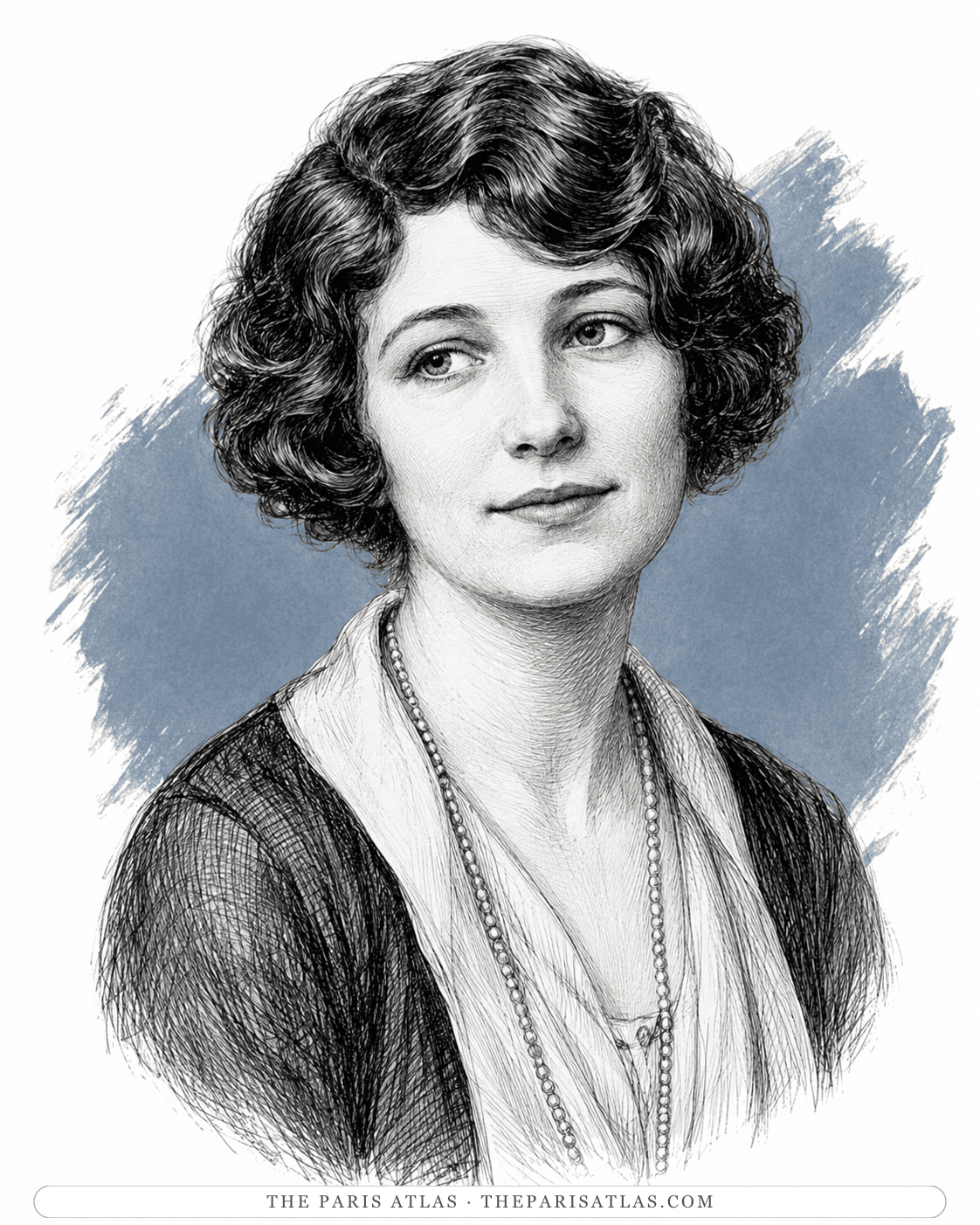
  • The faceSharply sculpted and quick, with brown eyes as alive as a small animal's and as merry as a girl's, and wavy brown hair brushed back from her forehead.
  • The mannerJokes, gossip, and undivided attention — the book treats her curiosity about people as a form of kindness.
  • The shopWarm in winter, stacked to the ceiling, and run on trust; the deposit she waves away is the era's most famous line of credit.
  • The wallsHung with photographs of the writers of the house, the living and the dead together — a family album the whole quarter belonged to.
  • The servicesMail held, money advanced, news exchanged — a post office and a bank that happened to lend books, all run from one desk.
  • The syllabusShe starts him on the Russians — Turgenev first, then Tolstoy and Dostoyevsky — carried home in armloads that set the course of a whole winter's education.

At a glance

In the book
'Sylvia' — bookseller and lender of first resort
Where she appears
'Shakespeare and Company,' and wherever books or money run short
The real person
Sylvia Beach · 1887–1962 · Baltimore, Maryland
Their ending, and the commentary — spoilers aheadHow the book leaves them, and what the record says. Open when you're ready.

Nothing in her chapters needs a spoiler warning — the aftermath does. Beach published Ulysses in 1922 when no one else would, nearly went under doing it, and lost the rights when Joyce signed with Random House a decade later. The shop she kept for the whole era closed for good in 1941, during the Occupation — by her own account after she refused to sell her last copy of Finnegans Wake to a German officer — and she was later interned for six months as an enemy alien.

She lived to write her own memoir of the street, Shakespeare and Company (1959), and died in Paris in 1962 — two years before A Moveable Feast told the deposit story. The name of her shop was revived in 1964 by George Whitman's bookstore on the rue de la Bûcherie, which carries it today.
More people from A Moveable Feast

People Sylvia Beach Knew

Relationships with other people, with sources for each connection.

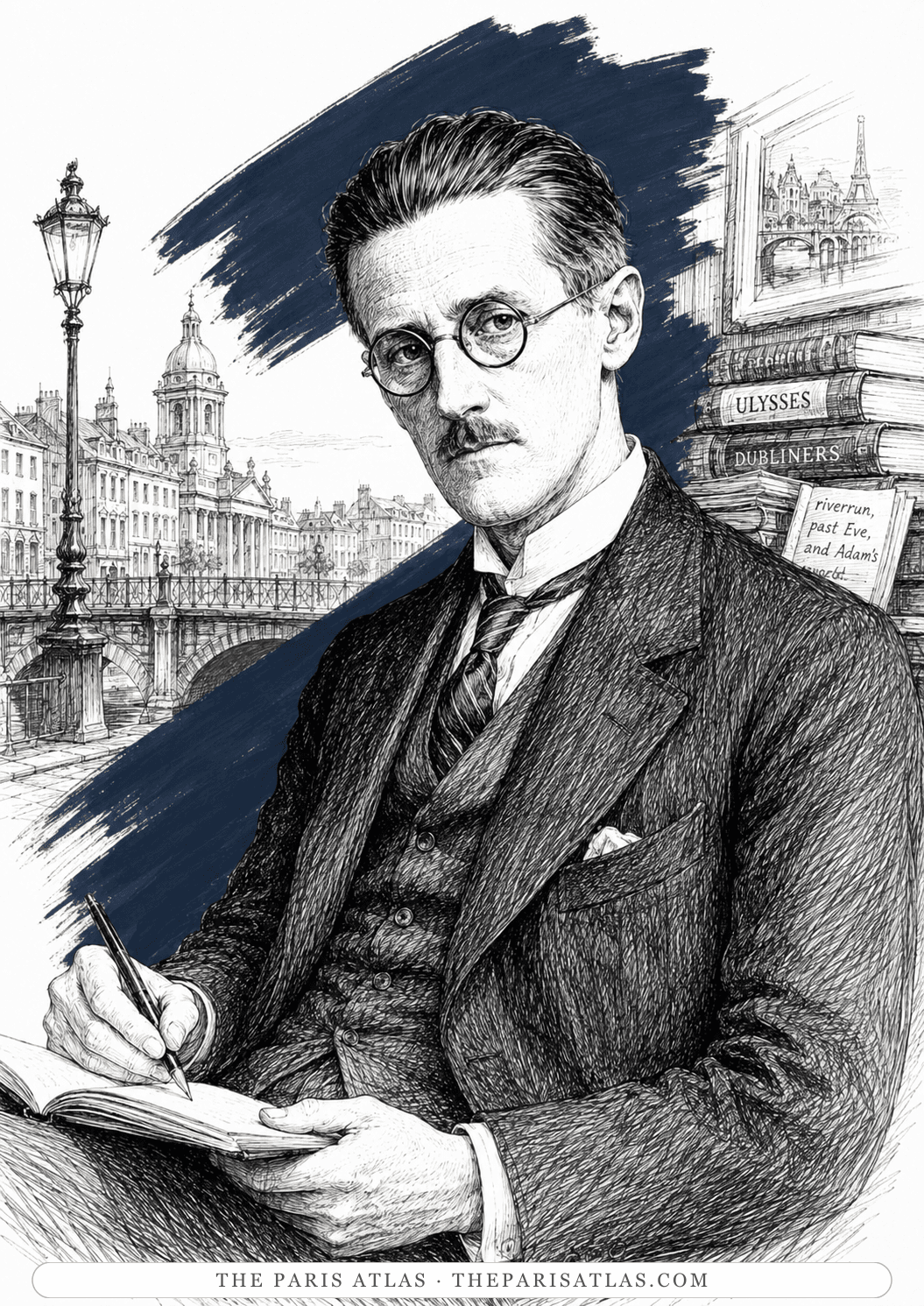
Illustrated portrait of James Joyce

James Joyce

  • Author
  • Poet

Met · 1920

Introduced at a party in the summer of 1920; within two years the bookseller had become the publisher of Ulysses. Her memoir opens on the meeting, and the shop's history was never separable from him again.

— Sylvia Beach, Shakespeare and Company (1959); Richard Ellmann, James Joyce (1959)

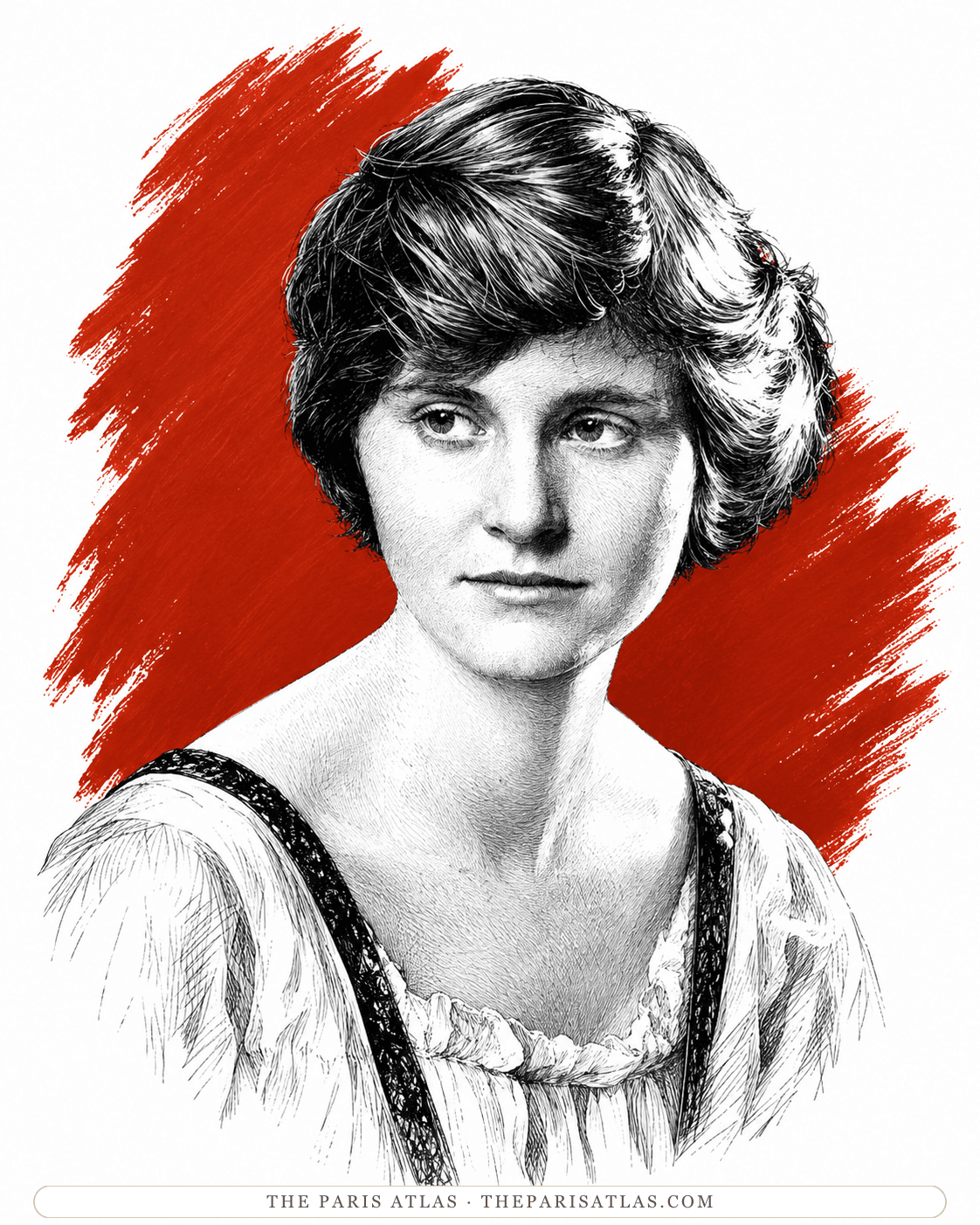
Illustrated portrait of Adrienne Monnier

Adrienne Monnier

  • Bookseller
  • Publisher
  • Author

Met · 1917

Beach met Monnier on a first visit to the shop in 1917 — the beginning of a partnership in work and in life that made the rue de l'Odéon the address of two literatures.

— Sylvia Beach, Shakespeare and Company (1959)

Illustrated portrait of Ernest Hemingway

Ernest Hemingway

  • Author
  • Journalist

Met · 1921

First stop on the rue de l'Odéon, December 1921: a lending-library card extended on trust to a writer who couldn't cover the deposit. Both memoirs record the friendship; in 1944 he arrived in uniform to 'liberate' the street.

— Ernest Hemingway, A Moveable Feast (1964), 'Shakespeare and Company'; Sylvia Beach, Shakespeare and Company (1959)

Illustrated portrait of Sisley Huddleston

Sisley Huddleston

  • Journalist
  • Author

Met

Neighbors in the small world of literary Paris — Huddleston championed Shakespeare and Company in his columns and gave the shop and its keeper a chapter's warmth in his 1928 memoir.

— Sisley Huddleston, Paris Salons, Cafés, Studios (1928)

Illustrated portrait of Jack Hemingway

Jack Hemingway

  • Conservationist
  • Author

Met

As a small boy Bumby knew and liked the Shakespeare and Company bookseller and, amused by her name, called her 'Silver Beech.'

— Sylvia Beach, Shakespeare and Company (1959)

Illustrated portrait of D. H. Lawrence

D. H. Lawrence

  • Author
  • Poet
  • Critic
  • +2

Met · 1929

Lawrence came to Paris in March 1929 to arrange a cheap edition of Lady Chatterley's Lover that could undercut the pirates, and asked Beach to publish it. She declined. Her own account of the refusal is plain: she did not admire the book and did not want a name as a publisher of erotica. She appears to have pointed him towards Edward Titus instead.

— Shakespeare and Company Project; Sylvia Beach, Shakespeare and Company (1959); Catherine Brown, D. H. Lawrence in Paris in 1929

Illustrated portrait of Hadley Richardson

Hadley Richardson

  • Musician

Met · 1922

Hadley used Shakespeare and Company regularly, borrowing books from Beach's lending library — the shop was a working part of her Paris rather than a literary landmark she visited.

— Carlos Baker, Ernest Hemingway: A Life Story (1969); Ernest Hemingway, A Moveable Feast (1964)

Movements

The artistic and literary currents this life ran through.

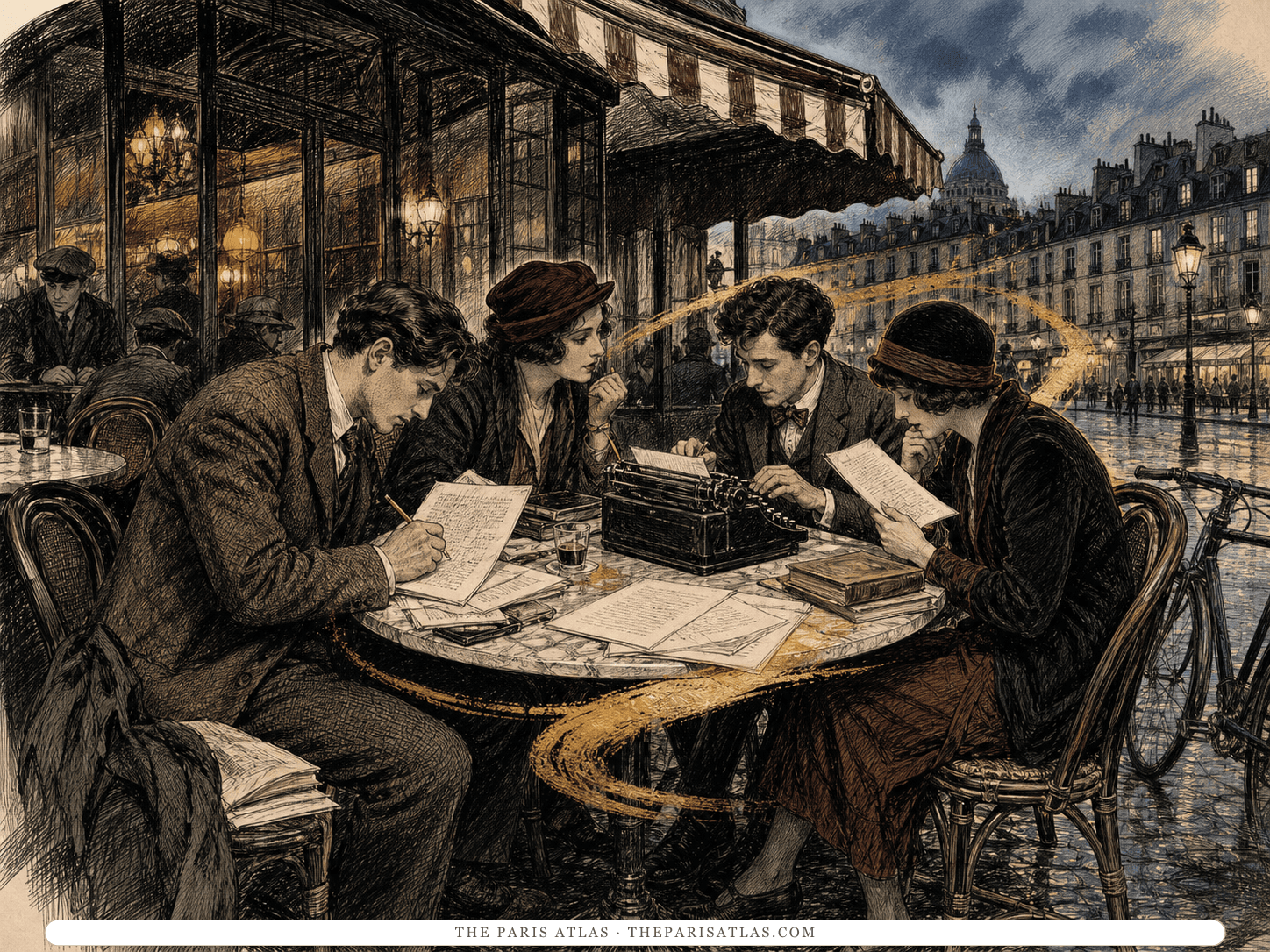
Pen-and-ink illustration of four young writers revising manuscripts around a typewriter at a Paris café in the 1920s

Literary generation · c. 1921–1929

The Lost Generation

The movement's supply line: the lending library, the mail desk, the advances against royalties — and Ulysses. Every member's first stop on the rue de l'Odéon, from the shop's opening to the Occupation.

— Sylvia Beach, Shakespeare and Company (1959); Ernest Hemingway, A Moveable Feast (1964), 'Shakespeare and Company'

Books by Sylvia Beach

Cover of Shakespeare and Company by Sylvia Beach

Memoir & autofiction

The bookseller's own story — twenty-two years at 12 rue de l'Odéon, told by the woman who lent the Lost Generation its library and published Ulysses.

4.3

Sylvia Beach’s Places

The cataloged places connected to Sylvia Beach — through the books, and through the documented record.

Places you can enter today appear first, followed by addresses to see from outside and sites that have vanished.

Organizations

Founded · 1919

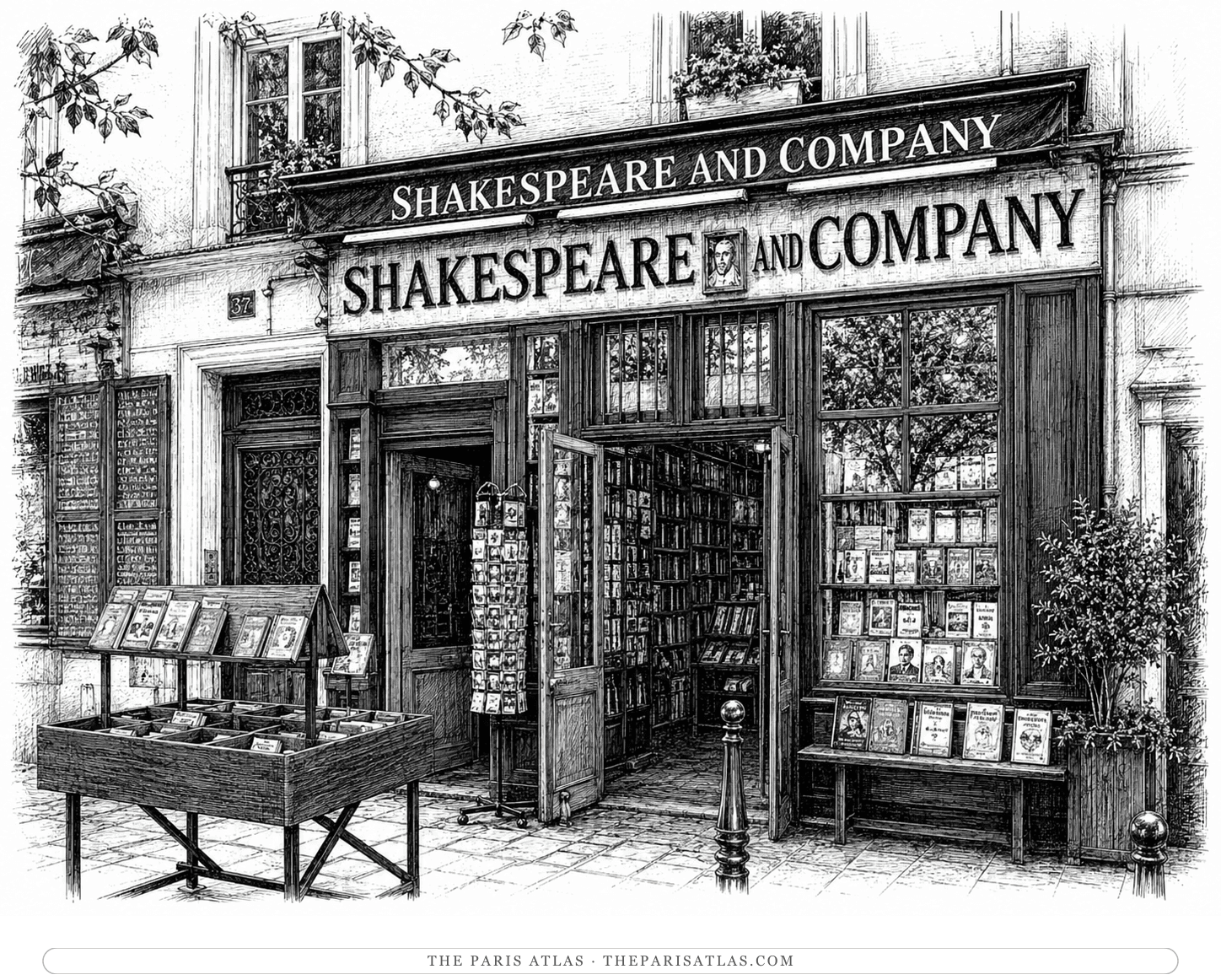
Shakespeare and Company

Sylvia Beach opens Shakespeare and Company in November 1919 as an English-language bookshop and lending library, from 1921 at 12 rue de l'Odéon.

— Sylvia Beach, Shakespeare and Company (1959)

Questions about Sylvia Beach

Who was Sylvia Beach?

Sylvia Beach was an American bookseller who ran Shakespeare and Company, an English-language bookshop and lending library in Paris, from 1919 to 1941. In 1922 she published James Joyce's Ulysses when no commercial publisher would take it.

Why did Sylvia Beach publish Ulysses?

Because nobody else would. A New York court had convicted the editors of The Little Review of obscenity in 1921 for printing extracts, and after that no publisher or printer in Britain or America would risk the book. Beach, who had never published anything, offered to do it and paid for the printing by selling subscriptions in advance.

Is the Shakespeare and Company in Paris today the same shop?

No. Beach's shop, at 12 rue de l'Odéon, closed in December 1941 and never reopened. The present Shakespeare and Company, near Notre-Dame on the rue de la Bûcherie, was opened by George Whitman in 1951 as Le Mistral and renamed in her honour in April 1964, after her death.

Why did Shakespeare and Company close?

Beach closed it in December 1941, during the German occupation of Paris. By her account a German officer demanded the copy of Finnegans Wake displayed in the window and threatened to confiscate the shop's contents when she refused. She and her friends emptied the premises the same afternoon.

Was Sylvia Beach imprisoned during the war?

Yes. After the United States entered the war she was classified as an enemy alien, arrested in 1942, and interned at Vittel in eastern France for six months before a friend with Vichy contacts secured her release.

What is Sylvia Beach's memoir?

Shakespeare and Company, published in 1959 by Harcourt, Brace. It is her account of the twenty-two years the shop was open, and it remains the main first-hand source for daily life among the expatriate writers of 1920s Paris.

Connections and Sources

Sylvia Beach’s connections to people, places, and works, with the sources behind each one.

Worked at · 1919–1941

Shakespeare and Company (12 Rue de l'Odéon)

Sylvia Beach ran the shop from behind its counter for twenty-two years — lending library, publishing house, and post office for a generation, until she closed it under the Occupation.

— Sylvia Beach, Shakespeare and Company (1959)

Founded · 1919

Shakespeare and Company

Sylvia Beach opens Shakespeare and Company in November 1919 as an English-language bookshop and lending library, from 1921 at 12 rue de l'Odéon.

— Sylvia Beach, Shakespeare and Company (1959)

Associated with · 1919–1941

The Lost Generation

The movement's supply line: the lending library, the mail desk, the advances against royalties — and Ulysses. Every member's first stop on the rue de l'Odéon, from the shop's opening to the Occupation.

— Sylvia Beach, Shakespeare and Company (1959); Ernest Hemingway, A Moveable Feast (1964), 'Shakespeare and Company'

Met · 1920

James Joyce

Introduced at a party in the summer of 1920; within two years the bookseller had become the publisher of Ulysses. Her memoir opens on the meeting, and the shop's history was never separable from him again.

— Sylvia Beach, Shakespeare and Company (1959); Richard Ellmann, James Joyce (1959)

Frequented · 1917

La Maison des Amis des Livres

Beach first walked into Monnier's shop in 1917; from 1921 her own shop faced it from No. 12, and the two doors ran as one street-wide institution for two decades.

— Sylvia Beach, Shakespeare and Company (1959)

Met · 1917

Adrienne Monnier

Beach met Monnier on a first visit to the shop in 1917 — the beginning of a partnership in work and in life that made the rue de l'Odéon the address of two literatures.

— Sylvia Beach, Shakespeare and Company (1959)

Met · 1921

Ernest Hemingway

First stop on the rue de l'Odéon, December 1921: a lending-library card extended on trust to a writer who couldn't cover the deposit. Both memoirs record the friendship; in 1944 he arrived in uniform to 'liberate' the street.

— Ernest Hemingway, A Moveable Feast (1964), 'Shakespeare and Company'; Sylvia Beach, Shakespeare and Company (1959)

Met

Sisley Huddleston

Neighbors in the small world of literary Paris — Huddleston championed Shakespeare and Company in his columns and gave the shop and its keeper a chapter's warmth in his 1928 memoir.

— Sisley Huddleston, Paris Salons, Cafés, Studios (1928)

Met

Jack Hemingway

As a small boy Bumby knew and liked the Shakespeare and Company bookseller and, amused by her name, called her 'Silver Beech.'

— Sylvia Beach, Shakespeare and Company (1959)

Met · 1929

D. H. Lawrence

Lawrence came to Paris in March 1929 to arrange a cheap edition of Lady Chatterley's Lover that could undercut the pirates, and asked Beach to publish it. She declined. Her own account of the refusal is plain: she did not admire the book and did not want a name as a publisher of erotica. She appears to have pointed him towards Edward Titus instead.

— Shakespeare and Company Project; Sylvia Beach, Shakespeare and Company (1959); Catherine Brown, D. H. Lawrence in Paris in 1929

Met · 1922

Hadley Richardson

Hadley used Shakespeare and Company regularly, borrowing books from Beach's lending library — the shop was a working part of her Paris rather than a literary landmark she visited.

— Carlos Baker, Ernest Hemingway: A Life Story (1969); Ernest Hemingway, A Moveable Feast (1964)

References

References

The sources below include biographies, scholarly essays, interviews, and primary materials that informed this page. They reflect both the historical record and ongoing critical conversations about Sylvia Beach and their work.

  1. 1↑How Sylvia Beach published Ulysses

    Website
    The Irish Post
    Used for

    Account of the 2 February 1922 publication day and the copies brought from Dijon by train.

    View source
  2. 2↑Persecution Under the Third Reich and Internment

    Website
    Dickinson College — Sylvia Beach's Literary Paris
    Used for

    Academic project page documenting Beach's arrest in 1942 and her six months at the Vittel internment camp.

    View source
  3. 3↑Sylvia Beach Papers

    Archive
    Princeton University Library
    Used for

    The archive of Beach's correspondence, business records and lending library files, held at Princeton since the 1960s.

    View source
  4. 4↑Beach, Sylvia (1887–1962)

    Website
    Encyclopedia.com
    Used for

    Reference entry used for the family's Paris years, the Princeton congregation, and the post-war decades.

    View source
  5. 5abShakespeare and Company

    Memoir
    Sylvia Beach, 1959
    Used for

    First-person evidence and historical context used in preparing the Sylvia Beach page.

  6. 6↑Our History

    Website
    Shakespeare and Company
    Used for

    The present bookshop's own account of its founding as Le Mistral in 1951 and its renaming in April 1964 in Beach's honour.

    View source
  7. 7abShakespeare and Company Project

    Archive
    Princeton University
    Used for

    Archival evidence used to document the historical record connected to Sylvia Beach.

    View source
  8. 8Shakespeare and Company (1919–1941)

    Website
    Wikipedia
    Used for

    Reference article on the original shop: the 1919 opening at 8 rue Dupuytren, the 1921 move to 12 rue de l'Odéon, and the December 1941 closure.

    View source
  9. 9Sylvia Beach's Shakespeare and Company

    Website
    Princeton Magazine
    Used for

    Article on Beach's Princeton connections and the making of the 1922 Ulysses.

    View source
  10. 10Ulysses by James Joyce (February 1922)

    Website
    The New York Public Library
    Used for

    Library exhibition record of the first edition, its three paper grades and the print run of 1,000 copies.

    View source
  1. 11Sylvia Beach: Legendary Paris Bookseller and Publisher

    Website
    Literary Ladies Guide
    Used for

    Biographical overview used for the lending library's role and Beach's post-war years.

    View source
  2. 12The dispersal of Sylvia Beach's books

    Website
    Princeton University Library
    Used for

    Library blog on what happened to the shop's stock and Beach's own library after her death.

    View source
  3. 13Sylvia Beach

    Website
    Wikipedia
    Used for

    General reference cross-checked against the Princeton and Dickinson material for dates.

    View source
  4. 14Sylvia Beach: A Biographical Essay

    Website
    Eliza Pillsbury
    Used for

    Biographical essay used for Beach's wartime farm work with the Volontaires Agricoles and the 1919 Red Cross mission to Serbia.

    View source
  5. 15A Moveable Feast

    Memoir
    Ernest Hemingway, 1964
    Used for

    First-person evidence and historical context used in preparing the Sylvia Beach page.

  6. 16James Joyce

    Biography
    Richard Ellmann, 1959
    Used for

    Biographical evidence used to verify chronology, relationships, and historical context connected to Sylvia Beach.

  7. 17Paris Salons, Cafés, Studios

    Memoir
    Sisley Huddleston, 1928
    Used for

    First-person evidence and historical context used in preparing the Sylvia Beach page.

  8. 18D. H. Lawrence in Paris in 1929

    Website
    Catherine Brown
    Used for

    Web source consulted for documented facts and historical context presented on the Sylvia Beach page.

    View source
  9. 19Ernest Hemingway: A Life Story

    Biography
    Carlos Baker, 1969
    Used for

    Biographical evidence used to verify chronology, relationships, and historical context connected to Sylvia Beach.

i
Why these sources are here

These references anchor the page in the documented record and in the scholarly conversations around Sylvia Beach. Every claim on this page traces back to one or more of the works listed here.

Explore more resources
Browse all authors