Sylvia Beach
- Bookseller
- Publisher
- Author
Met · 1917
Beach met Monnier on a first visit to the shop in 1917 — the beginning of a partnership in work and in life that made the rue de l'Odéon the address of two literatures.
Proprietor of La Maison des Amis des Livres on the rue de l'Odéon — Beach's partner and the French half of literature's main street.
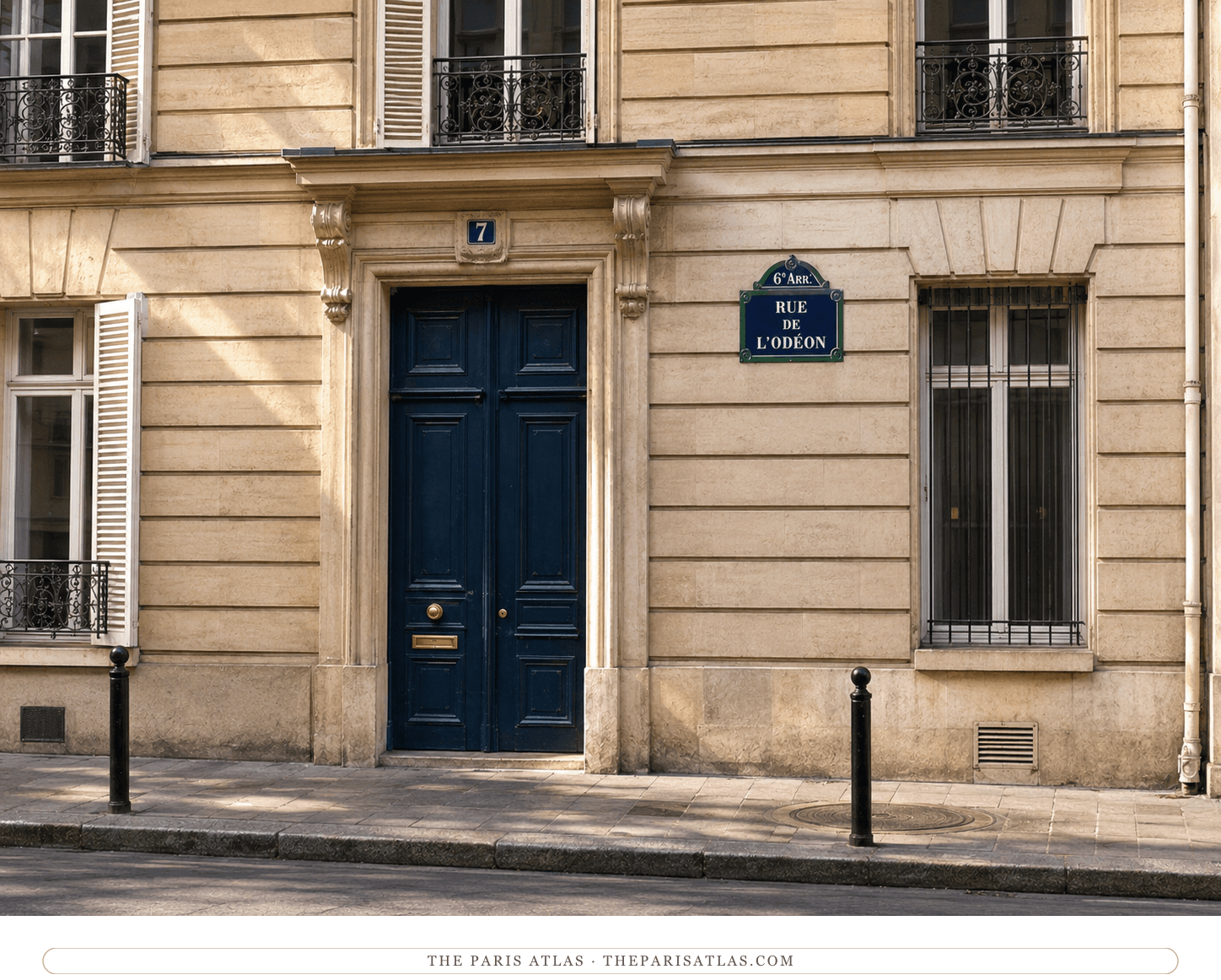
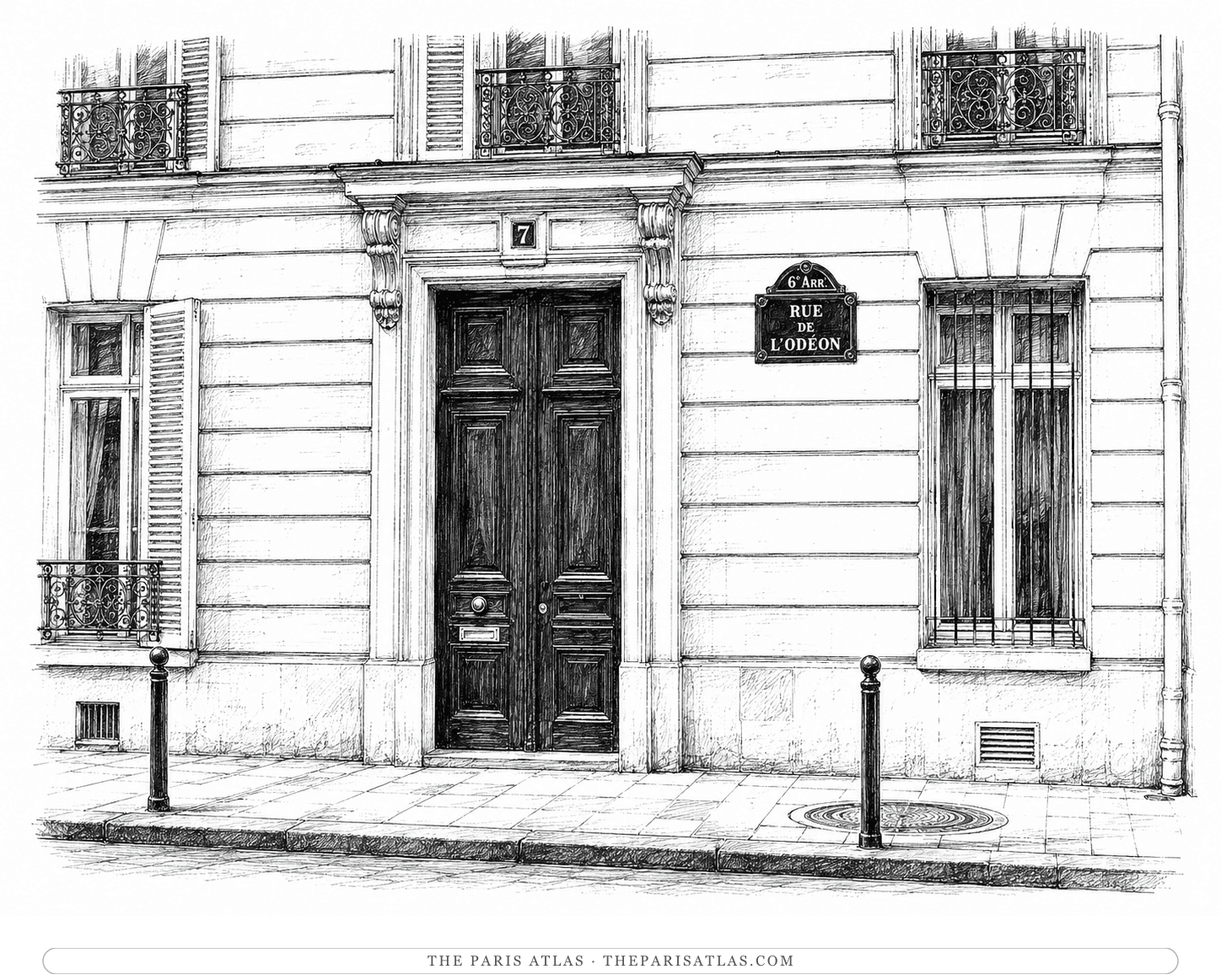
Adrienne Monnier was a French bookseller, publisher, poet and translator who ran La Maison des Amis des Livres at 7 rue de l'Odéon in Paris from 1915 to 1951. She was born in Paris on 26 April 1892 and died there on 19 June 1955.[1]
She was among the first women in France to found her own bookshop, and she opened it at twenty-three, in the middle of the First World War, using compensation money paid to her father after a rail crash.
The shop was a bookshop and a lending library, and it became the meeting place of French literary life between the wars. André Gide, Paul Valéry, Léon-Paul Fargue, Jules Romains, Walter Benjamin and many others read their new work aloud there and argued there. She published several of them, among them Valéry and Fargue.
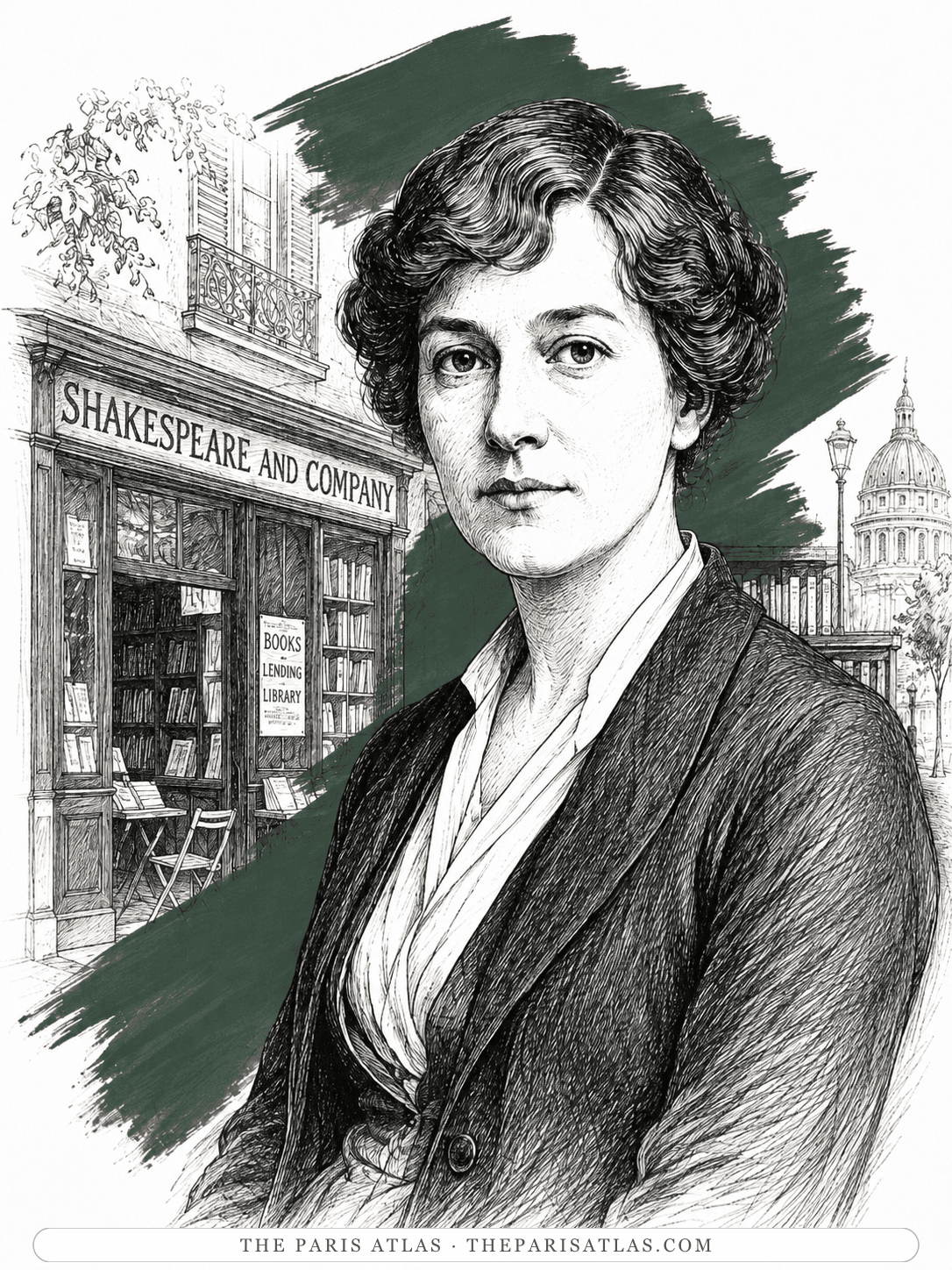
Monnier's second achievement was the English-language bookshop that opened across the street. She taught Sylvia Beach how to run a lending library, and Beach opened Shakespeare and Company a few doors away and then directly opposite. The two women were a couple for thirty-eight years and worked closely together, and between them they made the rue de l'Odéon the address where French and English-language modernism met.
Adrienne Monnier was born in Paris on 26 April 1892. Her family came from Savoy, and she spent parts of her childhood there; her father, Clovis Monnier, was a postal worker who sorted mail on night trains.[2]
In November 1913 a train crash left her father with a permanent limp. The railway compensation, ten thousand francs, was handed to his daughter to set her up in business.[1]
Monnier had worked as a secretary and had read constantly. She used the money to open a bookshop.
La Maison des Amis des Livres opened at 7 rue de l'Odéon on 15 November 1915, in wartime, when paper was short and many of the customers she might have had were at the front.[3]
The name — the House of the Friends of Books — describes the model. It was a bookshop, but the core of the business was a subscription lending library: members paid a fee and borrowed. That let poor writers and students read what they could not buy, and it gave Monnier a membership list rather than a stream of strangers. Colette, Walter Benjamin, André Breton and a young Simone de Beauvoir were all on the cards.
She sat at the back in a long grey skirt and white blouse that made visitors compare her to a nun or a shepherdess, and she ran readings. Writers read new work aloud to an audience of subscribers, and the readings became events: Valéry, Gide, Claudel, Larbaud, Fargue and Joyce all read there. The most consequential was the séance of 7 December 1921, at which Valery Larbaud introduced Ulysses to Paris, two months before the book existed.
Valery Larbaud had a name for the street the two shops stood on. He called it Odéonia.
In 1917 Sylvia Beach, an American, came into the shop looking for an issue of a literary review. Beach and Monnier became partners in life and in work, and remained so until Monnier's death.[4]
Monnier showed Beach how the lending-library model worked, and encouraged her to open an English-language version. Beach opened Shakespeare and Company in November 1919 at 8 rue Dupuytren, around the corner, and moved in 1921 to 12 rue de l'Odéon, directly across the street.
For twenty years the two shops faced each other, one French and one English. Writers crossed between them daily, and translations, introductions and friendships came out of the traffic.
Monnier published as well as sold. Her imprint issued work by Valéry, Fargue, Georges Duhamel and others, and from 1925 she ran a review, Le Navire d'Argent, edited with Jean Prévost.
Le Navire d'Argent lasted twelve issues and lost her money. It printed the first French translation of T. S. Eliot's The Love Song of J. Alfred Prufrock, an issue devoted to American writers, and early work in French translation by writers including Ernest Hemingway.[5]
She sold part of her own library to cover the debts when the review closed.
Monnier's largest publishing project was the French translation of Ulysses. Beach had published the English original in 1922; Monnier published Ulysse in February 1929, seven years later.
The translation was made by Auguste Morel, revised by Stuart Gilbert, and checked over by Valery Larbaud and by Joyce himself. It took years, and Joyce's involvement made every stage slower.
To mark the launch she gave a lunch at Les Vaux-de-Cernay outside Paris, in June 1929, for Joyce and about thirty guests, among them Paul Valéry, Jules Romains, Léon-Paul Fargue and Samuel Beckett. The guest list survives, which is why the lunch is described so often.[6]
Monnier wrote as well as sold and published. She produced poems, essays and memoirs, and translated from English and German — she and Beach translated Eliot's poem into French together, and she later translated Walter Benjamin, who was a customer and a friend.
Her collected pieces about the shop and its writers were published in French as Rue de l'Odéon. They are the best record of what the readings and the arguments were actually like, from the person who organised them.
Monnier kept the shop open through the German occupation of Paris, from 1940 to 1944, which meant operating under censorship and rationing.
She helped Beach, who was American and therefore an enemy alien after December 1941, and she was involved in hiding Beach's stock when Shakespeare and Company closed in December 1941. She also helped Jewish friends during the occupation, though the record does not say in what way.
After the war the shop struggled and Monnier's health failed. In 1951 she gave up La Maison des Amis des Livres after thirty-six years.
In 1954 she was diagnosed with Ménière's disease, a disorder of the inner ear. Her case produced constant loud noise in her head — she described hearing voices and unbearable sound that never stopped — and it did not respond to treatment. She could not read or work.
She wrote in the first person for her own readers, in pieces she called gazettes, and revived them after the war as La Gazette des Amis des Livres, which ran from 1938 to 1940.
On 19 June 1955 Adrienne Monnier died by suicide at her flat in the rue de l'Odéon, from an overdose of sleeping tablets. She was sixty-three. She left a note saying that she was ending a life she could no longer bear, after eight months of illness with no hope of improvement.[2]
Sylvia Beach, who had been with her for thirty-eight years, called it the great sorrow of her last years. Beach died seven years later.
The Paris council later put a plaque on the building at 7 rue de l'Odéon, naming her the sainte patronne des libraires, the patron saint of booksellers.
Monnier worked out a way of running a bookshop as a literary institution. It had four parts: a lending library with paying members, readings by the authors, a publishing arm, and a proprietor who chose the writers and made the introductions. Sylvia Beach copied the model directly when she opened Shakespeare and Company in 1919.
Between the wars the rue de l'Odéon held two bookshops facing each other, one French and one English. The traffic between them produced the translations, the meetings and the friendships that connected French writing to Anglo-American modernism. Ulysses was published in English on one side of that street and in French on the other, seven years apart, by two women who lived together.
Monnier wrote a first-person column she called a gazette, which began in her review Le Navire d'Argent. She revived the form after the war as La Gazette des Amis des Livres, printed in small numbers with old-rose covers, which ran from 1938 to 1940 until the war stopped it.
Born in Paris on 26 April, into a family from Savoy. Her father, Clovis Monnier, sorts mail on night trains.
Works as a secretary after leaving school, and reads constantly.
A rail crash in November leaves her father with a permanent limp. The compensation, ten thousand francs, is given to his daughter to set her up in business.
Opens La Maison des Amis des Livres at 7 rue de l'Odéon on 15 November, at twenty-three, in wartime.
Begins the subscription lending library that becomes the core of the business, letting poor writers and students borrow what they cannot buy.
Sylvia Beach comes into the shop looking for a literary review. They become partners in life and work for the next thirty-eight years.
Encourages Beach to open an English-language version of the shop. Shakespeare and Company opens in November at 8 rue Dupuytren.
Begins the readings that make the shop's reputation. Valéry, Gide, Claudel, Larbaud and Fargue all read new work aloud there.
Introduces James Joyce to her circle after he arrives in Paris.
Beach moves Shakespeare and Company to 12 rue de l'Odéon, directly opposite. The two shops face each other for twenty years.
Beach publishes Ulysses in English. Monnier begins organising a French translation.
Publishes work by Paul Valéry, Léon-Paul Fargue and Georges Duhamel under her own imprint.
Founds the review Le Navire d'Argent with Jean Prévost.
Le Navire d'Argent prints the first French translation of T. S. Eliot's The Love Song of J. Alfred Prufrock.
Devotes an issue of Le Navire d'Argent to American writers. The review closes after twelve issues, and she sells part of her own library to cover the debts.
Publishes Ulysse, the French Ulysses, in February, translated by Auguste Morel, revised by Stuart Gilbert and reviewed by Valery Larbaud and Joyce.
Gives a lunch at Les Vaux-de-Cernay in June to mark the translation, for Joyce and about thirty guests including Paul Valéry, Jules Romains and Samuel Beckett.
Continues the readings and the publishing through the Depression years as her American customers leave Paris.
Walter Benjamin, a customer and friend, is among the German exiles using the shop.
Publishes her own writing, including essays and poems about the shop and its writers.
Germany occupies Paris in June. Monnier keeps the shop open under censorship and rationing.
Beach closes Shakespeare and Company in December. Monnier helps hide the stock.
Beach is interned at Vittel. Monnier works for her release and supports her afterwards.
Paris is liberated in August.
Publishes Rue de l'Odéon, collecting her writing about the shop and the writers who used it.
Gives up La Maison des Amis des Livres after thirty-six years, as her health fails.
Is diagnosed with Ménière's disease. The condition fills her head with constant unbearable noise and does not respond to treatment.
Is diagnosed with Ménière's disease in September, a disorder of the inner ear that brings vertigo and deafness.
Dies by suicide at her flat in the rue de l'Odéon on 19 June, from an overdose of sleeping tablets, aged sixty-three, leaving a note about eight months of illness with no hope of improvement.
Her collected writings are republished in France.
The Very Rich Hours of Adrienne Monnier, an English selection translated by Richard McDougall, introduces her writing to Anglophone readers.
Met · 1917
Beach met Monnier on a first visit to the shop in 1917 — the beginning of a partnership in work and in life that made the rue de l'Odéon the address of two literatures.
A French bookseller, publisher and writer who ran La Maison des Amis des Livres at 7 rue de l'Odéon in Paris from 1915 to 1951. She was among the first women in France to found her own bookshop, and she was Sylvia Beach's partner for thirty-eight years.
With railway compensation money. A rail crash in November 1913 left her father, who sorted mail on night trains, with a permanent limp, and the ten thousand francs paid out went to his daughter. She opened the shop at twenty-three, on 15 November 1915, in the middle of the war.
A bookshop and subscription lending library at 7 rue de l'Odéon. Members paid a fee and borrowed books, which let poor writers and students read what they could not buy. Monnier also published books and ran readings at which writers read new work aloud to subscribers.
Beach walked into Monnier's shop in 1917 looking for a literary review. They became partners in life and work until Monnier's death. Monnier taught her the lending-library model, and Beach opened Shakespeare and Company in 1919, moving in 1921 to 12 rue de l'Odéon, directly across the street.
She published the French translation. Beach published Joyce's English original in 1922; Monnier published Ulysse in February 1929, translated by Auguste Morel, revised by Stuart Gilbert, and reviewed by Valery Larbaud and by Joyce himself.
She died by suicide on 19 June 1955 at her flat in the rue de l'Odéon, from an overdose of sleeping tablets. She was sixty-three. She had been diagnosed the year before with Ménière's disease, which filled her head with constant unbearable noise and did not respond to treatment, and she left a note saying she could no longer bear it.
Worked at · 1915–1951
Monnier founded the shop on 15 November 1915, at twenty-three — one of the first women in France to open a bookshop of her own — and ran it for thirty-six years, until she closed the house in 1951.
Hosted gatherings at · 1915–1951
The shop doubled as the salon of French letters — readings and gatherings that drew Gide, Valéry, and Larbaud, and on 7 December 1921 the séance at which Larbaud introduced Ulysses to some 250 listeners, Joyce among them.
Met · 1917
Beach met Monnier on a first visit to the shop in 1917 — the beginning of a partnership in work and in life that made the rue de l'Odéon the address of two literatures.
The sources below include biographies, scholarly essays, interviews, and primary materials that informed this page. They reflect both the historical record and ongoing critical conversations about Adrienne Monnier and their work.


Web source consulted for documented facts and historical context presented on the Adrienne Monnier page.
First-person evidence and historical context used in preparing the Adrienne Monnier page.
Reference entry on the shop, the publishing imprint and the French translation of Ulysses.
The museum's record of the June 1929 lunch for the French Ulysses, with the guest list.
Reference article cross-checked for the 1915 opening, the lending library, Le Navire d'Argent, the French Ulysses and her death.
Biographical evidence used to verify chronology, relationships, and historical context connected to Adrienne Monnier.
First-person evidence and historical context used in preparing the Adrienne Monnier page.
Web source consulted for documented facts and historical context presented on the Adrienne Monnier page.
These references anchor the page in the documented record and in the scholarly conversations around Adrienne Monnier. Every claim on this page traces back to one or more of the works listed here.
 Explore more resources