Gertrude Stein
- Author
- Salon host
- Patron
Met · 1922
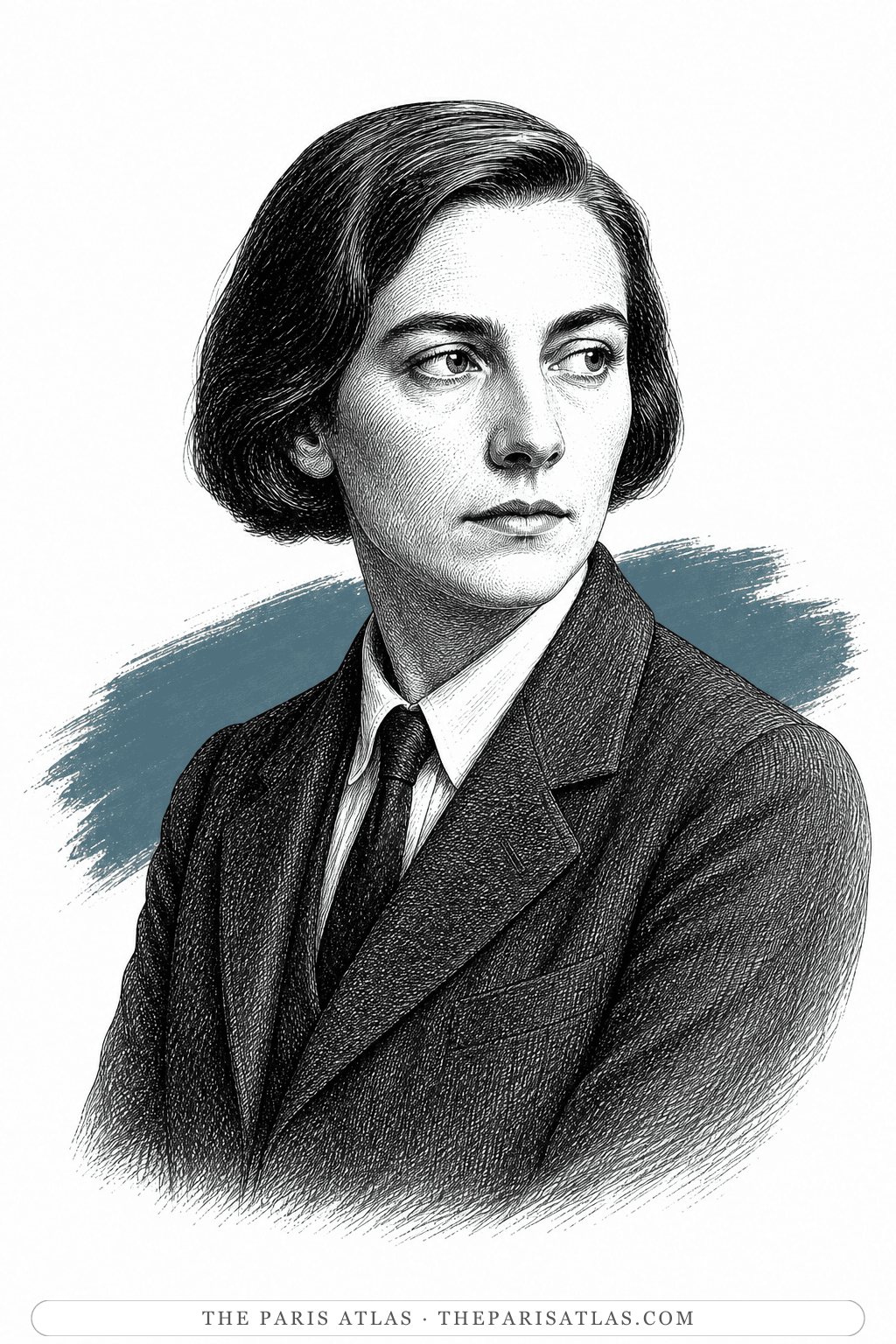
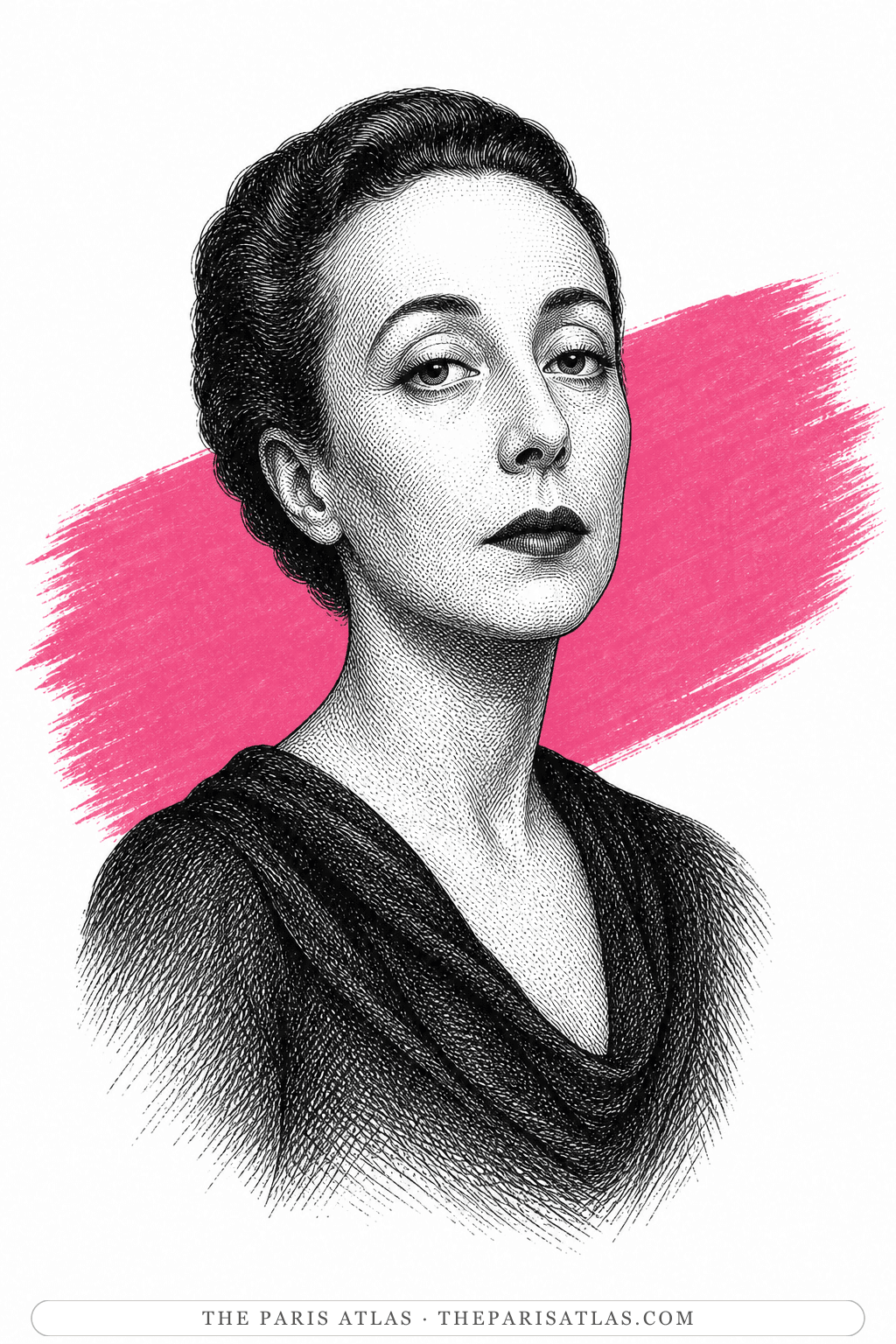
He photographed Stein and Toklas in the rue de Fleurus atelier in 1922 — the sitting preserved in our Stein timeline — and the Autobiography records the visits to his tiny hotel-room studio.
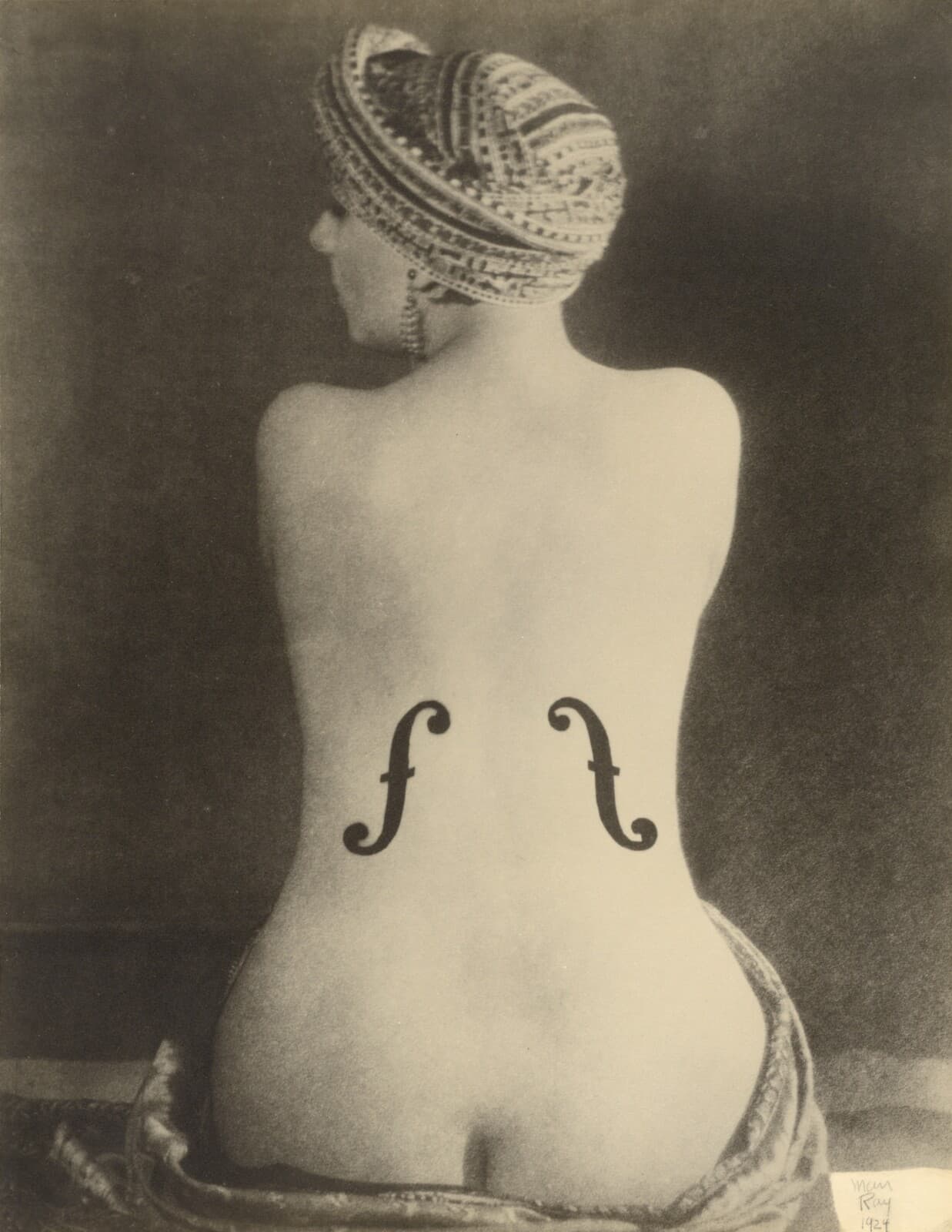
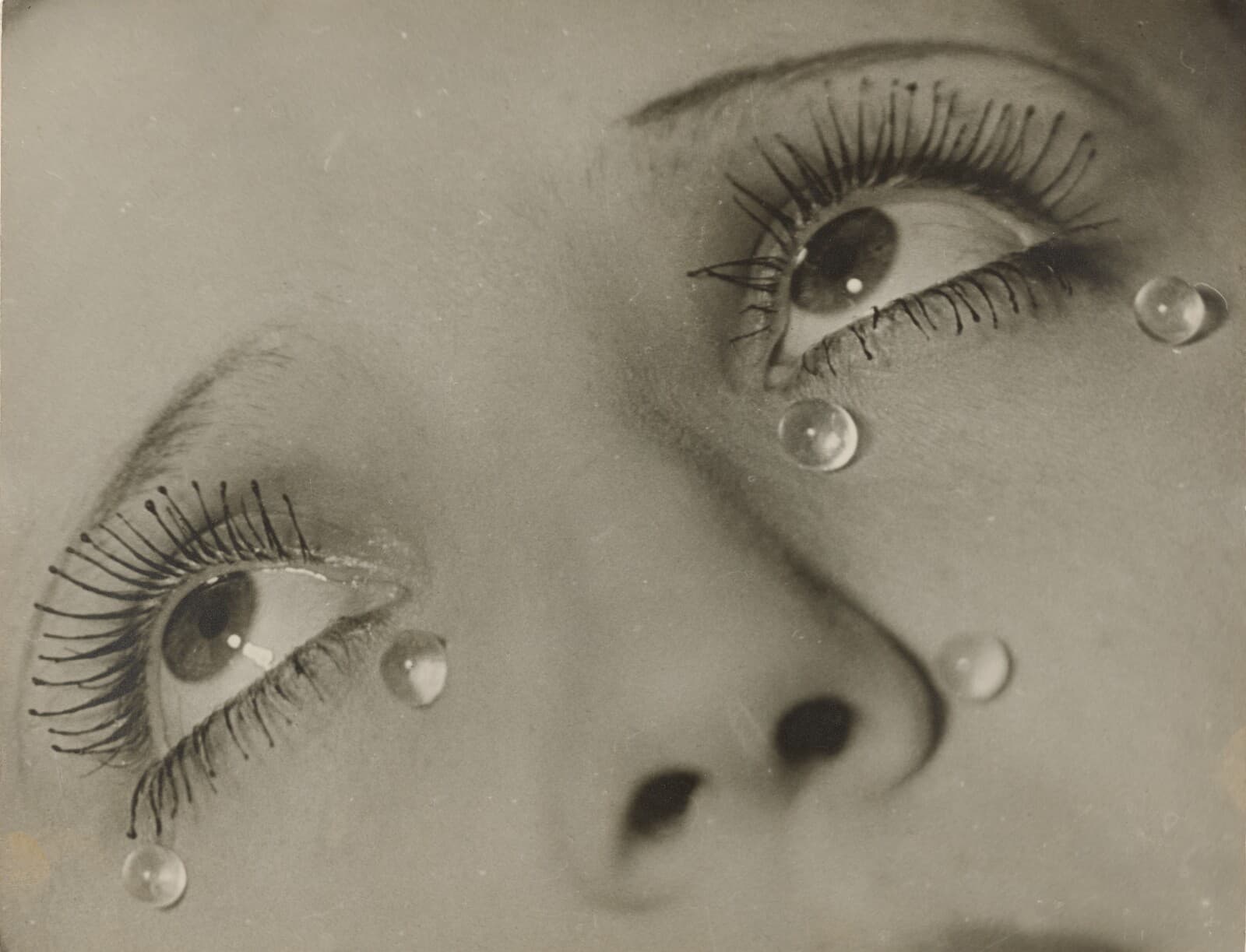
Man Ray was the American photographer, painter, and filmmaker at the center of Dada and Surrealism in Paris. Born Emmanuel Radnitzky in Philadelphia in 1890, he arrived in Montparnasse in July 1921 as the closest ally of Marcel Duchamp from their New York Dada years, and within a few years his studio was where the quarter went to be photographed — Gertrude Stein, James Joyce, Ernest Hemingway, and Jean Cocteau all sat for him. Alongside the portraits he invented the cameraless rayograph, made four Surrealist films, and produced Le Violon d'Ingres, the 1924 photograph of Kiki de Montparnasse that set the auction record for a photograph in 2022.
He was born Emmanuel Radnitzky on 27 August 1890 in Philadelphia. The family moved to Brooklyn around 1897 and later shortened its surname to Ray; Emmanuel became Man Ray and kept the invented name for the rest of his life. After high school he turned down an architecture scholarship to paint, and supported himself in Manhattan as a commercial artist and technical illustrator. In 1914 he married the Belgian poet Adon Lacroix; they separated in 1919, though the divorce waited until 1937.
He met Marcel Duchamp in the mid-1910s in the small artists' colony at Ridgefield, New Jersey, and the two ran New York's Dada experiments together for the next half decade. Among their productions was Rrose Sélavy, Duchamp's female alter ego, whom Man Ray photographed around 1920.
He reached Paris on 22 July 1921, and Duchamp introduced him to the Paris Dadaists on arrival. He settled in Montparnasse and stayed, with one long wartime interruption, for the rest of his life.
Portrait photography paid for everything else, and the client list became a census of the quarter. In 1922 he photographed Gertrude Stein and Alice B. Toklas beneath the paintings in the atelier at 27 rue de Fleurus; Stein's memoir The Autobiography of Alice B. Toklas records the visits to his tiny hotel-room studio. The Getty's holdings of his portraits include Henry Miller alongside Joyce, Stein, and Pablo Picasso.
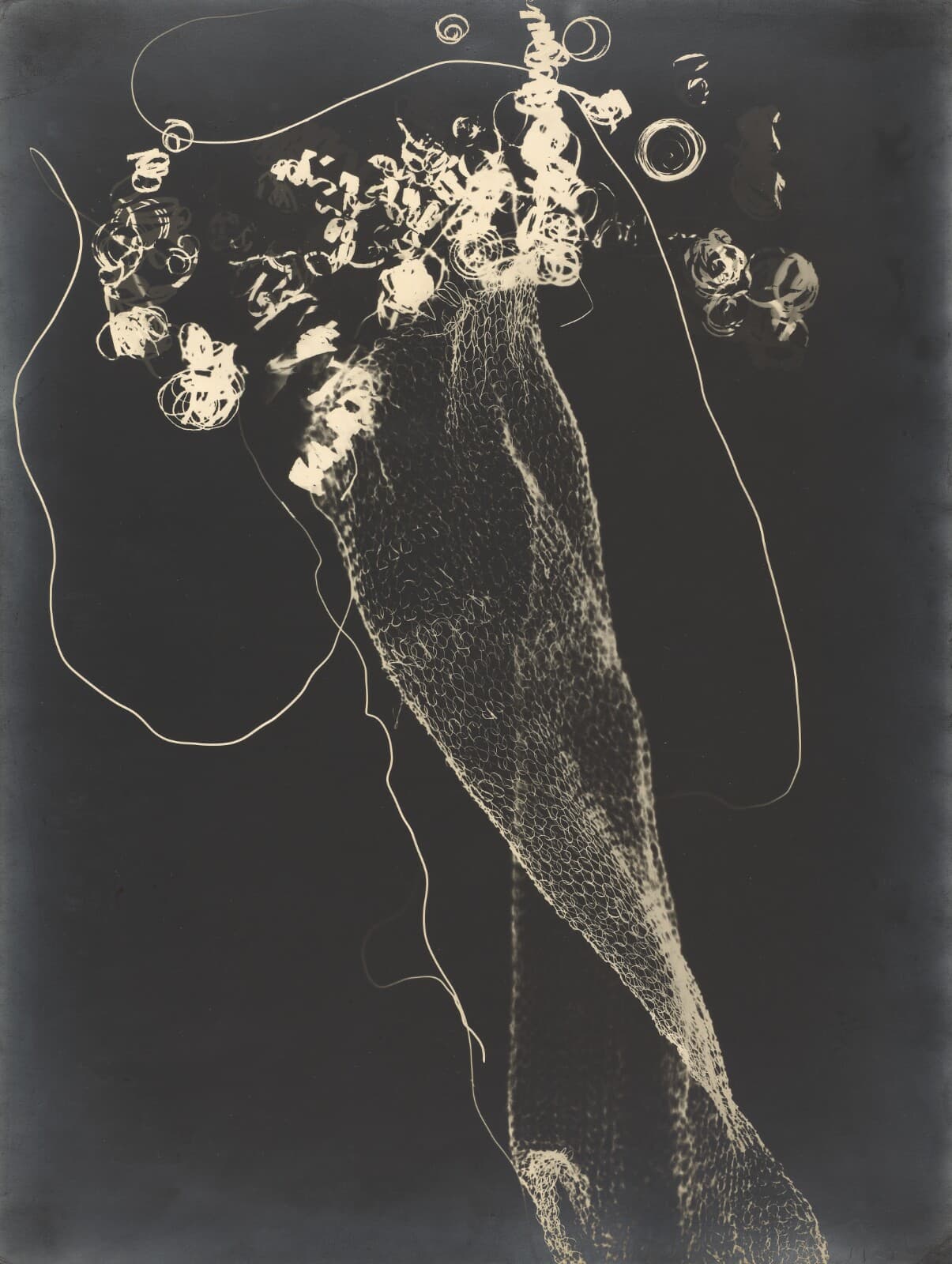
In the darkroom in 1922 he began laying objects directly onto photographic paper and exposing them to light. Twelve of the resulting images were published that year as the portfolio Champs délicieux, with a preface by the Dada poet Tristan Tzara, and the pictures became known as rayographs, after their maker.
When Surrealism organized itself out of Paris Dada, Man Ray went with it as the movement's house photographer. He photographed Gala Dalí, and one of the portraits appeared in Salvador Dalí's 1930 book La Femme visible.
For most of the 1920s he lived with Kiki de Montparnasse, the artists' model and cabaret singer born Alice Prin, and she became his most frequent model. In 1924 he photographed her bare back and added the two f-holes of a violin to the print. The result, Le Violon d'Ingres, is his best-known image; in May 2022 a print of it sold at Christie's for $12.4 million, the record for any photograph at auction.
Lee Miller, a young American model who intended to become a photographer, arrived at his studio in 1929. For three years she was his student, collaborator, and lover, and together they reworked solarization — the partial reversal of tones that rims a printed figure with a dark line — into a technique both used for the rest of their careers.
He made four short films of his own during the Paris decade:
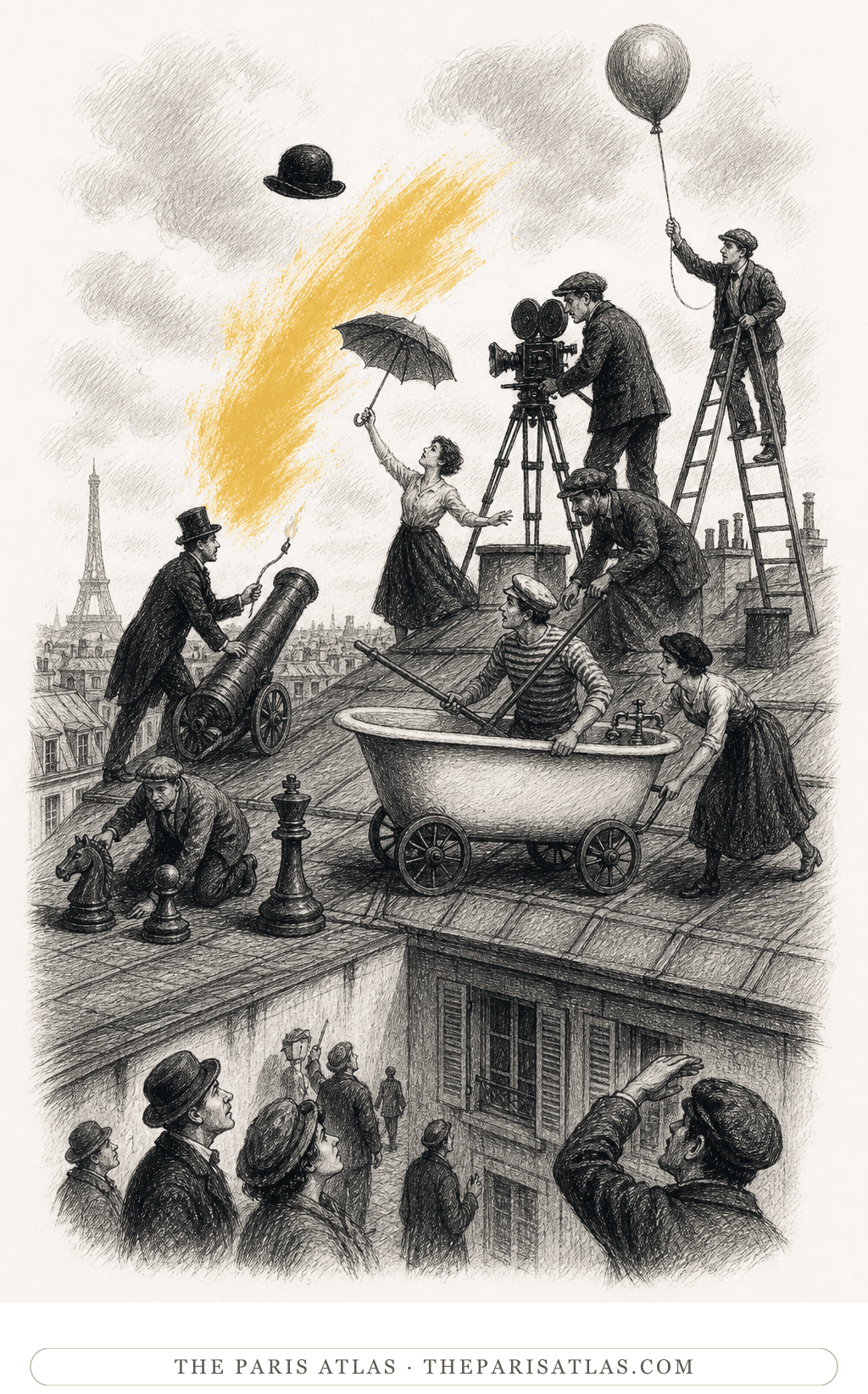
He worked on other people's films too. In René Clair's Entr'acte (1924) he and Duchamp play chess on the roof of the Théâtre des Champs-Élysées until a jet of water sweeps the game away, and in 1926 he filmed Duchamp's spinning word-discs for Anémic Cinéma.
The German occupation ended the first Paris period. He left France in the summer of 1940, reached the United States in August, and settled in Los Angeles for a decade of painting and teaching — he insisted throughout his life that painting, not photography, was his real medium. In October 1946 he married the dancer Juliet Browner in Beverly Hills, in a double wedding with Max Ernst and Dorothea Tanning.
In 1951 the couple returned to Paris and took an apartment and studio on rue Férou, a short street beside the Luxembourg Gardens, where he worked for another quarter century. He died in Paris on 18 November 1976, at eighty-six, and is buried in Montparnasse Cemetery under the epitaph he chose: 'Unconcerned, but not indifferent.' Juliet was later buried with him; her stone reads 'Together again.'
Born Emmanuel Radnitzky in Philadelphia on 27 August; the family moves to Brooklyn around 1897 and later shortens its surname to Ray.
Arrives in Paris on 22 July; Marcel Duchamp introduces him to the Dadaists, and he settles in Montparnasse.
Publishes the rayograph portfolio Champs délicieux and photographs Gertrude Stein and Alice B. Toklas in the atelier at 27 rue de Fleurus.
Photographs Kiki de Montparnasse as Le Violon d'Ingres, and plays rooftop chess with Duchamp in René Clair's Entr'acte.
Releases the cinépoème Emak-Bakia and films Marcel Duchamp's spinning discs for Anémic Cinéma.
Releases L'Étoile de mer, built on a poem by Robert Desnos, with Kiki de Montparnasse in the lead.
Completes Les Mystères du château de Dé for Charles and Marie-Laure de Noailles; Lee Miller becomes his student, model, and collaborator.
Carl Van Vechten photographs him in Paris with Salvador Dalí.
Leaves occupied France for the United States and settles in Los Angeles.
Marries the dancer Juliet Browner in Beverly Hills, in a double wedding with Max Ernst and Dorothea Tanning.
Returns to Paris with Juliet and takes an apartment and studio on rue Férou, beside the Luxembourg Gardens.
Dies in Paris on 18 November, at eighty-six, and is buried in Montparnasse Cemetery under the epitaph 'Unconcerned, but not indifferent.'
A print of Le Violon d'Ingres sells at Christie's for $12.4 million, the auction record for a photograph.
Met · 1922
He photographed Stein and Toklas in the rue de Fleurus atelier in 1922 — the sitting preserved in our Stein timeline — and the Autobiography records the visits to his tiny hotel-room studio.
Met
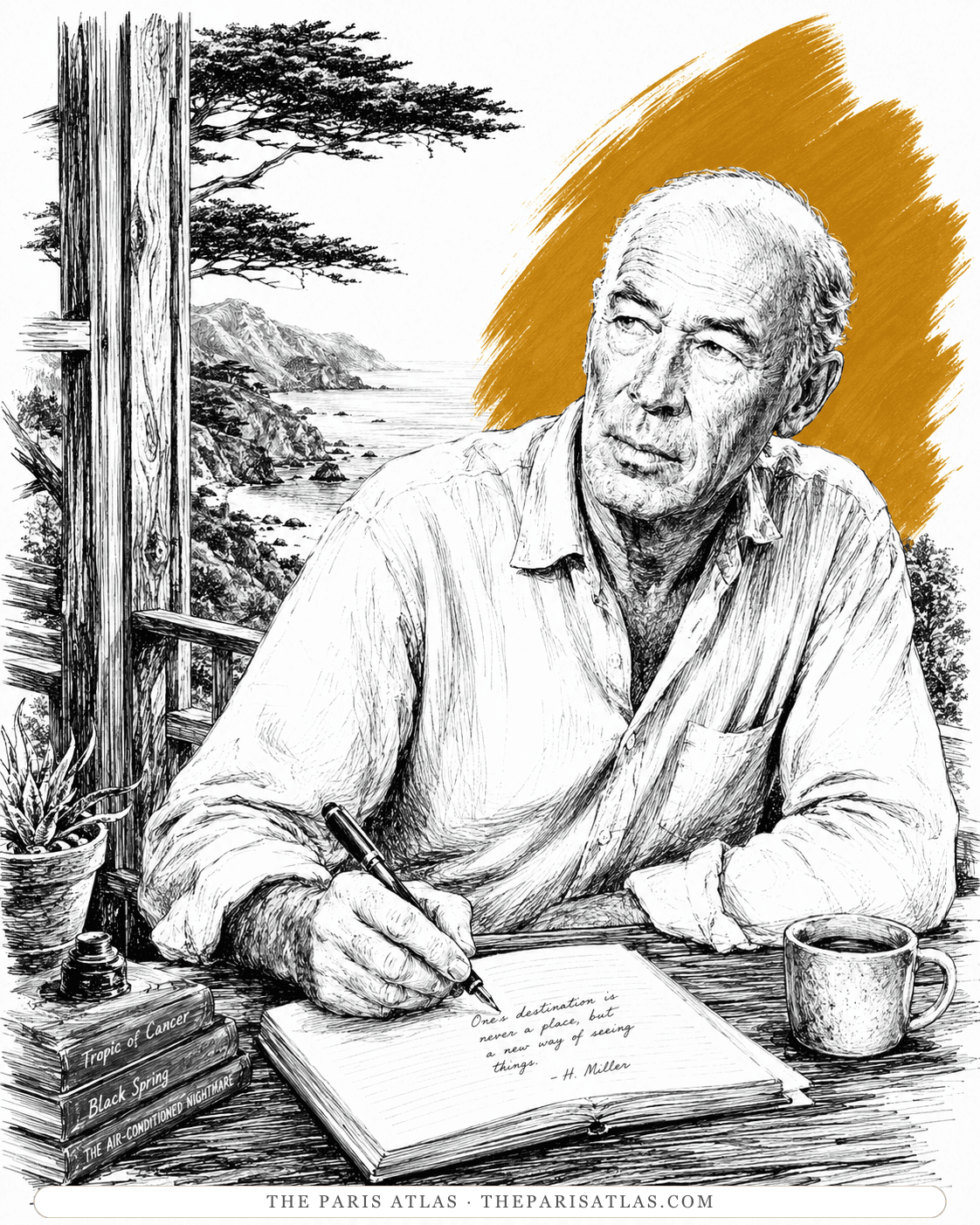
The American quarter's photographer and its most banned novelist, in one frame — Man Ray's portrait of Miller sits in the Getty's holdings among his sittings of Joyce, Stein, and Picasso.
Collaborated with · 1926
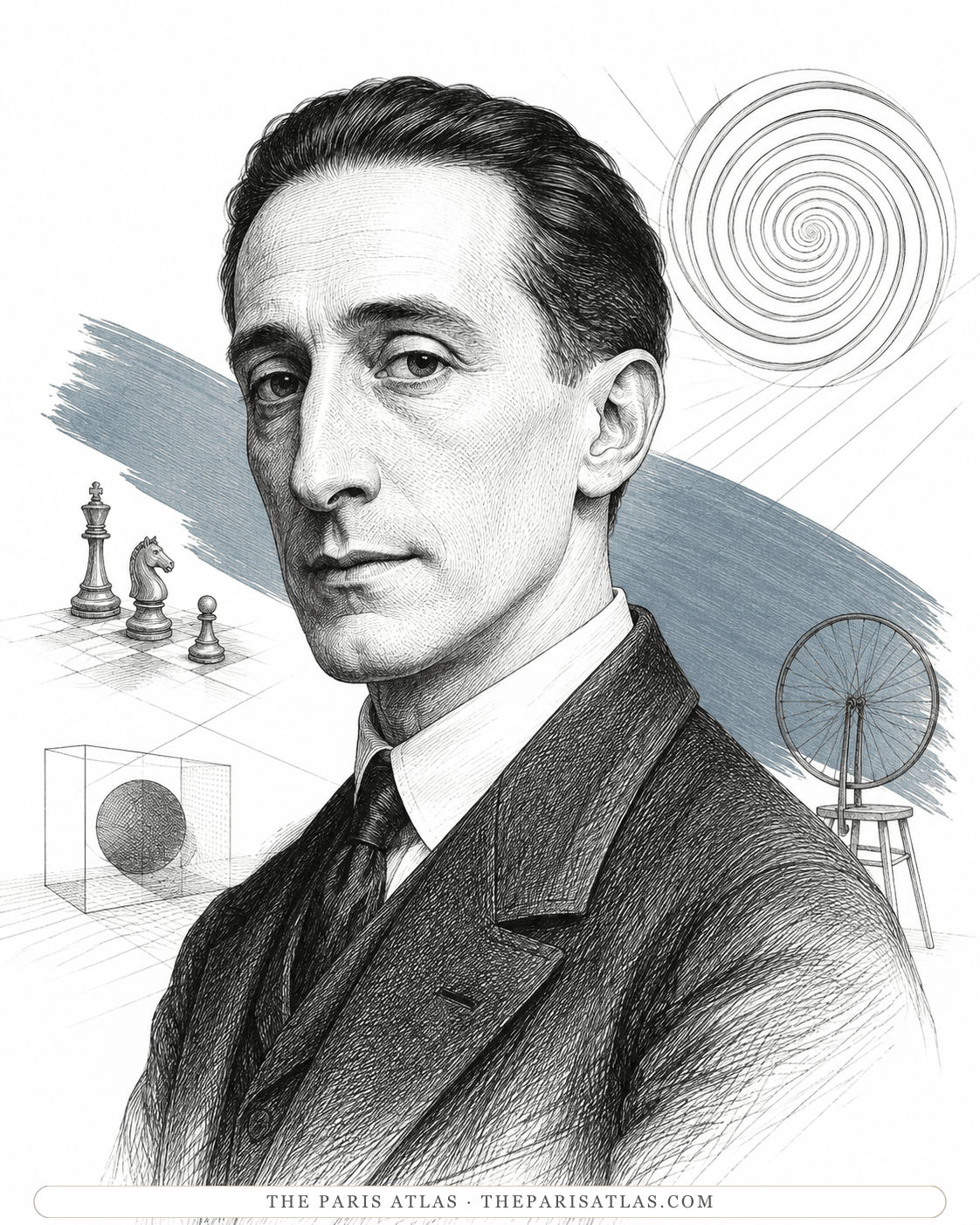
The Centre Pompidou credits Anémic Cinéma as 'réalisé par Marcel Duchamp avec Man Ray et Marc Allégret' — Man Ray filming Duchamp's turning spirals as an exercise in purely optical speed. The claim is scoped to the film; the friendship ran far longer.
Supported by
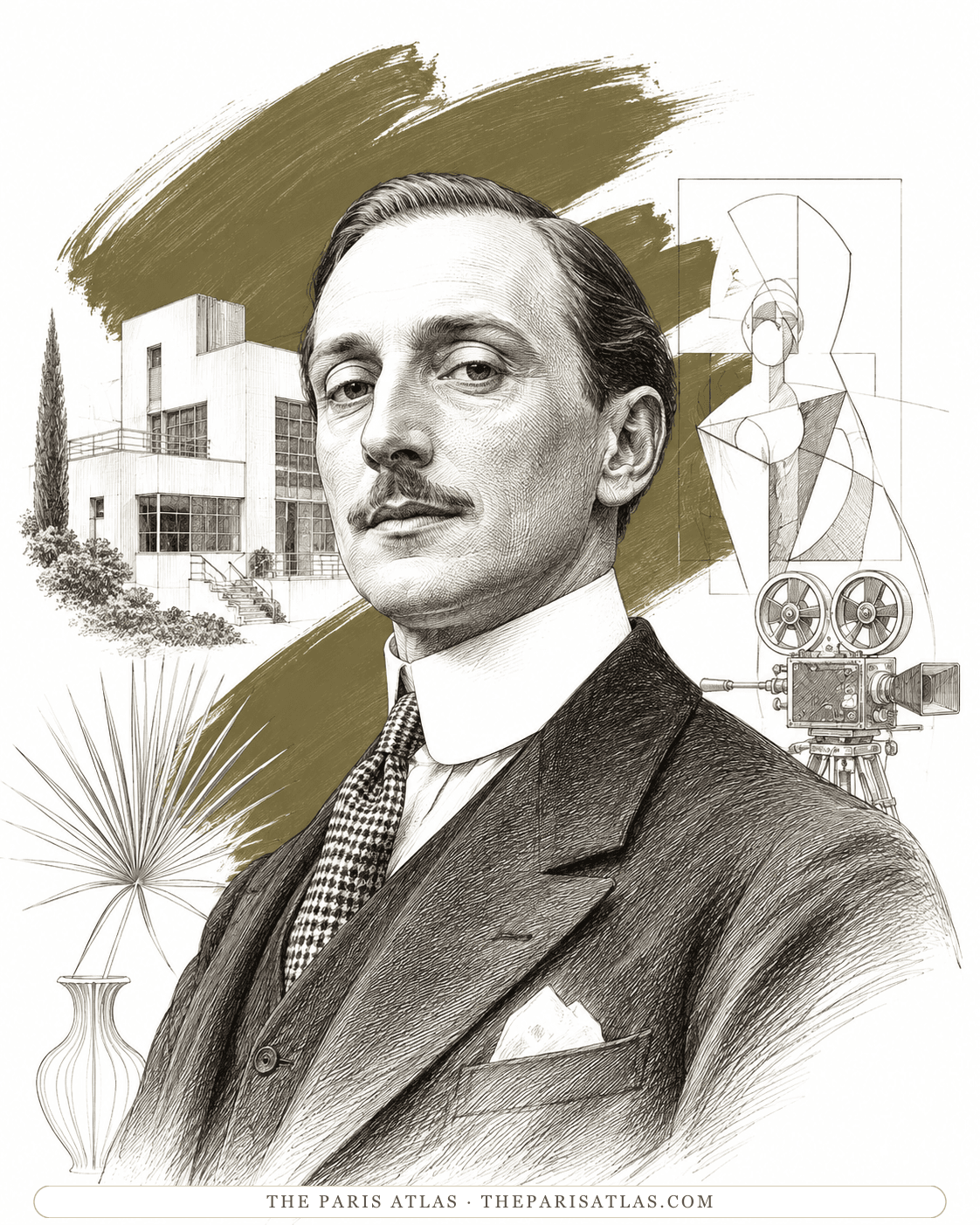
Charles and Marie-Laure de Noailles financed Les Mystères du château de Dé, shot at their modernist villa in Hyères — the Pompidou archive dates the shoot 1928 and the film 1929 — one of several film projects the couple paid for together.
Collaborated with
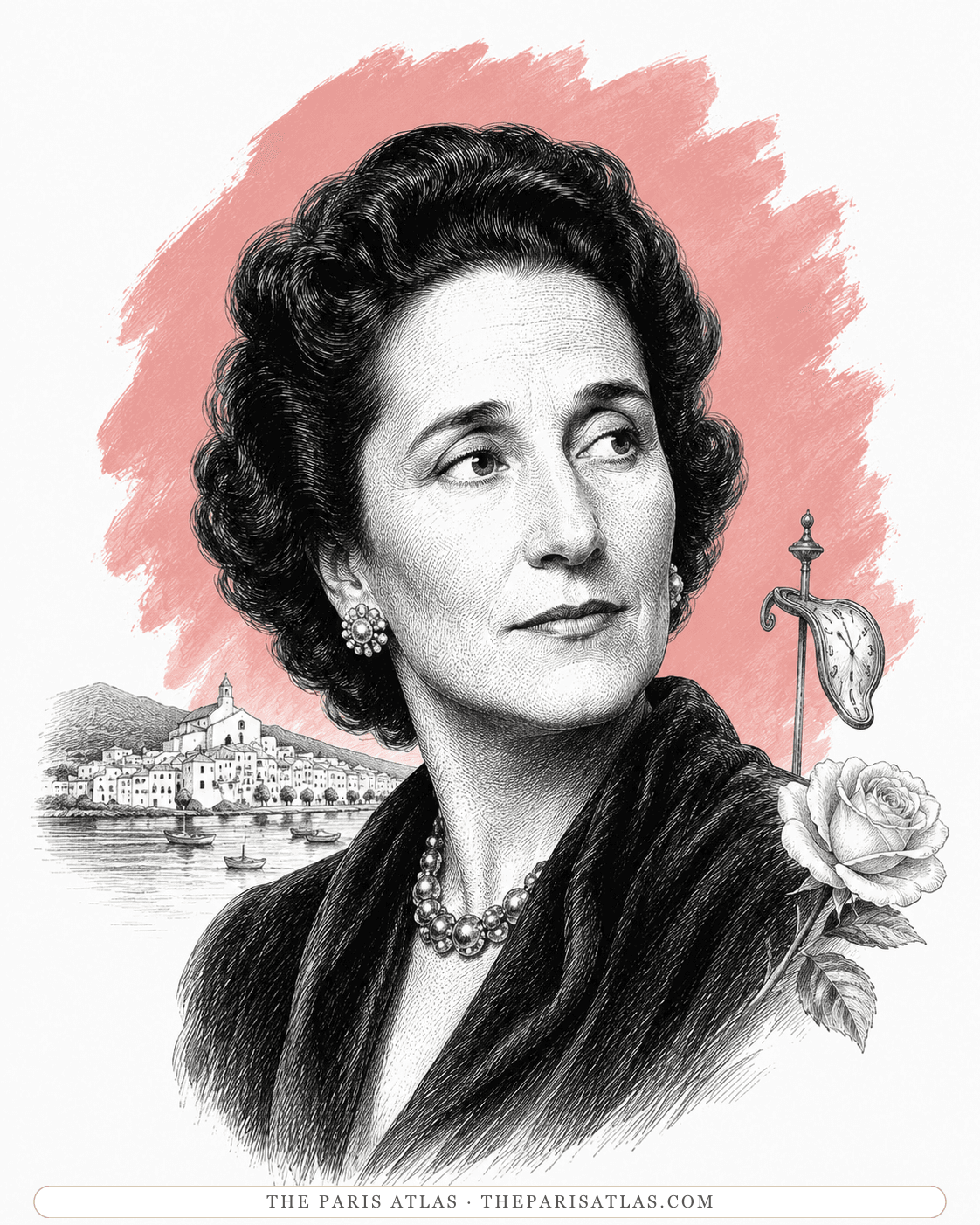
Gala sat for Man Ray. One of his portraits appeared in Dalí's 1930 promotional leaflet and book La Femme visible.
Collaborated with · 1926–1930
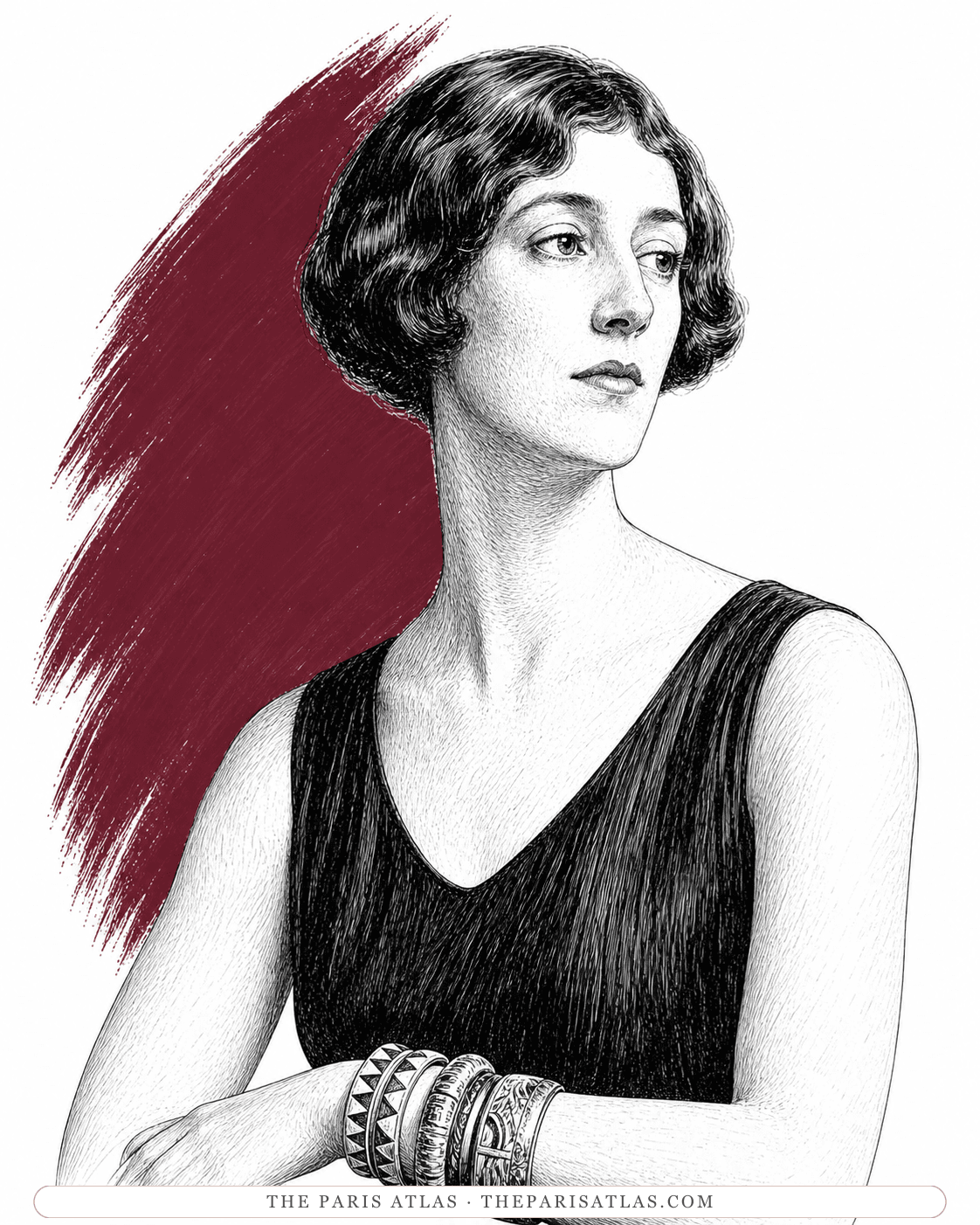
Cunard sat for Man Ray in 1926, for the portrait now at the Metropolitan Museum of Art in which her forearms are sheathed to the elbow in African bangles. He also made the cover for Henry Crowder's Henry-Music, printed by her Hours Press in 1930, and his work hung in the press's shop window on the rue Guénégaud.

Art & literary movement · 1924–1966
A founder of New York Dada and a mainstay of Paris surrealism — the movement's house photographer, and a maker of its films.
For his photographs of the Paris avant-garde of the 1920s and 1930s, for inventing the cameraless rayograph, and for single images like Le Violon d'Ingres (1924). He was also a painter, an object-maker in the Dada spirit, and the director of four Surrealist films, and he considered all of these one activity.
A photographic image made without a camera: objects are laid directly on photographic paper and exposed to light, leaving their silhouettes. Man Ray began making them in Paris in 1922 and published twelve that year as the portfolio Champs délicieux; the name is a play on his own.
His companion and most frequent model for most of the 1920s. Kiki de Montparnasse was the stage name of Alice Prin, a model and cabaret singer; she is the subject of Le Violon d'Ingres and appears in three of his films, Le Retour à la raison, Emak-Bakia, and L'Étoile de mer.
Emmanuel Radnitzky. He was born in Philadelphia on 27 August 1890; the family moved to Brooklyn and later shortened its surname to Ray, and Emmanuel worked under the invented name Man Ray for his whole career.
Yes. He directed four experimental shorts: Le Retour à la raison (1923), Emak-Bakia (1926), L'Étoile de mer (1928), and Les Mystères du château de Dé (1929). He also appears in René Clair's Entr'acte (1924), playing rooftop chess with Marcel Duchamp, and filmed Duchamp's Anémic Cinéma (1926).
A 1924 photograph of Kiki de Montparnasse's bare back with the two f-holes of a violin added to the print. In May 2022 a print sold at Christie's in New York for $12.4 million, making it the most expensive photograph ever sold at auction.
In Montparnasse Cemetery in Paris. He died in the city on 18 November 1976, and his gravestone carries the epitaph he chose, 'Unconcerned, but not indifferent.' His wife Juliet was later buried with him under the words 'Together again.'
Met · 1922
He photographed Stein and Toklas in the rue de Fleurus atelier in 1922 — the sitting preserved in our Stein timeline — and the Autobiography records the visits to his tiny hotel-room studio.
Associated with
A founder of New York Dada and a mainstay of Paris surrealism — the movement's house photographer, and a maker of its films.
Met
The American quarter's photographer and its most banned novelist, in one frame — Man Ray's portrait of Miller sits in the Getty's holdings among his sittings of Joyce, Stein, and Picasso.
Collaborated with · 1926
The Centre Pompidou credits Anémic Cinéma as 'réalisé par Marcel Duchamp avec Man Ray et Marc Allégret' — Man Ray filming Duchamp's turning spirals as an exercise in purely optical speed. The claim is scoped to the film; the friendship ran far longer.
Supported by
Charles and Marie-Laure de Noailles financed Les Mystères du château de Dé, shot at their modernist villa in Hyères — the Pompidou archive dates the shoot 1928 and the film 1929 — one of several film projects the couple paid for together.
Collaborated with
Gala sat for Man Ray. One of his portraits appeared in Dalí's 1930 promotional leaflet and book La Femme visible.
Collaborated with · 1926–1930
Cunard sat for Man Ray in 1926, for the portrait now at the Metropolitan Museum of Art in which her forearms are sheathed to the elbow in African bangles. He also made the cover for Henry Crowder's Henry-Music, printed by her Hours Press in 1930, and his work hung in the press's shop window on the rue Guénégaud.