The Paris AtlasCharting the artists, works, and places worth returning to.
  • Painter
  • Sculptor
  • Filmmaker
· French-born American · 1887–1968

Marcel Duchamp

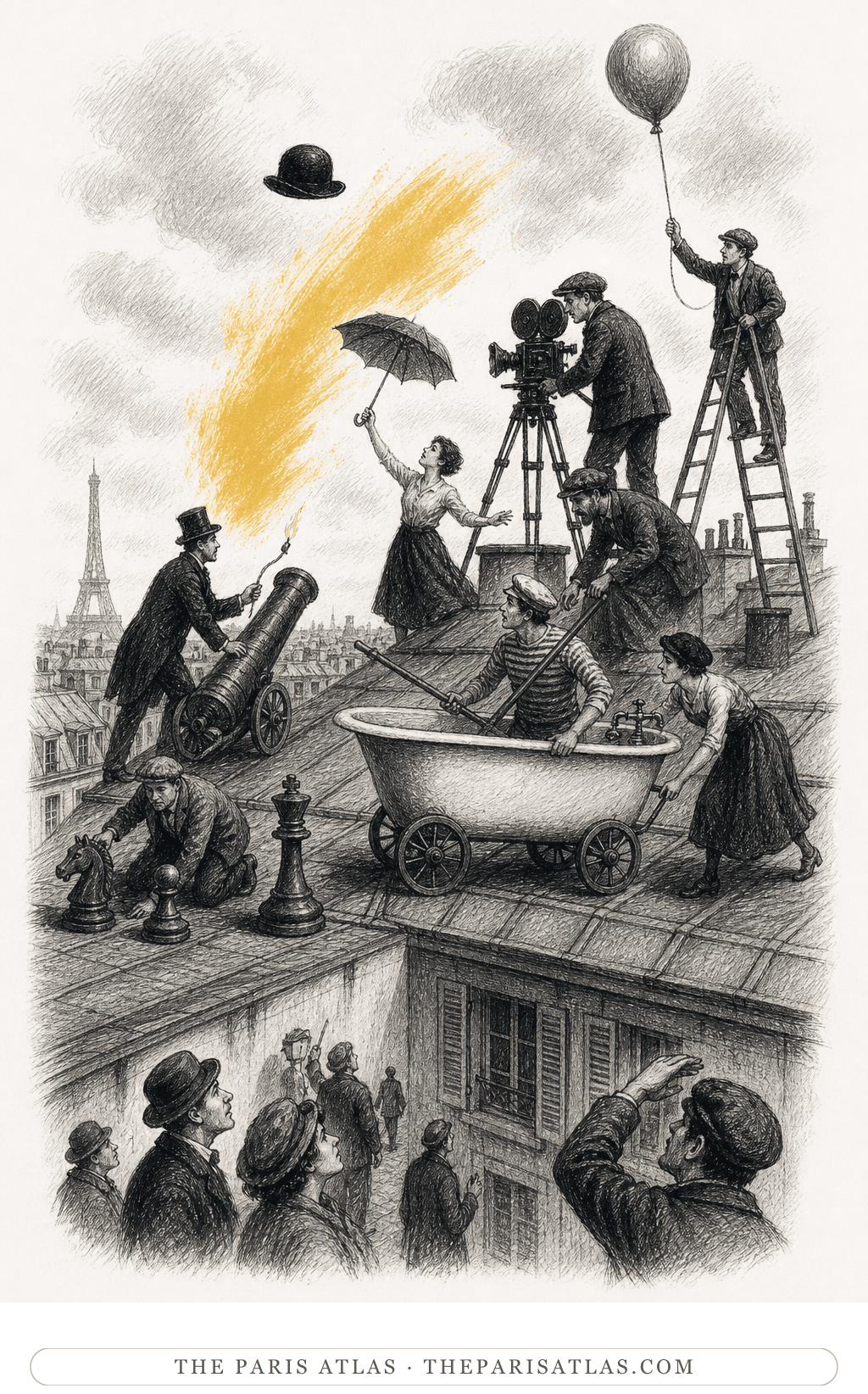
The century's quietest revolutionary — readymades, the abandonment of painting, chess on a Paris rooftop in Entr'acte, and one anemic film of spinning puns signed Rrose Sélavy.

In images

Details

Lived
1887–1968
Born
28 July 1887
Birthplace
Blainville-Crevon, Normandy
Died
2 October 1968 · aged 81
Place of death
Neuilly-sur-Seine
Nationality
French-born American
Married
Lydie Sarazin-Levassor · 1927–1928Alexina “Teeny” Sattler · 1954–1968
Partner
Mary Reynolds · c. 1923–1946
Roles
PainterSculptorFilmmaker
Also known as
Henri-Robert-Marcel Duchamp · Rrose Sélavy

About Marcel Duchamp

Why Duchamp matters

Marcel Duchamp did more than put strange objects in galleries; he changed the question a work of art is meant to answer. Earlier painting asked to be looked at. Duchamp asked who decides that a thing is art at all — the hand that makes it, the eye that sees it, or the institution that shows it. A French-born artist who became an American citizen in 1954, he passed through Cubism, Dada and Surrealism without settling into any of them.

His central invention was the readymade: a manufactured object, chosen and titled, presented as art with little or no alteration. It is the idea most of twentieth-century art has had to argue with, and the reason conceptual art, Pop and installation all trace a line back to him. He began as a painter and stayed a fine draftsman; what he rejected was art made only for the eye, which he called “retinal.”

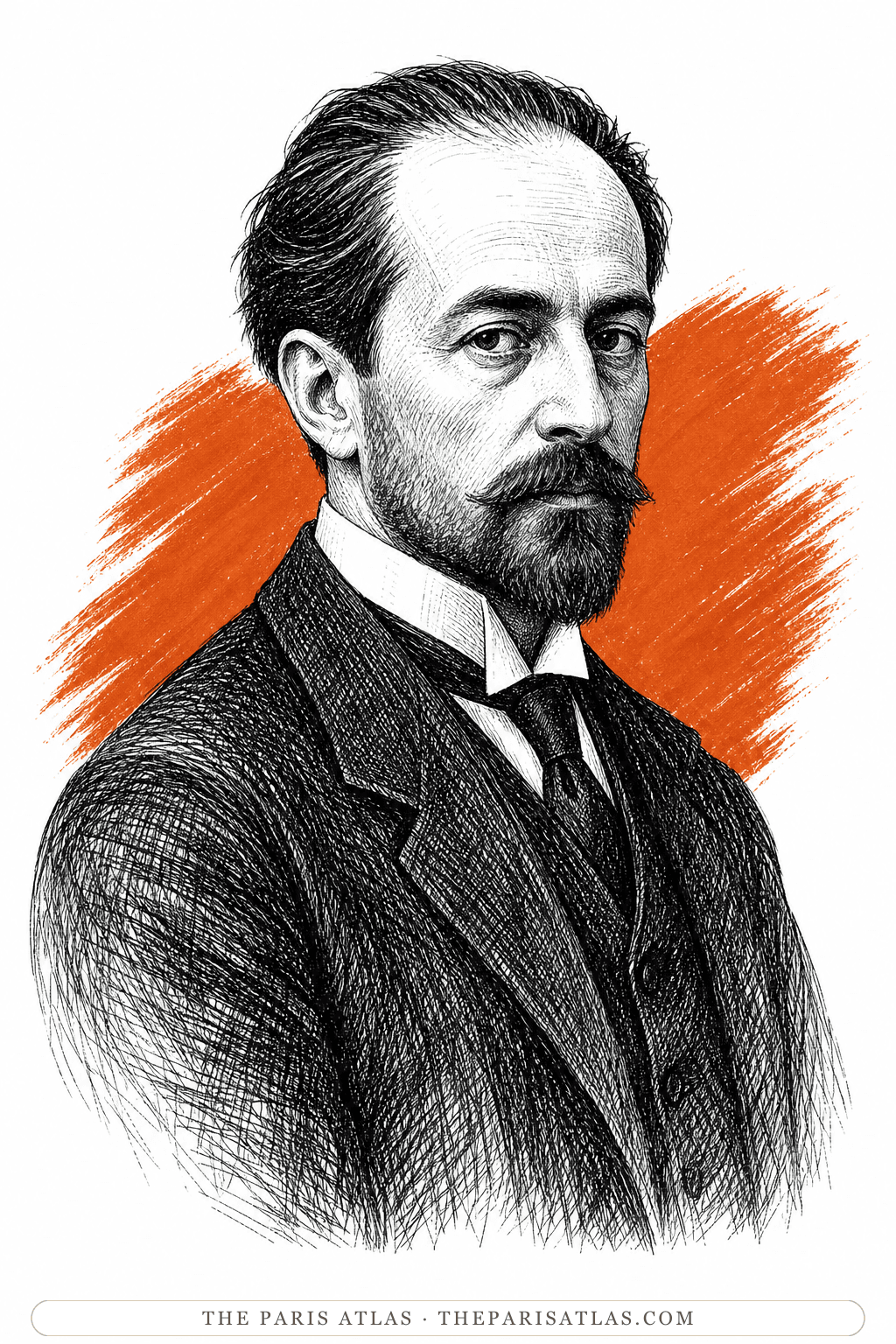
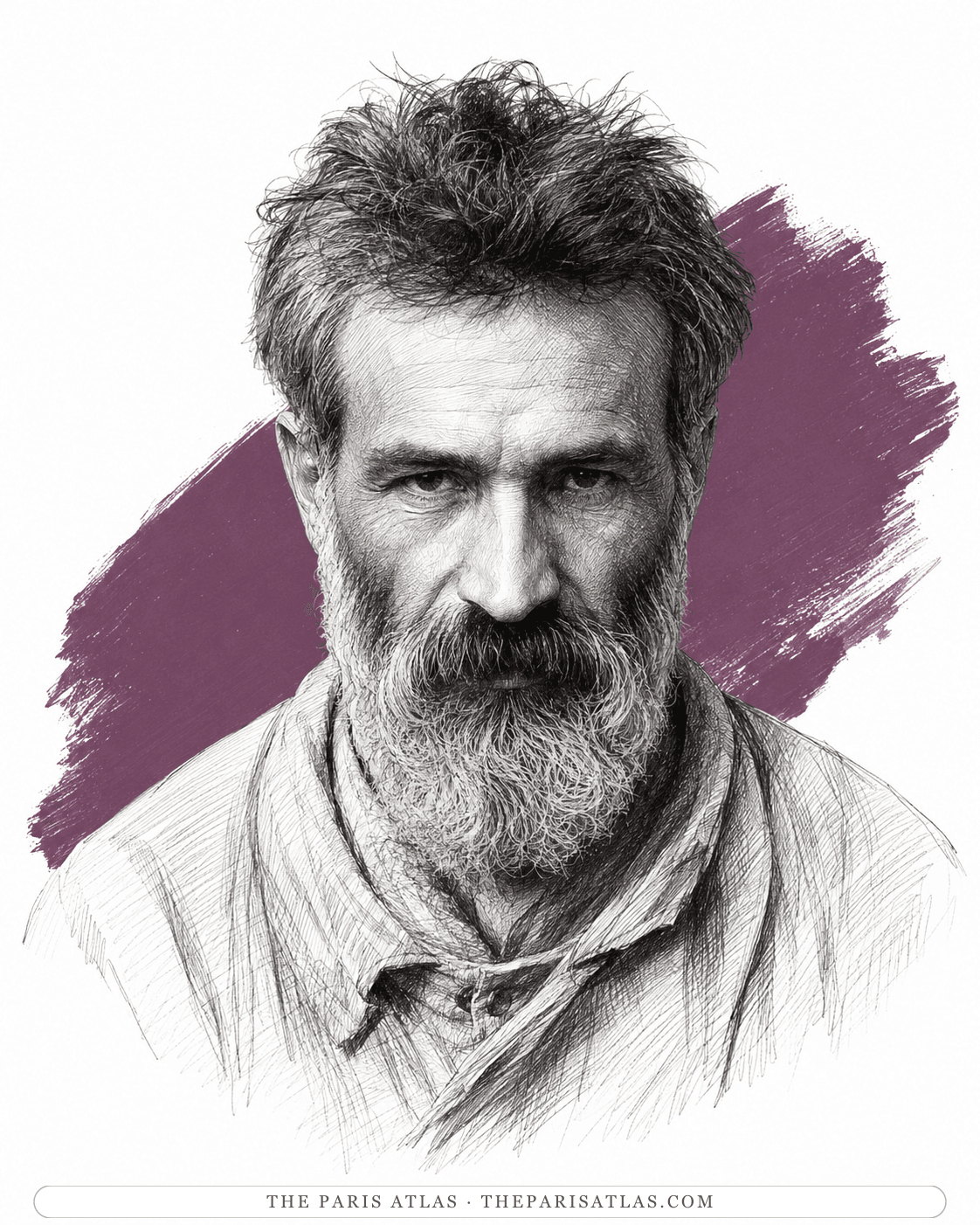
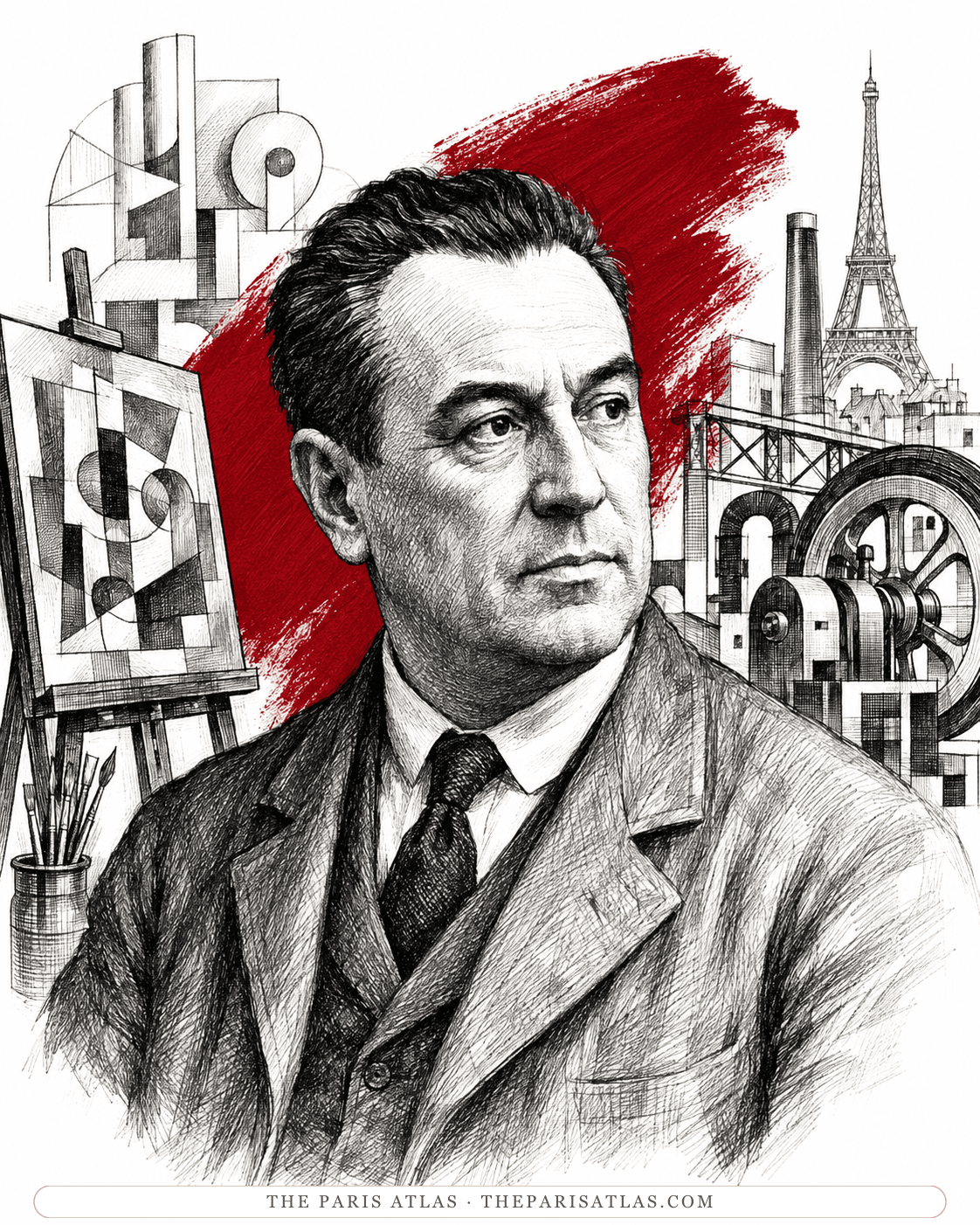
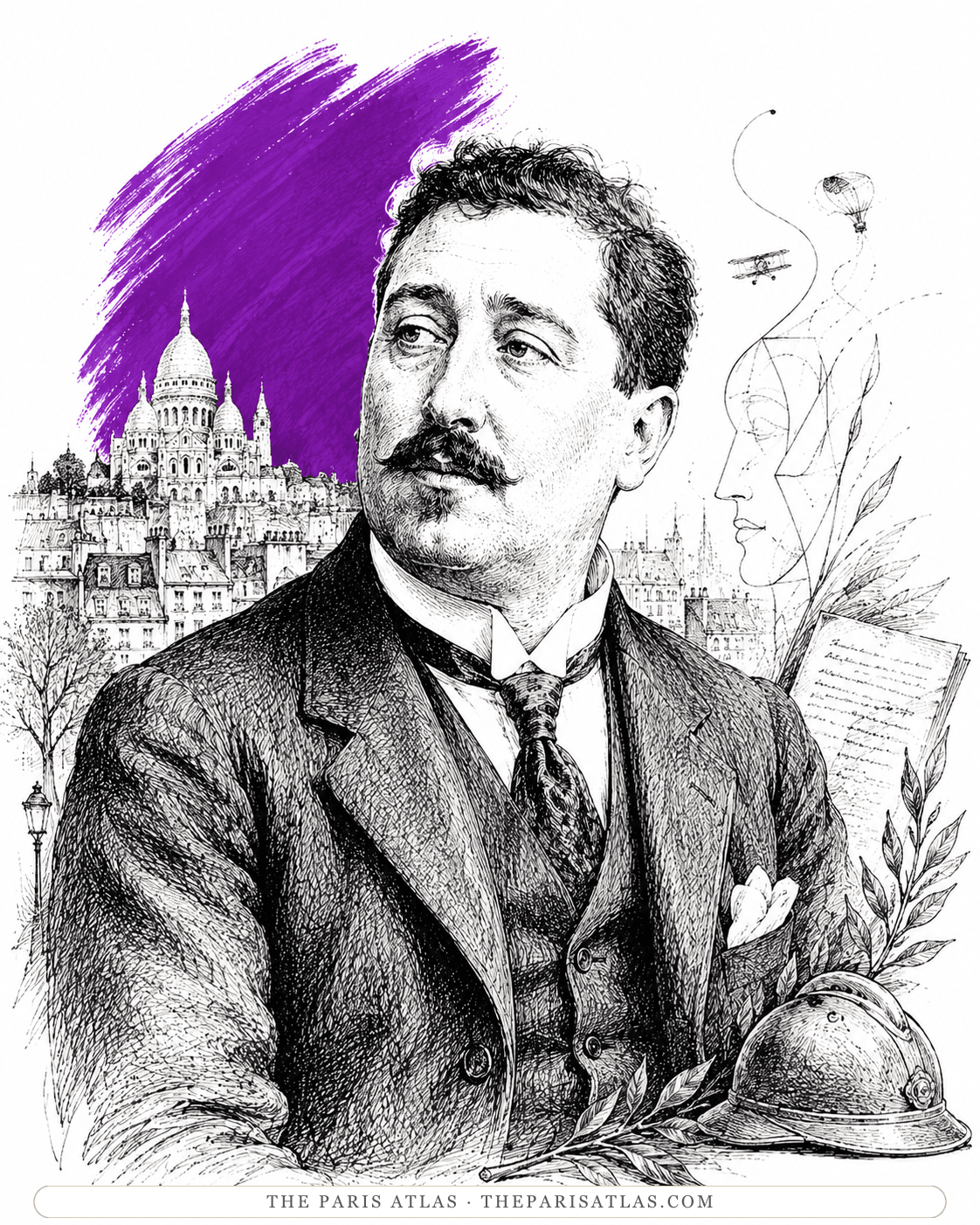
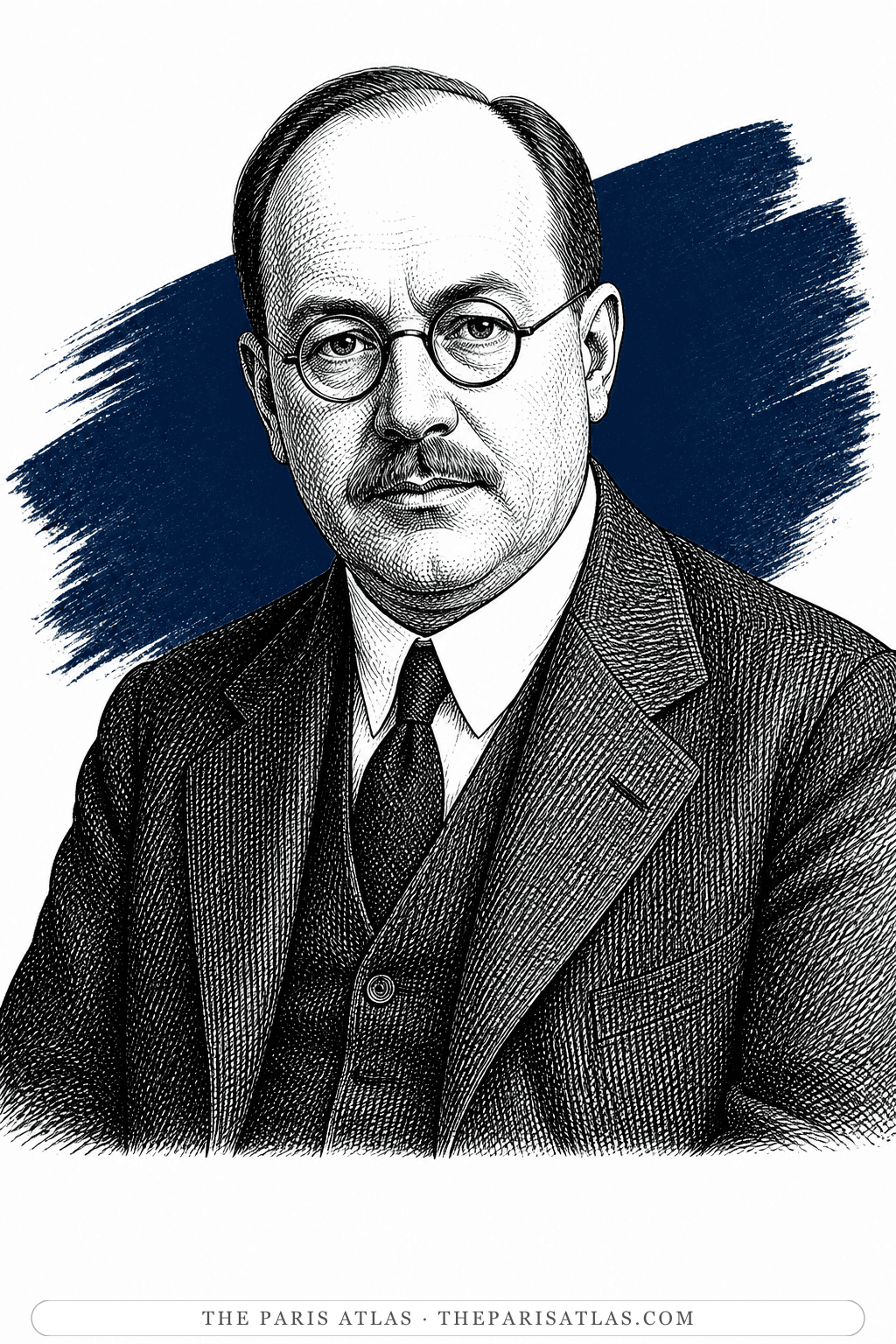
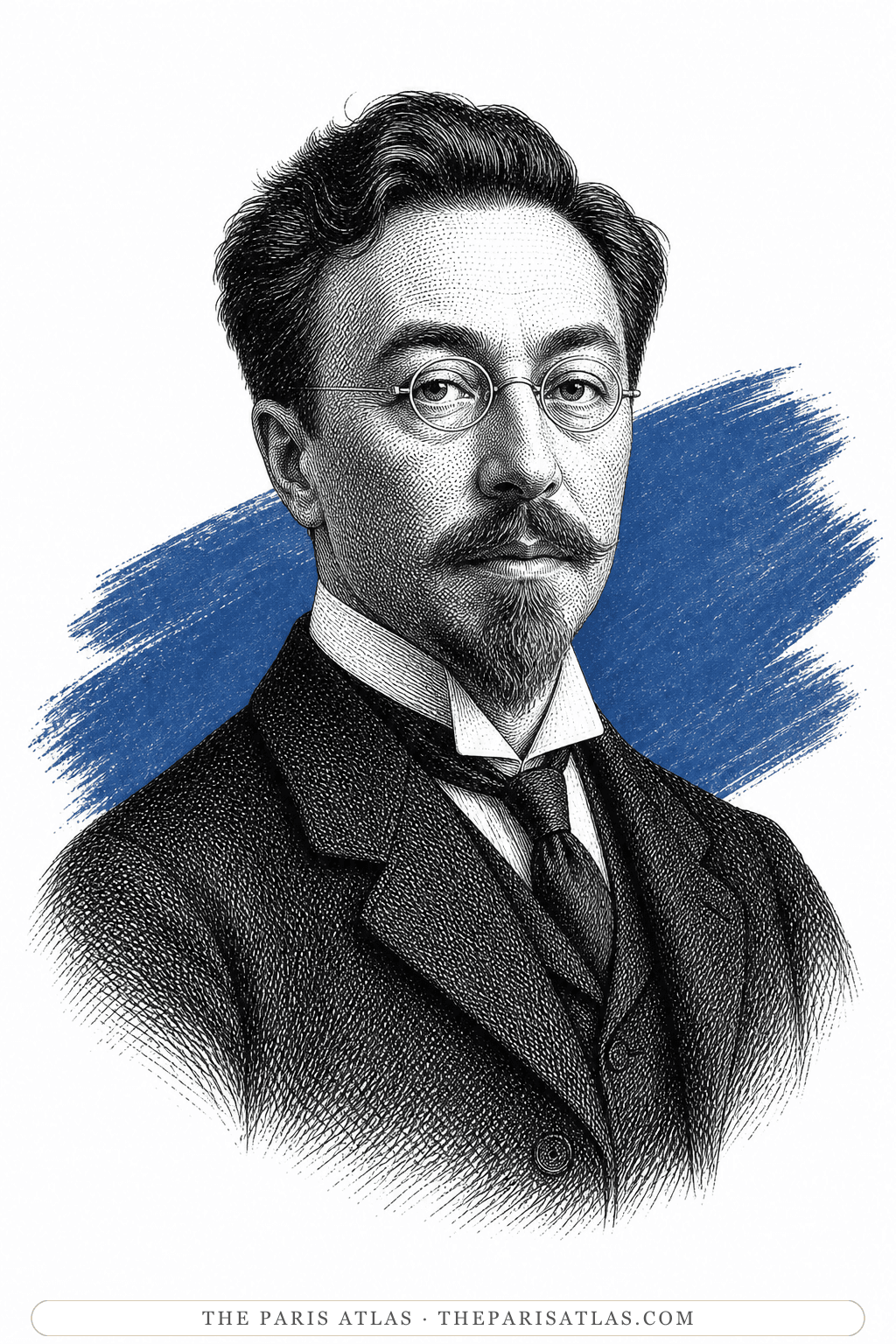
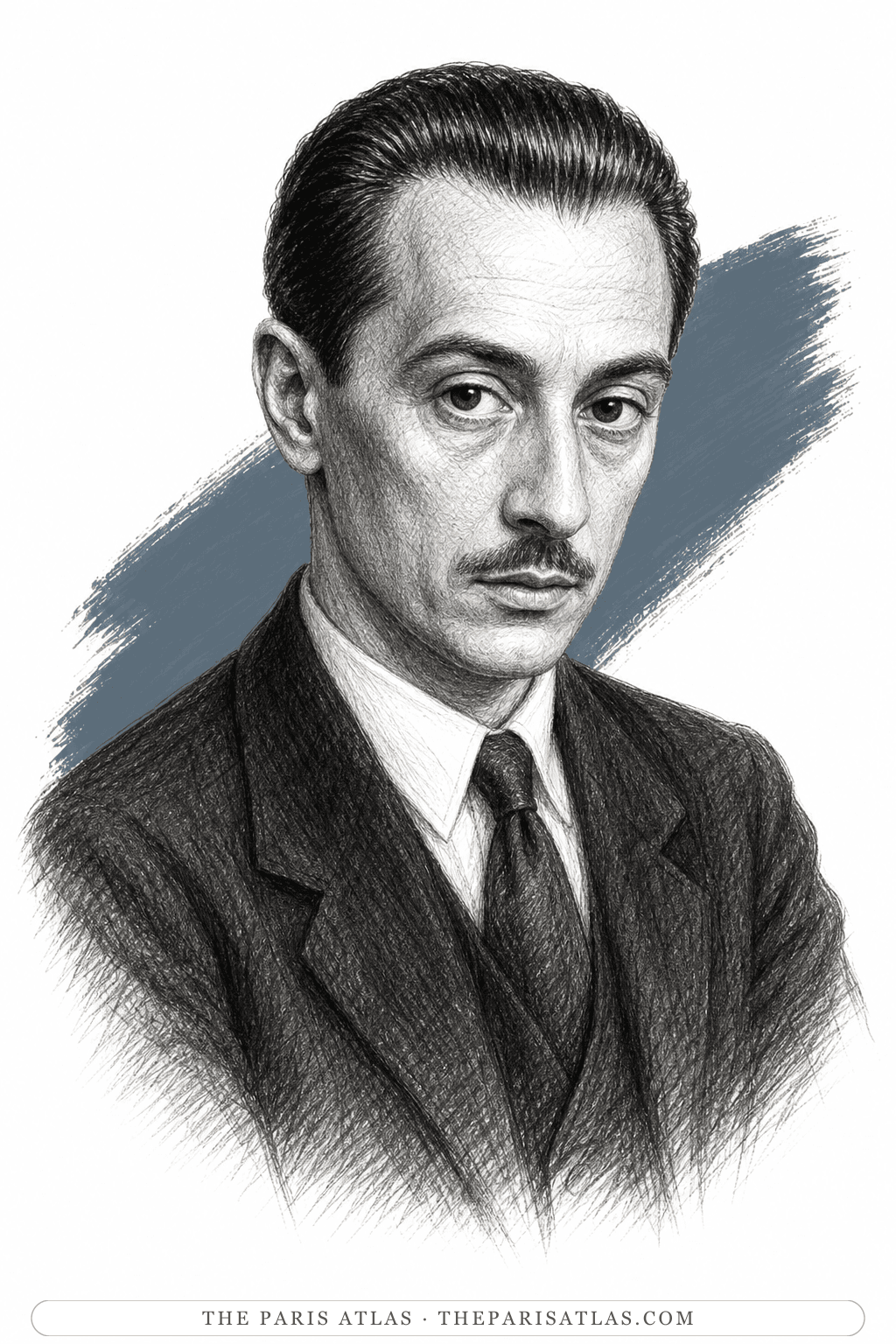
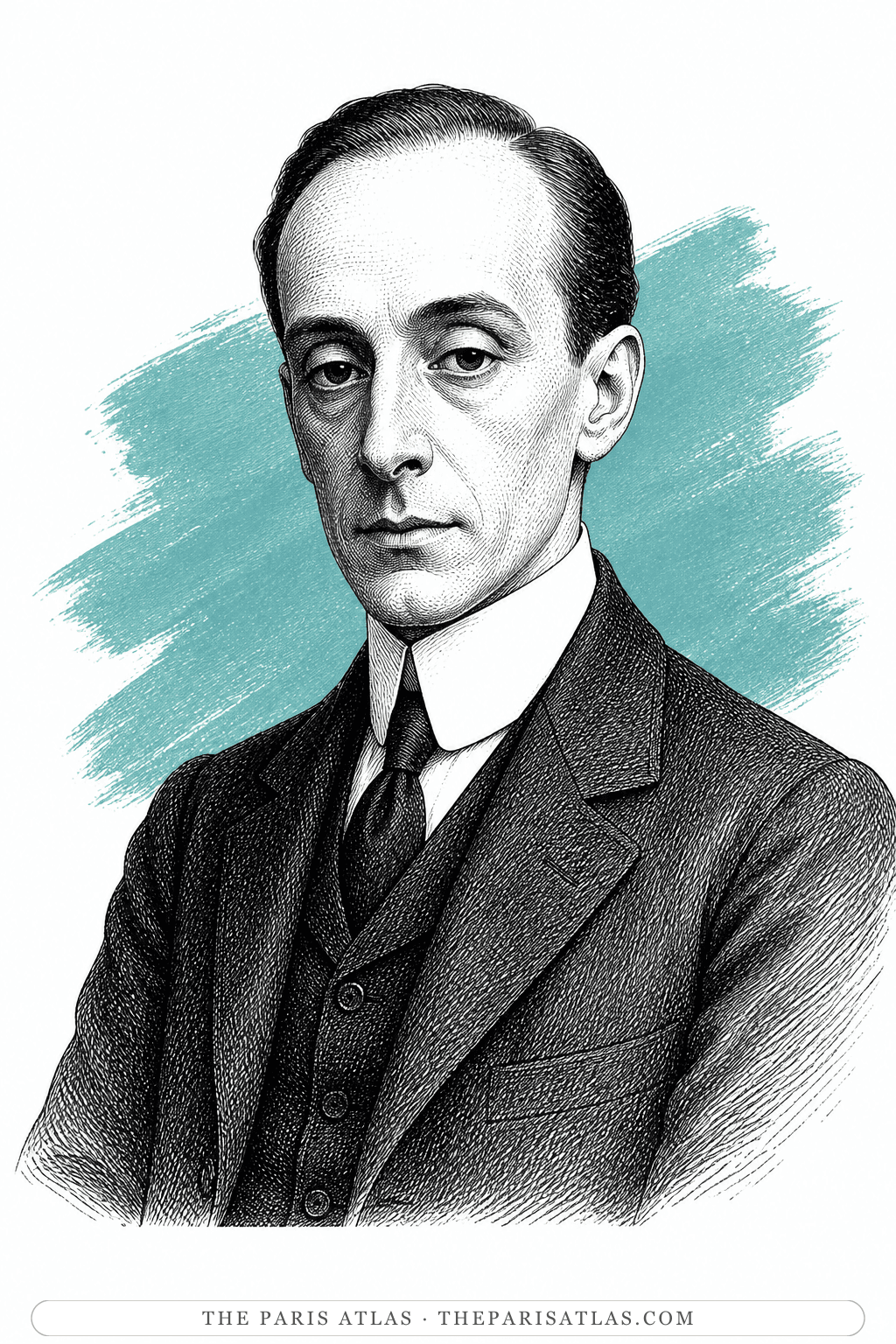
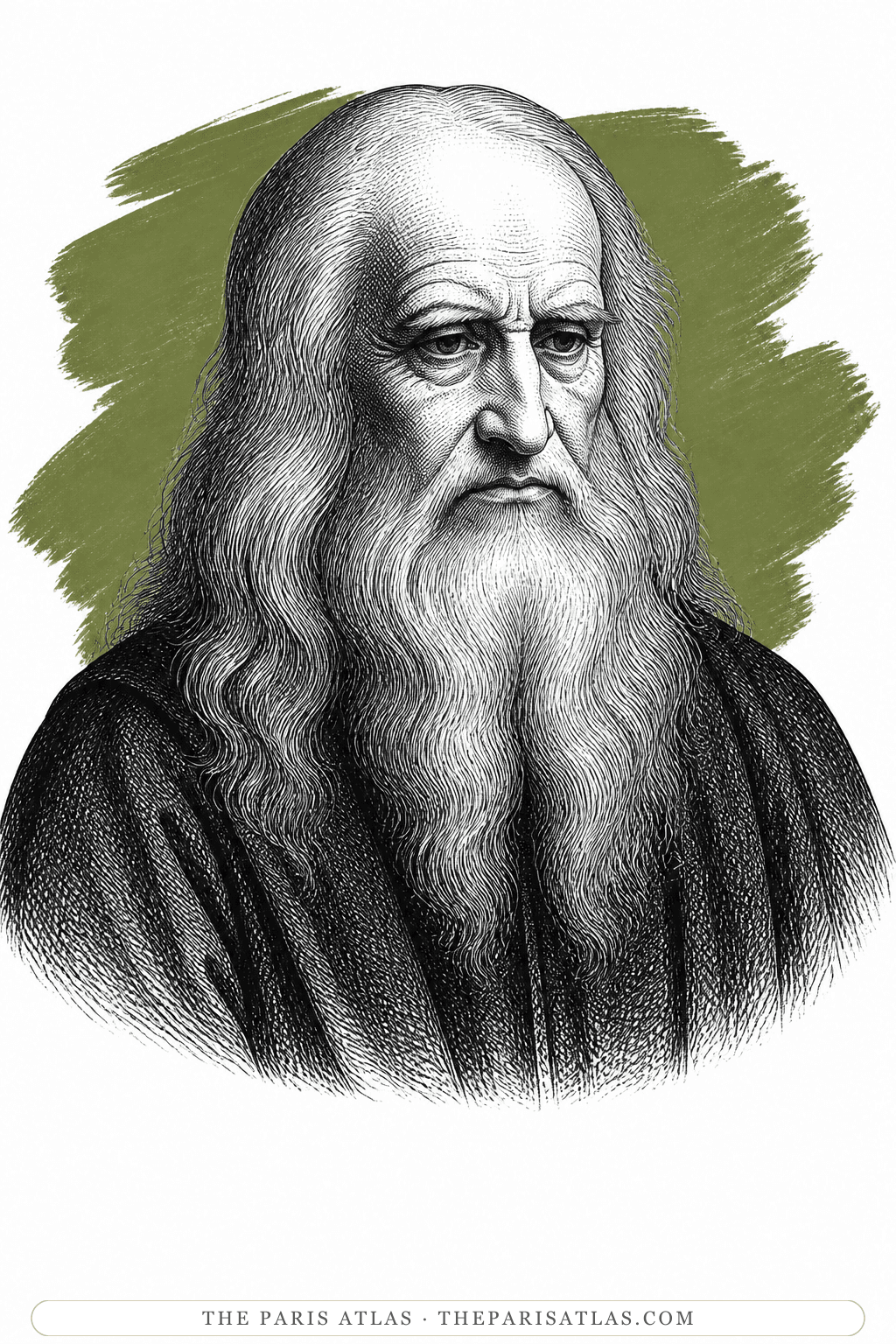
Marcel Duchamp, illustrated

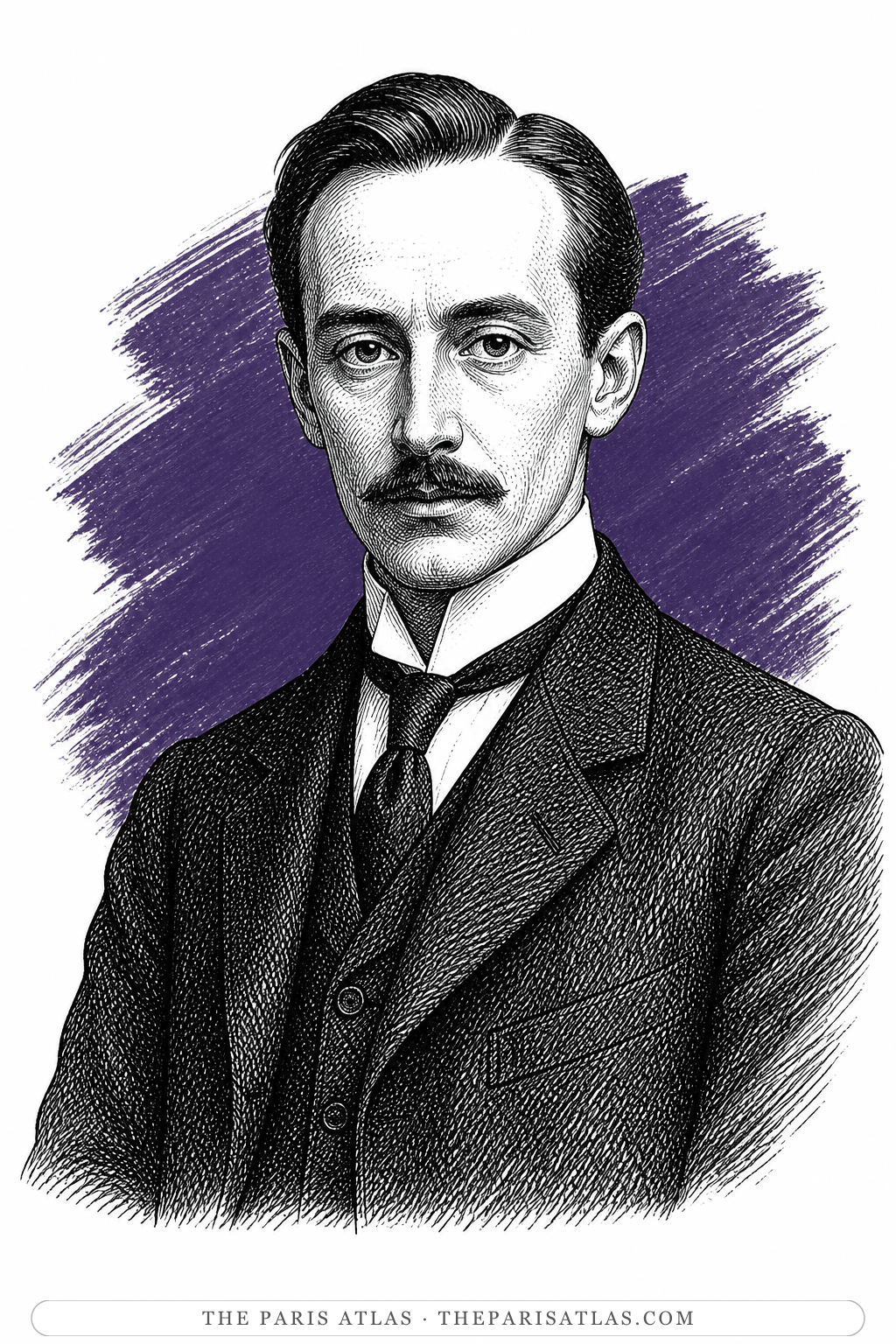
A study of Duchamp.
Reading, in an armchair.
At a café table.
On a Paris street.
By the river.
New York, across the water.
Illustrations — The Paris Atlas

Paris, and the scandal of the Nude

Duchamp was born in 1887 at Blainville-Crevon in Normandy, into a family that produced artists: his older brothers Jacques Villon and Raymond Duchamp-Villon, and his sister Suzanne Duchamp, all painted or sculpted. He moved to Paris in 1904, spent about a year at the Académie Julian, and was otherwise largely self-taught, drawing for the satirical press while his brothers drew him into the Puteaux circle of Cubist painters.

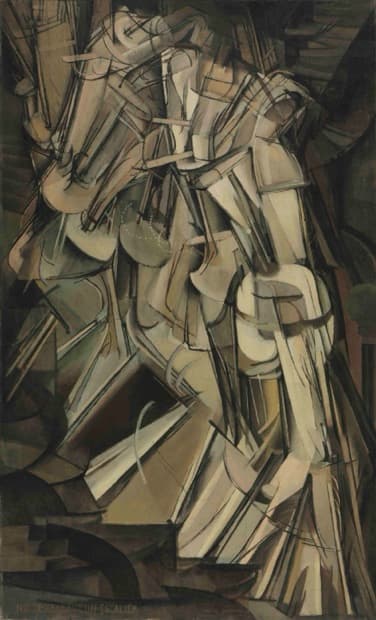
In 1912 he painted Nude Descending a Staircase (No. 2), a figure broken into overlapping planes of motion. His own Cubist associates asked him to withdraw it from a Paris exhibition, and he took it down without argument. A year later it was the succès de scandale of the 1913 Armory Show in New York, ridiculed in the American press and, almost overnight, the most famous modern painting in the country — in a place Duchamp had not yet set foot.

Duchamp in conversation. (Illustration — The Paris Atlas)

The readymade, and the Fountain scandal

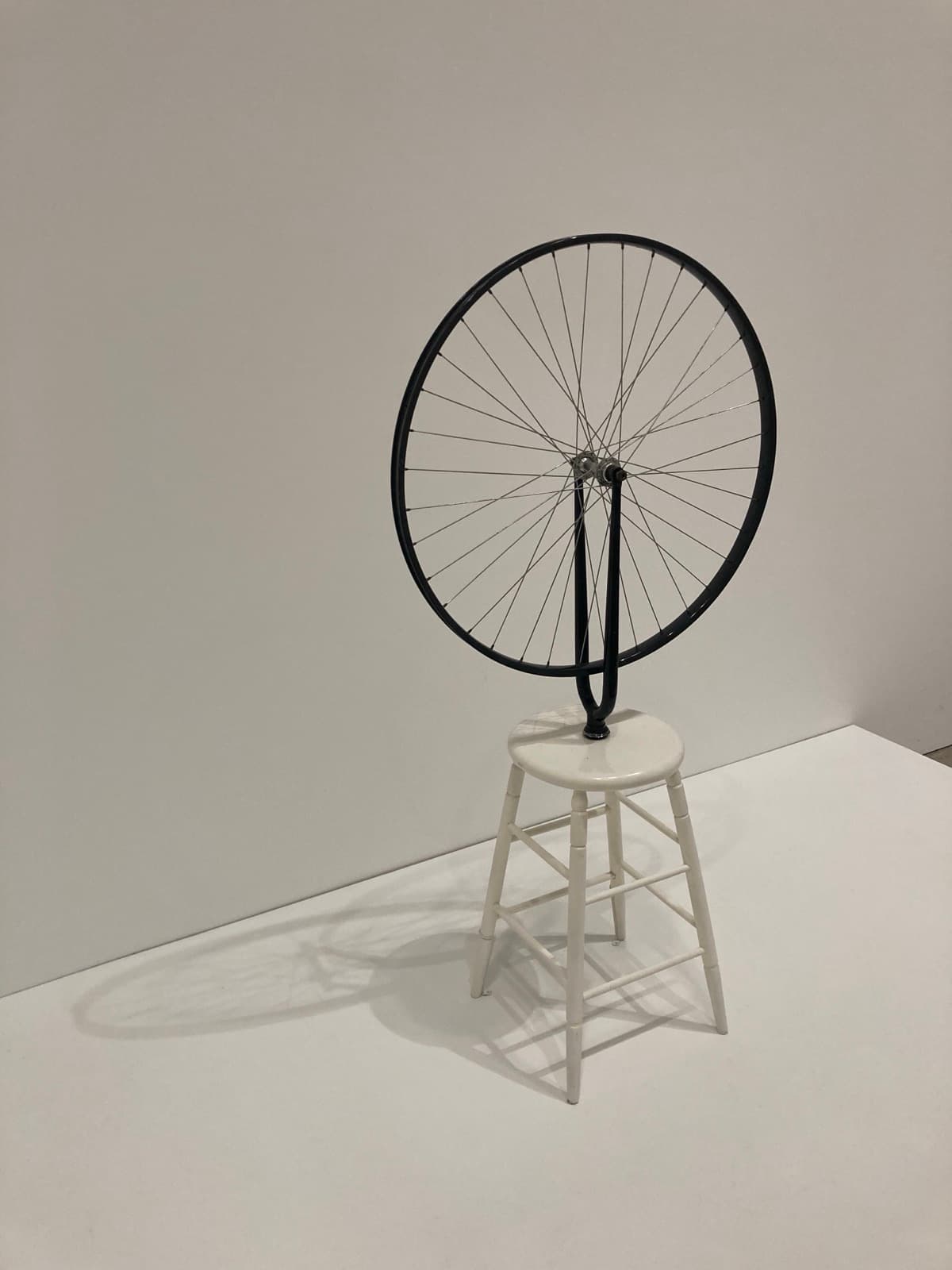
By 1913 he had mounted a bicycle wheel on a kitchen stool, and the next year he bought a bottle-drying rack and called it a work. These were the first readymades — objects he selected rather than made. A snow shovel followed, titled In Advance of the Broken Arm. The change was small and total at once: the art was now in the artist's decision rather than in his craft.

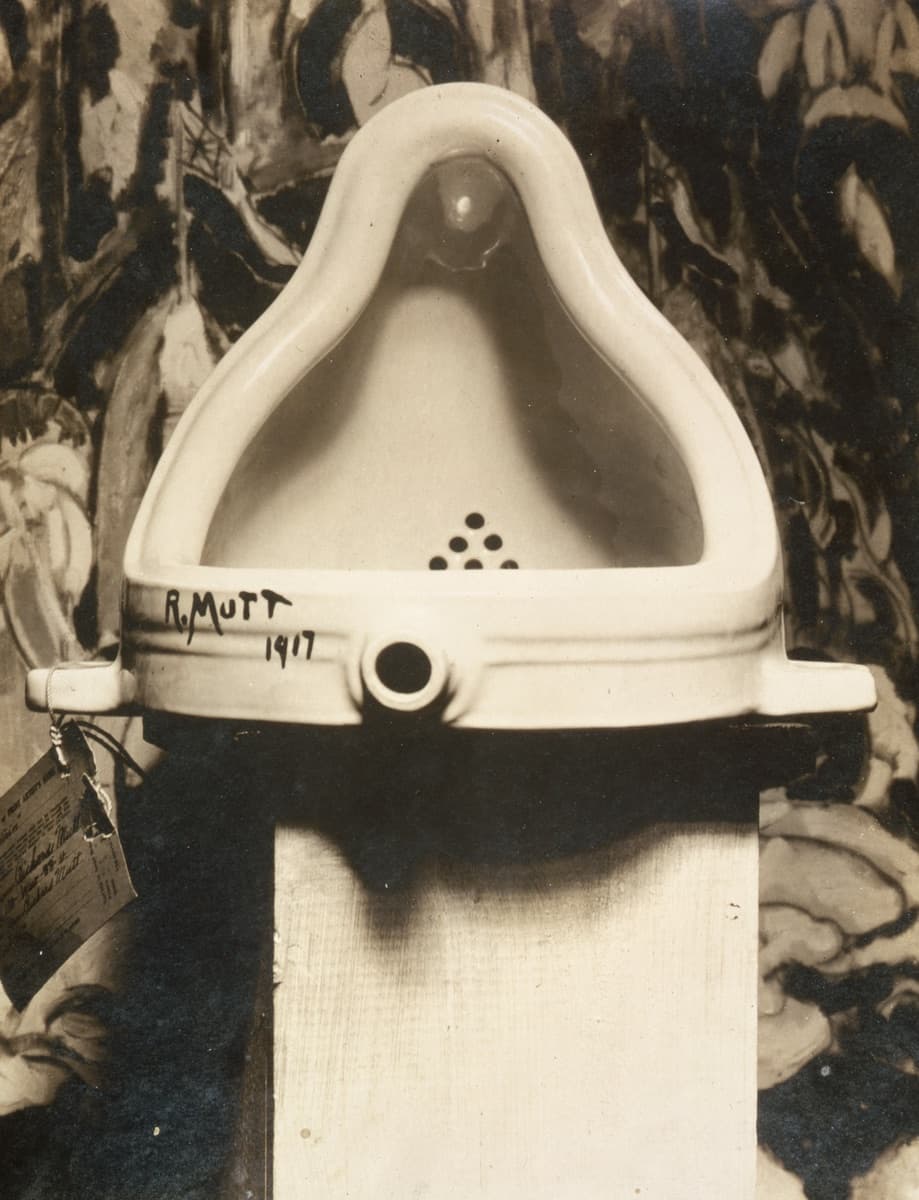
In 1917 he pushed the idea to its limit. Under the name “R. Mutt” he submitted a porcelain urinal, titled Fountain, to the Society of Independent Artists in New York, whose rules promised to show any work whose maker paid the fee. The committee refused it; Duchamp, who sat on that committee, resigned. Alfred Stieglitz photographed the piece, the little magazine The Blind Man defended it, and the argument it started — about who or what confers the status of art — has never quite closed.

The original Fountain was lost almost at once; the urinals in museums today are later versions Duchamp authorized. Its authorship has itself become a question: some writers propose that the Dada poet Elsa von Freytag-Loringhoven supplied or made it, while other scholars regard the claim as unproven. We record the attribution as contested, not settled.

The Large Glass, and Rrose Sélavy

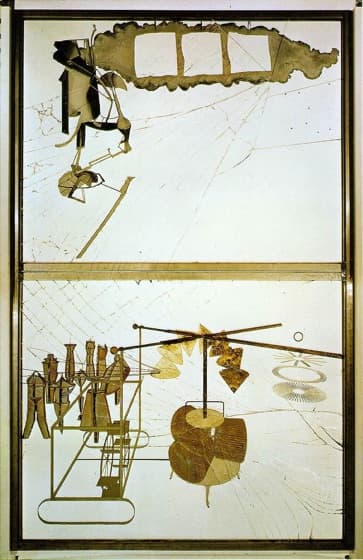
Alongside the readymades Duchamp spent eight years on The Bride Stripped Bare by Her Bachelors, Even — the Large Glass — a work in lead foil and dust on two panes of glass, part diagram and part erotic machine. He declared it “definitively unfinished” in 1923, and when it cracked in transit years later he accepted the cracks as part of it. It stands today in the Philadelphia Museum of Art, whose Duchamp holdings, built from the collection of his patrons Walter and Louise Arensberg, are the richest anywhere.

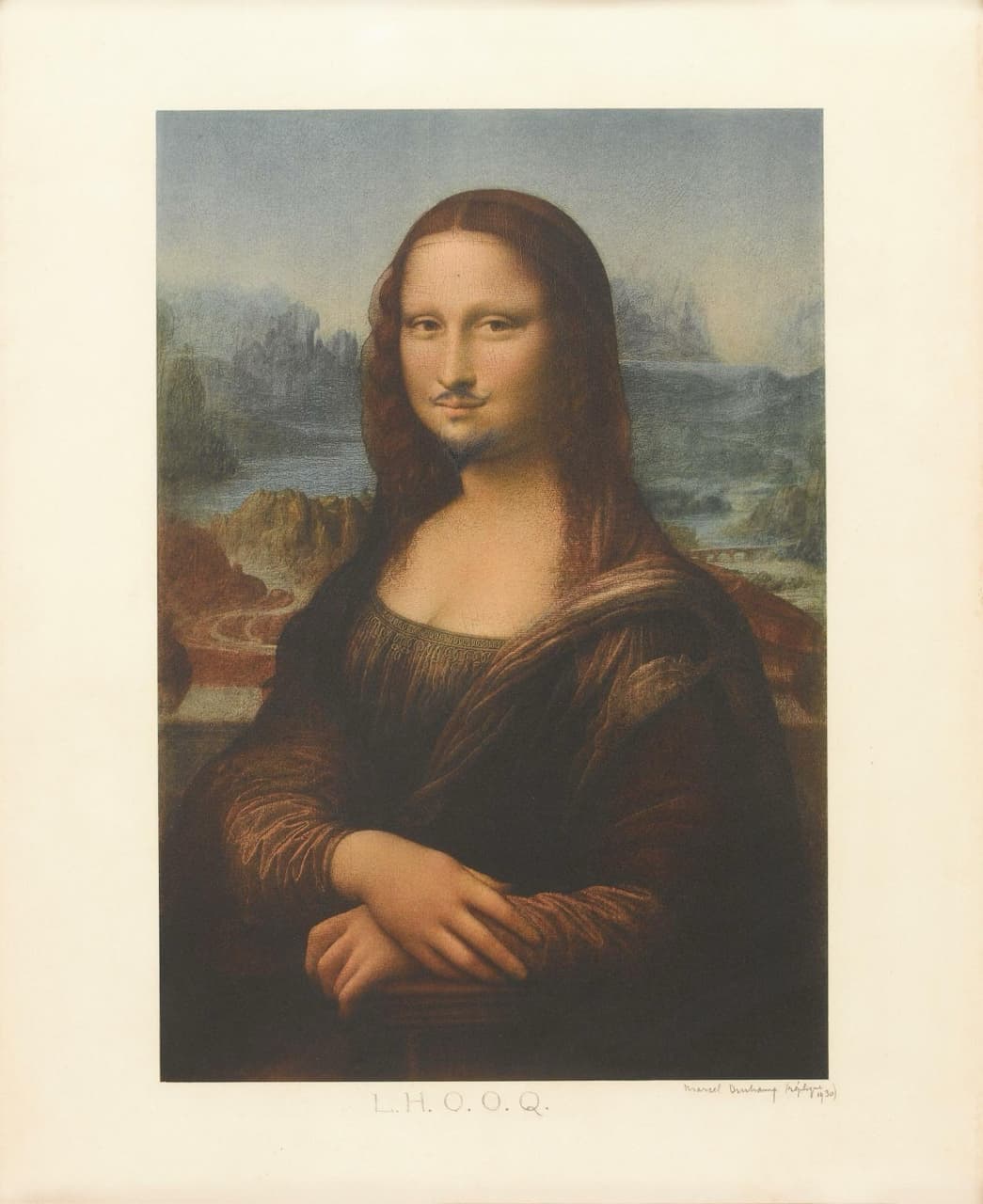
Around 1920 he acquired a second self: Rrose Sélavy, a feminine alter ego Man Ray photographed and whose punning name signed objects and wordplay. The same taste for the double meaning produced L.H.O.O.Q., a cheap postcard of the Mona Lisa to which he added a moustache and goatee. He worked with Man Ray on optical machines and the 1926 film Anémic Cinéma, and with Francis Picabia in the Paris Dada circle around André Breton.

Duchamp at a Paris café. (Illustration — The Paris Atlas)

Chess, and a retirement that wasn't

From the late 1910s Duchamp gave more and more of himself to chess — entering tournaments, representing France, and in 1932 co-writing a specialist study of rook-and-pawn endgames with Vitaly Halberstadt. He let the world believe he had given up art for the game. He had not. Through those decades he designed Surrealist exhibitions, issued editions and reproductions, and assembled the Boîte-en-valise, a portable museum of miniature copies of his own work.

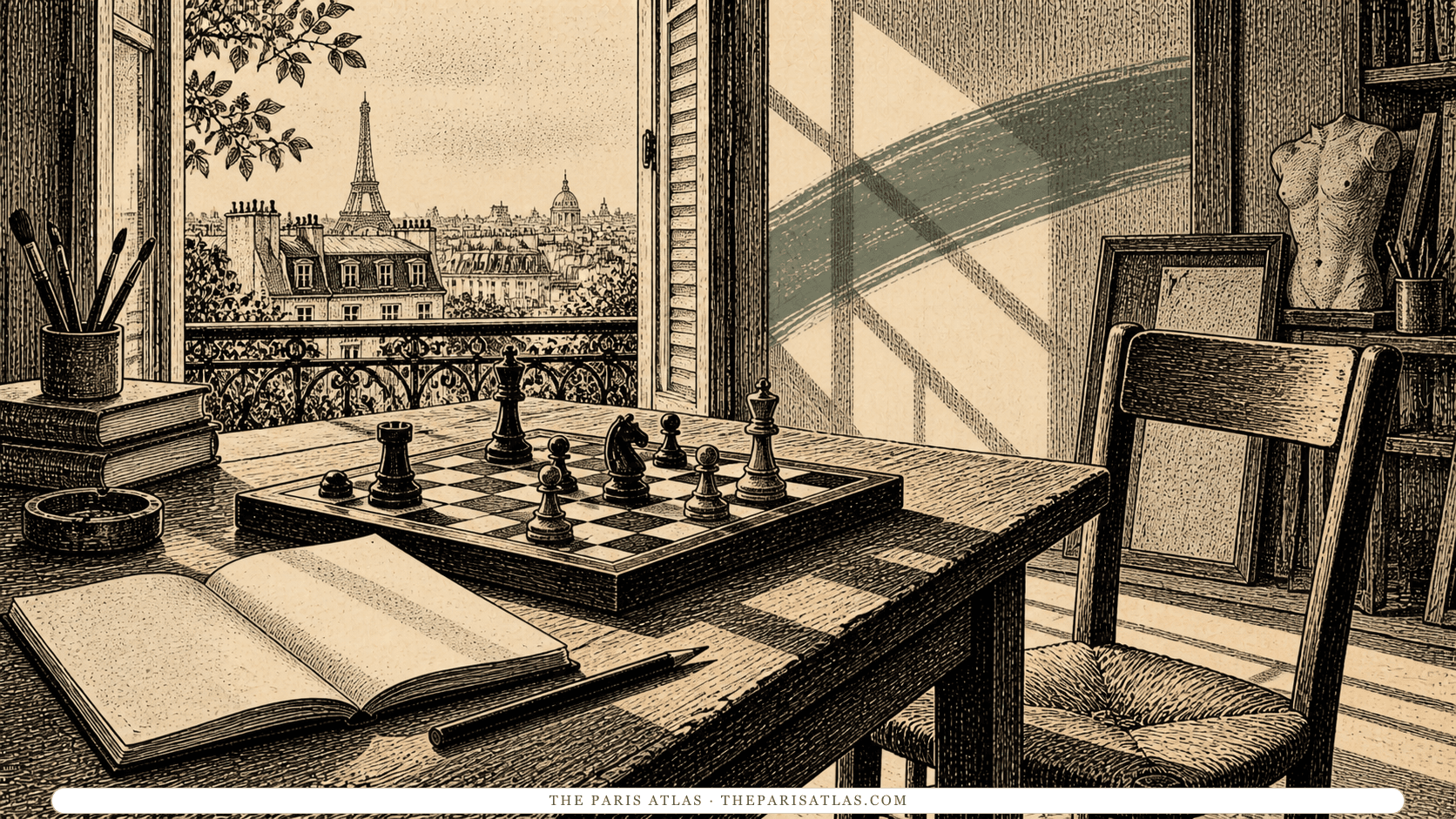
At the board. (Illustration — The Paris Atlas)

The larger deception was Étant donnés, a tableau of a nude figure in a landscape glimpsed through peepholes in a wooden door, which he built in secret between 1946 and 1966; the Brazilian sculptor María Martins was his lover, his advisor on its casting and a model for the body. He left an illustrated manual so it could be rebuilt after his death. Duchamp married Alexina “Teeny” Sattler in 1954 and died at Neuilly-sur-Seine in 1968; the next year Étant donnés was installed, to general astonishment, in Philadelphia. The artists who most shaped the century after him — John Cage, Jasper Johns, Robert Rauschenberg, Andy Warhol — had been reading him all along.

Life events

  1. 1887

    Born 28 July at Blainville-Crevon in Normandy, into a family of artists — his brothers Jacques Villon and Raymond Duchamp-Villon and his sister Suzanne Duchamp all painted or sculpted.

    Encyclopaedia Britannica — Marcel Duchamp

  2. 1904

    Moves to Paris, spends about a year at the Académie Julian, and otherwise teaches himself, drawing for the satirical press.

    Encyclopaedia Britannica — Marcel Duchamp

  3. 1912

    Paints Nude Descending a Staircase (No. 2); his own Cubist associates ask him to withdraw it from the Salon des Indépendants, and he takes it down without argument.

    Nude Descending a Staircase (No. 2): a figure abstracted into overlapping tan and brown planes of motion, descending diagonally, the title lettered along the lower edge.Painting · in the catalogNude Descending a Staircase (No. 2)1912 · Oil on canvas

    Calvin Tomkins, Duchamp: A Biography (1996); Encyclopaedia Britannica — Marcel Duchamp

  4. 1913

    The Nude is the succès de scandale of the Armory Show in New York, making him famous in a country he had not yet visited. In Paris he mounts a bicycle wheel on a kitchen stool — the first readymade.

    Calvin Tomkins, Duchamp: A Biography (1996); Encyclopaedia Britannica — Marcel Duchamp

  5. 1915

    Arrives in New York and begins The Bride Stripped Bare by Her Bachelors, Even — the Large Glass — which would occupy him for eight years.

    The Large Glass: a tall two-panel work on cracked glass, a mechanical bride-form above and a row of bachelor-machine elements below, drawn in lead wire and foil.Painting · in the catalogThe Bride Stripped Bare by Her Bachelors, Even (The Large Glass)1915–1923 · Oil, varnish, lead foil, lead wire and dust on two glass panels

    Calvin Tomkins, Duchamp: A Biography (1996)

  6. 1917

    Under the name “R. Mutt” he submits a porcelain urinal titled Fountain to the Society of Independent Artists in New York; the committee refuses it and Duchamp, a committee member, resigns.

    Alfred Stieglitz's 1917 photograph of Fountain: a white porcelain urinal laid on its back on a wooden pedestal, signed "R. Mutt 1917", an entry tag hanging from it, against a painted backdrop.Sculpture · in the catalogFountain1917 · Readymade: porcelain urinal

    Calvin Tomkins, Duchamp: A Biography (1996); Encyclopaedia Britannica — Marcel Duchamp

  7. 1920

    Adopts a feminine alter ego, Rrose Sélavy, photographed by Man Ray — a punning identity that signs objects and wordplay thereafter.

    Calvin Tomkins, Duchamp: A Biography (1996)

  8. 1923

    Declares the Large Glass “definitively unfinished” and leaves it; later, when it cracks in transit, he accepts the cracks as part of the work.

    Encyclopaedia Britannica — Marcel Duchamp

  9. 1926

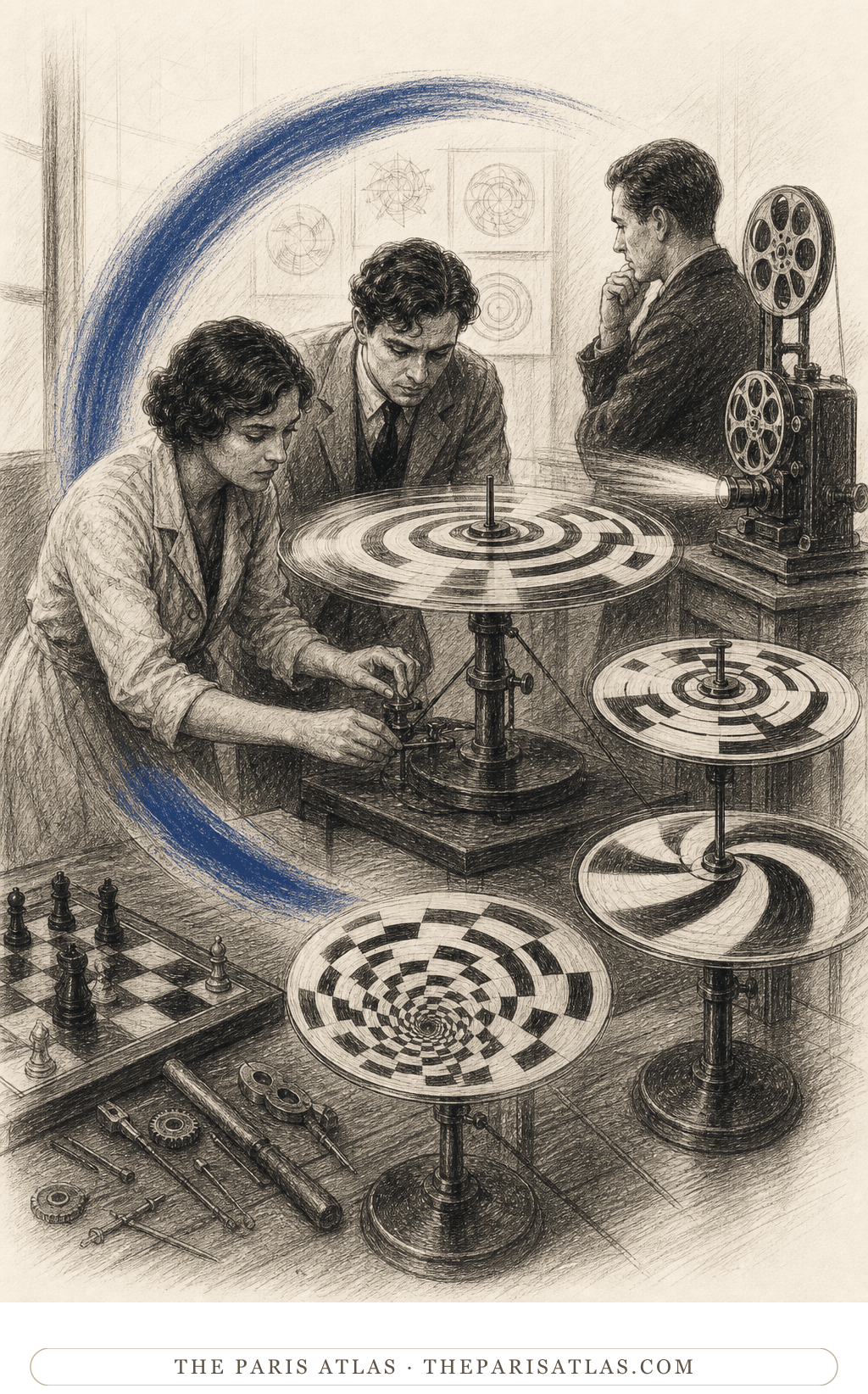
    Makes the film Anémic Cinéma with Man Ray — turning spirals of pun and optical illusion.

    Marcel Duchamp around 1927. (Photographer unknown)
    Film · in the catalogAnémic Cinéma1926 · Experimental film

    Calvin Tomkins, Duchamp: A Biography (1996)

  10. 1932

    Co-writes a specialist study of rook-and-pawn endgames with Vitaly Halberstadt, and lets the world believe he has given up art for chess. He had not.

    Calvin Tomkins, Duchamp: A Biography (1996)

  11. 1938–1942

    Designs the installations for the largest Surrealist exhibitions — twelve hundred coal sacks hung over the 1938 Paris show, a mile of string strung through the 1942 New York one.

    Calvin Tomkins, Duchamp: A Biography (1996); Encyclopaedia Britannica — Marcel Duchamp

  12. 1946–1966

    Builds Étant donnés in secret over twenty years — a tableau glimpsed through peepholes in a wooden door — leaving an illustrated manual so it could be rebuilt after his death.

    Calvin Tomkins, Duchamp: A Biography (1996)

  13. 1954

    Becomes an American citizen and marries Alexina “Teeny” Sattler.

    Calvin Tomkins, Duchamp: A Biography (1996)

  14. 1968

    Dies 2 October at Neuilly-sur-Seine; the next year Étant donnés is installed, to general astonishment, in the Philadelphia Museum of Art.

    Calvin Tomkins, Duchamp: A Biography (1996)

Selected works

Cataloged from the holding institutions' records. Reproductions appear only where the rights are verified.

Paintings

Nude Descending a Staircase (No. 2): a figure abstracted into overlapping tan and brown planes of motion, descending diagonally, the title lettered along the lower edge.

Artwork reproduction

Painting · Cubism

Nude Descending a Staircase (No. 2)

1912 · Oil on canvas

A descending body translated into overlapping ochre planes and repeated stages of motion. Its withdrawal from a Paris exhibition in 1912 and hostile reception at New York's 1913 Armory Show made it an early test of where Cubism ended and a new mechanized image began.
Philadelphia Museum of Art (The Louise and Walter Arensberg Collection)

Marcel Duchamp, Nude Descending a Staircase (No. 2), 1912. Philadelphia Museum of Art (The Louise and Walter Arensberg Collection). Image © the rights holder, shown under fair use.

The Large Glass: a tall two-panel work on cracked glass, a mechanical bride-form above and a row of bachelor-machine elements below, drawn in lead wire and foil.

Artwork reproduction

Painting

The Bride Stripped Bare by Her Bachelors, Even (The Large Glass)

1915–1923 · Oil, varnish, lead foil, lead wire and dust on two glass panels

Duchamp's monumental construction on two panes of glass, made over eight years as an erotic machine, technical diagram, and experiment in transparent pictorial space. He stopped in 1923, later accepted its transit cracks, and treated the work as permanently incomplete.

Philadelphia Museum of Art (Bequest of Katherine S. Dreier)

Marcel Duchamp, The Bride Stripped Bare by Her Bachelors, Even (The Large Glass), 1915–1923. Philadelphia Museum of Art (Bequest of Katherine S. Dreier). Image © the rights holder, shown under fair use.

Sculptures

Alfred Stieglitz's 1917 photograph of Fountain: a white porcelain urinal laid on its back on a wooden pedestal, signed "R. Mutt 1917", an entry tag hanging from it, against a painted backdrop.

Artwork reproduction

Sculpture · Readymade

Fountain

1917 · Readymade: porcelain urinal

A mass-produced porcelain urinal, turned on its back, signed “R. Mutt 1917,” and submitted to an open New York exhibition that refused to show it. The lost original survives through Alfred Stieglitz's photograph and later replicas authorized by Duchamp.

Original lost; authorized replicas in Tate, the San Francisco Museum of Modern Art, the Centre Pompidou and other collections

Marcel Duchamp, Fountain, 1917. Original lost; authorized replicas in Tate, the San Francisco Museum of Modern Art, the Centre Pompidou and other collections. Image: public domain.

People they knew

Documented connections — every one carries its source.

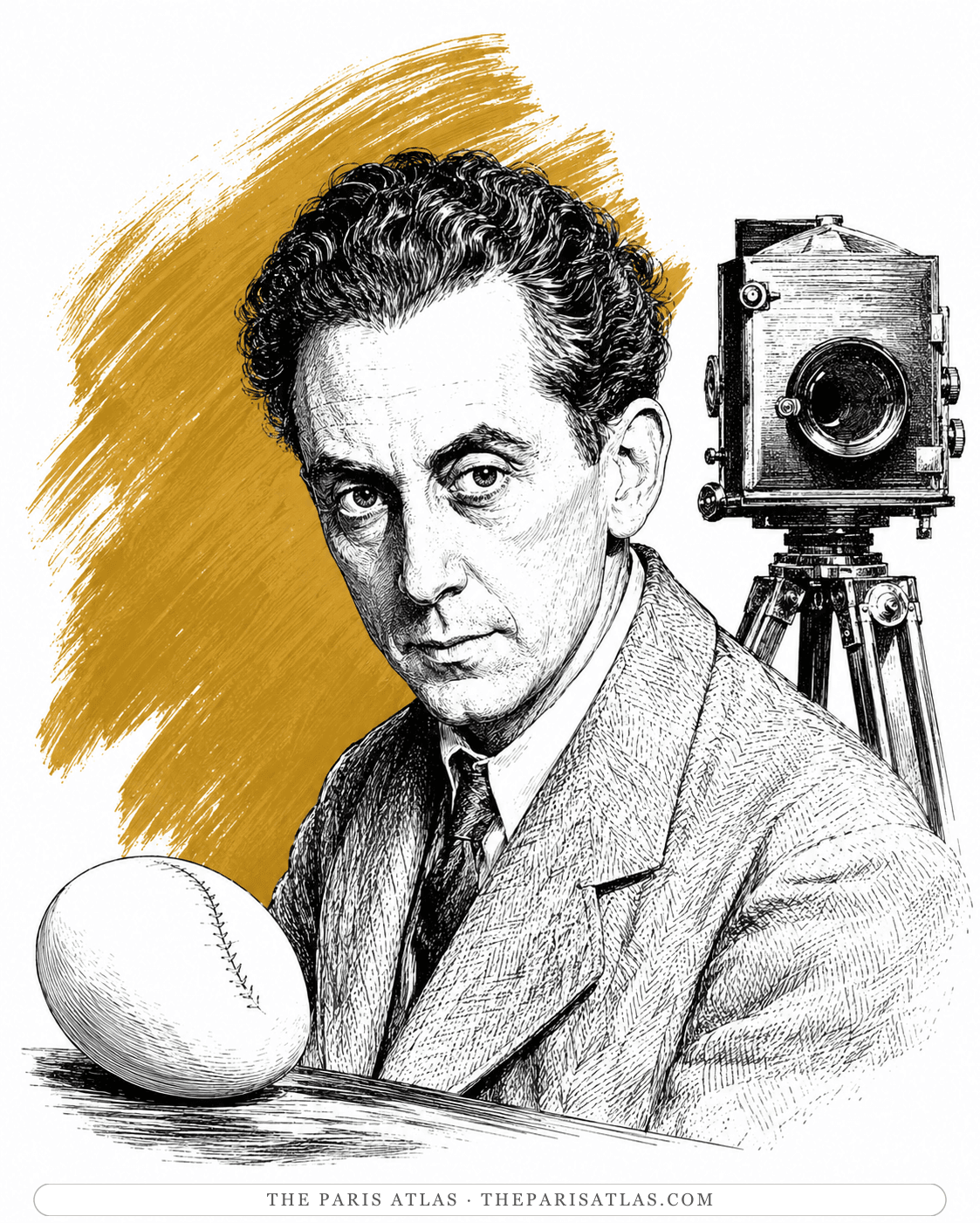
Illustrated portrait of Man Ray

Man Ray

  • Photographer
  • Painter
  • Filmmaker

Collaborated with · 1926

The Centre Pompidou credits Anémic Cinéma as 'réalisé par Marcel Duchamp avec Man Ray et Marc Allégret' — Man Ray filming Duchamp's turning spirals as an exercise in purely optical speed. The claim is scoped to the film; the friendship ran far longer.

Centre Pompidou — Marcel Duchamp : Anémic Cinéma (dossier ressource)

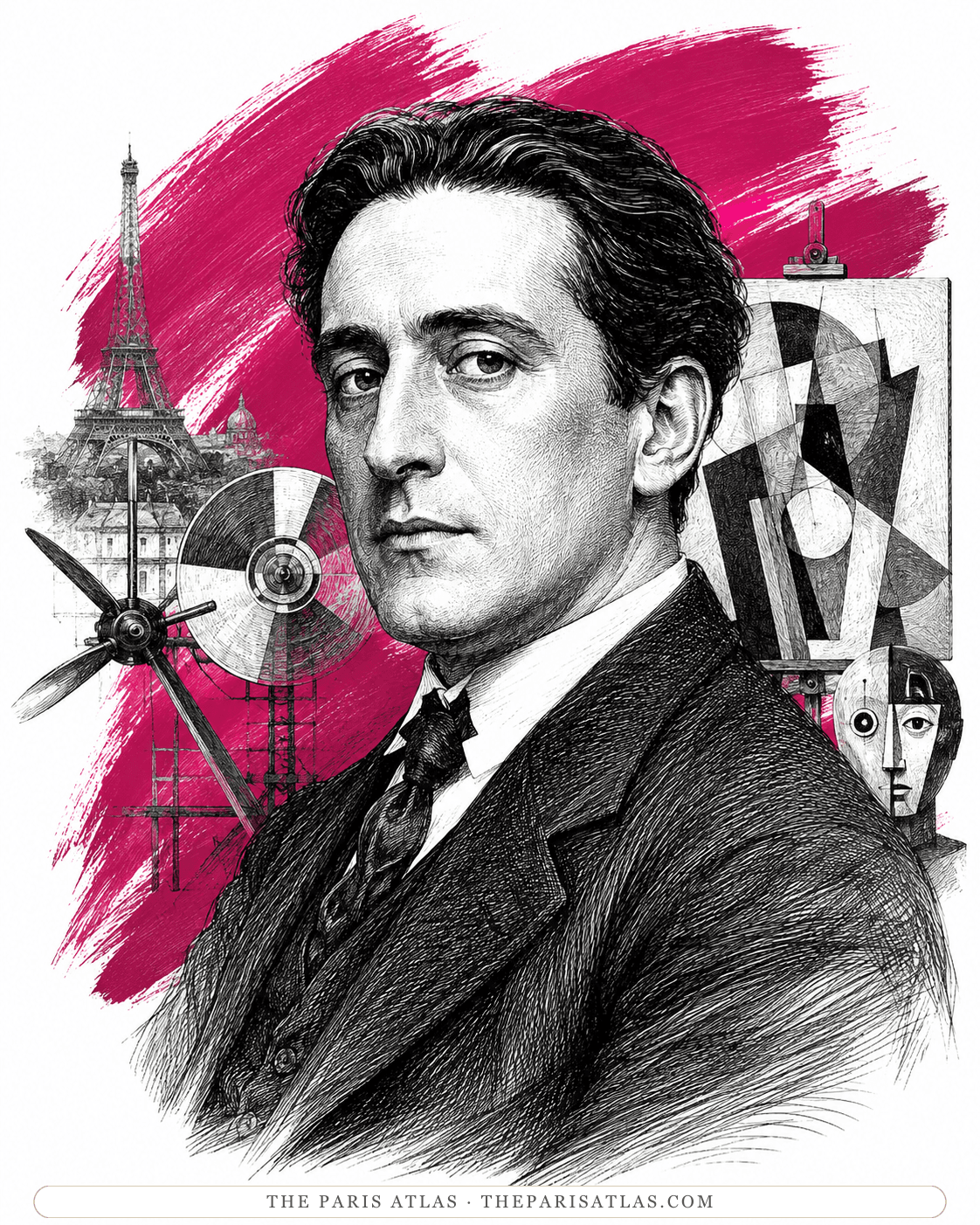
Illustrated portrait of Francis Picabia

Francis Picabia

  • Painter
  • Editor

Collaborated with

Duchamp and Picabia were close from around 1911 and central to Dada in New York and Paris, sharing its machine imagery and its attack on artistic seriousness. Picabia's review 391 and the pair's transatlantic activity carried Dada between the two cities.

Encyclopaedia Britannica — Marcel Duchamp

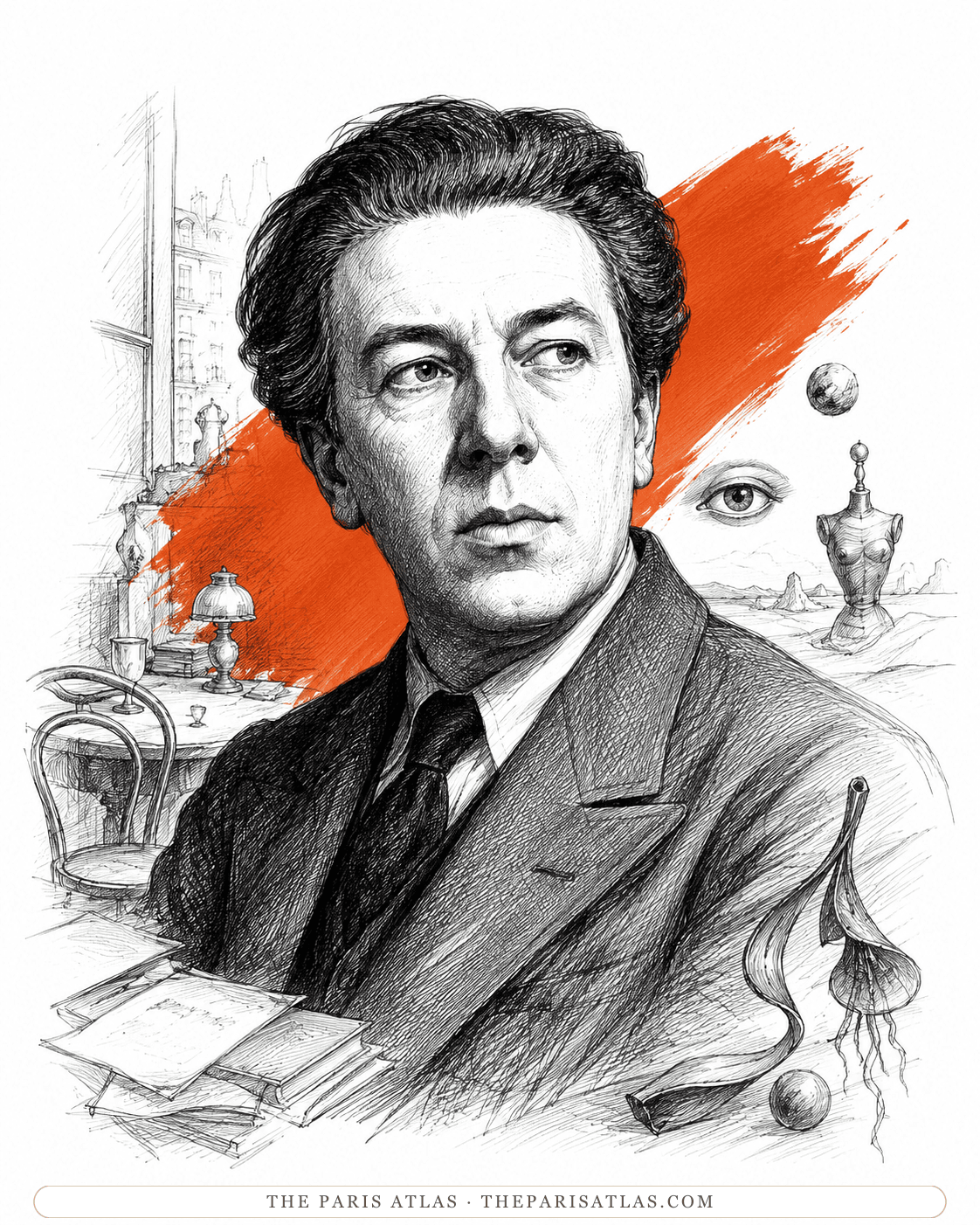
Illustrated portrait of André Breton

André Breton

  • Author
  • Poet
  • Critic
  • +1

Collaborated with

Duchamp and Breton were lifelong friends who designed Surrealist exhibitions together, Duchamp providing the installations — the twelve hundred coal sacks hung over the 1938 Paris show and the mile of string strung through the 1942 New York exhibition.

Calvin Tomkins, Duchamp: A Biography (1996)

Henri-Pierre Roché

  • Author

Collaborated with

With Roché and Beatrice Wood, Duchamp produced the short-lived New York Dada magazine The Blind Man in 1917; its second issue carried the defense of Fountain after the work was rejected.

Calvin Tomkins, Duchamp: A Biography (1996)

Albert Gleizes

  • Painter

Met

A leader of the Puteaux Cubists in Duchamp's orbit. In 1912 Gleizes was among those who asked Duchamp to withdraw Nude Descending a Staircase from the Salon des Indépendants, judging it off-message for the group.

Calvin Tomkins, Duchamp: A Biography (1996); Encyclopaedia Britannica — Marcel Duchamp

Illustrated portrait of Constantin Brâncuși

Constantin Brâncuși

  • Sculptor

Met

Close friends from the early 1910s — it was with Brâncuși and Léger that Duchamp visited the 1912 aviation salon. Duchamp later organized exhibitions of Brâncuși's sculpture and brokered its sale to American collectors.

Calvin Tomkins, Duchamp: A Biography (1996)

Illustrated portrait of Fernand Léger

Fernand Léger

  • Painter
  • Filmmaker

Met

In 1912 Duchamp visited the Salon de la Locomotion Aérienne with Léger and Brâncuși, where — standing before a propeller — he remarked that painting was finished and asked who could make anything better.

Calvin Tomkins, Duchamp: A Biography (1996)

Illustrated portrait of Guillaume Apollinaire

Guillaume Apollinaire

  • Poet
  • Critic

Met

Apollinaire moved in the same Puteaux and Section d'Or circle and wrote about Duchamp in Les Peintres cubistes (1913), predicting that he might reconcile art and the public.

Calvin Tomkins, Duchamp: A Biography (1996); Encyclopaedia Britannica — Marcel Duchamp

Jean Metzinger

  • Painter

Met

A central Puteaux Cubist and co-author of Du «Cubisme» (1912), part of the circle that gathered around Duchamp and his brothers at Puteaux.

Calvin Tomkins, Duchamp: A Biography (1996)

Illustrated portrait of Mina Loy

Mina Loy

  • Poet
  • Painter

Met

Both were regulars at the Arensberg salon in New York during the First World War, the milieu that became New York Dada.

Calvin Tomkins, Duchamp: A Biography (1996)

Illustrated portrait of Pablo Picasso

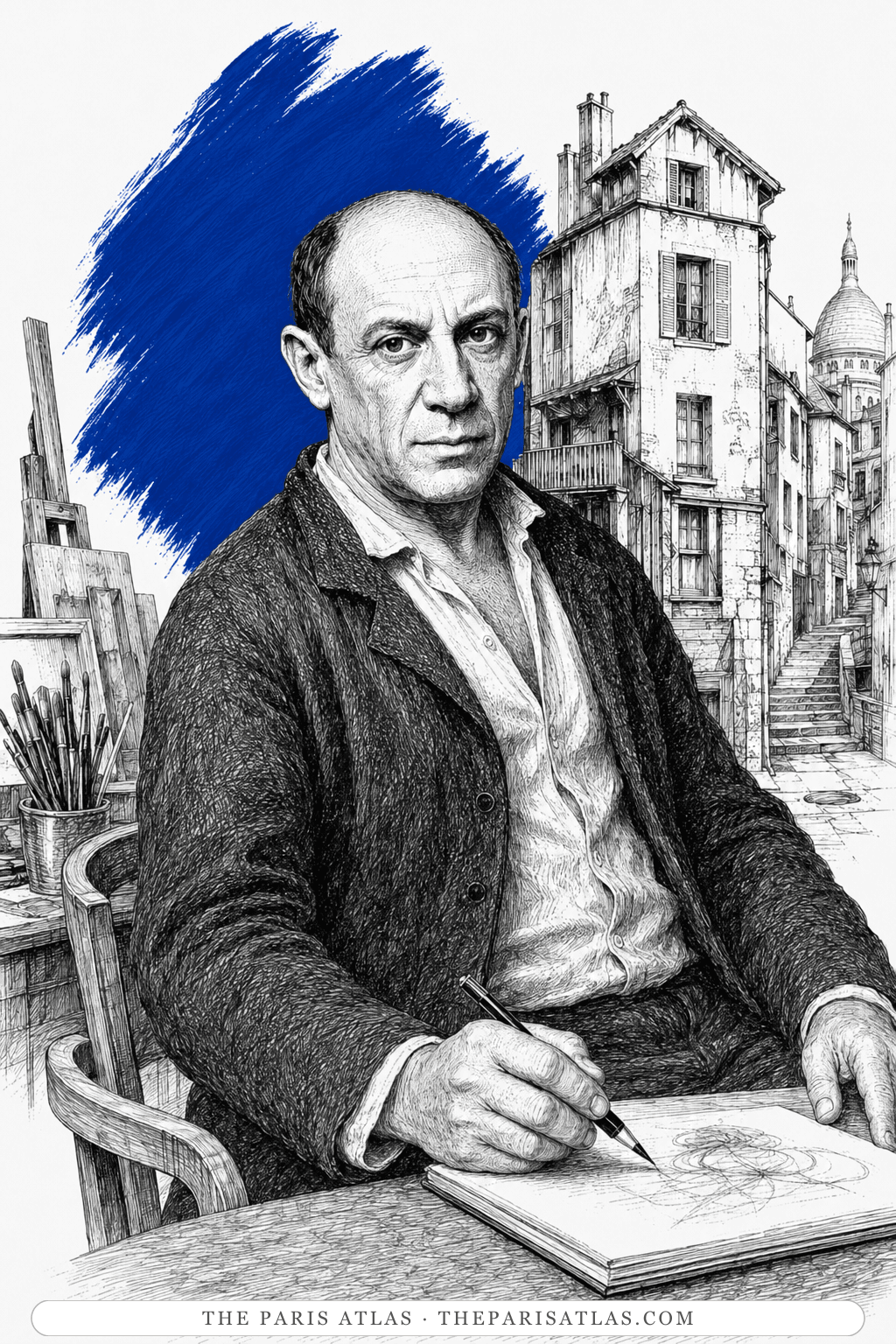
Pablo Picasso

  • Painter
  • Sculptor

Met

The two knew each other across decades of the Paris and New York avant-garde. The relationship was respectful rather than close; each measured himself against the other as the century's rival model of what a modern artist could be.

Calvin Tomkins, Duchamp: A Biography (1996)

Louise Arensberg

  • Patron

Supported by

With her husband Walter, Louise Arensberg supported Duchamp and assembled the collection, rich in his work, that passed to the Philadelphia Museum of Art.

Philadelphia Museum of Art — collection

Walter Arensberg

  • Patron
  • Poet

Supported by

Walter and Louise Arensberg were Duchamp's principal patrons; their New York apartment was his base in America, and the collection they built — later given to the Philadelphia Museum of Art — held the Large Glass and Nude Descending a Staircase.

Encyclopaedia Britannica — Marcel Duchamp; Philadelphia Museum of Art — collection

Who they drew from

Influence running inward — the writers and artists whose work fed theirs. Admiration is not acquaintance; these edges claim neither a meeting nor a friendship.

Raymond Roussel

Duchamp saw the 1912 stage adaptation of Roussel's Impressions d'Afrique and repeatedly named it a decisive influence on the conception of the Large Glass, crediting Roussel with showing him a way out of retinal painting.

Calvin Tomkins, Duchamp: A Biography (1996)

Movements

The artistic and literary currents this life ran through.

Pen-and-ink dream collage — a classical bust with clouds for eyes, a floating eye, a door opening onto sky, fish swimming through air, and an impossible staircase

Art & literary movement · 1924–1966

Surrealism

Duchamp came out of Dada and never formally joined the Surrealists, but was closely associated with them: André Breton championed him, and Duchamp designed the installations for their two largest exhibitions — the 1938 Exposition Internationale du Surréalisme in Paris and the 1942 First Papers of Surrealism in New York.

Encyclopaedia Britannica — Marcel Duchamp

Sunlight through a railing breaking into diagonal planes of shadow across bare concrete

Art movement · 1907–1914

Cubism

Duchamp painted through Cubism around 1911–12 — Portrait of Chess Players, and the Nude Descending a Staircase — and moved in the Puteaux circle with his brothers Jacques Villon and Raymond Duchamp-Villon. The Cubists' request that he withdraw the Nude in 1912 marked his break with conventional painting.

Encyclopaedia Britannica — Marcel Duchamp

Questions about Marcel Duchamp

What is Marcel Duchamp best known for?

The readymade — the idea that an ordinary manufactured object, selected and titled by an artist, can be a work of art. His best-known pieces are Fountain (a urinal, 1917), Nude Descending a Staircase (No. 2) (1912) and the Large Glass (1915–23).

What is a readymade?

A mass-produced object that an artist chooses and presents as art, sometimes with a title, inscription or small change. Duchamp coined the term; his Bicycle Wheel, Bottle Rack and Fountain are the defining examples.

What happened to the original Fountain?

It was lost soon after Duchamp submitted it in 1917. The urinals in museums today are later replicas he authorized in the 1950s and 1960s. Alfred Stieglitz's photograph is the main record of the lost original.

Who was Rrose Sélavy?

Duchamp's feminine alter ego, adopted around 1920 and photographed by Man Ray. The name is a pun sounding out roughly as “Eros, c'est la vie.” He signed works and wordplay under it — an artistic identity and a running joke about authorship more than a biographical disguise.

Did Duchamp give up art for chess?

No, though he encouraged the impression. He played competitively and co-wrote a chess book in 1932, but he kept making and organizing art the whole time — and secretly built his last major work, Étant donnés, between 1946 and 1966.

Was Duchamp a Dadaist or a Surrealist?

Both, and neither exactly. He took part in Dada in New York and Paris and designed major Surrealist exhibitions, but never committed to a movement; the Centre Pompidou describes him as passing through Cubism, Dada and Surrealism without belonging to any.

Sourced claims

Every connection the graph holds for Marcel, with the evidence behind it.

Collaborated with · 1926

Man Ray

The Centre Pompidou credits Anémic Cinéma as 'réalisé par Marcel Duchamp avec Man Ray et Marc Allégret' — Man Ray filming Duchamp's turning spirals as an exercise in purely optical speed. The claim is scoped to the film; the friendship ran far longer.

Centre Pompidou — Marcel Duchamp : Anémic Cinéma (dossier ressource)

Associated with

Surrealism

Duchamp came out of Dada and never formally joined the Surrealists, but was closely associated with them: André Breton championed him, and Duchamp designed the installations for their two largest exhibitions — the 1938 Exposition Internationale du Surréalisme in Paris and the 1942 First Papers of Surrealism in New York.

Encyclopaedia Britannica — Marcel Duchamp

Associated with · 1911–1912

Cubism

Duchamp painted through Cubism around 1911–12 — Portrait of Chess Players, and the Nude Descending a Staircase — and moved in the Puteaux circle with his brothers Jacques Villon and Raymond Duchamp-Villon. The Cubists' request that he withdraw the Nude in 1912 marked his break with conventional painting.

Encyclopaedia Britannica — Marcel Duchamp

Collaborated with

Francis Picabia

Duchamp and Picabia were close from around 1911 and central to Dada in New York and Paris, sharing its machine imagery and its attack on artistic seriousness. Picabia's review 391 and the pair's transatlantic activity carried Dada between the two cities.

Encyclopaedia Britannica — Marcel Duchamp

Collaborated with

André Breton

Duchamp and Breton were lifelong friends who designed Surrealist exhibitions together, Duchamp providing the installations — the twelve hundred coal sacks hung over the 1938 Paris show and the mile of string strung through the 1942 New York exhibition.

Calvin Tomkins, Duchamp: A Biography (1996)

Collaborated with

Henri-Pierre Roché

With Roché and Beatrice Wood, Duchamp produced the short-lived New York Dada magazine The Blind Man in 1917; its second issue carried the defense of Fountain after the work was rejected.

Calvin Tomkins, Duchamp: A Biography (1996)

Met

Albert Gleizes

A leader of the Puteaux Cubists in Duchamp's orbit. In 1912 Gleizes was among those who asked Duchamp to withdraw Nude Descending a Staircase from the Salon des Indépendants, judging it off-message for the group.

Calvin Tomkins, Duchamp: A Biography (1996); Encyclopaedia Britannica — Marcel Duchamp

Met

Constantin Brâncuși

Close friends from the early 1910s — it was with Brâncuși and Léger that Duchamp visited the 1912 aviation salon. Duchamp later organized exhibitions of Brâncuși's sculpture and brokered its sale to American collectors.

Calvin Tomkins, Duchamp: A Biography (1996)

Met

Fernand Léger

In 1912 Duchamp visited the Salon de la Locomotion Aérienne with Léger and Brâncuși, where — standing before a propeller — he remarked that painting was finished and asked who could make anything better.

Calvin Tomkins, Duchamp: A Biography (1996)

Met

Guillaume Apollinaire

Apollinaire moved in the same Puteaux and Section d'Or circle and wrote about Duchamp in Les Peintres cubistes (1913), predicting that he might reconcile art and the public.

Calvin Tomkins, Duchamp: A Biography (1996); Encyclopaedia Britannica — Marcel Duchamp

Met

Jean Metzinger

A central Puteaux Cubist and co-author of Du «Cubisme» (1912), part of the circle that gathered around Duchamp and his brothers at Puteaux.

Calvin Tomkins, Duchamp: A Biography (1996)

Met

Mina Loy

Both were regulars at the Arensberg salon in New York during the First World War, the milieu that became New York Dada.

Calvin Tomkins, Duchamp: A Biography (1996)

Met

Pablo Picasso

The two knew each other across decades of the Paris and New York avant-garde. The relationship was respectful rather than close; each measured himself against the other as the century's rival model of what a modern artist could be.

Calvin Tomkins, Duchamp: A Biography (1996)

Performed in · 1924

Entr'acte

Marcel Duchamp plays the other chess player, opposite Man Ray.

The Museum of Modern Art — Entr'acte (collection record)

Supported by

Louise Arensberg

With her husband Walter, Louise Arensberg supported Duchamp and assembled the collection, rich in his work, that passed to the Philadelphia Museum of Art.

Philadelphia Museum of Art — collection

Influenced by

Raymond Roussel

Duchamp saw the 1912 stage adaptation of Roussel's Impressions d'Afrique and repeatedly named it a decisive influence on the conception of the Large Glass, crediting Roussel with showing him a way out of retinal painting.

Calvin Tomkins, Duchamp: A Biography (1996)

Supported by

Walter Arensberg

Walter and Louise Arensberg were Duchamp's principal patrons; their New York apartment was his base in America, and the collection they built — later given to the Philadelphia Museum of Art — held the Large Glass and Nude Descending a Staircase.

Encyclopaedia Britannica — Marcel Duchamp; Philadelphia Museum of Art — collection