The Paris AtlasCharting the artists, works, and places worth returning to.
  • Painter
  • Filmmaker
· French · 1881–1955

Fernand Léger

The machine-age classicist — Cubism rebuilt with engine-part polish, and the postwar call to order answered in industrial gray.

In images

Details

Lived
1881–1955
Born
1881
Died
1955
Nationality
French
Roles
PainterFilmmaker

About Fernand Léger

Fernand Léger was a French painter who made machines and machine parts his subject. He was born in Argentan, in Normandy, on 4 February 1881 and died at Gif-sur-Yvette, outside Paris, on 17 August 1955.

His paintings are made of tubes, cylinders, cogs and pistons in flat strong colour, with black outlines. Critics named the style tubism, meaning Cubism made out of pipes, and the name stuck.

The First World War decided his subject. He served three years at the front and was gassed at Verdun in 1916. He came back convinced that the machinery he had lived among — guns, engines, aircraft — was the real material of modern art, and that the men he had served with were the audience for it.

He worked in almost every medium: painting, film, ceramics, stained glass, mosaic, stage design and mural. His aim throughout was an art that a factory worker could stand in front of and enjoy without instruction.[1]

Normandy and architecture

Fernand Léger was born on 4 February 1881 in Argentan, in Normandy, the son of a cattle farmer. His father died when he was young.[2]

He was apprenticed to an architect in Caen from 1897 to 1899, then moved to Paris in 1900 and worked as an architectural draughtsman. The training shows in everything he painted afterwards. He assembled his pictures from separate parts, the way a building is assembled from components, and the parts fit like machine parts.

He was refused entry to the École des Beaux-Arts and studied instead at the École des Arts Décoratifs and privately. He worked as a photographic retoucher to pay for it.[3]

Becoming a Cubist

Léger's early work was Impressionist. He said later that the Cézanne memorial exhibitions of 1907 made him give up Impressionism, and that it took him three years to work Cézanne out of his system.[4]

By 1909 he had moved to La Ruche, the cheap studio building in Montparnasse where Chagall, Soutine and Modigliani also worked. He met the poets Guillaume Apollinaire and Blaise Cendrars there, and the painters Robert Delaunay and Alexander Archipenko.

His Nudes in the Forest, painted between 1909 and 1911, was his first fully Cubist work, and it looks unlike anything by Picasso or Braque: the figures and the trees are built from the same grey and green metal tubes. When it was shown in 1911 a critic coined the word tubism, and it followed him for the rest of his life.[5]

The war

Léger was mobilised in 1914 and served for three years in the engineers and then as a stretcher-bearer, at Argonne and Verdun. He was thirty-three when he went.[2]

He drew constantly at the front, on any paper he could get, including the wooden ammunition boxes. What he drew was equipment and men: breech-blocks, gun barrels, aircraft, and soldiers reduced to the same cylinders as their weapons.

In September 1916 he was caught in a gas attack at Verdun and nearly died. He spent more than a year in hospital and convalescence, and was discharged in 1917.[6]

While convalescing he painted The Card Players, showing three soldiers at a game, their bodies made entirely of armour plate and pipework. It was the first time he painted the soldiers he had served with in his own machine style.[4]

The machine age

The war made Léger a populist. He had spent three years with miners, labourers and metalworkers, and he came out saying that they, not the salon public, were the people he wanted to paint for and paint about.

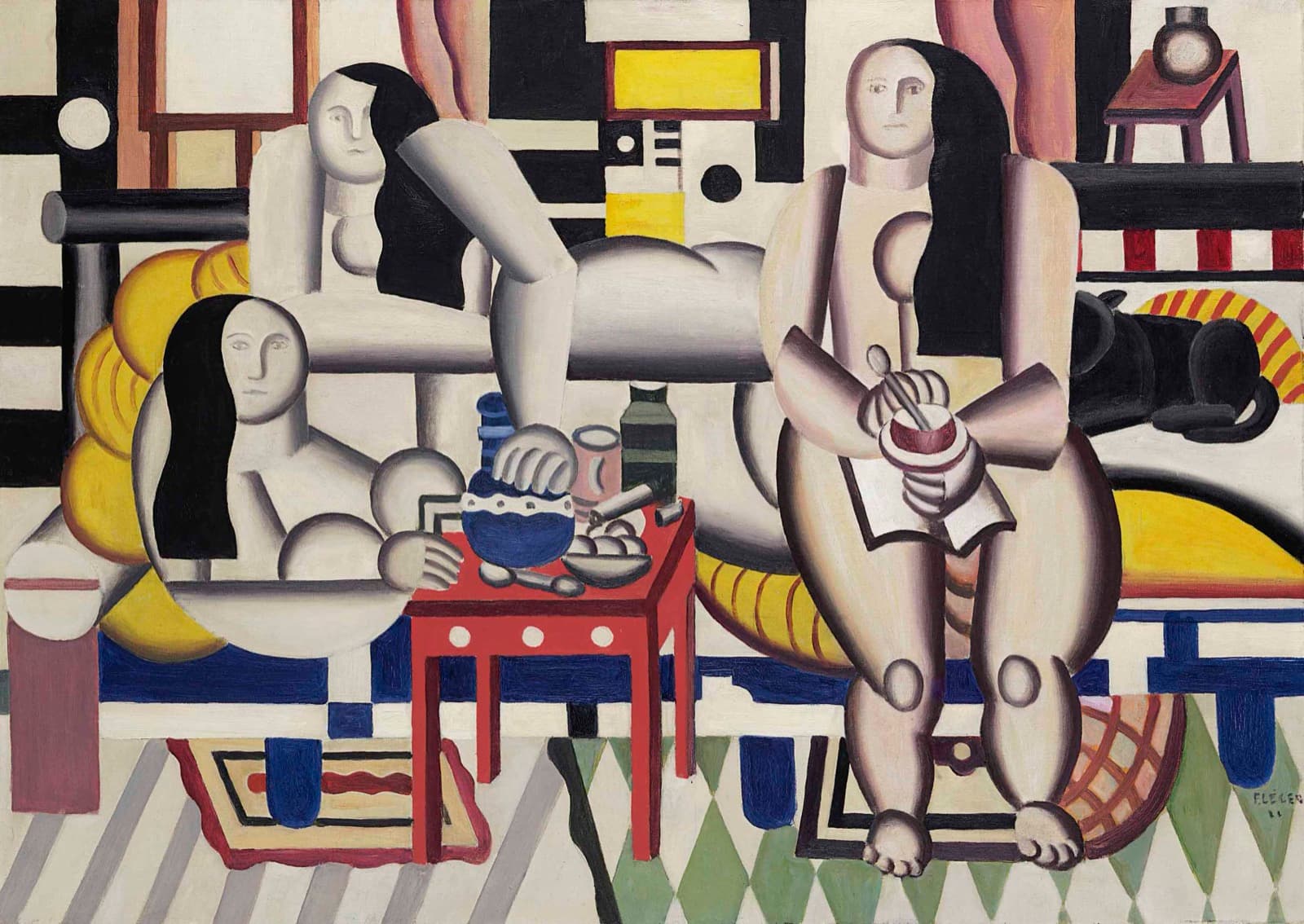
From 1918 he painted what he called the machine aesthetic. The City, in 1919, is a huge canvas of scaffolding, lettering, stencilled figures and hoardings. Three Women, in 1921, shows women reclining like polished engine parts. Dozens of other canvases are built from discs, gears and propellers.

He was not making fun of the machine and he was not warning about it. He thought a well-made machine part was as beautiful as anything in a museum, and that a modern painting should be built with the same precision.

Ballet Mécanique

In 1924 Léger made a film, Ballet Mécanique, with the American filmmaker Dudley Murphy and camera work by Man Ray. It has no story. It is nineteen minutes of close-ups of machine parts, kitchen implements, a woman's smile, a swinging pendulum and a washerwoman climbing stairs, cut into repeating rhythms.

The film treats objects and people identically: a mixing bowl gets the same attention as a face, and both are made to move like machinery. It was intended to have a score by the American composer George Antheil, though the music and the film were rarely performed together.

Ballet Mécanique is one of the first films made by a painter to be looked at like a painting instead of followed like a story, and it is still shown in courses on avant-garde film.

Teaching and murals

In 1924 Léger opened a free studio-school in Paris with Amédée Ozenfant, and he taught for much of the rest of his life. He also began working at architectural scale, arguing that painting belonged on the walls of ordinary buildings rather than in private collections.

He designed sets and costumes for the Ballets Suédois, made large decorative panels for exhibitions, and worked with architects including Le Corbusier. He joined the political left in the 1930s, and in 1945 he joined the French Communist Party. That matched what he had been saying since 1918: that art should be made for working people.

The American years

Léger visited the United States three times in the 1930s and was living there from 1940 to 1945, having left France after the German invasion.

He taught at Yale and at Mills College in Oakland, California, and lived mostly in New York. American subjects entered his painting: neon signs and industrial waste ground. He also returned to the divers he had watched at Marseille before sailing, who became the Divers series — figures tangled together in mid-air, their colour floating free of their outlines.

That device — flat bands of colour laid across a drawing that does not match them — became the basis of his late work.

Return and last years

Léger returned to France in 1945. His last decade was his most public. He made stained glass and a mosaic for the church at Audincourt, murals, ceramics and tapestries, and painted large canvases of construction workers and circus performers.

The Constructors, painted in 1950, shows steelworkers on girders against a blue sky, drawn with the flat clarity of a poster. He exhibited it in a factory canteen to see what the workers made of it.

His first wife, Jeanne-Augustine Lohy, died in 1950. He married the painter Nadia Khodasevich in 1952. In 1955 he bought a property at Biot, on the Riviera, intending to install large ceramics in the garden.

He died at Gif-sur-Yvette on 17 August 1955, aged seventy-four. The museum his widow and his collaborator Georges Bauquier built at Biot opened in 1960 and is now the Musée national Fernand Léger.

Why Fernand Léger matters

Léger took the machine seriously as a subject when most artists either ignored it or feared it, and he did it without either satire or dread. That gave twentieth-century painting a whole vocabulary — the piston, the propeller, the girder, the stencilled letter — and it fed directly into commercial art, poster design and, later, Pop art.

His second contribution is the ambition behind it. He wanted an art for people who worked with their hands, made at the scale of buildings rather than drawing rooms, and he spent thirty years on murals, glass, ceramics and teaching in pursuit of it. There is little evidence that the working audience he wanted ever came. The work he made trying to reach it is in museums, churches and public buildings across France.

Life events

  1. 1881

    Born on 4 February at Argentan in Normandy, the son of a cattle farmer.

  2. 1897

    Apprenticed to an architect in Caen.

  3. 1900

    Moves to Paris and works as an architectural draughtsman.

  4. 1903

    Refused entry to the École des Beaux-Arts. Studies at the École des Arts Décoratifs and privately, paying for it by retouching photographs.

  5. 1907

    Sees the Cézanne memorial exhibitions in Paris, which he later said changed his direction completely.

  6. 1909

    Moves into La Ruche, the cheap studio building in Montparnasse, where Chagall, Soutine and Modigliani also work. Meets Guillaume Apollinaire, Blaise Cendrars and Robert Delaunay.

  7. 1911

    Exhibits Nudes in the Forest, his first fully Cubist painting, built from grey and green tubes. A critic coins the word tubism.

  8. 1913

    Signs a contract with the dealer Daniel-Henry Kahnweiler and gives a lecture setting out his own theory of modern painting.

  9. 1914

    Mobilised in August. Serves in the engineers, at Argonne and then Verdun.

  10. 1915

    Draws constantly at the front, on any paper available and on the wood of ammunition boxes.

  11. 1916

    Caught in a gas attack at Verdun in September and nearly killed. Spends more than a year in hospital and convalescence.

  12. 1917

    Paints The Card Players while convalescing, showing three soldiers whose bodies are made of armour plate and pipework. Discharged from the army.

  13. 1919

    Paints The City, a large canvas of scaffolding, lettering and stencilled figures. Marries Jeanne-Augustine Lohy.

  14. 1921

    Paints Three Women. Meets the architect Le Corbusier.

  15. 1922

    Designs sets and costumes for the Ballets Suédois.

  16. 1924

    Makes the film Ballet Mécanique with Dudley Murphy, with camera work by Man Ray. Opens a free studio-school in Paris with Amédée Ozenfant.

  17. 1925

    Shows mural paintings in Le Corbusier's Pavillon de l'Esprit Nouveau at the Paris exhibition.

  18. 1931

    Visits the United States for the first time.

  19. 1935

    The Museum of Modern Art in New York gives him a solo exhibition.

  20. 1937

    Paints a large mural for the Paris International Exposition and works on commissions for the Popular Front government.

  21. 1940

    Leaves France after the German invasion and settles in the United States for the duration of the war.

  22. 1941

    Teaches at Mills College in Oakland, California, and later at Yale.

  23. 1942

    Begins the Divers series, in which flat bands of colour float free of the drawn figures.

  24. 1945

    Returns to France and joins the French Communist Party.

  25. 1948

    Begins working in ceramics with Roland Brice at Biot.

  26. 1950

    Paints The Constructors, showing steelworkers on girders, and exhibits it in a factory canteen to see what the workers make of it. His wife Jeanne dies.

  27. 1951

    Completes stained glass and a mosaic for the church at Audincourt.

  28. 1952

    Marries the painter Nadia Khodasevich, his former student.

  29. 1954

    Completes mosaics for the University of Caracas and for the church at Assy.

  30. 1955

    Wins the grand prize at the São Paulo Biennial. Buys a property at Biot on the Riviera, intending to install large ceramics in the garden.

  31. 1955

    Dies at Gif-sur-Yvette on 17 August, aged seventy-four.

  32. 1960

    The museum built at Biot by his widow Nadia and his collaborator Georges Bauquier opens.

  33. 1969

    The Biot museum is given to the French state and becomes the Musée national Fernand Léger.

Selected works

Cataloged from the holding institutions' records. Reproductions appear only where the rights are verified.

Paintings

Léger's Three Women: three gray, machine-polished nudes reclining around a small red table set with cups, in a boldly patterned geometric interior with a dark animal curled at the right

Artwork reproduction

Painting · Return to Order

Three Women (Le Grand Déjeuner)

1921–22 · Oil on canvas

Three monumental nudes lounge around a low table, their bodies assembled from polished cylinders and spheres. Léger turns the classical reclining nude into a machine-age image of order — calm, impersonal, and unmistakably modern.
The Museum of Modern Art

Fernand Léger, Three Women (Le Grand Déjeuner), 1921–22. The Museum of Modern Art. Image: public domain.

People Fernand Léger Knew

Relationships with other people, with sources for each connection.

Illustrated portrait of Serge Gainsbourg

Serge Gainsbourg

  • Singer
  • Composer
  • Pianist

Taught

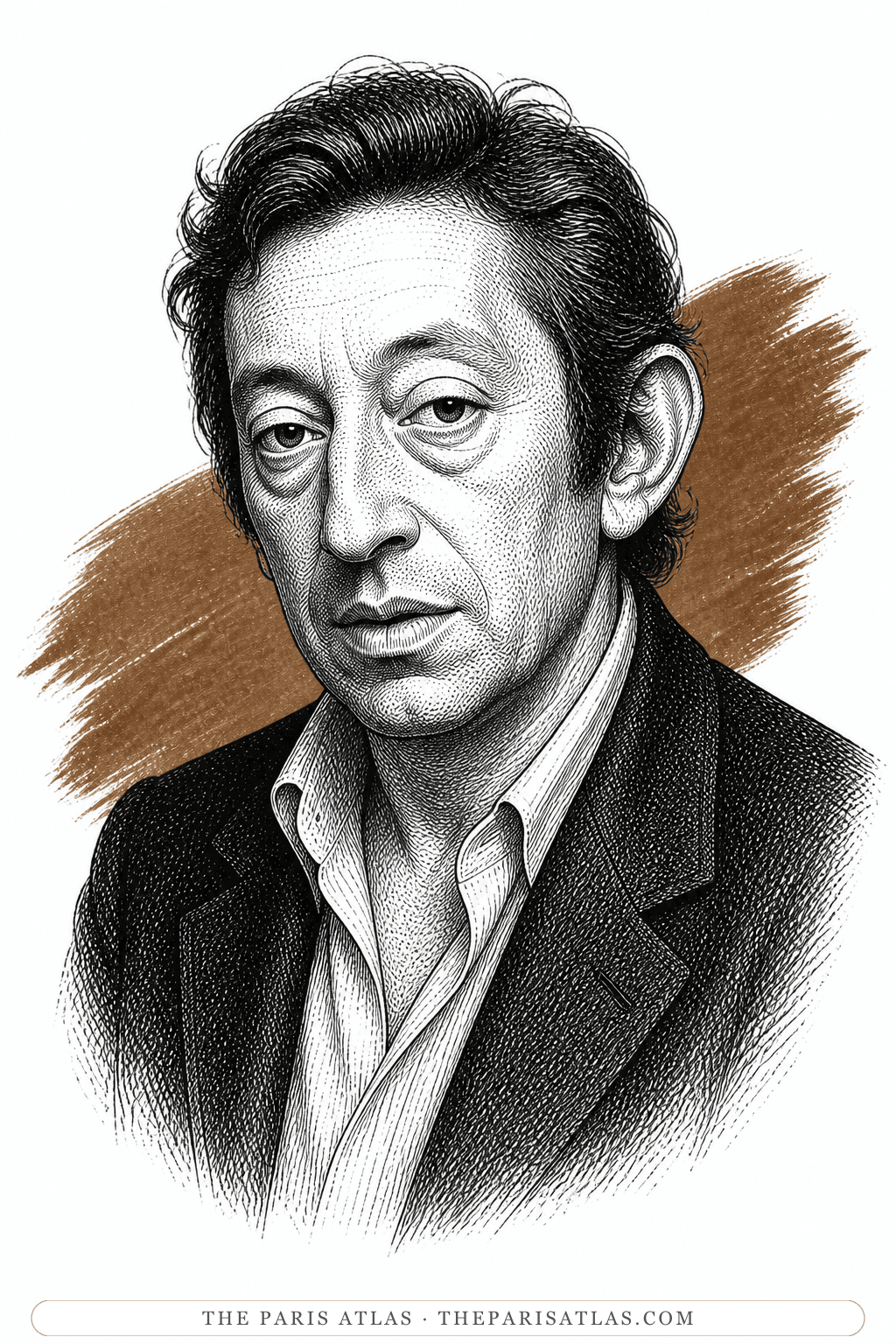
Before he was a songwriter, Gainsbourg meant to be a painter: the Encyclopædia Universalis notice records his fine-art studies under André Lhote and Fernand Léger. He gave painting up for music in the early 1950s, and went on describing his songs — and the rooms of his own house — in a painter's terms.

— Serge Gainsbourg (1928-1991)

Illustrated portrait of Rolf de Maré

Rolf de Maré

  • Patron
  • Archivist

Supported by · 1922

Léger designed the sets and costumes for two of the company's defining productions, Skating Rink in 1922 and La Création du monde in 1923. De Maré commissioned and paid for both.

— The Metropolitan Museum of Art, Leonard A. Lauder Research Center — Rolf de Maré, Modern Art Index Project

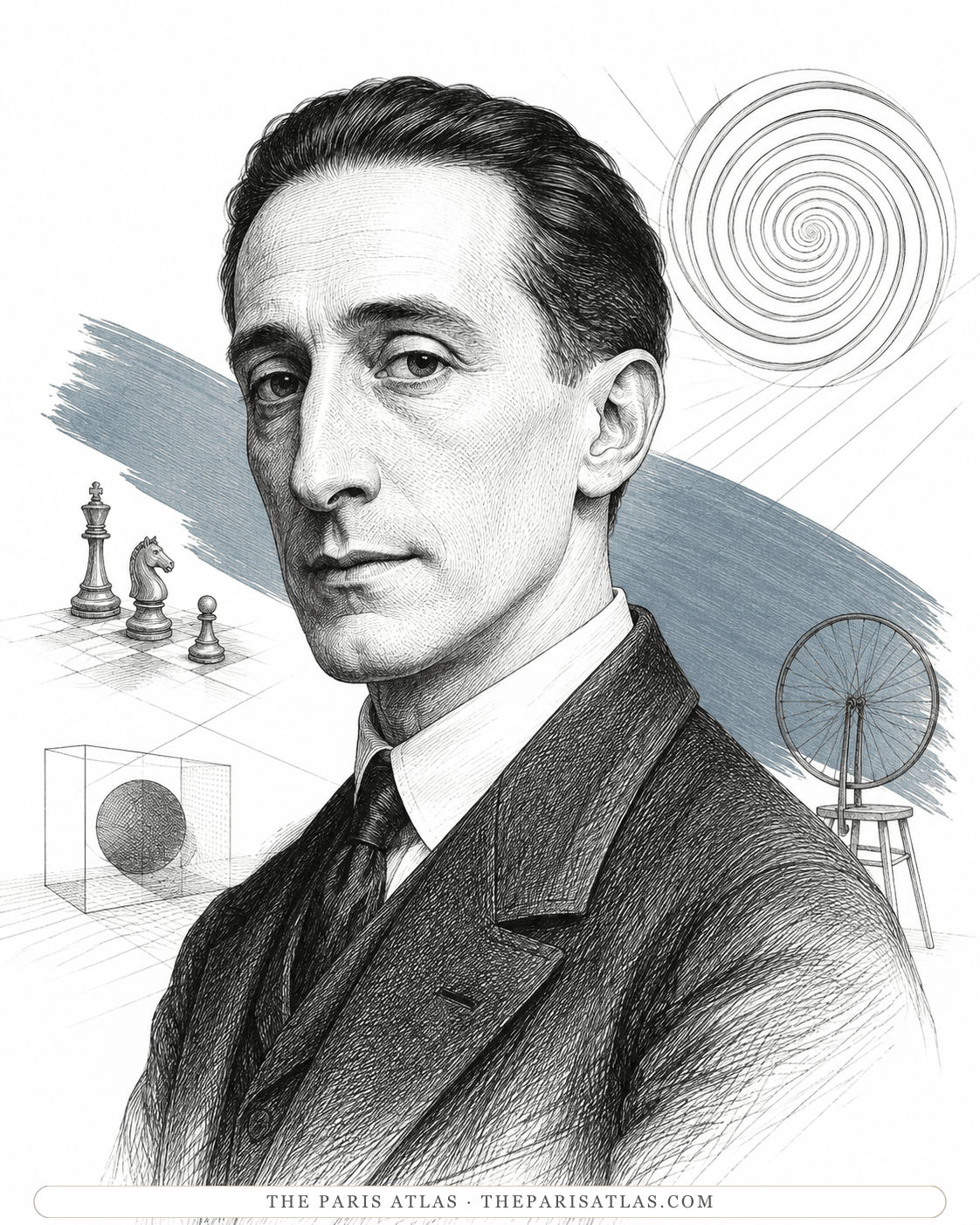
Illustrated portrait of Marcel Duchamp

Marcel Duchamp

  • Painter
  • Sculptor
  • Filmmaker

Met

In 1912 Duchamp visited the Salon de la Locomotion Aérienne with Léger and Brâncuși, where — standing before a propeller — he remarked that painting was finished and asked who could make anything better.

— Calvin Tomkins, Duchamp: A Biography (1996)

Illustrated portrait of Dudley Murphy

Dudley Murphy

  • Filmmaker

Collaborated with · 1924

Murphy co-directed Ballet mécanique with Léger and shot it. Léger supplied the machine-age subject; Murphy, an American cameraman, supplied the technique.

— The Museum of Modern Art — Ballet mécanique (collection record)

Illustrated portrait of Louise Bourgeois

Louise Bourgeois

  • Sculptor
  • Painter

Met · 1934

She trained in Leger's Paris studio in the mid-1930s, one of the five academies of her art education, and credited him with the observation that redirected her career: he looked at her work and told her she was a sculptor, not a painter.

— Louise Bourgeois — The Easton Foundation; Robert Storr, Intimate Geometries: The Art and Life of Louise Bourgeois (2016)

Illustrated portrait of Marc Chagall

Marc Chagall

  • Painter

Met · 1912

Fellow residents of La Ruche in the 1910s, where Leger was among the painters working in the rotunda's cheap studios alongside Chagall, Soutine and Modigliani.

— Biography of Marc Chagall

Illustrated portrait of Le Corbusier

Le Corbusier

  • Architect
  • Painter
  • Author

Met · 1930

The Fondation Le Corbusier's chronology records the two travelling to Spain together in August 1930. Both belonged to the machine-age wing of Paris painting in the 1920s - Leger through his own mechanical figures, Le Corbusier through the Purism he founded with Amedee Ozenfant - and the claim's date marks the documented journey rather than a first encounter, which the sources do not fix.

— Biography, 1929–1938

Illustrated portrait of Charlotte Perriand

Charlotte Perriand

  • Architect

Collaborated with · 1930

Perriand and Léger shared an interest in modern public life and collaborated across exhibitions, photomontage, and political projects.

— Charlotte Perriand: Inventing a New World

Illustrated portrait of Jean Dubuffet

Jean Dubuffet

  • Painter
  • Sculptor
  • Author
  • +1

Met · 1918

Dubuffet met Léger during his first Paris period after moving from Le Havre in 1918.

— Jean Dubuffet — biography

Movements

The artistic and literary currents this life ran through.

Sunlight through a railing breaking into diagonal planes of shadow across bare concrete

Art movement · 1907–1914

Cubism

One of Cubism's distinctive figures before the war, and one of the painters through whom the style spread after it. His variant ran to tubes, machinery, and the modern city rather than the café table.

— Cubism — The Metropolitan Museum of Art, essays; The Museum of Modern Art — collection records, object 79078

Fernand Léger’s Places

The cataloged places connected to Fernand Léger — through the books, and through the documented record.

Places you can enter today appear first, followed by addresses to see from outside and sites that have vanished.

Questions about Fernand Léger

Who was Fernand Léger?

Fernand Léger was a French painter, born in Normandy in 1881 and died outside Paris in 1955. He built a form of Cubism out of machine parts — tubes, cylinders and cogs in flat strong colour — and worked in film, ceramics, stained glass, mosaic and mural as well as paint.

What is tubism?

The name a critic gave Léger's early Cubism in 1911, because his figures and landscapes are built from cylinders and tubes rather than the flat facets of Picasso and Braque. Léger disliked the label but it described the work, and it stuck.

How did the First World War change Léger's art?

He served three years at the front and was gassed at Verdun in September 1916. He came back convinced that machinery was the true material of modern art and that the workers he had served with were the audience for it. The Card Players, painted while he was convalescing in 1917, shows soldiers whose bodies are made of armour plate and pipework.

What is Ballet Mécanique?

A nineteen-minute film Léger made in 1924 with Dudley Murphy, with camera work by Man Ray. It has no story: it cuts close-ups of machine parts, kitchen implements and a woman's face into repeating rhythms, treating objects and people the same way. It is one of the first films made by a painter as painting.

Where can you see Fernand Léger's work?

The Musée national Fernand Léger at Biot, on the French Riviera, is the only museum dedicated to him. It was built by his widow Nadia and his collaborator Georges Bauquier, opened in 1960, and given to the French state in 1969. His murals, mosaics and stained glass are also in churches and public buildings across France.

Why did Léger paint workers and machines?

He spent three years in the trenches among miners, labourers and metalworkers, and decided afterwards that they, not the gallery public, were the people he wanted to paint for. He joined the French Communist Party in 1945, and in 1950 he showed The Constructors in a factory canteen to see what the workers made of it.

Connections and Sources

Fernand Léger’s connections to people, places, and works, with the sources behind each one.

Associated with

Cubism

One of Cubism's distinctive figures before the war, and one of the painters through whom the style spread after it. His variant ran to tubes, machinery, and the modern city rather than the café table.

— Cubism — The Metropolitan Museum of Art, essays; The Museum of Modern Art — collection records, object 79078

Worked at · 1927

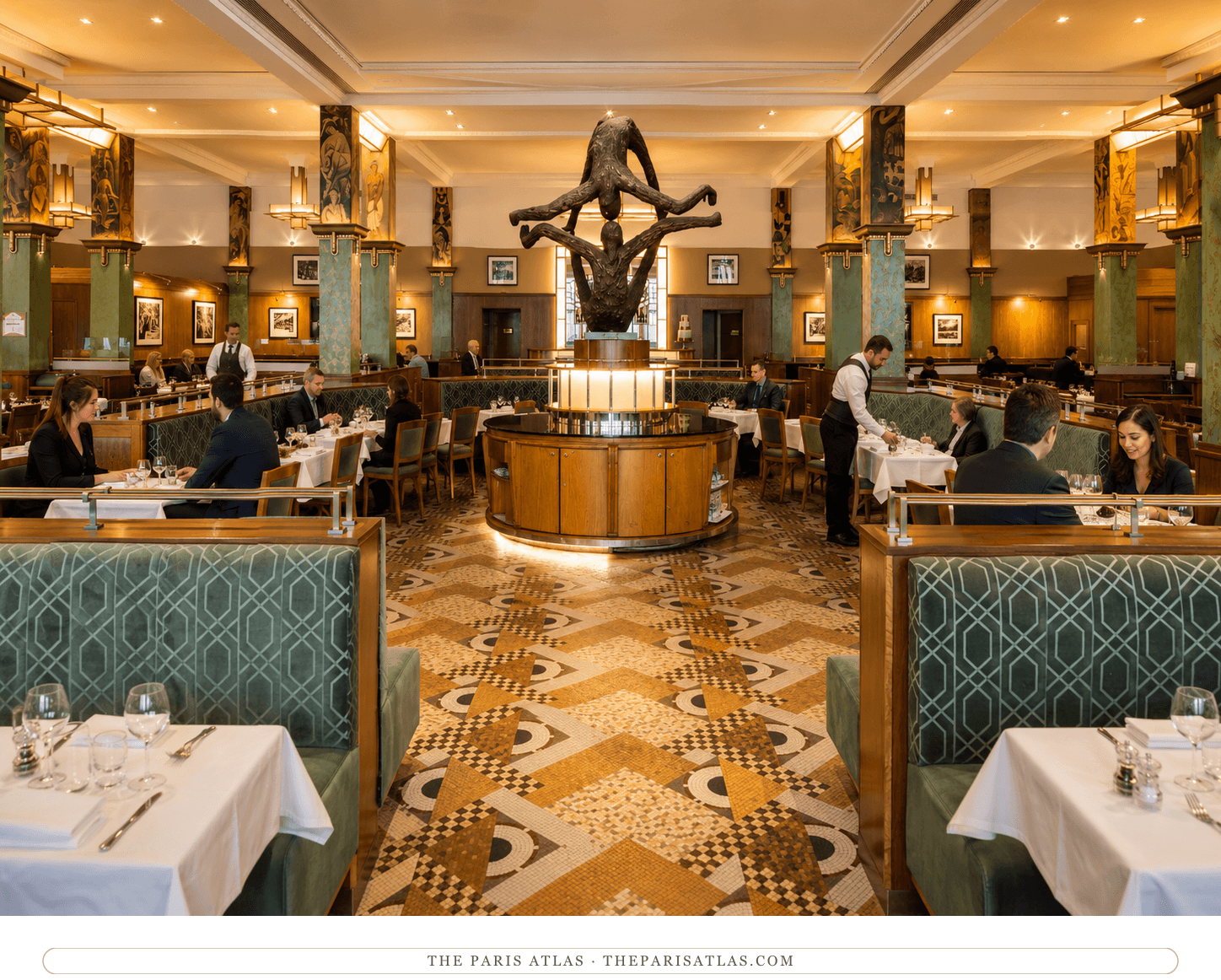
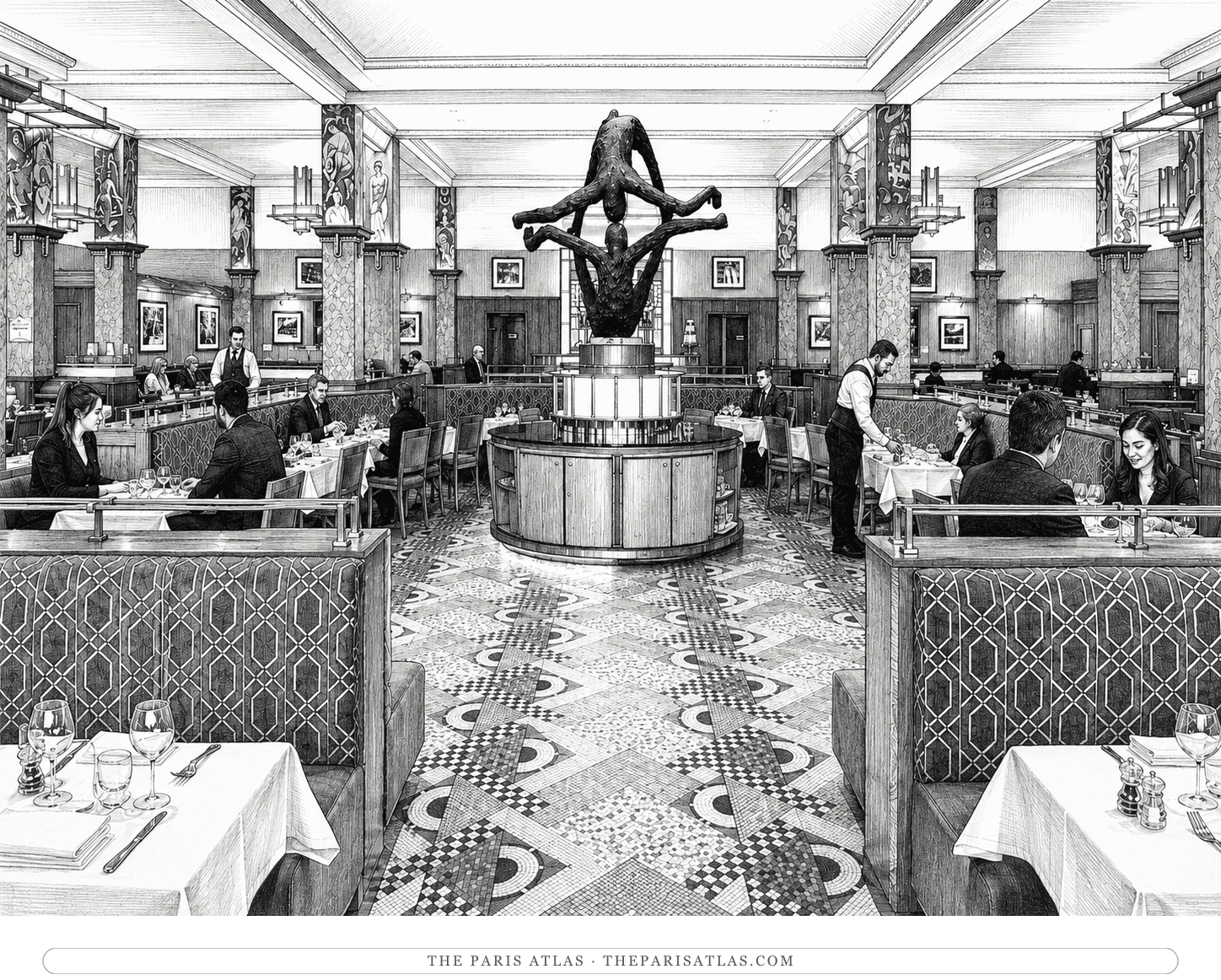
La Coupole

Léger was among the artists of the quarter — 33 by the standard count — who painted the pillars of the new brasserie for its December 1927 opening.

— Sortiraparis — La Coupole, symbol of the Roaring Twenties

Taught

Serge Gainsbourg

Before he was a songwriter, Gainsbourg meant to be a painter: the Encyclopædia Universalis notice records his fine-art studies under André Lhote and Fernand Léger. He gave painting up for music in the early 1950s, and went on describing his songs — and the rooms of his own house — in a painter's terms.

— Serge Gainsbourg (1928-1991)

Supported by · 1922

Rolf de Maré

Léger designed the sets and costumes for two of the company's defining productions, Skating Rink in 1922 and La Création du monde in 1923. De Maré commissioned and paid for both.

— The Metropolitan Museum of Art, Leonard A. Lauder Research Center — Rolf de Maré, Modern Art Index Project

Met

Marcel Duchamp

In 1912 Duchamp visited the Salon de la Locomotion Aérienne with Léger and Brâncuși, where — standing before a propeller — he remarked that painting was finished and asked who could make anything better.

— Calvin Tomkins, Duchamp: A Biography (1996)

Collaborated with · 1924

Dudley Murphy

Murphy co-directed Ballet mécanique with Léger and shot it. Léger supplied the machine-age subject; Murphy, an American cameraman, supplied the technique.

— The Museum of Modern Art — Ballet mécanique (collection record)

Met · 1934

Louise Bourgeois

She trained in Leger's Paris studio in the mid-1930s, one of the five academies of her art education, and credited him with the observation that redirected her career: he looked at her work and told her she was a sculptor, not a painter.

— Louise Bourgeois — The Easton Foundation; Robert Storr, Intimate Geometries: The Art and Life of Louise Bourgeois (2016)

Met · 1912

Marc Chagall

Fellow residents of La Ruche in the 1910s, where Leger was among the painters working in the rotunda's cheap studios alongside Chagall, Soutine and Modigliani.

— Biography of Marc Chagall

Met · 1930

Le Corbusier

The Fondation Le Corbusier's chronology records the two travelling to Spain together in August 1930. Both belonged to the machine-age wing of Paris painting in the 1920s - Leger through his own mechanical figures, Le Corbusier through the Purism he founded with Amedee Ozenfant - and the claim's date marks the documented journey rather than a first encounter, which the sources do not fix.

— Biography, 1929–1938

Collaborated with · 1930

Charlotte Perriand

Perriand and Léger shared an interest in modern public life and collaborated across exhibitions, photomontage, and political projects.

— Charlotte Perriand: Inventing a New World

Met · 1918

Jean Dubuffet

Dubuffet met Léger during his first Paris period after moving from Le Havre in 1918.

— Jean Dubuffet — biography

References

References

The sources below include biographies, scholarly essays, interviews, and primary materials that informed this page. They reflect both the historical record and ongoing critical conversations about Fernand Léger and their work.

  1. 1↑The Museum of Modern Art — Ballet mécanique (collection record)

    Website
    Used for

    Web source consulted for documented facts and historical context presented on the Fernand Léger page.

    View source
  2. 2abFernand Léger — Biography

    Biography
    Musée National Fernand Léger
    Used for

    The national museum's own biography, used for the Biot property, the ceramics and the museum's founding.

    View source
  3. 3↑Fernand Léger

    Website
    Encyclopaedia Britannica
    Used for

    Reference entry on tubism, the machine aesthetic and his shift towards a popular audience.

    View source
  4. 4abFernand Léger (1881–1955)

    Website
    The Metropolitan Museum of Art
    Used for

    Museum essay on his development from Cubism through the machine paintings to the late murals.

    View source
  5. 5↑Cubism — The Metropolitan Museum of Art, essays

    Website
    Used for

    Web source consulted for documented facts and historical context presented on the Fernand Léger page.

    View source
  6. 6↑Fernand Léger — Life and Legacy

    Website
    The Art Story
    Used for

    Art-historical overview used for the war drawings, the Divers series and the late public commissions.

    View source
  7. 7Fernand Léger

    Website
    Wikipedia
    Used for

    Reference article cross-checked for the Normandy childhood, the 1916 gas attack at Verdun, the American years and the late commissions.

    View source
  8. 8Fernand Léger National Museum

    Website
    Wikipedia
    Used for

    Reference article on the Biot museum built by Nadia Léger and Georges Bauquier, opened 1960 and given to the state in 1969.

    View source
  9. 9The Museum of Modern Art — collection records

    Website
    Used for

    Web source consulted for documented facts and historical context presented on the Fernand Léger page.

    View source
  1. 10The Metropolitan Museum of Art, Leonard A. Lauder Research Center — Rolf de Maré, Modern Art Index Project

    Website
    Used for

    Web source consulted for documented facts and historical context presented on the Fernand Léger page.

    View source
  2. 11Duchamp: A Biography

    Biography
    Henry Holt and Company, 1996
    Used for

    Biographical evidence used to verify chronology, relationships, and historical context connected to Fernand Léger.

  3. 12Sortiraparis — La Coupole, symbol of the Roaring Twenties

    Website
    Used for

    Web source consulted for documented facts and historical context presented on the Fernand Léger page.

    View source
  4. 13Louise Bourgeois — The Easton Foundation

    Website
    The Easton Foundation, New York
    Used for

    Web source consulted for documented facts and historical context presented on the Fernand Léger page.

    View source
  5. 14Intimate Geometries: The Art and Life of Louise Bourgeois

    Biography
    The Monacelli Press, 2016
    Used for

    Biographical evidence used to verify chronology, relationships, and historical context connected to Fernand Léger.

  6. 15Biography of Marc Chagall

    Website
    Musée national Marc Chagall, Nice
    Used for

    Web source consulted for documented facts and historical context presented on the Fernand Léger page.

    View source
  7. 16Serge Gainsbourg (1928-1991)

    Website
    Encyclopædia Universalis
    Used for

    Web source consulted for documented facts and historical context presented on the Fernand Léger page.

    View source
  8. 17Biography, 1929–1938

    Website
    Fondation Le Corbusier
    Used for

    Web source consulted for documented facts and historical context presented on the Fernand Léger page.

    View source
i
Why these sources are here

These references anchor the page in the documented record and in the scholarly conversations around Fernand Léger. Every claim on this page traces back to one or more of the works listed here.

Explore more resources