Marc Chagall
Chagall lived and worked at La Ruche from 1912 to 1914, in a wedge-shaped studio in the rotunda, alongside Modigliani, Soutine, Leger and Zadkine. The building is still an artists' residence.
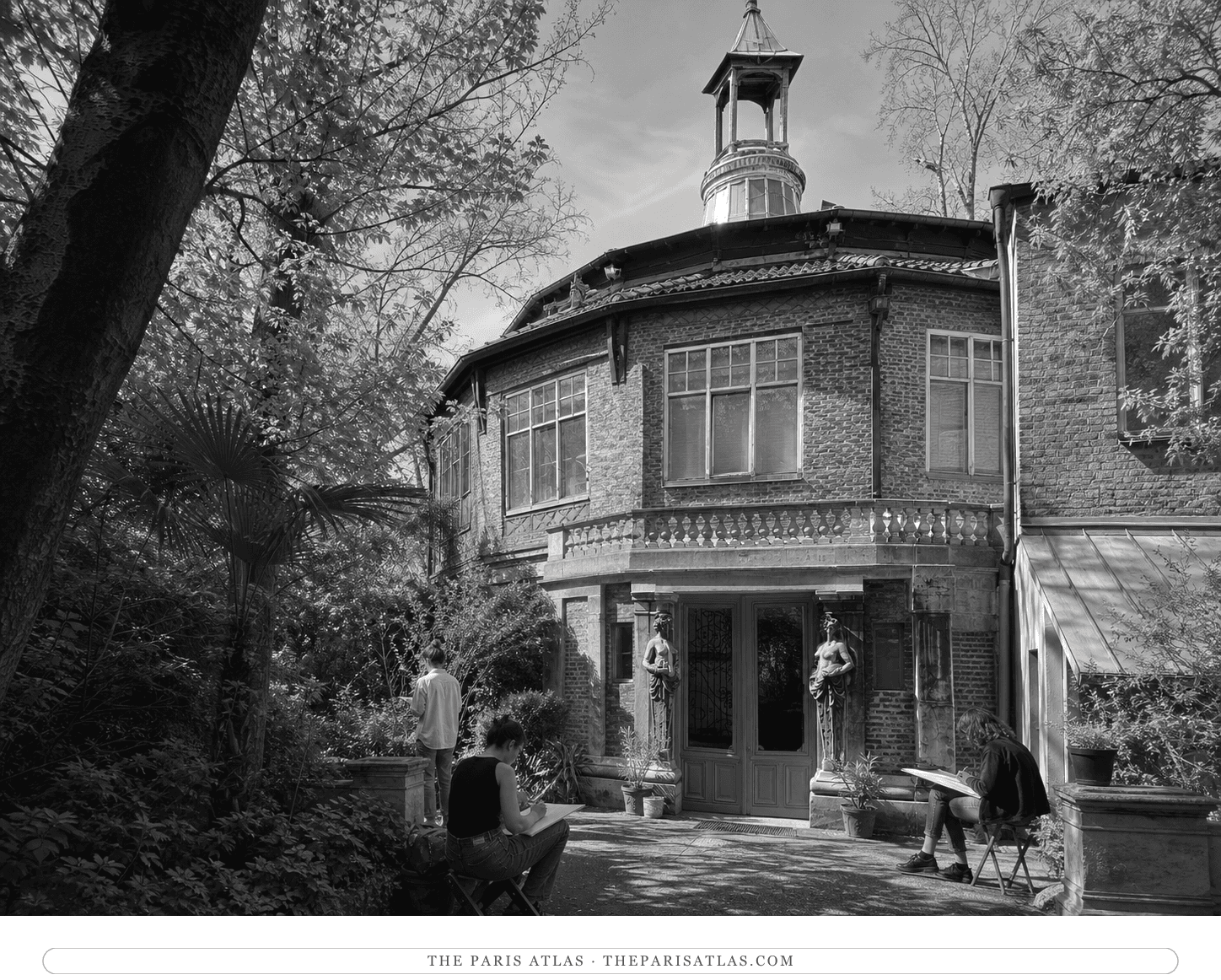
The circular studio building in Vaugirard — a wine rotunda from the 1900 Exposition rebuilt as cheap ateliers — where Marc Chagall lived from 1912 to 1914 alongside Modigliani, Soutine and Léger, and painted the pictures that made him.
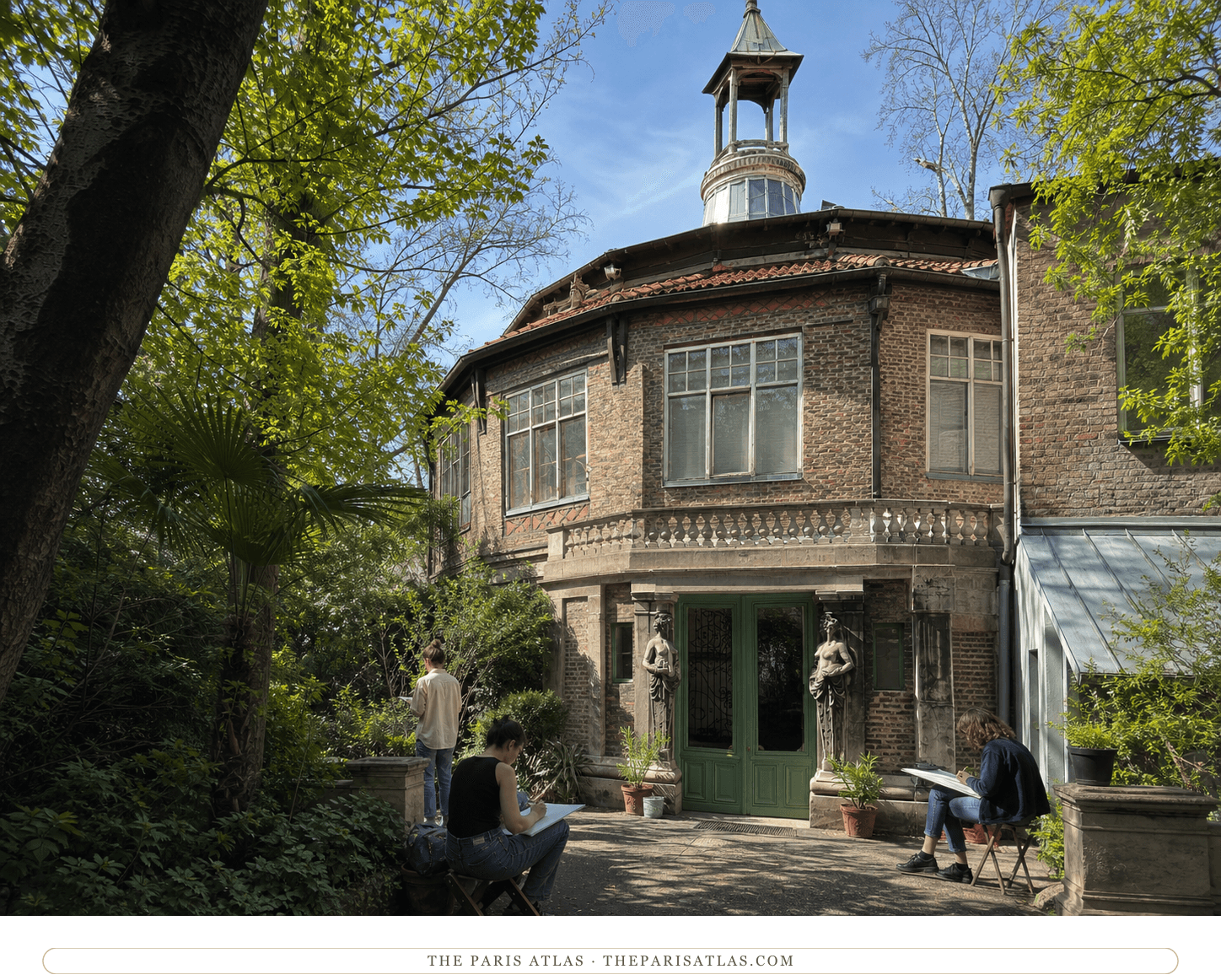
La Ruche is a three-storey rotunda, built from a wine pavilion salvaged from the 1900 Exposition Universelle and re-erected in Vaugirard by the sculptor Alfred Boucher as cheap studios for artists with no money. The wedge-shaped rooms radiating from a central stair gave it its name: the beehive.[1]
Reusing an exposition structure kept construction costs low and produced an unusual plan. Each narrow studio received a slice of the circular exterior and shared the compressed circulation around the centre. The geometry encouraged proximity even when language, nationality and style separated residents. Encounters on the stairs and in neighbouring workrooms were built into the place.[1]
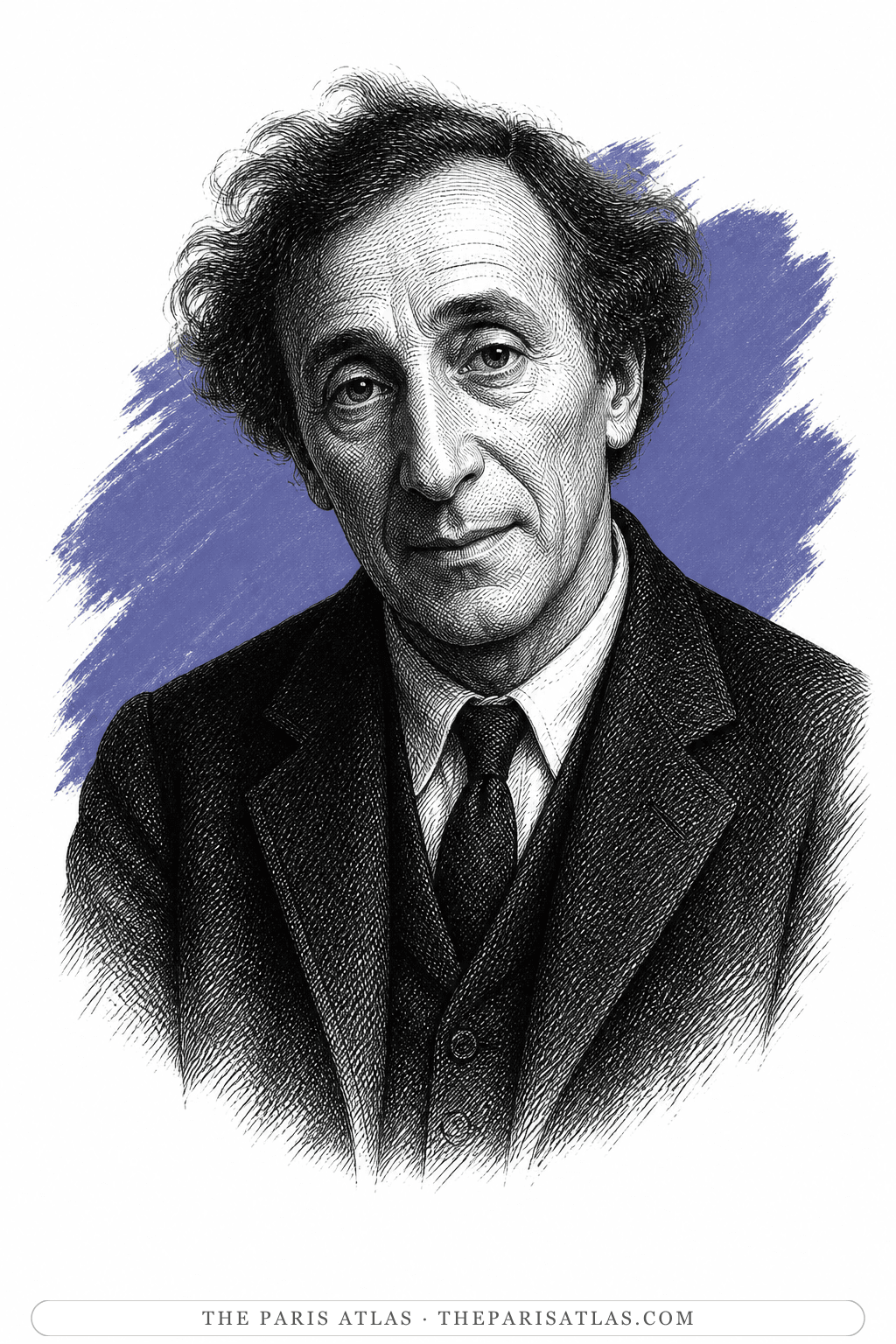
Marc Chagall arrived in Paris from the Russian Empire in 1911, aged twenty-four and nearly destitute, and moved into La Ruche the following year. He stayed until 1914. His neighbours over those years included Amedeo Modigliani, Chaïm Soutine, Fernand Léger and Ossip Zadkine — an extraordinary concentration of people who were, at the time, uniformly broke.[2]
The network extended beyond residents. Chagall met the Delaunays and writers including Blaise Cendrars, Guillaume Apollinaire, Max Jacob and André Salmon. Paris exposed him to Fauvist colour and Cubist structure, but he did not simply join either movement. He used their discoveries to reorganise memories of Vitebsk, making pictures in which village houses, animals and human figures no longer obeyed ordinary scale or gravity.[3]
The conditions were genuinely bad: unheated, insanitary, and so short of materials that painters worked on bedsheets and tablecloths. What came out of it was the work Chagall is known for — the floating figures, the Vitebsk villages remembered from a distance, the colour he always said Paris had given him after the darkness he arrived with.[4]
Distance was productive. In Vitebsk, the imagery had been the texture of daily life; in Paris it could be selected, rearranged and set against the formal experiments of the avant-garde. La Ruche was where exile first became a method in Chagall's work, long before war and persecution made exile a repeated fact of his life.
He exhibited at the Salon des Indépendants in 1912 and 1913, and the first major paintings of the Paris period began to establish a reputation beyond the studio colony. A 1914 exhibition in Berlin then placed the work before a German audience. Chagall returned to Russia that year intending only a short visit and was prevented by war from coming back for eight years.[2]
The building survived demolition proposals in the 1960s and is still an artists' residence, which means it is not open to the public. It is one of the very few Paris addresses doing in the present exactly what it did in 1912.[5]
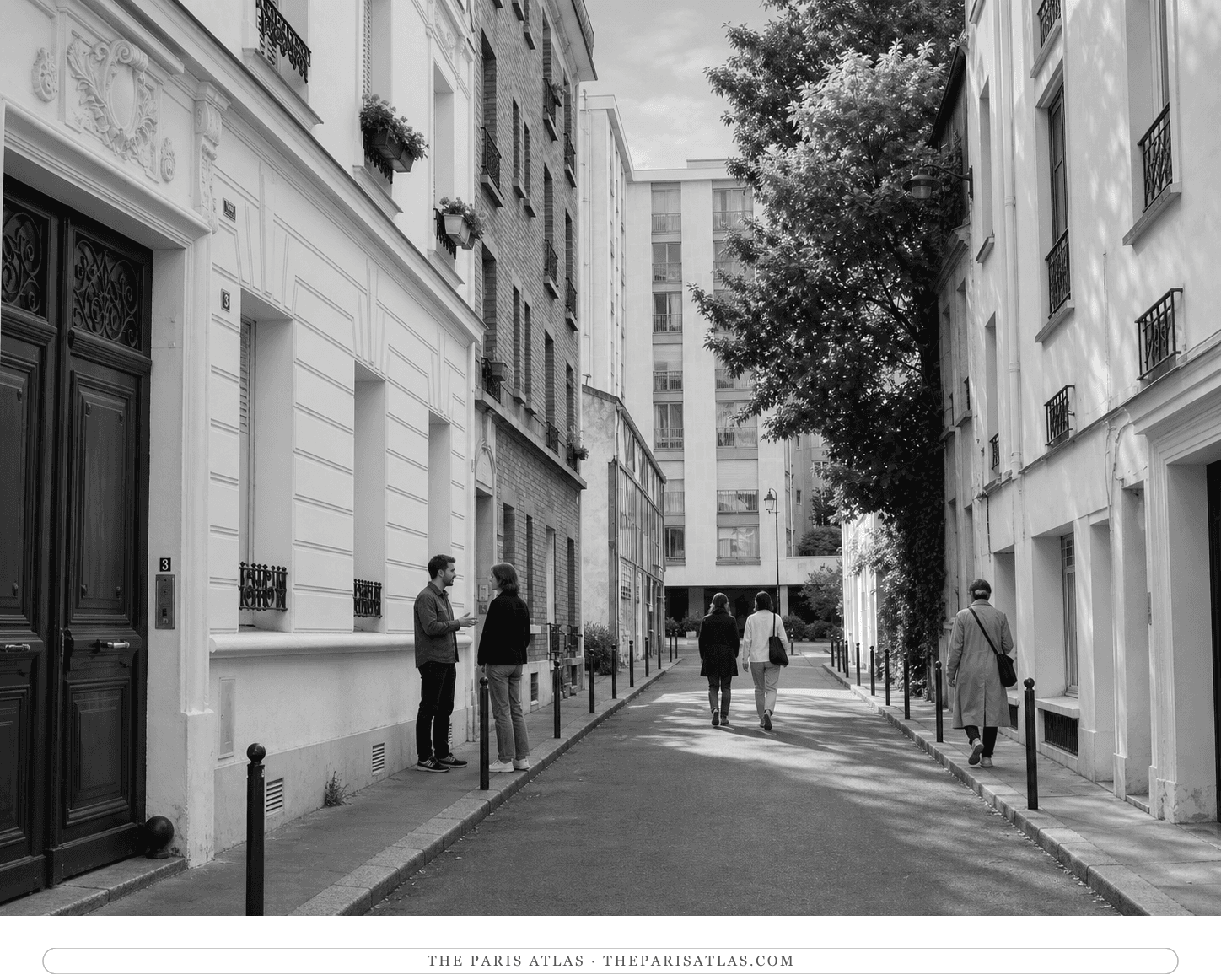
That continuity changes the ethics of visiting. The rotunda is historically important because artists could work there cheaply and privately; turning the studios into unrestricted tourist space would destroy the use being celebrated. The passage and garden offer limited exterior views, while the working rooms remain closed.
Alfred Boucher's project was philanthropic but practical. By providing inexpensive space, he intervened at the point where an artist's career could end before exhibitions or sales: the monthly cost of a room large enough to work. La Ruche did not remove poverty, discrimination or uncertainty, yet it lowered one barrier and placed newcomers beside others confronting similar conditions.[5]
The concentration of immigrant artists has encouraged later accounts to describe a harmonious international colony. Shared hardship did create contact, but residents brought different languages, religions, politics and ambitions, and not every neighbour formed a close circle. The architecture enabled encounter without guaranteeing agreement. That distinction keeps the social history credible rather than sentimental.
Chagall's Paris paintings demonstrate exchange without assimilation. Cubist fragmentation helped him reorganise space, Fauvist colour expanded his palette, and friendships with poets changed the language around his work. Yet Vitebsk figures and Jewish cultural memory remained active subjects. La Ruche was not where a provincial painter became generically French; it was where different visual systems met inside one practice.[6]
The building's rescue from demolition shows that survival was an achievement, not an accident. Preservation protected an architectural fragment of the 1900 exposition and a long record of artistic labour. Continued residency keeps that history open-ended. The present status can therefore be stated plainly: La Ruche is a surviving building used as private artists' studios, not a public museum, and access is restricted.[5]
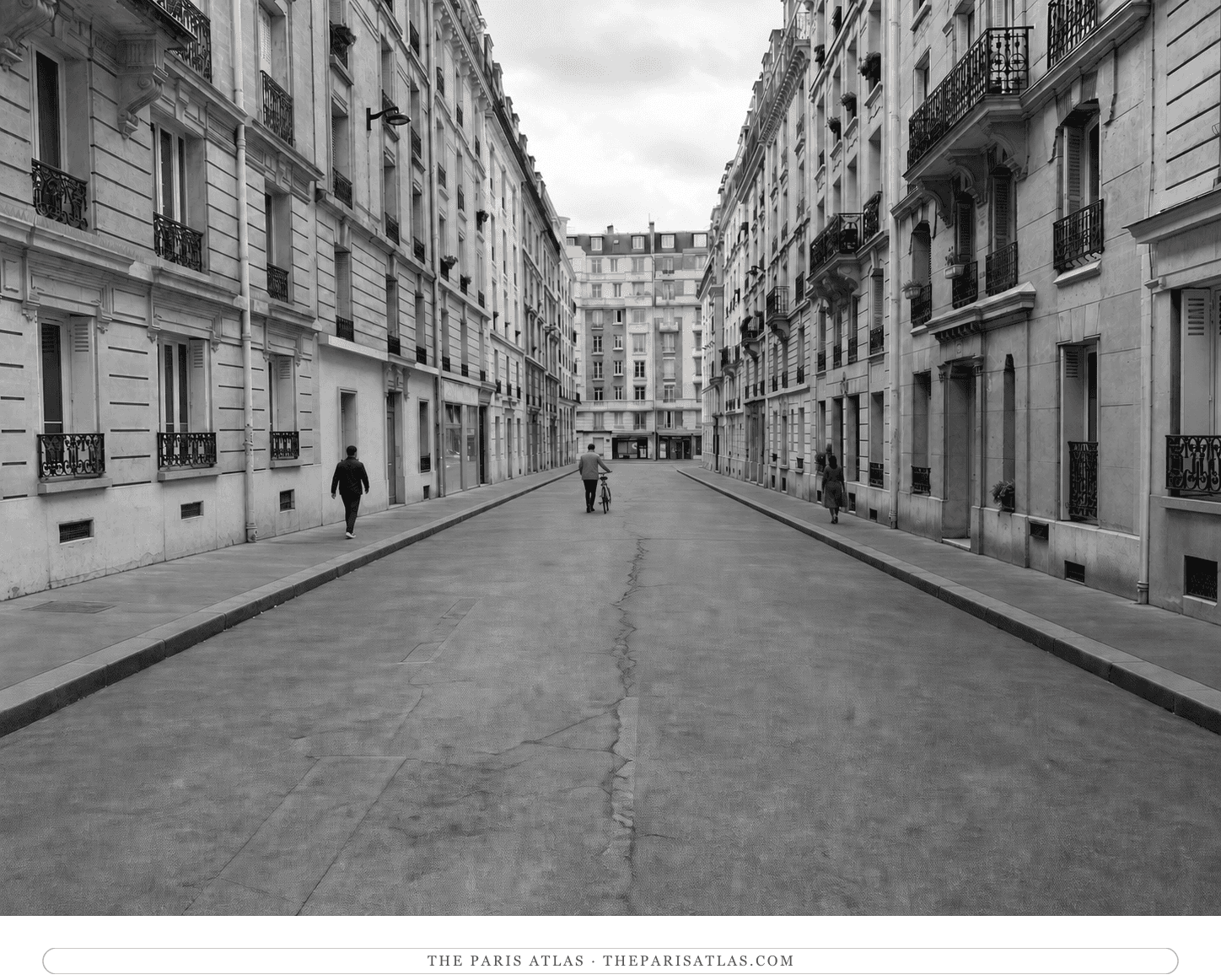
The rotunda's fame should not hide the wider neighbourhood that made it usable. Cheap restaurants, academies, colour merchants and other studios spread through Vaugirard and Montparnasse, allowing residents to find models, supplies and conversation beyond the gate. Chagall's transformation in Paris occurred through that larger network as well as within his wedge-shaped room. La Ruche is the most vivid surviving object in the story, but it was one node in a working ecosystem. Reading it that way avoids attributing artistic change to picturesque architecture alone and keeps attention on the repeated movements through the city that connected impoverished rooms to exhibitions and friendships.
Alfred Boucher opens La Ruche as cheap studios, using a salvaged Exposition pavilion.
Chagall arrives in Paris from the Russian Empire.
He lives and works at La Ruche among Modigliani, Soutine and Léger.
He leaves for Vitebsk and is trapped there by the war for eight years.
No. It is still a working artists' residence and the studios are private. The rotunda and its garden can be seen from the passage de Dantzig.
The building is circular, with wedge-shaped studios radiating off a central staircase — the plan looks like a honeycomb.
Among many others, Amedeo Modigliani, Chaïm Soutine, Fernand Léger and Ossip Zadkine, mostly in the same years Chagall was there.
Chagall lived and worked at La Ruche from 1912 to 1914, in a wedge-shaped studio in the rotunda, alongside Modigliani, Soutine, Leger and Zadkine. The building is still an artists' residence.
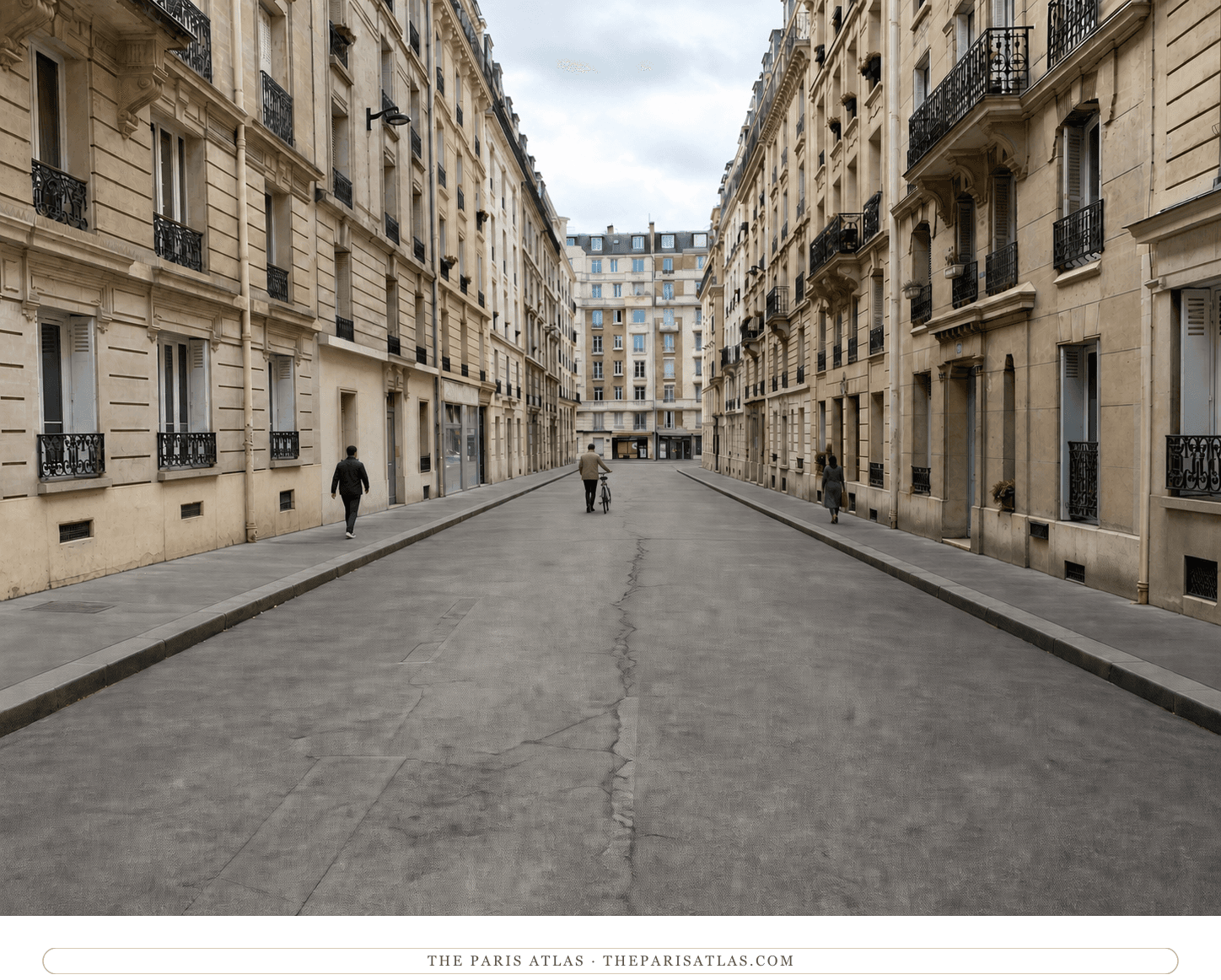
The Vaugirard house Gauguin moved his family into in the late 1870s — the first of his homes with a studio in it, and the subject of the 1881 painting named after the street.
Visit the place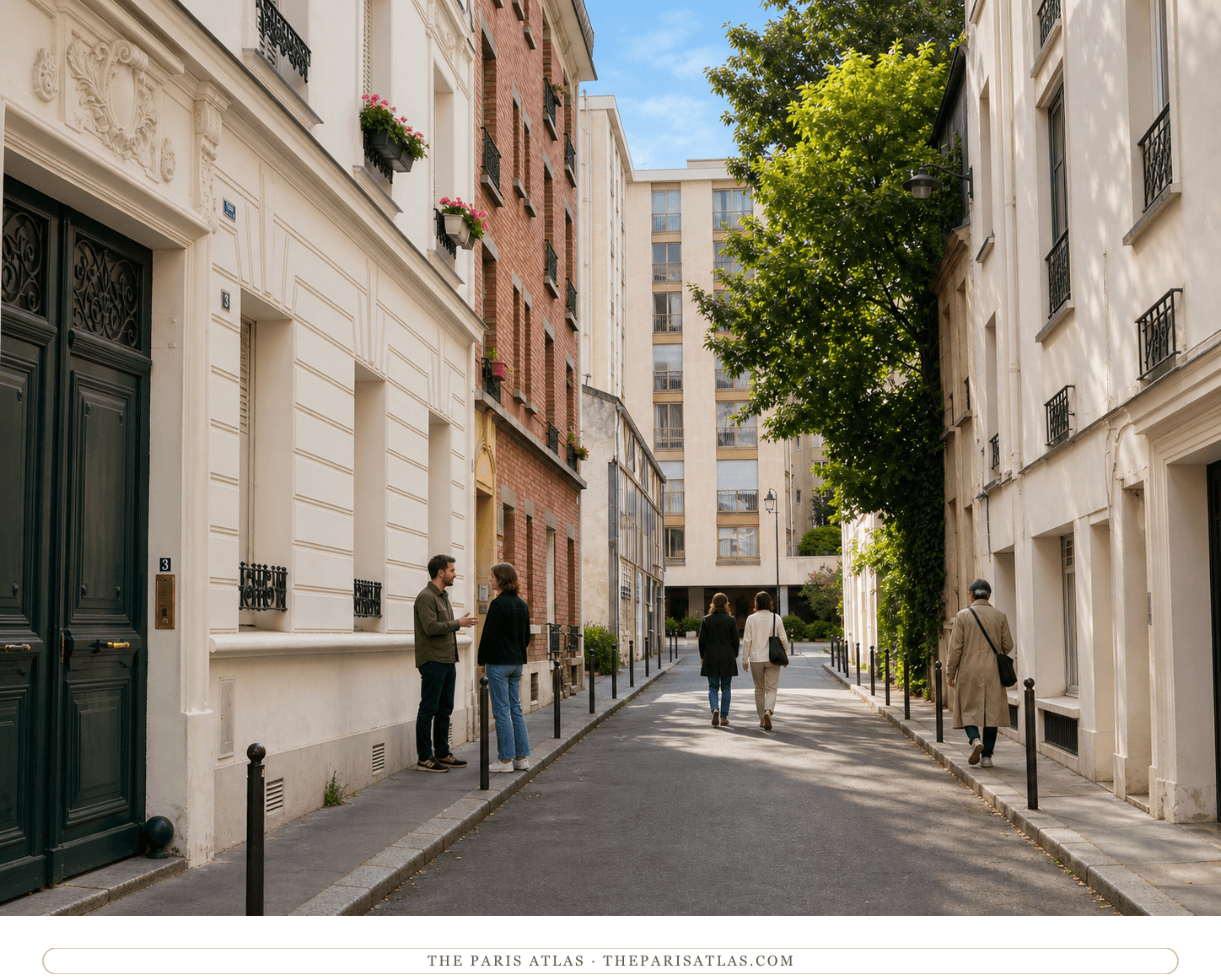
A narrow lane of nineteenth-century artists' studios in Vaugirard, worked in by Paul Gauguin and later by Amedeo Modigliani and Chaïm Soutine — cheap, cold and almost unchanged.
Visit the placeThe sources below include histories, archival materials, scholarly research, and official records that informed this page. They document La Ruche, 2 passage de Dantzig, the people connected to it, and its place in Paris.

Web source consulted for documented facts and historical context presented on the La Ruche, 2 passage de Dantzig page.

Contemporary reporting or criticism used to document the historical reception and context of La Ruche, 2 passage de Dantzig.
Web source consulted for documented facts and historical context presented on the La Ruche, 2 passage de Dantzig page.
These references provide the documented foundation for this page's history and context. Claim-level citations remain attached to the specific claims they support.
 Explore more resources
Newsletter
The cafés, studios, and walk-up flats where the work was made — one story from the map in every letter.