The Paris AtlasCharting the artists, works, and places worth returning to.
  • Architect
  • Painter
  • Author
· Swiss-French · 1887–1965

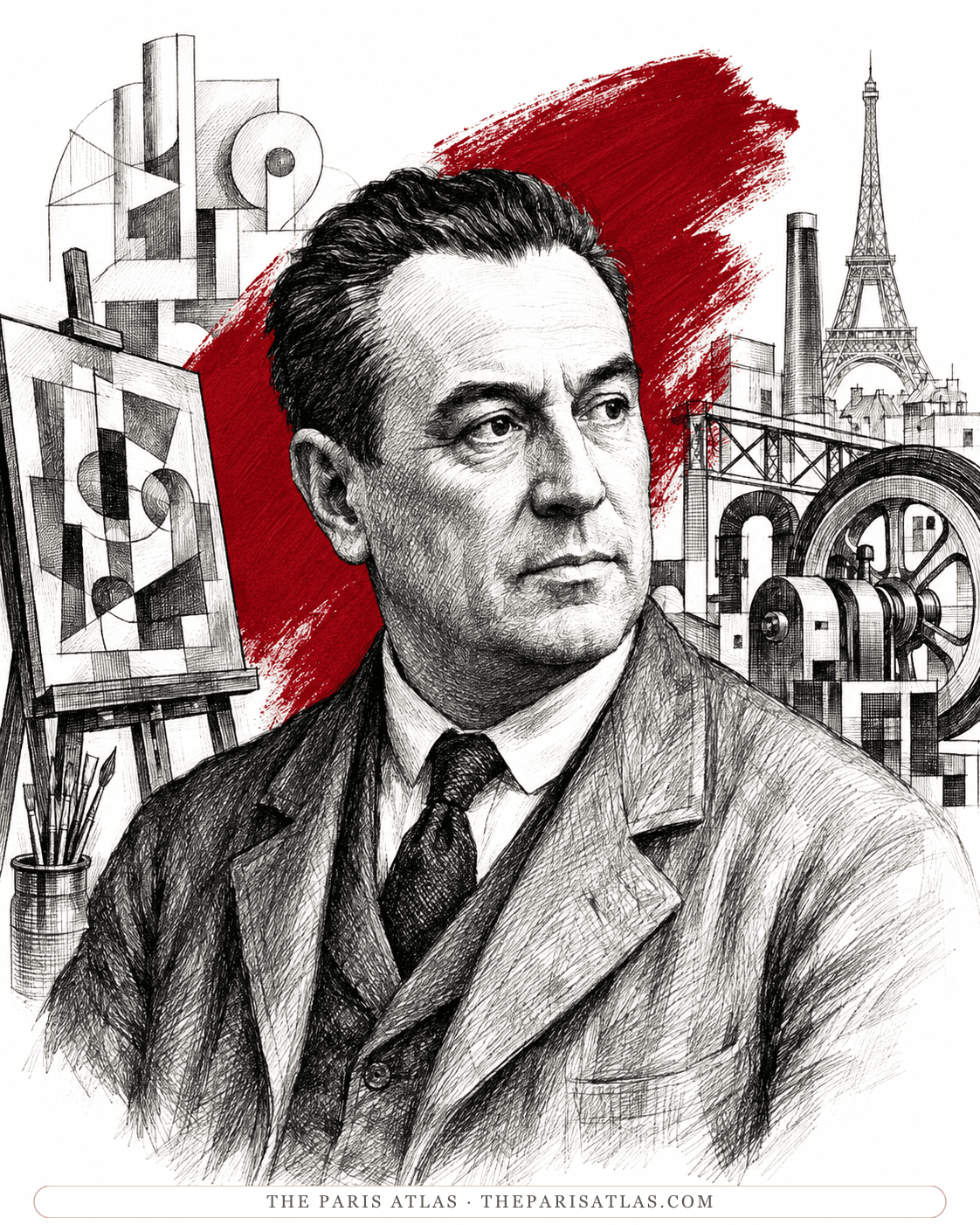
Le Corbusier

Swiss-born architect who arrived in Paris in 1917 as the painter Charles-Édouard Jeanneret, took the name Le Corbusier in 1920, and ran one atelier — his studio — at 35 rue de Sèvres for four decades. In 1925 he proposed demolishing much of the Right Bank of central Paris and replacing it with sixty-storey towers. Paris refused; the rest of the world adopted the idea after 1945.

Details

Lived
1887–1965
Born
6 October 1887
Birthplace
La Chaux-de-Fonds, Switzerland
Birth name
Charles-Édouard Jeanneret
Died
27 August 1965 · aged 77
Place of death
Roquebrune-Cap-Martin, France
Nationality
Swiss-French
Profession
Architect, painter and writer
Major works
Vers une architecture (1923); Maison La Roche, Paris; Villa Savoye, Poissy; the Cité de Refuge, Paris; the Unité d'habitation, Marseille; Chandigarh
Married
Yvonne Gallis · 1930–1957
Roles
ArchitectPainterAuthor
Also known as
Charles-Édouard Jeanneret

About Le Corbusier

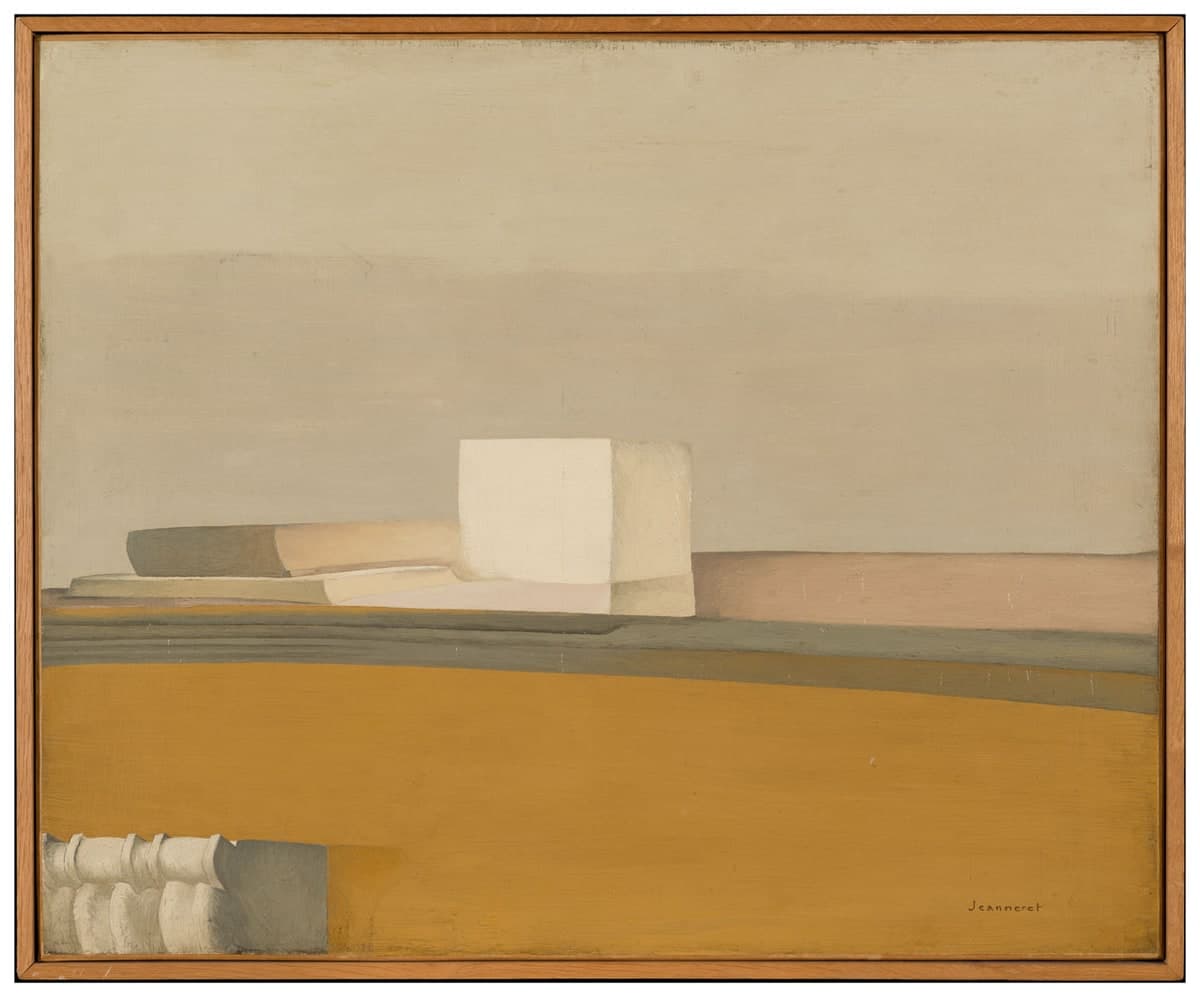
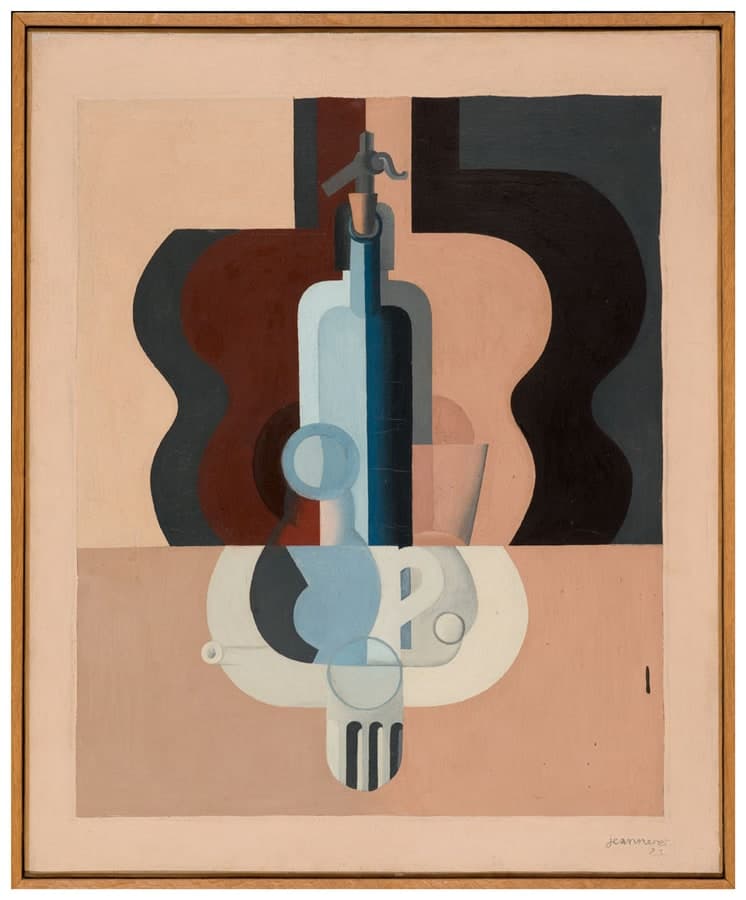
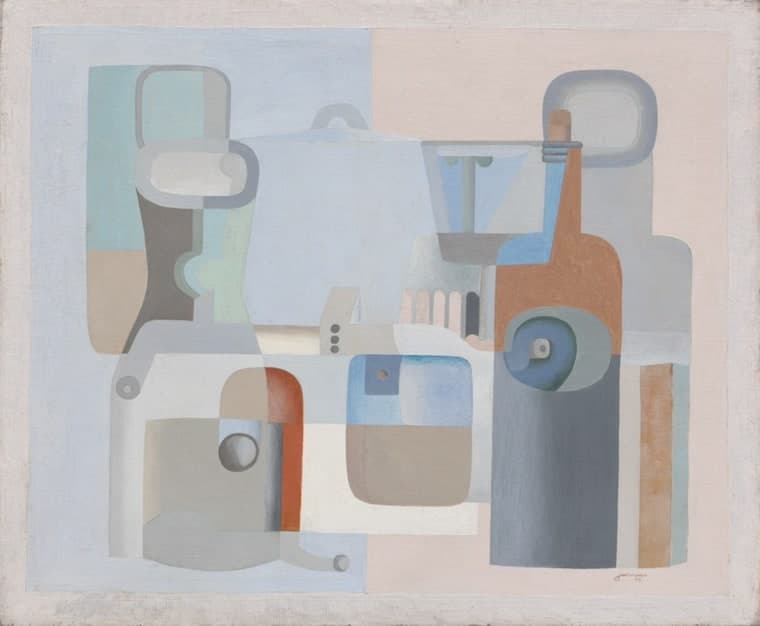
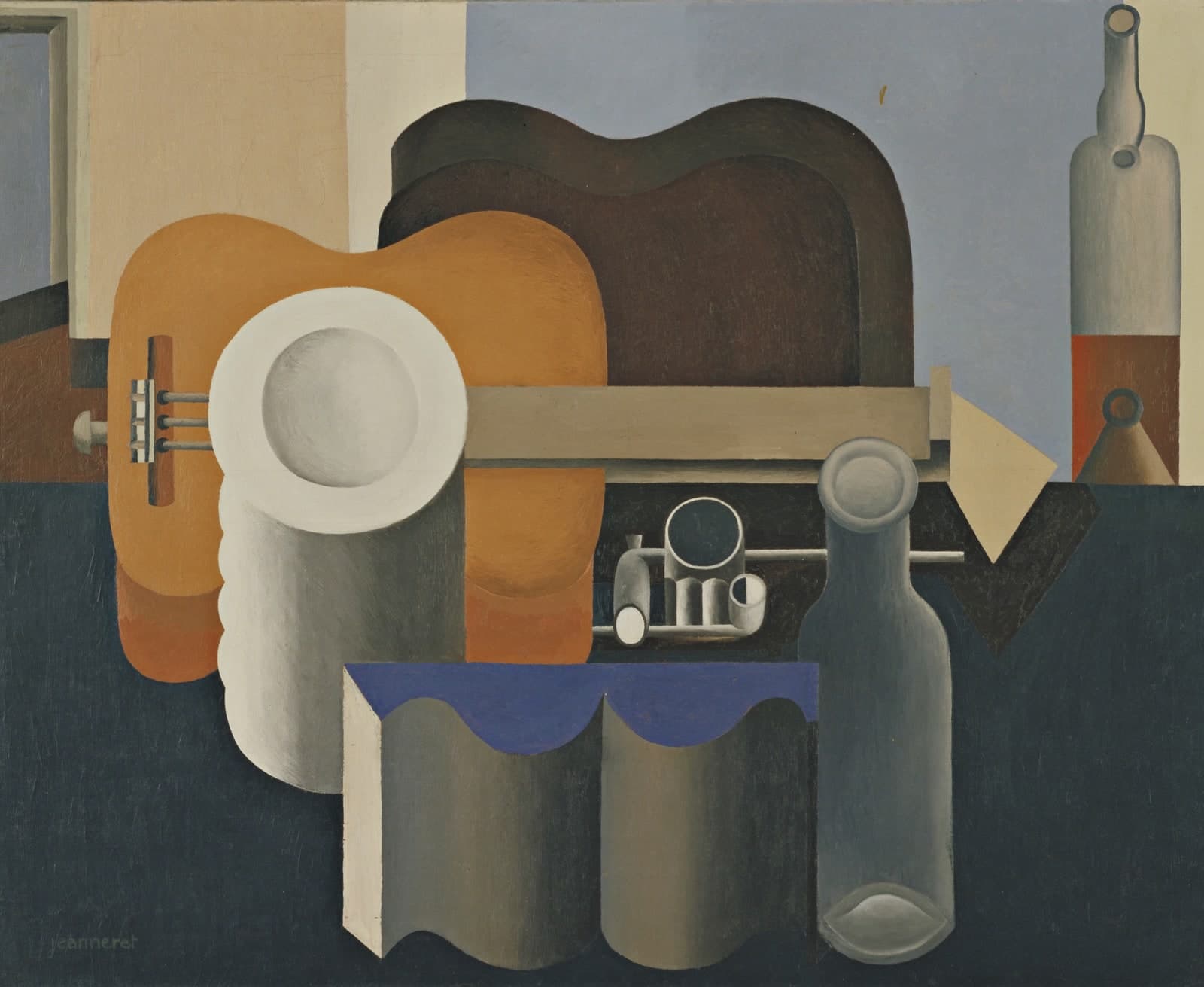
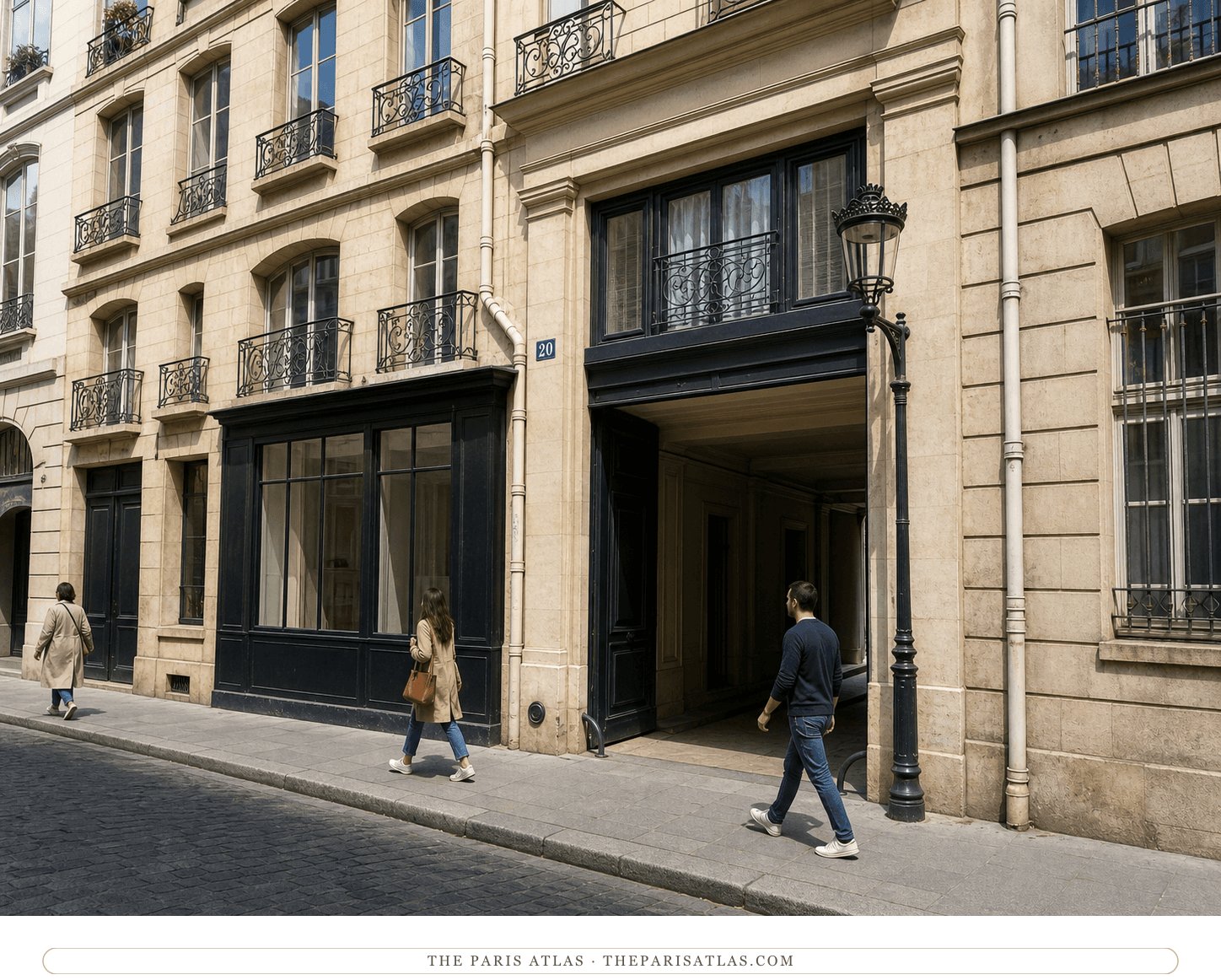
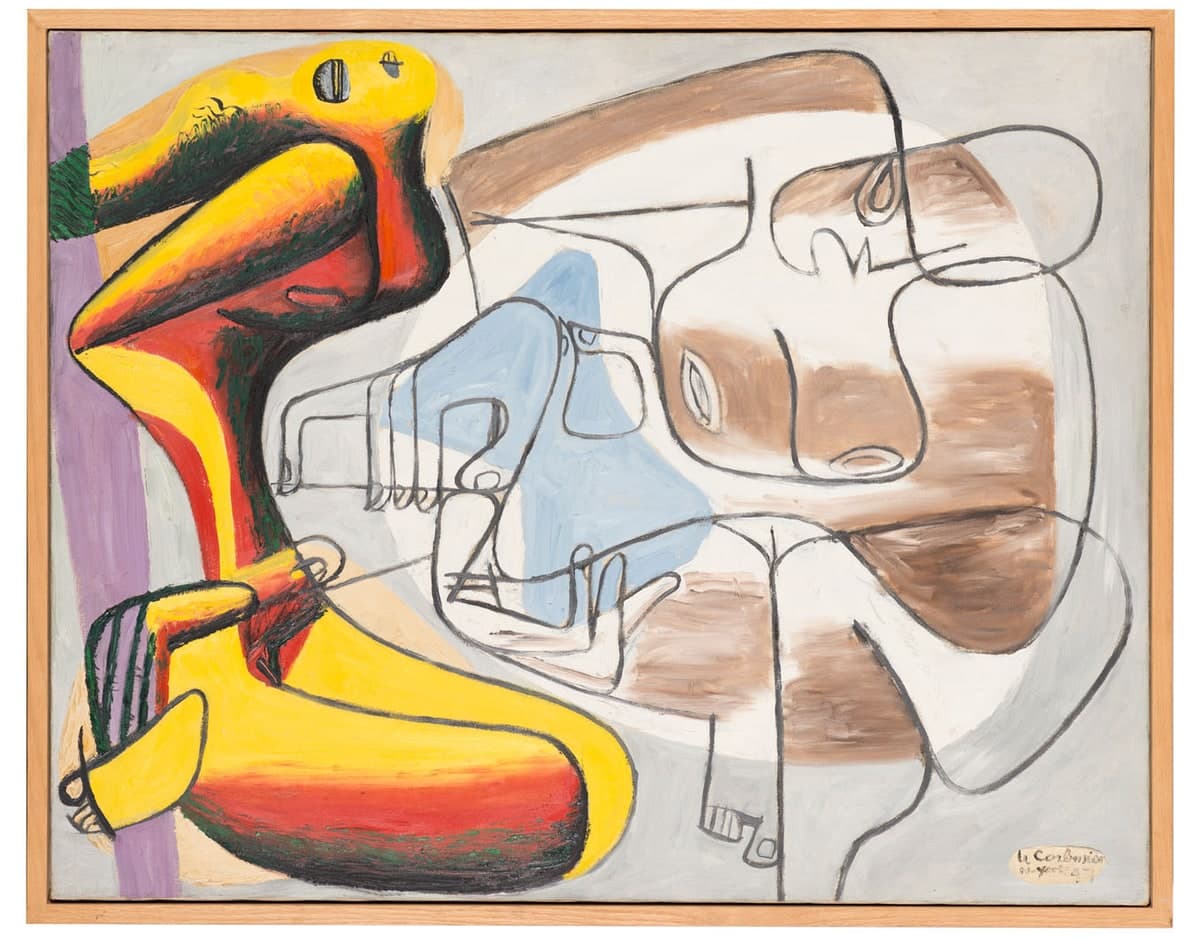
Charles-Édouard Jeanneret moved to Paris in February 1917, aged 29, and took a room at 20 rue Jacob in the 6th arrondissement. He was a Swiss watchmaking town's art-school student who had decided to be an architect, and for the first years in Paris he was mainly a painter: with the painter Amédée Ozenfant he published Après le cubisme — 'After Cubism' — in 1918, arguing that Cubism, the fractured picture-making of Picasso and Braque, had softened into decoration and that painting should recover the clarity of a machine. They called the alternative Purism. In 1920 the two of them founded a magazine, L'Esprit Nouveau — 'The New Spirit' — and Jeanneret began signing his architecture articles Le Corbusier. The pen name became the person.

From September 1924 he worked from a former convent at 35 rue de Sèvres, and he never moved the office again. Out of it came the houses that made modern architecture legible to the public — Maison La Roche in the 16th arrondissement, the Villa Savoye at Poissy — and the proposal that made him notorious in his adopted city. The Plan Voisin of 1925 would have cleared much of the Right Bank of central Paris and rebuilt it as sixty-storey towers standing in open parkland. Nothing was built. Everything else was: a Salvation Army hostel in the 13th arrondissement, an apartment block in Boulogne where he lived, and after 1945 Marseille, Ronchamp and the new capital city of Chandigarh in India.

From a Swiss watchmaking town to Paris

He was born on 6 October 1887 at La Chaux-de-Fonds, a watchmaking town in the Swiss Jura, to Georges-Édouard Jeanneret, an enameller of watch dials, and Marie-Charlotte Amélie Perret, a pianist and music teacher. He entered the town's École d'art in April 1900 and studied drawing and engraving under Charles L'Eplattenier. His first building, the Villa Fallet at La Chaux-de-Fonds, went up in 1905, when he was eighteen, with L'Eplattenier's guidance and the help of a local architect, René Chapallaz.

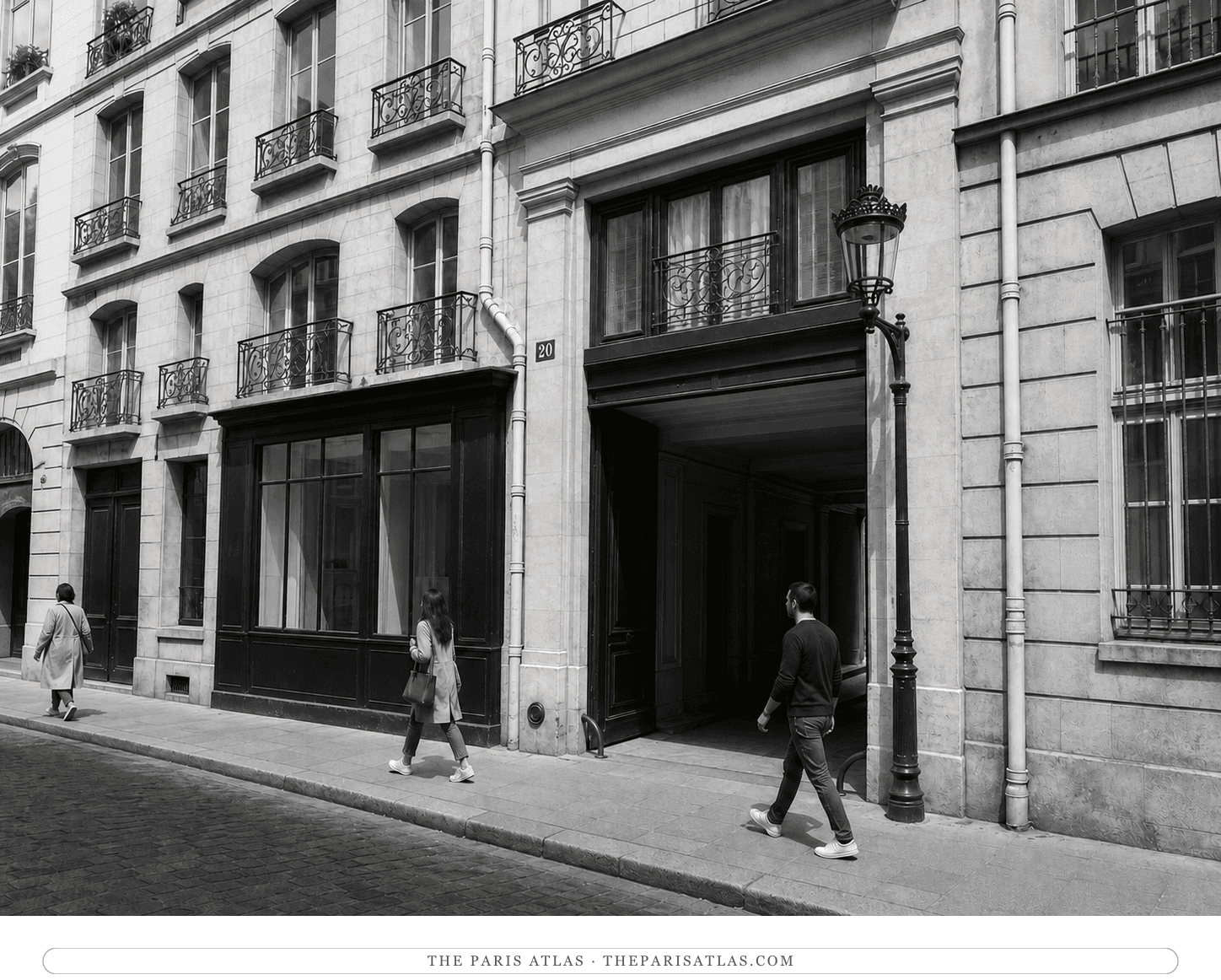
In February 1917 he settled in Paris for good, at 20 rue Jacob in Saint-Germain-des-Prés. It is an address with another life: the garden pavilion behind the same street entrance was where the American writer Natalie Clifford Barney held the literary salon — the regular gathering of writers at her home — that she ran from 1909 for more than half a century. Nothing records the two of them meeting.

The Paris years began in paint. He met the painter Amédée Ozenfant, and in 1918 the two published Après le cubisme — 'After Cubism' — the founding text of Purism, which held that painting should give up decorative fragmentation and use clear, impersonal forms of the kind a machine produces. Jeanneret painted his first Purist canvas, La Cheminée — 'The Fireplace' — the same year and showed at the Galerie Druet in December 1918. In 1920, with Ozenfant and the poet Paul Dermée, he launched the magazine L'Esprit Nouveau, and it was there that he began signing his architectural articles Le Corbusier. In 1922 his cousin Pierre Jeanneret joined him, and the practice that produced everything afterwards was two men working as one office.

The first Paris buildings were for the people around him. The house and studio he built between 1922 and 1924 for Ozenfant near the Parc Montsouris in the 14th arrondissement used a reinforced concrete frame so the walls could carry glass instead of load — ribbon windows, an external spiral stair, and a painter's studio lit from above through industrial roof-lights. Its façades and roofs were listed as a historic monument in 1975.

35 rue de Sèvres, and the houses that argued

On 18 September 1924 Le Corbusier opened an atelier — his studio — at 35 rue de Sèvres in the 6th arrondissement, in a former convent, and worked there until he died forty-one years later. The year before, he had published Vers une architecture — usually translated as Towards a New Architecture — the book that carried his arguments out of the little magazine and into general circulation.

Between 1923 and 1925 he and Pierre Jeanneret built a pair of joined houses in a cul-de-sac in the 16th arrondissement for Raoul La Roche, a Swiss banker in Paris who collected Cubist and Purist paintings. La Roche wanted somewhere to live and somewhere to hang pictures, so the house is two things bolted together: private flat on one side, a gallery for the pictures on the other. It is the clearest early demonstration of what he called the five points of a new architecture — the building lifted on columns, the free plan, the free façade, the long horizontal window, the roof garden. Maison La Roche was listed as a historic monument in 1996, entered the UNESCO World Heritage list in 2016 with sixteen other Le Corbusier buildings, and is open to visitors as the home of the Fondation Le Corbusier at 10 square du Docteur Blanche.

The Savoye family commissioned a country house at Poissy, west of Paris, in 1928; it was finished by 1931 and they nicknamed it Les Heures claires, 'the sunny hours'. A white box on thin columns above a meadow, it is the textbook demonstration of the five points. Its later history was worse than its design: requisitioned by the Germans in the war as an observation post, damaged again by American troops, turned into farm storage by the Savoyes by 1947, and scheduled for demolition in 1958 so that Poissy could build a school. Architects formed a committee, the culture minister André Malraux intervened in 1959, the state bought it, and it was listed as a historic monument in 1965 while Le Corbusier was still alive.

The Plan Voisin: the demolition of central Paris

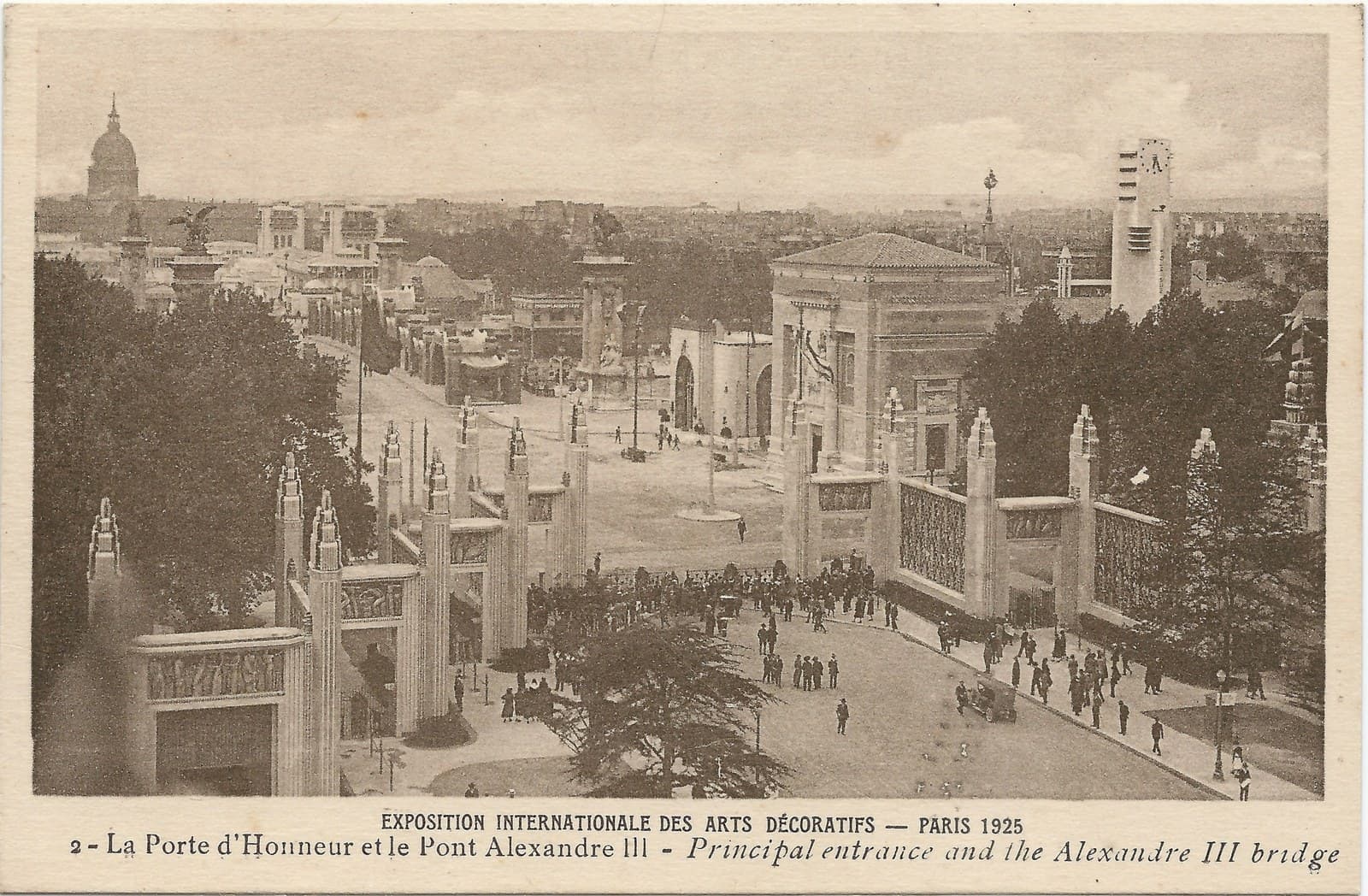
In 1925 Le Corbusier put a model on display in the Pavillon de l'Esprit Nouveau, his contribution to the Exposition internationale des arts décoratifs, the decorative-arts fair Paris held that year. It showed the Right Bank of central Paris cleared of its streets and rebuilt as widely spaced towers standing in parkland. He named it the Plan Voisin after the Voisin company, the aircraft and car manufacturer that paid for the study. His argument was financial as much as aesthetic: the centre of Paris was, he wrote, a diamond mine, and the way to realise its value was to build sixty storeys where six then stood. 'Urbanising is not spending money,' he wrote, 'but making money.'

Urbanising is not spending money, but making money.

Urbaniser n'est pas dépenser de l'argent, mais gagner de l'argent.

Le Corbusier on the Plan Voisin, 1925

It was never close to being built and the press attacked it, which he enjoyed. The idea did not stay in Paris: the tower-in-parkland model became the template for public housing across France and much of the world after 1945, and the argument about whether that inheritance is his fault has never stopped.

Building in Paris: the Cité de Refuge and the flat above the roofs

The largest thing he built in Paris was a hostel. Commissioned in 1929 by the Salvation Army and paid for by the patron Winnaretta Singer, Princesse de Polignac, the Cité de Refuge on rue Cantagrel in the 13th arrondissement opened in 1933 with around 500 beds, a canteen, workshops for retraining people out of work, and a nursery, which was rare then. Le Corbusier sealed the south front behind a single sheet of glass and planned to condition the air mechanically, a system he called exact respiration. It did not work: the glass wall cooked the building, and by 1935 openings had to be cut into it. The façade was destroyed by wartime bombing and rebuilt between 1948 and 1952. The exterior was listed as a historic monument in 1974, and the building was renovated again between 2009 and 2015.

He became a French citizen by decree on 19 September 1930 and married Yvonne Gallis on 18 December that year. In 1934 the two of them moved into the top two floors of an apartment block he had just built at 24 rue Nungesser-et-Coli, on the western edge of Paris at Boulogne. The flat included a painter's studio, and he kept the architecture at rue de Sèvres.

The Paris practice was one node of a travelling career. He crossed to South America in 1929 on the liner Giulio Cesare, and met Josephine Baker, the American dancer who had become the most famous performer in France, on the voyage. He travelled to Spain with the painter Fernand Léger in August 1930. He organised the first Congrès internationaux d'architecture moderne — CIAM, the standing conference through which modern architects agreed a common programme — at the Château de la Sarraz in Switzerland in June 1928, and hired the designer Charlotte Perriand in October 1927 to draw up his furniture programme.

The war years, and what is argued about them

After the defeat of France in 1940 the country was governed from the spa town of Vichy by a regime under Marshal Philippe Pétain that collaborated with Nazi Germany. Le Corbusier moved to Vichy in January 1941 and spent eighteen months there trying to get control of the reconstruction he expected to follow. By the Fondation Le Corbusier's own account he obtained no real authority — a temporary post at the commission on unemployment, a seat on a planning commission from May 1941 — and he left on 1 July 1942 with a written farewell the foundation records in his own words — 'Adieu, cher merdeux Vichy! Je secoue la poussière de mes croquenots jusqu'au dernier grain', which is to say: goodbye, dear shitty Vichy, I am shaking your dust off my boots to the last grain.

That period is the substance of a long argument about his politics. Two books published in France in 2015 — the journalist Xavier de Jarcy's Le Corbusier, un fascisme français ('Le Corbusier, a French Fascism') and the architect François Chaslin's Un Corbusier — set out his links to fascist groups in the 1920s and 1930s and his pursuit of a role under Vichy, and appeared while the Centre Pompidou, Paris's modern-art centre, was showing a Le Corbusier retrospective that did not address them. The museum answered that the exhibition had never been intended to cover his whole life, and the British newspaper the Guardian reported the exchange at the time as a public argument over concealment. His atelier at 35 rue de Sèvres reopened after the Liberation of Paris in 1944.

Marseille, Chandigarh, and the last swim

The postwar work was the largest of his life. Construction began in 1947 on the Unité d'habitation — 'housing unit' — in Marseille, the built answer to the tower-in-parkland idea, finished in 1952. He worked on the United Nations headquarters project in New York in 1947, without the commission ever becoming his. In 1950 he was appointed general consultant for Chandigarh, the new capital of the Indian Punjab, and made his first visit to Ronchamp in eastern France to work on the rebuilding of the chapel of Notre-Dame-du-Haut. He published the Modulor in 1950, a system of proportions derived from the human body that he used to size everything he built.

On 27 August 1965 he went for his daily swim in the Mediterranean at Roquebrune-Cap-Martin, on the French Riviera, and died of a heart attack in the water. He was 77. The funeral procession on 31 August travelled from Menton by way of Firminy to the convent of La Tourette near Lyon — a building of his own design — where Dominican friars received the body. On 1 September the French state held a ceremony in the Cour carrée, the great square courtyard of the Louvre, where André Malraux, the minister of culture who had saved the Villa Savoye six years earlier, gave the oration. Seventeen of his buildings across seven countries were inscribed on the UNESCO World Heritage list in 2016, and the Fondation Le Corbusier holds the archive at Maison La Roche, the house he built for a banker who wanted somewhere to hang his paintings.

Life events

  1. 1887

    Born Charles-Édouard Jeanneret on 6 October at La Chaux-de-Fonds, Switzerland, to a watch-dial enameller and a music teacher.

    Biography, 1887-1906: A childhood at La Chaux-de-Fonds

  2. 1917

    Settles permanently in Paris in February, at 20 rue Jacob in the 6th arrondissement.

    Biography, 1917-1922: À nous deux Paris!

  3. 1918–1920

    Publishes Après le cubisme with Amédée Ozenfant, the founding text of Purism, and exhibits his first Purist paintings; in 1920 the two launch the magazine L'Esprit Nouveau with Paul Dermée, where he begins signing himself Le Corbusier.

    Biography, 1917-1922: À nous deux Paris!

  4. 1923

    Publishes Vers une architecture and begins the Maisons La Roche-Jeanneret in the 16th arrondissement with his cousin Pierre Jeanneret.

    Biography, 1923-1925: Becoming Le Corbusier; Maison La Roche, 10 square du Docteur Blanche, Paris

  5. 1924

    Opens the atelier at 35 rue de Sèvres on 18 September, in a former convent, and keeps it until his death.

    Biography, 1923-1925: Becoming Le Corbusier

  6. 1925

    Exhibits the Plan Voisin at the Pavillon de l'Esprit Nouveau: much of the Right Bank of central Paris razed and rebuilt as sixty-storey towers in parkland, paid for by the Voisin car and aircraft company.

    Plan Voisin, Paris, France, 1925; Steve Rose, The many contradictions of Le Corbusier (2008)

  7. 1928

    The Savoye family commission the villa at Poissy; Le Corbusier organises the first CIAM congress at the Château de la Sarraz in June.

    Biography, 1926-1928: Building for people and peace; History of the Villa Savoye, Poissy

  8. 1929

    The Salvation Army commissions the Cité de Refuge on rue Cantagrel; on the South America voyage he meets Josephine Baker aboard the Giulio Cesare.

    Cité de Refuge, Salvation Army hostel, Paris, 1929–1933; Biography, 1929–1938

  9. 1930

    Granted French nationality by decree on 19 September; marries Yvonne Gallis on 18 December; travels to Spain with Fernand Léger in August.

    Biography, 1929–1938

  10. 1933

    The Cité de Refuge opens in the 13th arrondissement with about 500 beds; its sealed glass south wall overheats and is cut open by 1935.

    Cité de Refuge, Salvation Army hostel, Paris, 1929–1933

  11. 1934

    Moves with Yvonne into the apartment and painting studio at the top of his own building at 24 rue Nungesser-et-Coli, Boulogne.

    Biography, 1929–1938

  12. 1941–1942

    Moves to Vichy in January 1941 seeking control of postwar reconstruction, obtains no real authority, and leaves on 1 July 1942.

    Biography, 1939-1946: From mobilization to reconstruction

  13. 1947–1950

    Construction begins on the Unité d'habitation at Marseille, and he works on the United Nations headquarters project in New York; in 1950 he is appointed general consultant for Chandigarh, visits Ronchamp for the first time, and publishes the Modulor.

    Biography, 1947-1951: Major projects

  14. 1965

    Dies of a heart attack on 27 August while swimming at Roquebrune-Cap-Martin. The state funeral is held on 1 September in the Cour carrée of the Louvre, with the oration by André Malraux.

    Biography, 1961-1965: Recognition and legacy

People they knew

Documented connections — every one carries its source.

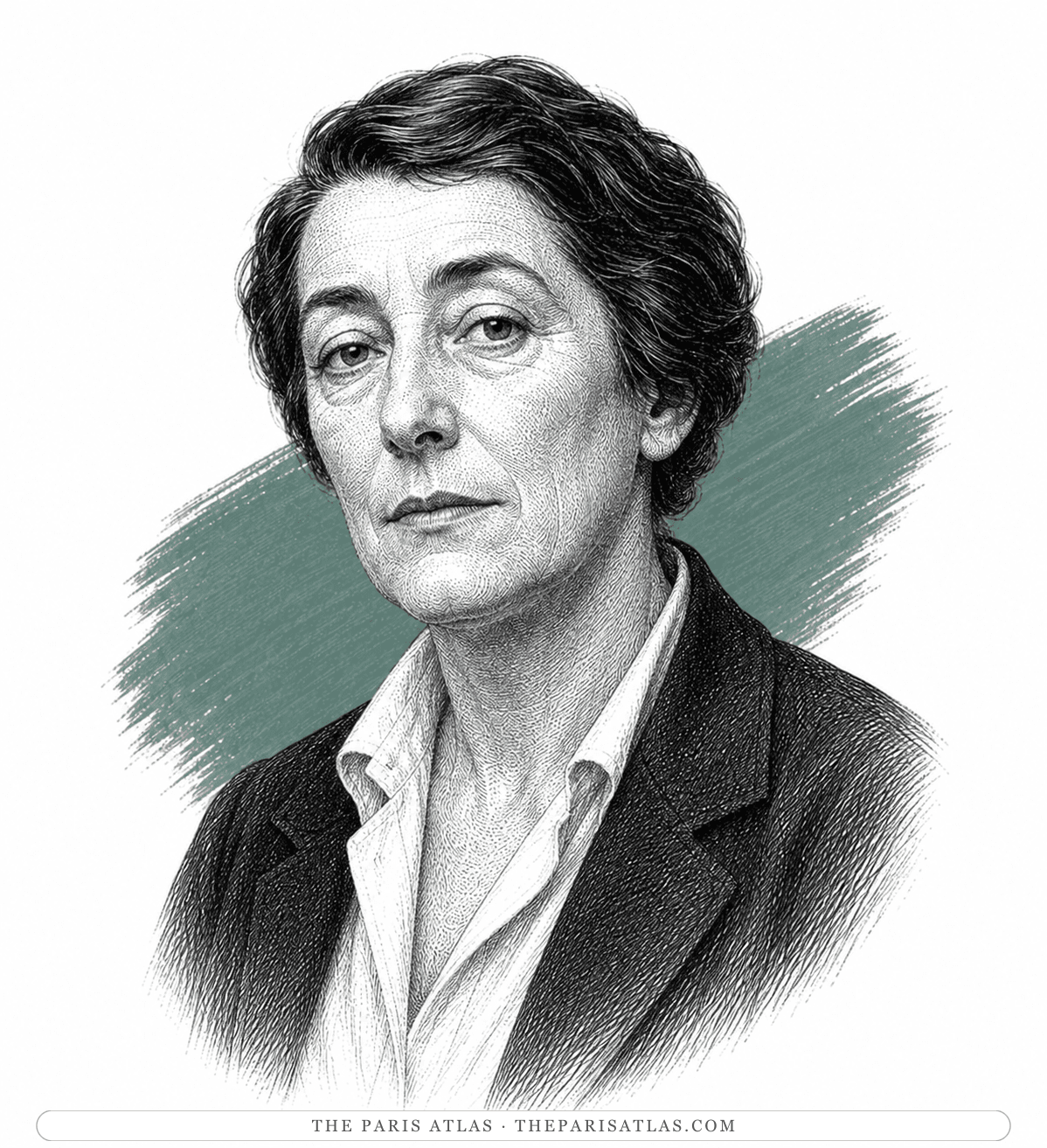
Illustrated portrait of Fernand Léger

Fernand Léger

  • Painter
  • Filmmaker

Met · 1930

The Fondation Le Corbusier's chronology records the two travelling to Spain together in August 1930. Both belonged to the machine-age wing of Paris painting in the 1920s - Leger through his own mechanical figures, Le Corbusier through the Purism he founded with Amedee Ozenfant - and the claim's date marks the documented journey rather than a first encounter, which the sources do not fix.

Biography, 1929–1938

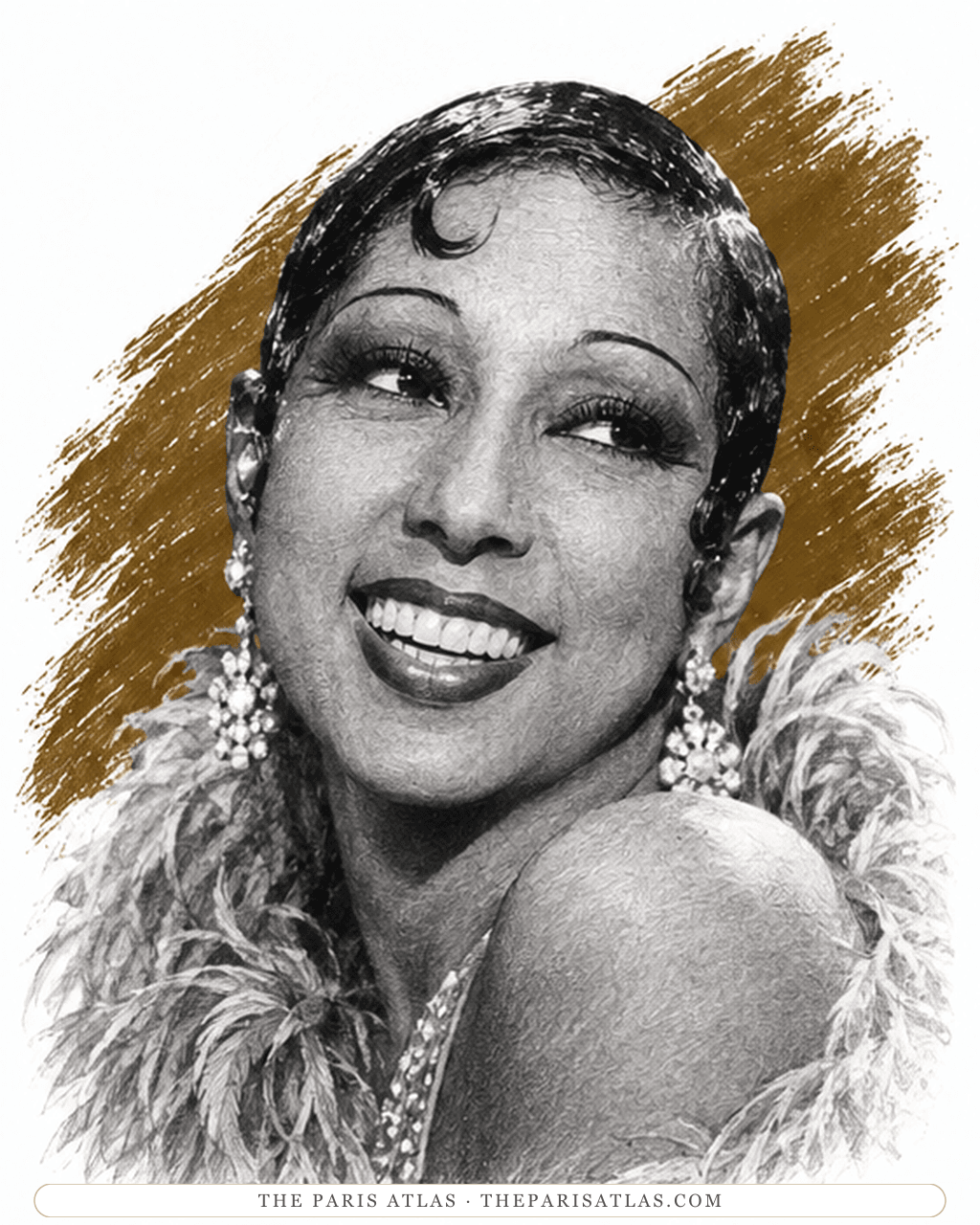
Illustrated portrait of Josephine Baker

Josephine Baker

  • Dancer
  • Singer
  • Actor

Met · 1929

They met on the crossing to South America in 1929, the voyage that took Le Corbusier to Buenos Aires for the lectures published as Precisions. The Fondation Le Corbusier's chronology records the meeting aboard the Giulio Cesare.

Biography, 1929–1938

Movements

The artistic and literary currents this life ran through.

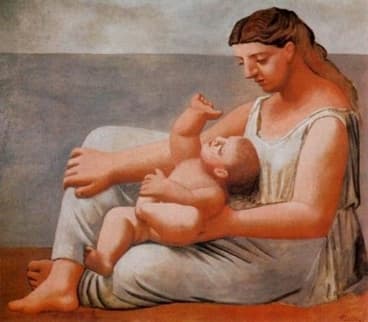
Picasso's Mother and Child: a monumental woman in a white tunic seated by a gray sea, holding an infant who reaches up toward her face

Art movement · c. 1918–1930

Return to Order

Purism was the doctrinaire wing of the postwar return to order, and Charles-Edouard Jeanneret founded it with Amedee Ozenfant: their 1918 book Apres le cubisme argued that Cubism had decayed into decoration and that painting should recover the impersonal clarity of the machine. Their journal L'Esprit Nouveau, launched in 1920, carried the argument through the decade, and it was in its pages that Jeanneret began signing himself Le Corbusier.

Biography, 1917-1922: À nous deux Paris!

Le Corbusier’s Places

The cataloged places connected to Le Corbusier — through the books, and through the documented record.

Places you can enter today appear first, followed by addresses to see from outside and sites that have vanished.

Questions about Le Corbusier

Who was Le Corbusier?

A Swiss-born architect, painter and writer who spent his working life in Paris. He was born Charles-Édouard Jeanneret at La Chaux-de-Fonds in 1887, moved to Paris in 1917, took the name Le Corbusier in 1920 while editing the magazine L'Esprit Nouveau, and ran a single atelier, or studio, at 35 rue de Sèvres from 1924 until his death in 1965. He became a French citizen in 1930. His buildings, his books and his city plans shaped twentieth-century architecture more than any other single figure's.

Why is he called Le Corbusier?

It began as a byline. In 1920, when he and Amédée Ozenfant founded the magazine L'Esprit Nouveau, Charles-Édouard Jeanneret started signing his architectural articles Le Corbusier, and the pseudonym became the name he is known by. He went on using Jeanneret for his paintings.

What was the Plan Voisin?

A 1925 proposal to demolish much of the Right Bank of central Paris and rebuild it as widely spaced sixty-storey towers standing in parkland. Le Corbusier exhibited it as a model at the Pavillon de l'Esprit Nouveau during the Paris decorative arts exposition of 1925, and named it after the Voisin aircraft and car company, which funded the study. He argued that the centre of Paris was a diamond mine and that building sixty storeys where six stood would pay for itself. It was never built.

What are Le Corbusier's five points of architecture?

The building raised on columns so the ground runs under it, the free plan (interior walls carry nothing, so rooms can be arranged at will), the free façade (the outside wall carries nothing either), the long horizontal ribbon window, and the roof garden. They follow from a reinforced concrete frame doing the structural work. Maison La Roche in Paris shows them early; the Villa Savoye at Poissy, finished in 1931, is the textbook demonstration of all five.

Where can you see Le Corbusier's buildings in Paris?

Maison La Roche at 10 square du Docteur Blanche in the 16th arrondissement is open to visitors as the home of the Fondation Le Corbusier. His own apartment and studio at 24 rue Nungesser-et-Coli, on the Boulogne edge of the city, is also open. The Cité de Refuge on rue Cantagrel in the 13th, built for the Salvation Army, can be seen from the street, as can the Ozenfant house near the Parc Montsouris. The Villa Savoye is at Poissy, a short train ride west, and is run by the national monuments service.

What did Le Corbusier do during the Second World War?

He moved to Vichy — the spa town from which Marshal Pétain's regime governed the unoccupied part of France in collaboration with Germany — in January 1941, and spent about eighteen months trying to obtain control of the reconstruction he expected after the war. The Fondation Le Corbusier's own account is that he never got real authority: a temporary post on the commission dealing with unemployment and a seat on a planning commission from May 1941. He left on 1 July 1942 with a written insult to the place. His Paris atelier reopened after the Liberation in 1944.

Why is Le Corbusier controversial?

Two lines of criticism. The first is architectural: the tower-in-parkland model behind the Plan Voisin and the Marseille Unité became the template for postwar public housing across France and elsewhere, and the results are widely blamed for the isolation of the French banlieues — the high-rise suburbs around its cities. The second is political: two books published in 2015, Xavier de Jarcy's Le Corbusier, un fascisme français and François Chaslin's Un Corbusier, set out his links to fascist groups between the wars and his pursuit of a role under Vichy. They appeared while the Centre Pompidou was showing a retrospective that left the subject out, and the omission became a public argument in the French press.

How did Le Corbusier die?

He had a heart attack while swimming in the Mediterranean at Roquebrune-Cap-Martin on the French Riviera on 27 August 1965, aged 77. It was his daily swim. The funeral procession travelled from Menton to the convent of La Tourette on 31 August, and on 1 September the French state held a ceremony in the Cour carrée of the Louvre, where the culture minister André Malraux delivered the oration.

Sourced claims

Every connection the graph holds for Le, with the evidence behind it.

Associated with · 1918–1925

Return to Order

Purism was the doctrinaire wing of the postwar return to order, and Charles-Edouard Jeanneret founded it with Amedee Ozenfant: their 1918 book Apres le cubisme argued that Cubism had decayed into decoration and that painting should recover the impersonal clarity of the machine. Their journal L'Esprit Nouveau, launched in 1920, carried the argument through the decade, and it was in its pages that Jeanneret began signing himself Le Corbusier.

Biography, 1917-1922: À nous deux Paris!

Lived at · 1917

20 rue Jacob

Charles-Edouard Jeanneret settled permanently in Paris in February 1917 and took a room at this address, three years before he began signing his work Le Corbusier. The Fondation Le Corbusier's chronology names the address and the arrondissement. Natalie Clifford Barney's salon occupied the garden pavilion behind the same entrance from 1909; nothing records the two of them meeting.

Biography, 1917-1922: À nous deux Paris!

Met · 1930

Fernand Léger

The Fondation Le Corbusier's chronology records the two travelling to Spain together in August 1930. Both belonged to the machine-age wing of Paris painting in the 1920s - Leger through his own mechanical figures, Le Corbusier through the Purism he founded with Amedee Ozenfant - and the claim's date marks the documented journey rather than a first encounter, which the sources do not fix.

Biography, 1929–1938

Met · 1929

Josephine Baker

They met on the crossing to South America in 1929, the voyage that took Le Corbusier to Buenos Aires for the lectures published as Precisions. The Fondation Le Corbusier's chronology records the meeting aboard the Giulio Cesare.

Biography, 1929–1938

References

References

The sources below include biographies, scholarly essays, interviews, and primary materials that informed this page. They reflect both the historical record and ongoing critical conversations about Le Corbusier and their work.

  1. 1Biography, 1887-1906: A childhood at La Chaux-de-Fonds

    Fondation Le Corbusier

    The foundation's own chronology of the childhood at La Chaux-de-Fonds and the Villa Fallet.

    View source
  2. 2Biography, 1917-1922: À nous deux Paris!

    Fondation Le Corbusier

    The move to 20 rue Jacob in 1917, Purism with Ozenfant, L'Esprit Nouveau, and the adoption of the name.

    View source
  3. 3Biography, 1923-1925: Becoming Le Corbusier

    Fondation Le Corbusier

    Vers une architecture, the Maisons La Roche-Jeanneret, the opening of 35 rue de Sèvres, and the Plan Voisin.

    View source
  4. 4Biography, 1926-1928: Building for people and peace

    Fondation Le Corbusier

    The Villa Savoye commission, the founding of CIAM at La Sarraz, and Charlotte Perriand's arrival.

    View source
  5. 5Biography, 1929–1938

    Fondation Le Corbusier

    French citizenship, the marriage to Yvonne Gallis, the Giulio Cesare crossing, and the move to rue Nungesser-et-Coli.

    View source
  6. 6Biography, 1939-1946: From mobilization to reconstruction

    Fondation Le Corbusier

    The eighteen months at Vichy and the return to rue de Sèvres after the Liberation.

    View source
  7. 7Biography, 1947-1951: Major projects

    Fondation Le Corbusier

    Marseille, the United Nations project, Chandigarh, Ronchamp, and the Modulor.

    View source
  8. 8Biography, 1961-1965: Recognition and legacy

    Fondation Le Corbusier

    The death at Roquebrune-Cap-Martin and the state funeral at the Louvre.

    View source
  1. 9Plan Voisin, Paris, France, 1925

    Fondation Le Corbusier

    The foundation's record of the 1925 Plan Voisin, its sponsor and Le Corbusier's own arguments for it.

    View source
  2. 10Maison La Roche, 10 square du Docteur Blanche, Paris

    Fondation Le Corbusier

    The house, its patron, and its present life as the foundation's museum.

    View source
  3. 11Cité de Refuge, Salvation Army hostel, Paris, 1929–1933

    Fondation Le Corbusier

    The Salvation Army building on rue Cantagrel, its funding, its sealed glass wall and the failure of it.

    View source
  4. 12Maison-atelier Ozenfant, Paris, 1922–1924

    Fondation Le Corbusier

    The 1922–24 house and studio built for Amédée Ozenfant near the Parc Montsouris.

    View source
  5. 13History of the Villa Savoye, Poissy

    Centre des monuments nationaux

    The French national monuments service on the Villa Savoye, its near-demolition and its rescue.

    View source
  6. 14The many contradictions of Le Corbusier

    The Guardian, 2008

    Newspaper profile stating plainly what the Plan Voisin proposed to demolish.

    View source
  7. 15Great modern buildings: profile of Le Corbusier

    The Guardian, 2007

    Dated career profile; the source for the sixty-storey towers and for Yvonne Gallis's death in 1957.

    View source
  8. 16Le Corbusier, Piaf, the feuding Le Pens … the wartime rifts that still divide France

    The Guardian, 2015

    Newspaper account of the 2015 books on his politics and the row around the Centre Pompidou retrospective.

    View source
i
Why these sources are here

These references anchor the page in the documented record and in the scholarly conversations around Le Corbusier. Every claim on this page traces back to one or more of the works listed here.

Explore more resources
Browse all authors