The Paris AtlasCharting the artists, works, and places worth returning to.
  • Dancer
  • Singer
  • Actor
· American-born French · 1906–1975

Josephine Baker

American-born French dancer and singer who conquered Paris at nineteen in La Revue Nègre, and who traded expatriate stories at James Baldwin's Saint-Paul-de-Vence table nearly fifty years later.

In images

Details

Lived
1906–1975
Born
3 June 1906
Birthplace
St. Louis, Missouri
Died
12 April 1975 · aged 68
Place of death
Paris
Nationality
American-born French
Married
Willie Wells · 1919–1920Will Baker · 1921–1925Jean Lion · 1937–1940Jo Bouillon · 1947–1961
Children
Akio, Janot, Jari, Luis, Marianne, Brahim, Moïse, Jean-Claude, Noël, Koffi, Mara, Stellina
Roles
DancerSingerActor
Also known as
Freda Josephine McDonald · Joséphine Baker

About Josephine Baker

Josephine Baker escaped childhood poverty and racial violence in St. Louis to become one of the most famous performers in the world. She arrived in Paris in 1925 as a nineteen-year-old chorus dancer and within weeks was the sensation of La Revue Nègre at the Théâtre des Champs-Élysées; within a few years she was headlining the Folies Bergère, starring in films, and running her own nightclub. The banana skirt was a few minutes of a career that ran half a century. She became a French citizen, served French military intelligence through the Second World War, refused to perform for segregated audiences in America, spoke at the 1963 March on Washington in her French uniform, and raised twelve adopted children from around the world at a château in the Dordogne. In 2021 France gave her the Panthéon — the first Black woman so honored.

St. Louis

She was born Freda Josephine McDonald on 3 June 1906 in St. Louis, Missouri, and grew up poor in a segregated city. Her mother, Carrie McDonald, supported the family partly through laundry work; her father was never a stable presence, and the record of his identity is uncertain. As a young girl Josephine was placed in white households as a domestic servant. She also organized little shows for other children, danced, and made faces — the comic instinct that later became a signature was there from the start.

In 1917, when she was eleven, white mobs in nearby East St. Louis attacked Black residents, burned homes, and killed people in the streets. The Smithsonian counts Baker among those marked by that violence. Much of her adult life — the emigration, the citizenship, the activism, the rainbow family — reads as an answer to what she saw as a child.

Out through the stage door

Performance was the way out. She danced with touring troupes as a young teenager, joining the Jones Family Band in 1920 and working with the Dixie Steppers. The marriages came almost unbelievably early: Willie Wells at thirteen, over within months, and Will Baker at fifteen, in 1921 — that marriage ended too, but Freda Josephine McDonald kept the surname for the rest of her life.

In New York she joined the world of the Harlem Renaissance, dancing in the chorus of Shuffle Along, the landmark 1921 Black Broadway musical. Her method was already visible at the end of the chorus line: she crossed her eyes, tangled her legs, mugged, and then — almost without the audience noticing the transition — turned apparent clumsiness into dazzling control. People laughed at her and then realized they were watching the best dancer on the stage. Biographers also record relationships with women in these years, among them the blues singer Clara Smith; the historical societies that document her life describe her plainly as having loved both men and women.

La Revue Nègre

Josephine Baker dancing the Charleston at the Folies Bergère, 1926. Photograph by Walery, Paris. (Walery (1863–1929), via Wikimedia Commons · Public domain)

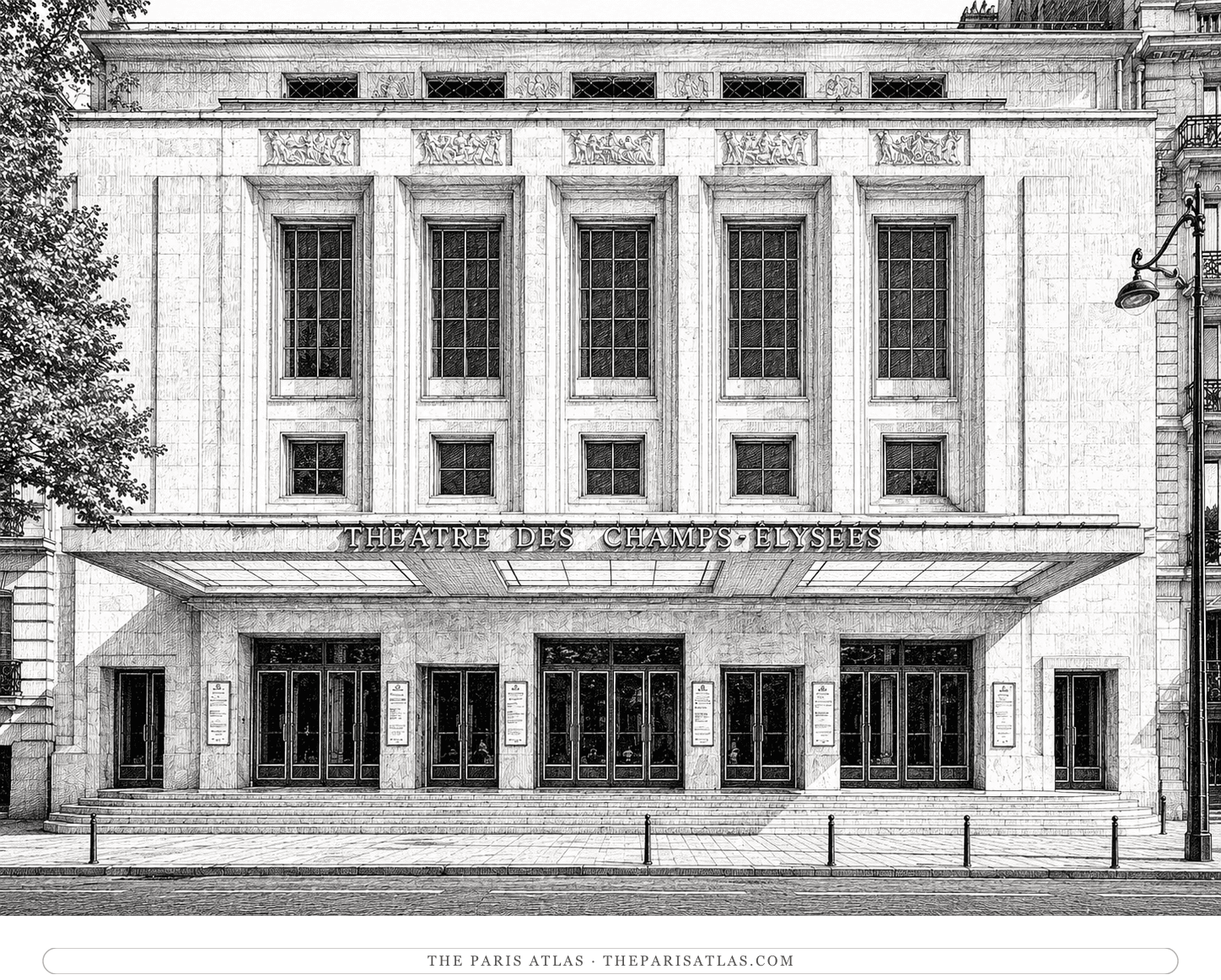
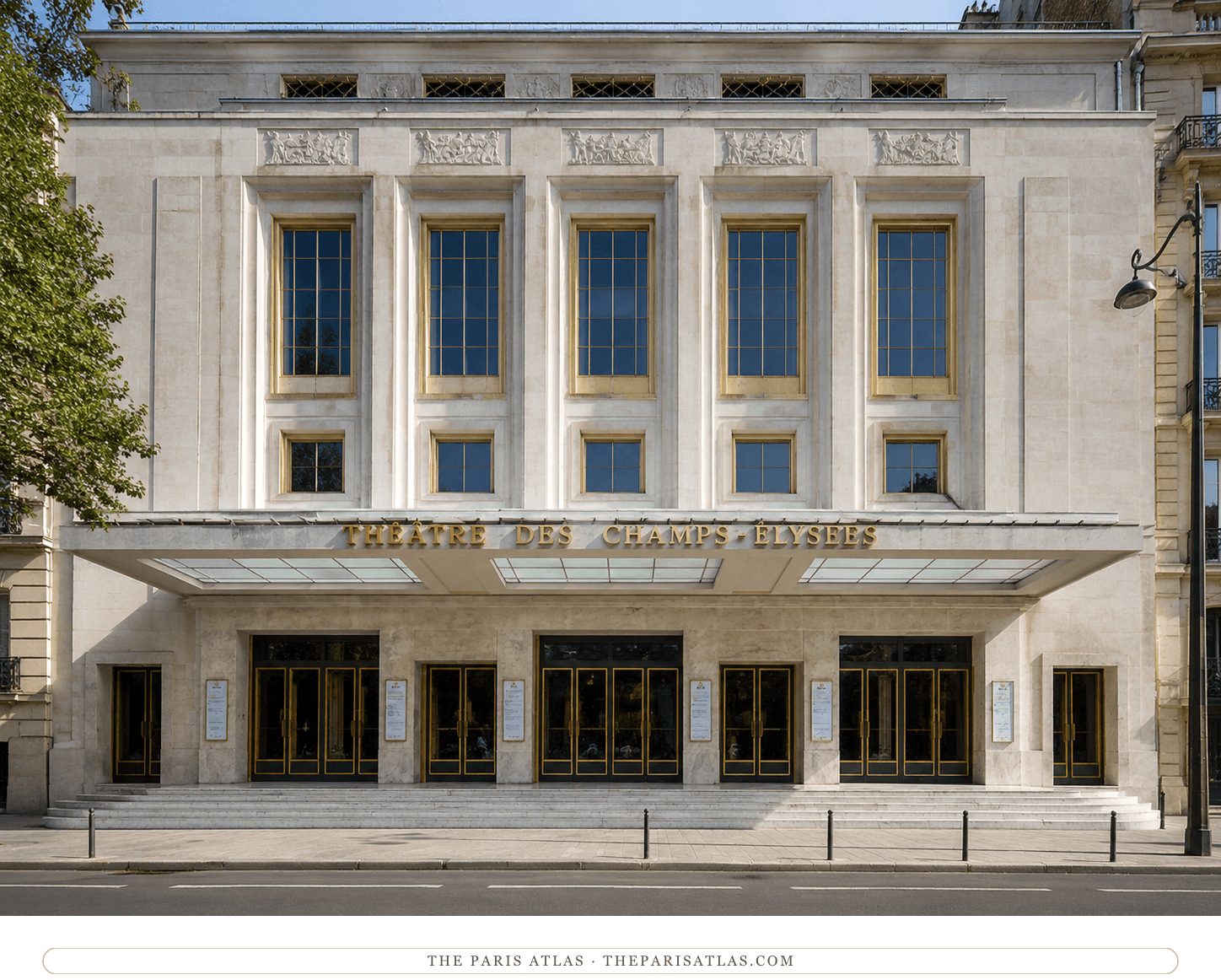
In 1925 she accepted a place in a company of Black American entertainers sailing for Paris — thirteen dancers and twelve musicians, the New Orleans jazzman Sidney Bechet among them. La Revue Nègre opened at the Théâtre des Champs-Élysées on 2 October 1925, and the nineteen-year-old replacement dancer became its center within days. Postwar Paris was already obsessed with jazz, the Charleston, and Black American culture; Baker arrived at the exact moment the city was waiting for her.

The environment that made her a star was not innocent. The French music hall sold colonial fantasies about Africa, and the publicity around Baker — including the famous Art Deco posters the young Paul Colin drew after watching the company rehearse — could lean on racist caricature even while announcing something thrillingly modern. Baker was simultaneously a modern woman, a jazz-age celebrity, a subject of European fantasy, and an artist manipulating those fantasies for her own purposes. Reading her Paris career honestly means keeping all of it in view.

The banana skirt

Josephine Baker in the banana costume of La Folie du Jour at the Folies Bergère, 1927 — the most reproduced image of her career. Photograph by Lucien Walery, Paris. (Lucien Walery (1863–1929), via Wikimedia Commons · Public domain)

After La Revue Nègre she moved to the Folies Bergère as a star attraction, and there, in La Folie du Jour, she performed the number that produced the most reproduced image of her life: a dance in little more than jewelry and a belt of artificial bananas, at its most celebrated in the 1927 performances. On one level the costume fed the music hall's appetite for the exotic. On another, Baker exaggerated the stereotype of the 'savage' performer so wildly that the number tipped into parody — France's own monuments authority reads it that way — and she was in command of the joke.

What she could not control was the still photograph, reproduced for a century without the movement, the comedy, or the context. The banana skirt became famous enough to swallow the rest of the career. She spent decades proving there was more.

How Josephine Baker danced

She was not famous because of one costume. She was famous because she moved differently. Her early style combined qualities no other performer put in one body:

  • Rapid, syncopated Charleston rhythms
  • Flexible hips and knees, and sudden changes of direction
  • Intentionally angular arms and legs
  • Comic facial expressions traded instantly for glamour
  • Sensual movement and extreme physical energy
  • Apparent spontaneity over movement that in fact required tremendous control
  • Parody of conventional feminine grace

Contemporary images show a body that rarely appears rigidly posed — everything seems to move at once. Histoire par l'image, the French public-history resource, emphasizes the extraordinary sense of suspended movement that Paul Colin tried to capture when he drew Baker and the Revue Nègre company. Her face mattered almost as much as her legs: the child who loved making faces turned those expressions into technique, making herself deliberately ridiculous and then, a beat later, beautiful. That is what made her impossible to reduce to the passive role of an exotic beauty. She was controlling the joke.

La Baker

She understood that a sensation can vanish as fast as it arrives, and she rebuilt herself deliberately: French lessons, voice lessons, couture, a smoother stage presence. By the early 1930s Paris treated her not as an American novelty but as La Baker, one of its own great stars, headlining the Casino de Paris and running her own nightclub, Chez Joséphine. Her signature song became J'ai deux amours — I have two loves, my country and Paris — and the line was simply true.

The films followed. La Sirène des tropiques (1927) made her, by the Criterion Collection's account, the first Black woman to star in a major motion picture; Zouzou (1934) put her opposite Jean Gabin before he became the face of French cinema, and Princesse Tam Tam followed in 1935 — starring roles unimaginable for a Black actress in the Hollywood of the day, even as their plots ran on the same colonial fantasies as the music hall. The avant-garde took her as a subject too: Alexander Calder made a series of wire sculptures of her in the late 1920s, and the Centre Pompidou lists Man Ray, Pablo Picasso, Henri Matisse, and Tsuguharu Foujita among the artists she inspired — inspiration being the documented relation; friendship, in most cases, is not. By Ernest Hemingway's own later telling he once spent a night at Le Jockey talking to her about his love life, a story best held as an anecdote, since it comes from Ernest Hemingway. The architect Le Corbusier, whose foundation records the meeting, crossed the Atlantic with her in 1929.

Even the tributes carried the era's poison. The Museum of Modern Art describes Alexander Calder's wire Josephine Baker (III) as homage to one of the most celebrated performers of the age while noting that its exaggerated features drew on harmful Black caricature. Baker was a muse of modernism, and modernism did not automatically free itself of racism — both facts stand.

The fashion icon

Her influence ran far past dance. She helped popularize the sleek garçonne image of the 1920s — short sculpted hair, shining skin, long lines, dramatic jewelry, a body presented with unapologetic confidence — and later cultivated full couture glamour. She was photographed constantly, and her image circulated on posters, magazines, advertisements, postcards, and merchandise.

Fashion let her perform one more transformation. The woman advertised as 'primitive' on the music-hall stage could arrive offstage as one of the most elegant women in Europe, and the contrast itself made a statement.

Citizen, then agent

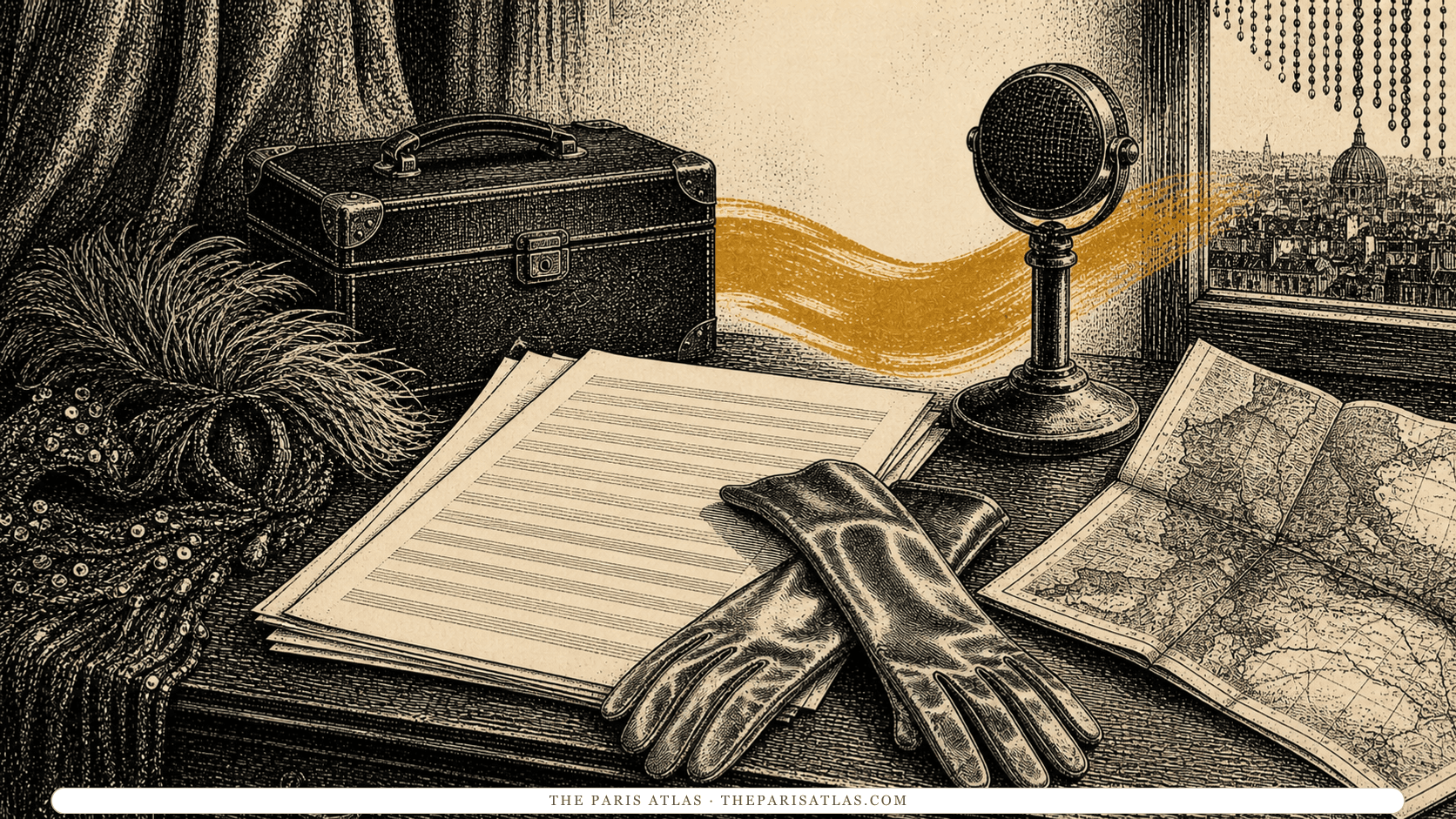
In 1937 she married the French industrialist Jean Lion and took French citizenship. Two years later the country she had chosen went to war, and Baker put her fame at its service. Celebrity was cover: diplomats talked freely at receptions around a glamorous entertainer, and an international star had every reason to travel. She worked for French counterintelligence in Paris, and after the fall of France traveled through Spain and Portugal with the intelligence officer Jacques Abtey under cover of touring, information carried in and among her sheet music. When the Germans entered Paris in 1940 she refused to perform for them and withdrew to the Dordogne.

The war years took her to North Africa, and nearly killed her — the Ordre de la Libération records nineteen months in hospital. From January 1943 she was performing again anyway, for Free French forces and Allied troops, unpaid, while continuing intelligence work connected to de Gaulle's headquarters. On 23 May 1944 she formally joined the women's formations of the French Air Force as a sub-lieutenant; she was demobilized in September 1945. France gave her the Croix de guerre, the Médaille de la Résistance with rosette in 1946, and — by a decree of December 1957 — the Légion d'honneur. The Ordre de la Libération's own biography describes the service as continuous from 1939 to the German defeat: not honorary celebrity participation, but the real thing.

America, refused

American tours kept reminding her why she had left. A decorated French officer who had been received in palaces could still be turned away from hotels and restaurants in the country of her birth. By 1951 she was refusing to perform for segregated audiences at all — and she had the leverage to make the refusal stick, because a venue that would not integrate lost the star. The performer who had once played inside racial stereotype on a Paris stage now spent her fame attacking the system that produced it.

On 28 August 1963 she stood at the Lincoln Memorial in her French uniform and decorations and addressed the March on Washington crowd before the official program began — one of the very few women to speak that day, ahead of the program in which Daisy Bates delivered the tribute to Black women. Martin Luther King Jr. gave the day its famous speech; a Library of Congress photograph catches Baker in conversation with Lena Horne at the Memorial. She wrote President Kennedy afterward and called it one of the greatest moments of her life.

Les Milandes and the Rainbow Tribe

Josephine Baker in her garden at Château des Milandes, June 1961, in the years of the Rainbow Tribe. Photograph from the Dutch Nationaal Archief. (Nationaal Archief, the Netherlands (CC0), via Wikimedia Commons · Public domain)

At Château des Milandes in the Dordogne, which she and her fourth husband, the bandleader Jo Bouillon, developed after their 1947 marriage, Baker attempted her largest project: a 'Global Village' built around a family meant to prove a point. Beginning in the 1950s she adopted twelve children of different national, ethnic, and religious backgrounds — Akio, Janot, Jari, Luis, Marianne, Brahim, Moïse, Jean-Claude, Noël, Koffi, Mara, and Stellina — and called them her Rainbow Tribe. The household was both a family and a public argument that coexistence was possible, which also meant the children grew up inside their mother's very public experiment.

The dream was ruinously expensive. The château's own history credits the collapse to overspending, poor management, unstinting generosity, and contractors who overcharged her; the marriage to Bouillon gave out under the strain, and the debts stayed. Brigitte Bardot's public appeal bought time when Les Milandes faced auction in 1964, but in 1968 the property went into forced sale. When the new owner came to take possession, Baker barricaded herself in the kitchen; she was removed, and photographed on the back steps in her dressing gown. Princess Grace of Monaco — the former Grace Kelly — helped her settle at Roquebrune, near Monaco, and Baker went back on stage in her sixties because she had a family to support.

Race, exoticism, and control

Was her early Paris image liberating or racist? It was both more liberating and more compromised than a simple answer allows. Parisian producers marketed Baker through colonial ideas about Blackness; posters and publicity could turn an American woman from Missouri, dancing forms rooted in Black American popular culture, into an imagined African 'primitive.' That was racism, and it paid her salary.

But Baker was never a passive object inside the spectacle. She exaggerated, parodied, manipulated, made money, negotiated better positions, changed theaters, became a headliner, learned French, became a singer, ran her own nightclub, made films, and controlled more and more of her own image — and ultimately used the celebrity that system produced to fight racism itself. Her history is not a simple story of victimhood or of triumph. It is the story of a highly intelligent performer obtaining power inside a culture that did not begin by offering it to her.

Why Paris mattered so much to her

Paris did not remove racism from Baker's life — French colonial culture had built many of the stereotypes she was marketed through. But the city offered what the segregated United States would not: top billing, film stardom, her own nightclub, wealth, and finally citizenship. France gave her forms of public recognition that remained nearly unreachable for Black American performers at home in the 1920s and 1930s.

That difference is why her love of Paris was so intense, and why J'ai deux amours never read as a mere show tune. Paris was not simply where she worked. It was where she discovered what her life could become.

Bobino, and the Panthéon

The last act was a comeback. Audiences of the 1970s came to see not just a music-hall star but fifty years of the century in one person — the Jazz Age, the Resistance, the March on Washington. In the summer of 1973 she sat down to dinner with James Baldwin at his table in Saint-Paul-de-Vence, two American expatriates trading stories for a young Henry Louis Gates Jr., on assignment for a magazine that ended up declining the piece. In April 1975 the Bobino theater in Paris opened a retrospective celebrating her half-century on stage, and it was a triumph. Days later she was found unconscious in her Paris apartment, and she died at the Pitié-Salpêtrière hospital on 12 April 1975, of a cerebral hemorrhage, at sixty-eight. Thousands filled the streets for her funeral at La Madeleine, with military honors; she was buried in Monaco.

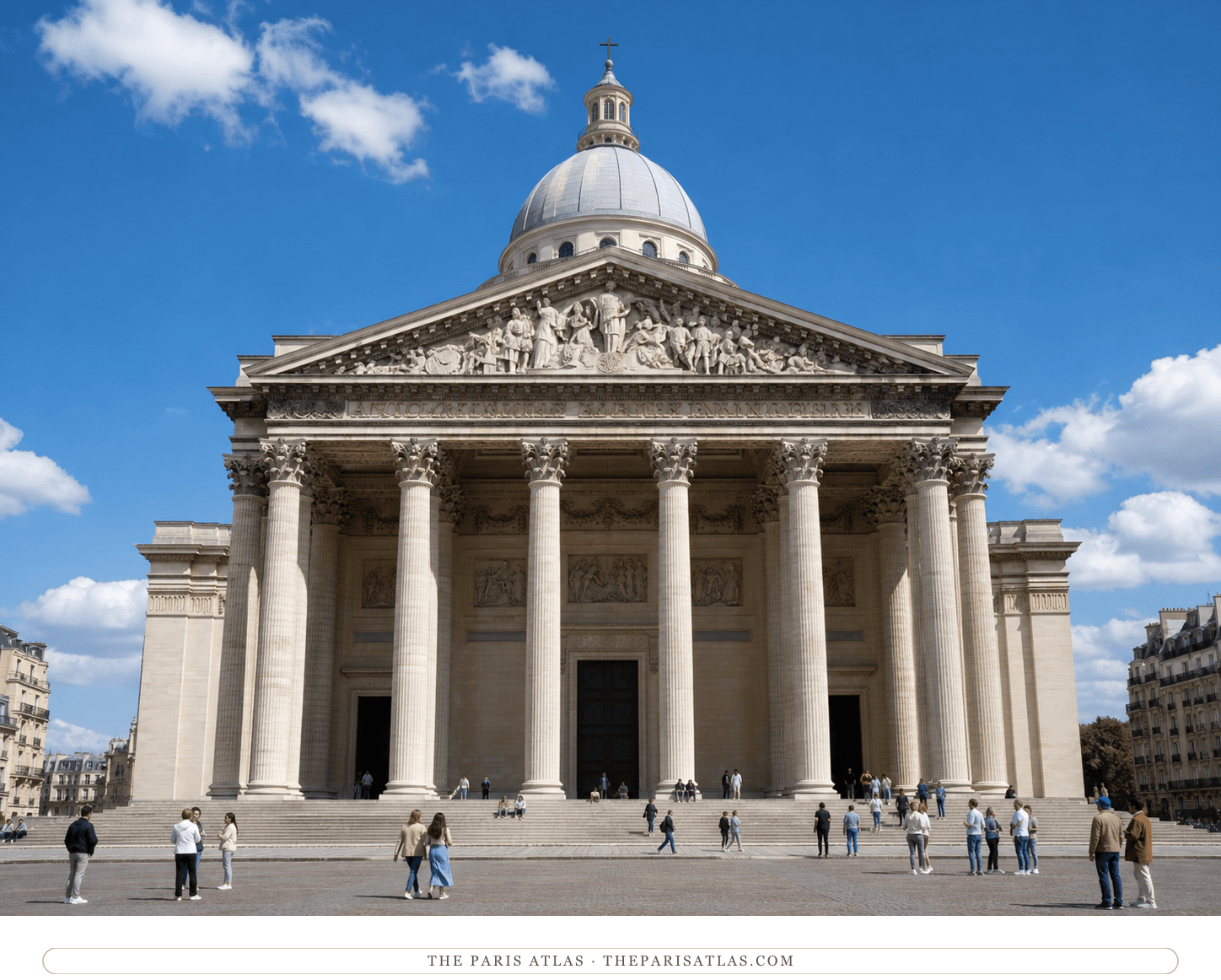
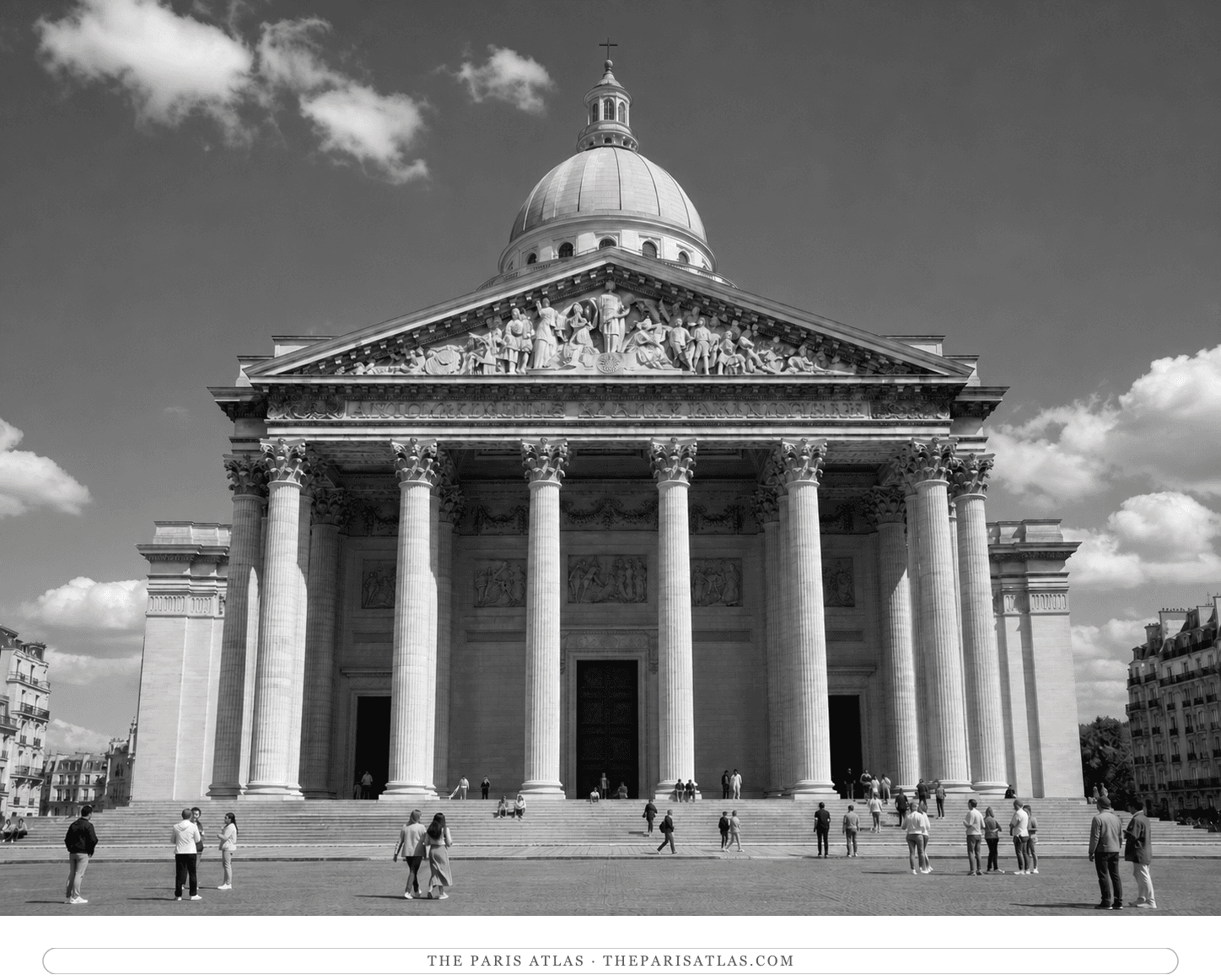
On 30 November 2021 France brought her into the Panthéon — the first Black woman honored there, the sixth woman to enter (the monuments authority counts her the fifth formally honored, since Sophie Berthelot entered in 1907 alongside her husband without her own decree). Her body stayed in Monaco; the cenotaph carried into the monument holds soil from St. Louis, where she was born, from Les Milandes, where she tried to build the world she wanted, and from Monaco, where she lies. America made her. Paris transformed her. France became the country she chose.

Why Josephine Baker matters

Josephine Baker cannot be summarized as the woman in the banana skirt; that image is a few minutes of a life spanning almost seven decades. She was one of the defining performers of Jazz Age Paris, a pioneering Black movie star, a singer, a fashion icon, a subject for modern artists, a French intelligence operative, a commissioned officer, a decorated Resistance veteran, a civil-rights activist, the mother of twelve adopted children, a woman who lost a fortune on a utopian project, and finally the first Black woman honored in France's Panthéon.

Few twentieth-century entertainers moved so completely between art and history. She did not merely witness the century's defining struggles — race, modernism, celebrity, fascism, war, colonialism, civil rights — she repeatedly placed herself inside them. The most interesting thing about Josephine Baker is not that she became famous. It is what she decided to do with fame once she had it.

Life events

  1. 1906

    Born Freda Josephine McDonald in St. Louis, Missouri, on 3 June.

    Josephine Baker

  2. 1917

    At eleven, lives through the racial violence of the East St. Louis riots across the river — mobs burn Black homes and kill residents.

    The East St. Louis Race Riot Left Dozens Dead, Devastating a Community on the Rise; Josephine Baker

  3. 1919–1921

    Marries Willie Wells at thirteen, then Will Baker at fifteen; both marriages end quickly, but she keeps the name Baker for life. Tours with the Jones Family Band and the Dixie Steppers.

    Josephine Baker

  4. 1921

    Joins the chorus of Shuffle Along in New York, inside the Harlem Renaissance.

    Josephine Baker

  5. 1925

    Opens in La Revue Nègre at the Théâtre des Champs-Élysées on 2 October, aged nineteen, and becomes the sensation of Paris within weeks.

    Joséphine Baker et la Revue Nègre

  6. 1926–1927

    Headlines the Folies Bergère in La Folie du Jour; the banana-skirt number becomes the most reproduced image of her career.

    Josephine Baker in the banana costume of La Folie du Jour at the Folies Bergère, 1927 — the most reproduced image of her career. Photograph by Lucien Walery, Paris. (Lucien Walery (1863–1929), via Wikimedia Commons)

    Joséphine Baker, 5e femme au Panthéon

  7. 1927

    Stars in La Sirène des tropiques — by the Criterion Collection's account, the first Black woman to star in a major motion picture.

    The Queen of Paris: Josephine Baker on Film

  8. 1929

    Meets the architect Le Corbusier aboard the liner Giulio Cesare.

    Biography, 1929–1938

  9. c. 1930

    Turns seriously to singing; J'ai deux amours becomes her signature song, and Chez Joséphine her own Paris nightclub.

    Josephine Baker — biography

  10. 1934

    Stars opposite Jean Gabin in Zouzou; Princesse Tam Tam follows in 1935.

    The Queen of Paris: Josephine Baker on Film

  11. 1937

    Marries the industrialist Jean Lion and becomes a French citizen.

    Joséphine Freda Baker

  12. 1939

    At the outbreak of war, begins working for French counterintelligence.

    Joséphine Freda Baker

  13. 1940

    Refuses to perform for the German occupiers; carries intelligence through Spain and Portugal with officer Jacques Abtey, messages hidden among her sheet music.

    Joséphine Freda Baker

  14. 1941–1943

    Works from North Africa; nineteen months of hospitalization nearly end the work, but from January 1943 she performs unpaid for Free French and Allied troops.

    Joséphine Freda Baker

  15. 1944

    Joins the women's formations of the French Air Force on 23 May as a sub-lieutenant; demobilized September 1945.

    Joséphine Freda Baker

  16. 1946–1957

    France decorates her: the Médaille de la Résistance with rosette in 1946, the Croix de guerre, and the Légion d'honneur by decree of December 1957.

    Joséphine Freda Baker

  17. 1947

    Marries the bandleader Jo Bouillon; together they build Château des Milandes into the 'Global Village.'

    Josephine Baker — biography

  18. 1951

    On American tours, refuses segregated audiences and forces venues to integrate or lose her.

    Josephine Baker

  19. 1954–1965

    Adopts twelve children of different national and religious backgrounds — the Rainbow Tribe — and raises them at Les Milandes.

    Josephine Baker in her garden at Château des Milandes, June 1961, in the years of the Rainbow Tribe. Photograph from the Dutch Nationaal Archief. (Nationaal Archief, the Netherlands (CC0), via Wikimedia Commons)

    Josephine Baker — biography

  20. 1963

    Speaks at the March on Washington on 28 August, in French uniform and decorations, before the official program; photographed with Lena Horne at the Lincoln Memorial.

    Making the March on Washington, August 28, 1963; Josephine Baker talking with Lena Horne at the March on Washington

  21. 1964

    Les Milandes faces auction; Brigitte Bardot's public appeal buys time.

    Josephine Baker — biography

  22. 1968–1969

    Loses Les Milandes; barricades herself in the kitchen when the new owner takes possession. Princess Grace of Monaco helps her settle at Roquebrune.

    Josephine Baker — biography

  23. 1973

    Dines with James Baldwin at Saint-Paul-de-Vence, the two expatriates brought together by a young Henry Louis Gates Jr.

  24. 1975

    Opens the triumphant Bobino retrospective celebrating fifty years on stage; days later, dies of a cerebral hemorrhage in Paris on 12 April, aged sixty-eight. Funeral at La Madeleine with military honors; burial in Monaco.

    Joséphine Baker, 5e femme au Panthéon

  25. 2021

    Enters the Panthéon on 30 November — the first Black woman honored there. The cenotaph holds soil from St. Louis, Les Milandes, and Monaco; her body stays in Monaco.

    Joséphine Baker, 5e femme au Panthéon

People they knew

Documented connections — every one carries its source.

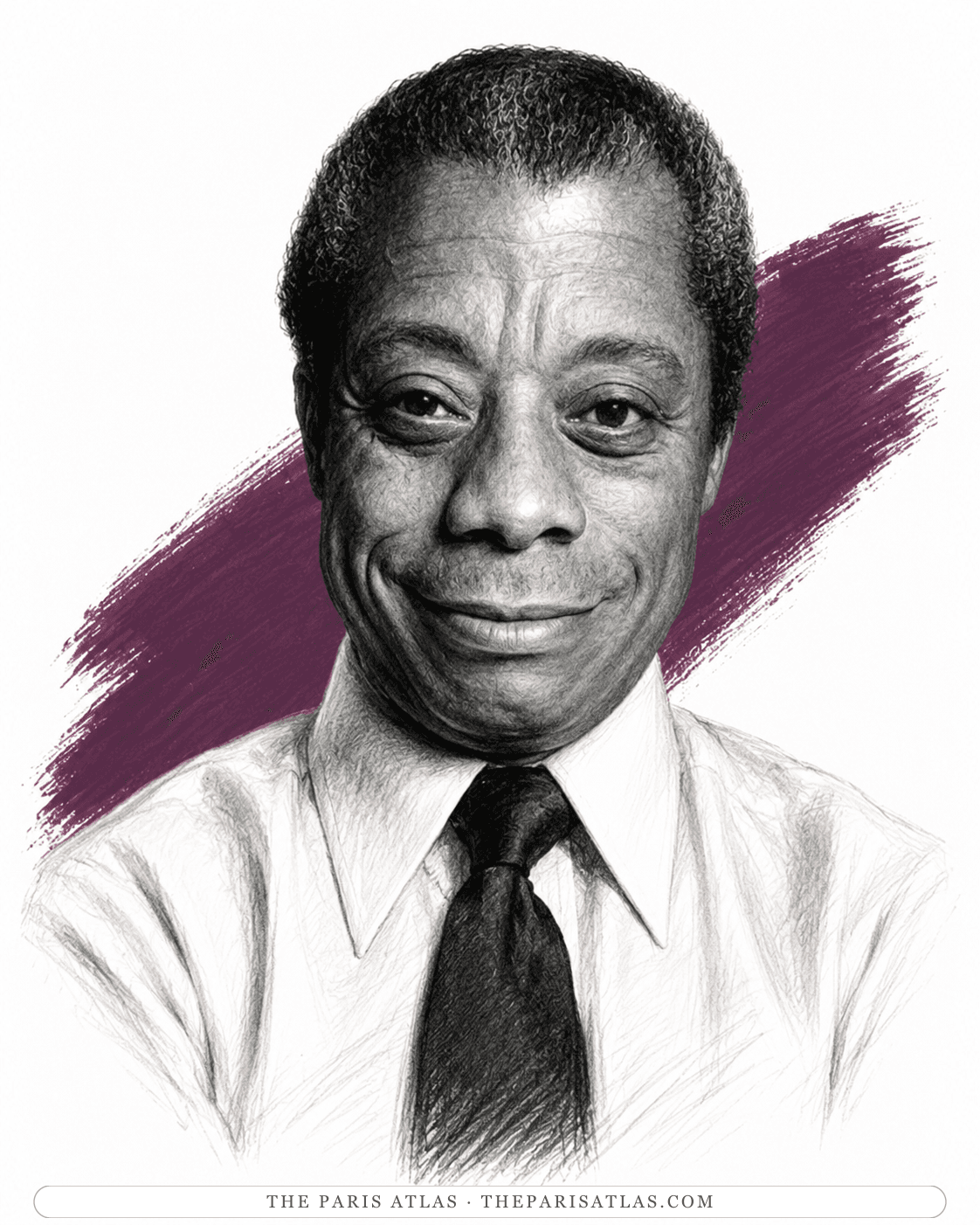
Illustrated portrait of James Baldwin

James Baldwin

  • Author
  • Playwright
  • Critic
  • +1

Met · 1973

In the summer of 1973 the 22-year-old Henry Louis Gates Jr., on assignment for Time, brought the two expatriates together for a dinner that ran from Baker's favorite Monte Carlo restaurant to the long table at Baldwin's house in Saint-Paul-de-Vence. Time declined the resulting piece, judging both of them passé.
Harmony Holiday, A Dinner in France, 1973: Josephine Baker, James Baldwin, and a Very Young Henry Louis Gates, Jr. (2021)

Movements

The artistic and literary currents this life ran through.

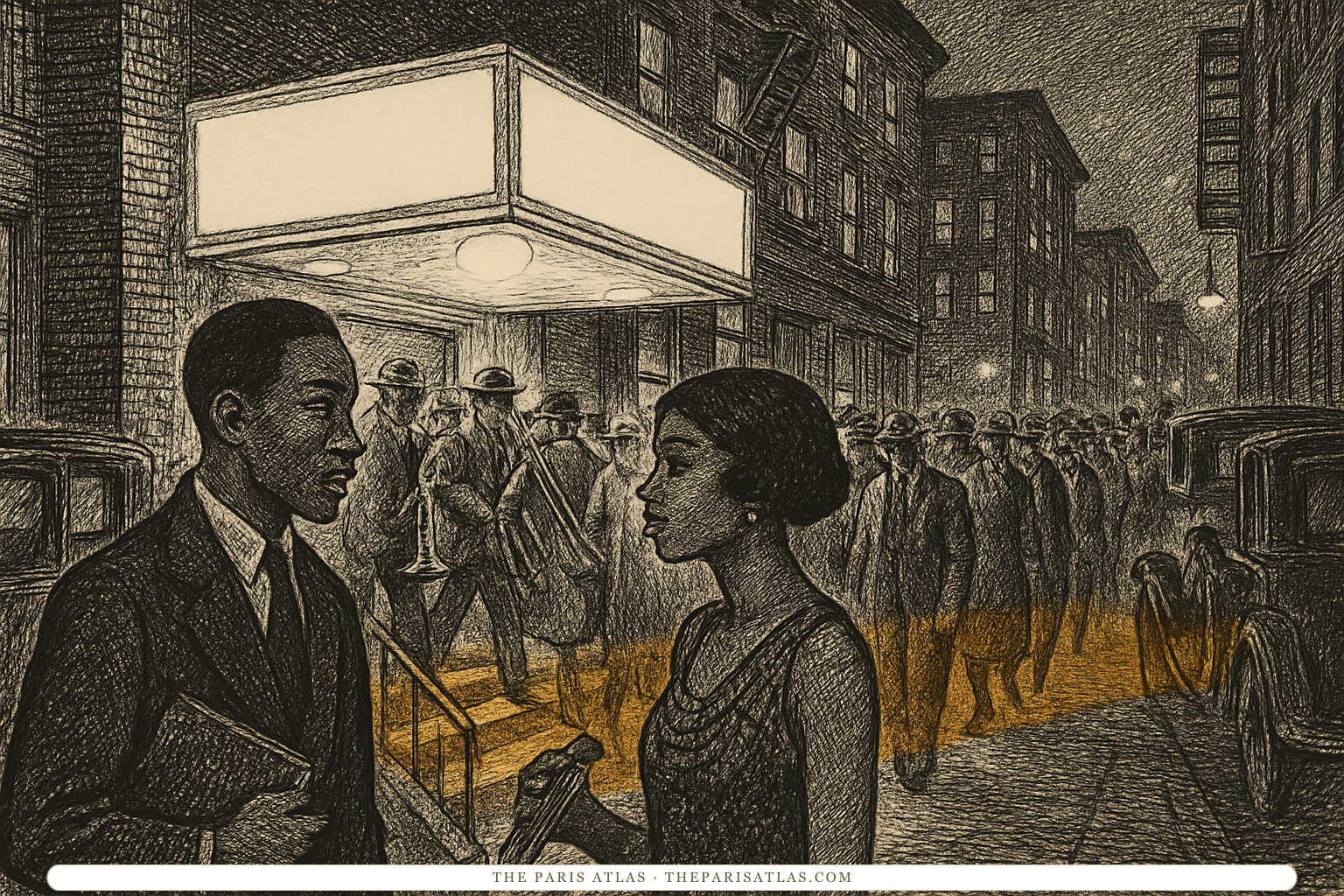
Pen-and-ink illustration of a 1920s Harlem avenue at night: a young Black poet holding a book talks with a woman in a beaded dress while musicians carry a trumpet and trombone into a club under a glowing marquee, the crowd and brownstones behind them swept with one gold brush stroke

Cultural movement · c. 1918 – mid-1930s

The Harlem Renaissance

The Smithsonian's account of the movement names her among its significant contributors — the performer who carried its stage energy to Paris when La Revue Nègre opened in October 1925.

A New African American Identity: The Harlem Renaissance

Josephine Baker’s Places

The cataloged places connected to Josephine Baker — through the books, and through the documented record.

Places you can enter today appear first, followed by addresses to see from outside and sites that have vanished.

Questions about Josephine Baker

Who was Josephine Baker?

An American-born French dancer, singer, actress, Resistance agent, and civil-rights activist. Born into poverty in St. Louis in 1906, she became the sensation of Paris in 1925 with La Revue Nègre, headlined the Folies Bergère, starred in films, served French military intelligence through the Second World War, spoke at the 1963 March on Washington, and in 2021 became the first Black woman honored in France's Panthéon.

What was Josephine Baker's real name?

Freda Josephine McDonald. The stage name came from her second husband, Will Baker, whom she married at fifteen in 1921; the marriage ended, but she kept the surname for the rest of her life.

Why did Josephine Baker move to Paris?

She came in 1925, at nineteen, to dance in La Revue Nègre at the Théâtre des Champs-Élysées — work and billing that segregated America would not offer a young Black performer. The show made her famous within weeks, and Paris became her home. Her signature song, J'ai deux amours, says it plainly: two loves, her country and Paris.

Did Josephine Baker really dance in a banana skirt?

Yes — at the Folies Bergère in La Folie du Jour, most famously in the 1927 performances, wearing a belt of artificial bananas. The number played on the era's colonial fantasies about Africa, and Baker exaggerated the stereotype until it tipped into parody she controlled. The still photograph, endlessly reproduced without the movement or the comedy, became famous enough to overshadow everything else she did.

Was Josephine Baker the first Black female movie star?

The Criterion Collection credits her 1927 starring role in La Sirène des tropiques as making her the first Black woman to star in a major motion picture. Zouzou (1934), opposite Jean Gabin, and Princesse Tam Tam (1935) followed — leading roles Hollywood offered no Black actress of her generation.

Was Josephine Baker really a spy?

Intelligence agent is the precise term, and yes. From 1939 she worked for French counterintelligence — listening at receptions where no one suspected the entertainer, later carrying information through Spain and Portugal with officer Jacques Abtey, messages hidden among her sheet music. She joined the French Air Force's women's formations as a sub-lieutenant in 1944, and France gave her the Croix de guerre, the Médaille de la Résistance with rosette, and the Légion d'honneur.

Did Josephine Baker speak at the March on Washington?

Yes. On 28 August 1963 she addressed the crowd at the Lincoln Memorial in her French military uniform and decorations, speaking before the official program began — one of the very few women to speak that day. During the official program itself, Daisy Bates delivered the tribute to Black women. Baker afterward wrote President Kennedy that it was one of the greatest moments of her life.

What was the Rainbow Tribe?

Baker's family of twelve children, adopted from the 1950s onward from different countries, cultures, and religions — Akio, Janot, Jari, Luis, Marianne, Brahim, Moïse, Jean-Claude, Noël, Koffi, Mara, and Stellina. She raised them at Château des Milandes in the Dordogne as a deliberate demonstration that children of different origins could grow up as siblings — a family that was also a public argument, with all the weight that put on the children.

Why did Josephine Baker lose Château des Milandes?

Money. The château's own history blames overspending, poor management, her constant generosity, and contractors who overcharged her. Brigitte Bardot's public appeal held off an auction in 1964, but the property was seized and sold in 1968; when the new owner took possession, Baker barricaded herself in the kitchen and had to be removed. Princess Grace of Monaco helped her settle near Monaco afterward.

Was Josephine Baker bisexual?

The documented record says she had relationships with both men and women. Alongside her four marriages, the State Historical Society of Missouri records relationships with women including the blues singer Clara Smith, and the Smithsonian's National Museum of African American History and Culture notes the same in modern biographical research.

How did Josephine Baker die?

Of a cerebral hemorrhage, in Paris on 12 April 1975, at sixty-eight — days after opening a triumphant retrospective at the Bobino theater celebrating her fifty years on stage. Her funeral at La Madeleine drew thousands and carried military honors. She was buried in Monaco.

Is Josephine Baker buried in the Panthéon?

No — her body remains in Monaco. What entered the Panthéon on 30 November 2021 was a cenotaph containing soil from St. Louis, from Château des Milandes, and from Monaco. She was the first Black woman honored at the Panthéon and the sixth woman to enter it; the Centre des monuments nationaux counts her the fifth formally honored, since Sophie Berthelot entered beside her husband in 1907 without her own decree.

What was La Revue Nègre?

The 1925 Paris revue of Black American performers — thirteen dancers and twelve musicians, the jazz clarinetist Sidney Bechet among them — that opened at the Théâtre des Champs-Élysées on 2 October 1925. Baker, a nineteen-year-old replacement dancer, became its breakout star within days.

Why was Josephine Baker's dancing considered so unusual?

It combined Charleston rhythm, exaggerated and angular gesture, hip movement, facial comedy, sensuality, and extraordinary physical freedom — and it deliberately broke the conventions of elegant female movement, turning apparent awkwardness into virtuosity. Audiences laughed and then realized they were watching the best dancer on the stage.

Was the banana dance racist?

It existed inside a Parisian entertainment culture saturated with colonial stereotypes about Black people and Africa, and it cannot be separated from that context. At the same time, France's Centre des monuments nationaux reads Baker's exaggeration as mocking and manipulating the 'savage' stereotype — parody she controlled. Both readings are true at once, which is why the number still gets argued about a century later.

Was Josephine Baker only a dancer?

No. She became a major singer — J'ai deux amours was hers from about 1930 — a film star in La Sirène des tropiques, Zouzou, and Princesse Tam Tam, a nightclub owner at Chez Joséphine, and one of the first Black women to control a public image on an international scale.

Did Josephine Baker know Le Corbusier?

Yes — the architect's own foundation records their meeting aboard the ocean liner Giulio Cesare in 1929, during an Atlantic crossing.

Did Josephine Baker know Picasso?

They are often connected, and the Centre Pompidou lists Picasso among the artists Baker inspired — but inspiration is what the sources establish, not friendship. The documented personal and professional connections are with Paul Colin, Sidney Bechet, Jean Gabin, Le Corbusier, Lena Horne, Princess Grace, and Jo Bouillon.

Did Alexander Calder make art of Josephine Baker?

Yes — a series of wire sculptures in his early Paris years, five between 1926 and 1929. The Museum of Modern Art owns Josephine Baker (III) and describes it as tribute to one of the era's most celebrated performers, while noting its exaggerated features drew on harmful Black caricature.

Did Josephine Baker hide messages in her sheet music?

Accounts of her Resistance service record information concealed within and carried alongside her musical material — invisible ink on the scores, by the classic account — letting an international star transport intelligence without drawing the suspicion an ordinary courier would. Her celebrity was the cover.

What military rank and honors did Josephine Baker hold?

She joined the women's formations of the French Air Force on 23 May 1944 as a sub-lieutenant, and France decorated her with the Croix de guerre, the Médaille de la Résistance française with rosette (1946), and the Légion d'honneur (decreed December 1957).

Was Josephine Baker the only woman who spoke at the March on Washington?

It is often said, and needs qualification. Baker was one of the very few women to address the crowd, speaking before the official program in her French uniform; during the official program itself, Daisy Bates delivered the tribute to Black women after Myrlie Evers could not attend.

Did Josephine Baker have biological children?

Her famous family was formed through adoption — the twelve children of the Rainbow Tribe, raised at Château des Milandes.

How many times was Josephine Baker married?

Four: Willie Wells at thirteen, Will Baker at fifteen — whose surname she kept — the French industrialist Jean Lion in 1937, which brought her French citizenship, and the bandleader Jo Bouillon in 1947.

What was Château des Milandes?

The château in the Dordogne that became her home, the headquarters of the Rainbow Tribe, and the site of her 'Global Village' — a project meant to demonstrate universal fraternity, which grew into a complex of buildings, staff, and visitors that finally outran her money. She lost it at forced sale in 1968.

Did Brigitte Bardot help Josephine Baker?

Yes — when Les Milandes faced auction in 1964, Brigitte Bardot made a public appeal on Baker's behalf that bought temporary relief. The finances collapsed again within a few years.

Why is Josephine Baker important?

She broke barriers in entertainment and then converted celebrity into political power: transforming the European music hall, becoming a pioneering Black film star, serving the French Resistance in earnest, refusing segregated audiences, speaking at the March on Washington, and building a family designed to prove coexistence possible. Few entertainers of her century moved so completely between art and history.

Sourced claims

Every connection the graph holds for Josephine, with the evidence behind it.

Met · 1973

James Baldwin

In the summer of 1973 the 22-year-old Henry Louis Gates Jr., on assignment for Time, brought the two expatriates together for a dinner that ran from Baker's favorite Monte Carlo restaurant to the long table at Baldwin's house in Saint-Paul-de-Vence. Time declined the resulting piece, judging both of them passé.
Harmony Holiday, A Dinner in France, 1973: Josephine Baker, James Baldwin, and a Very Young Henry Louis Gates, Jr. (2021)

Performed at · 1925

Théâtre des Champs-Élysées

La Revue Nègre opened here on 2 October 1925 with the nineteen-year-old Baker dancing the finale's danse sauvage with Joe Alex. The show made her the toast of Paris; within a year she had moved to the Folies Bergère and the banana skirt.

La Revue Nègre

Associated with · 1925

The Harlem Renaissance

The Smithsonian's account of the movement names her among its significant contributors — the performer who carried its stage energy to Paris when La Revue Nègre opened in October 1925.

A New African American Identity: The Harlem Renaissance

Sources and further reading

  • Joséphine Baker, 5e femme au Panthéon
  • Josephine Baker — biography
  • Joséphine Freda Baker
  • Joséphine Baker et la Revue Nègre
  • Josephine Baker
  • Josephine Baker
  • Joséphine Baker — retrospective
  • The Queen of Paris: Josephine Baker on Film
  • Making the March on Washington, August 28, 1963
  • Josephine Baker talking with Lena Horne at the March on Washington
  • Biography, 1929–1938
  • Alexander Calder, Josephine Baker (III), c. 1927
  • Alexander Calder — les années parisiennes
  • Josephine Baker
  • Josephine Baker's memoir, Fearless and Free
  • Hemingway in Love
  • The East St. Louis Race Riot Left Dozens Dead, Devastating a Community on the Rise