
Depicted in its pages
Ladies Almanack
Barnes turns Natalie Barney's rue Jacob salon and its regular circle into the almanack's gathering place, with Barney recast as Dame Evangeline Musset.
The courtyard pavilion where Natalie Clifford Barney held her Friday salon for sixty years, and the small Doric temple in its garden.
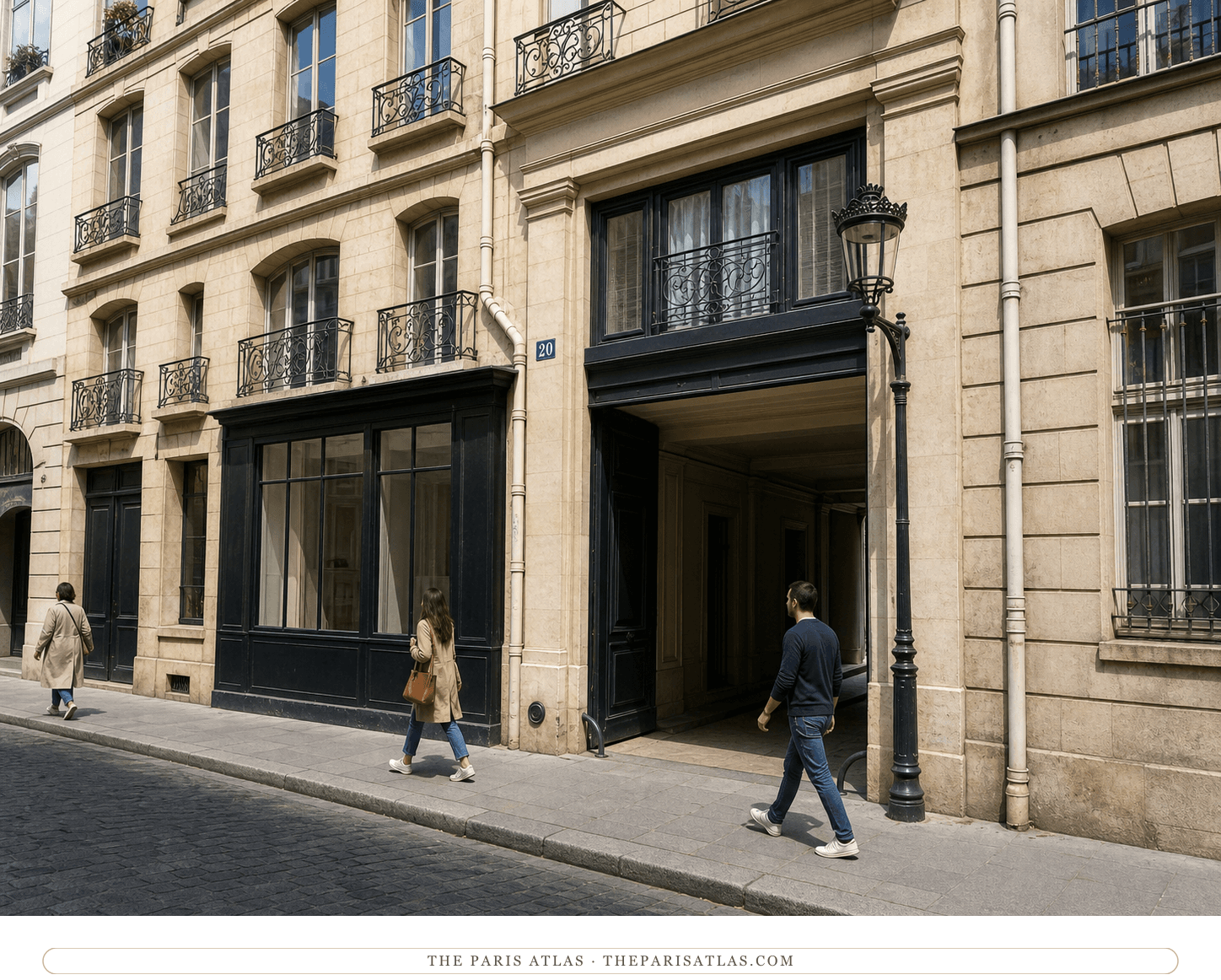
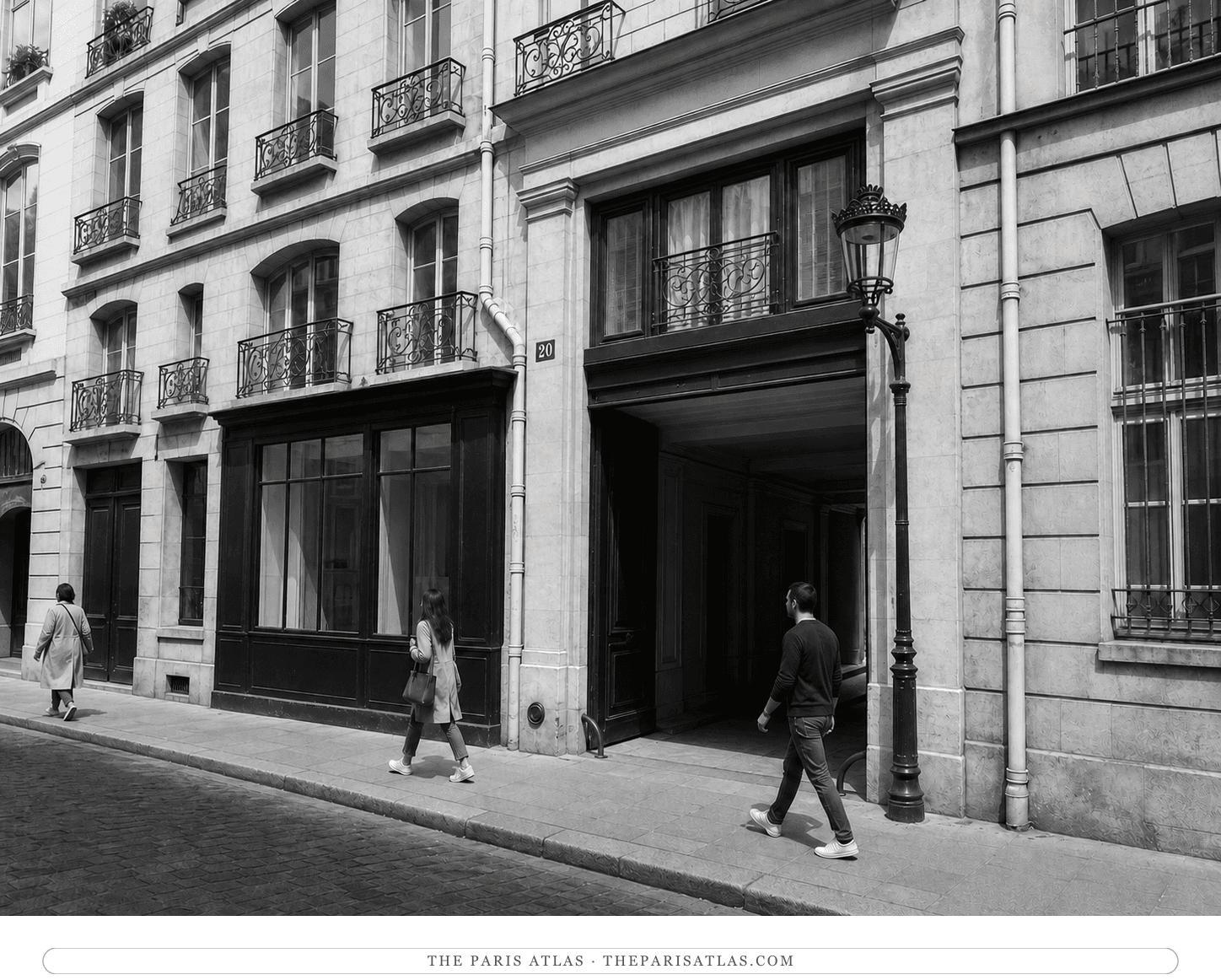
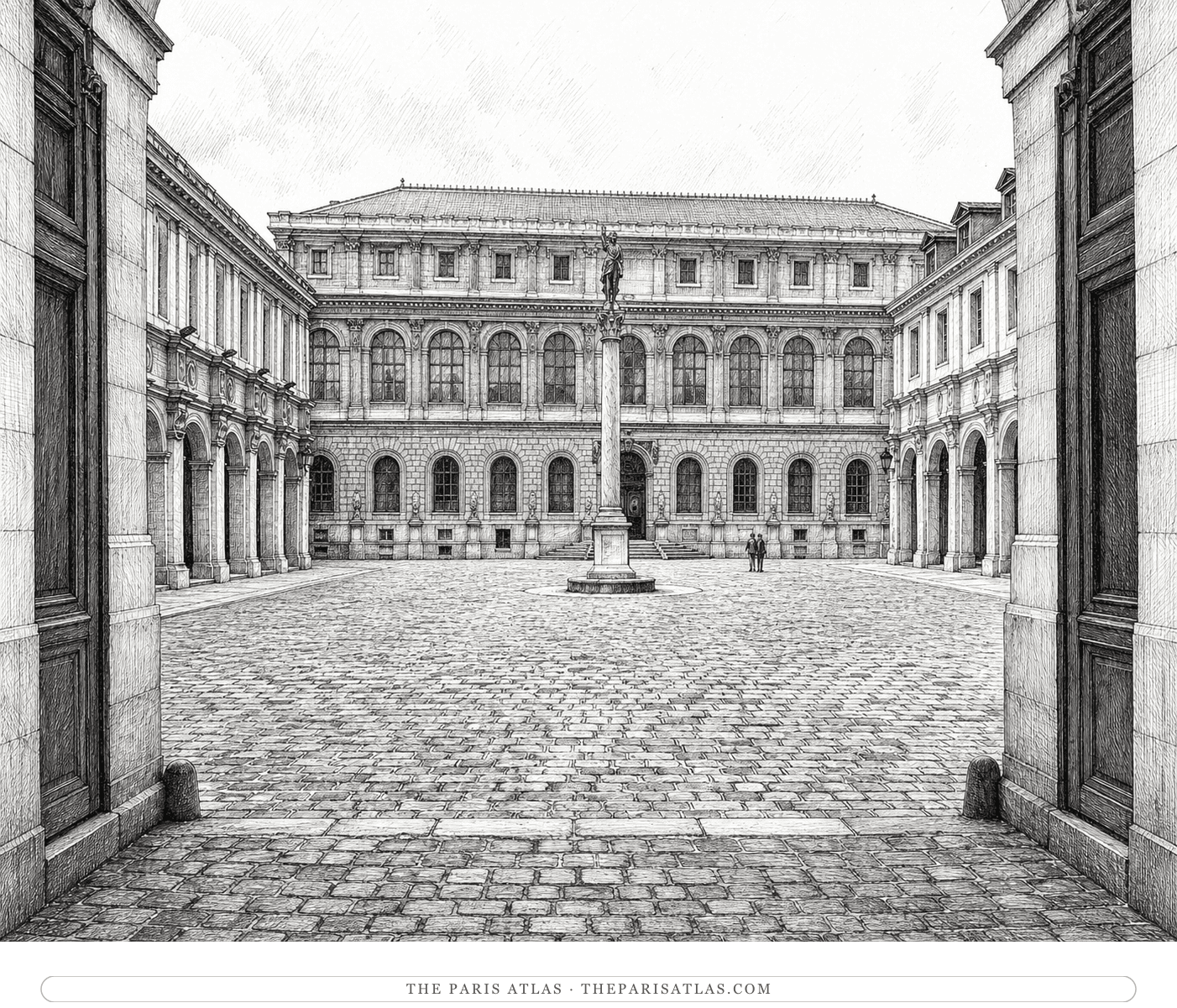
Natalie Clifford Barney took the lease on the pavilion behind 20 rue Jacob in April 1909, when she was thirty-two, and stayed for sixty years. The address is an ordinary Left Bank frontage in Saint-Germain-des-Prés; everything she is remembered for happened behind it, in a walled courtyard holding a two-storey house with a veranda, a large overgrown garden, and a small Doric temple with À L'AMITIÉ cut into its pediment.[1]
From October 1909 she opened the rooms every Friday and went on doing it, with one long break for the Second World War, until she was evicted at the end of the 1960s. Gertrude Stein's Saturday evenings at 27 rue de Fleurus were the other great salon of the same decades. Barney's outlasted it by thirty years.[2]
The lease, recorded in the Paris archives and reconstructed by Baptiste Essevaz-Roulet and William Pesson in their study of the site, covered four separate things.[3]
Renée Vivien, the poet who had been the great love of Barney's twenties, died a few weeks after the move and never saw the house.[4]
The temple is a garden folly: four Doric columns, six steps, a pediment carrying the words À L'AMITIÉ and the initials DLV, and inside a perfectly circular room lit from an oculus in the dome. It is roughly four metres across.[5]
For most of the twentieth century it was said to have been built by the Maréchal de Saxe for his mistress, the actress Adrienne Lecouvreur. The dates make that impossible: Lecouvreur died in 1730, and the temple first appears on the imperial cadastre of 1821–22. Essevaz-Roulet and Pesson trace it instead to Nicolas Simon Delamarche, who bought the garden in 1804, and read DLV as the marquis de la Vaupallière, Delamarche's patron. A second story, that the building was a masonic lodge, they date to the 1960s and find nothing in the archives to support. Barney herself believed the Lecouvreur legend and furnished the temple's niches with busts of the actress and the marshal; a bust of Lecouvreur also went up on the pavilion's façade. Both busts appear to have been taken away after her death.[3]
She used the temple first as a painting studio and then as a private room, kept apart from the salon. She furnished it with rough old Spanish chairs and a swan-necked bed, had it scrubbed out and a fire lit in its chimney for receptions, and took people into it two at a time.[3]
My second garden has kept its temple to Friendship, windowless, its doors half shut, the refuge of some solitary who is invisible or gone.
Mon deuxième jardin a su garder son temple à l'Amitié, sans fenêtres, aux portes mi-closes, refuge d'un solitaire invisible ou disparu.
The salon ran from five to eight. Thirty to thirty-five people came on an ordinary Friday and as many as two hundred for a set piece. Berthe Cleyrergue, who came to work for Barney in 1927 and stayed in the house until 1977, made the food: triangular sandwiches, and the small harlequin-coloured cakes from Rumpelmayer's. Barney sometimes forgot which day it was, and Cleyrergue had to tell her that the guests were downstairs.[6]
Barney's stated purpose was traffic between languages. She thought American, British and French writers ought to read and translate one another, and she ran the room to make that happen. Paul Valéry gave the first public reading of his poem Le Cimetière marin there. George Antheil gave the first performance of his First String Quartet. Ernest Hemingway came a few times, and wrote afterwards that plenty of well-off American and French women kept salons but Barney was the only one with a small Greek temple in her garden. James Joyce, Gertrude Stein and Alice B. Toklas, Ezra Pound, T. S. Eliot, Mina Loy and Colette were all in the room at one time or another; Robert de Montesquiou was there in the earliest years, before his death in 1921.[2]
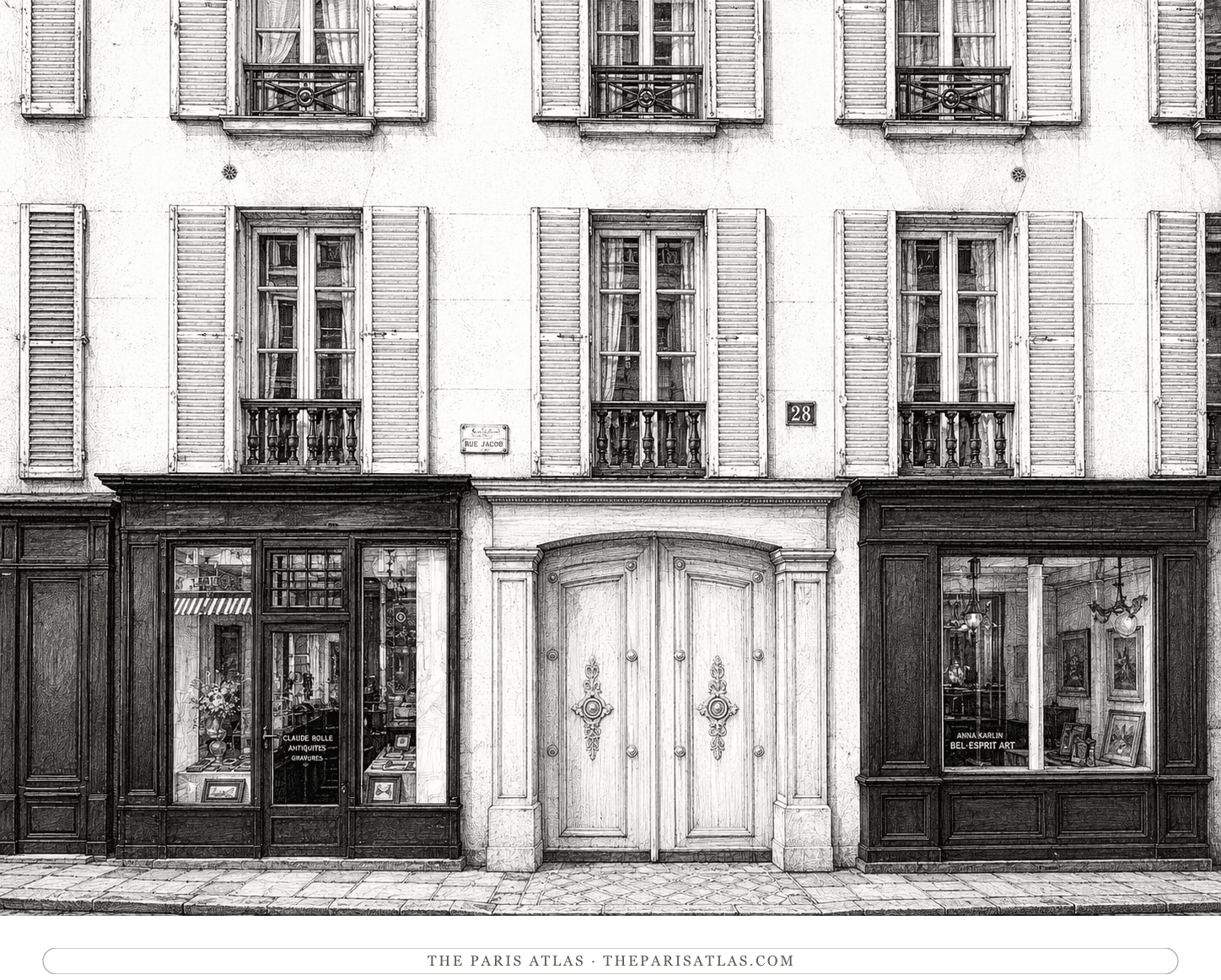
Colette had lived four doors along, on the third floor of 28 rue Jacob, from 1893 to 1896. She came back to the street as Barney's friend, gave her the first hearing of her stage version of La Vagabonde in the salon, and once, according to the diary of the abbé Mugnier, was seen running nearly naked through the garden. Marcel Proust managed one visit and called the building the temple of Love by mistake.[4]
In 1927 Barney gave part of the season a name. The Académie des Femmes was not an institution and had no members in any formal sense. It was a run of Fridays, each given over to one woman writer, who read from work in progress or work no publisher had taken. The Académie française had been electing forty immortals since the seventeenth century and had never elected a woman; this was the reply.[2]
Gertrude Stein, Colette, Mina Loy, Djuna Barnes, Rachilde, Lucie Delarue-Mardrus and Anna Wickham were among those honoured, and Renée Vivien posthumously. Stein's evening in 1927 included a French translation Barney had made of passages from The Making of Americans.[2]
Barney was a lesbian and never concealed it, in a period and a family that gave her every reason to. Her father bought up and destroyed the remaining stock and printing plates of her first book, Quelques Portraits-Sonnets de Femmes, in 1900, because its poems were addressed to women. She published anonymously until he died in 1902 and under her own name for the seventy years after that.[7]
The rue Jacob was where that life had its address. Renée Vivien, Élisabeth de Gramont, Dolly Wilde and the painter Romaine Brooks, whose relationship with Barney lasted more than fifty years, belong to the house as much as any of the writers who read there. Two novels published in 1928 put the salon into print. Djuna Barnes wrote Barney into Ladies Almanack as Dame Evangeline Musset, and the book's other characters are her circle under invented names. Radclyffe Hall, in The Well of Loneliness, made her the salon hostess Valérie Seymour, and used her as the novel's one figure entirely at peace with herself.[4]
The salon stopped for the Second World War. Barney spent it in Italy with Romaine Brooks, in a villa outside Florence, and Berthe Cleyrergue kept the house through the Occupation, hiding her employer's jewellery and passing food to Barney's friends in Paris. The Fridays started again in 1949 and ran on into the 1950s, by which time the room had become a piece of literary history that young writers came to look at as much as a place where reputations were made.[6]
In 1966 the whole property at number 20 was divided into a copropriété and sold off in lots. The buyer of the pavilion lot wanted it as his own town house. Barney, then ninety, was granted the right to stay until she died, but the new owner went to court and obtained an eviction order, enforceable four years after it was served. The case reached the newspapers in France and the United States; Georges Pompidou intervened personally and got a promise that the order would not be executed.[3]
What followed was quieter and more effective. An architect declared the pavilion in danger of collapse, carpenters drove shoring props through every room, the kitchen was condemned, and building materials were stacked in the garden. A later report by the chief architect of historic monuments found the props unsuited to the building and probably unnecessary.[3]
My salon is a monument of contemporary literature. Nobody has the right to alter it. I swore I would give up my soul in the place where the mind reigned.
Mon salon est un monument de la littérature contemporaine : personne n'a le droit de le modifier. J'ai fait le serment de rendre l'âme là où l'esprit a régné.
She left the house when it became uninhabitable, saying she would come back in the spring. She died at the Hôtel Meurice in February 1972, aged ninety-five, without returning. She is buried at Passy cemetery under a stone that names her as Remy de Gourmont's Amazon, the nickname the writer gave her early in the rue Jacob years and she carried for the rest of her life.[8]
The Temple à l'Amitié was listed as a historic monument on 16 January 1947, and the surrounding site was registered in 1975. Between 1967 and 1971 its owner removed the oak parquet, blocked the oculus, cut windows into the walls and enlarged the niches. The protest that followed forced a reconstruction, carried out in 1972–74 from photographs taken in 1909; the certificate of conformity was issued in January 1974. What stands there is the temple's shape put back, not the room Barney furnished.[5]
The Mérimée notice records the temple as the property of a private company. It is not open, and it cannot be seen from the rue Jacob or from anywhere else public — only from the windows of neighbouring buildings. What occupies the pavilion now is not on the public record, and no plaque on the street front has been documented. The street is as close as a visitor gets.[5]
Nicolas Simon Delamarche builds the Temple à l'Amitié as a garden folly; it first appears on the cadastre of 1821–22.
Natalie Clifford Barney takes the lease on the pavilion, its veranda, the garden and the temple.
The first of the Fridays. The salon runs weekly from five to eight.
Barney meets Remy de Gourmont, who gives her the name l'Amazone. It follows her onto her gravestone.
Barney founds the Académie des Femmes, a run of Fridays given to individual women writers. Berthe Cleyrergue joins the household as housekeeper.
Djuna Barnes publishes Ladies Almanack and Radclyffe Hall The Well of Loneliness; both put Barney and her salon into fiction.
The salon closes for the war. Barney spends it in Italy with Romaine Brooks; Cleyrergue keeps the house through the Occupation.
The Fridays resume and continue into the 1950s.
Number 20 is divided into a copropriété. The buyer of the pavilion later obtains a court order for Barney's eviction.
Barney protests in France-Soir that her salon is a monument of contemporary literature and no one has the right to alter it.
Barney dies at the Hôtel Meurice, aged ninety-five, having left the shored-up pavilion and never returned.
The temple, stripped by its new owner, is rebuilt to its original appearance from 1909 photographs after a public scandal.
No. The courtyard, the pavilion and the garden are private, and the Temple à l'Amitié belongs to a private company. The temple cannot be seen from the street; the only views of it are from the windows of neighbouring buildings.
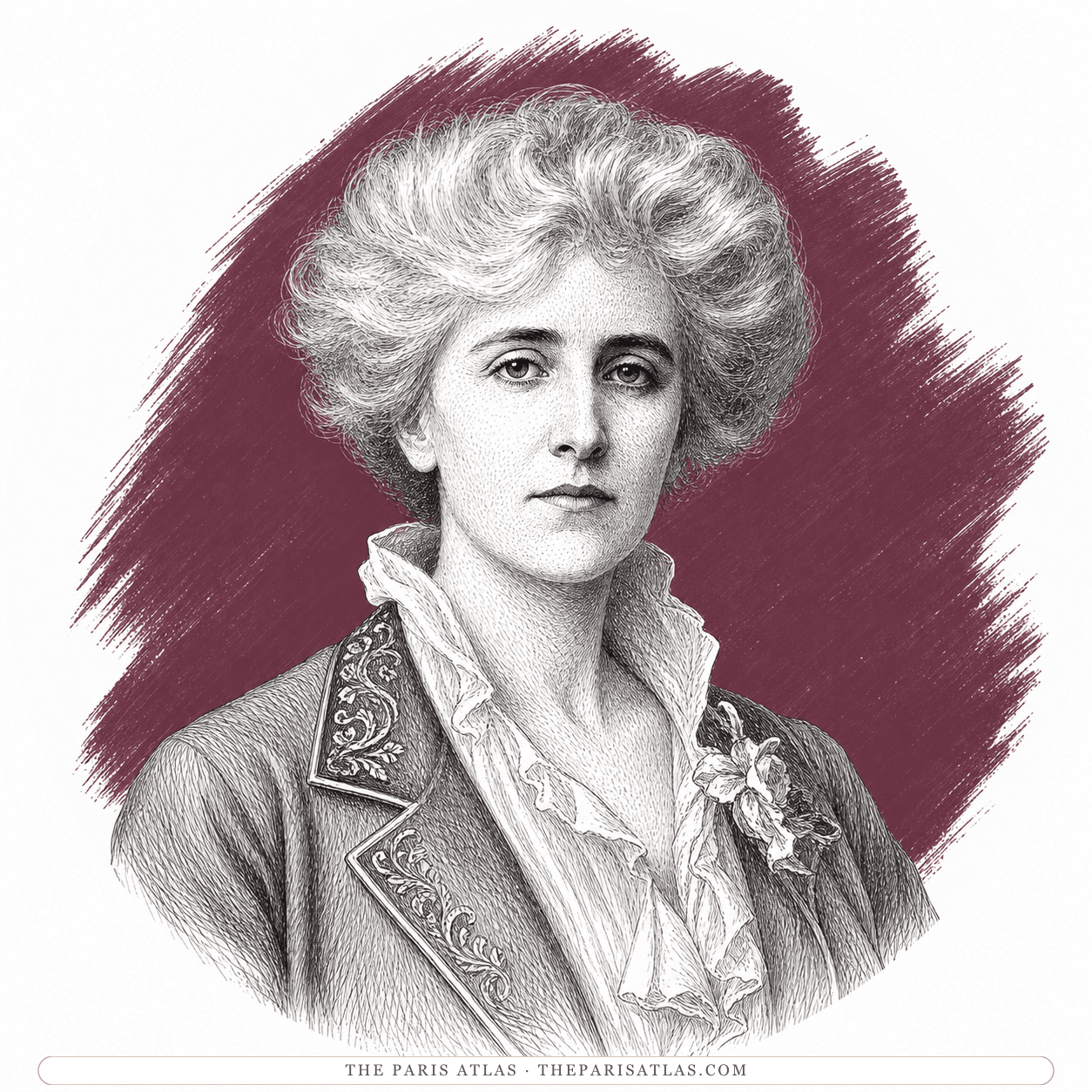
An American writer, born in Dayton, Ohio in 1876, who lived in Paris from her twenties and wrote almost entirely in French. She was openly a lesbian all her adult life, published poems, essays and epigrams, and ran the Friday salon at 20 rue Jacob for sixty years. Remy de Gourmont's name for her, l'Amazone, stuck to her and is on her gravestone.
It was a garden folly, built between 1804 and 1822 by Nicolas Simon Delamarche, who had bought the garden in 1804. The initials DLV on its pediment point to his patron, the marquis de la Vaupallière. The long-repeated story that the Maréchal de Saxe built it for the actress Adrienne Lecouvreur cannot be true, since she died in 1730.
Colette, Gertrude Stein and Alice B. Toklas, Ezra Pound, T. S. Eliot, James Joyce, Ernest Hemingway, Mina Loy, Djuna Barnes, Sylvia Beach, Janet Flanner, Rainer Maria Rilke and Robert de Montesquiou are among the names in the accounts. Paul Valéry gave the first public reading of Le Cimetière marin there, and George Antheil the first performance of his First String Quartet.
The property was divided into a copropriété in 1966 and the buyer of the pavilion went to court to evict Barney. Shoring props were driven through the rooms and the kitchen was condemned. She left at the end of the 1960s expecting to return in the spring, and died at the Hôtel Meurice in February 1972 without going back.
No. Colette lived on the third floor of 28 rue Jacob from 1893 to 1896, four doors along, with her first husband Henry Gauthier-Villars. She later came back to the street as a guest and friend of Barney's at number 20.
Depicted in its pages
Barnes turns Natalie Barney's rue Jacob salon and its regular circle into the almanack's gathering place, with Barney recast as Dame Evangeline Musset.

Depicted in its pages
The Paris chapters transform Natalie Barney's rue Jacob salon into Valérie Seymour's gathering place, just as the hostess appears under an invented name.
Hosted gatherings here · 1909–1970
The Fridays began in October 1909 and ran weekly from five to eight, with thirty to thirty-five regulars on an ordinary week and up to two hundred for a set piece. They stopped for the Second World War, which Barney spent in Italy, and resumed in 1949. From 1927 a run of them was given over to the Académie des Femmes, one Friday per woman writer.
Lived here · 1909–1970
Barney took the lease on the courtyard pavilion, its veranda, the garden and the Temple à l'Amitié in April 1909, and lived there for sixty years. The end year is approximate: the property was divided into a copropriété in 1966, the buyer of the pavilion obtained an eviction order against her, and she left the shored-up house at the end of the 1960s meaning to return in the spring. She died at the Hôtel Meurice in February 1972 without going back.

Lived here · 1917
Charles-Edouard Jeanneret settled permanently in Paris in February 1917 and took a room at this address, three years before he began signing his work Le Corbusier. The Fondation Le Corbusier's chronology names the address and the arrondissement. Natalie Clifford Barney's salon occupied the garden pavilion behind the same entrance from 1909; nothing records the two of them meeting.
Frequented by
Berthe Cleyrergue, who ran the household from 1927, named Toklas with Gertrude Stein among the guests at the Fridays. No dates are given.
Frequented by
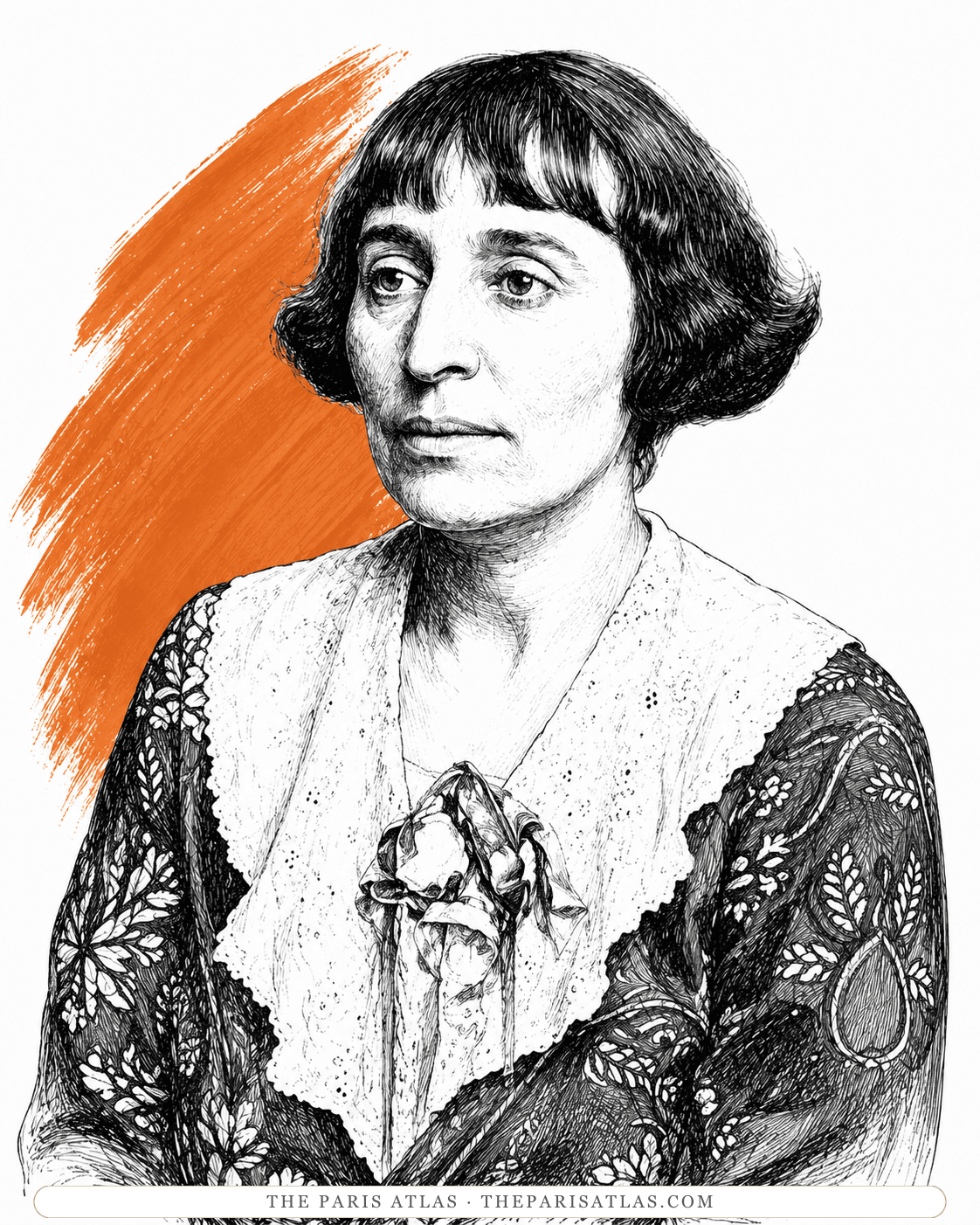
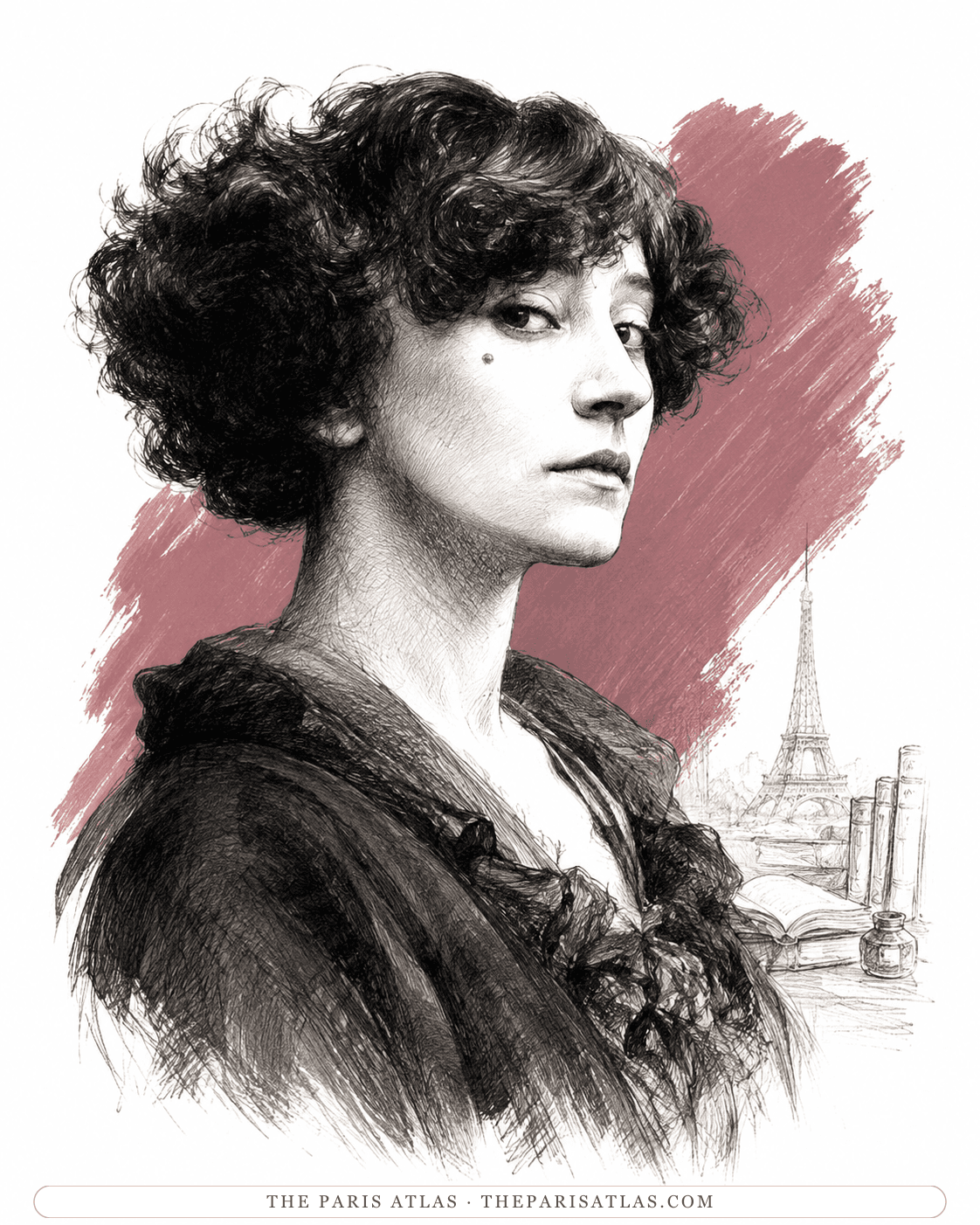
Colette took part in the salon repeatedly. She gave Barney the first hearing of her stage version of La Vagabonde there, and the Académie des Femmes honoured her from 1927. She had lived four doors along at 28 rue Jacob from 1893 to 1896, before Barney arrived on the street. No first or last visit is fixed by the sources.

Frequented by
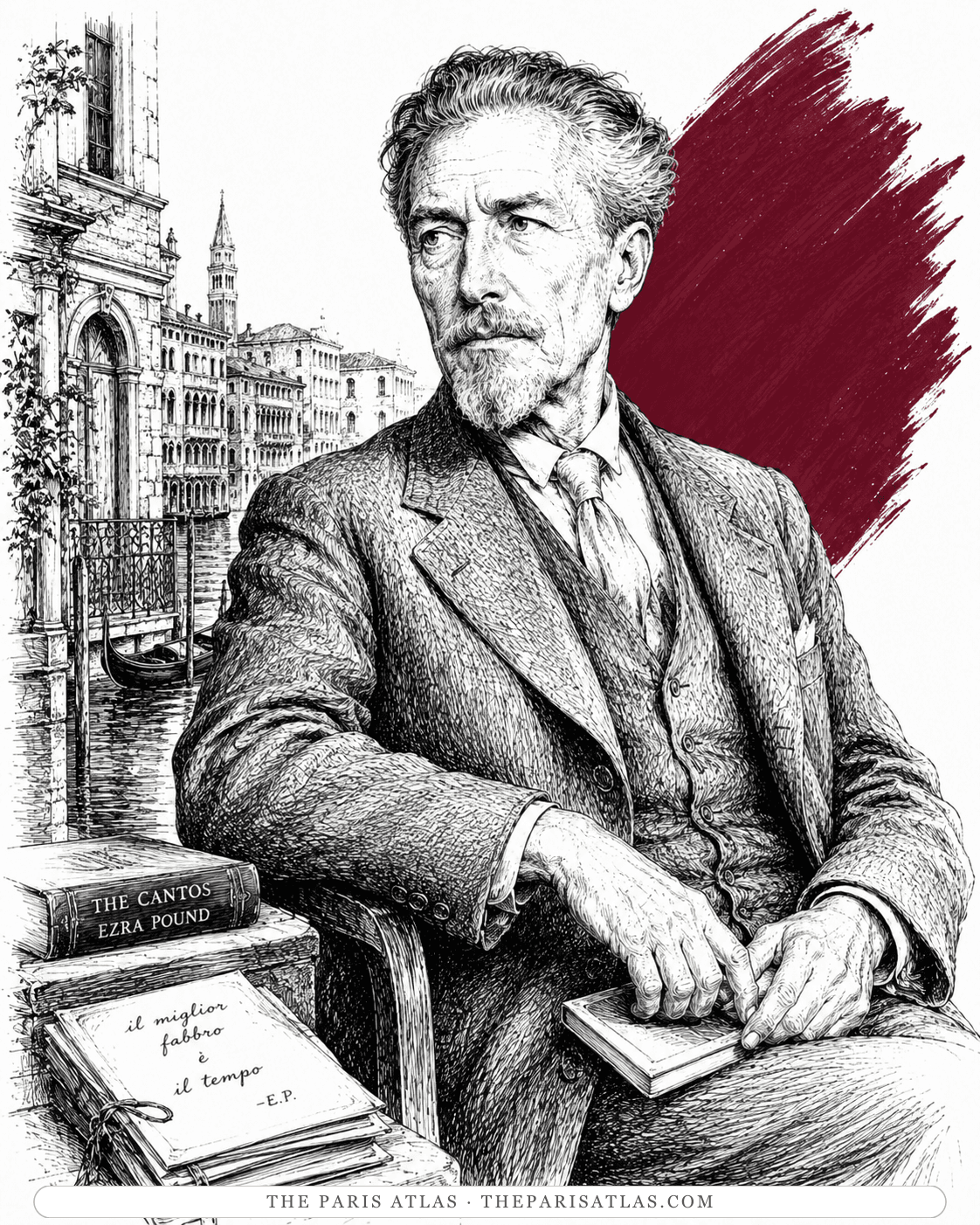
Hemingway went a few times rather than regularly, and wrote afterwards that other well-off American and French women kept salons but Barney was the only one with a small Greek temple in her garden. The sources do not date the visits.
Frequented by
Pound was among the writers Barney received at the Fridays during his Paris years, and Berthe Cleyrergue lists him among the guests she served. The sources name him without dating the visits.

Frequented by · 1927
Barney's Académie des Femmes gave Stein an evening in 1927, with readings and a French translation Barney had made of passages from The Making of Americans. Berthe Cleyrergue, the housekeeper, counted Stein and Alice B. Toklas among the regular guests. The year is the Académie evening, not a first visit, which the sources do not fix.
Frequented by
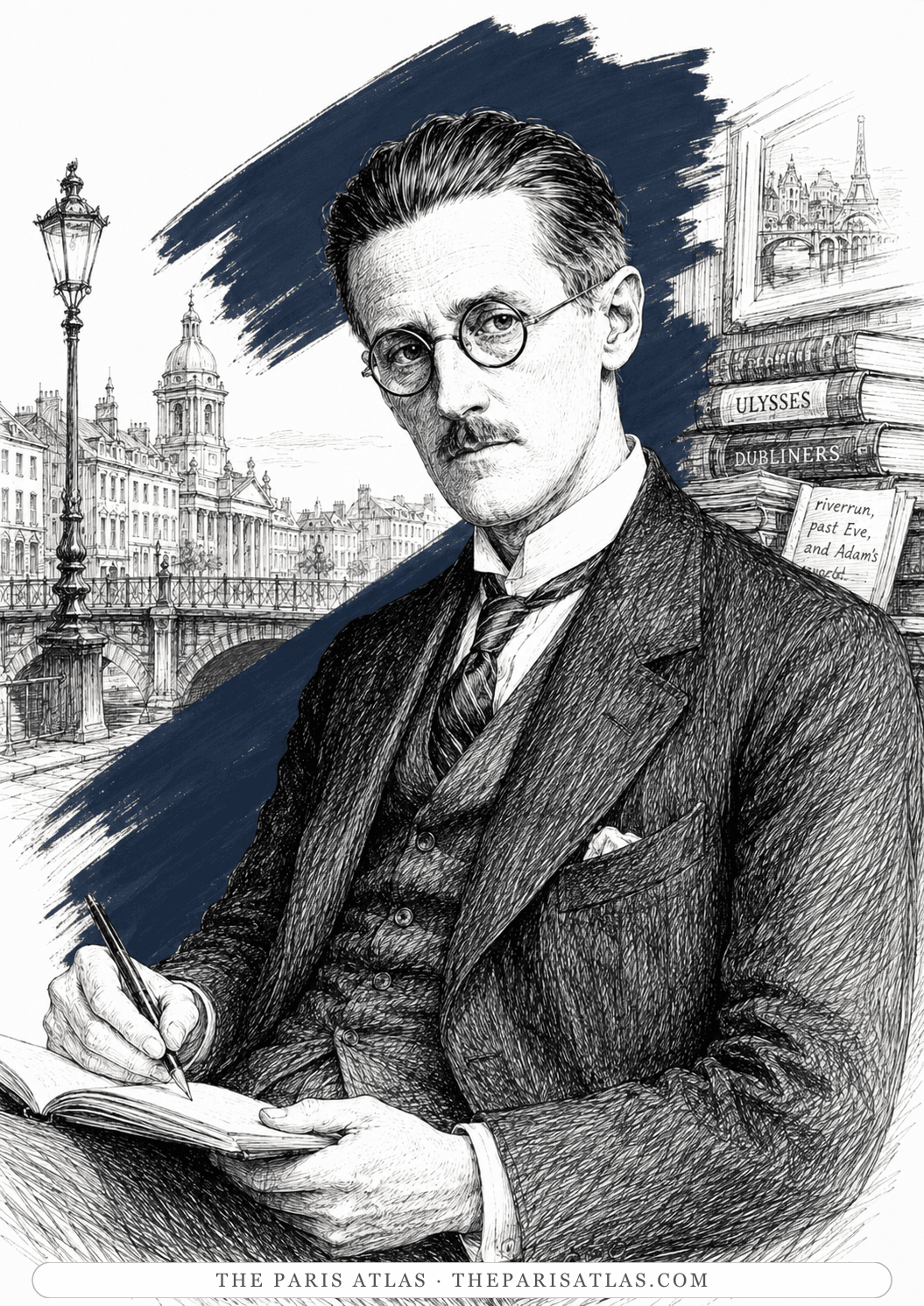
Joyce is named as one of the writers who used the salon, which Barney ran expressly as a meeting point between American, British and French literature. Berthe Cleyrergue also lists him among the guests. No dates are recorded.
Frequented by
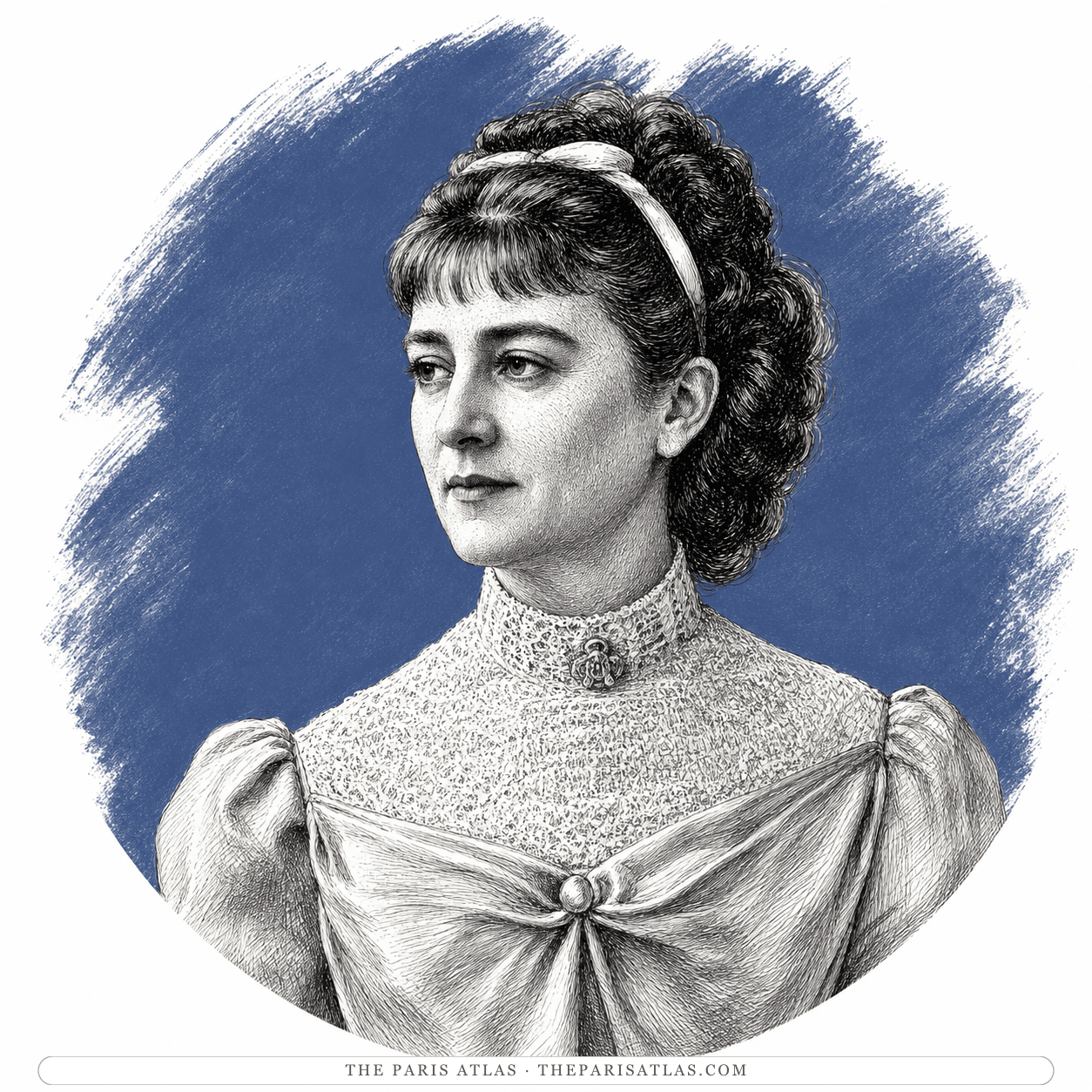
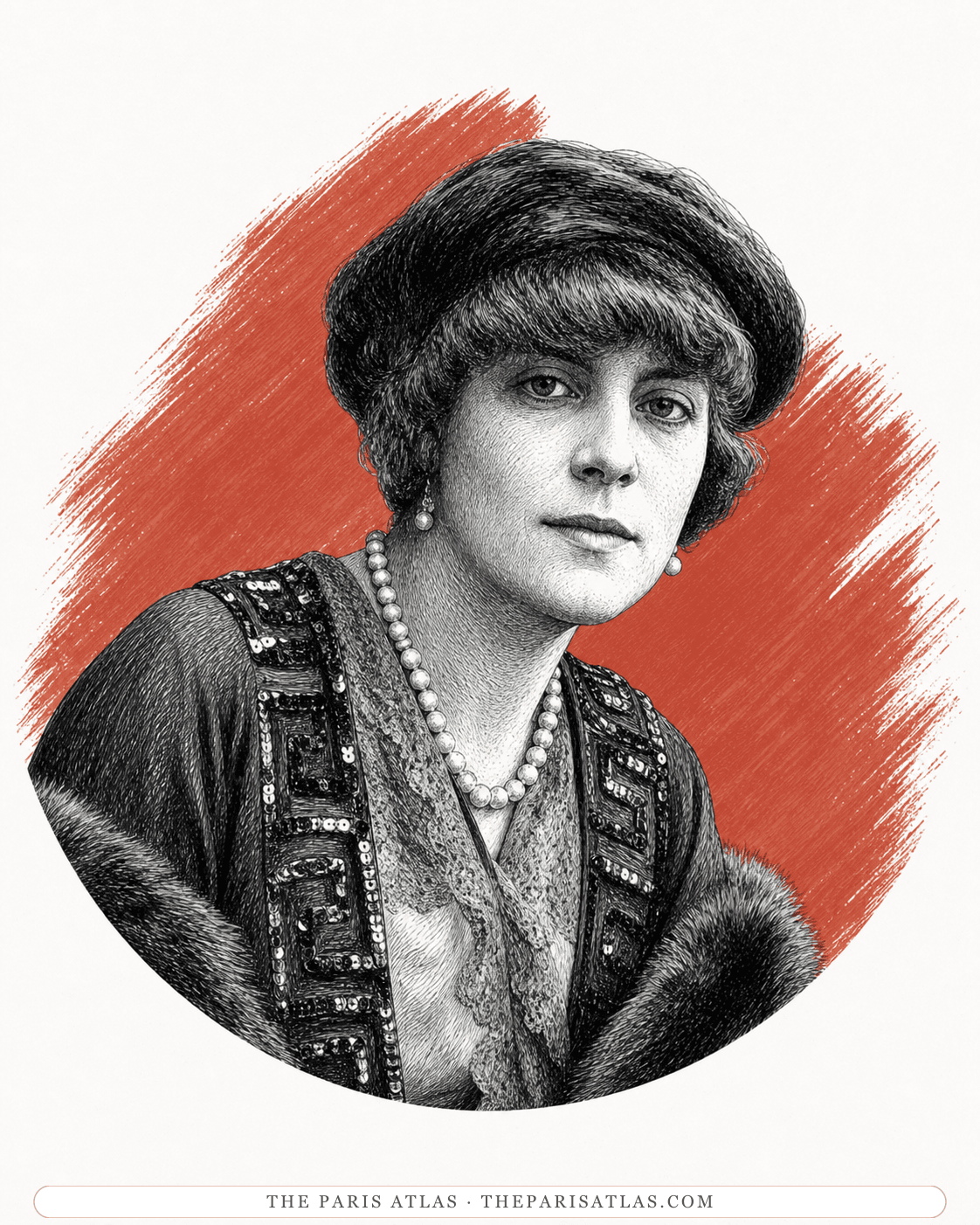
Gramont is named among the French writers honoured by the Académie des Femmes, the run of Fridays Barney gave over to individual women writers from 1927 in the same rooms as the ordinary salon. Anne Charles counts her among the probable guests at the salon's opening in 1909. No start year is recorded because the sources do not fix one.
Frequented by
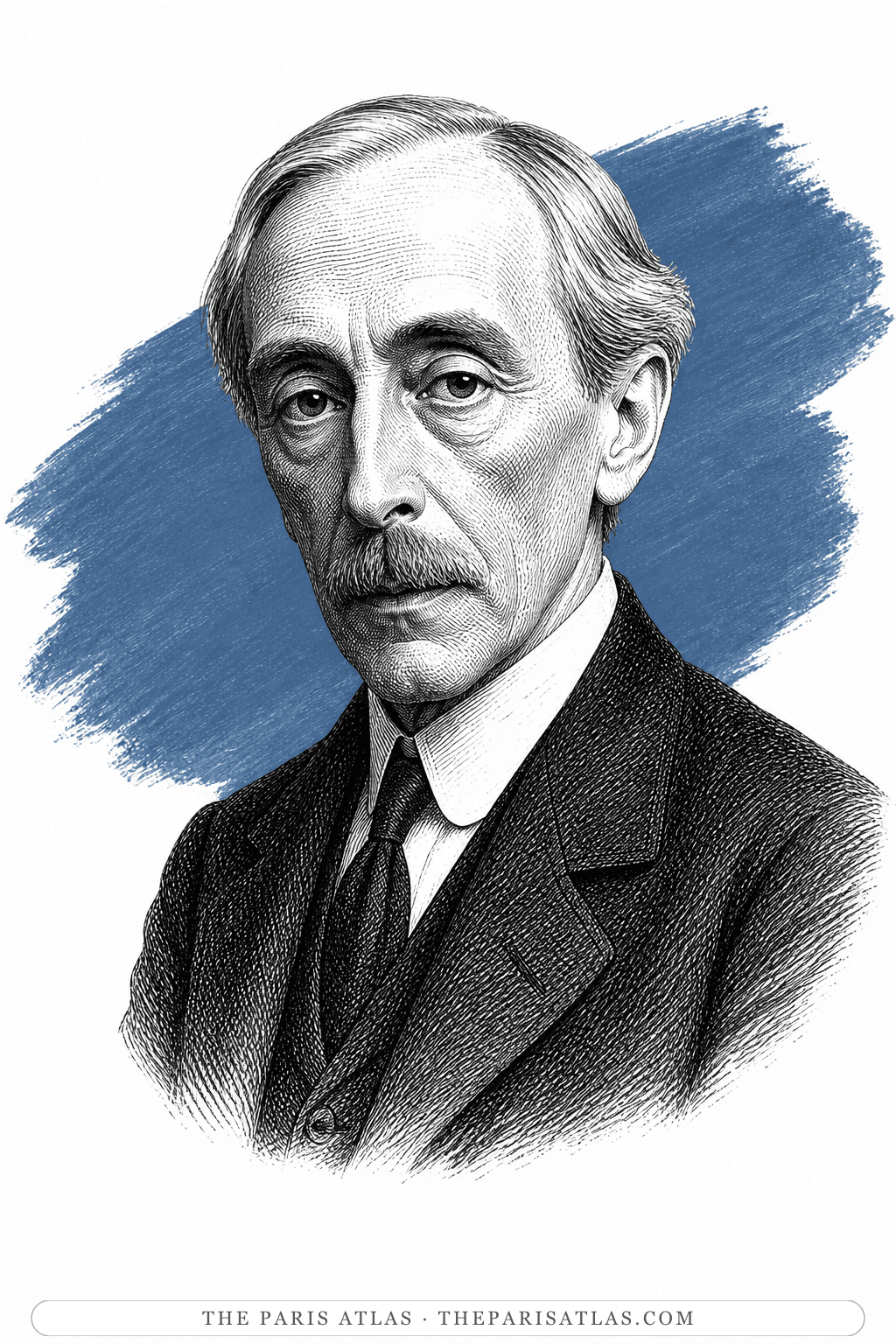
Delarue-Mardrus is named among the French writers honoured by the Académie des Femmes, the run of Fridays Barney gave over to individual women writers from 1927 in the same rooms as the ordinary salon. Anne Charles counts her and her husband, Joseph Charles Mardrus, among the probable guests at the salon's opening in 1909. No start year is recorded because the sources do not fix one.
Frequented by
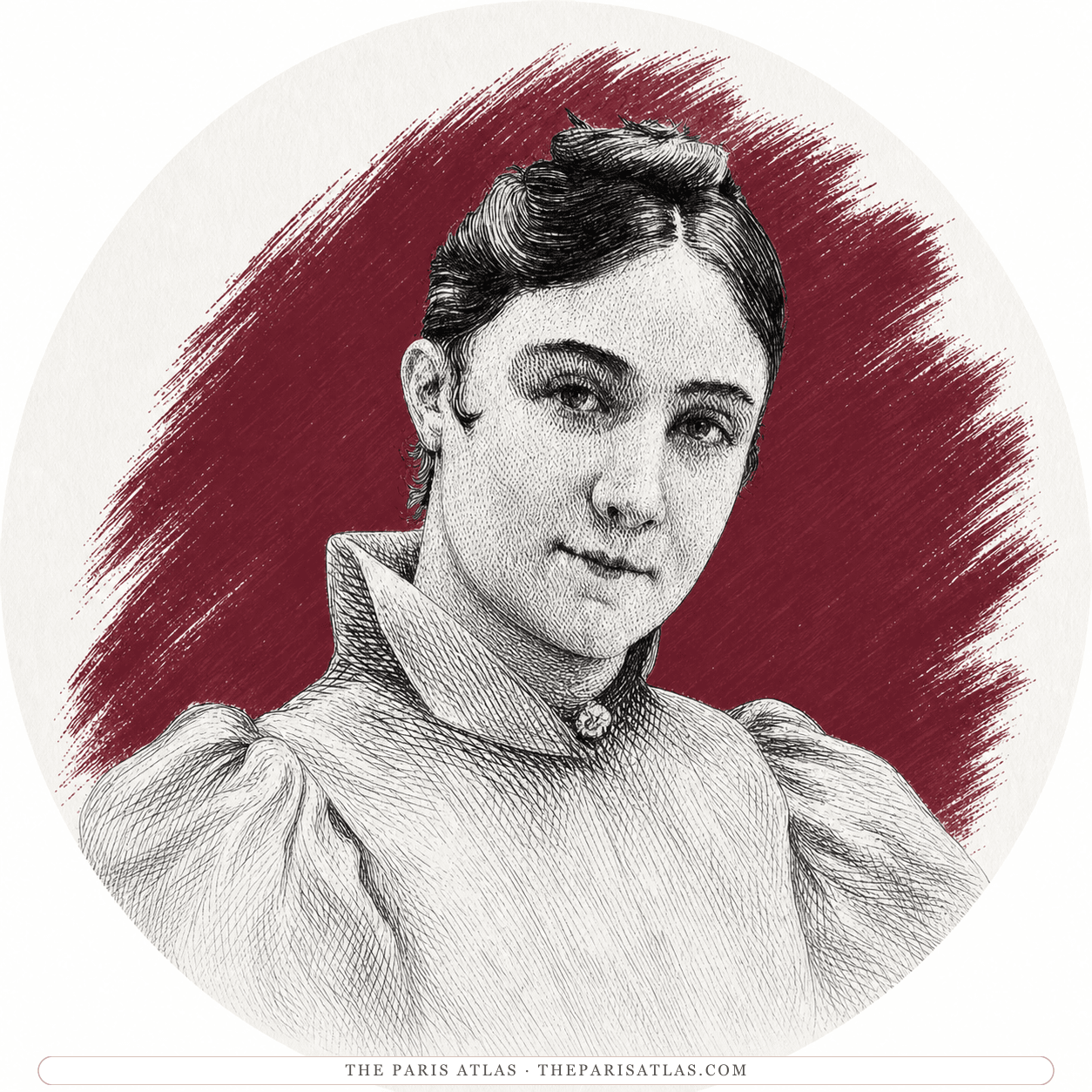
Valéry is named among the salon's visitors in the reference accounts of it, and he gave the first public reading of Le Cimetière marin there. The poem was published in June 1920; the sources do not date the reading, so no years are recorded here. Barney translated his work for American readers.
Frequented by · 1927
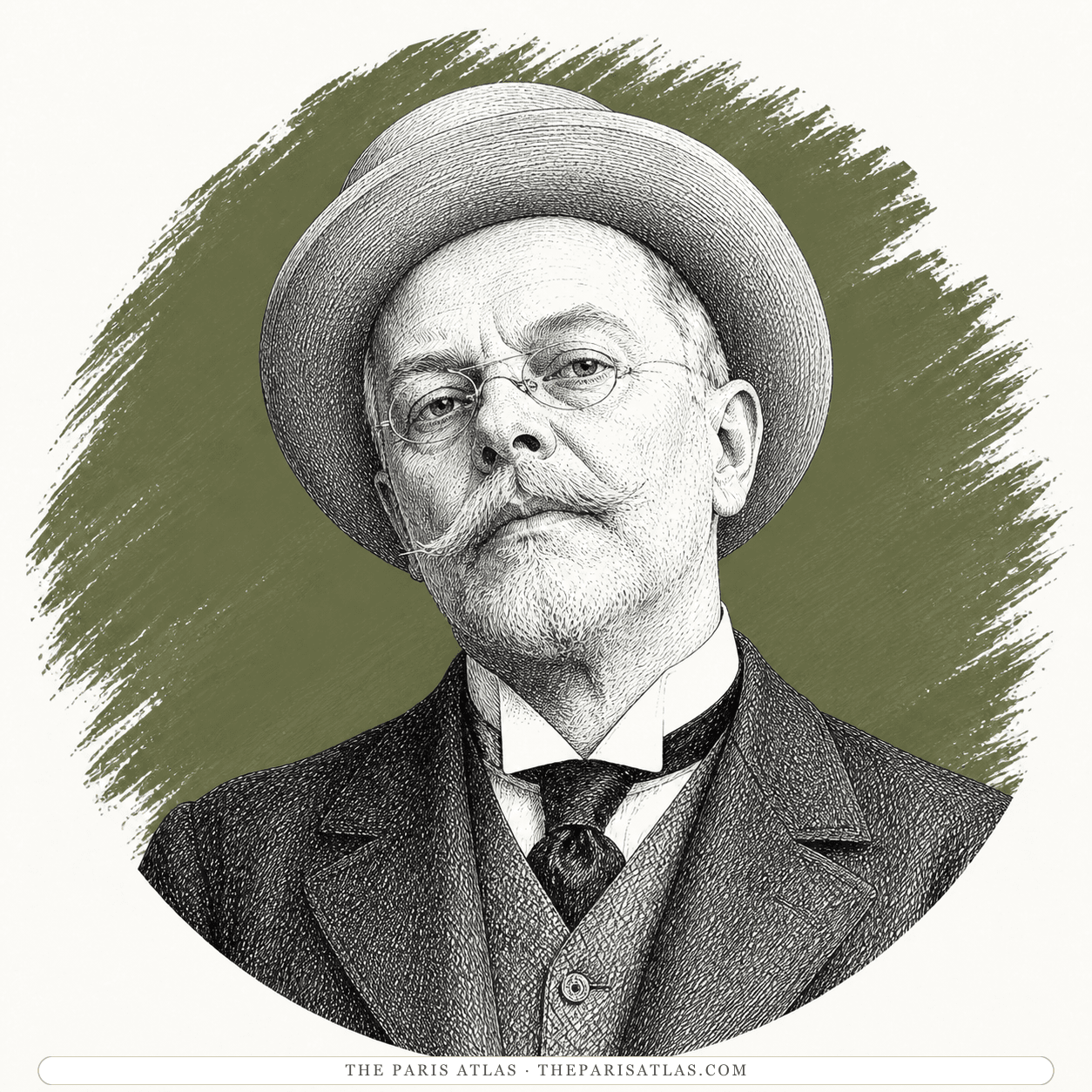
Two documented facts meet here rather than one: Barney's Académie des Femmes met at 20 rue Jacob, giving one Friday to each woman writer it honoured, and Rachilde is named among those honoured. The sources do not describe Rachilde in the room on her own evening, which is why this is probable rather than documented.
Frequented by · 1910–1915
Barney's courtship of Gourmont as a friend eventually got him out of his flat and into the pavilion on the rue Jacob, first for her masked ball and then for the Friday salon itself. He had been a recluse since 1891, so the appearances are the point rather than the frequency, and the accounts do not say how many times he came.

Frequented by
Flanner is named among the Americans Natalie Clifford Barney received at the Friday salon during the 1920s. She lived two minutes' walk south, at 36 rue Bonaparte. The sources name her without dating individual visits.
Frequented by
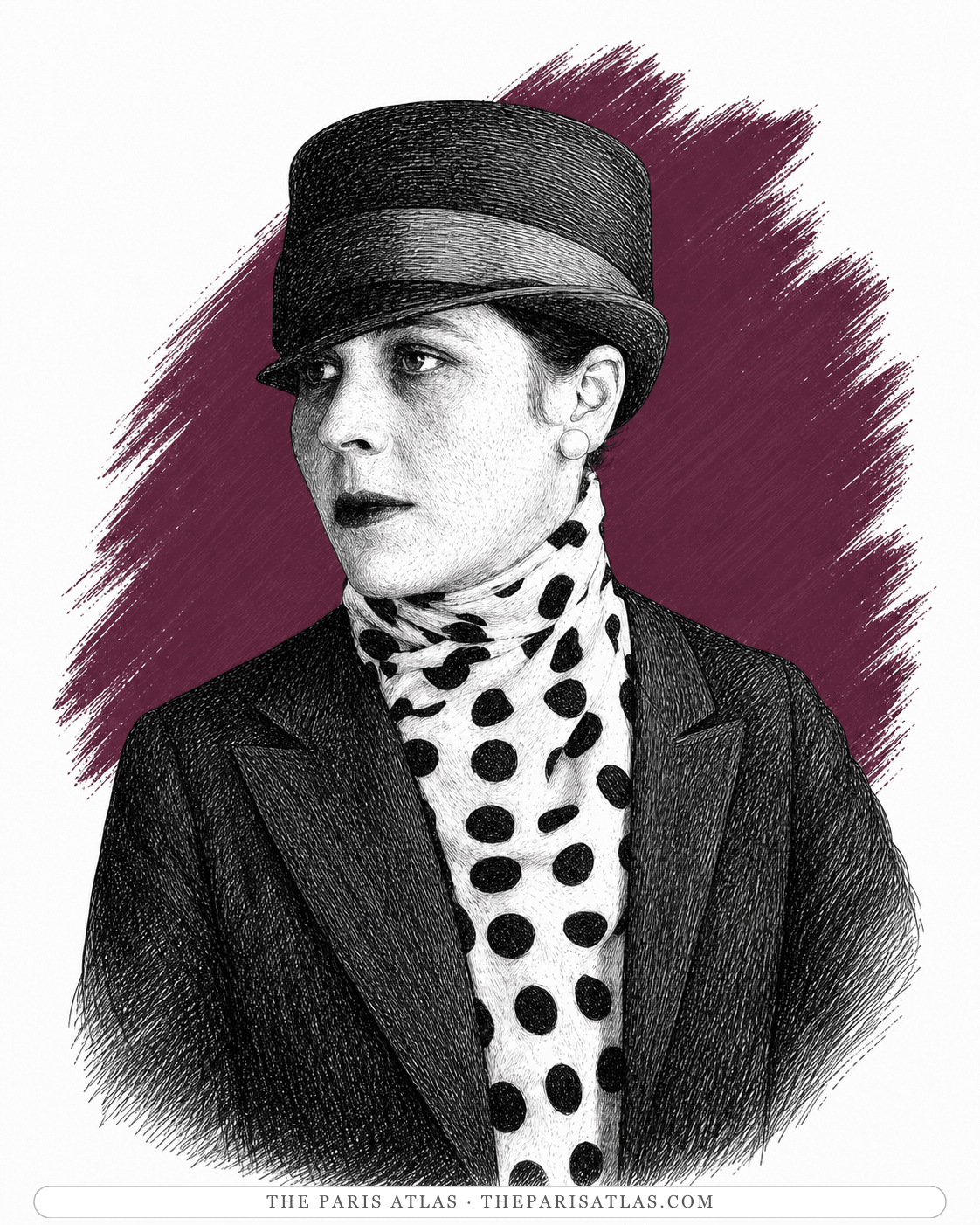
Barnes belonged to the circle around Natalie Clifford Barney's salon on the rue Jacob. Her privately printed Ladies Almanack satirises the members of that community.
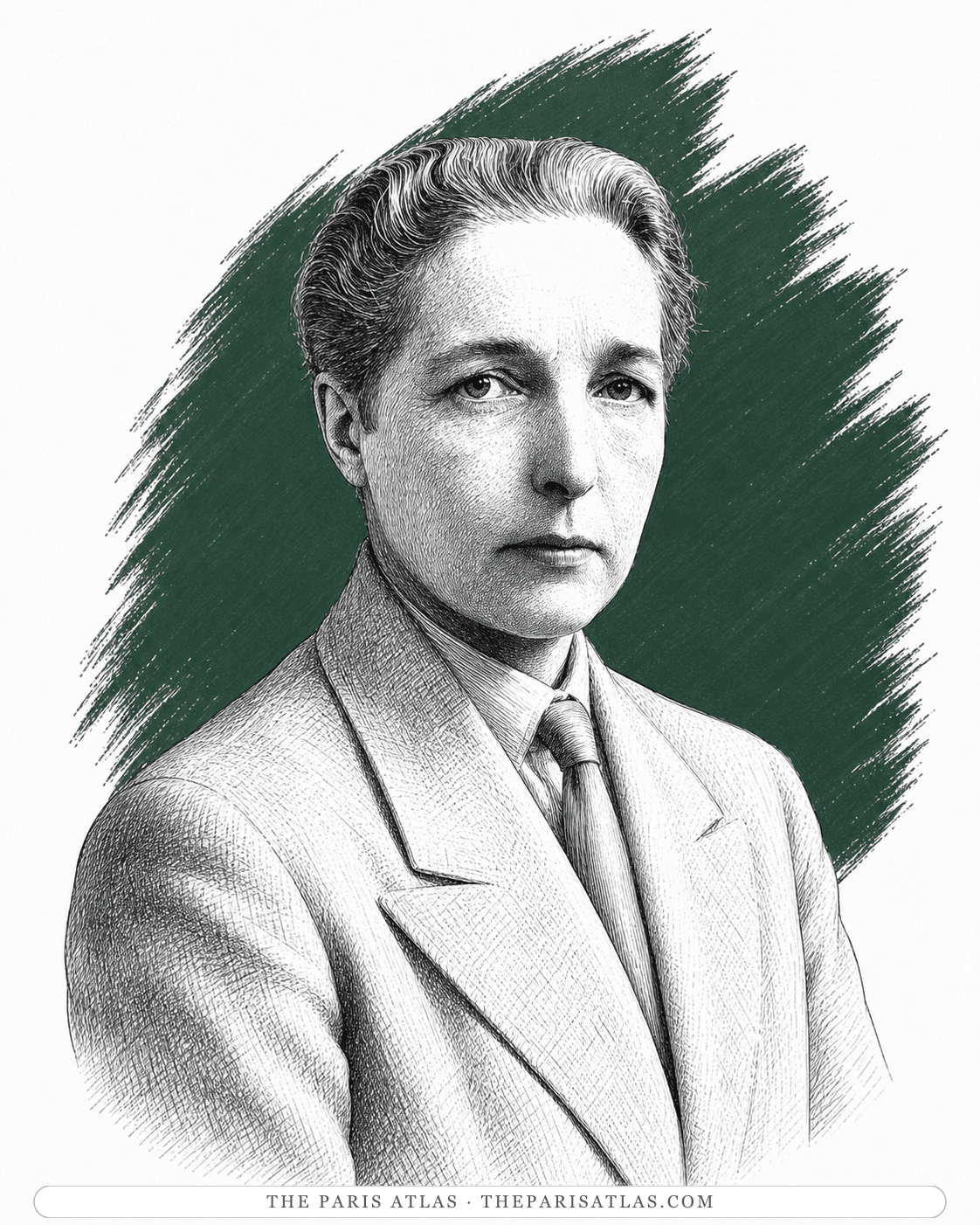
Radclyffe Hall wrote about 20 rue Jacob in The Well of Loneliness.
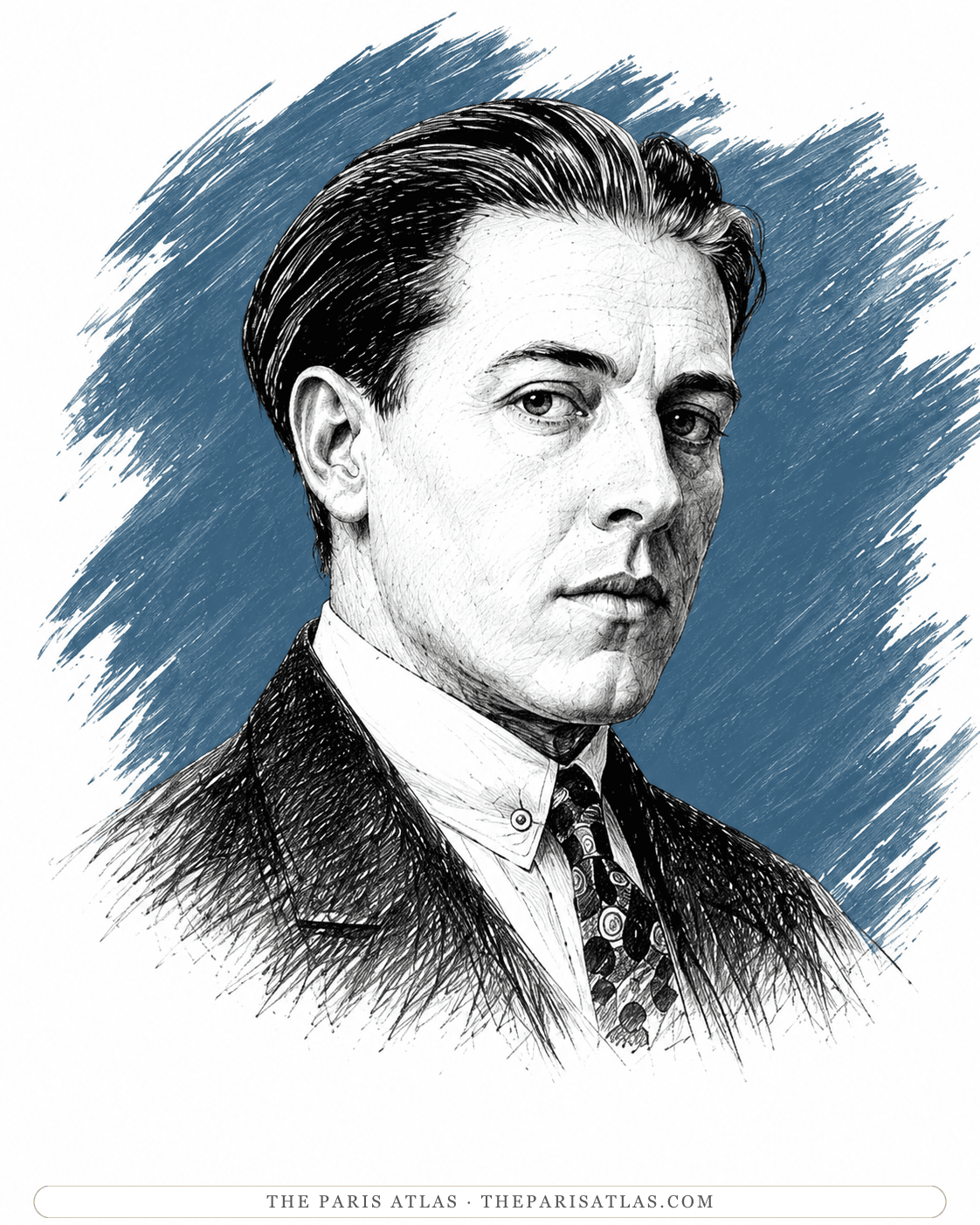
Antheil gave the first performance of his First String Quartet at one of Barney's Fridays. The Fridays were not only readings: music and dance were programmed alongside them. The sources do not date the evening.
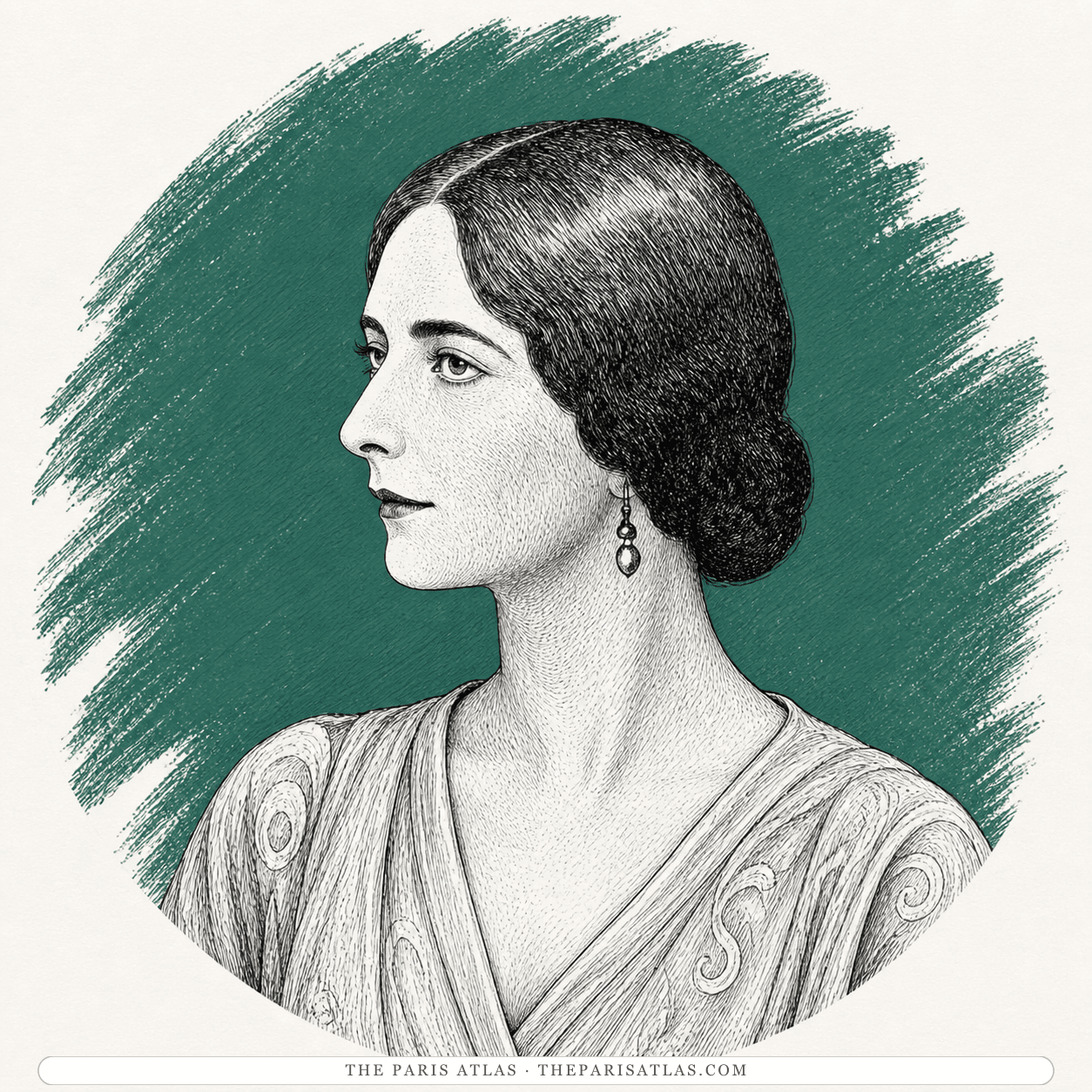
Loy joined the circle at the rue Jacob on her return to Paris in 1923, and the Académie des Femmes honoured her from 1927. The end year is her departure from Paris, not a last visit.
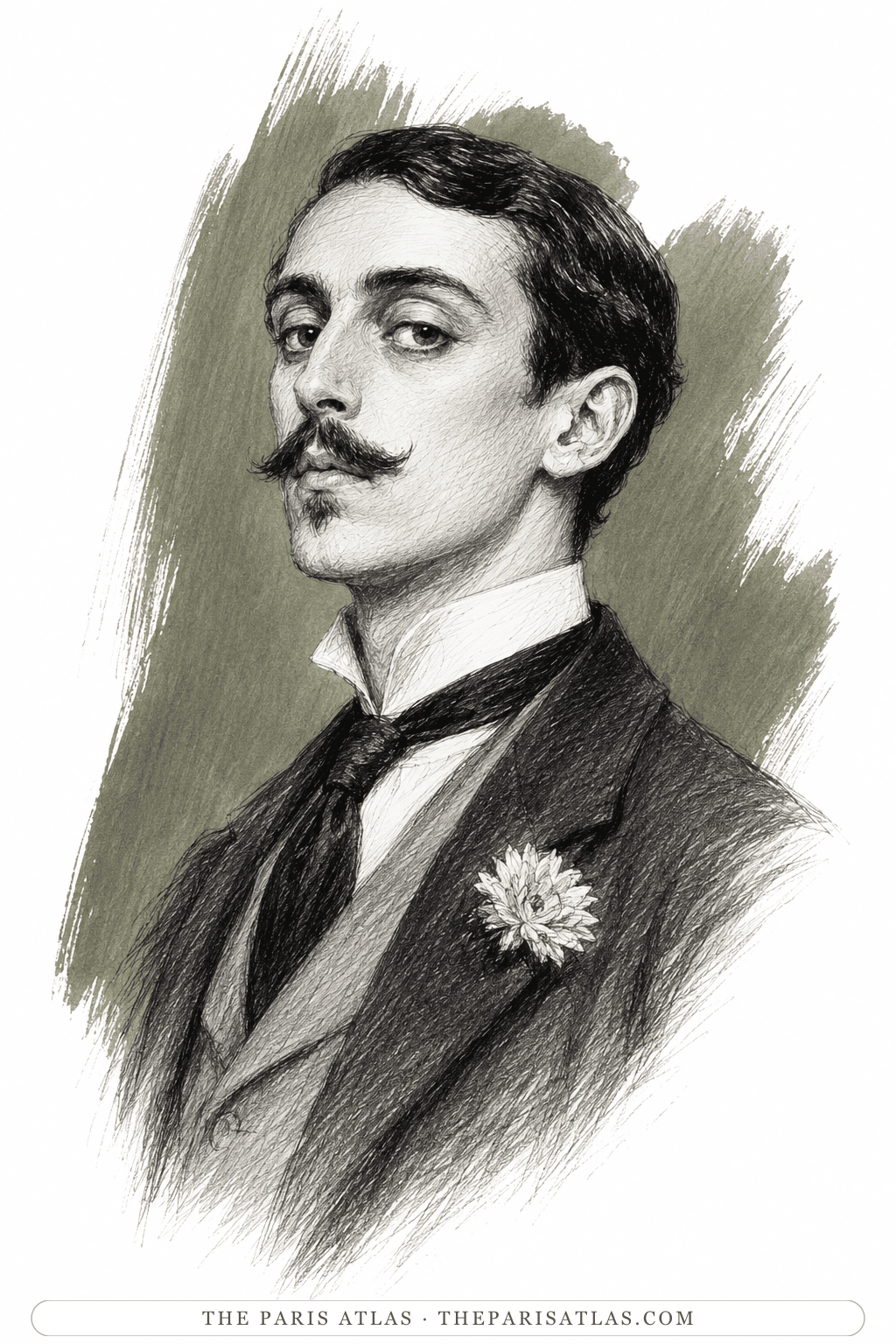
Montesquiou is named among the early participants in the salon, in its first years after 1909. The end year is his death; no individual visit is dated.
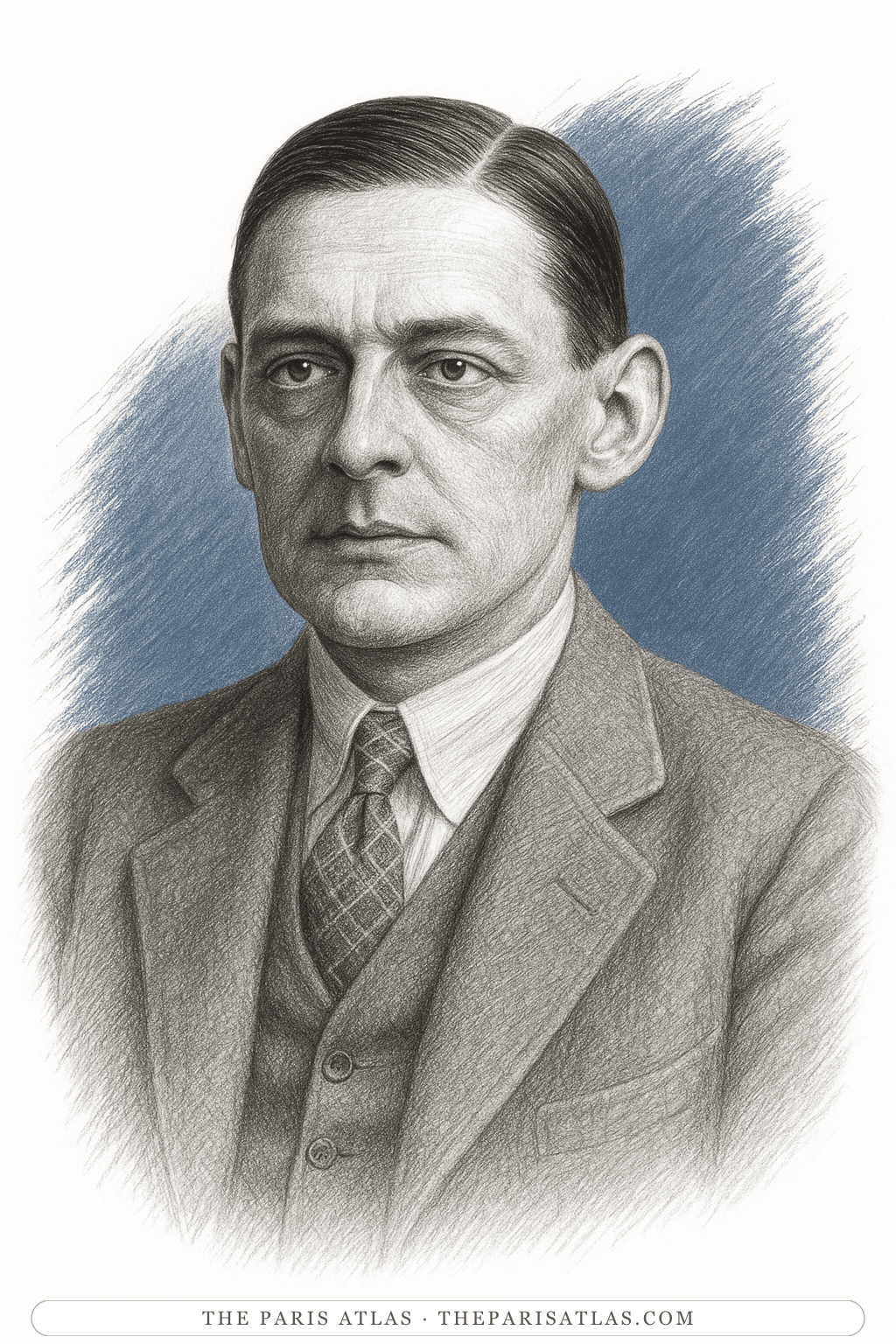
The Library of Congress guide counts Eliot among the writers Barney acted as hostess to, and Berthe Cleyrergue names him among the guests at the Fridays. Neither source dates the visits, and other accounts describe him as an occasional caller rather than a regular.
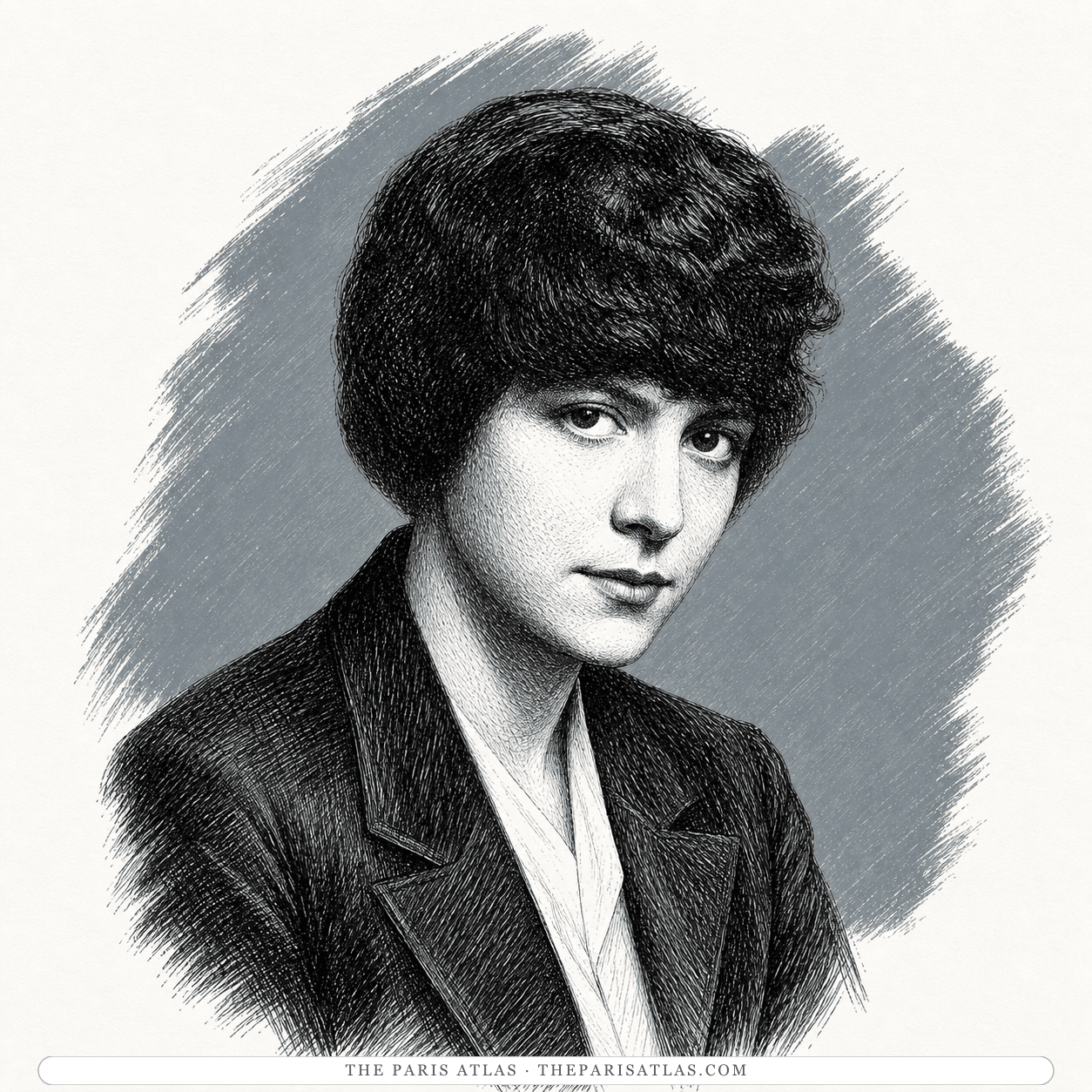
Brooks was at the house across five decades as Barney's partner, and painted her there in 1920 with what the Musée Carnavalet reads as the rue Jacob courtyard behind her. She was not a salon guest in the ordinary sense: she disliked Paris and disliked the Fridays, kept her own flat in the rue Raynouard rather than move in, and spent parts of every year elsewhere. No first or last visit is fixed by the sources.
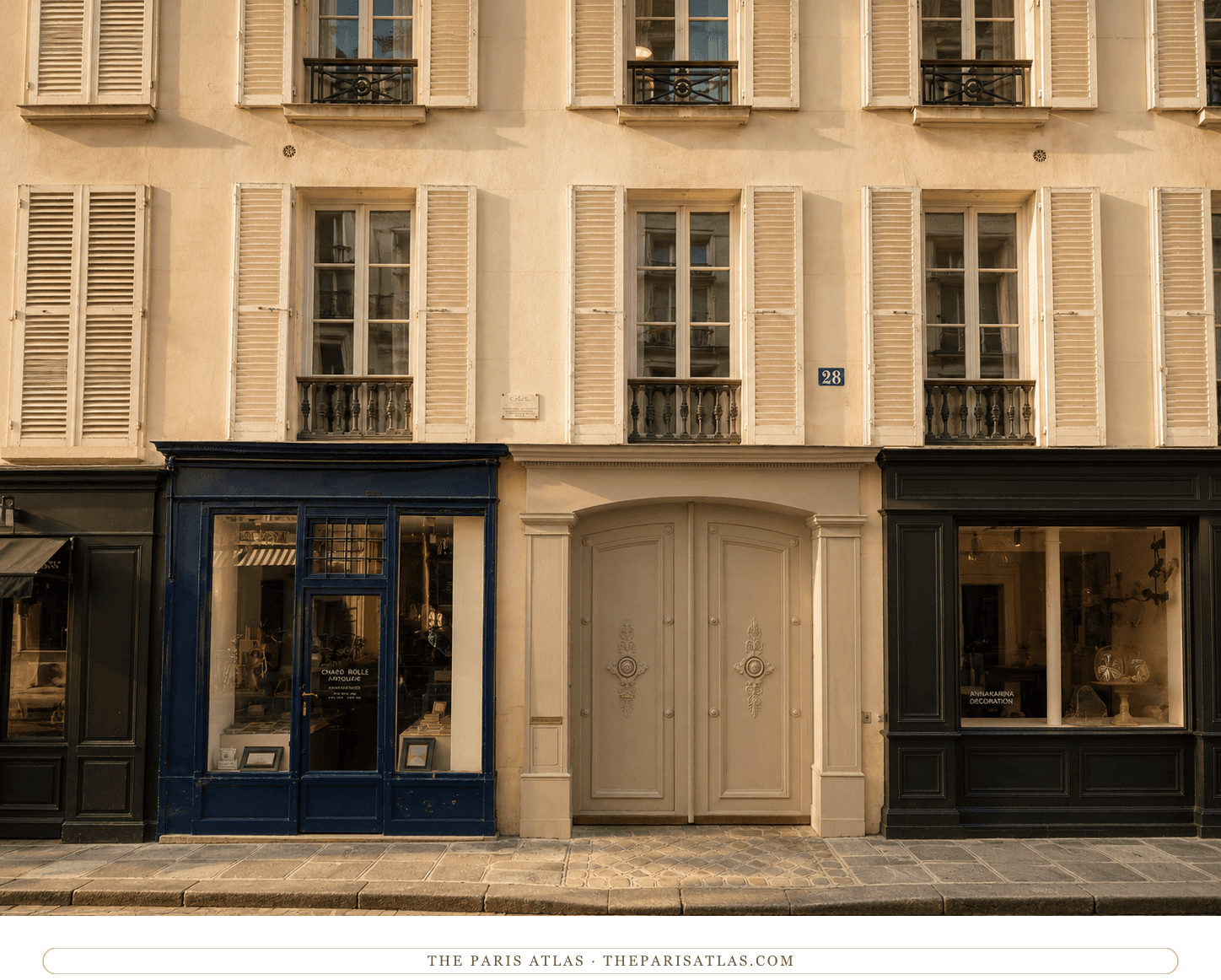
Colette's first marital home in Paris, a third-floor apartment she took with her husband Willy in 1893.
Visit the place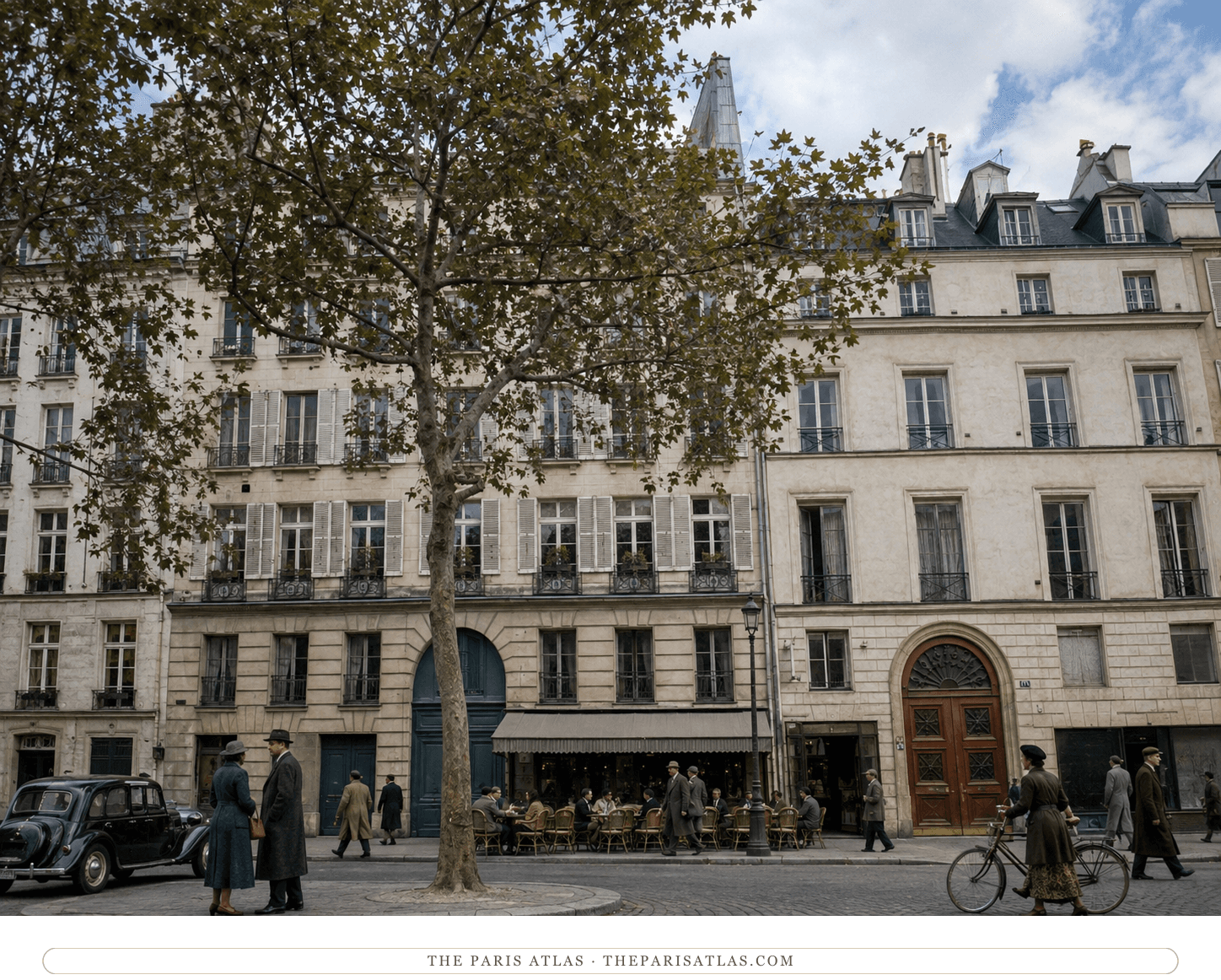
The Left Bank quarter around the abbey church, where the cafés doubled as offices and the bars above and below them ran the other half of post-war Paris.
Visit the place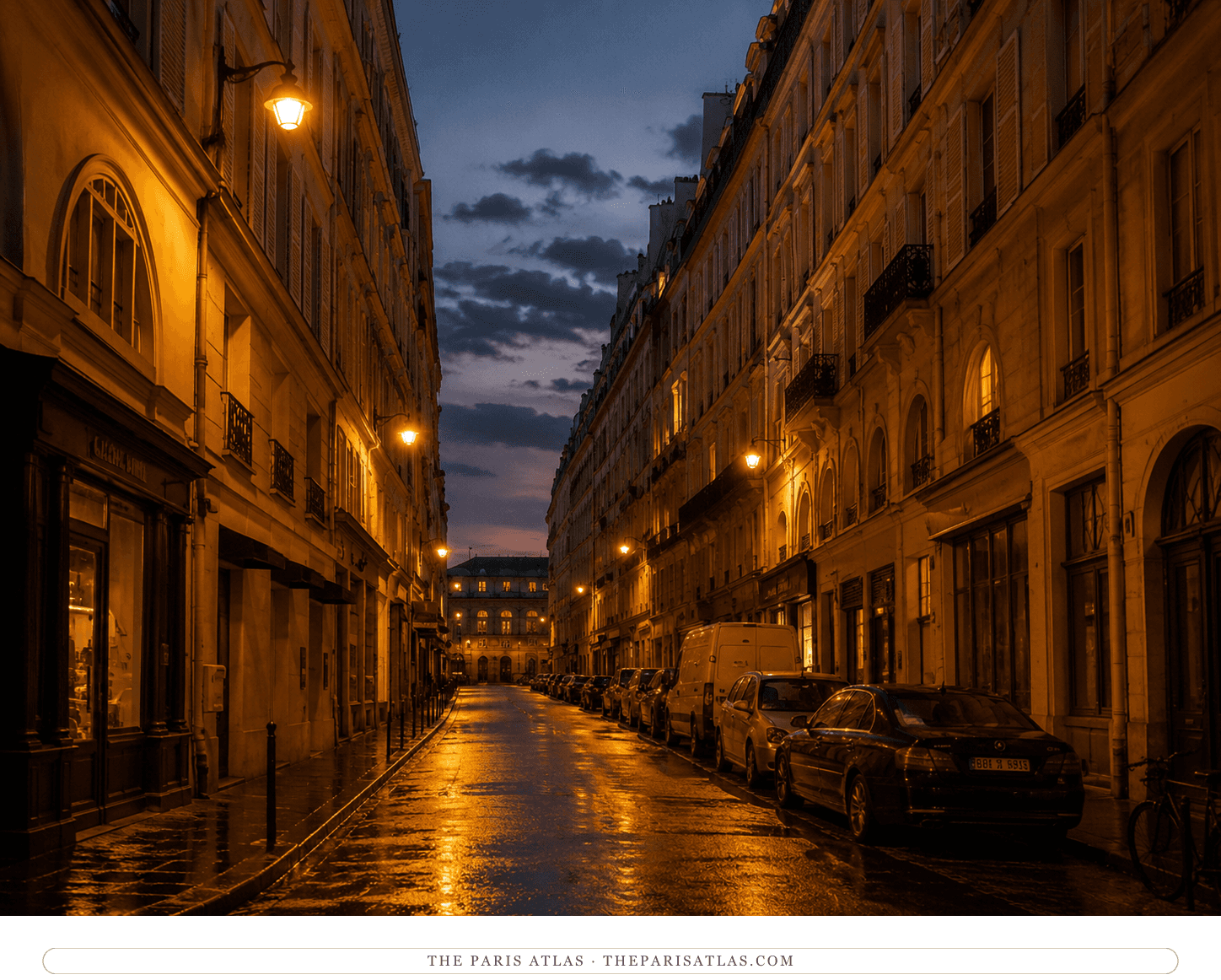
The street that stitches the Left Bank together — river to Beaux-Arts to Saint-Germain to Saint-Sulpice — and the nightly walk Henry Miller could not stop remembering.
Visit the place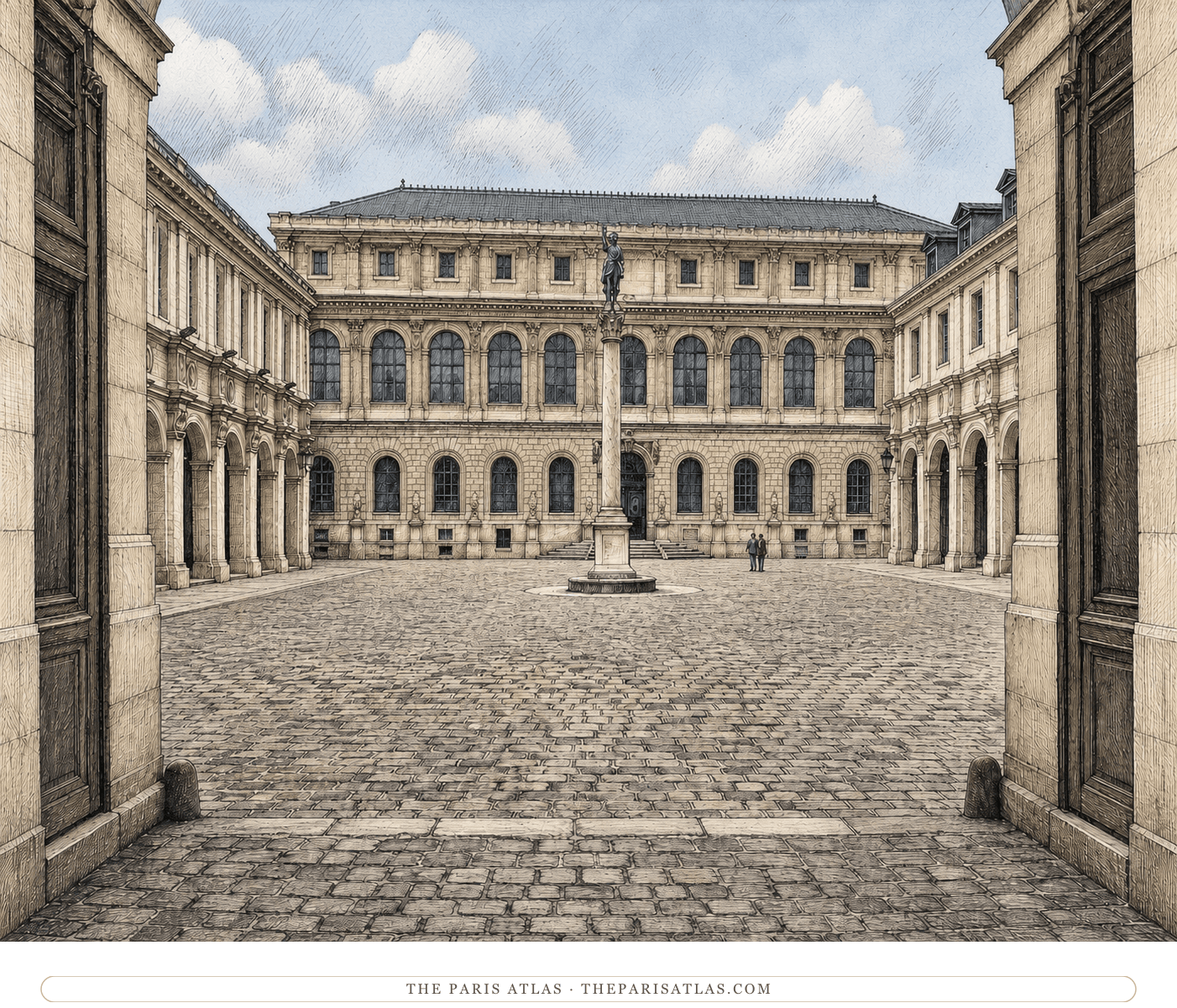
France's national art school, on the rue Bonaparte across from the Louvre. Almost every French painter of the nineteenth century passed through it, argued with it, or defined themselves against it — Degas entered in the 1850s.
Visit the placeThe sources below include histories, archival materials, scholarly research, and official records that informed this page. They document 20 rue Jacob, the people connected to it, and its place in Paris.


Published analysis and historical context used in preparing the 20 rue Jacob page.

Biographical evidence used to verify chronology, relationships, and historical context connected to 20 rue Jacob.
Published analysis and historical context used in preparing the 20 rue Jacob page.
Web source consulted for documented facts and historical context presented on the 20 rue Jacob page.
Published analysis and historical context used in preparing the 20 rue Jacob page.
First-person evidence and historical context used in preparing the 20 rue Jacob page.
Archival evidence used to document the historical record connected to 20 rue Jacob.
Archival evidence used to document the historical record connected to 20 rue Jacob.
Archival evidence used to document the historical record connected to 20 rue Jacob.
Map data used to verify addresses, geographic coordinates, and the placement associated with 20 rue Jacob.
These references provide the documented foundation for this page's history and context. Claim-level citations remain attached to the specific claims they support.
 Explore more resources
Newsletter
The cafés, studios, and walk-up flats where the work was made — one story from the map in every letter.
.jpg) View source
View source View source