Ladies Almanack
How Natalie appears in its pages: The book's heroine — a wealthy Englishwoman of fifty who rescues women in distress, holds court at a tea table, and is canonised as a saint a third of the way through.
Read the character guideAmerican writer who ran the Friday salon at 20 rue Jacob for sixty years, wrote her own books in French, and founded the Académie des Femmes as an answer to the all-male Académie française.
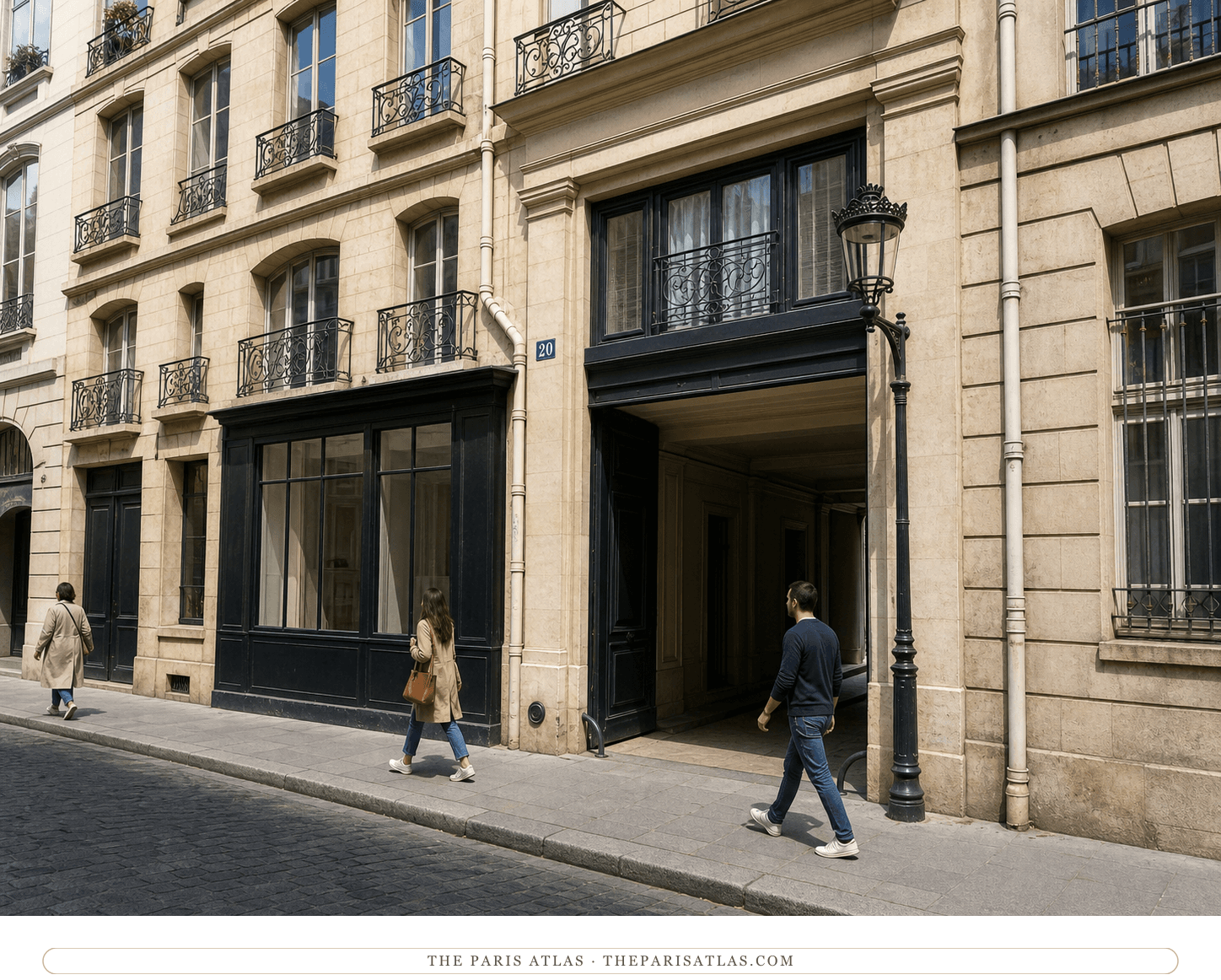
Natalie Clifford Barney was an American writer who spent almost her whole adult life in Paris and wrote almost all of it in French. From 1909 she held a Friday salon at 20 rue Jacob, in the sixth arrondissement, in a pavilion whose garden contains a small Doric folly called the Temple à l'Amitié. The salon ran, with a break for the Second World War, until 1968. Its guests included Colette, Gertrude Stein, Ezra Pound, James Joyce, Paul Valéry, T. S. Eliot, Marcel Proust, and Ernest Hemingway.
She is usually remembered as a hostess, which undersells the writing. Between 1900 and 1963 she published some fourteen books: sonnets, Greek dialogues, plays, three volumes of pensées, one novel in English, and two books of memoirs. Remy de Gourmont addressed a famous series of open letters to her as l'Amazone, and the name stuck for the rest of her life and onto her gravestone. In 1927 she launched the Académie des Femmes, a set of salon evenings honouring women writers, in answer to an Académie française that admitted none.
Barney lived openly as a lesbian from her twenties until her death at ninety-five, at a time when very few women did, and she refused monogamy on principle rather than by accident. Her long attachments were to the poet Renée Vivien, the writer Élisabeth de Gramont, the painter Romaine Brooks, Dolly Wilde, and, from her eighties, Janine Lahovary. She spent the Second World War in Italy, where she wrote a book of wartime commentary that her biographers regard as the hardest part of her record.
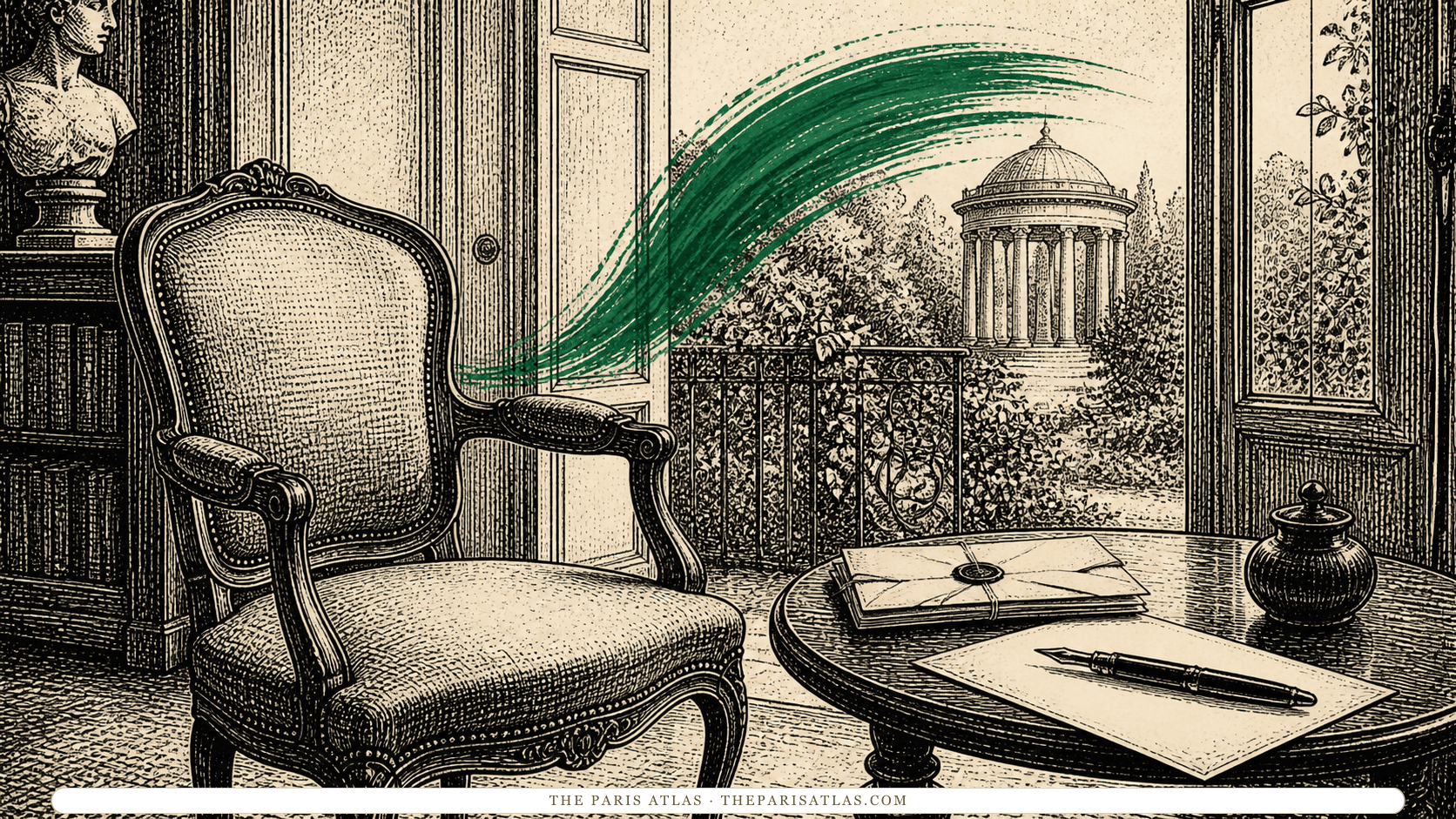
Barney moved into the pavilion at 20 rue Jacob in 1909 and stayed for nearly sixty years. The house sits behind a courtyard off a narrow street in Saint-Germain-des-Prés, with a large overgrown garden at the back. In one corner of that garden stands a small Doric temple, four columns under a pediment inscribed A l'Amitié. The French heritage register classes it as a fabrique de jardin, a nineteenth-century garden folly that was there long before she was, and it was listed as a historic monument on 16 January 1947, while she was living beside it. It stands on private ground and cannot be visited.[1]
The salon met on Fridays. Barney received in a tea gown, fed her guests properly, and made introductions the point of the afternoon. There were readings, recitations, concerts, and theatricals staged for friends. Attendance was by invitation, and guests were expected to bring people worth meeting.[2]
What she wanted from it was traffic across the Channel and the Atlantic. She believed that American, British, and French writers should know one another and translate one another, and she ran the Fridays accordingly. Colette performed in the theatricals. Ezra Pound, James Joyce, T. S. Eliot, Marcel Proust, Gertrude Stein, and Paul Valéry all came, along with publishers, critics, diplomats, and scholars. Barney translated Valéry for American readers and Stein for French ones.
Two salons dominate the accounts of literary Paris between the wars. Gertrude Stein's Saturdays at 27 rue de Fleurus were built around a picture wall and a theory of modern writing. Barney's Fridays were built around introductions, and around women. Many guests went to both.
Barney met the critic Remy de Gourmont in 1910. He was one of the most influential men of letters in France, attached to the Mercure de France, and by then a recluse, disfigured by lupus and rarely seen. She courted him as a friend: visits, flowers, drives, boat trips, and eventually appearances at her masked ball and her salon.[3]
Out of their conversations he wrote a series of open letters, published fortnightly in the Mercure de France through 1912 and 1913 and collected as Lettres à l'Amazone in 1914. He called her the Amazon after the riding habit she wore on her morning rides in the Bois de Boulogne, which in French is riding en amazone, side-saddle. The letters made her a public literary figure rather than a private hostess. Gourmont died in 1915. The name outlived them both: her headstone at Passy identifies her as the Amazon of Remy de Gourmont.
Barney published around fourteen books over sixty-three years, nearly all of them in French, a language she had spoken without an accent since childhood. The first, Quelques portraits-sonnets de femmes, appeared in 1900 with portraits by her mother, the painter Alice Pike Barney. Its subject was love between women, and when her father Albert Clifford Barney found out he bought up the publisher's remaining stock and destroyed the printing plates. Until his death in 1902 she published anonymously or as Tryphé.[4]
After that the forms multiplied. Cinq petits dialogues grecs (1901) reworked Sappho. Actes et entr'actes (1910) collected plays and poems. Poems & poèmes: autres alliances (1920) gathered her verse in both her languages. The One Who Is Legion (1930), her only novel, was written in English, privately printed in London, and made with Romaine Brooks on the theme of androgyny. Aventures de l'esprit (1929) and Souvenirs indiscrets (1960) are memoirs of the salon and the people who passed through it. Traits et portraits (1963) was the last book she published.
The work she is most worth reading for is the pensées: three volumes of epigrams, published as Éparpillements (1910), Pensées d'une Amazone (1920), and Nouvelles pensées de l'Amazone (1939). Her biographer George Wickes rated them, with the memoirs, as her best writing, and praised what he called the accuracy of her aim. Pensées d'une Amazone opens with a long section against the First World War and on feminism, then moves through love, a novel she says she will not write, and a scattering of notes on literature and old age.
To judge a man, take him out of his world; to judge a woman, give her one.
Pour juger d'un homme, sortez-le de son milieu; pour juger d'une femme, donnez-lui le sien.
The register is dry and very short. Most entries run to a single line, and the effect depends on compression rather than argument. Her guests described her talk the same way, which is one reason the pensées read like a person rather than a programme.
The Académie française had been electing men since 1635 and would not elect a woman until Marguerite Yourcenar in 1980. In 1927 Barney set up her own version. The Académie des Femmes was not an institution with statutes and seats. It was a run of salon evenings, each given over to one woman writer, held in the same room as the ordinary Fridays.
The point was to introduce French women writers to their English-speaking counterparts and to put money and an audience behind work that was not getting either. Those honoured included:
Gertrude Stein's evening was the most elaborate. Virgil Thomson set her writing to music, there were readings, and Barney supplied a French translation of passages from The Making of Americans. The Académie also raised the money to print Djuna Barnes's Ladies Almanack in 1928. Barney kept up with Mina Loy, who had joined the circle in 1923, long after Loy left Paris in 1936, and she wrote a foreword to a posthumous Stein volume, As Fine as Melanctha, for Yale in 1954.
Barney was a lesbian, said so, and wrote about it under her own name from her first book onwards. She did not use codes, did not marry for cover, and did not present her private life as anybody's tragedy. In 1928, the year Radclyffe Hall's The Well of Loneliness was tried and banned as obscene in Britain, Barney had already been publishing love poetry addressed to women for twenty-eight years and had been receiving women writers at 20 rue Jacob for nineteen.[5]
She also refused monogamy, and refused it as a position rather than as a habit she failed to break. She argued against jealousy in print as early as 1901 and kept several attachments running at once for most of her life. This was harder on the women who loved her than on her. Romaine Brooks wanted one person and got a household; the only lover who is said to have shared Barney's view of the arrangement without strain was Dolly Wilde.
The first of the public affairs was with the courtesan Liane de Pougy in 1899, and de Pougy turned it into a bestselling novel, Idylle saphique, in 1901. The long attachments came after it, and several of them overlapped:[6]
It was the Lahovary years that ended the friendship with Romaine Brooks.
In 1928 the American writer Djuna Barnes published Ladies Almanack, a short comic book in mock-archaic English, privately printed in Paris with money the Académie des Femmes raised. It is a roman à clef about Barney's circle, laid out as an almanac with a chapter for each month.[7]
Barney is its heroine, Dame Evangeline Musset, who begins as a scandal, arrives at what the book calls a witty and learned fifty, spends her time rescuing women in distress and dispensing advice, and is canonised at the end. The other women of the salon appear under names of the same sort. Barney was delighted by it and reread it for the rest of her life.
Barney was a pacifist through the First World War. She stayed in Paris rather than go home to America, held antiwar gatherings at the Temple à l'Amitié, and did not join the Red Cross work that occupied most of her friends. The first and longest section of Pensées d'une Amazone, written in those years, is titled Les sexes adverses, la guerre et le féminisme, and it treats war as a male enterprise.
In 1939 she and Romaine Brooks left France for Italy and spent the Second World War at a villa outside Florence. The salon closed. During those years Barney wrote a book of wartime reminiscence and commentary, Memoirs of a European-American, which has never been published.
Anna Livia, who edited and translated a selection of Barney's writing in 1992 and read the manuscript, describes it as loyal to Mussolini and the Axis, and records that Barney wrote lightly of wars of extermination at a time when friends of hers were interned in camps. Livia reads the loyalty as running through Barney's conviction that tradition, art, and personal freedom had to prevail over communism. Her biographers treat the passages about Jewish people as the most troubling thing she left behind, and note the contradiction with her own family: her mother's father, Samuel Pike, was of Dutch-Jewish descent, and Barney had written about that background with pride in her early books.
The same years hold facts that run the other way. She gave up her cabin on a New York-bound ship so that Jewish musicians could get out of Italy. Interviewed after the Allied victory there, she said that she and Brooks had been artists who knew too little about politics to take any part in them. The manuscript itself changes position before it ends: Livia dates the turn to the two of them watching the retreating German army blow up the bridges of Florence, and by the last pages Barney is writing as a pro-American pacifist.
She returned to Paris in 1946 and reopened the salon, which ran another twenty-two years.
In 1968 Barney lost 20 rue Jacob. Her landlord went to court over the state of the building, and at ninety-one she moved to the Hôtel Meurice, on the rue de Rivoli. The Fridays stopped. She and Romaine Brooks had by then broken over Janine Lahovary; Barney's last letter to Brooks came back unopened.
She died in Paris on 2 February 1972, aged ninety-five, after a heart attack and pneumonia. Her maid of many years, Berthe Cleyrergue, called the Friday funeral Mademoiselle's last Friday. She is buried at the Passy cemetery, above the Trocadéro, under a stone naming her as Remy de Gourmont's Amazon.
She left more than forty thousand letters, along with manuscripts and papers, to the Bibliothèque littéraire Jacques Doucet in Paris. That collection is where most of what is now known about the salon comes from.
Born 31 October in Dayton, Ohio, to Albert Clifford Barney, of a railroad-car fortune, and the painter Alice Pike Barney. Bilingual in French before her teens.
Meets the courtesan Liane de Pougy in Paris. De Pougy turns the affair into the novel Idylle saphique, published in 1901.
Quelques portraits-sonnets de femmes is published, with portraits by her mother. Her father buys up the remaining stock and destroys the plates; she publishes anonymously or as Tryphé until his death. She begins her affair with Renée Vivien the same year.
Her father dies. The inheritance makes her independent for life, and she settles permanently in Paris.
Takes the pavilion at 20 rue Jacob and starts the Friday salon. The garden holds the Temple à l'Amitié, a Doric folly of the early nineteenth century.
Meets Remy de Gourmont. Éparpillements, her first book of epigrams, appears the same year.
Gourmont's open letters to her run fortnightly in the Mercure de France and appear in book form as Lettres à l'Amazone in 1914. The nickname is permanent from here.
Stays in Paris through the war as a pacifist, holding antiwar gatherings at the Temple à l'Amitié rather than joining the Red Cross work of her friends.
Pensées d'une Amazone published by Émile-Paul Frères — epigrams on war, feminism, love, literature and age, and the book she is most read for.
Launches the Académie des Femmes, an answer to an Académie française that admitted no women. Gertrude Stein's evening includes settings by Virgil Thomson and Barney's French translation of The Making of Americans.
The Académie funds the printing of Djuna Barnes's Ladies Almanack, a comic roman à clef of the circle in which Barney appears as Dame Evangeline Musset.
Aventures de l'esprit, her memoir of the salon and its writers. It appears in English as Adventures of the Mind in 1992.
Leaves France for a villa outside Florence with Romaine Brooks and spends the Second World War in Italy. Writes the unpublished Memoirs of a European-American there. Returns to Paris in 1946 and reopens the salon.
Souvenirs indiscrets, the second book of memoirs. Traits et portraits, her last book, follows in 1963.
Loses 20 rue Jacob after a court case with her landlord over the state of the building, and moves to the Hôtel Meurice. The salon ends after fifty-nine years.
Dies in Paris on 2 February, aged ninety-five, and is buried at the Passy cemetery. Her papers and some forty thousand letters go to the Bibliothèque littéraire Jacques Doucet.
To judge a man, take him out of his world; to judge a woman, give her one.Pour juger d'un homme, sortez-le de son milieu; pour juger d'une femme, donnez-lui le sien.
Motherhood? The child too confines the woman to itself, and then leaves her.La maternité? L'enfant aussi limite à lui la femme,—et puis la délaisse.
We learn only what we already know.On n'apprend que ce que l'on sait.
How Natalie appears in its pages: The book's heroine — a wealthy Englishwoman of fifty who rescues women in distress, holds court at a tea table, and is canonised as a saint a third of the way through.
Read the character guide
Valérie Seymour is invented, drawn from Natalie: The American writer whose Paris flat is the one room in the novel where nobody has to pretend. Radclyffe Hall drew her from Natalie Clifford Barney.
Read the character guide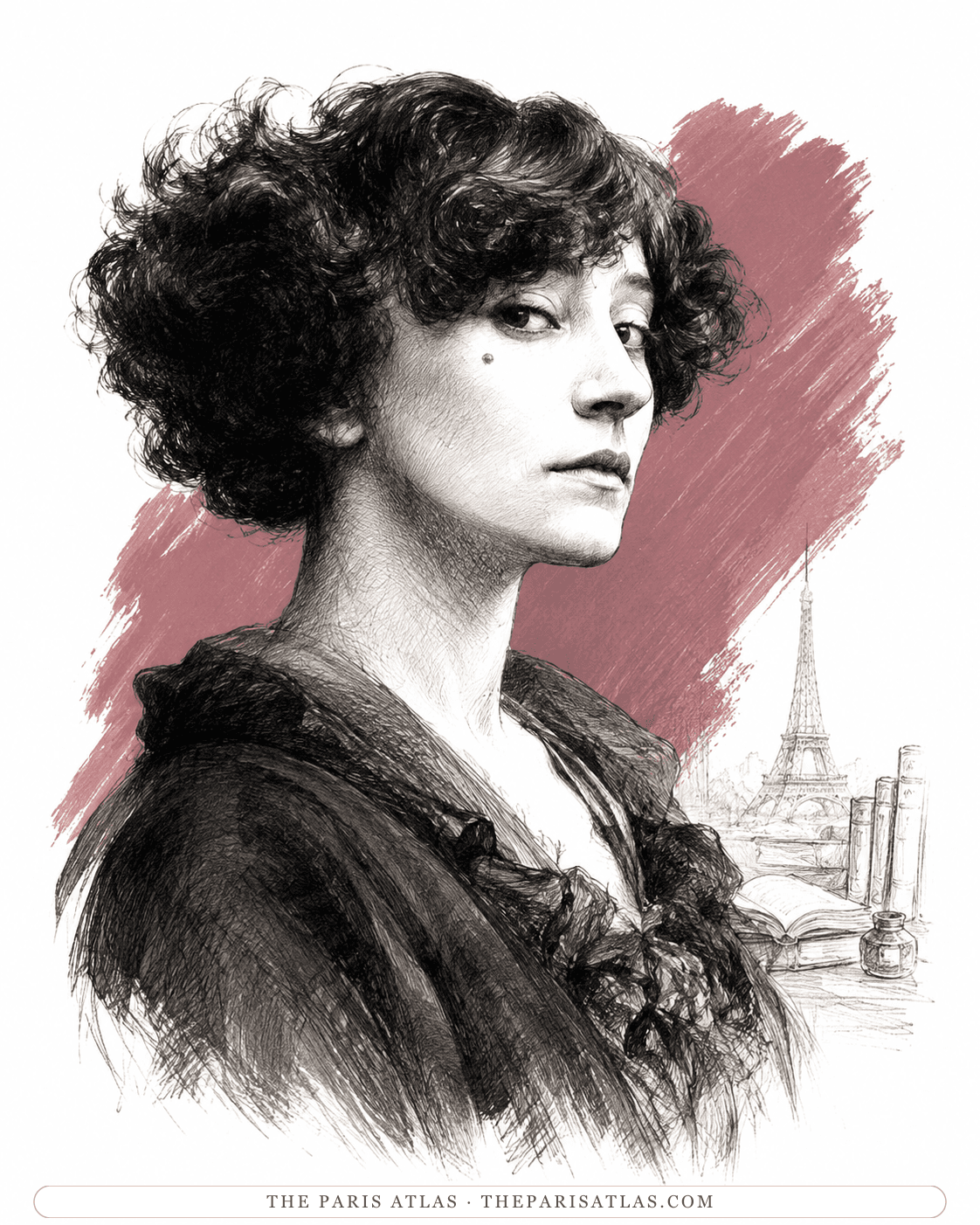
Met · 1906
Colette performed in the theatricals Barney staged for friends at 20 rue Jacob, and was one of the French writers the Académie des Femmes honoured from 1927. Suzanne Rodriguez's biography counts her among Barney's lovers, in the years around Colette's separation from Willy; the friendship outlasted the affair and ran until Colette's death in 1954. The start year is approximate — the sources place the two together from the middle of the 1900s without fixing a first meeting.
Met · 1920
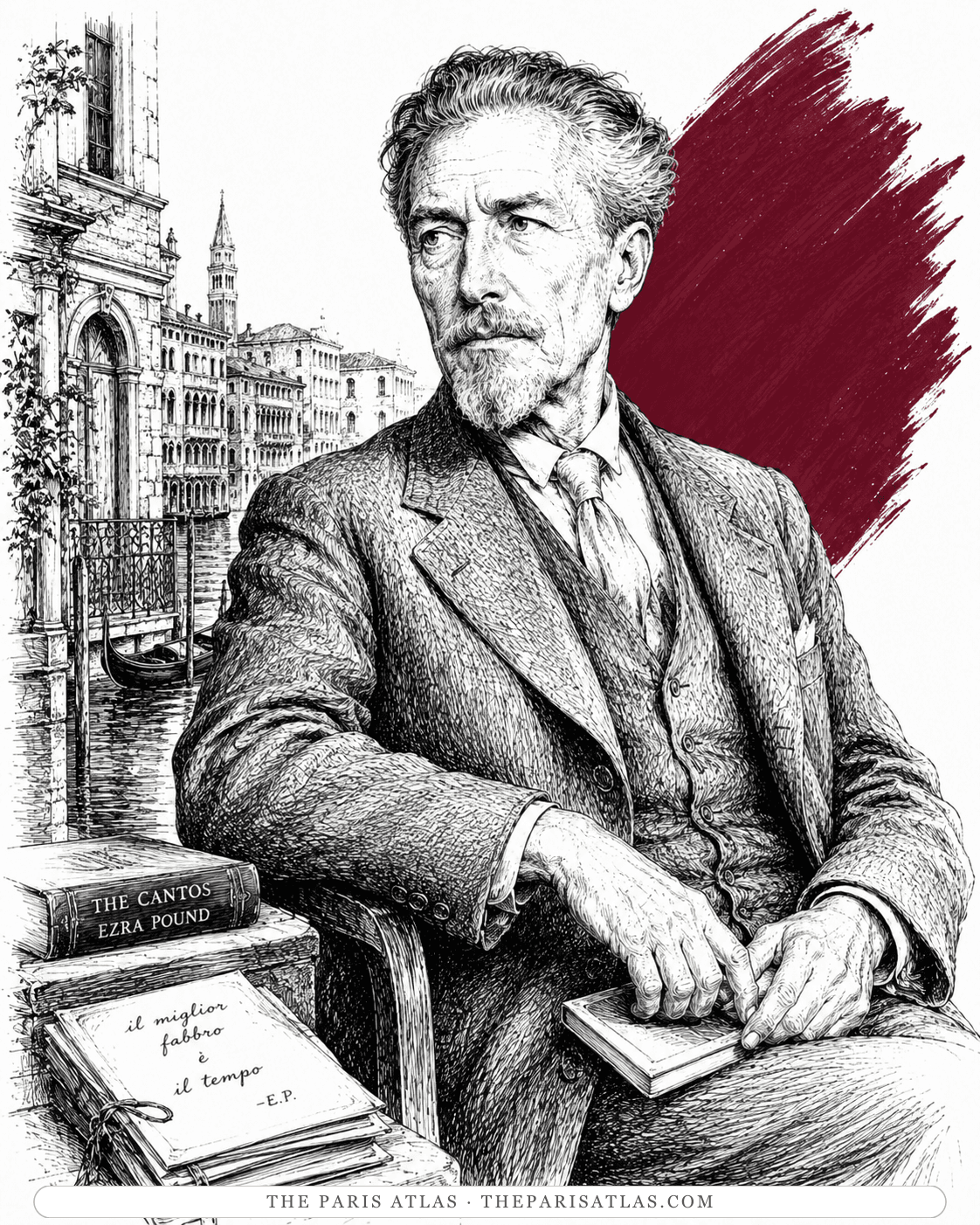
Pound was one of the writers Barney received at 20 rue Jacob during his Paris years, in a room she ran expressly to get American, British and French writers reading and translating one another. The start year is approximate: the Library of Congress guide names him among her regular guests without dating the introduction.

Met · 1927
Stein was among the writers Barney received at 20 rue Jacob, and Barney's Académie des Femmes gave her an evening in 1927: Virgil Thomson set her writing to music, there were readings, and Barney supplied a French translation of passages from The Making of Americans. Barney later wrote the foreword to the posthumous Stein volume As Fine as Melanctha, published by Yale in 1954. The date here is the Académie evening, not their first meeting, which the sources do not fix.
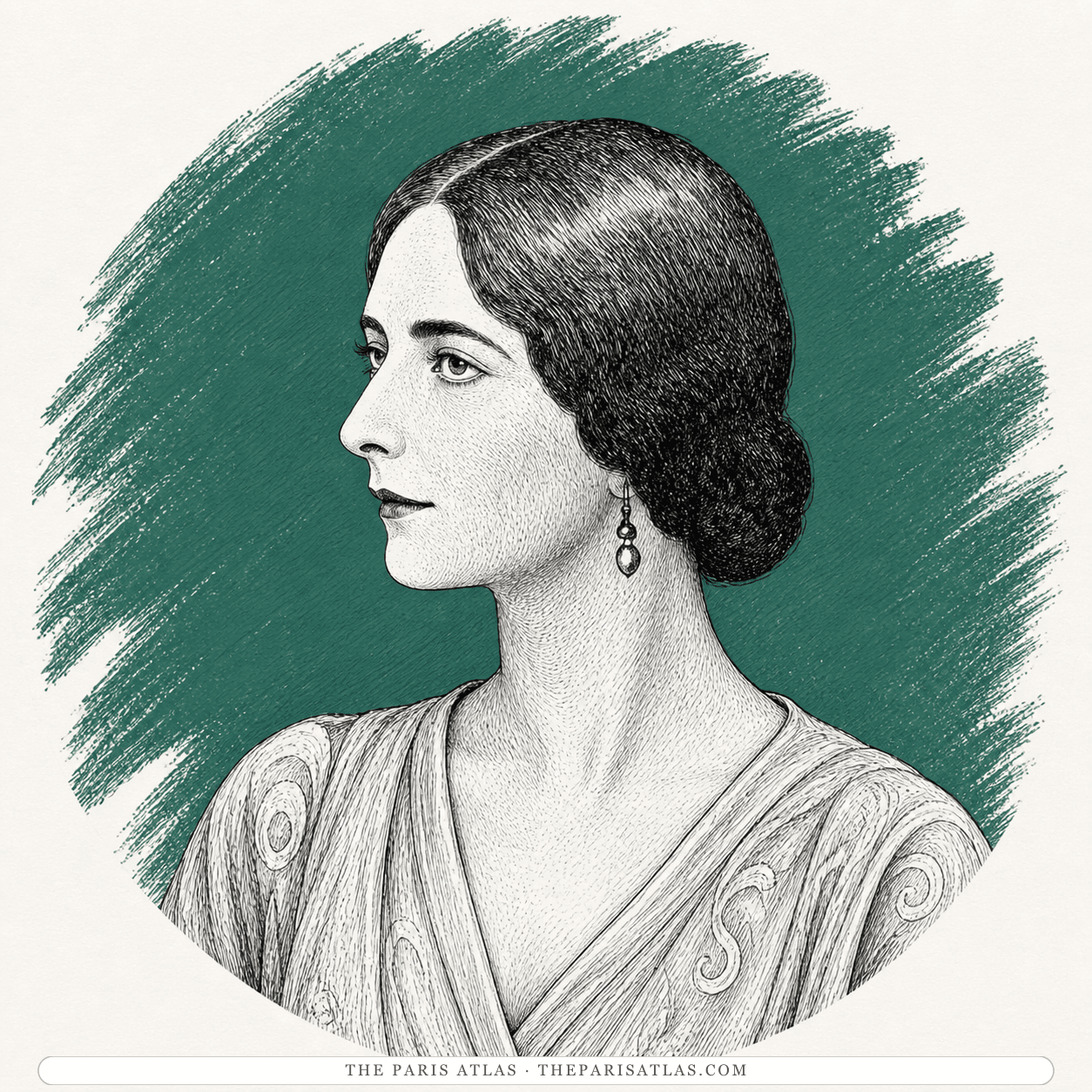
Met · 1923–1936
Loy joined the circle at 20 rue Jacob on her return to Paris in 1923. Barney was fond of Loy's children, the two held similar views on love and monogamy, and Loy was among the writers the Académie des Femmes honoured from 1927. The friendship continued by letter after Loy left Paris in 1936; the end year marks her departure, not the end of the friendship.
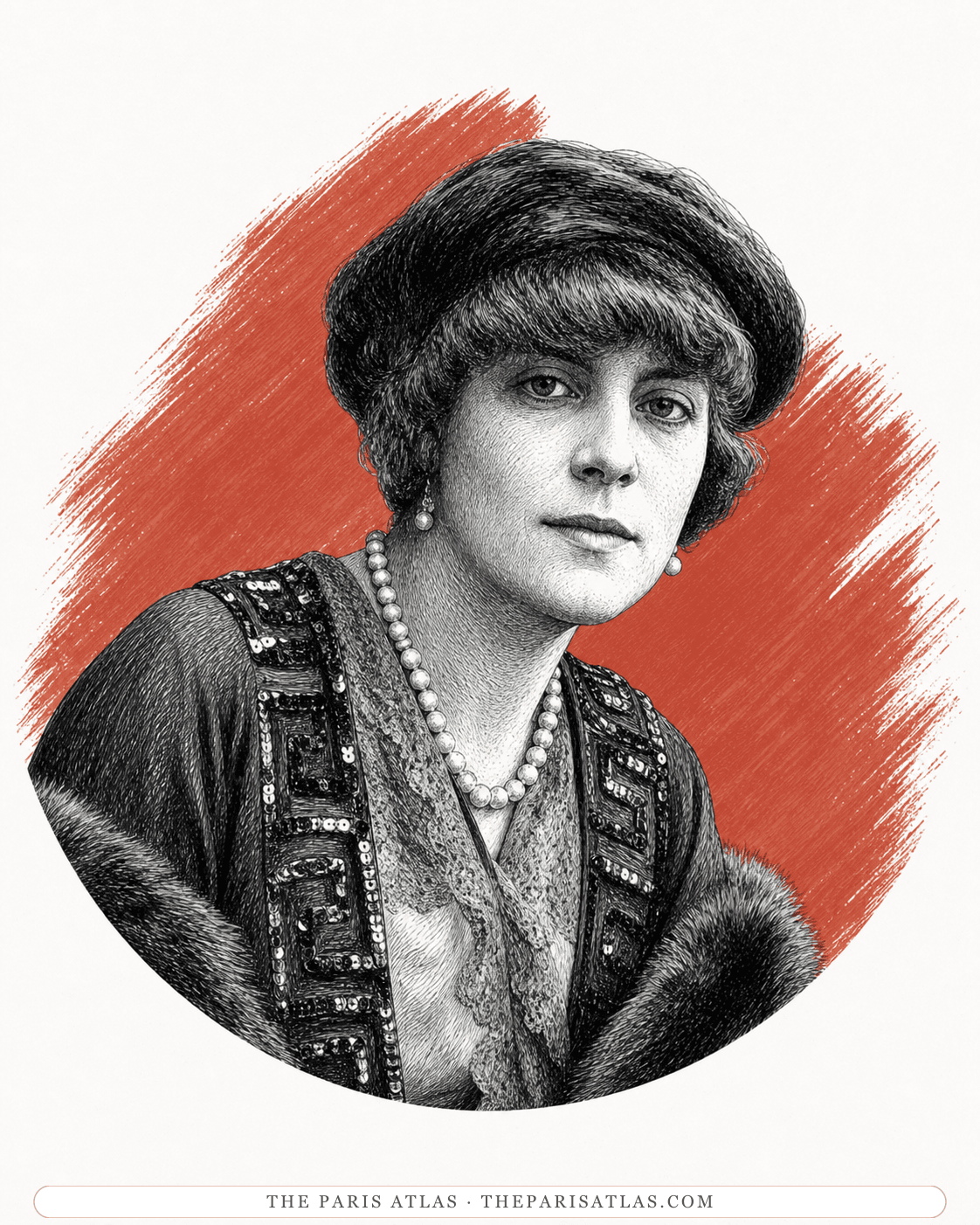
Met · 1902
Delarue-Mardrus wrote Barney the poems later published as Nos secrètes amours between about 1902 and 1905, while she was married to Joseph Charles Mardrus. Mirande Lucien, who edited them from the manuscripts Delarue-Mardrus gave Barney, describes a brief and difficult affair in which the poet was the novice and Barney, the younger woman, the one who took other lovers. Barney arranged the confidential posthumous printing of the poems in 1951, six years after Delarue-Mardrus died, and edited the text as she did so. Delarue-Mardrus was among the writers the Académie des Femmes honoured from 1927.
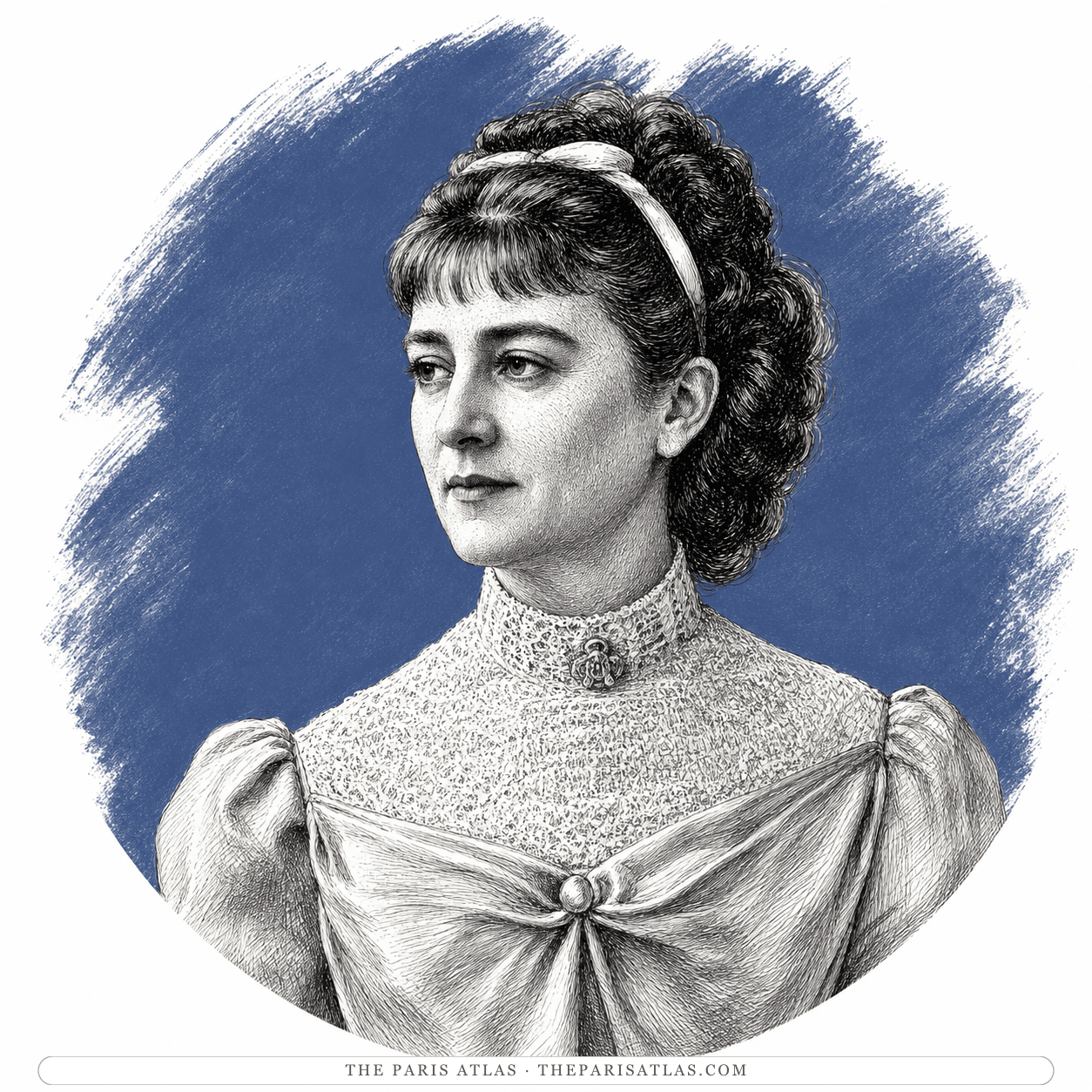
Partner of · 1910–1954
Barney and Gramont met around the time the rue Jacob salon began and were together from about 1910. On 20 June 1918, at the Hôtel de l'Europe et Villa Victoria in Aix-les-Bains, they wrote and signed a private marriage contract on hotel letterhead: it acknowledged both women's other affairs and set no condition beyond the bond itself, ending 'the one I marry shall not be called my wife, nor my slave, nor my spouse ... but my one, my eternal mate'. Gramont was married to the Duc de Clermont-Tonnerre at the time; the divorce came in 1920. The relationship lasted until Gramont's death in 1954. Barney also wrote a prose portrait of her, The Woman Who Lives with Me, printed in an edition of two copies.
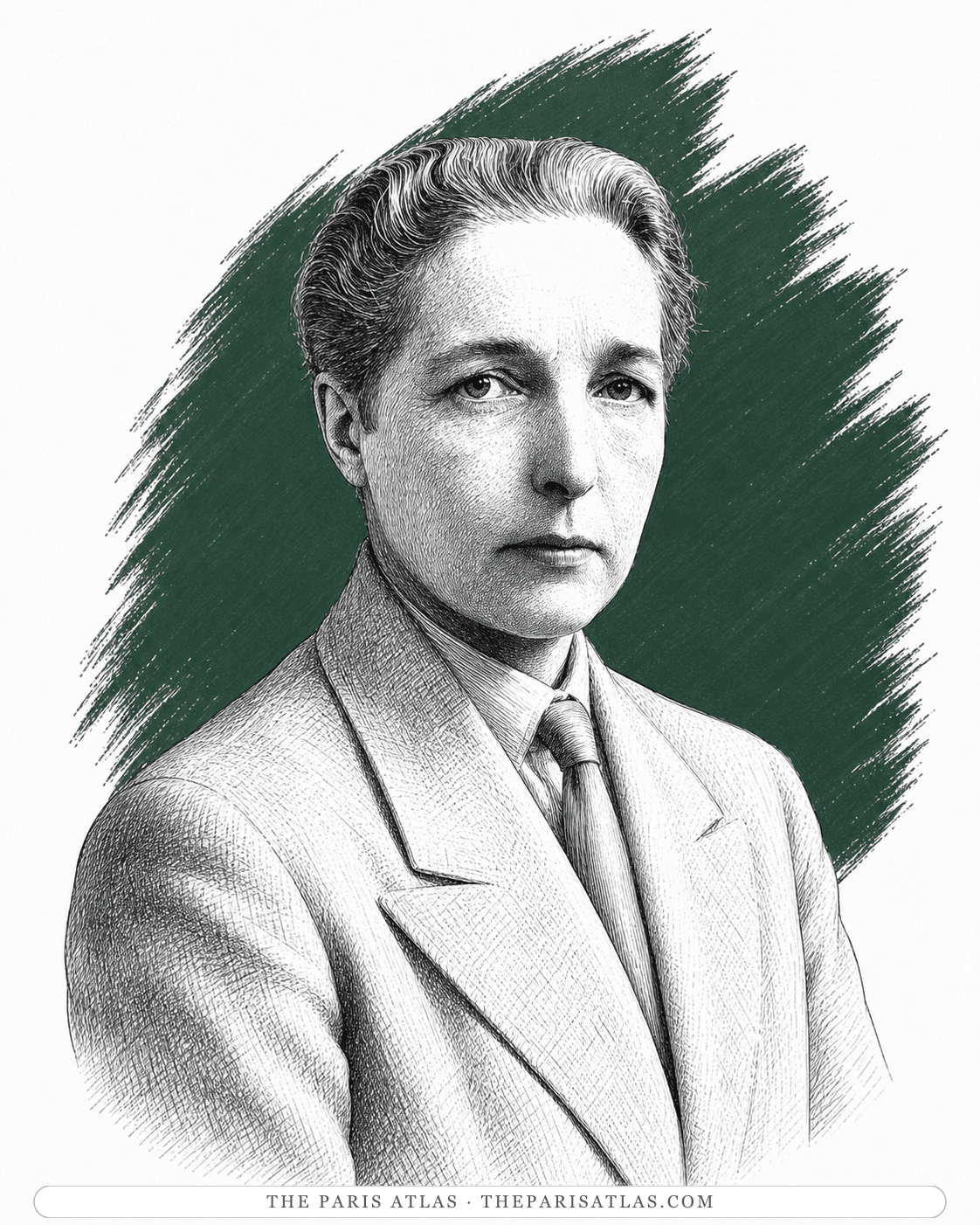
Met
Hall met Barney and the painter Romaine Brooks through the women she knew in London, and in 1928 she put Barney into The Well of Loneliness as the salon hostess Valérie Seymour, who is the first person Stephen Gordon meets in Paris. No year is given for the meeting, so none is recorded here. Accounts written since have also placed Hall among the guests at Barney's Friday salon at 20 rue Jacob; that is a separate assertion and no source consulted for this record documents it, so no attendance edge is claimed.
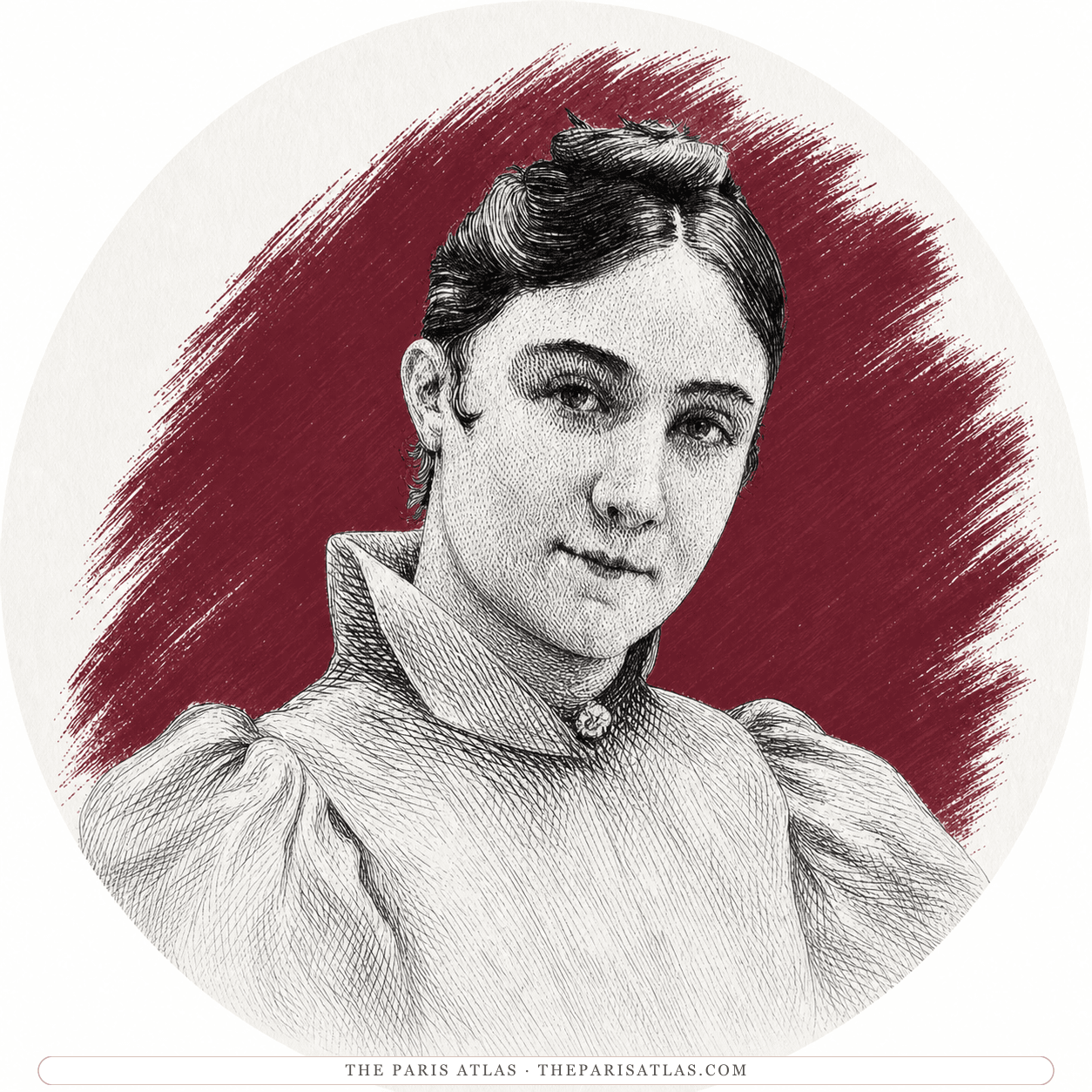
Met · 1927
Barney's Académie des Femmes, the run of salon evenings she began in 1927 to honour women writers, counted Rachilde among the French writers it honoured, alongside Colette, Élisabeth de Gramont and Lucie Delarue-Mardrus. The start year is the Académie's rather than a first meeting: the two moved in overlapping Paris literary circles well before it, and the reference accounts do not date their first meeting.
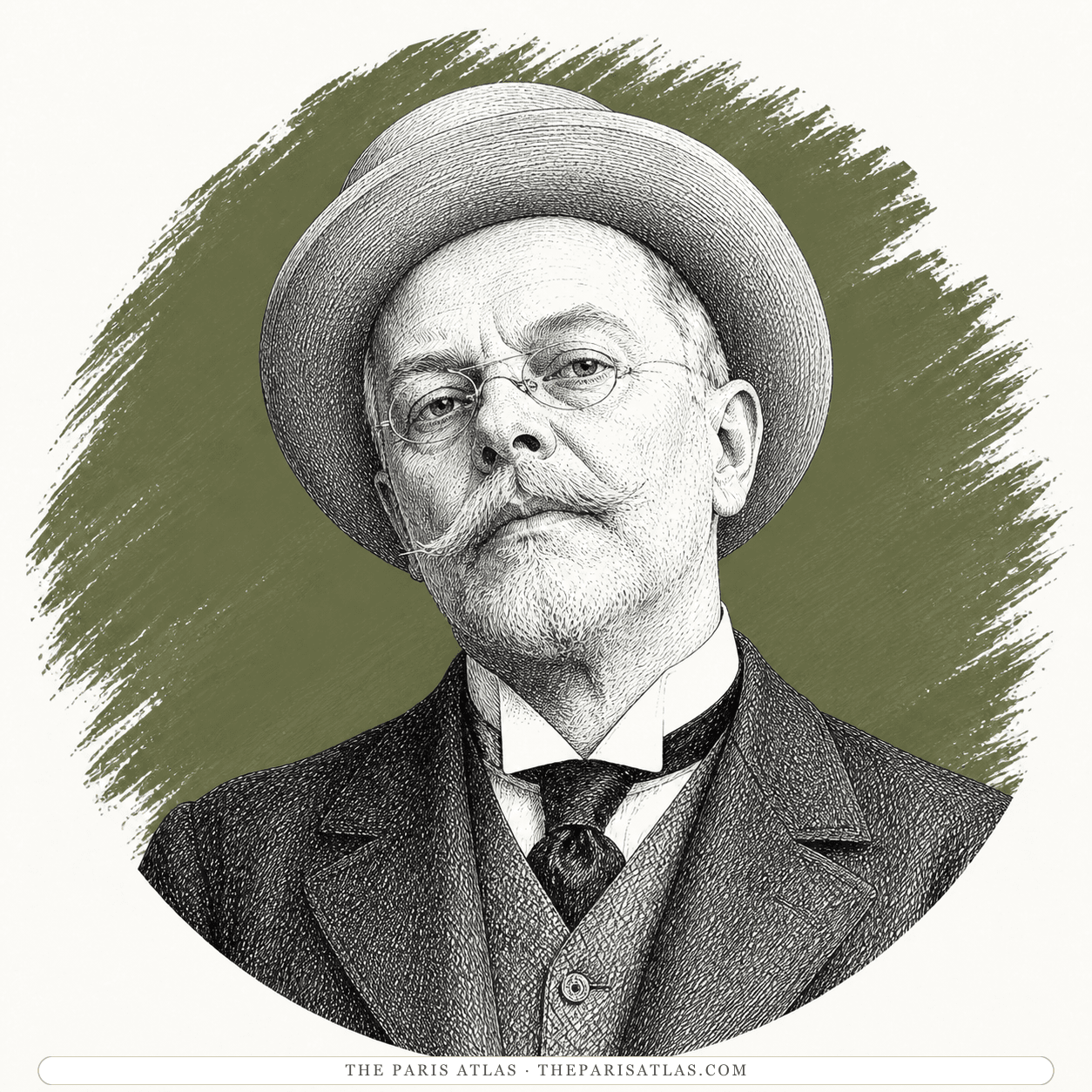
Met · 1910–1915
Barney sought Gourmont out in 1910, nineteen years after the lupus had driven him out of company, and drew him back into it with visits, flowers, drives and river trips. Out of the friendship came the open letters he published fortnightly in the Mercure de France through 1912 and 1913 and collected as Lettres à l'Amazone in 1914. He gave her the name l'Amazone, after the way she rode side-saddle in the Bois de Boulogne, and she carried it until her death in 1972. The friendship ended with his death in September 1915.
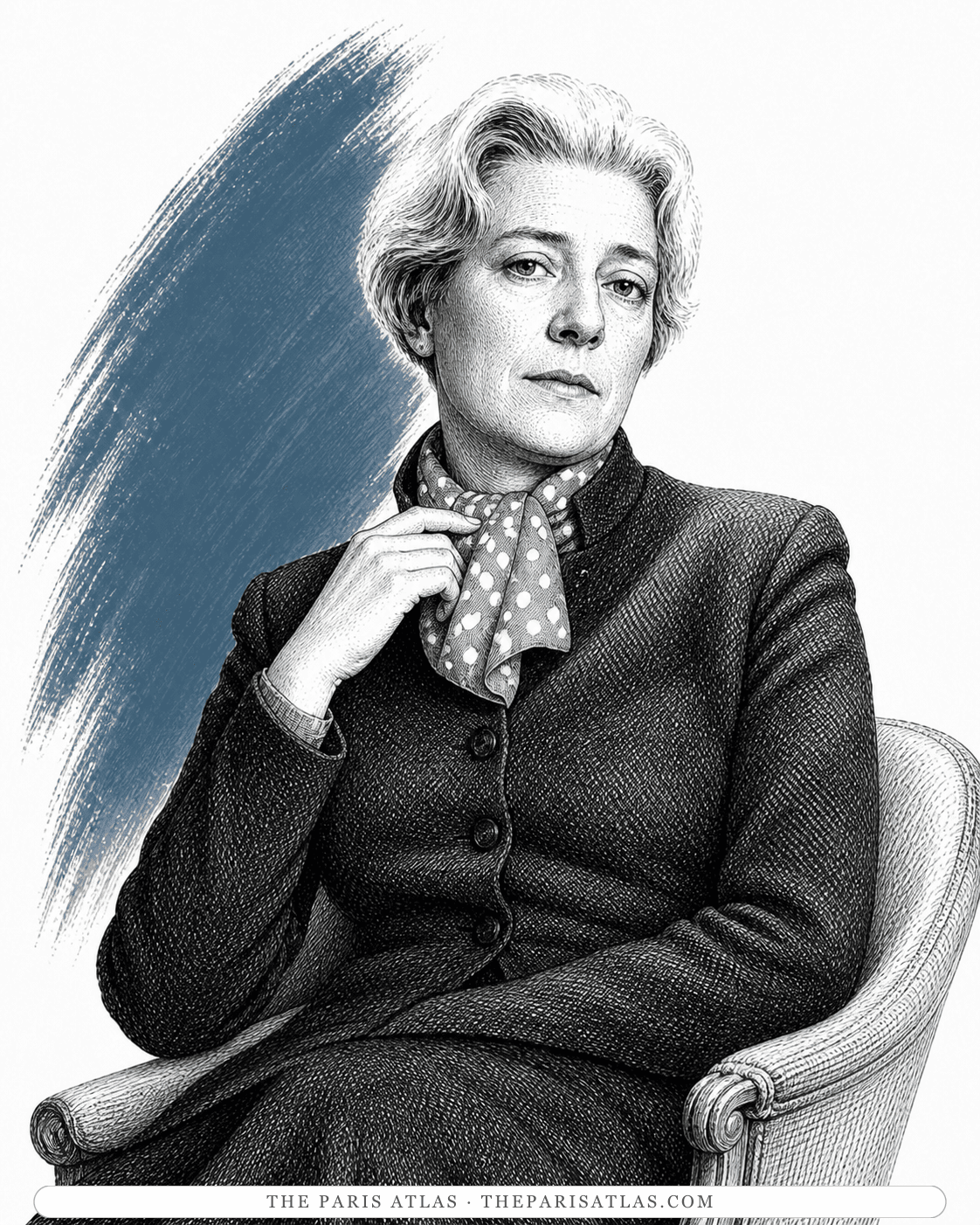
Met
Flanner belonged to Barney's circle from the 1920s. Djuna Barnes's Ladies Almanack of 1928, the comic roman à clef about that circle, puts Flanner and Solita Solano in it as a pair of journalists called Nip and Tuck.

Partner of · 1900–1904
Violet Shillito introduced them in Paris in 1899. The affair itself lasted about a year and broke in the summer of 1901, after Shillito died of typhoid and Vivien held herself responsible for having let the friendship go. Barney spent the following years trying to win her back, and in 1904 the two travelled to Mytilene on Lesbos together with a plan for a school of women poets that came to nothing. The end year records the last of that contact rather than the end of the affair.
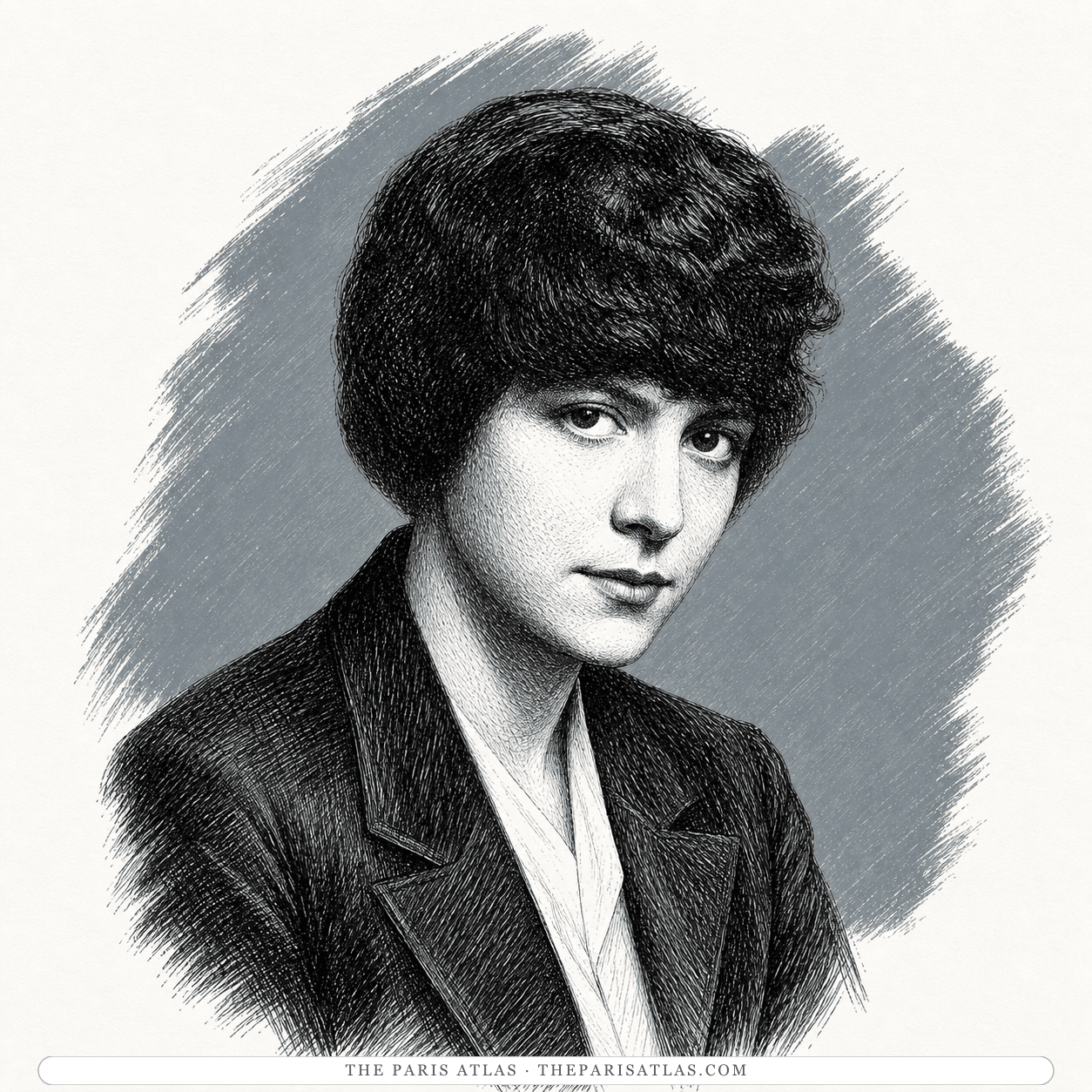
Partner of · 1915–1968
Brooks and Barney met in 1915 and were together for more than fifty years. Barney refused monogamy as a matter of principle and was already attached to Élisabeth de Gramont, so the relationship ran alongside her others; Brooks tolerated the arrangement and gave one recorded ultimatum, over Dolly Wilde. They built the Villa Trait d'Union on the Riviera with two separate wings joined by a shared dining room. It ended in Brooks's last years, over Barney's relationship with Janine Lahovary: Brooks stopped answering and Barney's last letter came back unopened.
Sat for a portrait by · 1920
Portrait de Natalie Clifford Barney, dit « L'Amazone », oil on canvas, signed and dated Romaine 1920. Barney sits in a fur coat at a writing table wearing a sapphire necklace Brooks had given her, with a black ceramic horse bolting across the desk in front of her — a joke on the nickname Remy de Gourmont had given her. The museum reads the background as the courtyard of 20 rue Jacob. Shown at the Salon de la Société nationale des beaux-arts in 1922 as number 135. Brooks gave it to the Musée Carnavalet in 1966; inventory P2302.
Founded · 1927
Both sources credit the Académie des Femmes to Barney alone and date it to 1927. Anna Livia writes that Barney launched it as a circle where women writers could share their work and find support, and reads it as a second attempt at the school of women poets she and Renée Vivien had failed to start on Lesbos. Anne Charles writes that Barney had long considered an alliance of women writers and carried the plan out in 1927.
An American writer (1876–1972) who lived in Paris from 1902 and ran a literary salon at 20 rue Jacob for nearly sixty years. She wrote in French: sonnets, plays, two books of memoirs, a novel, and three volumes of epigrams, of which Pensées d'une Amazone (1920) is the best known. In 1927 she founded the Académie des Femmes to honour women writers.
The critic Remy de Gourmont gave her the name around 1910, after the riding habit she wore for her morning rides in the Bois de Boulogne — riding side-saddle is monter en amazone in French. He addressed a series of open letters to her as l'Amazone in the Mercure de France in 1912 and 1913, collected as Lettres à l'Amazone in 1914. The name followed her the rest of her life and is on her gravestone at Passy.
At 20 rue Jacob in the sixth arrondissement of Paris, from 1909 to 1968. It is a private pavilion behind a courtyard, and it is not open to the public. The Doric garden folly known as the Temple à l'Amitié still stands there and has been a listed historic monument since January 1947, but it is on private ground and cannot be visited.
Colette, Gertrude Stein, Ezra Pound, James Joyce, T. S. Eliot, Marcel Proust, Paul Valéry, Ernest Hemingway, Djuna Barnes, Mina Loy, Sinclair Lewis and Élisabeth de Gramont, among many others, along with publishers, critics and scholars. Barney's stated purpose was to get American, British and French writers reading and translating one another.
A run of salon evenings Barney began in 1927, each devoted to one woman writer, set up in answer to the Académie française, which had admitted only men since 1635 and would not elect a woman until 1980. Those honoured included Colette, Rachilde, Lucie Delarue-Mardrus, Élisabeth de Gramont, Gertrude Stein, Djuna Barnes, Mina Loy and Anna Wickham, and Renée Vivien after her death. It also raised the money to print Djuna Barnes's Ladies Almanack in 1928.
Yes, and she said so publicly from her twenties until her death at ninety-five, which almost no woman of her generation did. Her first book, in 1900, was love poetry addressed to women and published under her own name. She also refused monogamy as a matter of principle, arguing against jealousy in print as early as 1901. Her long attachments were to Renée Vivien, Élisabeth de Gramont, Romaine Brooks, Dolly Wilde and Janine Lahovary.
Yes. Ladies Almanack, which the American writer Djuna Barnes published privately in Paris in 1928, is a comic roman à clef about Barney's circle, and Barney is its heroine, Dame Evangeline Musset. Barney's Académie des Femmes paid for the printing, and Barney reread the book for the rest of her life.
She spent it in Italy. In 1939 she and Romaine Brooks left France for a villa outside Florence, and she did not return to Paris until 1946. There she wrote an unpublished book of wartime commentary, Memoirs of a European-American. Anna Livia, who read the manuscript and translated a selection of Barney's work in 1992, describes it as loyal to Mussolini and the Axis and records that Barney wrote lightly of wars of extermination while friends of hers were interned in camps; her biographers treat its passages about Jewish people as the most troubling part of her record, and note that her mother's father, Samuel Pike, was of Dutch-Jewish descent. In the same years she gave up her cabin on a New York-bound ship so that Jewish musicians could leave Italy, and by the end of the manuscript her position has reversed to a pro-American pacifism.
She died in Paris on 2 February 1972, aged ninety-five, after a heart attack and pneumonia. She had left 20 rue Jacob in 1968 after losing a court case with her landlord and was living at the Hôtel Meurice. She is buried at the Passy cemetery, under a stone identifying her as the Amazon of Remy de Gourmont.
At the Bibliothèque littéraire Jacques Doucet in Paris, which holds her manuscripts and more than forty thousand letters. Her correspondence with Romaine Brooks is held separately, in American collections.
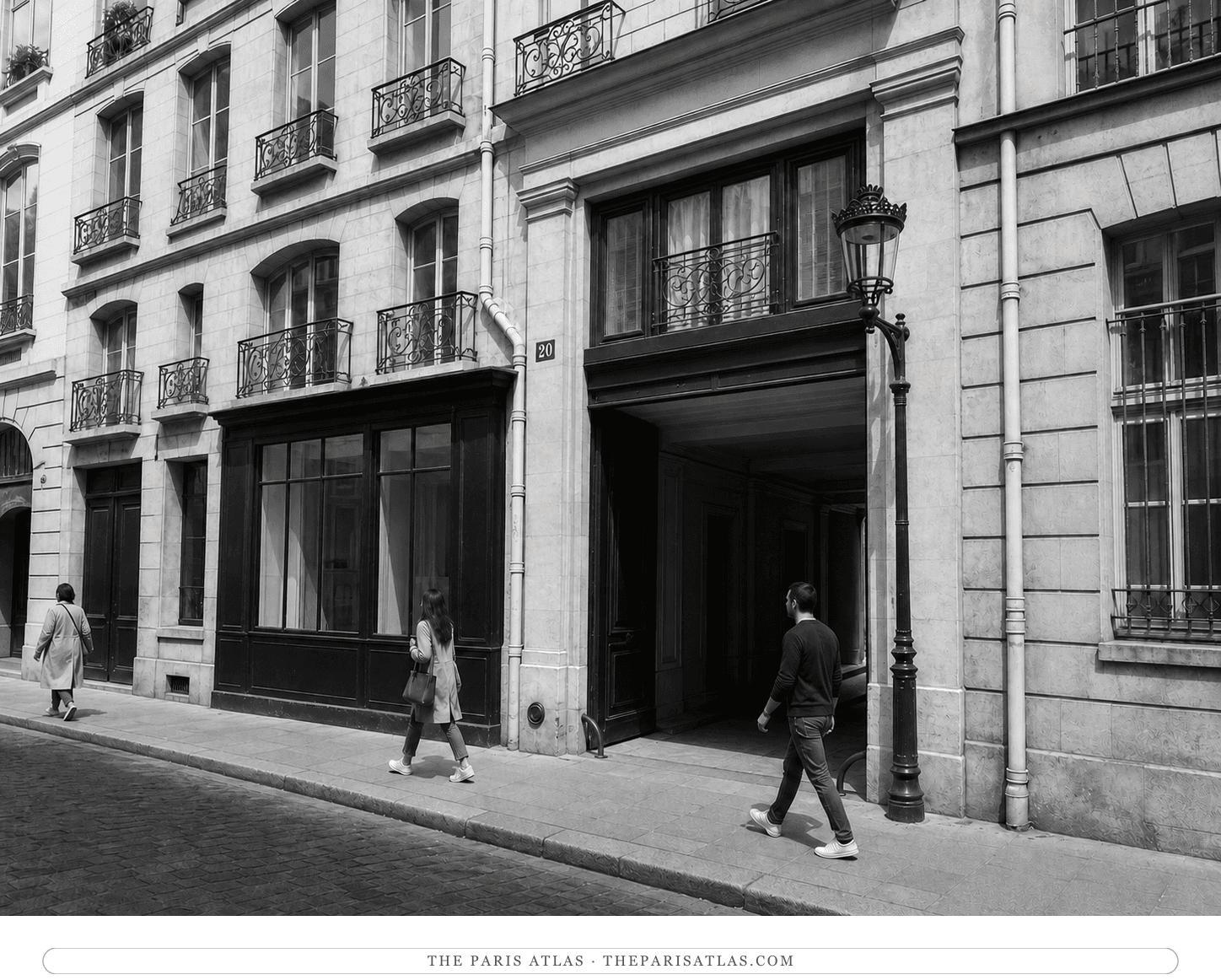
Hosted gatherings at · 1909–1970
The Fridays began in October 1909 and ran weekly from five to eight, with thirty to thirty-five regulars on an ordinary week and up to two hundred for a set piece. They stopped for the Second World War, which Barney spent in Italy, and resumed in 1949. From 1927 a run of them was given over to the Académie des Femmes, one Friday per woman writer.
Lived at · 1909–1970
Barney took the lease on the courtyard pavilion, its veranda, the garden and the Temple à l'Amitié in April 1909, and lived there for sixty years. The end year is approximate: the property was divided into a copropriété in 1966, the buyer of the pavilion obtained an eviction order against her, and she left the shored-up house at the end of the 1960s meaning to return in the spring. She died at the Hôtel Meurice in February 1972 without going back.
Met · 1906
Colette performed in the theatricals Barney staged for friends at 20 rue Jacob, and was one of the French writers the Académie des Femmes honoured from 1927. Suzanne Rodriguez's biography counts her among Barney's lovers, in the years around Colette's separation from Willy; the friendship outlasted the affair and ran until Colette's death in 1954. The start year is approximate — the sources place the two together from the middle of the 1900s without fixing a first meeting.
Met · 1920
Pound was one of the writers Barney received at 20 rue Jacob during his Paris years, in a room she ran expressly to get American, British and French writers reading and translating one another. The start year is approximate: the Library of Congress guide names him among her regular guests without dating the introduction.
Met · 1927
Stein was among the writers Barney received at 20 rue Jacob, and Barney's Académie des Femmes gave her an evening in 1927: Virgil Thomson set her writing to music, there were readings, and Barney supplied a French translation of passages from The Making of Americans. Barney later wrote the foreword to the posthumous Stein volume As Fine as Melanctha, published by Yale in 1954. The date here is the Académie evening, not their first meeting, which the sources do not fix.
Met · 1923–1936
Loy joined the circle at 20 rue Jacob on her return to Paris in 1923. Barney was fond of Loy's children, the two held similar views on love and monogamy, and Loy was among the writers the Académie des Femmes honoured from 1927. The friendship continued by letter after Loy left Paris in 1936; the end year marks her departure, not the end of the friendship.
Met · 1902
Delarue-Mardrus wrote Barney the poems later published as Nos secrètes amours between about 1902 and 1905, while she was married to Joseph Charles Mardrus. Mirande Lucien, who edited them from the manuscripts Delarue-Mardrus gave Barney, describes a brief and difficult affair in which the poet was the novice and Barney, the younger woman, the one who took other lovers. Barney arranged the confidential posthumous printing of the poems in 1951, six years after Delarue-Mardrus died, and edited the text as she did so. Delarue-Mardrus was among the writers the Académie des Femmes honoured from 1927.
Partner of · 1910–1954
Barney and Gramont met around the time the rue Jacob salon began and were together from about 1910. On 20 June 1918, at the Hôtel de l'Europe et Villa Victoria in Aix-les-Bains, they wrote and signed a private marriage contract on hotel letterhead: it acknowledged both women's other affairs and set no condition beyond the bond itself, ending 'the one I marry shall not be called my wife, nor my slave, nor my spouse ... but my one, my eternal mate'. Gramont was married to the Duc de Clermont-Tonnerre at the time; the divorce came in 1920. The relationship lasted until Gramont's death in 1954. Barney also wrote a prose portrait of her, The Woman Who Lives with Me, printed in an edition of two copies.
Founded · 1927
Both sources credit the Académie des Femmes to Barney alone and date it to 1927. Anna Livia writes that Barney launched it as a circle where women writers could share their work and find support, and reads it as a second attempt at the school of women poets she and Renée Vivien had failed to start on Lesbos. Anne Charles writes that Barney had long considered an alliance of women writers and carried the plan out in 1927.
Met
Hall met Barney and the painter Romaine Brooks through the women she knew in London, and in 1928 she put Barney into The Well of Loneliness as the salon hostess Valérie Seymour, who is the first person Stephen Gordon meets in Paris. No year is given for the meeting, so none is recorded here. Accounts written since have also placed Hall among the guests at Barney's Friday salon at 20 rue Jacob; that is a separate assertion and no source consulted for this record documents it, so no attendance edge is claimed.
Met · 1927
Barney's Académie des Femmes, the run of salon evenings she began in 1927 to honour women writers, counted Rachilde among the French writers it honoured, alongside Colette, Élisabeth de Gramont and Lucie Delarue-Mardrus. The start year is the Académie's rather than a first meeting: the two moved in overlapping Paris literary circles well before it, and the reference accounts do not date their first meeting.
Met · 1910–1915
Barney sought Gourmont out in 1910, nineteen years after the lupus had driven him out of company, and drew him back into it with visits, flowers, drives and river trips. Out of the friendship came the open letters he published fortnightly in the Mercure de France through 1912 and 1913 and collected as Lettres à l'Amazone in 1914. He gave her the name l'Amazone, after the way she rode side-saddle in the Bois de Boulogne, and she carried it until her death in 1972. The friendship ended with his death in September 1915.
Met
Flanner belonged to Barney's circle from the 1920s. Djuna Barnes's Ladies Almanack of 1928, the comic roman à clef about that circle, puts Flanner and Solita Solano in it as a pair of journalists called Nip and Tuck.
Partner of · 1900–1904
Violet Shillito introduced them in Paris in 1899. The affair itself lasted about a year and broke in the summer of 1901, after Shillito died of typhoid and Vivien held herself responsible for having let the friendship go. Barney spent the following years trying to win her back, and in 1904 the two travelled to Mytilene on Lesbos together with a plan for a school of women poets that came to nothing. The end year records the last of that contact rather than the end of the affair.
Partner of · 1915–1968
Brooks and Barney met in 1915 and were together for more than fifty years. Barney refused monogamy as a matter of principle and was already attached to Élisabeth de Gramont, so the relationship ran alongside her others; Brooks tolerated the arrangement and gave one recorded ultimatum, over Dolly Wilde. They built the Villa Trait d'Union on the Riviera with two separate wings joined by a shared dining room. It ended in Brooks's last years, over Barney's relationship with Janine Lahovary: Brooks stopped answering and Barney's last letter came back unopened.
Sat for a portrait by · 1920
Portrait de Natalie Clifford Barney, dit « L'Amazone », oil on canvas, signed and dated Romaine 1920. Barney sits in a fur coat at a writing table wearing a sapphire necklace Brooks had given her, with a black ceramic horse bolting across the desk in front of her — a joke on the nickname Remy de Gourmont had given her. The museum reads the background as the courtyard of 20 rue Jacob. Shown at the Salon de la Société nationale des beaux-arts in 1922 as number 135. Brooks gave it to the Musée Carnavalet in 1966; inventory P2302.
Depicted in · 1928
Barney appears in the novel as Valérie Seymour, and the Paris chapters put Stephen Gordon inside the circle Barney kept. The book calls Valérie a kind of lighthouse in a storm-swept ocean, and gives her the salon where the other characters can stop pretending. Radclyffe Hall's author's note declares every character imaginary, which is why this is filed as a portrayal at one remove.
Inspired · 1928
Hall drew the salon hostess Valérie Seymour from Natalie Clifford Barney, the American writer who had lived in Paris since 1902 and had been receiving women writers at 20 rue Jacob since 1909. The novel gives Valérie the traits Barney was known for — American, independently rich, bilingual, writing outspoken sketches in French, and living without concealment — and makes her the one character in the book wholly at ease with herself.
The sources below include biographies, scholarly essays, interviews, and primary materials that informed this page. They reflect both the historical record and ongoing critical conversations about Natalie Clifford Barney and their work.


Web source consulted for documented facts and historical context presented on the Natalie Clifford Barney page.
Biographical evidence used to verify chronology, relationships, and historical context connected to Natalie Clifford Barney.
First-person evidence and historical context used in preparing the Natalie Clifford Barney page.

Published analysis and historical context used in preparing the Natalie Clifford Barney page.
Published analysis and historical context used in preparing the Natalie Clifford Barney page.
Biographical evidence used to verify chronology, relationships, and historical context connected to Natalie Clifford Barney.
Published analysis and historical context used in preparing the Natalie Clifford Barney page.
Published analysis and historical context used in preparing the Natalie Clifford Barney page.
Published analysis and historical context used in preparing the Natalie Clifford Barney page.
First-person evidence and historical context used in preparing the Natalie Clifford Barney page.
First-person evidence and historical context used in preparing the Natalie Clifford Barney page.
Official record used to verify names, dates, institutional details, or other factual information on this page.
Biographical evidence used to verify chronology, relationships, and historical context connected to Natalie Clifford Barney.
Web source consulted for documented facts and historical context presented on the Natalie Clifford Barney page.
These references anchor the page in the documented record and in the scholarly conversations around Natalie Clifford Barney. Every claim on this page traces back to one or more of the works listed here.
 Explore more resources