The Paris AtlasCharting the artists, works, and places worth returning to.
  • Journalist
  • Author
  • Critic
  • Translator
· American · 1892–1978

Janet Flanner

American journalist who wrote The New Yorker's fortnightly Letter from Paris under the pen name Genêt for fifty years, from 1925 to 1975, and whose dispatches are a running record of the city between the wars, under German occupation, and after.

Details

Lived
1892–1978
Born
13 March 1892
Birthplace
Indianapolis, Indiana
Died
7 November 1978 · aged 86
Place of death
New York City
Nationality
American
Married
William Lane Rehm · 1918–1926
Partner
Solita Solano · c. 1919–1975Natalia Danesi Murray · 1940–1978
Roles
JournalistAuthorCriticTranslator
Also known as
Genêt · Janet Tyler Flanner
In fiction
Nip and Tuck (with Solita Solano) in Ladies Almanack (Djuna Barnes, 1928)

About Janet Flanner

Janet Flanner was an American journalist who lived in Paris from 1922 and reported on it for The New Yorker from the magazine's first year until 1975. Her fortnightly column was called the Letter from Paris, and she signed it Genêt, a pen name chosen for her by the magazine's founding editor, Harold Ross. She wrote roughly 2,500 words every two weeks for fifty years.

The subject was whatever the French were talking about: politics, painting, murder trials, couture, films, funerals, the franc. She also wrote long profiles, among them Isadora Duncan in 1927, Edith Wharton in 1929, and a three-part study of Adolf Hitler in 1936. She left France in September 1939, returned in 1944 in the uniform of a war correspondent, and covered the Nuremberg trials the following year.

Four collections of the dispatches were published in her lifetime. Paris Journal, 1944–1965 won the National Book Award for Arts and Letters in 1966. She lived with Solita Solano, an American journalist she met in New York in the winter of 1918–19, and later with the Italian-born publisher Natalia Danesi Murray. She died in New York in 1978.

Fifty years of the Letter from Paris

The New Yorker began publishing in February 1925. Later that year Jane Grant, a Greenwich Village friend who was married to the magazine's founding editor Harold Ross, suggested that Flanner send a regular letter from Paris. Flanner was thirty-three and had published nothing of consequence. The first Letter from Paris ran in the issue of 10 October 1925. The fee was thirty-five dollars.

Ross gave her one instruction, which she repeated for the rest of her life: he wanted to know what the French thought was going on in France, not what she thought was going on. It is a narrow brief and it turned out to suit her. The column reported the city as a city rather than as a destination, and it did not explain France to Americans so much as let them overhear it.

The material was whatever was in front of her:

  • Politics and money — cabinet collapses, the franc, the Stavisky affair, later de Gaulle
  • The galleries and the studios, including Henri Matisse, Pablo Picasso and Georges Braque
  • Books, theatre and the new films, which she had begun reviewing in Indianapolis in 1918
  • Crimes, trials and funerals, which she treated as national events because in France they were
  • The long Profiles: the dancer Isadora Duncan in 1927, the novelist Edith Wharton in 1929, Marshal Philippe Pétain in 1944, and Colette's funeral in 1954

She read eight newspapers a day and typed on a small Olivetti. Solita Solano, who was a professional editor, typed and cut her copy for years. Flanner described the process without much romance.

I act as a sponge. I soak it up and squeeze it out in ink every two weeks.

Janet Flanner

The letters ran regularly until 1970 and then intermittently. She wrote the last one in November 1975, fifty years and a month after the first.

Where the name Genêt came from

Ross wanted a French-sounding byline and invented Genêt. It is not the French for Janet, which is Jeannette. Genêt in French is broom, the yellow-flowered shrub. The writer Jean Genet has nothing to do with it either: he was fifteen years old and unknown in 1925, and his name is spelled without the circumflex.

Flanner never got an explanation out of Ross. Her own account, given in an interview many years later, is the origin of the story that is usually told as fact:

I looked up the French meanings and found three, none of which mattered. Ross never told me what it meant. Frankly, I think he thought it was a nice French way of spelling Janet.

Janet Flanner, on Harold Ross's choice of pen name

It had one effect she may not have minded. A reader in Ohio in 1925 could not tell from the byline whether the correspondent was a man or a woman, and for a good many years most of them assumed a man.

Indianapolis, and the family she left

She was born in Indianapolis on 13 March 1892, the middle of three daughters of a Quaker family. Her father, Francis William Flanner, was an undertaker who had gone into business in 1881 and founded the firm of Flanner and Buchanan with Charles J. Buchanan a few years later. He built the first crematory in Indiana in 1904 and owned the city's first motor ambulance. He also gave land and money on Indiana Avenue for a settlement house serving Black residents, which became Flanner House. Her mother, Mary Ellen Hockett Flanner, wrote plays and acted. Her sister Hildegarde became a poet and her sister Marie a pianist.

Frank Flanner died by suicide on 17 February 1912, at the mortuary, by swallowing poison. His partner Paul Buchanan found him in the chapel while he was still alive and could not save him. He had been in decline for two years. He had lost money on an invention, the news reaching him in Germany where he had taken his wife and daughters, and the family came home early; his health broke afterwards into what the period called nervous prostration. Janet Flanner was nineteen and in her first year at the University of Chicago.

She stayed at Chicago two years and did not graduate. Her own explanation was that she was requested to leave, and she gave the reason as lawlessness. The university's alumni magazine records objections to three-in-the-morning returns to Green Hall and suggests a relationship with a woman on the gymnasium staff may have contributed.

She went home and onto the Indianapolis Star, where she reviewed vaudeville and burlesque, became assistant drama editor, and in 1918 started a column called Comments on the Screen. It made her one of the first film critics in the country. In April of that year she married William Lane Rehm and left immediately for New York. The marriage was over within a few years and formally ended in 1926.

Solita Solano, and Natalia Danesi Murray

In New York, in the winter of 1918–19, Flanner met Solita Solano. Solano had been born Sarah Wilkinson in Troy, New York, in 1888, had worked as a drama critic in Boston, and was drama editor of the New York Tribune. In 1921 she was given an assignment by National Geographic and took Flanner with her to Greece and Constantinople. In the autumn of 1922 the two settled in Paris.

They lived together for sixteen years and remained attached for the rest of Solano's life. The relationship was not monogamous, by agreement, and both women said so. Solano edited Flanner's copy, kept her papers, and in 1932 became a follower of G. I. Gurdjieff and one of the group of women around him known as The Rope. Their letters and papers are in the Library of Congress as a single collection, which is where most of what is known about either of them comes from.

Rarely does a day go by that I don't think of you.

Janet Flanner to Solita Solano, 1974, fifty-six years after they met

In 1940, stranded in New York by the war, Flanner met Natalia Danesi Murray. Murray was Italian-born, broadcast for NBC's Italian-language shortwave service through the war, ran Arnoldo Mondadori's New York office from 1951 and became a vice-president of Rizzoli in 1966. They met at Cherry Grove on Fire Island. The relationship lasted thirty-eight years, until Flanner's death, and ran alongside the attachment to Solano, which caused Solano real pain. Murray edited the letters Flanner wrote her and published them in 1985 as Darlinghissima.

None of this was hidden. Flanner was a lesbian, lived as one in a city where that was possible, and appears as such in the record her friends left. Djuna Barnes put Flanner and Solano into Ladies Almanack in 1928, the comic roman à clef about Natalie Clifford Barney's circle, as a pair of journalists called Nip and Tuck.

36 rue Bonaparte

From the autumn of 1922 to September 1939, Flanner lived in a room at the Hôtel Saint-Germain-des-Prés, at 36 rue Bonaparte, in the sixth arrondissement. She wrote the first Letter from Paris there and every letter and profile that followed for the next fourteen years. A photograph of the room survives in her papers at the Library of Congress with a caption in her own hand recording exactly that.

The quarter did the rest. Sylvia Beach's Shakespeare and Company was a few streets away on the rue de l'Odéon. Natalie Clifford Barney received on Fridays at 20 rue Jacob, two minutes' walk north, and Flanner went. Gertrude Stein received on Saturdays at 27 rue de Fleurus. Flanner knew Ernest Hemingway well enough that in 1937, after she wrote about bullfighting, he told her that if a prize were ever given for the worst sportswriter in the western world he would see that she got it.

After the war she crossed the river. From 1949 she lived at the Hôtel Continental on the rue de Castiglione, by the Tuileries, in one room with a small balcony, and stayed for roughly twenty years.

The 1936 profile of Hitler

In 1935 Flanner went to Germany to report a Profile of Adolf Hitler for The New Yorker. She did not request an interview. She watched, read and asked around, and the piece ran in three parts, beginning in the issue of 29 February 1936. It opens on the gap between the country and the man.

Dictator of a nation devoted to splendid sausages, cigars, beer, and babies, Adolf Hitler is a vegetarian, teetotaller, nonsmoker, and celibate.

The opening of the profile, The New Yorker, 1936

The profile does not discuss the persecution of Jews in Germany, which by 1936 was law and which Flanner knew about. In America the omission was criticised. In Germany the piece was read as friendly. When she reprinted it in An American in Paris in 1940 she added a note saying its only value now was as a period piece, from a time when Europe still thought Hitler a joke.

The war, and Nuremberg

Flanner left France in September 1939 and spent the war in New York, writing about the occupation from a distance. Her piece Paris, Germany, published on 7 December 1940, described the German soldiers shopping their way through a city on rations.

She came back in 1944 as an accredited war correspondent, in uniform, and broadcast for the Blue Network as well as writing for the magazine. Photographs from the liberation of Paris show her with Hemingway at Les Deux Magots, both in correspondent's uniform. In March 1945 she filed a Letter from Cologne on a city that had been demolished. She reported from Ravensbrück and Buchenwald.

The International Military Tribunal opened at Nuremberg on 20 November 1945 and she covered it for The New Yorker. Her account of Hermann Göring in the dock has him conducting the court through what she called the most cynical military period in Europe's history, with savage humour, little remorse and no conscience. Writing to her sister about the men in the dock and the mind behind them, she was blunter: I hate them.

The books

She published one novel and then stopped. The Cubical City came out in 1926, was set in New York, and drew on her own life; she said afterwards that she was not a first-class fiction writer, and she was right. Everything else is journalism, gathered.

  • An American in Paris: Profile of an Interlude Between Two Wars (1940) — the first collection, made as the war closed the story it tells
  • Pétain: The Old Man of France (1944) — the four-part Profile of Marshal Philippe Pétain, published as a book
  • Men and Monuments (1957) — profiles of Matisse, Picasso, Braque and André Malraux
  • Paris Journal, 1944–1965 (1965) — winner of the National Book Award for Arts and Letters in 1966
  • Paris Journal, 1965–1971 (1971), Paris Was Yesterday, 1925–1939 (1972) and London Was Yesterday, 1934–1939 (1975)

She also translated Colette's Chéri into English for Albert and Charles Boni in 1929, the first English version of the novel.

Her own summary of what the collections are for stands at the front of Paris Was Yesterday.

Memories are the specific invisible remains in our lives of what belongs in the past tense.

Janet Flanner, preface to Paris Was Yesterday, 1925–1939 (1972)

Honours, last years, and what the dispatches are worth

France made her a chevalier of the Légion d'honneur in 1948 for the Letters. Smith College gave her an honorary doctorate in 1958, and she was elected to the National Institute of Arts and Letters in 1959.

She moved back to New York for good in October 1975. Solano died the following month. Flanner died on 7 November 1978, aged eighty-six, at Lenox Hill Hospital after what the contemporary obituaries reported as a heart attack. She was cremated, and her ashes were scattered at Cherry Grove on Fire Island, where she had met Natalia Danesi Murray thirty-eight years earlier. Lillian Hellman, who had first met her in Paris in 1927, spoke at the funeral.

I liked her enormously, was amused and pleased by her, and I think that what she wrote will be read a long time from now as an important interpretation of the times in which she lived.

Lillian Hellman, American Academy of Arts and Letters, 1978

Hellman was making a claim about the future, and it has held up in a particular way. Most of what is known about literary Paris between the wars comes from memoirs written twenty and thirty years later, by people with reputations to arrange. Flanner was there on a fortnightly deadline. A Letter from Paris is dated, was published within days of the events in it, and was written by someone whose job was to be accurate about what the city was saying that week. That makes the fifty-year run a primary source for the period rather than a recollection of it, and it is the reason her dispatches are worth citing on subjects far from her own life.

Life events

  1. 1892

    Born 13 March in Indianapolis, the middle of three daughters of a Quaker family. Her father Frank Flanner was an undertaker who built the first crematory in Indiana.

    Catherine Gibson, Janet Tyler Flanner (Genêt); Francis William (Frank) Flanner

  2. 1912

    Her father dies by suicide on 17 February, by poison, at the family mortuary. She is nineteen and in her first year at the University of Chicago. She leaves after two years without a degree.

    Francis William (Frank) Flanner; Flanner, Janet (1892–1978); Love letters from Paris

  3. 1918

    Starts the column Comments on the Screen at the Indianapolis Star, one of the first film-reviewing columns in the country. Marries William Lane Rehm on 25 April and leaves for New York. Meets Solita Solano that winter.

    Ray E. Boomhower, Janet Flanner (2009); Flanner, Janet (1892–1978)

  4. 1921–1922

    Travels to Greece and Constantinople with Solano on a National Geographic assignment, then settles with her in Paris in the autumn of 1922, in a room at the Hôtel Saint-Germain-des-Prés, 36 rue Bonaparte.

    Flanner, Janet (1892–1978); [Janet Flanner's room at 36 rue Bonaparte, Paris] — Janet Flanner and Solita Solano Papers

  5. 1925

    The first Letter from Paris appears in the issue of 10 October, signed Genêt. Harold Ross pays thirty-five dollars for roughly 2,500 words every two weeks.

    Love letters from Paris; Ray E. Boomhower, Janet Flanner (2009)

  6. 1926

    Publishes her only novel, The Cubical City, set in New York. Her divorce from Rehm is finalised the same year.

    Flanner, Janet (1892–1978)

  7. 1928

    Djuna Barnes puts Flanner and Solano into Ladies Almanack, her comic roman à clef about Natalie Clifford Barney's circle, as the journalists Nip and Tuck.

    Flanner, Janet (1892–1978)

  8. 1929

    Translates Colette's Chéri into English for Albert and Charles Boni, the first English version of the novel. Her Profile of Edith Wharton appears the same year, the first piece she publishes under her own name rather than as Genêt.

    Chéri, by Colette, translated by Janet Flanner (Albert & Charles Boni) — catalogue record; Flanner, Janet (1892–1978)

  9. 1936

    A three-part Profile of Adolf Hitler runs in The New Yorker from the issue of 29 February, reported from Germany the previous year. It does not discuss the persecution of Jews.

    David O, Führer Furor — the issue of 29 February 1936; Flanner, Janet (1892–1978)

  10. 1939

    Leaves France in September and spends the war in New York. Her account of the occupied city, Paris, Germany, appears on 7 December 1940.

    Flanner, Janet (1892–1978)

  11. 1944–1946

    Returns to Paris as an accredited war correspondent, broadcasts for the Blue Network, reports from Cologne, Ravensbrück and Buchenwald, and covers the Nuremberg tribunal for The New Yorker.

    Flanner, Janet (1892–1978); Ray E. Boomhower, Janet Flanner (2009)

  12. 1948

    Made a chevalier of the Légion d'honneur for the Letter from Paris. Smith College gives her an honorary doctorate in 1958 and she is elected to the National Institute of Arts and Letters in 1959.

    Ray E. Boomhower, Janet Flanner (2009); Flanner, Janet (1892–1978)

  13. 1966

    Paris Journal, 1944–1965 wins the National Book Award for Arts and Letters.

    Paris Journal, 1944–1965 — Winner, National Book Awards 1966 for Arts and Letters (1966)

  14. 1975

    Writes the last Letter from Paris in November and moves back to New York for good in October. Solita Solano dies the same November.

    Flanner, Janet (1892–1978)

  15. 1978

    Dies in New York on 7 November, aged eighty-six. She is cremated and her ashes are scattered at Cherry Grove on Fire Island. Lillian Hellman speaks at the funeral.

    Flanner, Janet (1892–1978); Lillian Hellman, Janet Flanner — a tribute (1978)

Janet Flanner quotes

Verbatim, as recorded by the witnesses of the era — sources on every quotation.

I act as a sponge. I soak it up and squeeze it out in ink every two weeks.
Janet Flanner, on writing the Letter from Paris
I looked up the French meanings and found three, none of which mattered. Ross never told me what it meant. Frankly, I think he thought it was a nice French way of spelling Janet.
Janet Flanner, on Harold Ross's choice of the pen name Genêt
I was requested to leave. Lawless.
Janet Flanner, on the end of her two years at the University of Chicago
All 7 Janet Flanner quotes

People they knew

Documented connections — every one carries its source.

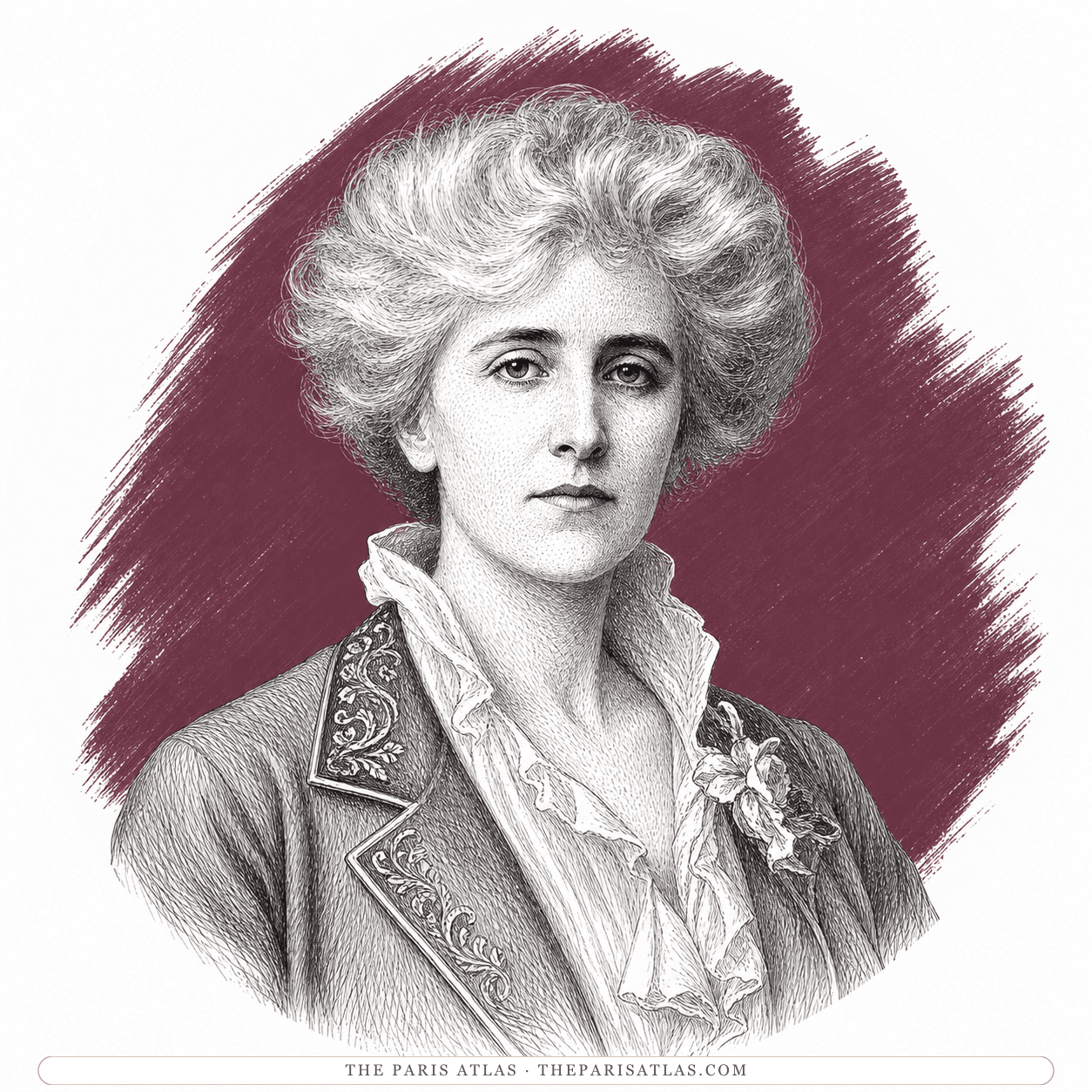
Illustrated portrait of Ernest Hemingway

Ernest Hemingway

  • Author
  • Journalist

Met

A friendship documented on both sides. In 1937 Hemingway told Flanner that if a prize were ever given for the worst sportswriter in the western world he would see that she got it, over a piece she had written on bullfighting. Photographs from the liberation of Paris in August 1944 show the two at Les Deux Magots, both in United States war-correspondent uniform.

Love letters from Paris; Janet Flanner and Solita Solano Papers

Illustrated portrait of Nancy Cunard

Nancy Cunard

  • Poet
  • Publisher
  • Printer
  • +4

Met

The two knew each other from the 1920s and were still writing to each other in 1960, when Cunard sent Flanner the letter that begins 'not being one who wants to go through life entirely alone'. The Library of Congress holds photographs from Flanner's own papers of Cunard with Flanner in 1926 and of Flanner at a fancy-dress party of Cunard's. Women in World History goes further and describes the two, with Solita Solano, as a triangle; that is one encyclopedia's characterisation and no other source consulted repeats it.

Cunard, Nancy (1896–1965); Janet Flanner and Solita Solano Papers

Illustrated portrait of Natalie Clifford Barney

Natalie Clifford Barney

  • Author
  • Poet
  • Salon host
  • +2

Met

Flanner belonged to Barney's circle from the 1920s. Djuna Barnes's Ladies Almanack of 1928, the comic roman à clef about that circle, puts Flanner and Solita Solano in it as a pair of journalists called Nip and Tuck.

Flanner, Janet (1892–1978); Natalie Clifford Barney — French Women & Feminists in History: A Resource Guide

Movements

The artistic and literary currents this life ran through.

Pen-and-ink illustration of four young writers revising manuscripts around a typewriter at a Paris café in the 1920s

Literary generation · c. 1921–1929

The Lost Generation

Flanner arrived in Paris in 1922 and reported the expatriate city for The New Yorker from 1925. She is a participant and, unusually, a contemporary witness in print: the fortnightly Letter from Paris is a dated record of the years the movement is named for, written while they were happening rather than remembered afterwards.

Flanner, Janet (1892–1978); Ray E. Boomhower, Janet Flanner (2009)

Janet Flanner’s Places

The cataloged places connected to Janet Flanner — through the books, and through the documented record.

Places you can enter today appear first, followed by addresses to see from outside and sites that have vanished.

Questions about Janet Flanner

Who was Janet Flanner?

An American journalist (1892–1978) who wrote The New Yorker's fortnightly Letter from Paris under the pen name Genêt from 1925 to 1975. She lived in Paris from 1922, reported the city for fifty years, profiled Adolf Hitler in 1936, covered the Nuremberg trials in 1945, and won the National Book Award for Arts and Letters in 1966 for the collection Paris Journal, 1944–1965.

Why did Janet Flanner write as Genêt?

Because Harold Ross, the founding editor of The New Yorker, wanted a French-sounding byline and invented one for her. Genêt is not the French for Janet, which is Jeannette; the French word means the broom shrub. Ross never explained the choice, and Flanner's own guess — that he thought it a nice French way of spelling Janet — is the source of the story now usually told as fact. The writer Jean Genet is unrelated: he was fifteen and unknown in 1925.

How long did Janet Flanner write the Letter from Paris?

Fifty years. The first appeared in the issue of 10 October 1925 and the last was written in November 1975. She filed roughly 2,500 words every two weeks, regularly until 1970 and intermittently after that. The one long gap is the war: she left France in September 1939 and returned in 1944.

Did Janet Flanner write about Hitler?

Yes. She reported a Profile of Adolf Hitler from Germany in 1935 and The New Yorker ran it in three parts, beginning in the issue of 29 February 1936. It does not discuss the persecution of Jews in Germany, an omission criticised in America at the time; in Germany the piece was read as friendly. When Flanner reprinted it in 1940 she added a note saying its only remaining value was as a period piece from a time when Europe thought Hitler a joke.

Who was Janet Flanner's partner?

Solita Solano, an American drama critic and editor she met in New York in the winter of 1918–19 and went to Paris with in 1922. They lived together for sixteen years and remained attached until Solano's death in 1975. From 1940 Flanner was also with Natalia Danesi Murray, an Italian-born broadcaster and publisher she met at Cherry Grove on Fire Island; that relationship lasted until Flanner died in 1978. Neither was hidden, and both are documented in her letters.

Where did Janet Flanner live in Paris?

In two hotel rooms. From the autumn of 1922 to September 1939 she lived at the Hôtel Saint-Germain-des-Prés, 36 rue Bonaparte, in the sixth arrondissement, and wrote every Letter from Paris of those years there. From 1949 she lived at the Hôtel Continental on the rue de Castiglione, by the Tuileries, for roughly twenty years.

Which Janet Flanner book won the National Book Award?

Paris Journal, 1944–1965, which won the 1966 National Book Award in the Arts and Letters category. It collects the Letters from her return to Paris in 1944 through 1965. The companion volumes are Paris Journal, 1965–1971 and Paris Was Yesterday, 1925–1939, which gathers the pre-war run.

How did Janet Flanner die?

She died in New York City on 7 November 1978, aged eighty-six, at Lenox Hill Hospital, after what the contemporary obituaries reported as a heart attack. She had moved back from Paris three years earlier. She was cremated and her ashes were scattered at Cherry Grove on Fire Island.

Are Janet Flanner's papers available to read?

Yes. The Janet Flanner and Solita Solano Papers are in the Manuscript Division of the Library of Congress, given between 1967 and 1977, and hold the correspondence, manuscripts, photographs and scrapbooks of both women. The dispatches themselves are in The New Yorker's archive and in the collections published in her lifetime.

Sourced claims

Every connection the graph holds for Janet, with the evidence behind it.

Associated with · 1922–1939

The Lost Generation

Flanner arrived in Paris in 1922 and reported the expatriate city for The New Yorker from 1925. She is a participant and, unusually, a contemporary witness in print: the fortnightly Letter from Paris is a dated record of the years the movement is named for, written while they were happening rather than remembered afterwards.

Flanner, Janet (1892–1978); Ray E. Boomhower, Janet Flanner (2009)

Frequented

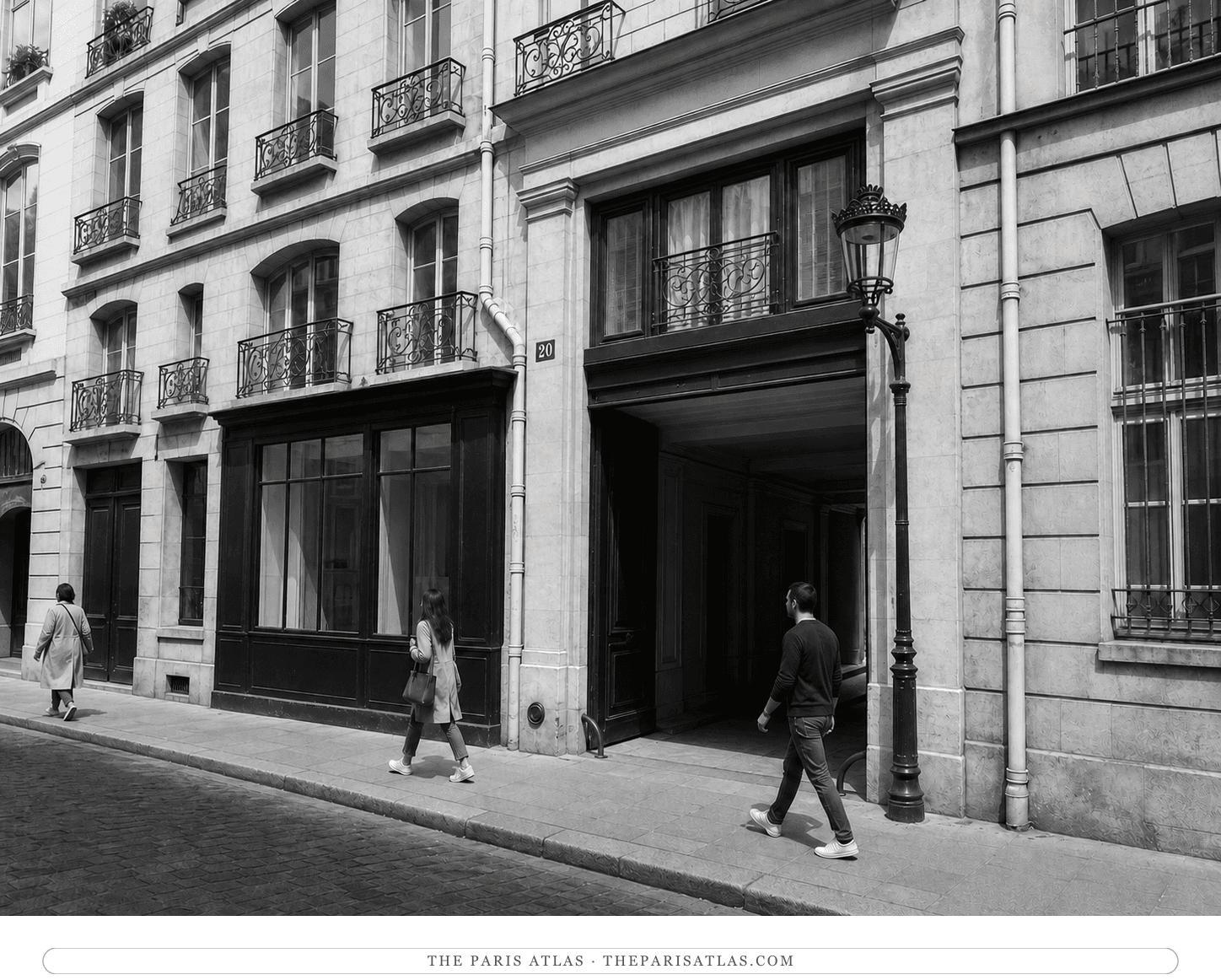
20 rue Jacob

Flanner is named among the Americans Natalie Clifford Barney received at the Friday salon during the 1920s. She lived two minutes' walk south, at 36 rue Bonaparte. The sources name her without dating individual visits.

Flanner, Janet (1892–1978); Natalie Clifford Barney — French Women & Feminists in History: A Resource Guide

Lived at · 1922–1939

Rue Bonaparte

Flanner and Solita Solano took a room at the Hôtel Saint-Germain-des-Prés, 36 rue Bonaparte, in the autumn of 1922 and stayed sixteen years. A photograph of the room in her papers at the Library of Congress carries a caption in her own hand: she wrote the first New Yorker Letter from Paris there in 1925, and every letter and profile after it until September 1939. She moved to the Hôtel Continental on the rue de Castiglione, across the river, in 1949.

[Janet Flanner's room at 36 rue Bonaparte, Paris] — Janet Flanner and Solita Solano Papers; Flanner, Janet (1892–1978); Love letters from Paris

Met

Ernest Hemingway

A friendship documented on both sides. In 1937 Hemingway told Flanner that if a prize were ever given for the worst sportswriter in the western world he would see that she got it, over a piece she had written on bullfighting. Photographs from the liberation of Paris in August 1944 show the two at Les Deux Magots, both in United States war-correspondent uniform.

Love letters from Paris; Janet Flanner and Solita Solano Papers

Met

Nancy Cunard

The two knew each other from the 1920s and were still writing to each other in 1960, when Cunard sent Flanner the letter that begins 'not being one who wants to go through life entirely alone'. The Library of Congress holds photographs from Flanner's own papers of Cunard with Flanner in 1926 and of Flanner at a fancy-dress party of Cunard's. Women in World History goes further and describes the two, with Solita Solano, as a triangle; that is one encyclopedia's characterisation and no other source consulted repeats it.

Cunard, Nancy (1896–1965); Janet Flanner and Solita Solano Papers

Met

Natalie Clifford Barney

Flanner belonged to Barney's circle from the 1920s. Djuna Barnes's Ladies Almanack of 1928, the comic roman à clef about that circle, puts Flanner and Solita Solano in it as a pair of journalists called Nip and Tuck.

Flanner, Janet (1892–1978); Natalie Clifford Barney — French Women & Feminists in History: A Resource Guide

Translated · 1929

Chéri

Flanner's English Chéri was published by Albert and Charles Boni in 1929, the first English version of Colette's novel. The translation generally read today is Roger Senhouse's, made much later, and it is the one the catalogued edition carries.

Chéri, by Colette, translated by Janet Flanner (Albert & Charles Boni) — catalogue record; Flanner, Janet (1892–1978)

Sources and further reading

  • Flanner, Janet (1892–1978)
  • Catherine Gibson, Janet Tyler Flanner (Genêt)
  • Francis William (Frank) Flanner
  • Ray E. Boomhower, Janet Flanner (2009)
  • Love letters from Paris
  • Paris Journal, 1944–1965 — Winner, National Book Awards 1966 for Arts and Letters (1966)
  • Janet Flanner and Solita Solano Papers
  • [Janet Flanner's room at 36 rue Bonaparte, Paris] — Janet Flanner and Solita Solano Papers
  • Lillian Hellman, Janet Flanner — a tribute (1978)
  • David O, Führer Furor — the issue of 29 February 1936
  • Chéri, by Colette, translated by Janet Flanner (Albert & Charles Boni) — catalogue record
Browse all authors