
Depicted in its pages
Tropic of Cancer
The nightly walks with Mona, remembered a year too late — the book's tenderest stretch of pavement.
The street that stitches the Left Bank together — river to Beaux-Arts to Saint-Germain to Saint-Sulpice — and the nightly walk Henry Miller could not stop remembering.
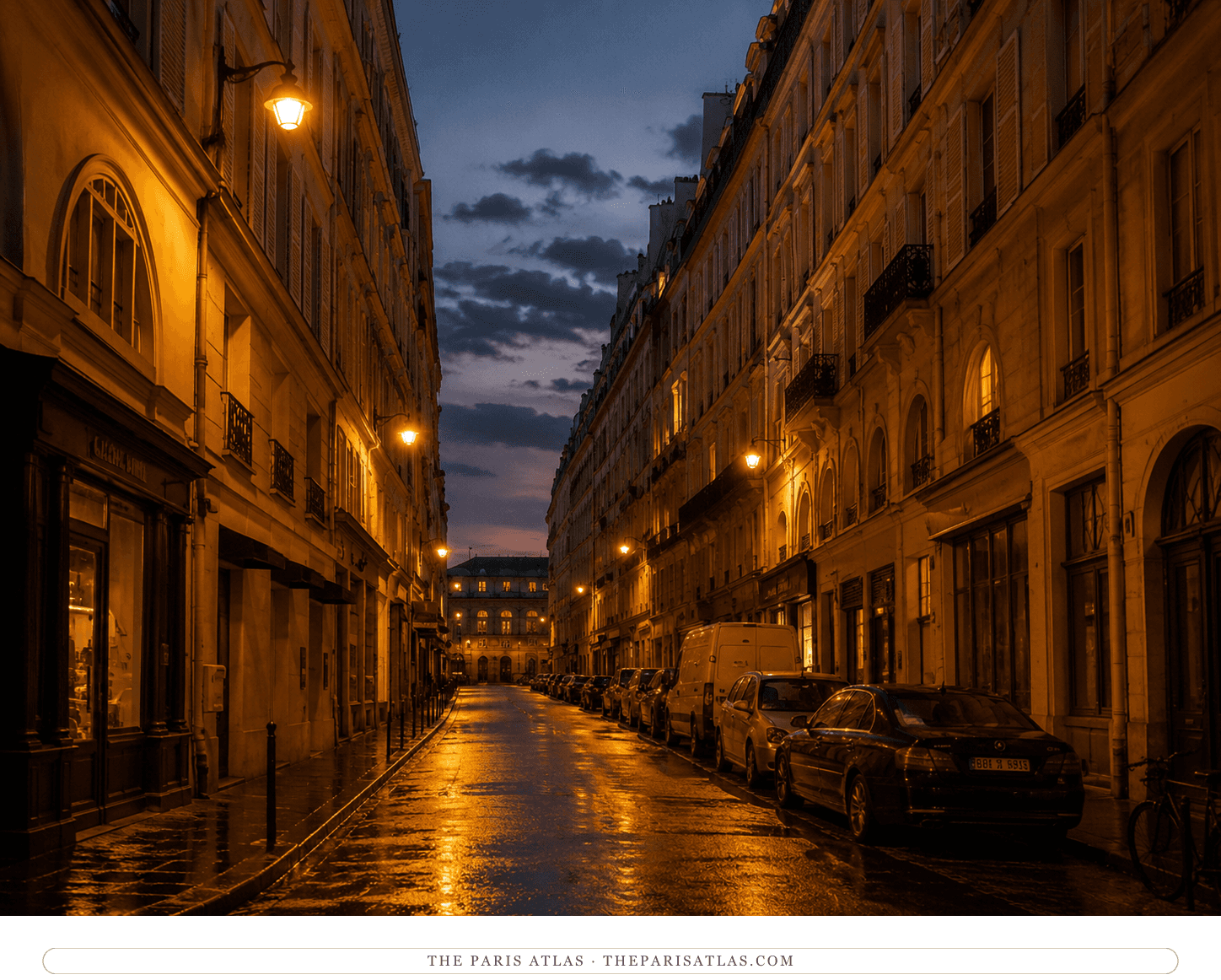
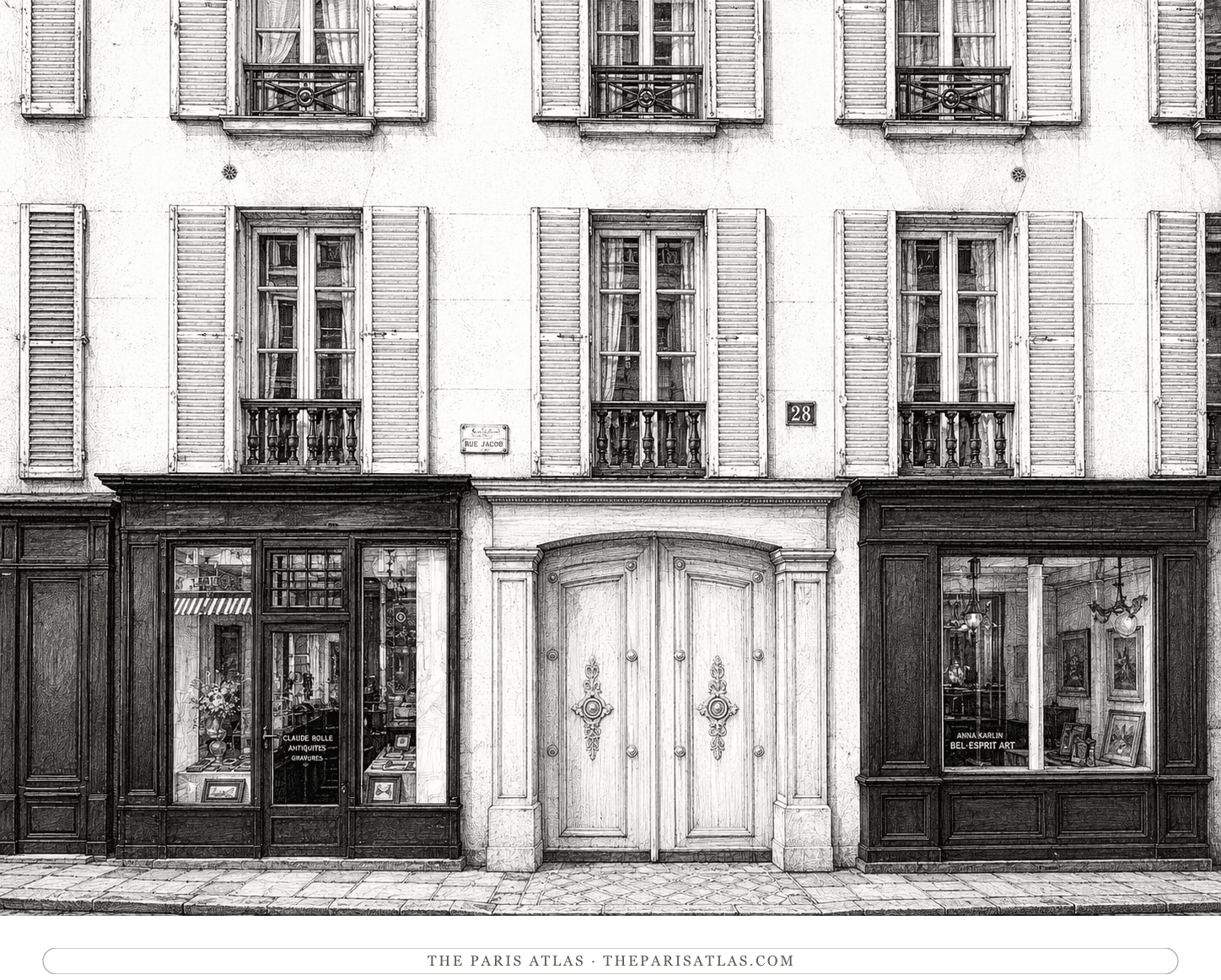
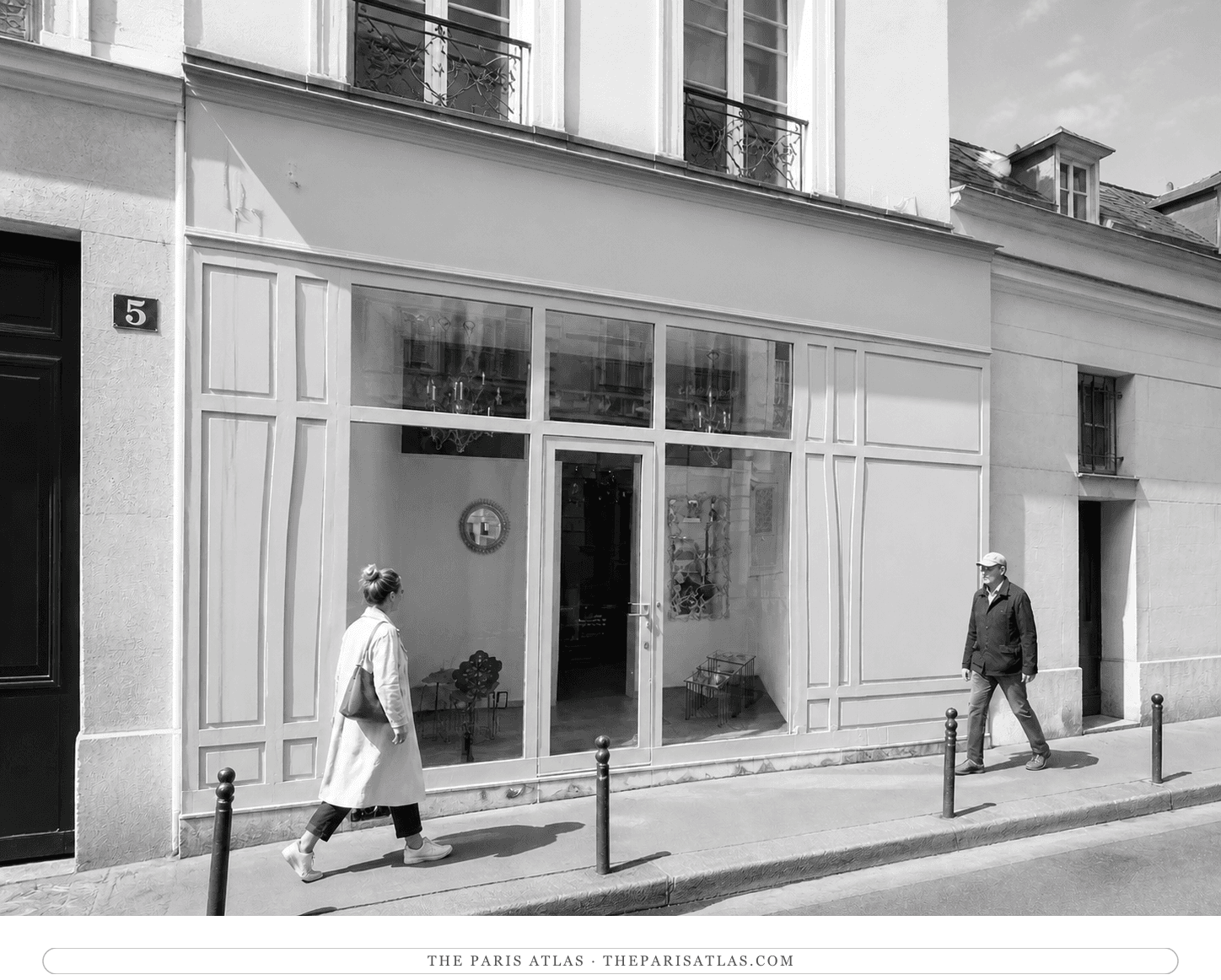
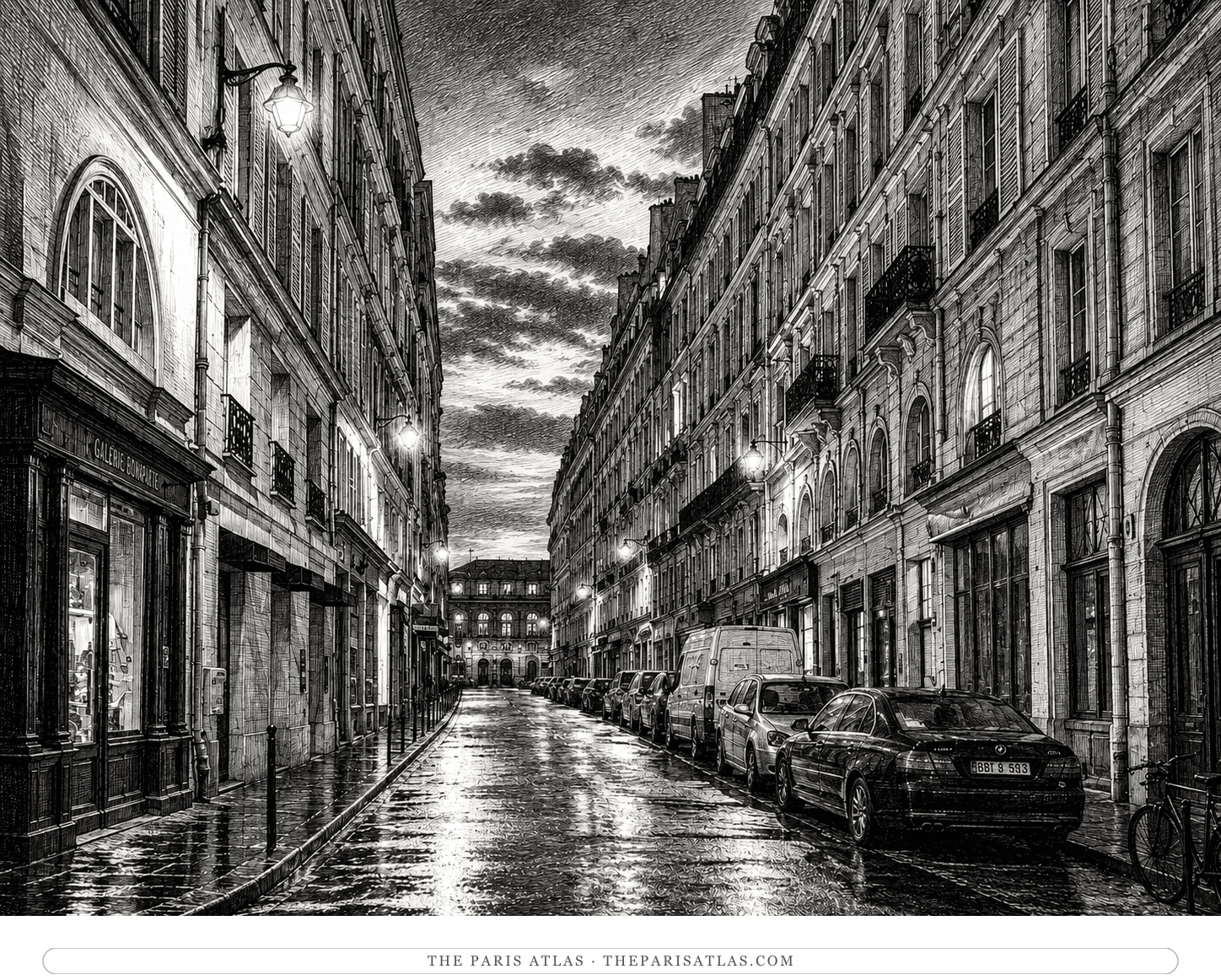
Rue Bonaparte runs the Left Bank's whole argument in ten minutes: from the quai and the École des Beaux-Arts, past the church and cafés of Saint-Germain-des-Prés, down to the quiet of Saint-Sulpice. Painters' suppliers, print dealers, and antiquaires lined it through the era, and it crosses the boulevard at the exact corner where the Deux Magots' terrace watches the church.
In Tropic of Cancer the street carries the book's wound. The narrator remembers walking it every night with Mona only a year before — the happy version of a marriage the novel spends its length grieving. Miller gives the street no description at all; he doesn't need one. It is the route itself, walked nightly and then lost, that does the work — our purest example of an address holding a feeling.
The street's afterlife kept its literary weight: Sartre lived at No. 42 above the square's corner through the existentialist decades, and the Beaux-Arts end still feeds the quarter its art students. The walk from river to square is unchanged, and still best taken at night.
And it was down the Rue Bonaparte that only a year before Mona and I used to walk every night…
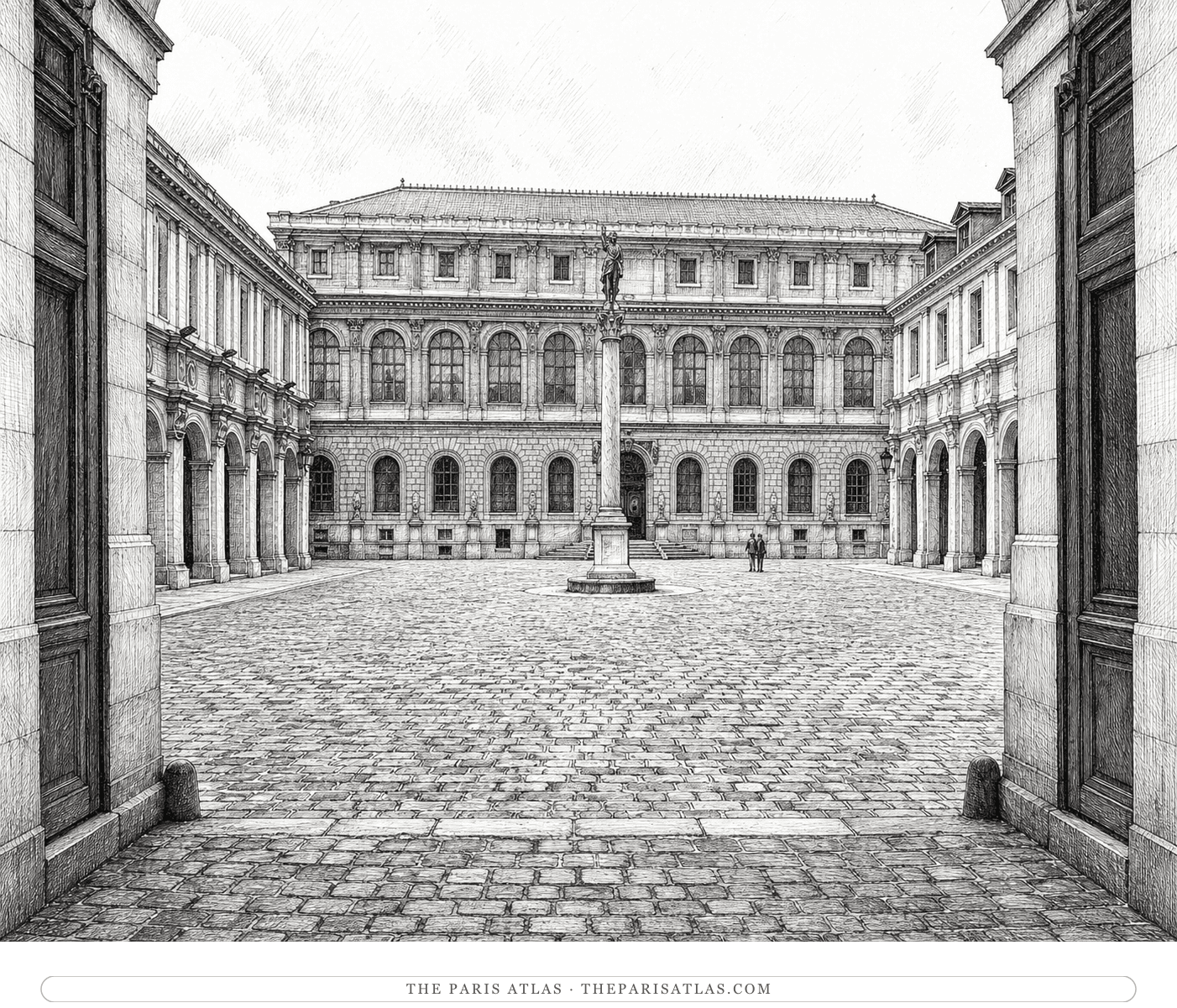
The street assembles from riverside lanes; the Beaux-Arts anchors its northern end.
The nightly walks with Mona that Miller will mourn in Tropic of Cancer.
Sartre moves to No. 42, and the street inherits a second literary era.
The walk from quai to square survives intact.
Depicted in its pages
The nightly walks with Mona, remembered a year too late — the book's tenderest stretch of pavement.
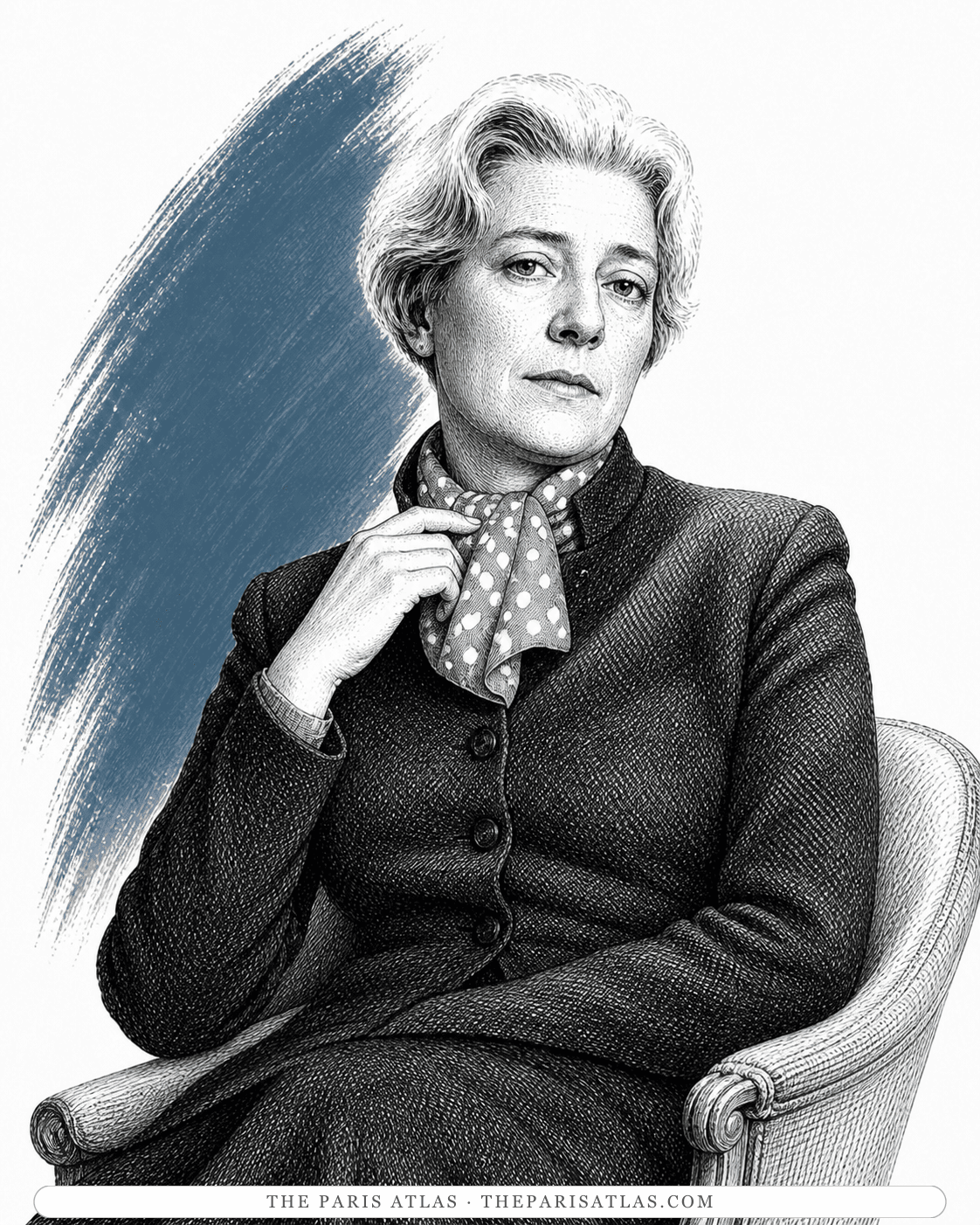
Lived here · 1922–1939
Flanner and Solita Solano took a room at the Hôtel Saint-Germain-des-Prés, 36 rue Bonaparte, in the autumn of 1922 and stayed sixteen years. A photograph of the room in her papers at the Library of Congress carries a caption in her own hand: she wrote the first New Yorker Letter from Paris there in 1925, and every letter and profile after it until September 1939. She moved to the Hôtel Continental on the rue de Castiglione, across the river, in 1949.
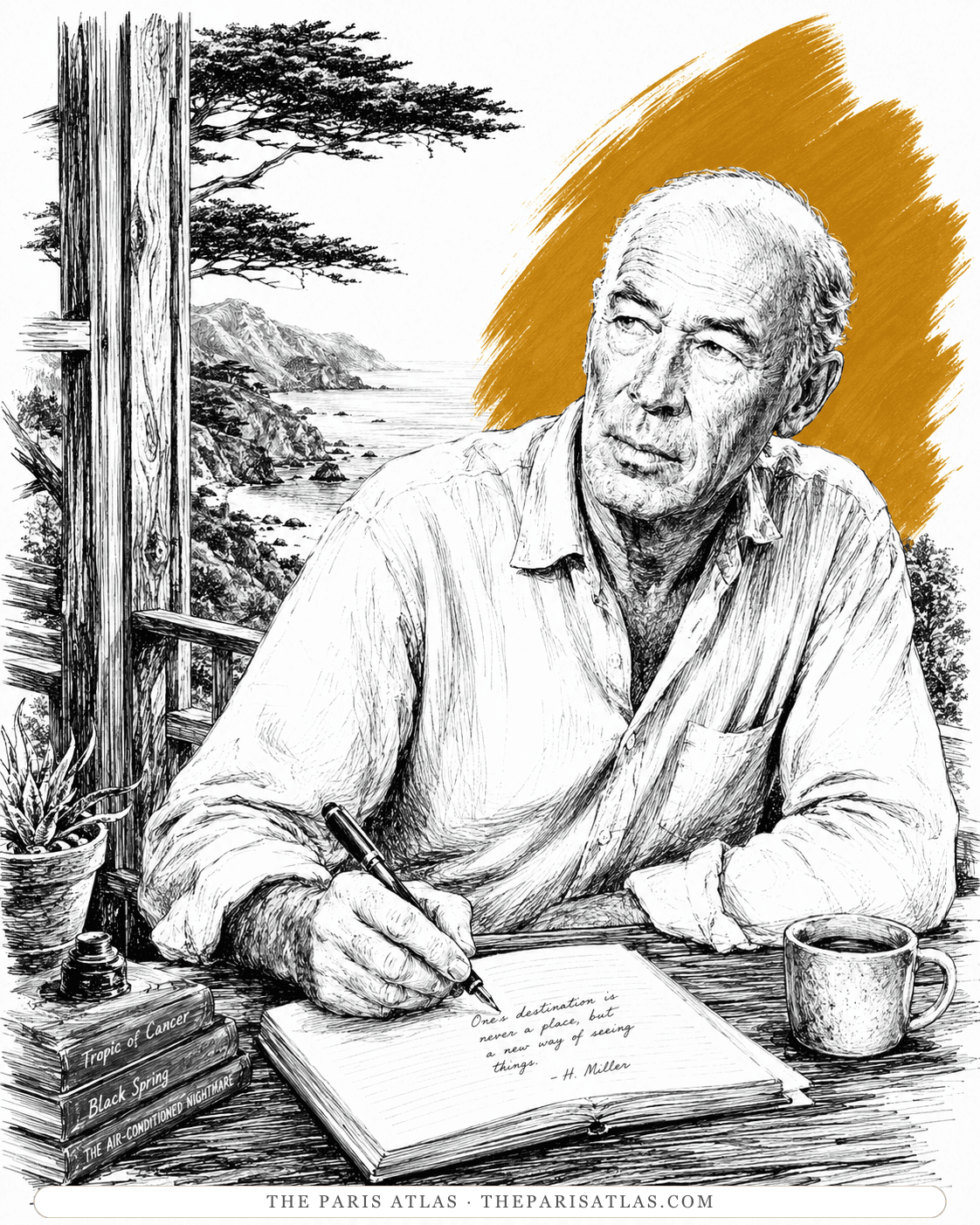
Frequented by · 1928–1930
The nightly walks with Mona that Tropic of Cancer mourns — a route walked habitually before the novel's Paris begins.
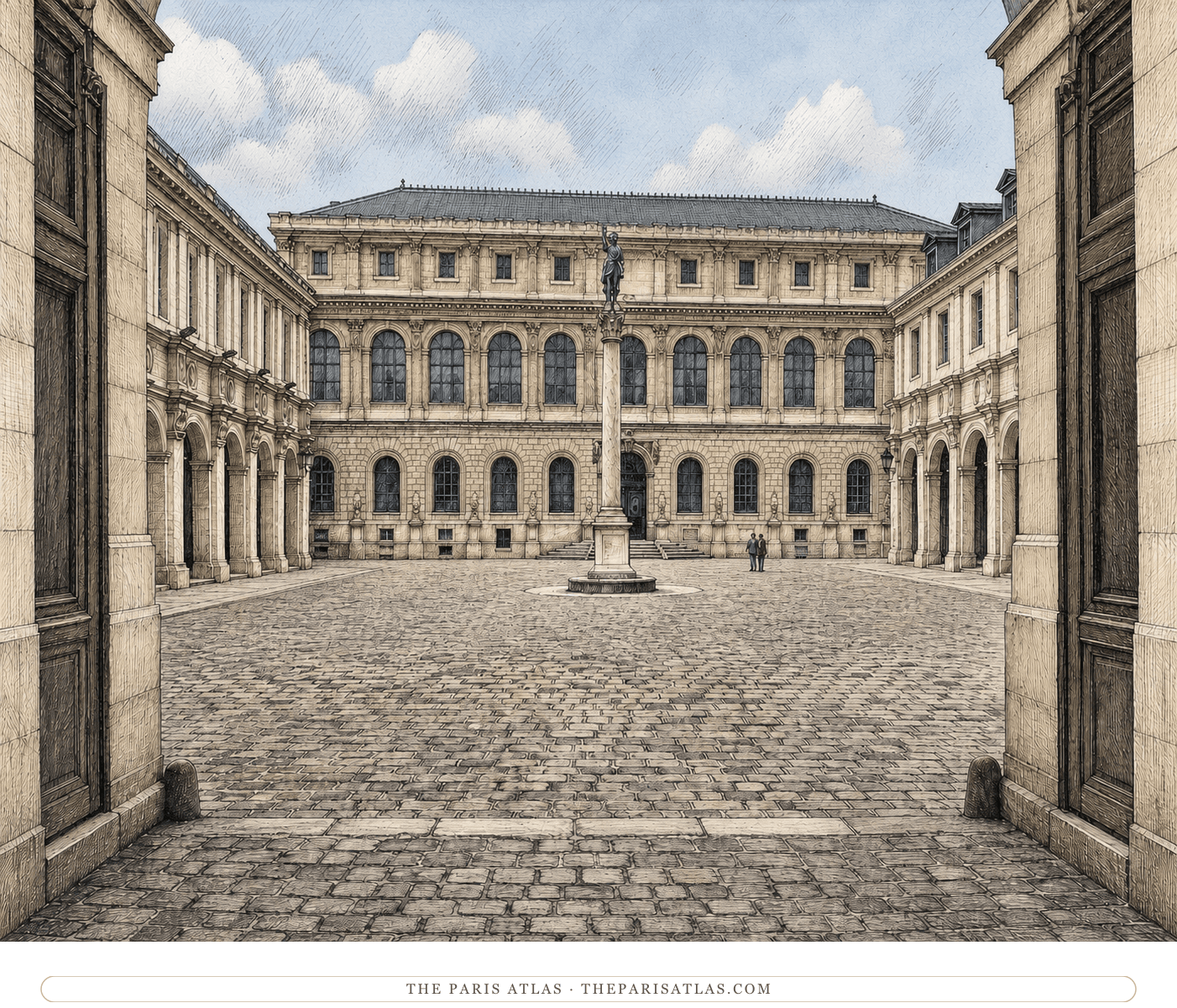
France's national art school, on the rue Bonaparte across from the Louvre. Almost every French painter of the nineteenth century passed through it, argued with it, or defined themselves against it — Degas entered in the 1850s.
Visit the place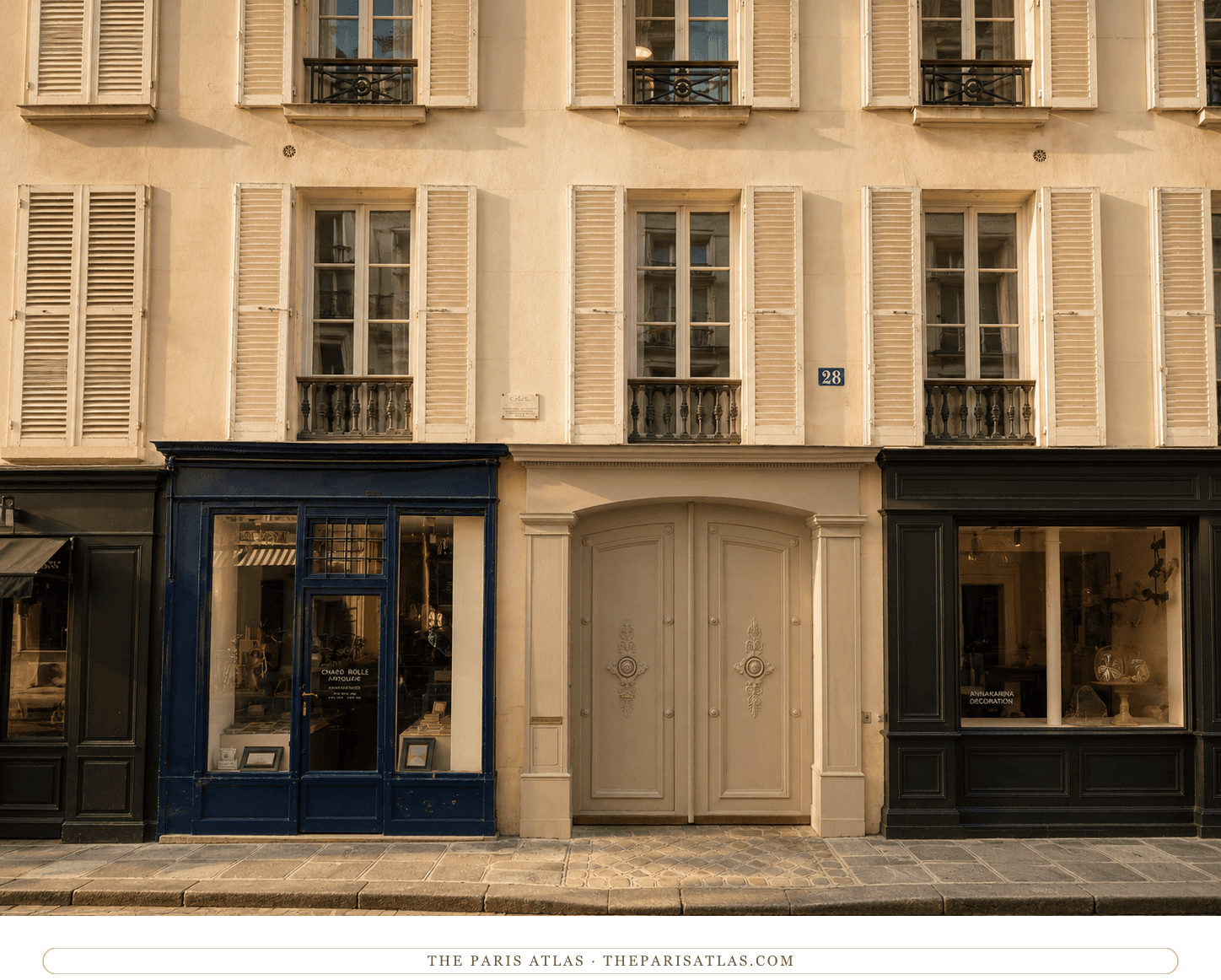
Colette's first marital home in Paris, a third-floor apartment she took with her husband Willy in 1893.
Visit the place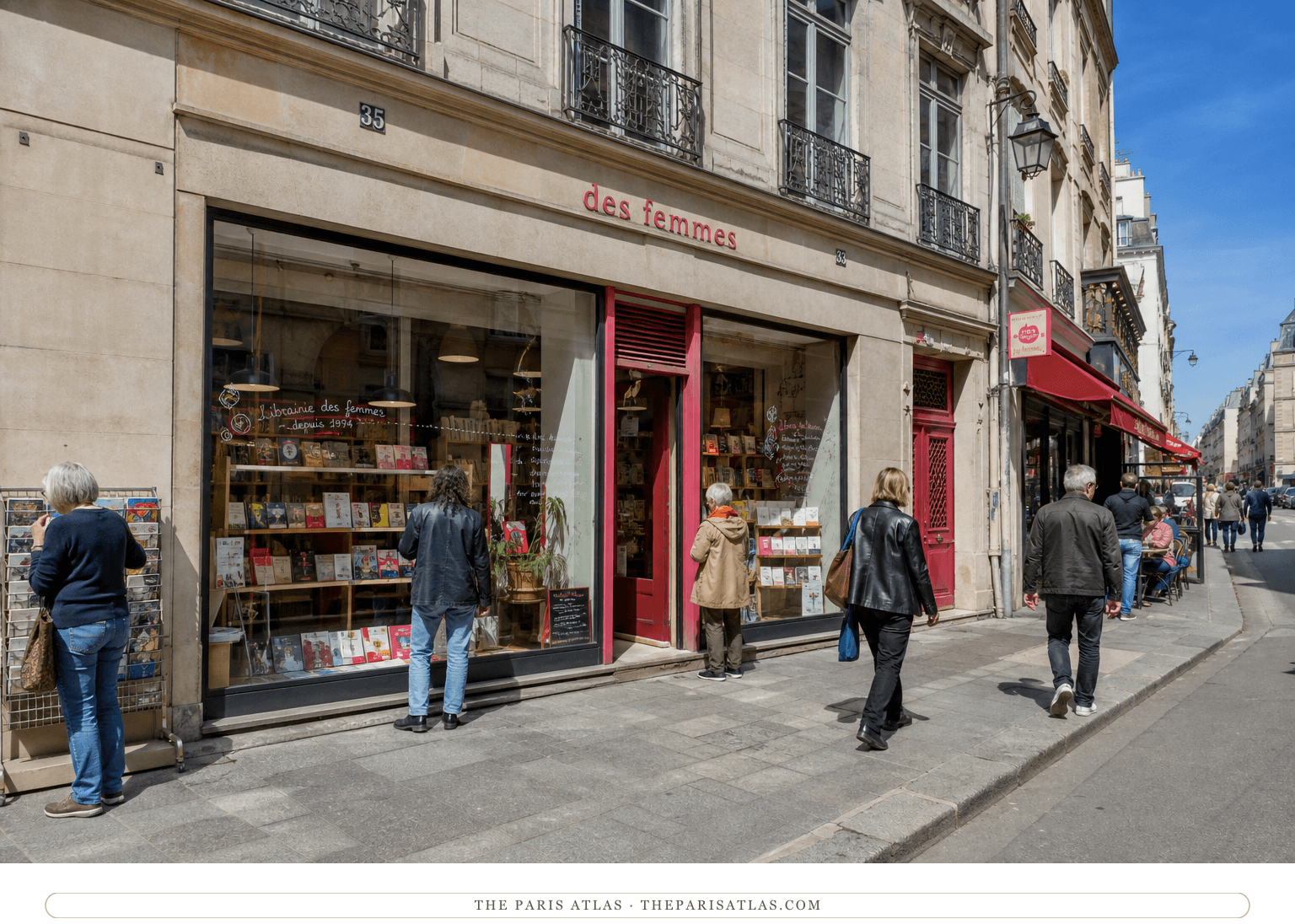
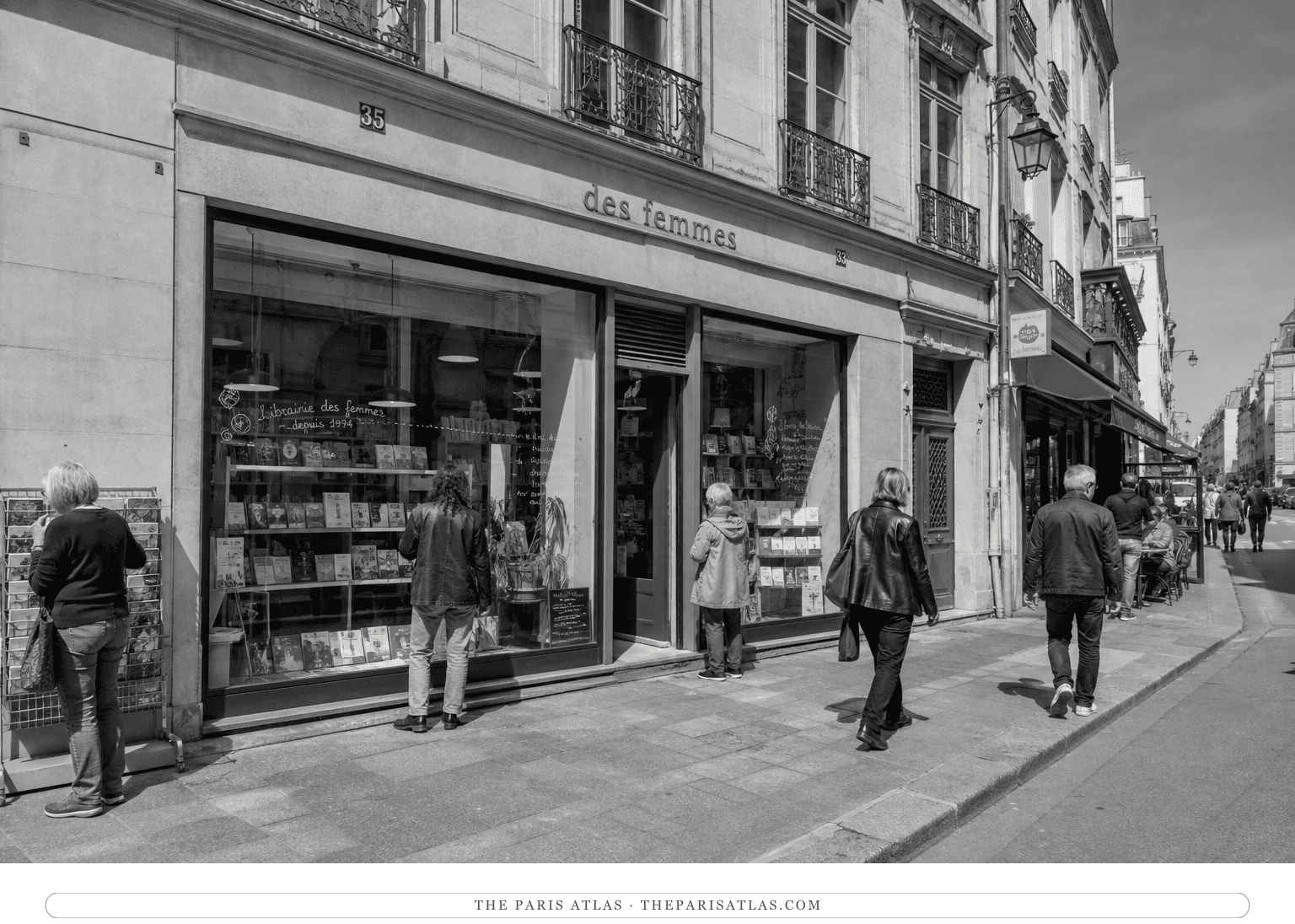
The Catholic girls' school Simone de Beauvoir attended from the age of six until her baccalauréat. The address is now occupied by the Librairie des Femmes — the feminist bookshop and publishing house — which makes it the most improbable coincidence on any Paris literary walk.
Visit the place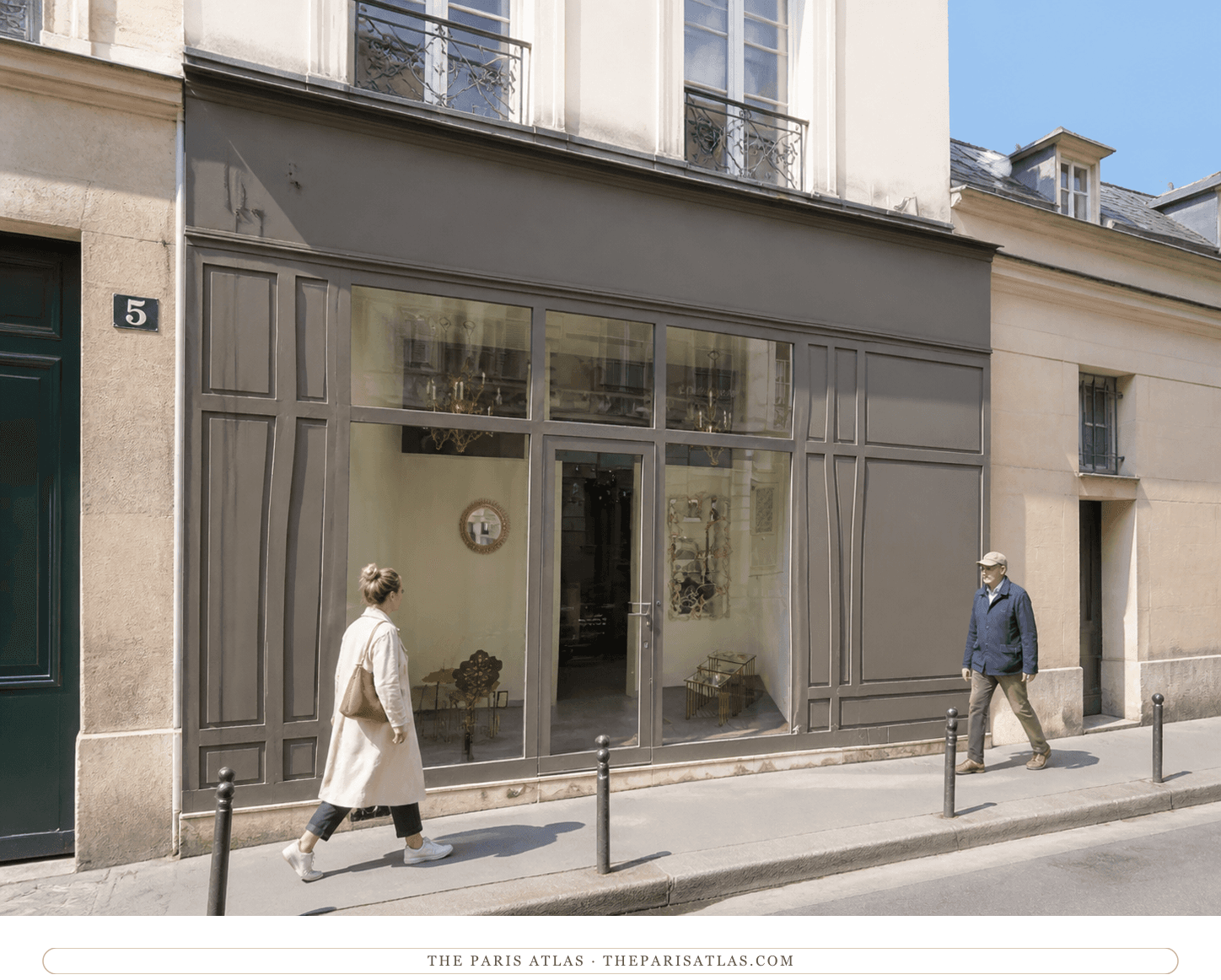
The house where Édouard Manet was born on 23 January 1832, on a street then called the rue des Petits-Augustins — a few doors from the art school and a bridge from the Louvre.
Visit the placeThe sources below include histories, archival materials, scholarly research, and official records that informed this page. They document Rue Bonaparte, the people connected to it, and its place in Paris.


Primary text included as part of the documented record for Rue Bonaparte.

Map data used to verify addresses, geographic coordinates, and the placement associated with Rue Bonaparte.
Biographical evidence used to verify chronology, relationships, and historical context connected to Rue Bonaparte.
Biographical evidence used to verify chronology, relationships, and historical context connected to Rue Bonaparte.
These references provide the documented foundation for this page's history and context. Claim-level citations remain attached to the specific claims they support.
 Explore more resources
Newsletter
The cafés, studios, and walk-up flats where the work was made — one story from the map in every letter.