Point Counter Point
Lucy Tantamount is invented, drawn from Nancy: Lord Edward's daughter, a restless beauty who collects sensations and people. Drawn from Nancy Cunard.
Read the character guideBritish poet and printer who ran the Hours Press in Normandy and Paris, published Samuel Beckett's first separately printed work, compiled and paid for the 855-page Negro: An Anthology in 1934, and reported the Spanish refugee camps for the Manchester Guardian.
Nancy Cunard was a British poet, printer, editor and political journalist. She was the great-granddaughter of Samuel Cunard, who founded the steamship line, and the only child of Sir Bache Cunard and the London hostess Maud Alice Burke, who called herself Emerald. She spent almost her whole adult life in France.
Between 1928 and 1931 she ran the Hours Press, first from a farmhouse in Normandy and then from a shop on the rue Guénégaud in Paris, setting type by hand on a press she bought from William Bird. It printed the first collected edition of Ezra Pound's A Draft of XXX Cantos and, after a poetry competition in 1930, Samuel Beckett's Whoroscope, his first separately published work. She then spent three years compiling Negro: An Anthology, an 855-page collection of some 150 contributors on Black history, politics, art and music, which she paid for herself and published in 1934.
Her partner from 1928 was the American jazz musician Henry Crowder. Her mother's reaction to the relationship ended their relations permanently and cost Nancy Cunard her allowance; her answer was a pamphlet, Black Man and White Ladyship, printed in 1931 and posted to her mother's friends. She raised money for the Scottsboro defendants, organised the 1937 questionnaire Authors Take Sides on the Spanish War, reported the Spanish refugee camps for the Manchester Guardian, and worked with Pablo Neruda on a series of poetry pamphlets for the Republic. She died in Paris in 1965, destitute.
Nancy Cunard is usually introduced as the heiress to the Cunard Line, which is not quite what she was. Samuel Cunard, who founded the shipping company, was her great-grandfather. By 1896 what descended in the family was a baronetcy and a private fortune rather than the firm. Her father, Sir Bache Cunard, was the third baronet, a country gentleman at Nevill Holt in Leicestershire, thirty years older than his wife and interested chiefly in hunting and metalwork.[1]
Her mother, Maud Alice Burke, was American, from San Francisco, and became one of the two or three most effective hostesses in London. She changed her name to Emerald, took Sir Thomas Beecham as her lover and the opera as her cause, and separated from Sir Bache in 1911. Nancy, then fourteen, went with her to London. The daughter's life reads for the next twenty years as a series of positions taken against the mother's, and the money is the thread: she had an allowance rather than an estate, and in 1931 it stopped.
She married Sydney Fairbairn, a cricketer and army officer wounded at Gallipoli, on 15 November 1916. She wore gold, and there were no bridesmaids and no flowers. The marriage lasted twenty months in practice and was not dissolved until 1925. Her own verdict, quoted by her biographers, was that she had married a foul man and loathed him.
Three books of poems came first: Outlaws in 1921 from Elkin Mathews, Sublunary in 1923 from Hodder and Stoughton with a frontispiece portrait by Wyndham Lewis, and Parallax in 1925.
Parallax is the one still read. Leonard and Virginia Woolf hand-printed it at the Hogarth Press in an edition of 420 copies, with a cover design by the American painter Eugene McCown. Hogarth had published T. S. Eliot's The Waste Land three years earlier, and Parallax is a long poem of a city in winter that critics have been comparing to it ever since, mostly to Cunard's disadvantage. Read on its own the opening does what it means to do.[2]
This thin edge of December / Wears out meagrely in the / Cold muds, rains, intolerable nauseas of the street.
She went on writing poems for the rest of her life and never again published a book of them that mattered as much as the printing and editing she did instead.
In 1928 Cunard bought a hand press. It was a Belgian Mathieu about two hundred years old, and it came from William Bird, the American newspaperman who had run the Three Mountains Press in Paris and was giving it up. Bird supervised the move and the installation at her farmhouse at La Chapelle-Réanville in Normandy, and taught her to use it. She bought Caslon Old Face type and Vergé de Rives paper and learned to set by hand.[3]
Within two years the press had moved to a small shop on the rue Guénégaud in Paris, near the Galerie surréaliste. The window showed work by Salvador Dalí, Man Ray and Joan Miró alongside the African and Oceanic sculpture she collected. She added a faster Minerva press for the routine work and kept the Mathieu for the books she cared about.[4]
The list in three and a half years ran to about twenty-five titles, and the names on it are the argument for taking her seriously as a publisher:[5]
Covers were commissioned from Man Ray, John Banting and Len Lye. Cunard shut the press in early 1931 to give her whole time to the anthology, having handed the daily running to Wyn Henderson before that. Her own account of the four years, These Were the Hours, was edited by Hugh Ford and published in 1969, after her death.
In the spring of 1930 Cunard and Richard Aldington advertised a competition. The wording was theirs: Nancy Cunard, Hours Press, in collaboration with Richard Aldington, offers £10 for the best poem up to 100 lines, in english or american on TIME (for or against). The deadline was 15 June 1930.[6]
The winning entry arrived after it. In the early hours of 16 June a folder was pushed under the door of the Paris office. It held a ninety-eight-line poem called Whoroscope, spoken in the voice of René Descartes and thick with references to his biography, by a twenty-four-year-old Irishman then lecturing at the École normale supérieure. Cunard and Aldington gave it the ten pounds.
We found a poem, a beauty, by a poet—so much so that it must be printed by itself.
She printed it as its own book that summer: a hundred signed copies at a shilling, two hundred unsigned at fivepence, scarlet covers, eleven-point Caslon on Vergé de Rives. It is the first work Samuel Beckett published separately, four years before More Pricks Than Kicks and twenty-three before Waiting for Godot. The story that he wrote it in a single night is often repeated; his biographer James Knowlson treats the speed as remarkable rather than documented, and it should be read as an anecdote rather than a fact.[6]
Beckett kept working for her. He translated nineteen French essays and poems for Negro: An Anthology, which at the time was the largest body of his prose in print.
Henry Crowder was an American jazz pianist from Gainesville, Georgia, the youngest of twelve children of a tannery worker. He had studied a year at Atlanta University and then at the Chicago School of Music, played the Washington restaurants and brothels from about 1915, and came to Europe in 1928 with Eddie South and his Alabamians. Cunard heard him play in Venice that year, and they were together for the next seven.[7]
He is the reason the rest of her life took the shape it did. She said so plainly: the anthology is dedicated to him, and its dedication credits him with making her see the subject at all. Crowder was less impressed by the book than she was, calling it shallow and empty, and his own memoir of the affair, written around 1935 and published fifty years later as As Wonderful As All That?, is an unhappy document. Both of those are true at once, and neither cancels the other.
The Hours Press printed his one book, Henry-Music, in 1930: settings of poems by Beckett, Aldington, Walter Lowenfels and Cunard herself, with a photomontage cover by Man Ray. He later left music and worked as a clerk at the United States Customs Bureau until his death.
Lady Cunard learned that her daughter was living with a Black man and set about breaking it up. The question she is recorded as asking, which Nancy Cunard printed in the pamphlet, was whether it was true that her daughter knew a Negro. At one of her lunch parties Margot Asquith asked across the table what it was this time, drink, drugs, or Black men, using the period's word.
The answer was a pamphlet, privately printed at Toulon in 1931 and titled Black Man and White Ladyship: An Anniversary. Cunard sent it to her mother's friends in London society. It set out the colour bar as she understood it, named her mother's conduct, and disclosed the details of her own allowance. A version appeared in W. E. B. Du Bois's magazine The Crisis in September 1931.[8]
How come, white man, the rest of the world is to be re-formed in your dreary and decadent image?
Lady Cunard disinherited her. The two never spoke again. What is sometimes told as a piece of society theatre was in fact the moment Cunard chose the rest of her life over the money, and she never had much of it afterwards.
The title page reads Negro: Anthology made by Nancy Cunard 1931–1933. It is a quarto of roughly 855 pages in brown cloth, with photographic plates, a large folding map of what it calls Negro Africa, and a map of the Black Belt of America printed on the back cover. It holds around 250 contributions from about 150 people, Black and white, and it cost her a great deal of her own money to make. Wishart and Company published it in London in February 1934.[9]
The contributors include Langston Hughes, Zora Neale Hurston, W. E. B. Du Bois, Countee Cullen, Sterling Brown, Alain Locke, Arthur Schomburg, Walter White, George Padmore, Louis Armstrong and Henry Crowder, alongside Ezra Pound, William Carlos Williams, Theodore Dreiser, Norman Douglas, William Plomer and Samuel Beckett as translator. The range is deliberate: history and ethnography, poetry and fiction, sheet music and photographs of sculpture, reports on lynching and on the Scottsboro case, essays on Africa and the Caribbean and Latin America.
It was necessary to make this book — and I think in this manner, an Anthology of some 150 voices of both races — for recording of the struggles and achievements, the persecutions and the revolts against them, of the Negro people.
She gathered it in person. She went to the United States twice, in 1931 and 1932, and stayed in Harlem at the Grampion Hotel rather than in a white hotel downtown, which the New York tabloids turned into a week of coverage. They cast her as a traitor to her race and invented a relationship with Paul Robeson, which she denied in the Philadelphia Inquirer, saying that beyond a formal introduction the two did not know each other. Anonymous letters followed, some threatening her life. She printed a selection of them in the anthology, noting that the rest were too obscene to reproduce.
About a thousand copies were printed. Most of them burned in a warehouse during the Blitz, and the first edition has been scarce ever since. Abridged editions have kept the book in circulation from the 1970s onward.
In 1931 nine Black youths were convicted in Alabama of raping two white women on a freight train, on evidence that collapsed under examination, and all but the youngest were sentenced to death. Cunard used Black Man and White Ladyship to announce that she was raising money for their defence, and she went on raising it from 1933.
The British authorities noticed. The Metropolitan Police kept a file on her from 1932 to 1947, now at the National Archives as MEPO 38/9, which calls her a well-known extremist, records a street stop in London in February 1932, and follows her contacts with the trade unionist I. T. A. Wallace-Johnson and a planned Negro Welfare Club and bookshop.[10]
In June 1937 Cunard drafted a questionnaire and sent it to writers over a group of names that included her own, W. H. Auden, Stephen Spender, Heinrich Mann and Pablo Neruda. It asked two questions and allowed six lines for the answer: are you for, or against, the legal Government and the People of Republican Spain, and are you for, or against, Franco and Fascism. Left Review published the replies in November 1937 as Authors Take Sides on the Spanish War, price sixpence. The great majority came down for the Republic; five writers declared for Franco. George Orwell's reply was not printed. It began by asking them to stop sending him this bloody rubbish.[11]
With Neruda she produced six issues of Les Poètes du monde défendent le peuple espagnol in 1937, pamphlets of poetry in support of the Republic, with contributors including Auden and Tristan Tzara. She had set type for four years and now used it for propaganda.
The reporting is the part that has lasted. She wrote for the Associated Negro Press of Chicago and for the Manchester Guardian, whose archive holds more than thirty of her published articles and letters and her correspondence with two editors across twenty years. She was in Barcelona under the air raids in September 1938, and in February 1939 she was at Perpignan and Argelès as half a million refugees came over the Pyrenees into France and were put behind wire on the beach.[12]
Something like 60,000 men are living here, on bare ground, without shelter in the cold and the damp.
She had wired the paper a fortnight earlier in telegram English, asking it to open a fund immediately for as many as half a million starving Spanish refugees pouring in, and calling the situation catastrophic. The editor W. P. Crozier wrote back on 7 February 1939 that her articles were admirable. When she asked in 1946 to be the paper's Spain correspondent, his successor turned her down.
Cunard left for Chile in January 1940 and spent the war in London, translating for the Free French. She got back to Normandy in February 1945 and found the farmhouse wrecked. Her African sculpture, her books, her manuscripts and her paintings had been broken up rather than carried off, by German soldiers and by neighbours. A canvas by Yves Tanguy was found in the rubble shot through with bullet holes. The houses on either side had not been touched.
Efforts to get compensation from the French state failed. She rented a farmhouse at Lamothe-Fénelon in the Dordogne from 1948 and kept moving after that. In June of the same year, aged fifty-two, she sailed from Trinidad to Britain on the Empire Windrush, the only passenger on the list who gave her occupation as writer.
Two books of memory came out of the late years: Grand Man, on Norman Douglas, in 1954, and G.M., on George Moore, who had been a friend of her mother's and a kind of literary godfather to her as a child, in 1956.
Cunard was photographed and painted more than almost any other woman of her circle, and the images have done a good deal to flatten her. The best known is Man Ray's of 1926, at the Metropolitan Museum of Art, with her forearms sheathed to the elbow in African ivory and wood bangles. Cecil Beaton photographed her in 1929 against a polka-dot backdrop for The Book of Beauty and wrote that she looked like a robot woman in a German film. Curtis Moffat, Barbara Ker-Seymer and John Banting all photographed her too.[13][14]
Constantin Brâncuși made a portrait of her. He had met her in Paris in 1923 through the poet Tristan Tzara, and by his gallery's account she did not sit for him. The Centre Pompidou holds a plaster of about 1928, with a separate fragment catalogued as her chignon. The polished bronze on a marble base, Jeune fille sophistiquée, was cast in 1932 and sold at Christie's in 2018 for seventy-one million dollars, the highest price ever paid for the sculptor. It is in a private collection.[15][16]
Novelists used her as well. Scholars accept three identifications: Iris Storm in Michael Arlen's The Green Hat (1924), and Myra Viveash in Antic Hay (1923) and Lucy Tantamount in Point Counter Point (1928), both by Aldous Huxley, who had an affair with her in 1922. A fourth identification circulates and should not: Lady Brett Ashley in Ernest Hemingway's The Sun Also Rises is not her. Hemingway scholarship attributes Brett to Duff Twysden, and the Cunard version is folklore. Evelyn Waugh is often said to have written her into something, with no novel and no character ever named.
The photographs and the fictions between them produced the version of Nancy Cunard most people have: a rich girl with bangles and lovers. It is the version her own work exists to contradict.
Cunard drank heavily and smoked heavily for decades, and in her sixties her health and her mind both gave way. In the spring of 1960 she was expelled from Spain, then arrested in London for drunkenness, declared insane and committed to Holloway Sanatorium for four months. She wrote to Janet Flanner from that year in terms she did not use in public.
not being one who wants to go through life entirely alone in every sense and at every hour, I have loathed my life, all of it, and spit on it.
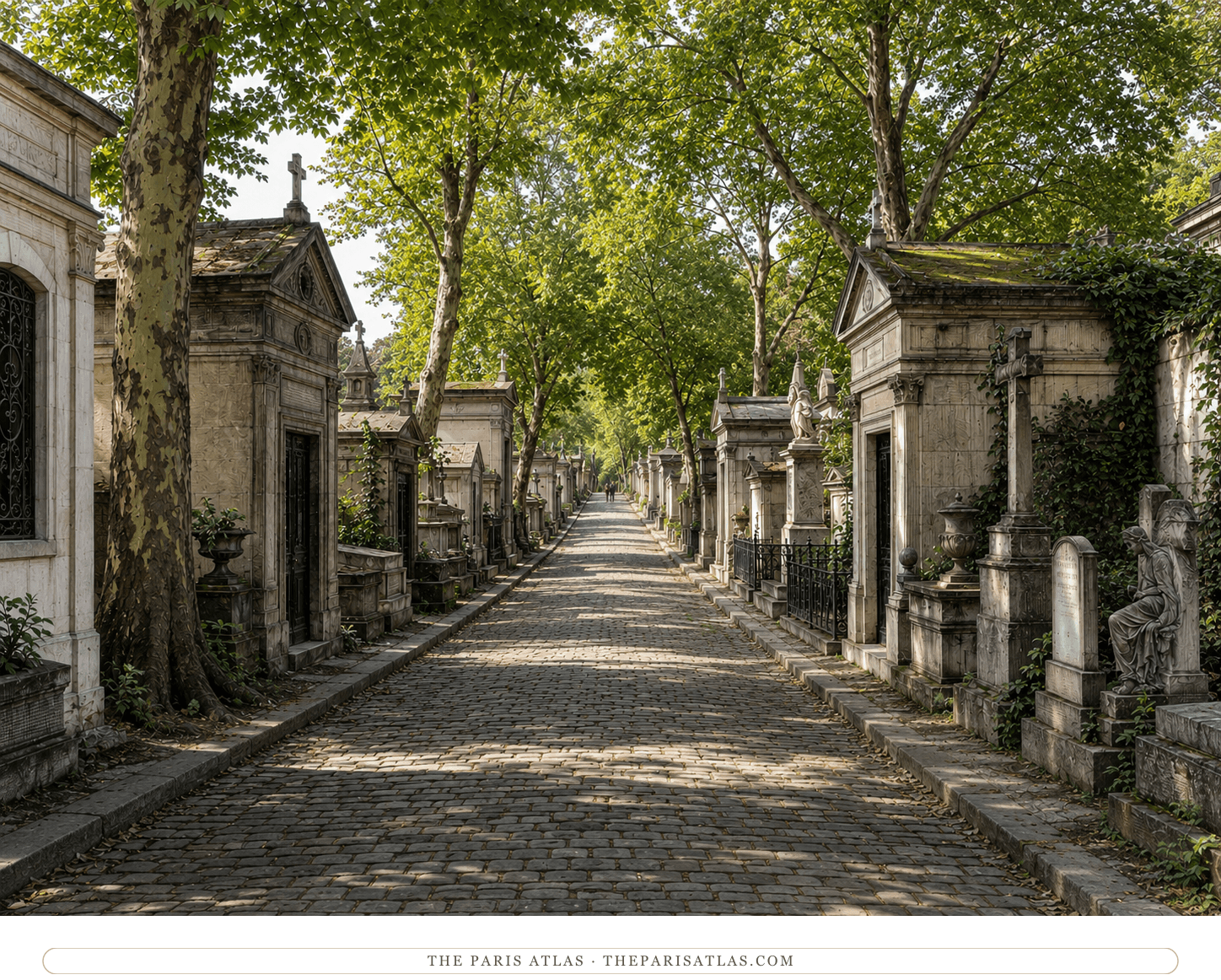
She was found collapsed in a Paris street in March 1965, taken to the Hôpital Cochin, and died there two days later, on 17 March, at sixty-nine. She weighed under sixty pounds. She had almost no money. Her ashes are at Père Lachaise, in the columbarium.[17]
Her papers went to the Harry Ransom Center at the University of Texas at Austin, which holds thirty-five boxes covering 1895 to 1965: manuscripts, correspondence, diaries, medical records, scrapbooks, more than fifteen hundred photographs, and the copper printing blocks from the Hours Press. The Guardian correspondence is at the John Rylands Library in Manchester, and the police file is at Kew.[18]
Born 10 March at Nevill Holt in Leicestershire, the only child of Sir Bache Cunard, third baronet, and the American Maud Alice Burke. Samuel Cunard, founder of the shipping line, was her great-grandfather.
Marries Sydney Fairbairn on 15 November. The marriage lasts twenty months in practice; the divorce comes through in 1925.
Leonard and Virginia Woolf hand-print her long poem Parallax at the Hogarth Press in 420 copies.
Buys a two-hundred-year-old Belgian hand press from William Bird of the Three Mountains Press and founds the Hours Press at La Chapelle-Réanville in Normandy. Meets Henry Crowder in Venice the same year.
Prints the first collected A Draft of XXX Cantos by Ezra Pound, and, after a £10 poetry competition on the subject of Time, Samuel Beckett's Whoroscope — his first separately published work. Also prints Henry Crowder's Henry-Music with a cover by Man Ray.
Closes the Hours Press to work on the anthology. Publishes Black Man and White Ladyship at Toulon and posts it to her mother's friends; a version appears in The Crisis in September. Lady Cunard disinherits her.
Second research trip to the United States, staying in Harlem at the Grampion Hotel. The tabloids run a week of coverage; anonymous death threats follow, some of which she later prints in the anthology. The Metropolitan Police open a file on her.
Negro: An Anthology is published in London by Wishart and Co. — roughly 855 pages, some 150 contributors, financed by Cunard herself and dedicated to Henry Crowder.
Organises the questionnaire published by Left Review in November as Authors Take Sides on the Spanish War, and produces six issues of Les Poètes du monde défendent le peuple espagnol with Pablo Neruda.
Reports the Barcelona air raids in September 1938 and the Spanish refugee camps at Perpignan and Argelès in February 1939 for the Manchester Guardian. The editor W. P. Crozier writes to her on 7 February 1939 that her articles are admirable.
Returns to Réanville in February to find the house wrecked and her African art collection, books and paintings destroyed rather than looted. A Tanguy canvas is found shot through with bullet holes.
Sails from Trinidad to Britain aboard the Empire Windrush in June, the only passenger on the list giving her occupation as writer.
Expelled from Spain, arrested in London for drunkenness, declared insane and committed to Holloway Sanatorium for four months.
Found collapsed in a Paris street and taken to the Hôpital Cochin, where she dies on 17 March, aged sixty-nine and weighing under sixty pounds. Her ashes are placed in the columbarium at Père Lachaise.
This thin edge of December / Wears out meagrely in the / Cold muds, rains, intolerable nauseas of the street.
It was necessary to make this book — and I think in this manner, an Anthology of some 150 voices of both races — for recording of the struggles and achievements, the persecutions and the revolts against them, of the Negro people.
How come, white man, the rest of the world is to be re-formed in your dreary and decadent image?
Lucy Tantamount is invented, drawn from Nancy: Lord Edward's daughter, a restless beauty who collects sensations and people. Drawn from Nancy Cunard.
Read the character guide
Collaborated with · 1929
Cunard sat for Beaton in 1929, against a polka-dot backdrop, for a portrait he used in The Book of Beauty the following year. The National Portrait Gallery holds the vintage bromide print as NPG x40077. Beaton's own line about her was that she looked like a robot woman in a German film.
Collaborated with · 1930–1934
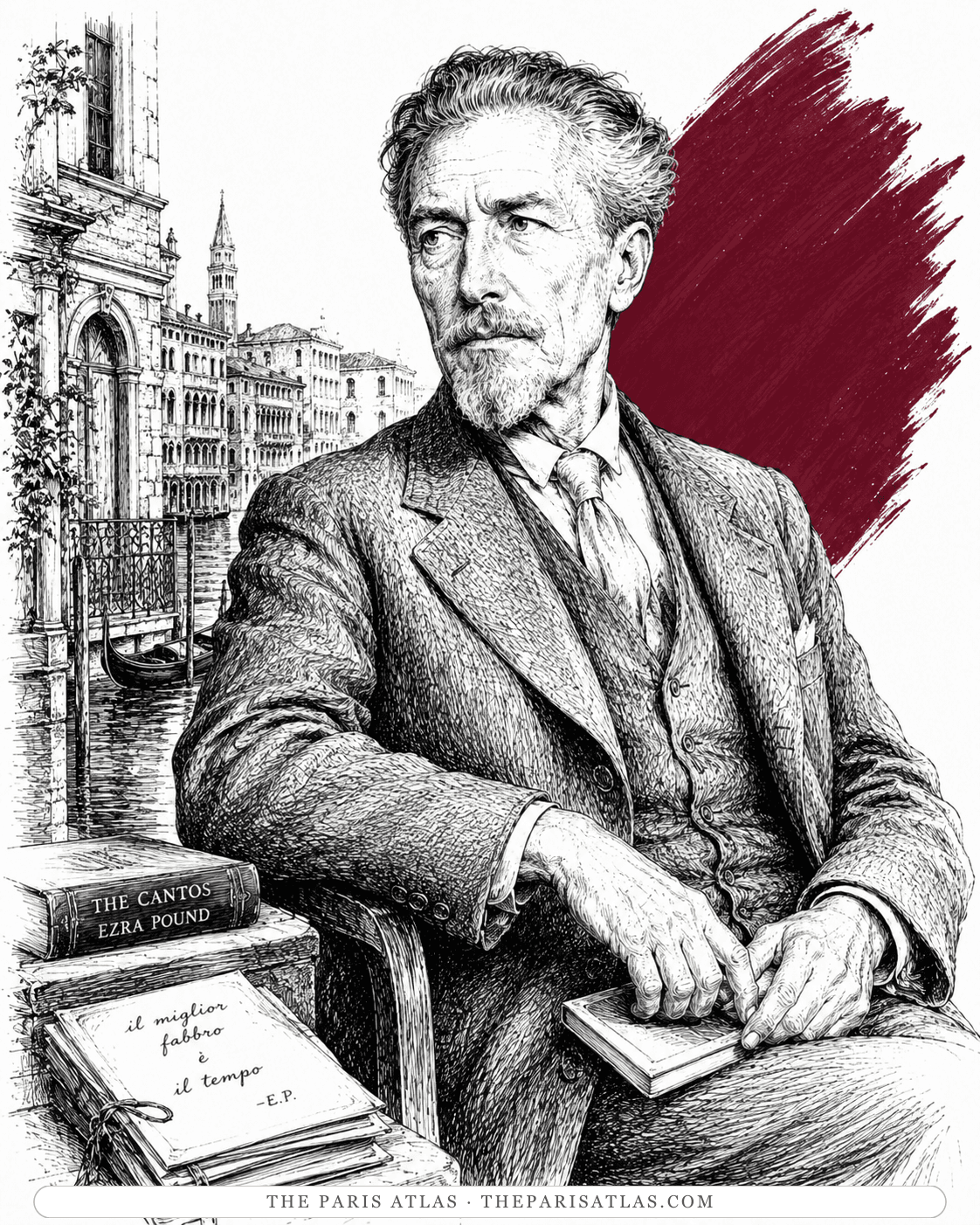
Cunard's Hours Press printed A Draft of XXX Cantos in 1930, the first collected edition of Pound's first thirty cantos. He contributed to Negro: An Anthology four years later and answered her Authors Take Sides questionnaire in 1937, filing under Neutral.
Collaborated with · 1931–1934
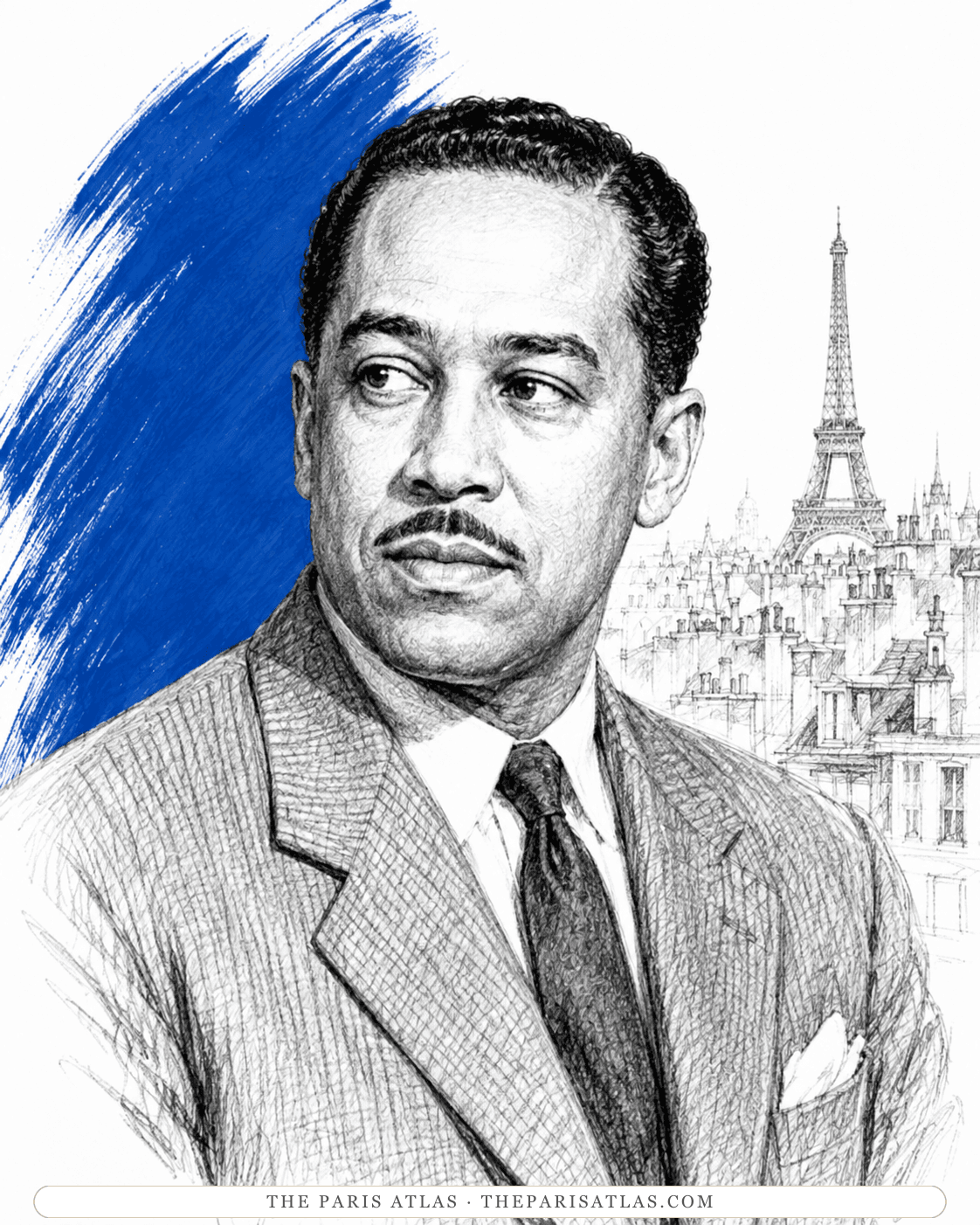
Hughes was among the contributors to Negro: An Anthology, which Cunard compiled between 1931 and 1933 and published in 1934. Their correspondence is in the Cunard collection at the Harry Ransom Center, which names him in its inventory of the letters.

Collaborated with · 1926–1930
Cunard sat for Man Ray in 1926, for the portrait now at the Metropolitan Museum of Art in which her forearms are sheathed to the elbow in African bangles. He also made the cover for Henry Crowder's Henry-Music, printed by her Hours Press in 1930, and his work hung in the press's shop window on the rue Guénégaud.
Met · 1923
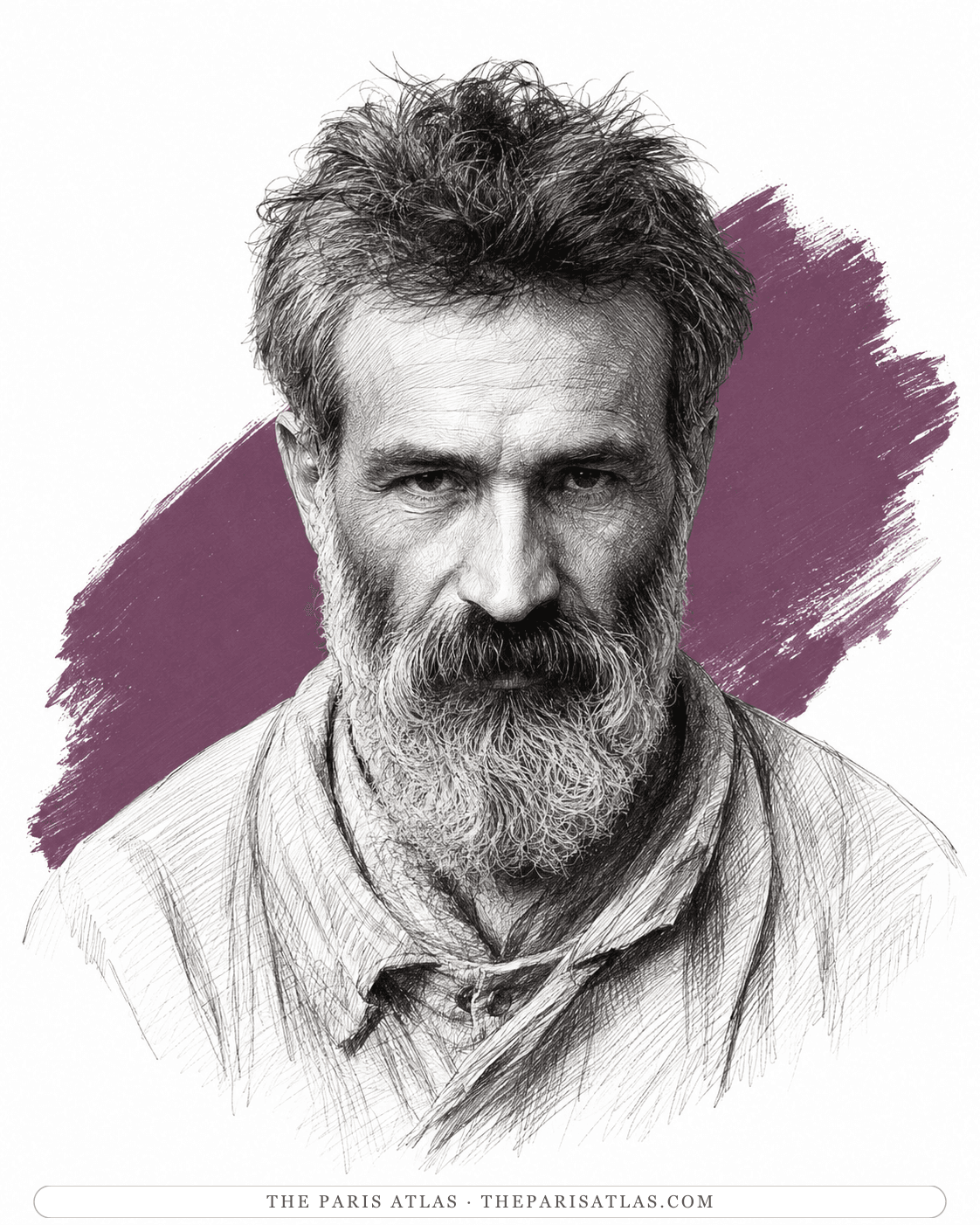
They met in Paris in 1923, introduced by the Dada poet Tristan Tzara. Brancusi made a portrait of her: the Centre Pompidou holds a plaster of about 1928 and a separate fragment catalogued as her chignon, and the polished bronze Jeune fille sophistiquée was cast in 1932. The edge is 'met' rather than a sitting, because the accounts say she did not pose for him and only learned afterwards that the work carried her name.

Partner of · 1926–1928
Cunard and the Surrealist poet Louis Aragon were together for about two years and travelled a good deal. It ended in Venice in 1928, on the holiday during which Cunard first heard Henry Crowder play. Several accounts add that Aragon attempted suicide there; that is reported rather than established, and is attributed rather than asserted here.

Met
The two knew each other from the 1920s and were still writing to each other in 1960, when Cunard sent Flanner the letter that begins 'not being one who wants to go through life entirely alone'. The Library of Congress holds photographs from Flanner's own papers of Cunard with Flanner in 1926 and of Flanner at a fancy-dress party of Cunard's. Women in World History goes further and describes the two, with Solita Solano, as a triangle; that is one encyclopedia's characterisation and no other source consulted repeats it.

Collaborated with · 1936–1937
In November 1936, months after the Spanish Civil War began, Neruda and Nancy Cunard edited the review Los poetas del mundo defienden al pueblo español — 'The poets of the world defend the Spanish people' — together in Paris, gathering poems for the Republican cause. Cunard, who had run her own Hours Press, supplied the printing know-how; Neruda, newly stripped of his Madrid consulate for taking sides, supplied the poets.

Met · 1930
Cunard, the English shipping heiress who ran the Hours Press in Paris, set a competition in 1930 for the best poem on time. Beckett — twenty-four, and with no book of his own — wrote Whoroscope overnight, won it, and had his first separately published work printed by her press. The friendship lasted: she later put translation work his way, and he contributed translations to her Negro anthology of 1934.

Met · 1924–1929
Cunard and Crowley moved through the same Paris modernist circle in the 1920s; Churton identifies her among the writers and artists with whom Crowley enjoyed camaraderie.
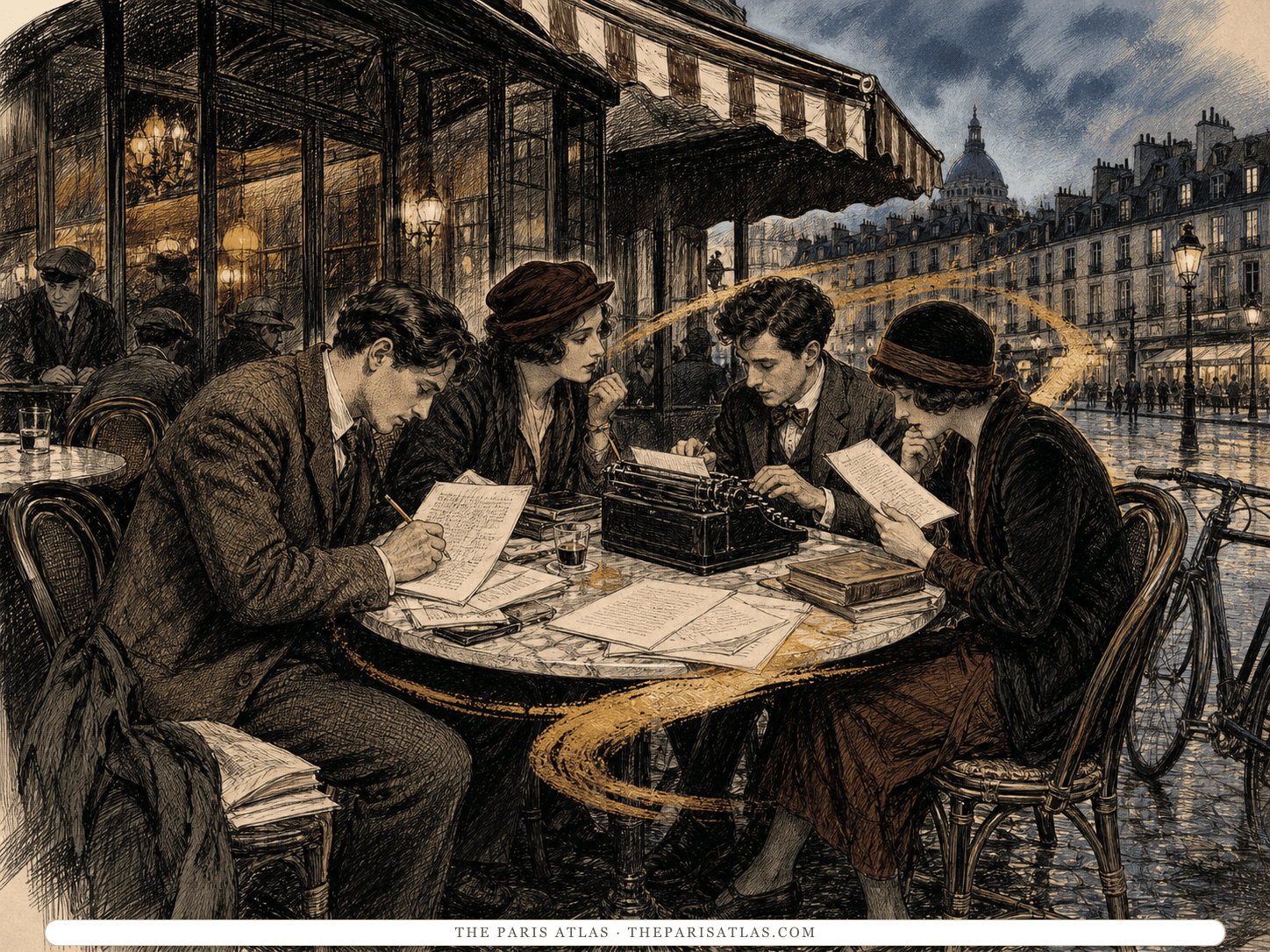
Literary generation · c. 1921–1929
Cunard ran the Hours Press from Normandy and then from the rue Guénégaud in Paris between 1928 and 1931, printing Ezra Pound and Samuel Beckett on a press bought from William Bird of the Three Mountains Press. She belongs to the movement's publishing side rather than its cafés.
A British poet, printer, editor and political journalist (1896–1965). She ran the Hours Press in Normandy and Paris from 1928 to 1931, printing Ezra Pound and Samuel Beckett, and she compiled and paid for Negro: An Anthology, an 855-page collection published in 1934. She raised money for the Scottsboro defendants, organised the 1937 questionnaire Authors Take Sides on the Spanish War, and reported the Spanish refugee camps for the Manchester Guardian.
Not quite, and the shorthand is worth correcting. Samuel Cunard, who founded the steamship company, was her great-grandfather; her father Sir Bache Cunard was the third baronet. What she had was an allowance from a family fortune rather than a stake in the firm, and her mother stopped the allowance in 1931 after Cunard published Black Man and White Ladyship. She spent the last thirty years of her life with very little money and died destitute.
Nancy Cunard's private press, which she ran from 1928 to 1931, first at a farmhouse at La Chapelle-Réanville in Normandy and then from a shop on the rue Guénégaud in Paris. She bought a two-hundred-year-old Belgian hand press from William Bird of the Three Mountains Press and set type by hand. In three and a half years it published about twenty-five titles, including the first collected edition of Ezra Pound's A Draft of XXX Cantos and Samuel Beckett's first separately published work.
Through a competition. In 1930 she and the poet Richard Aldington advertised a £10 prize for the best poem of up to a hundred lines on the subject of Time, with a deadline of 15 June. Beckett's ninety-eight-line poem Whoroscope, spoken by René Descartes, was pushed under her Paris office door in the early hours of 16 June, after the deadline. She gave it the prize and printed it as a book of its own that summer: a hundred signed copies and two hundred unsigned. It is the first work Beckett published separately.
An 855-page anthology on Black history, politics, art and music that Nancy Cunard compiled between 1931 and 1933, financed herself, and published through Wishart and Co. in London in February 1934. It holds around 250 contributions by about 150 people, Black and white, among them Langston Hughes, Zora Neale Hurston, W. E. B. Du Bois, Countee Cullen, Alain Locke, George Padmore, Louis Armstrong and Henry Crowder, with nineteen translations from the French by Samuel Beckett. Most of the first edition was destroyed in a warehouse during the Blitz.
An American jazz pianist from Gainesville, Georgia, and Nancy Cunard's partner from 1928 to about 1935. She heard him play in Venice with Eddie South's band and they were together for the next seven years. He is the dedicatee of Negro: An Anthology, and the Hours Press printed his one book, Henry-Music, in 1930. His own memoir of the relationship, As Wonderful As All That?, was written around 1935 and published in 1987.
Because of Henry Crowder, and then because of what Cunard published about it. Lady Cunard tried to break up the relationship, and in 1931 her daughter answered with a pamphlet, Black Man and White Ladyship: An Anniversary, privately printed at Toulon and posted to her mother's friends in London. It set out the colour bar as she saw it, quoted her mother, and disclosed the terms of her own allowance. The allowance stopped and the two never spoke again.
She reported it and campaigned for the Republic. She wrote for the Manchester Guardian and the Associated Negro Press, covered the Barcelona air raids in September 1938 and the refugee camps at Perpignan and Argelès in February 1939, and wired the Guardian asking it to open a relief fund. She also devised the 1937 questionnaire published as Authors Take Sides on the Spanish War, and produced six issues of the poetry series Les Poètes du monde défendent le peuple espagnol with Pablo Neruda.
No. That identification circulates but Hemingway scholarship attributes Brett Ashley in The Sun Also Rises to Duff Twysden, and the Cunard version is folklore. Three fictional portraits are accepted: Iris Storm in Michael Arlen's The Green Hat (1924), and Myra Viveash in Antic Hay (1923) and Lucy Tantamount in Point Counter Point (1928), both by Aldous Huxley.
She was found collapsed in a Paris street in March 1965, taken to the Hôpital Cochin, and died there two days later, on 17 March, aged sixty-nine. She weighed under sixty pounds and had almost no money. Her ashes are in the columbarium at Père Lachaise cemetery in Paris.
Associated with · 1928–1931
Cunard ran the Hours Press from Normandy and then from the rue Guénégaud in Paris between 1928 and 1931, printing Ezra Pound and Samuel Beckett on a press bought from William Bird of the Three Mountains Press. She belongs to the movement's publishing side rather than its cafés.
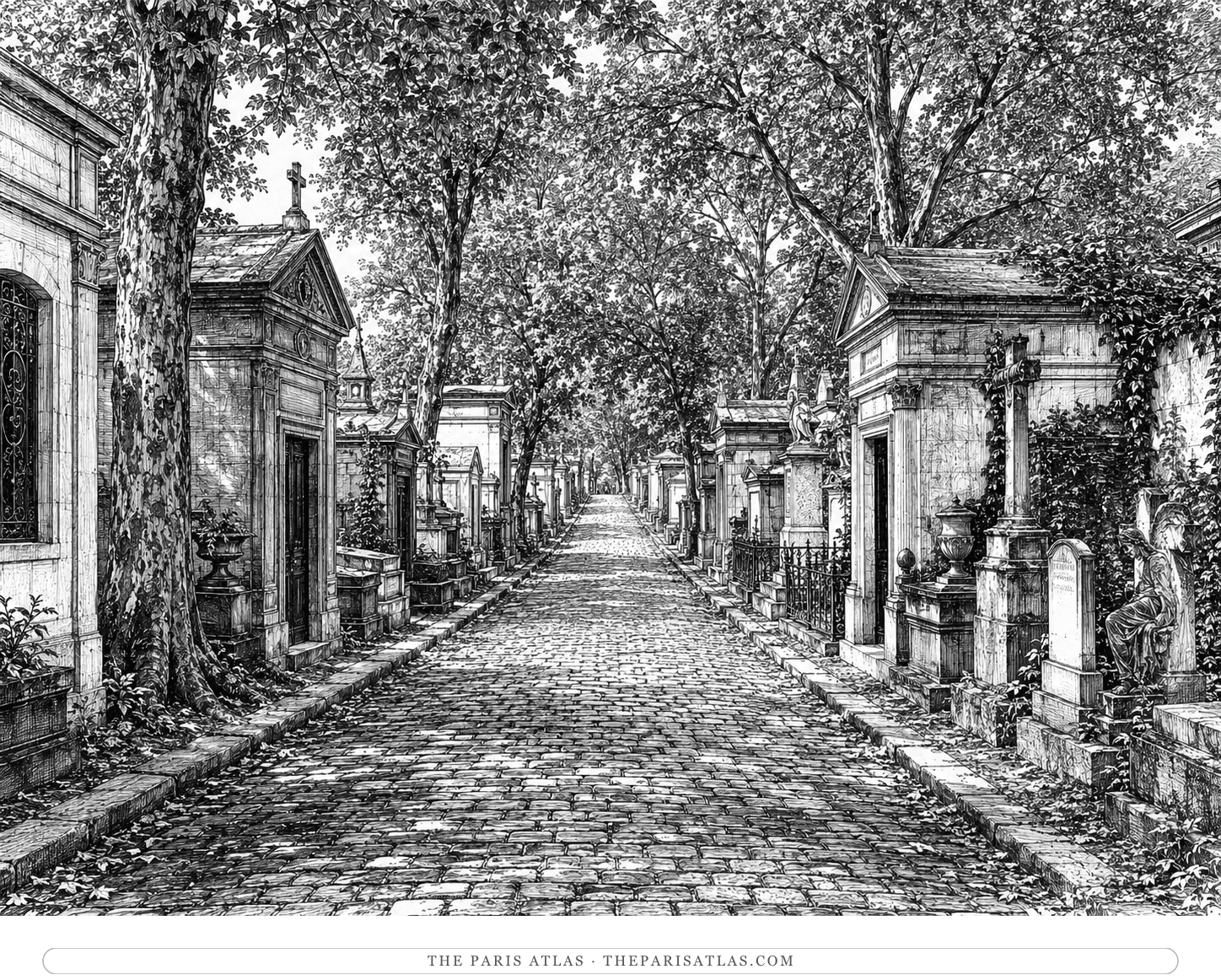
Buried at · 1965
Cunard was cremated after her death at the Hôpital Cochin in March 1965 and her ashes were placed in the columbarium at Père Lachaise. Lois Gordon's biography carries the death and cremation; the urn number sometimes given has no institutional confirmation here.
Collaborated with · 1929
Cunard sat for Beaton in 1929, against a polka-dot backdrop, for a portrait he used in The Book of Beauty the following year. The National Portrait Gallery holds the vintage bromide print as NPG x40077. Beaton's own line about her was that she looked like a robot woman in a German film.
Collaborated with · 1930–1934
Cunard's Hours Press printed A Draft of XXX Cantos in 1930, the first collected edition of Pound's first thirty cantos. He contributed to Negro: An Anthology four years later and answered her Authors Take Sides questionnaire in 1937, filing under Neutral.
Collaborated with · 1931–1934
Hughes was among the contributors to Negro: An Anthology, which Cunard compiled between 1931 and 1933 and published in 1934. Their correspondence is in the Cunard collection at the Harry Ransom Center, which names him in its inventory of the letters.
Collaborated with · 1926–1930
Cunard sat for Man Ray in 1926, for the portrait now at the Metropolitan Museum of Art in which her forearms are sheathed to the elbow in African bangles. He also made the cover for Henry Crowder's Henry-Music, printed by her Hours Press in 1930, and his work hung in the press's shop window on the rue Guénégaud.
Met · 1923
They met in Paris in 1923, introduced by the Dada poet Tristan Tzara. Brancusi made a portrait of her: the Centre Pompidou holds a plaster of about 1928 and a separate fragment catalogued as her chignon, and the polished bronze Jeune fille sophistiquée was cast in 1932. The edge is 'met' rather than a sitting, because the accounts say she did not pose for him and only learned afterwards that the work carried her name.
Partner of · 1926–1928
Cunard and the Surrealist poet Louis Aragon were together for about two years and travelled a good deal. It ended in Venice in 1928, on the holiday during which Cunard first heard Henry Crowder play. Several accounts add that Aragon attempted suicide there; that is reported rather than established, and is attributed rather than asserted here.
Met
The two knew each other from the 1920s and were still writing to each other in 1960, when Cunard sent Flanner the letter that begins 'not being one who wants to go through life entirely alone'. The Library of Congress holds photographs from Flanner's own papers of Cunard with Flanner in 1926 and of Flanner at a fancy-dress party of Cunard's. Women in World History goes further and describes the two, with Solita Solano, as a triangle; that is one encyclopedia's characterisation and no other source consulted repeats it.
Collaborated with · 1936–1937
In November 1936, months after the Spanish Civil War began, Neruda and Nancy Cunard edited the review Los poetas del mundo defienden al pueblo español — 'The poets of the world defend the Spanish people' — together in Paris, gathering poems for the Republican cause. Cunard, who had run her own Hours Press, supplied the printing know-how; Neruda, newly stripped of his Madrid consulate for taking sides, supplied the poets.
Met · 1930
Cunard, the English shipping heiress who ran the Hours Press in Paris, set a competition in 1930 for the best poem on time. Beckett — twenty-four, and with no book of his own — wrote Whoroscope overnight, won it, and had his first separately published work printed by her press. The friendship lasted: she later put translation work his way, and he contributed translations to her Negro anthology of 1934.
Met · 1924–1929
Cunard and Crowley moved through the same Paris modernist circle in the 1920s; Churton identifies her among the writers and artists with whom Crowley enjoyed camaraderie.
The sources below include biographies, scholarly essays, interviews, and primary materials that informed this page. They reflect both the historical record and ongoing critical conversations about Nancy Cunard and their work.

Web source consulted for documented facts and historical context presented on the Nancy Cunard page.
Web source consulted for documented facts and historical context presented on the Nancy Cunard page.
First-person evidence and historical context used in preparing the Nancy Cunard page.
Web source consulted for documented facts and historical context presented on the Nancy Cunard page.
Web source consulted for documented facts and historical context presented on the Nancy Cunard page.
Biographical evidence used to verify chronology, relationships, and historical context connected to Nancy Cunard.
Web source consulted for documented facts and historical context presented on the Nancy Cunard page.
Web source consulted for documented facts and historical context presented on the Nancy Cunard page.

Official record used to verify names, dates, institutional details, or other factual information on this page.
Archival evidence used to document the historical record connected to Nancy Cunard.
Web source consulted for documented facts and historical context presented on the Nancy Cunard page.
Archival evidence used to document the historical record connected to Nancy Cunard.
Official record used to verify names, dates, institutional details, or other factual information on this page.
Official record used to verify names, dates, institutional details, or other factual information on this page.
Official record used to verify names, dates, institutional details, or other factual information on this page.
Web source consulted for documented facts and historical context presented on the Nancy Cunard page.
Biographical evidence used to verify chronology, relationships, and historical context connected to Nancy Cunard.
Archival evidence used to document the historical record connected to Nancy Cunard.
These references anchor the page in the documented record and in the scholarly conversations around Nancy Cunard. Every claim on this page traces back to one or more of the works listed here.
 Explore more resources