The Paris AtlasCharting the artists, works, and places worth returning to.
  • Poet
  • Politician
· Chilean · 1904–1973

Pablo Neruda

Chilean poet of the twentieth century's most widely read love poems, who spent his whole life in his country's diplomatic service and came back to Paris three times: passing through at twenty-three in 1927, on his way to his first consular post in Burma; running the rescue of refugees from the Spanish Civil War out of a Paris office in 1939; and serving as ambassador to France for Salvador Allende, Chile's newly elected socialist president, when the Nobel Prize in Literature reached him in October 1971.

Details

Lived
1904–1973
Born
12 July 1904
Birthplace
Parral, Chile
Birth name
Ricardo Eliécer Neftalí Reyes Basoalto
Died
23 September 1973 · aged 69
Place of death
Santiago, Chile
Nationality
Chilean
Profession
Poet, diplomat and senator
Major works
Twenty Love Poems and a Song of Despair, Residence on Earth, Spain in Our Hearts, Canto General
Roles
PoetPolitician

About Pablo Neruda

Pablo Neruda published Twenty Love Poems and a Song of Despair at nineteen and spent the next fifty years unable to escape it: the book has sold in the millions and is still the most quoted book of love poetry in Spanish. He was born Ricardo Eliécer Neftalí Reyes Basoalto in Parral, in central Chile, on 12 July 1904, took his pen name as a teenager to keep his poetry from his railwayman father, and never used the old one again.

The rest of the life was made of two careers braided together. He was a poet who was also, almost continuously, a Chilean official — an honorary consul — a consul being the man a country posts abroad to look after its citizens and its trade — at twenty-three in Rangoon, the capital of British Burma and now Yangon in Myanmar; then a consul in Spain when the Spanish Civil War broke out; a senator; a fugitive with a warrant out for him; and finally, in 1971, ambassador of Chile to France. Paris ran through all of it. He first saw the city for a few days in July 1927 on his way to Burma; in 1939 he ran a Paris office that put nearly two thousand Spanish refugees onto a ship for Chile; and on 21 October 1971, while he was living in Paris as his country's ambassador, the Swedish Academy gave him the Nobel Prize in Literature.

Temuco, and a name borrowed from a Czech

His mother died a month after he was born. His father, a railway worker, moved the family north to Temuco, a frontier town in the rainy forest country of southern Chile, where the boy entered the Liceo de Hombres — the boys' secondary school — in 1910 and began publishing poems in local papers as a teenager. His father disapproved of poetry, so he signed himself Pablo Neruda, after the nineteenth-century Czech poet and storyteller Jan Neruda, and kept the invention for life. It became his legal name later.

He went to Santiago to study French, and instead wrote Veinte poemas de amor y una canción desesperada — Twenty Love Poems and a Song of Despair — published in 1924, weeks before his twentieth birthday. The poems are frank about sex in a way Spanish-language verse had not been, and plain enough that people who never read poetry read these. He was famous in Chile at twenty and had almost no money, which is how the diplomatic service acquired him: in April 1927 the government made him honorary consul in Rangoon, in British Burma, a post whose salary was whatever fees the consulate collected.

Twenty July 1927: Paris for three days

He left Santiago on 14 June 1927 for a post on the other side of the world, and took the long way — by sea via Buenos Aires and across the Atlantic. He reached Madrid on 16 July and Paris on 20 July, then went down to Marseille to pick up the boat east. The University of Chile's chronology of his life gives the stop three lines. He was twenty-three, had a famous book behind him, spoke almost no French, and was passing through the literary capital of the world on his way to a job he had taken because it paid at all.

The Asian years that followed — Rangoon, then Colombo in Ceylon, now Sri Lanka, then Batavia in Java, now Jakarta in Indonesia, where he married a Dutch bank employee, María Antonieta Hagenaar, in 1930 — were the loneliest of his life and produced Residencia en la tierra, 'Residence on Earth', the dense, hallucinatory book that made his reputation among other poets. He came home in 1932, was posted to Buenos Aires in 1933, and there, at a party on 13 October, met the Spanish poet Federico García Lorca. The friendship redirected everything that came next.

The war in Spain, organised from Paris

Neruda was consul in Barcelona in 1934 and then in Madrid, at the centre of the Spanish poetic generation around Lorca, when the Spanish Civil War began on 18 July 1936 — the military rising against Spain's elected Republic that would kill some half a million people in three years. Lorca was murdered within weeks by the Nationalists, the rebel side under General Francisco Franco. Neruda, who had been a resolutely private poet of love and dread, turned political in a single season and lost his consular post for it.

He moved to Paris and worked the war from there. In November 1936, with the British writer and publisher Nancy Cunard — the shipping heiress who ran her own press and printed for the Republic — he edited a review with a title that was a programme in itself: Los poetas del mundo defienden al pueblo español, 'The poets of the world defend the Spanish people'. In February 1937 he gave a Paris lecture on the murdered Lorca. In April he founded the Hispano-American Group for Aid to Spain with the Peruvian poet César Vallejo, and on 2 July he addressed the Congress of American Nations in Paris. His book of war poems, España en el corazón — 'Spain in Our Hearts' — appeared in French in July 1938 with a preface by the French poet Louis Aragon.

Then came the piece of work he was proudest of. With the Republic defeated and half a million Spaniards penned in camps on the French side of the Pyrenees, Chile named him special consul for Spanish emigration, based in Paris. From April to July 1939 he selected families, argued with officials, and chartered a cargo ship. The Winnipeg sailed from Pauillac, the port on the Gironde estuary below Bordeaux, in August with close to two thousand refugees aboard and reached Chile at the end of the year. He called it his finest poem, and said that if anyone tried to erase his poetry he would like that line to stay.

Senator, fugitive, exile

Back in Chile he was elected senator for the northern mining provinces of Tarapacá and Antofagasta on 4 March 1945 and joined the Communist Party. Three years later the president he had helped elect, Gabriel González Videla, outlawed the party and turned on its members. On 6 January 1948 Neruda answered from the Senate floor with a speech he published as Yo acuso — 'I accuse'. On 3 February the Supreme Court stripped him of his parliamentary immunity, and a warrant was issued for his arrest.

He spent more than a year hidden in friends' houses, writing the enormous poem of the Americas he had begun, Canto General ('General Song'), and on 24 February 1949 crossed the Andes on horseback into Argentina. Two months later, on 25 April, he walked onto the platform of the First World Congress of Partisans of Peace in Paris — the Communist-backed international peace rally for which Picasso drew the dove that became the world's peace emblem — as a poet the Chilean police were still looking for. Canto General was printed in Mexico in 1950 with illustrations by the Mexican muralists Diego Rivera and David Alfaro Siqueiros. The arrest order lapsed, and he went home to Santiago on 12 August 1952.

Ambassador in Paris, and the telephone call from Stockholm

In 1970 Chile elected Salvador Allende, a socialist doctor who had run for president three times before, at the head of a left coalition. Neruda had briefly been a candidate himself and stood aside for him. On 21 January 1971 the Chilean Senate confirmed the poet as his country's ambassador to France, and at sixty-six he came back to Paris to run an embassy — receiving visitors, defending Chile's nationalisation of its copper mines to French bankers, and writing in the mornings while ill with the cancer that would kill him.

On 21 October 1971 the Swedish Academy announced that the Nobel Prize in Literature was his. He was in Paris, in office, and the news reached the ambassador before it reached the poet: the residence filled with reporters and the embassy staff answered the telephones. It is a rare sequence in the history of the prize — a serving ambassador in Paris receiving the world's principal literary honour for the poems he had written in Rangoon, Madrid, hiding, and exile.

He resigned the embassy on 5 February 1973, too ill to continue, and went home to the house at Isla Negra on the Chilean coast. On 11 September 1973 the armed forces, under General Augusto Pinochet, overthrew Allende, who died in the presidential palace as it was attacked. Neruda died twelve days later, on 23 September, at the Santa María clinic in Santiago. His house in Santiago had been ransacked; mourners walked behind his coffin through streets under military curfew anyway, reciting Canto General aloud, and the funeral became the first public protest against the new regime.

Life events

  1. 1904

    Born Ricardo Eliécer Neftalí Reyes Basoalto on 12 July at Parral, in central Chile.

    Biografía de Pablo Neruda; Pablo Neruda: Cronología, 1904–1913

  2. 1924

    Publishes Veinte poemas de amor y una canción desesperada (Twenty Love Poems and a Song of Despair) at nineteen, weeks before his twentieth birthday — the book that made him famous and never stopped selling.

    Adam Feinstein, Pablo Neruda: A Passion for Life (2004)

  3. 1927

    Named honorary consul in Rangoon, Burma. Leaves Santiago on 14 June, reaches Madrid on 16 July and Paris on 20 July, then sails east from Marseille.

    Pablo Neruda: Cronología, 1927–1933

  4. 1933

    Consul in Buenos Aires; meets Federico García Lorca at a party on 13 October.

    Pablo Neruda: Cronología, 1927–1933

  5. 1936

    The Spanish Civil War begins on 18 July and Lorca is murdered soon after. In November, with the British writer and publisher Nancy Cunard, Neruda edits the review Los poetas del mundo defienden al pueblo español ('The poets of the world defend the Spanish people').

    Pablo Neruda: Cronología, 1936–1939

  6. 1937

    Lectures in Paris on García Lorca in February; founds the Hispano-American Group for Aid to Spain with César Vallejo in April; addresses the Congress of American Nations in Paris on 2 July.

    Pablo Neruda: Cronología, 1936–1939

  7. 1938

    Espagne au cœur, the French edition of his Spanish war poems, appears in July with a preface by Louis Aragon.

    Pablo Neruda: Cronología, 1936–1939

  8. 1939

    Appointed Chile's consul for Spanish emigration, based in Paris. From April to July he organises the rescue that puts close to two thousand Republican refugees aboard the Winnipeg for Chile.

    Pablo Neruda: Cronología, 1936–1939; Biografía de Pablo Neruda

  9. 1945

    Elected senator for Tarapacá and Antofagasta on 4 March, and joins the Communist Party of Chile.

    Pablo Neruda: Cronología, 1945–1952

  10. 1948

    Delivers the Senate speech published as Yo acuso ('I accuse') on 6 January; on 3 February the Supreme Court strips him of the immunity from arrest that protects a senator, and he goes into hiding to write Canto General.

    Pablo Neruda: Cronología, 1945–1952

  11. 1949

    Escapes over the Andes on 24 February, and on 25 April appears at the First World Congress of Partisans of Peace in Paris.

    Pablo Neruda: Cronología, 1945–1952

  12. 1971

    The Chilean Senate confirms him as ambassador to France on 21 January. On 21 October, living in Paris, he is awarded the Nobel Prize in Literature.

    Pablo Neruda: Cronología, 1970–1973; Biografía de Pablo Neruda

  13. 1973

    Resigns the Paris embassy on 5 February. Allende's government falls on 11 September; Neruda dies at the Santa María clinic in Santiago on 23 September.

    Pablo Neruda: Cronología, 1970–1973

People they knew

Documented connections — every one carries its source.

Illustrated portrait of Louis Aragon

Louis Aragon

  • Poet
  • Author

Collaborated with · 1938

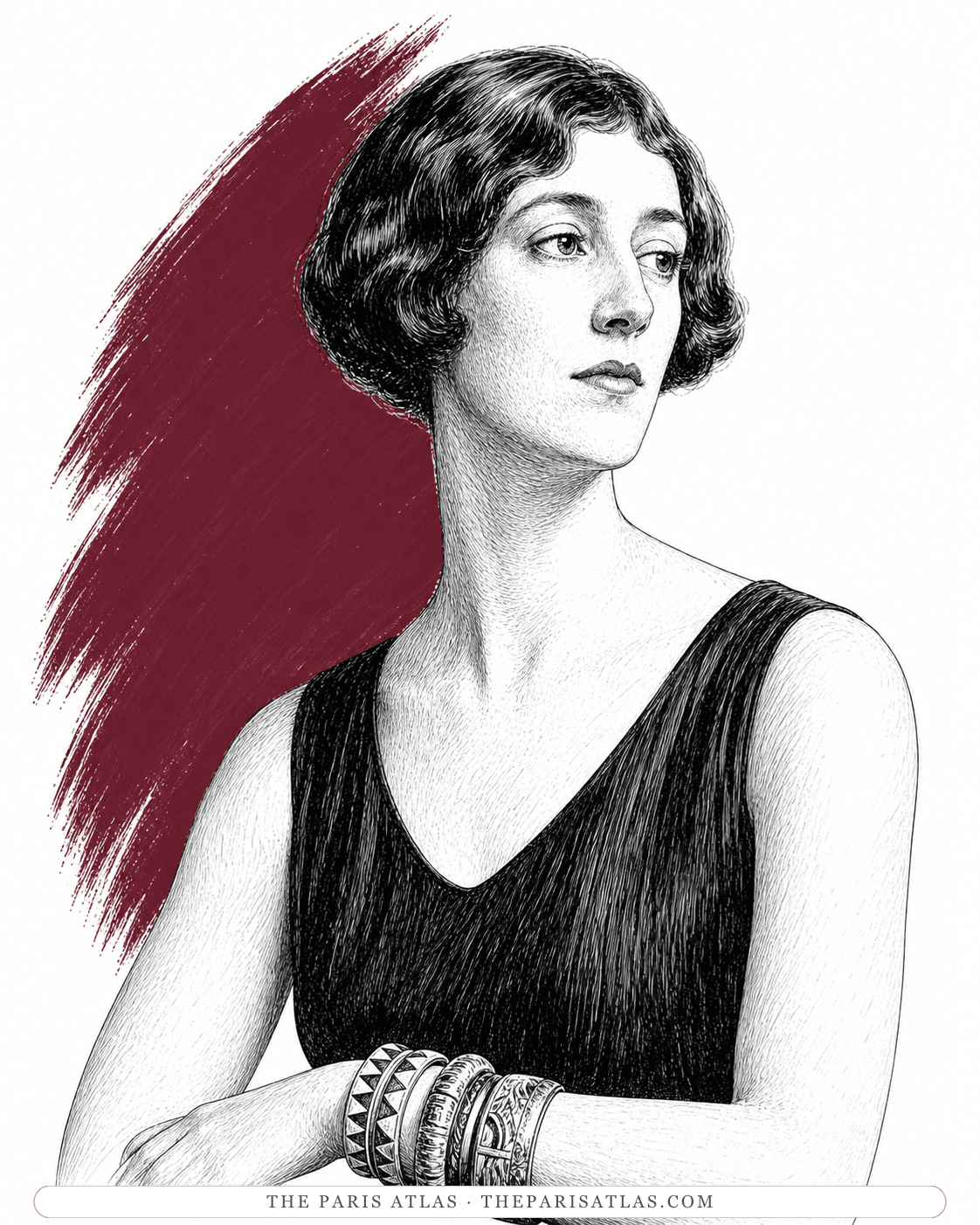
Aragon wrote the preface for Espagne au cœur, the French edition of Neruda's Spanish Civil War poems España en el corazón, published in Paris in July 1938. The two were fellow Communist poets working the same Paris campaign for the Spanish Republic; the preface is the documented instance.
Pablo Neruda: Cronología, 1936–1939

Illustrated portrait of Nancy Cunard

Nancy Cunard

  • Poet
  • Publisher
  • Printer
  • +4

Collaborated with · 1936–1937

In November 1936, months after the Spanish Civil War began, Neruda and Nancy Cunard edited the review Los poetas del mundo defienden al pueblo español — 'The poets of the world defend the Spanish people' — together in Paris, gathering poems for the Republican cause. Cunard, who had run her own Hours Press, supplied the printing know-how; Neruda, newly stripped of his Madrid consulate for taking sides, supplied the poets.

Pablo Neruda: Cronología, 1936–1939

Illustrated portrait of Federico García Lorca

Federico García Lorca

  • Poet
  • Playwright

Met · 1933–1936

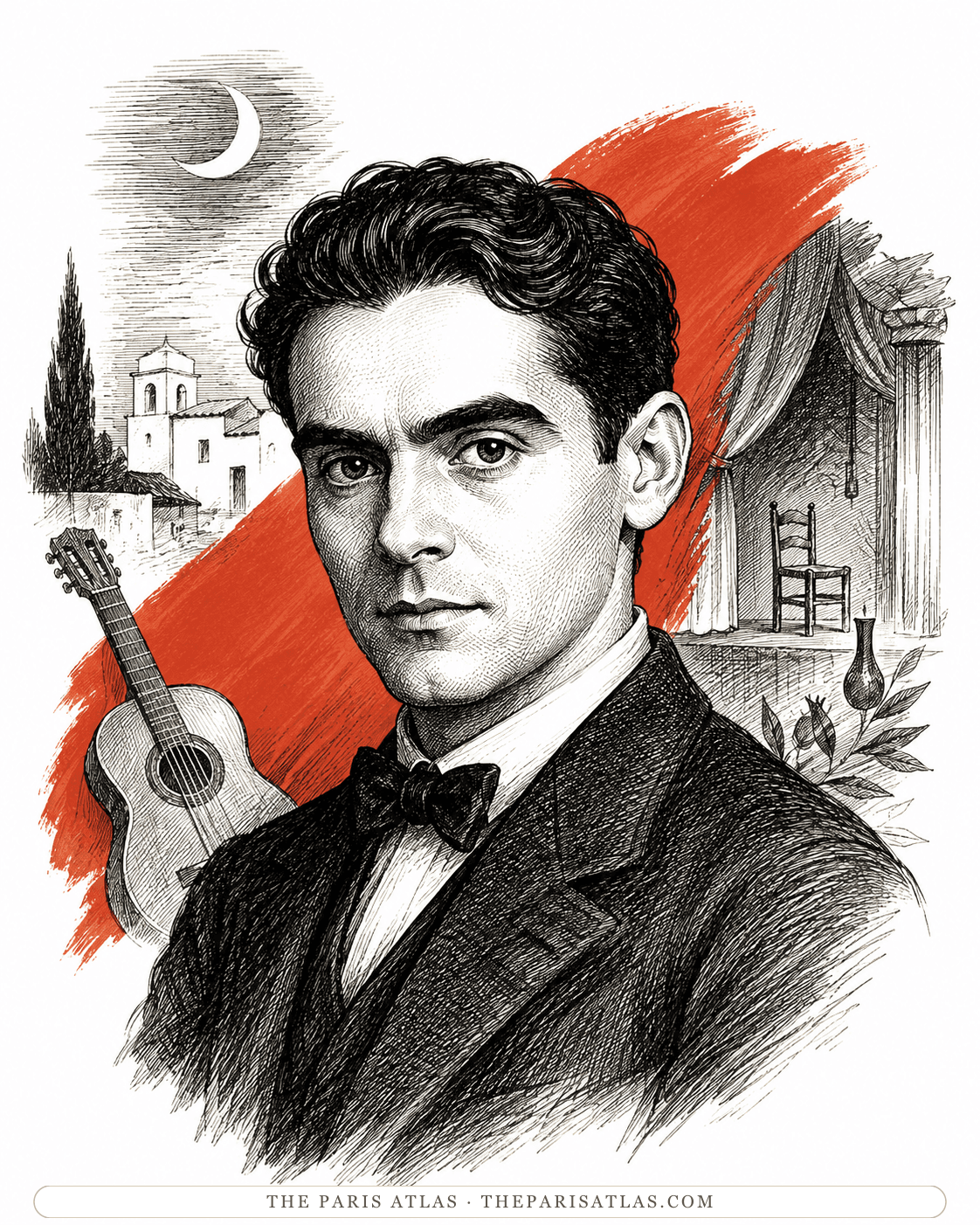
They met on 13 October 1933 at the house of the Argentine writer Pablo Rojas Paz in Buenos Aires, where Neruda was serving as Chile's consul, and the friendship carried into Neruda's Madrid years. Lorca was murdered by Nationalist forces weeks after the Spanish Civil War began in July 1936; Neruda's lecture on him in Paris in February 1937 was among the first public memorials.

Pablo Neruda: Cronología, 1927–1933; Pablo Neruda: Cronología, 1936–1939

Questions about Pablo Neruda

Was Pablo Neruda ambassador to France?

Yes. The Chilean Senate confirmed his appointment as ambassador to France on 21 January 1971, under President Salvador Allende, and he ran the embassy in Paris until he resigned on 5 February 1973 because of failing health. He was sixty-six when he took the post and already ill with cancer.

Did Neruda win the Nobel Prize while living in Paris?

He did. The Swedish Academy announced the 1971 Nobel Prize in Literature on 21 October, while Neruda was in Paris serving as Chile's ambassador to France. He travelled to Stockholm that December to receive it. Very few laureates have been running an embassy at the moment the prize was announced.

When was Neruda first in Paris?

In July 1927, for a few days, at twenty-three. Chile had made him honorary consul in Rangoon, in British Burma, and he took the long sea route east: Buenos Aires, then Madrid on 16 July, Paris on 20 July, and Marseille to catch the boat. He had no money, little French, and one famous book of love poems behind him.

What did Neruda do in the Spanish Civil War?

He was Chile's consul in Madrid when the war began in 1936, lost the post for taking the Republic's side, and moved to Paris to work for it. He co-edited a review for the Republic with Nancy Cunard, lectured on his murdered friend Federico García Lorca, helped found a Latin American aid group with César Vallejo, and in 1939, as consul for Spanish emigration in Paris, arranged the voyage of the Winnipeg, which carried close to two thousand Republican refugees to Chile.

What is Neruda most famous for?

Twenty Love Poems and a Song of Despair, published in 1924 when he was nineteen, which has sold in the millions and is the most widely read book of love poetry in Spanish. Serious readers often point instead to Residencia en la tierra ('Residence on Earth'), his dark, surreal book of the Asian years, or to Canto General ('General Song', 1950), the thousand-page poem of Latin America he wrote while hiding from the Chilean police.

Why was Neruda a fugitive?

He was an elected Chilean senator and a Communist when President Gabriel González Videla outlawed the party in 1948. Neruda attacked him from the Senate floor in a speech published as Yo acuso; the Supreme Court stripped him of a senator's immunity from arrest in February 1948, and a warrant was issued. He hid in friends' houses for over a year, writing Canto General, and escaped over the Andes on horseback in February 1949.

How did Pablo Neruda die?

He died at the Santa María clinic in Santiago on 23 September 1973, twelve days after the military coup that overthrew Salvador Allende. He had advanced prostate cancer. The circumstances of the death have been contested in Chile for years and formally investigated in the courts, without a settled conclusion. His funeral, walked through streets under curfew, became the first public demonstration against the new regime.

Sourced claims

Every connection the graph holds for Pablo, with the evidence behind it.

Collaborated with · 1938

Louis Aragon

Aragon wrote the preface for Espagne au cœur, the French edition of Neruda's Spanish Civil War poems España en el corazón, published in Paris in July 1938. The two were fellow Communist poets working the same Paris campaign for the Spanish Republic; the preface is the documented instance.

Pablo Neruda: Cronología, 1936–1939

Collaborated with · 1936–1937

Nancy Cunard

In November 1936, months after the Spanish Civil War began, Neruda and Nancy Cunard edited the review Los poetas del mundo defienden al pueblo español — 'The poets of the world defend the Spanish people' — together in Paris, gathering poems for the Republican cause. Cunard, who had run her own Hours Press, supplied the printing know-how; Neruda, newly stripped of his Madrid consulate for taking sides, supplied the poets.

Pablo Neruda: Cronología, 1936–1939

Met · 1933–1936

Federico García Lorca

They met on 13 October 1933 at the house of the Argentine writer Pablo Rojas Paz in Buenos Aires, where Neruda was serving as Chile's consul, and the friendship carried into Neruda's Madrid years. Lorca was murdered by Nationalist forces weeks after the Spanish Civil War began in July 1936; Neruda's lecture on him in Paris in February 1937 was among the first public memorials.

Pablo Neruda: Cronología, 1927–1933; Pablo Neruda: Cronología, 1936–1939

References

References

The sources below include biographies, scholarly essays, interviews, and primary materials that informed this page. They reflect both the historical record and ongoing critical conversations about Pablo Neruda and their work.

  1. 1Pablo Neruda: Cronología

    Universidad de Chile

    The University of Chile's dated chronology — the source for the 1927 Paris stop, the Spanish war years, the 1949 escape, and the 1971 ambassadorship.

    View source
  2. 2Biografía de Pablo Neruda

    Fundación Pablo Neruda

    The biography published by the foundation that keeps his houses and archive: birth name, consular posts, the Winnipeg, the Nobel in Paris.

    View source
  1. 3Pablo Neruda: A Passion for Life

    Bloomsbury, 2004

    The standard English-language biography, for the pen name, the early books, and the last months.

i
Why these sources are here

These references anchor the page in the documented record and in the scholarly conversations around Pablo Neruda. Every claim on this page traces back to one or more of the works listed here.

Explore more resources