
Twenty Love Poems and a Song of Despair
Pablo Neruda
Twenty Love Poems and a Song of Despair
The love poems Pablo Neruda published at nineteen. The memoirs say where some of them were written.
Read our takeMemoirs
Pablo Neruda
by Pablo Neruda
Pablo Neruda's own story of his life, finished by others after he died and still argued over today.
Memoirs is Pablo Neruda's autobiography. The Spanish title, Confieso que he vivido, means I confess that I have lived. Much of it first appeared in 1962 as a ten-part series in the magazine O Cruzeiro Internacional. In 1972, while he was Chile's ambassador in Paris, Neruda worked on turning the series into a full book at his country house in Normandy. He was still working on it when he died in September 1973. His widow, Matilde Urrutia, and the Venezuelan writer Miguel Otero Silva put the material in order, and the book came out in 1974. Hardie St. Martin's English translation followed in 1977.[1][2]
The book began as magazine writing. From January to June 1962 the Rio de Janeiro magazine O Cruzeiro Internacional ran ten installments, in Spanish and Portuguese, under the title Las vidas del poeta, the lives of the poet. The Fundación Pablo Neruda says these texts became the base of the memoirs.[1]
Ten years later Neruda was ambassador in Paris and seriously ill. He had bought a country house in Normandy, about an hour and a half from Paris, which he called La Manquel. He wanted somewhere to rest away from the embassy, where he also lived.[1]
On 5 August 1972 he wrote to his friend and biographer Volodia Teitelboim that he was working every day at La Manquel with his secretary, Homero Arce. The aim, he said, was to complete the Cruzeiro text until it formed an important book.[1]
Neruda never gave the book its final order. He kept working on it until the last days of his life, and Matilde Urrutia and Miguel Otero Silva arranged what he left.[1] The critic Tunku Varadarajan notes that he rushed to finish as his health failed, which gives the last chapters a fast, broken-up quality.[2]
The book follows Neruda's life only roughly in order. Tunku Varadarajan describes it as a series of loosely connected pieces about his life, his loves, his politics and what inspired his poems.[2]
Some chapters explain where poems came from. Neruda writes that the wharves in the Song of Despair were the old wharves of Carahue and Bajo Imperial. He describes Josie Bliss, the woman he lived with in Rangoon, and he recalls how The Captain's Verses first came out in Naples without his name.[1]
Others are stories from his public life. He describes the secret printing of Canto General in Chile in 1950 and his arrest in Buenos Aires in 1957, when he was carried to prison on a stretcher. He tells of meeting Fidel Castro in Caracas in 1959. At the Nobel ceremony in 1971, he writes, people said the old king of Sweden held his hand longer than any other laureate's.[1]
The Chilean Senate approved Neruda's appointment as ambassador to France on 21 January 1971. He presented his credentials to President Georges Pompidou in Paris on 26 March. Chile's National Library dates his time as ambassador from March 1971 to the end of 1972.
He was already ill. After the Nobel Prize was announced in October 1971 he had surgery for prostate cancer, and he recovered at La Manquel, his house in Normandy. He spent his sixty-eighth birthday there on 12 July 1972 with a group of writers.
By August 1972 the memoirs were his daily work at La Manquel. He returned to Chile on 21 November 1972 and left the Paris embassy in the hands of the writer Jorge Edwards.
The memoirs appeared in 1974 together with six posthumous books of poems. The Swedish Academy's bibliography records the edition of Seix Barral in Barcelona. The Fundación Pablo Neruda describes the edition of Editorial Losada in Buenos Aires.
General Augusto Pinochet's military government did not allow the book into Chile. A few copies were smuggled in behind a false cover, disguised as the Jorge Amado novel Teresa Batista cansada da guerra.
Reviews still appeared in Chile. The critic Alone wrote in El Mercurio on 21 July 1974 that the memoirs were crammed with facts and anecdotes but never argued anything. The critic Emir Rodríguez Monegal called the book deliberately fragmentary, a collage made from texts Neruda had already written.
One episode is among the most notorious in the book. Neruda describes his time as consul in Colombo, in British Ceylon, in 1929. A Tamil woman came every morning to empty the latrine of his house. He writes that he took her by the wrist, led her to his bed and had sex with her while she lay unresponsive.
Neruda never calls what he did rape. Reviewing the 2021 edition in The Wall Street Journal, Tunku Varadarajan does. He also reports that feminists opposed a 2018 proposal to rename the Santiago airport after Neruda because of the passage.
Farrar, Straus and Giroux published an expanded edition in 2021 as The Complete Memoirs. Hardie St. Martin's translation stays, and Adrian Nathan West translated the new material.
An editorial note lists nineteen additions, from a few pages to single sentences. The most important deals openly with the homosexuality of Federico García Lorca, whom Neruda knew in the early 1930s.
The Lorca pages had been left out on purpose. Neruda had asked Matilde Urrutia whether the public was free enough of prejudice to accept Lorca's homosexuality without harm to his reputation. In a handwritten note she said she had the same doubts, and so she did not include the pages.
What the memoir writer remembers is not the same thing the poet remembers.
The private tragedy for us Communists was realizing that, on several sides of the Stalin problem, the enemy was right.La íntima tragedia para nosotros los comunistas fue darnos cuenta de que, en diversos aspectos del problema Stalin, el enemigo tenía razón.
The poems it contains were written here and there, throughout my exile in Europe.Los poemas que contiene fueron escritos aquí y allá, a lo largo de mi destierro en Europa.
Neruda explains where Twenty Love Poems, Canto General and The Captain's Verses came from, in his own words.
Rangoon in the 1920s, the secret printing of Canto General, exile in Europe, and the Nobel ceremony in Stockholm.
Neruda worked on the book in Normandy in 1972 while he was Chile's ambassador in Paris.
The Colombo passage and the pages on Stalin mean the book is read as evidence against its author as well as for him.
1962
O Cruzeiro Internacional publishes Las vidas del poeta, ten autobiographical installments that become the base of the memoirs.
1971
Pablo Neruda becomes Chile's ambassador to France and wins the Nobel Prize in Literature. After cancer surgery he recovers at La Manquel, his house in Normandy.
1972
In August Neruda works on the memoirs every day at La Manquel with his secretary, Homero Arce. He returns to Chile in November.
1973
Neruda resigns the embassy in February and dies in Santiago on 23 September, with the book unfinished.
1974
Confieso que he vivido is published, arranged by Matilde Urrutia and Miguel Otero Silva. The military government keeps it out of Chile.
1977
Farrar, Straus and Giroux publishes Hardie St. Martin's English translation as Memoirs.
2021
Farrar, Straus and Giroux publishes The Complete Memoirs, with nineteen added texts translated by Adrian Nathan West.

Twenty Love Poems and a Song of Despair
Pablo Neruda
The love poems Pablo Neruda published at nineteen. The memoirs say where some of them were written.
Read our takeCanto General
Pablo Neruda
The long poem whose secret printing in Chile in 1950 the memoirs describe.
Read our takeResidence on Earth
Pablo Neruda
Neruda's poems of the Asian years. The memoirs describe his life in Rangoon and Colombo in the same years.
Read our take
Langston Hughes's second autobiography, which covers the Spanish Civil War, the war that turned Neruda toward political poetry, and ends in Paris.
Read our takeI confess that I have lived. Memorias, meaning memoirs, is the subtitle, and English editions have used it as the title since 1977.
In 1974, the year after Neruda died. The English translation by Hardie St. Martin followed in 1977.
No. He worked on them until the last days of his life but never gave them a final order. His widow, Matilde Urrutia, and the Venezuelan writer Miguel Otero Silva arranged the material.
Much of the text first appeared in 1962 in the magazine O Cruzeiro Internacional. In 1972 he expanded it at La Manquel, his country house in Normandy, while he was Chile's ambassador in Paris.
The 2021 expanded edition adds nineteen texts to the original book. The most important are pages on Federico García Lorca's homosexuality, which Matilde Urrutia had chosen to leave out.
Mainly because of a passage about Colombo in 1929, in which Neruda describes forcing himself on a Tamil woman who cleaned his house. Tunku Varadarajan, reviewing the 2021 edition, calls it rape. The book's pages on Stalin are also argued over.
Chile's military government did not let it into the country in 1974. A few copies were smuggled in with a false cover disguising them as a novel by Jorge Amado.
Explore authors with a similar voice, perspective, and influence.
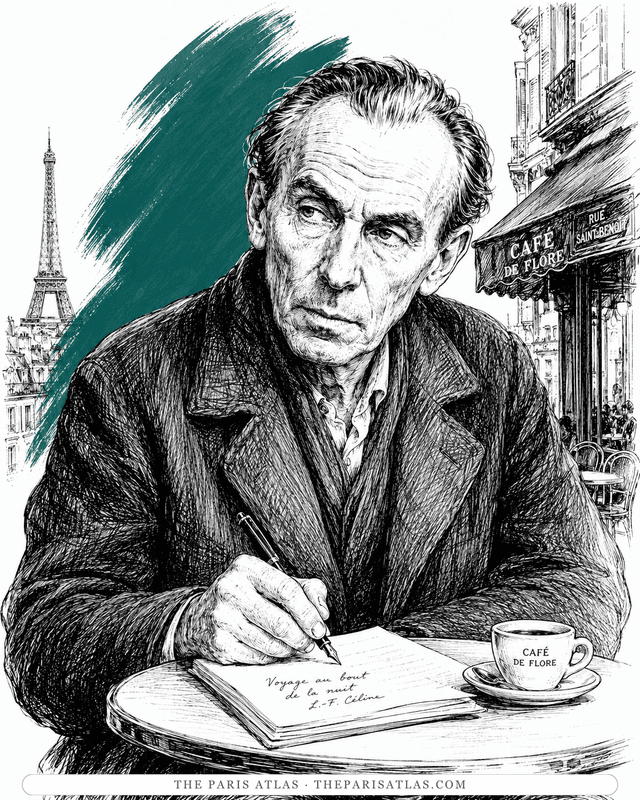
The doctor of the Paris slums who wrote the century's blackest, funniest novel — and changed the sound of French prose.
View author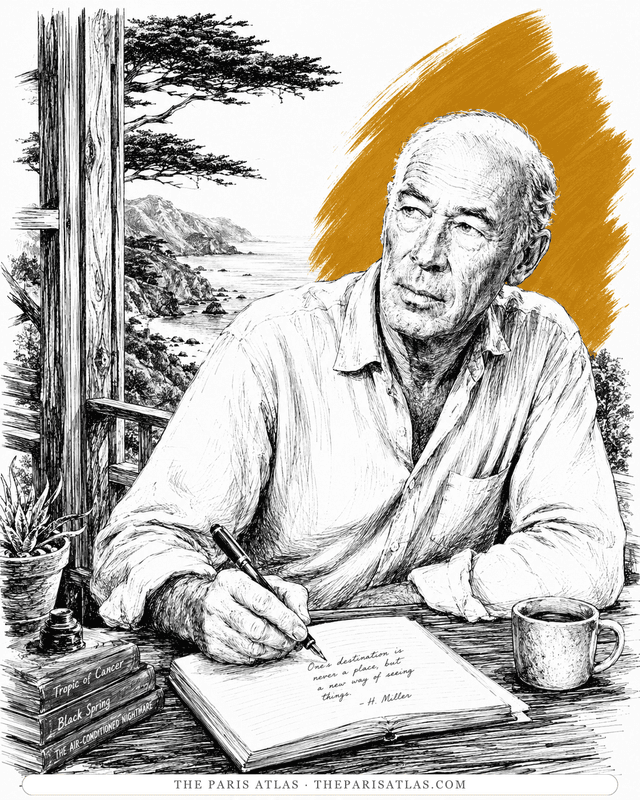
The Brooklyn dropout who arrived in Paris broke at thirty-eight and wrote the exuberant, banned books that ended American censorship.
View author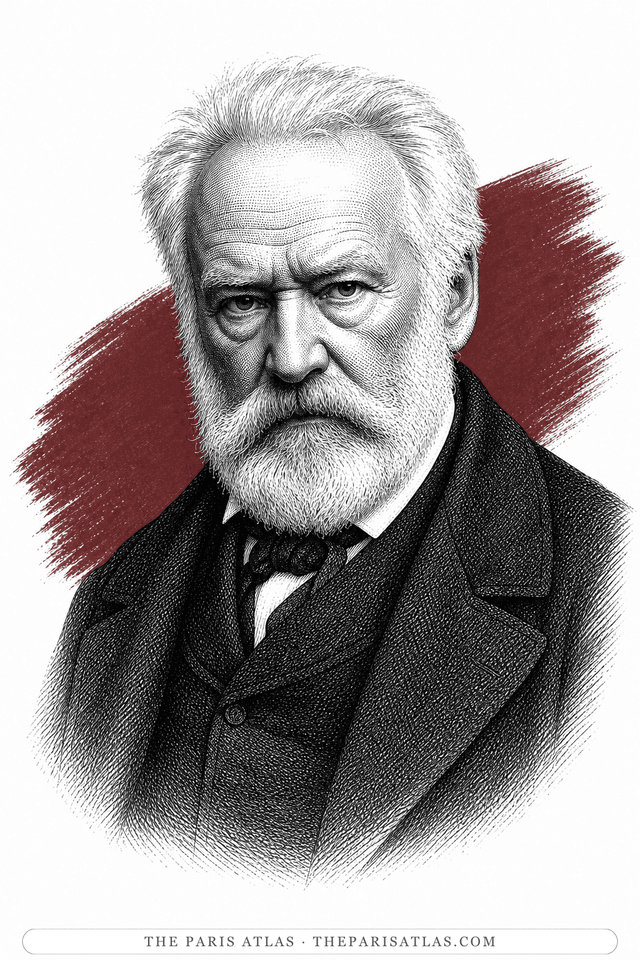
Poet, novelist and playwright who spent sixteen years in an apartment on the Place des Vosges that is now his museum, wrote a novel about Notre-Dame that shamed France into repairing the cathedral, spent nineteen years in exile for opposing the emperor Napoleon III, and was buried in the Panthéon — the Paris monument where France buries its most honoured dead — in 1885 after a funeral that brought roughly two million people into the streets of Paris.
View authorThe sources below include the primary text, editions, scholarship, archival materials, and other records that informed this page. They document Memoirs, its publication, and its place in literary history.
Tunku Varadarajan's Wall Street Journal review of The Complete Memoirs: the added texts, the Lorca pages, the Colombo passage, and the book's opening line.
Library of Congress record for the 2021 expanded edition and its translators.
The National Library of Chile on Neruda's years as ambassador in Paris.
The Swedish Academy's bibliography: the 1974 Seix Barral edition and the 1977 English translation.
The University of Chile's chronology: the O Cruzeiro series and the embassy years.
Open Library edition records, used to confirm each ISBN listed.
The primary text represented by this page, used for descriptions of the work’s contents and for any quoted passages shown here.
The primary text is the baseline reference for every book page. Additional references document publication history, interpretation, and historical context where that evidence is available.
 Explore more resources