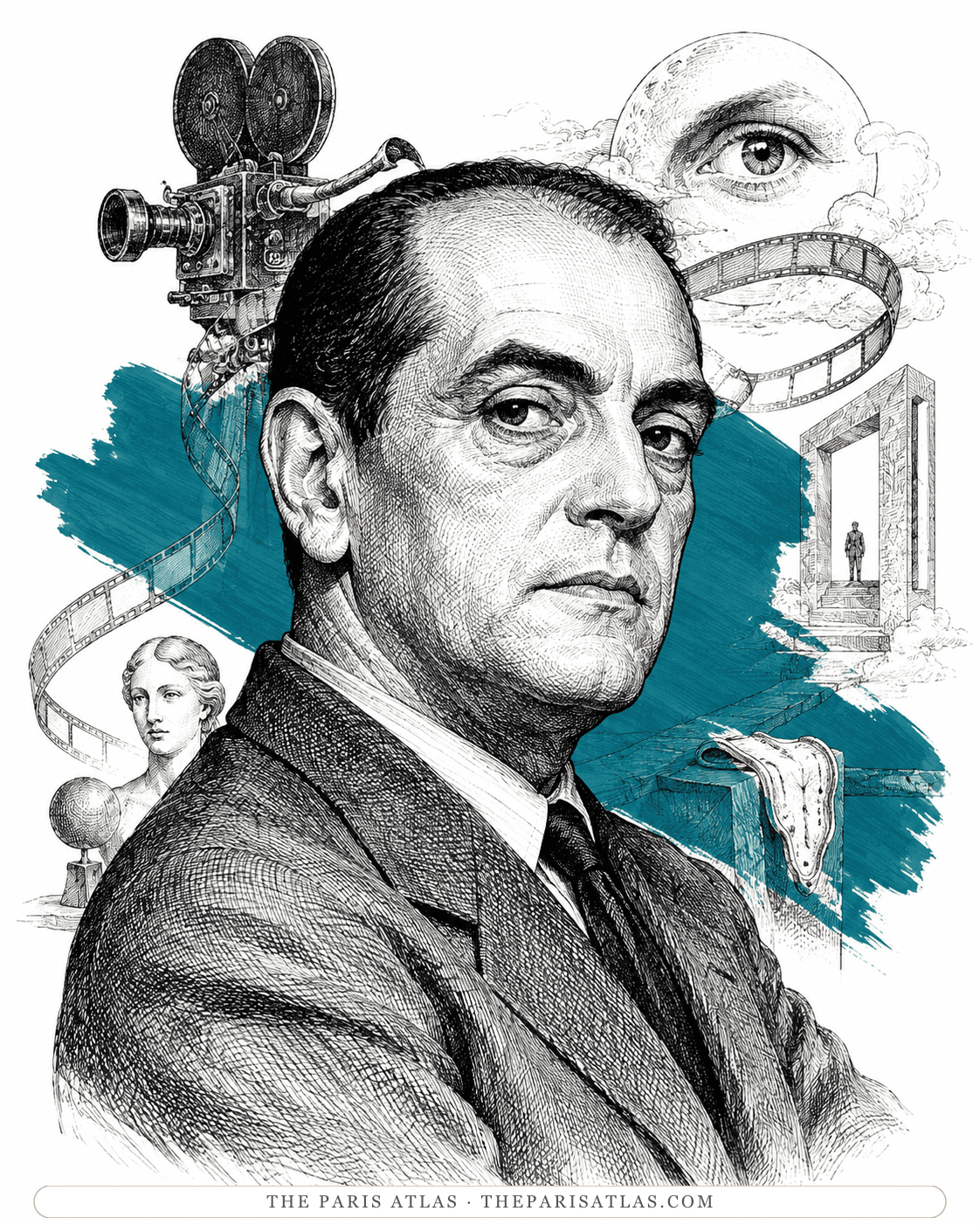
Luis Buñuel
- Filmmaker
Met · 1922
At the Residencia de Estudiantes in Madrid, with Dalí. The friendship cooled after Un Chien Andalou, which Lorca took to be aimed at him; Buñuel denied it.
Poet and playwright, and the closest friend of Dalí's student years at the Residencia de Estudiantes in Madrid. Nationalist forces shot him near Granada in August 1936, a month into the civil war; his grave has never been found.
Federico García Lorca, known simply as Lorca, was a Spanish poet, playwright and theatre director, born in the village of Fuente Vaqueros near Granada on 5 June 1898. He is the emblematic figure of the Generation of '27, the poets who carried the European avant-garde into Spanish, and the most translated Spanish writer after Cervantes.[1]
Lorca arrived at the Residencia de Estudiantes in Madrid in 1919 and stayed most of a decade, in the years when it held Salvador Dalí and Luis Buñuel at the same time. He published Romancero gitano in 1928 and became, very quickly, the most widely read poet in Spain. The plays came later and are what he is staged for now: Blood Wedding, Yerma, The House of Bernarda Alba, finished two months before he died.
His friendship with Dalí was the central relationship of both young men's lives, and on Lorca's side it was love. Dalí's accounts of it changed with each telling. In August 1936, a month into the civil war, Nationalist forces took Lorca from a house in Granada and shot him. He was thirty-eight. The grave has never been found, and the search for it continues.[2]
Federico García Lorca was born on 5 June 1898 in Fuente Vaqueros, a farming village on the fertile plain west of Granada. His father, Federico García Rodríguez, was a landowner grown rich in the sugar boom; his mother, Vicenta Lorca Romero, had been a teacher. The family moved to Granada itself in 1909, and their summer house on the city's edge, the Huerta de San Vicente, became the poet's working refuge for the rest of his life. All three family homes are museums today.[1]
Music came before poetry. From eleven he studied piano with Antonio Segura Mesa, dreamed of a composer's career, and took his first inspirations from Debussy, Chopin and Beethoven. Only after Segura's death in 1916 did he turn seriously to writing. His first prose pieces carried musical titles: Nocturne, Ballade, Sonata. At the University of Granada he nominally read law while running with the young intellectuals of the Café Alameda's back corner. A professor's study trips through Castile and Galicia produced his first book, Impressions and Landscapes, printed at his father's expense in 1918.[1]
In 1919 Fernando de los Ríos persuaded Lorca's parents to send him to the Residencia de Estudiantes in Madrid, the Oxford-styled college that was becoming the engine room of the Spanish avant-garde. There he met Luis Buñuel and, in 1922, Salvador Dalí, and was taken up by the poet Juan Ramón Jiménez. His first staged play, The Butterfly's Evil Spell, a verse drama of a cockroach in love with a butterfly, was laughed off the stage in four performances in 1920, a wound that shaped his relationship with audiences for life.[1]
The books built through the decade: Libro de poemas (1921), the flamenco-soaked Poem of the Deep Song, written from 1921 around the cante jondo festival he organised in Granada with the composer Manuel de Falla, then Canciones. In 1927 Barcelona's Galeries Dalmau exhibited his drawings, and his play Mariana Pineda, with sets by Dalí, opened there to acclaim. The friendship with Dalí, at its most intense from 1925 to 1928, was mutual passion; Dalí later said he refused Lorca's advances, and told the story differently every decade.[1]
Romancero gitano (1928), eighteen ballads of an invented, mythic Andalusia of gypsies, archangels and civil guards, made him the most famous poet in the Spanish-speaking world almost overnight. He hated the cage that came with it, protesting that the gypsies were a theme and nothing more, and that he could as well be a poet of sewing needles or hydraulic landscapes.[1]
Fame arrived with a private collapse. The intimacy with Dalí broke as Gala entered Dalí's life, and a love affair with the sculptor Emilio Aladrén ended badly. Un Chien Andalou, the 1929 film Dalí made with Buñuel, struck Lorca, perhaps wrongly, as an attack on him personally. Depressed, and carrying a homosexuality he could acknowledge only in private, he let his family send him abroad. In June 1929 he sailed for New York and enrolled, nominally, at Columbia University.[2]
The city gave him his strangest book. Poet in New York, published only after his death, answers Wall Street, Harlem and the Crash he personally witnessed with a surrealism of alienation and protest, as far from the Andalusian ballads as he ever travelled. A happier season in Havana closed the journey, and he returned to a Spain that had just become the Second Republic.[1]
In 1931 the Republic's education ministry funded La Barraca, a student theatre company with a portable stage, and put Lorca in charge. The troupe trucked classical Spanish drama, Lope de Vega and Calderón, into villages that had never seen a play, with Lorca directing and acting. The theatre, he said, is a school of weeping and of laughter, a free forum where outmoded norms can be questioned.[1]
On the road with La Barraca he wrote the tragedies that hold the world's stages now: Blood Wedding (1932), Yerma (1934), and The House of Bernarda Alba. He finished the last in June 1936, two months before his death, and never saw its five daughters locked in a widow's house performed. A triumphant 1933–34 season in Buenos Aires, where he delivered the famous lecture on the duende, the dark force great art draws from an awareness of death, made him financially independent of his father for the first time. His last poems, the Sonnets of Dark Love, went unpublished for nearly half a century.[1]
The military rising of July 1936 caught Lorca in Granada, a city that fell to the rebels at once and began shooting its Republicans. His brother-in-law, Manuel Fernández-Montesinos, the Socialist mayor of Granada, was executed. Lorca, a signatory of Popular Front manifestos and a famous voice of the left, took shelter in the house of the poet Luis Rosales, whose brothers were senior Falangists. He was arrested there by the former rightist deputy Ramón Ruiz Alonso.[3]
On or about 19 August 1936, Nationalist militia shot Lorca beside the road between Víznar and Alfacar, outside Granada, together with two bullfighters' banderilleros, Joaquín Arcollas and Francisco Galadí, and a schoolteacher, Dióscoro Galindo. He was 38. A Franco-era police report, made public in 2015, records the regime's own justification: it describes him as a socialist and freemason who engaged in what it called abnormal practices. Historians still argue the exact weight of politics, his homosexuality, and local feuds in the killing; Ian Gibson, who has studied it for fifty years, places it inside the organised extermination of Granada's Popular Front supporters.[3]
His body has never been found. Excavations near Alfacar in 2009, 2014 and 2016 all came up empty, and the search, entangled with Spain's larger reckoning over the graves of the Franco era, continues. The Falangist press itself, within a year, printed the sentence that has outlived every excuse: the finest poet of Imperial Spain has been assassinated.[3]
Lorca's manner fuses what Spain kept apart: the oldest popular forms, ballad, lullaby, flamenco letra, with the newest European imagery. The Romancero gitano runs on the traditional eight-syllable ballad line while its metaphors behave like surrealism; the New York poems abandon the folk scaffolding for free-verse hallucination; the late sonnets return to the strictest sixteenth-century form. He was also a musician who collected and arranged folksongs, and a gifted draughtsman whose double-faced self-portraits he explained as man's capacity for crying as well as winning.
The plays move the same fusion onto the stage: verse and song embedded in prose tragedy, rural Andalusia raised to myth, and at the center, again and again, women imprisoned by honour, barrenness and walls. His theory is in the duende lecture: great art requires a vivid awareness of death, contact with a nation's soil, and the acknowledgement that reason has limits.
Franco's Spain banned Lorca's work wholesale until 1953 and let his name stand for everything the regime had buried; his international standing only grew, and the plays became repertory staples on every continent. He is now among the most translated of all Spanish writers, and Blood Wedding, Yerma and The House of Bernarda Alba are performed as constantly as any twentieth-century tragedies.
In Spain his absence is an institution: the three family houses around Granada are museums, the Centro Federico García Lorca in Granada holds his manuscripts, and each failed excavation at Víznar returns his murder to the front pages. The missing grave has become what his poems kept foretelling, the image of all the war's unfound dead.[1]
Born in Fuente Vaqueros, on the plain west of Granada, on 5 June.
The family moves into Granada; piano lessons point him toward a musical career.
His first book, Impressions and Landscapes, is printed at his father's expense.
Enters the Residencia de Estudiantes in Madrid, where he meets Luis Buñuel and, in 1922, Salvador Dalí.
Organises the cante jondo festival in Granada with the composer Manuel de Falla.
Mariana Pineda opens in Barcelona with sets by Dalí; the Galeries Dalmau shows his drawings.
Romancero gitano makes him the most famous poet in the Spanish language almost overnight.
In personal crisis, sails for New York in June and enrolls at Columbia; the Crash he witnesses enters Poet in New York.
The Republic puts him at the head of La Barraca, the student company trucking classical theatre through rural Spain.
Buenos Aires embraces Blood Wedding; the duende lecture states his theory of art.
Finishes The House of Bernarda Alba in June. Arrested in Granada in August, he is shot by Nationalist militia on the road between Víznar and Alfacar, on or about 19 August, aged 38.
The first of three excavations near Alfacar seeks his grave; like those of 2014 and 2016, it finds nothing.
Met · 1922
At the Residencia de Estudiantes in Madrid, with Dalí. The friendship cooled after Un Chien Andalou, which Lorca took to be aimed at him; Buñuel denied it.
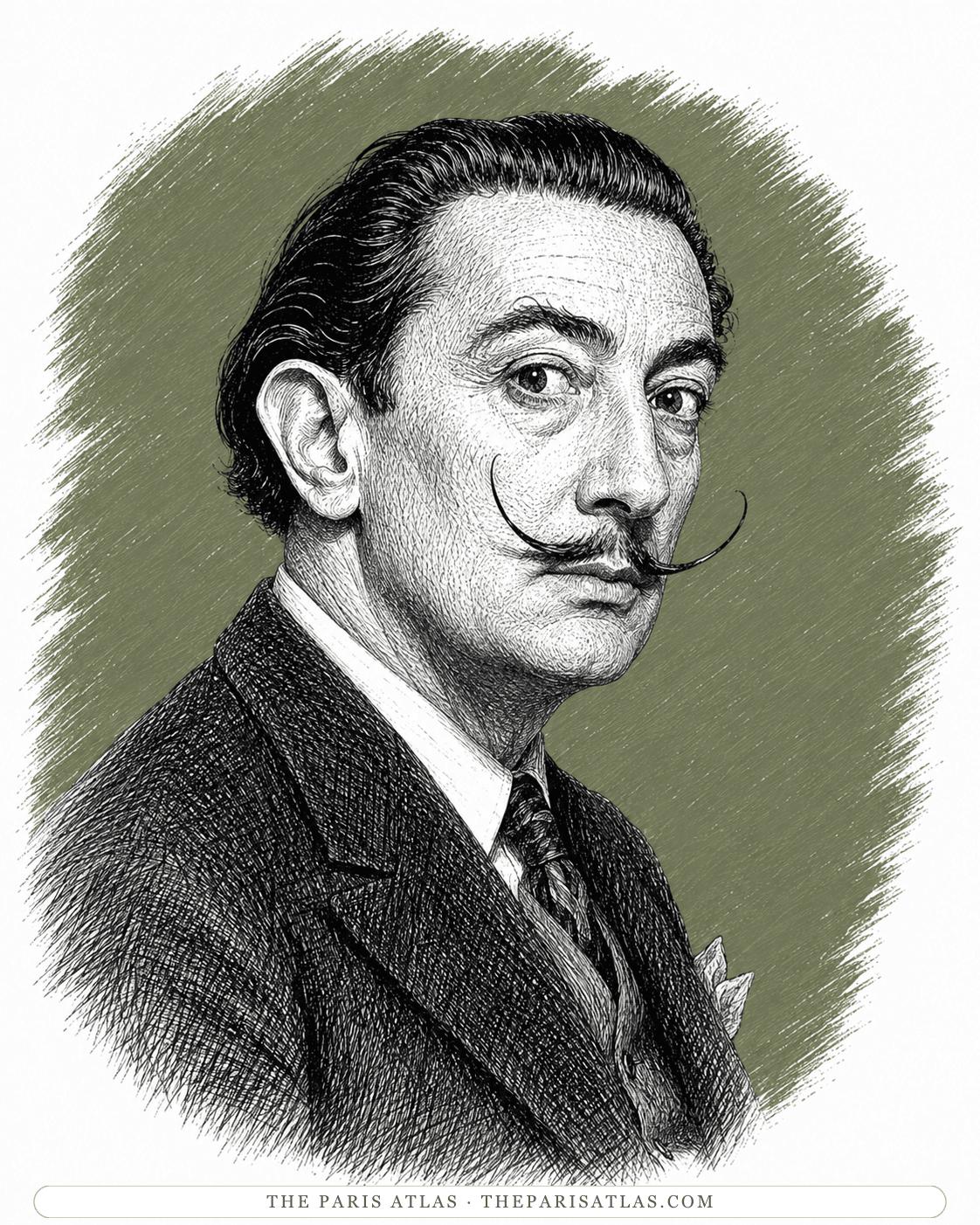
Met · 1922
At the Residencia de Estudiantes in Madrid, where both were students. It became the closest friendship of Dalí's life and, on Lorca's side, more than that; Dalí's later accounts of it contradict one another and cannot all be true.
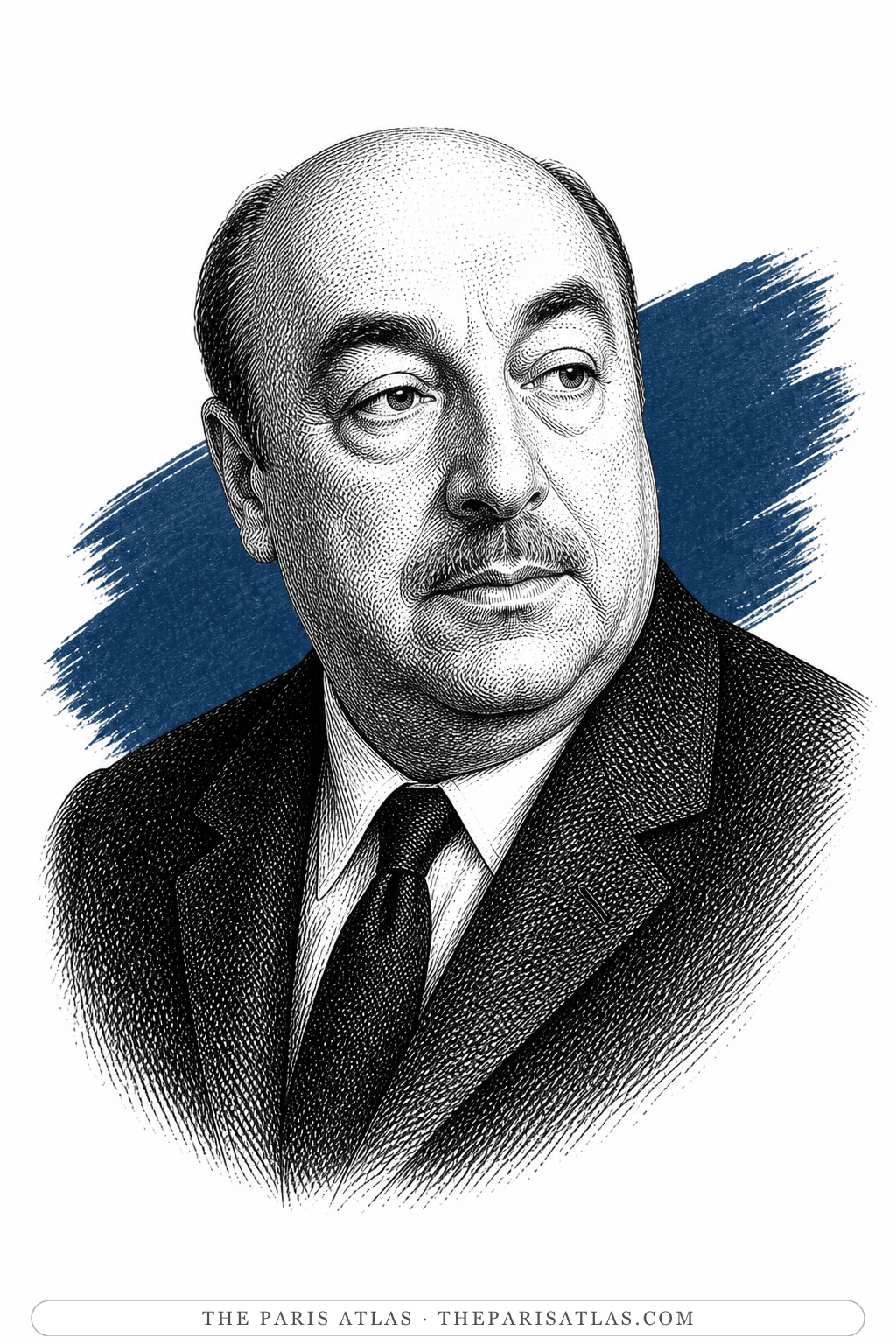
Met · 1933–1936
They met on 13 October 1933 at the house of the Argentine writer Pablo Rojas Paz in Buenos Aires, where Neruda was serving as Chile's consul, and the friendship carried into Neruda's Madrid years. Lorca was murdered by Nationalist forces weeks after the Spanish Civil War began in July 1936; Neruda's lecture on him in Paris in February 1937 was among the first public memorials.
Federico García Lorca (1898–1936) was a Spanish poet, playwright and theatre director, the leading figure of the Generation of '27 and one of the most translated Spanish writers ever. His ballad collection Romancero gitano (1928) made him the most famous poet in the language, and his tragedies Blood Wedding, Yerma and The House of Bernarda Alba hold stages worldwide. Nationalist forces murdered him near Granada in August 1936, at the start of the Spanish Civil War, when he was 38.
He was shot without trial by Nationalist militia at the beginning of the Spanish Civil War. Granada fell to the military rising in July 1936, and its new rulers began executing Republicans, including Lorca's brother-in-law, the city's Socialist mayor. Lorca was arrested in the house of the poet Luis Rosales and shot on or about 19 August 1936 beside the road between Víznar and Alfacar, with two banderilleros and a schoolteacher. A Franco-era police report, released in 2015, cited his socialism, his freemasonry and his homosexuality. His body has never been found.
The full weight of the motives is still argued, but the evidence points to political extermination with his homosexuality aggravating it. Lorca had signed Popular Front manifestos and was a nationally famous voice of the Republic's culture; Granada's new authorities were systematically shooting leftists, and his biographer Ian Gibson places the murder inside that campaign, sharpened by rivalries between rightist factions. Witnesses reported his killers boasting about his sexuality. Claims that the killing was purely personal have not displaced the political record.
The closest friendship of Lorca's and Dalí's youth, formed at Madrid's Residencia de Estudiantes after 1922. It was at its most intense from 1925 to 1928, when Lorca twice summered with Dalí at Cadaqués and the two filled each other's work. On Lorca's side it was love; Dalí said later that he had refused Lorca's advances, and his accounts of the friendship changed with every telling. The estrangement came with Gala's arrival and with Un Chien Andalou, the 1929 Dalí-Buñuel film Lorca read as aimed at himself.
In poetry, Romancero gitano (1928), the eighteen gypsy ballads that made him famous, and Poet in New York, the surrealist collection published after his death. In theatre, the rural trilogy: Blood Wedding (1932), Yerma (1934) and The House of Bernarda Alba (1936), which he finished two months before he was killed and never saw staged. The duende lecture of 1933 is his most quoted statement about art.
No. He is believed to lie in an unmarked mass grave near the road between Víznar and Alfacar, outside Granada, with the three men shot alongside him. Excavations in 2009, 2014 and 2016, undertaken as part of Spain's wider recovery of Franco-era graves, found no remains at the candidate sites. The search continues, and the missing grave has become the emblem of the tens of thousands of the war's disappeared.
Met · 1922
At the Residencia de Estudiantes in Madrid, with Dalí. The friendship cooled after Un Chien Andalou, which Lorca took to be aimed at him; Buñuel denied it.
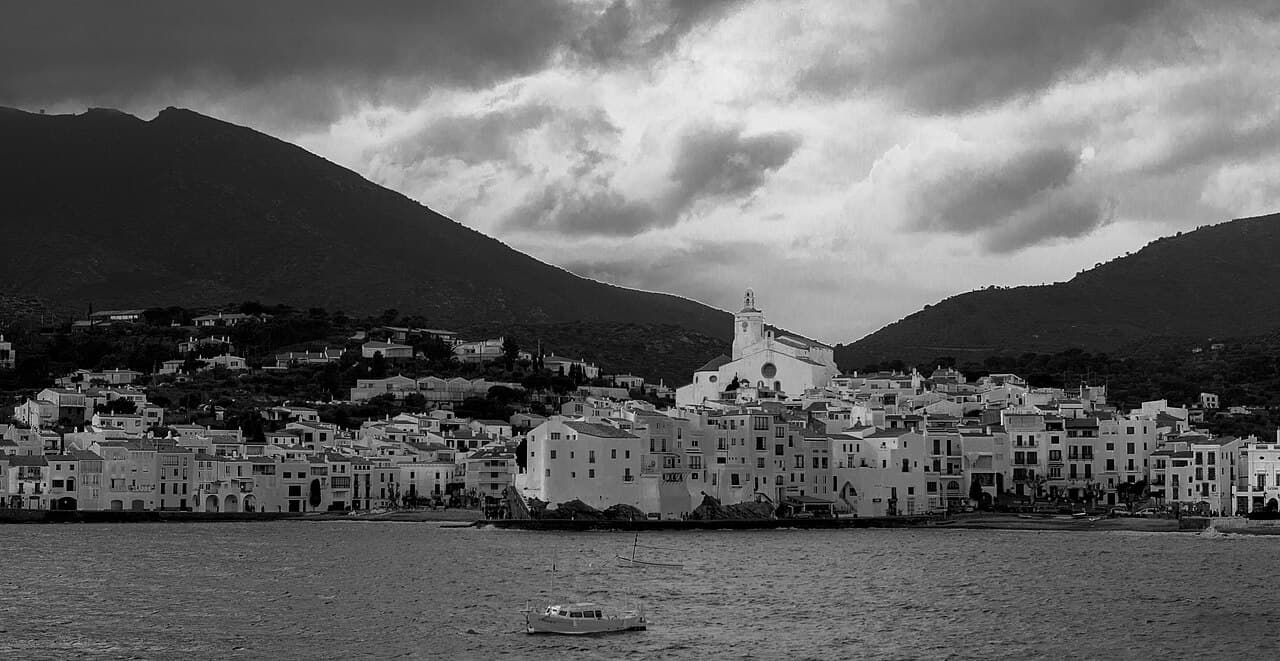
Visited · 1925
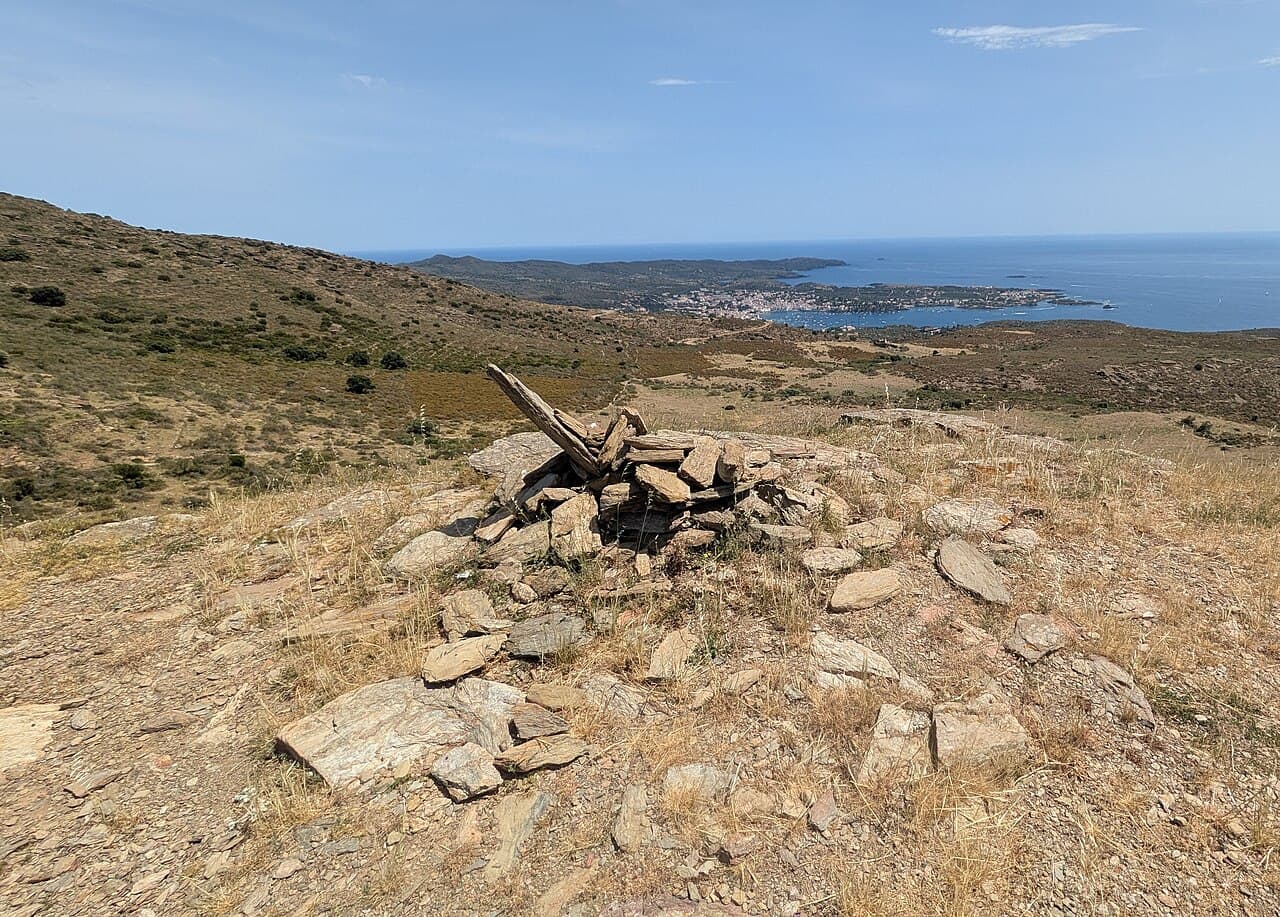
Federico García Lorca made his first visit to Cadaqués during Holy Week in 1925, at the height of his close friendship and artistic exchange with Salvador Dalí.
Met · 1922
At the Residencia de Estudiantes in Madrid, where both were students. It became the closest friendship of Dalí's life and, on Lorca's side, more than that; Dalí's later accounts of it contradict one another and cannot all be true.
Met · 1933–1936
They met on 13 October 1933 at the house of the Argentine writer Pablo Rojas Paz in Buenos Aires, where Neruda was serving as Chile's consul, and the friendship carried into Neruda's Madrid years. Lorca was murdered by Nationalist forces weeks after the Spanish Civil War began in July 1936; Neruda's lecture on him in Paris in February 1937 was among the first public memorials.
The sources below include biographies, scholarly essays, interviews, and primary materials that informed this page. They reflect both the historical record and ongoing critical conversations about Federico García Lorca and their work.


Web source consulted for documented facts and historical context presented on the Federico García Lorca page.
Web source consulted for documented facts and historical context presented on the Federico García Lorca page.
Reference article cross-checked for the chronology, the New York year, La Barraca, and the murder and excavations.
These references anchor the page in the documented record and in the scholarly conversations around Federico García Lorca. Every claim on this page traces back to one or more of the works listed here.
 Explore more resources