The Paris AtlasCharting the artists, works, and places worth returning to.
  • Filmmaker
· Spanish · 1900–1983

Luis Buñuel

Surrealism's filmmaker — Un Chien Andalou opened with a razor across an eye and L'Âge d'Or ended in a riot, and he kept the scandal honest across fifty years of cinema.

In images

Details

Lived
1900–1983
Born
22 February 1900
Birthplace
Calanda, Teruel, Aragón, Spain
Died
29 July 1983 · aged 83
Place of death
Mexico City, Mexico
Nationality
Spanish
Married
Jeanne Rucar · 1934–1983
Roles
Filmmaker

About Luis Buñuel

Luis Buñuel was the filmmaker of Surrealism. A Spaniard who arrived in Paris in 1925, he made the movement's two defining films with the painter Salvador Dalí: Un Chien Andalou (1929), seventeen minutes of silent film that open with a razor drawn across an eye, and L'Âge d'Or (1930), which provoked a riot and a police ban. Exile then carried him through the United States to Mexico, and a late run of French films ended with an Academy Award. He is the only member of the original Surrealist group who kept working in its spirit for fifty years without ever being expelled from anything.

Calanda and the Residencia

Buñuel was born on 22 February 1900 in Calanda, a town in rural Aragón, and was schooled by Jesuits in Zaragoza. In 1917 he went to the Residencia de Estudiantes in Madrid to study agronomy and then entomology, and left having decided on cinema.

The friendships he made there shaped the next decade of his life and the first two films he directed. In 1922 he met two other residents: Federico García Lorca, the poet and playwright who became the circle's central figure, and Salvador Dalí, a painting student from Catalonia. Seven years later, Buñuel and Dalí would write Un Chien Andalou together.

Paris and Un Chien Andalou

Buñuel moved to Paris in 1925, initially with a secretarial post at an international cultural organization. He apprenticed himself to the director Jean Epstein, assisting on Mauprat (1926) and The Fall of the House of Usher (1928), and wrote film criticism for Spanish and French journals.

The prologue: Buñuel's own hands strop the razor at the window. 'Once upon a time,' says the intertitle, and the film spends its first minute keeping the promise badly. (Luis Buñuel & Salvador Dalí — film frame, Internet Archive copy · Public domain (US))

Un Chien Andalou was written with Dalí in six days at Figueres and financed by Buñuel's mother. Buñuel directed, edited, and appears in the film himself: he is the man stropping the razor in the prologue, the hand behind the most famous cut in cinema. It premiered at the Studio des Ursulines in Paris in June 1929. By his own account in his memoir My Last Sigh, he stood behind the screen with stones in his pockets, expecting a riot; the audience applauded instead.

The film brought both men into the Surrealist group around André Breton that same year. It also cost Buñuel something at home: Lorca took the title to be aimed at him, and the friendship of the Residencia years cooled. Buñuel denied any such intent.

L'Âge d'Or

L'Âge d'Or followed in 1930, commissioned by the vicomte Charles de Noailles, who paid for an avant-garde film each year as a birthday present for his wife. The planned second collaboration with Dalí collapsed almost at once. Dalí was newly attached to Gala Dalí, formerly Gala Éluard, and Buñuel was hostile to her; the film became Buñuel's own, though Dalí's name stayed on the credits.

It opened at Studio 28 in Montmartre at the end of November 1930 and provoked a riot: members of far-right leagues attacked the cinema mid-screening, and within the week the Paris police banned the film. The ban, and the withdrawal of the prints, kept it out of French cinemas for half a century.

Buñuel worked within Surrealism's orbit into the early 1930s before parting from Breton's group. He made the documentary Las Hurdes (Land Without Bread) about poverty in rural Spain, married Jeanne Rucar, a Frenchwoman, in 1934, and worked for the Republican government during the Spanish Civil War. He and Rucar had two sons, and the marriage lasted until his death.

Mexico

He spent the war years in the United States, first at the Museum of Modern Art in New York, working on documentaries for Latin America, then in Hollywood producing Spanish-language dubbing. Dalí's 1942 autobiography, The Secret Life of Salvador Dalí, described him as an atheist and a Communist; the pressure that followed cost Buñuel the museum job. The two never made another film together.

In 1946 he moved to Mexico City, where the film industry could employ him, and in 1949 he became a Mexican citizen. He spent twenty years making films in Mexico. Most were commercial assignments; the third, Los Olvidados (1950), a story of Mexico City street children, won him the best-director prize at Cannes in 1951 and put him back at the front of world cinema. The Exterminating Angel (1962), in which dinner guests find themselves unable to leave the room, closed the Mexican period at its strongest.

The late films

In 1961 he returned to Spain to make Viridiana, which won the Palme d'Or at Cannes and was banned by the Spanish authorities. Then came the French films, most of them written with Jean-Claude Carrière, that made his last decade the most celebrated of his career:

  • Belle de Jour (1967), with Catherine Deneuve as a bourgeois wife working afternoons in a brothel — the Golden Lion at Venice
  • The Discreet Charm of the Bourgeoisie (1972), six friends forever prevented from sitting down to dinner — the Academy Award for best foreign-language film at the 1973 ceremony
  • That Obscure Object of Desire (1977), his last film, with two actresses sharing a single role

His memoir, My Last Sigh, appeared in 1982 — his own account of the Residencia, the Surrealists, and the exiles, and cited here as his account. He died in a Mexico City hospital on 29 July 1983, at eighty-three. Catherine Deneuve was among the mourners of a career that had run from the silent razor to the Oscars without once apologizing for either.

Life events

  1. 1900

    Born in Calanda, a town in rural Aragón, Spain, on 22 February.

  2. 1917

    Moves to Madrid and enters the Residencia de Estudiantes, to study agronomy and then entomology.

  3. 1922

    Meets Salvador Dalí and Federico García Lorca at the Residencia.

  4. 1925

    Moves to Paris, where he becomes an assistant to the director Jean Epstein.

  5. 1929

    Un Chien Andalou, written with Dalí in six days and financed by his mother, premieres in Paris; the Surrealist group admits him the same year.

    The prologue: Buñuel's own hands strop the razor at the window. 'Once upon a time,' says the intertitle, and the film spends its first minute keeping the promise badly. (Luis Buñuel & Salvador Dalí — film frame, Internet Archive copy)
  6. 1930

    L'Âge d'Or opens at Studio 28 in Montmartre; a far-right attack on the cinema is followed by a police ban.

  7. 1946

    Moves to Mexico City after the war years in the United States; he becomes a Mexican citizen in 1949.

  8. 1951

    Los Olvidados, his film about Mexico City street children, wins him the best-director prize at Cannes.

  9. 1961

    Returns to Spain to make Viridiana, which wins the Palme d'Or at Cannes and is banned by the Spanish authorities.

  10. 1967

    Belle de Jour, with Catherine Deneuve, wins the Golden Lion at Venice.

  11. 1972

    The Discreet Charm of the Bourgeoisie is released; it wins the Academy Award for best foreign-language film at the 1973 ceremony.

  12. 1983

    Dies in a Mexico City hospital on 29 July, at eighty-three, a year after publishing his memoir My Last Sigh.

Selected works

Cataloged from the holding institutions' records. Reproductions appear only where the rights are verified.

Cinema

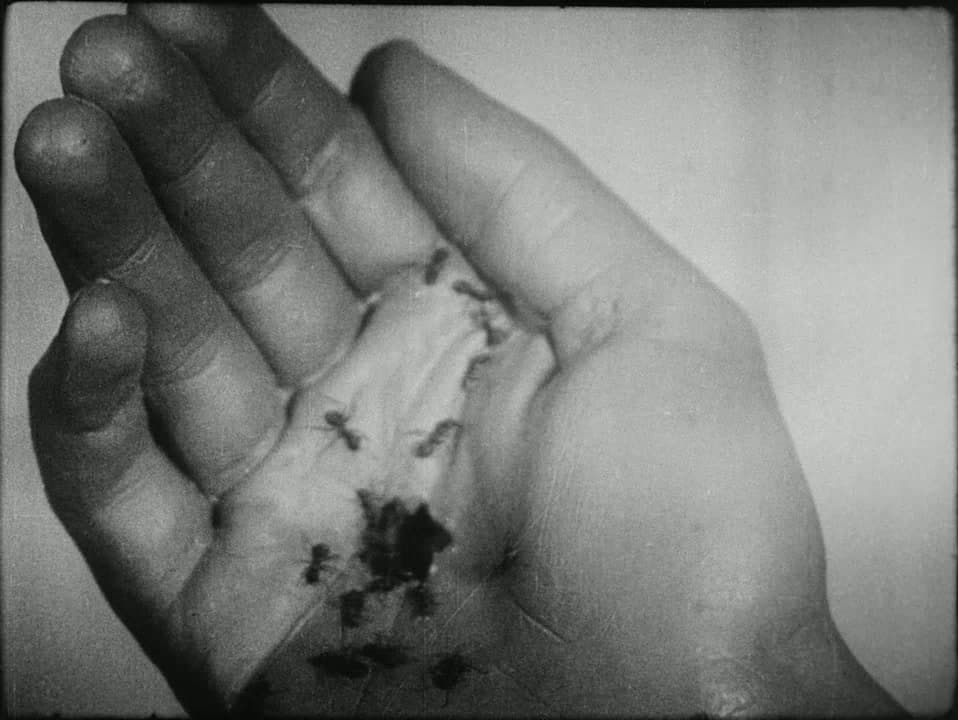
Ants crawl from a dark hole in the center of an open palm, in close-up, from Un Chien Andalou

Artwork reproduction

Film

Un Chien Andalou

1929 · Surrealist film

A cloud crosses the moon; a razor crosses an eye — and cinema acquires its most famous seventeen minutes. Written in six days by two young Spaniards trading dreams, on one rule: no image that could be explained. Ants pour from a hole in a palm, a man drags pianos loaded with dead donkeys and live priests, and a Paris premiere its director attended with stones in his pockets ends, to his disgust, in applause.
Luis Buñuel, Salvador Dalí, Un Chien Andalou, 1929. Image: public domain (US).

People they knew

Documented connections — every one carries its source.

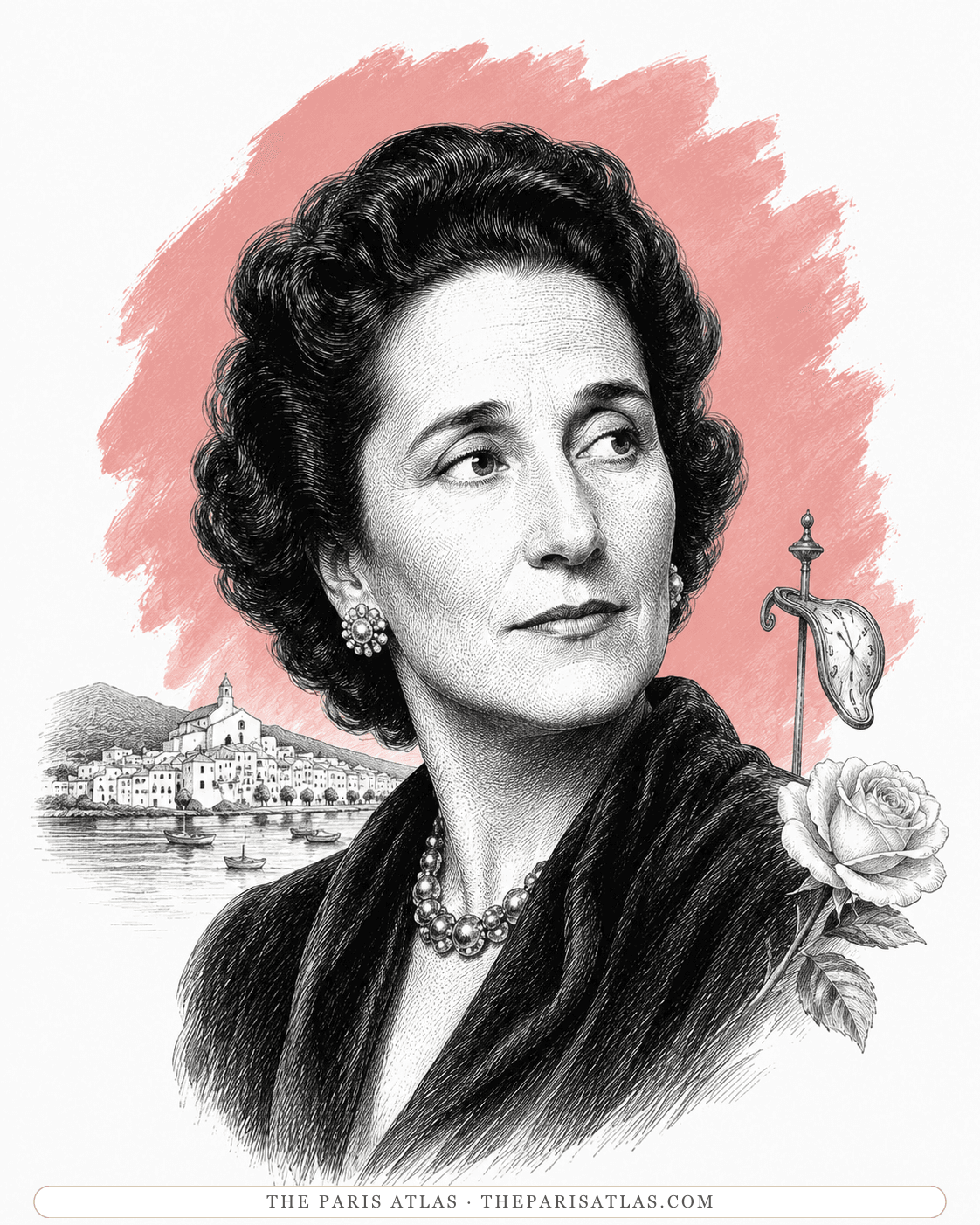
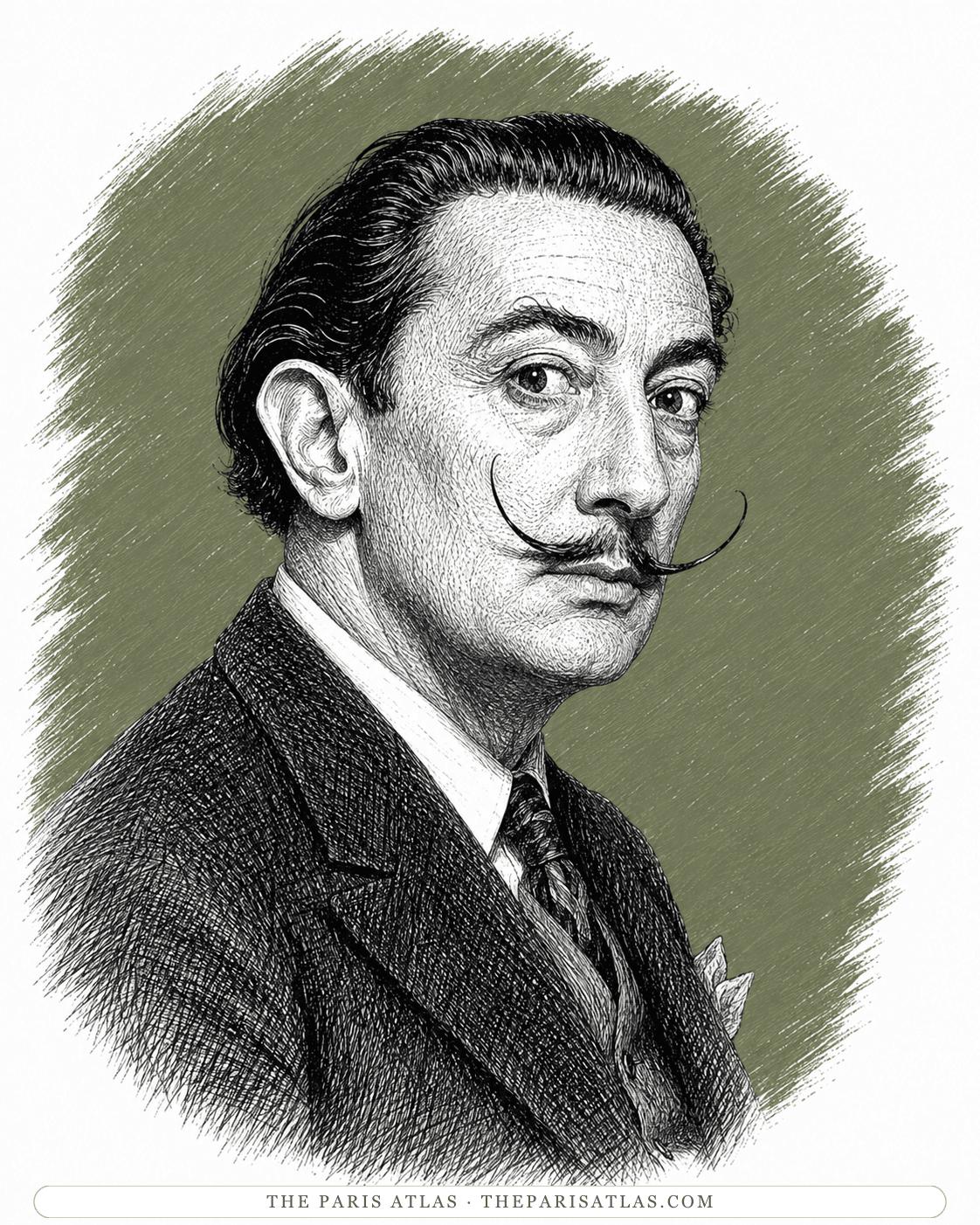
Illustrated portrait of Salvador Dalí

Salvador Dalí

  • Painter
  • Filmmaker
  • Sculptor

Met · 1922

Also at the Residencia. Seven years later they wrote Un Chien Andalou together in six days at Figueres, and followed it with L'Âge d'Or; the collaboration did not survive the thirties.

Ian Gibson, The Shameful Life of Salvador Dalí (1997)

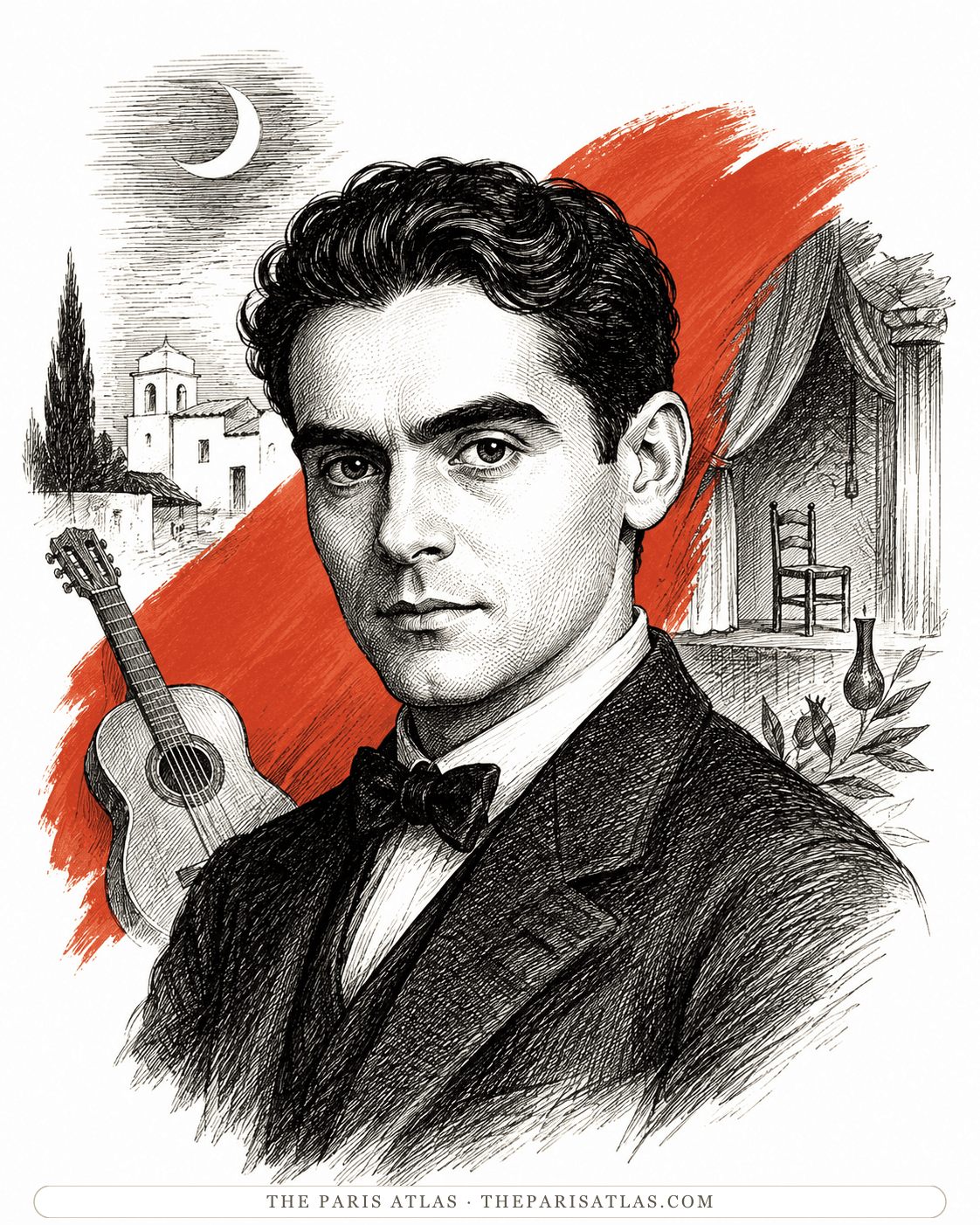
Illustrated portrait of Federico García Lorca

Federico García Lorca

  • Poet
  • Playwright

Met · 1922

At the Residencia de Estudiantes in Madrid, with Dalí. The friendship cooled after Un Chien Andalou, which Lorca took to be aimed at him; Buñuel denied it.

Ian Gibson, The Shameful Life of Salvador Dalí (1997)

Illustrated portrait of Gala Dalí

Gala Dalí

  • Artists' model
  • Muse
  • Agent

Clashed with

The MNAC's 2018 exhibition describes Buñuel's hostility toward Gala. This was an antagonistic connection within the Surrealist circle, not a close friendship.

Estrella de Diego, Gala Salvador Dalí: A Room of One's Own in Púbol (2018), p. 2

Movements

The artistic and literary currents this life ran through.

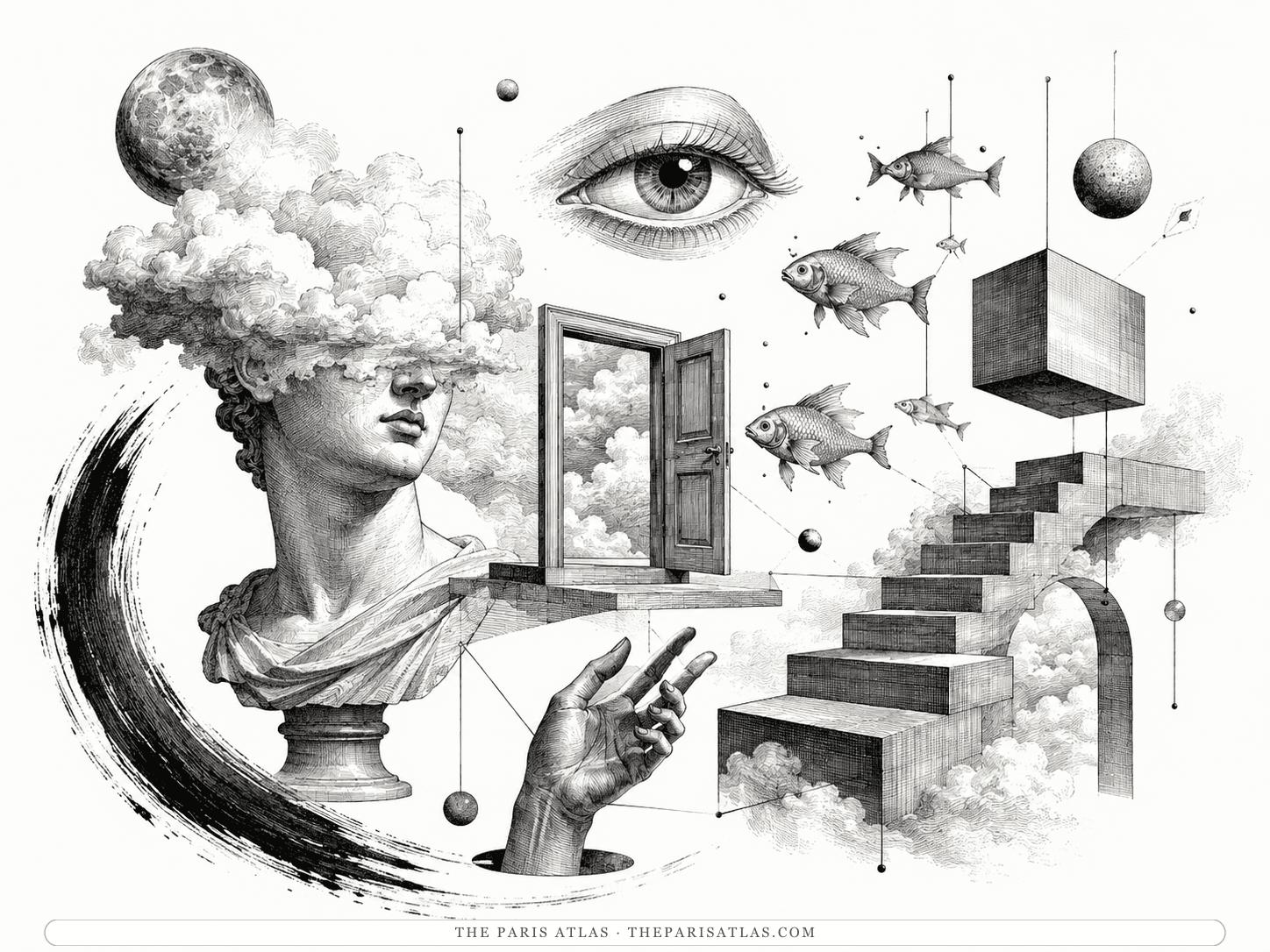
Pen-and-ink dream collage — a classical bust with clouds for eyes, a floating eye, a door opening onto sky, fish swimming through air, and an impossible staircase

Art & literary movement · 1924–1966

Surrealism

Buñuel joined the Paris Surrealist group around 1929, the year of Un Chien Andalou, and worked within its orbit into the early 1930s before parting from Breton. Gives his cinema a route into the graph independent of Dalí.

Encyclopaedia Britannica — Luis Buñuel

Luis Buñuel’s Places

The cataloged places connected to Luis Buñuel — through the books, and through the documented record.

Places you can enter today appear first, followed by addresses to see from outside and sites that have vanished.

Questions about Luis Buñuel

Who was Luis Buñuel?

A Spanish film director, born in Calanda, Aragón, in 1900, who made the two defining films of Surrealist cinema in Paris — Un Chien Andalou (1929) and L'Âge d'Or (1930), the first written with the painter Salvador Dalí. He spent twenty years making films in Mexico, where he took citizenship in 1949, and a late run of French films won him an Academy Award. He died in Mexico City in 1983.

What is Un Chien Andalou?

A seventeen-minute silent film from 1929, written by Luis Buñuel and the painter Salvador Dalí and directed by Buñuel. It is best known for its opening image, a razor drawn across a woman's eye, and it was built on one rule: no image that could be rationally explained. Its Paris premiere brought both men into the Surrealist group.

Did Luis Buñuel and Salvador Dalí fall out?

Yes. They wrote Un Chien Andalou together in 1929, but their planned second collaboration, L'Âge d'Or (1930), collapsed almost at once — Dalí was newly attached to Gala, and his involvement largely fell away, though his name stayed on the credits. In 1942 Dalí's autobiography described Buñuel as an atheist and a Communist, which cost Buñuel his job at the Museum of Modern Art in New York. They never made another film together.

Why did Luis Buñuel live in Mexico?

Exile. The Spanish Civil War ended his work in Spain, and after several years in the United States he moved to Mexico City in 1946, where the film industry could employ him. He became a Mexican citizen in 1949, made some twenty films there, including Los Olvidados (1950), and kept Mexico City as his home for the rest of his life.

What are Luis Buñuel's most famous films?

Un Chien Andalou (1929) and L'Âge d'Or (1930), the Surrealist films made in Paris with Salvador Dalí; Los Olvidados (1950) and The Exterminating Angel (1962) from the Mexican years; and the late French films Belle de Jour (1967), The Discreet Charm of the Bourgeoisie (1972), which won the Academy Award for best foreign-language film, and That Obscure Object of Desire (1977), his last.

How did Luis Buñuel die?

He died in a hospital in Mexico City on 29 July 1983, at eighty-three. Contemporary obituaries reported the cause differently: the hospital gave cirrhosis of the liver, while wire reports cited heart and kidney failure. His memoir My Last Sigh, published the year before, was written in the knowledge that he was near the end.

Sourced claims

Every connection the graph holds for Luis, with the evidence behind it.

Associated with · 1929

Surrealism

Buñuel joined the Paris Surrealist group around 1929, the year of Un Chien Andalou, and worked within its orbit into the early 1930s before parting from Breton. Gives his cinema a route into the graph independent of Dalí.

Encyclopaedia Britannica — Luis Buñuel

Performed in · 1929

Un Chien Andalou

Luis Buñuel plays the man with the razor.

Encyclopaedia Britannica — An Andalusian Dog (Un Chien Andalou)

Visited · 1929

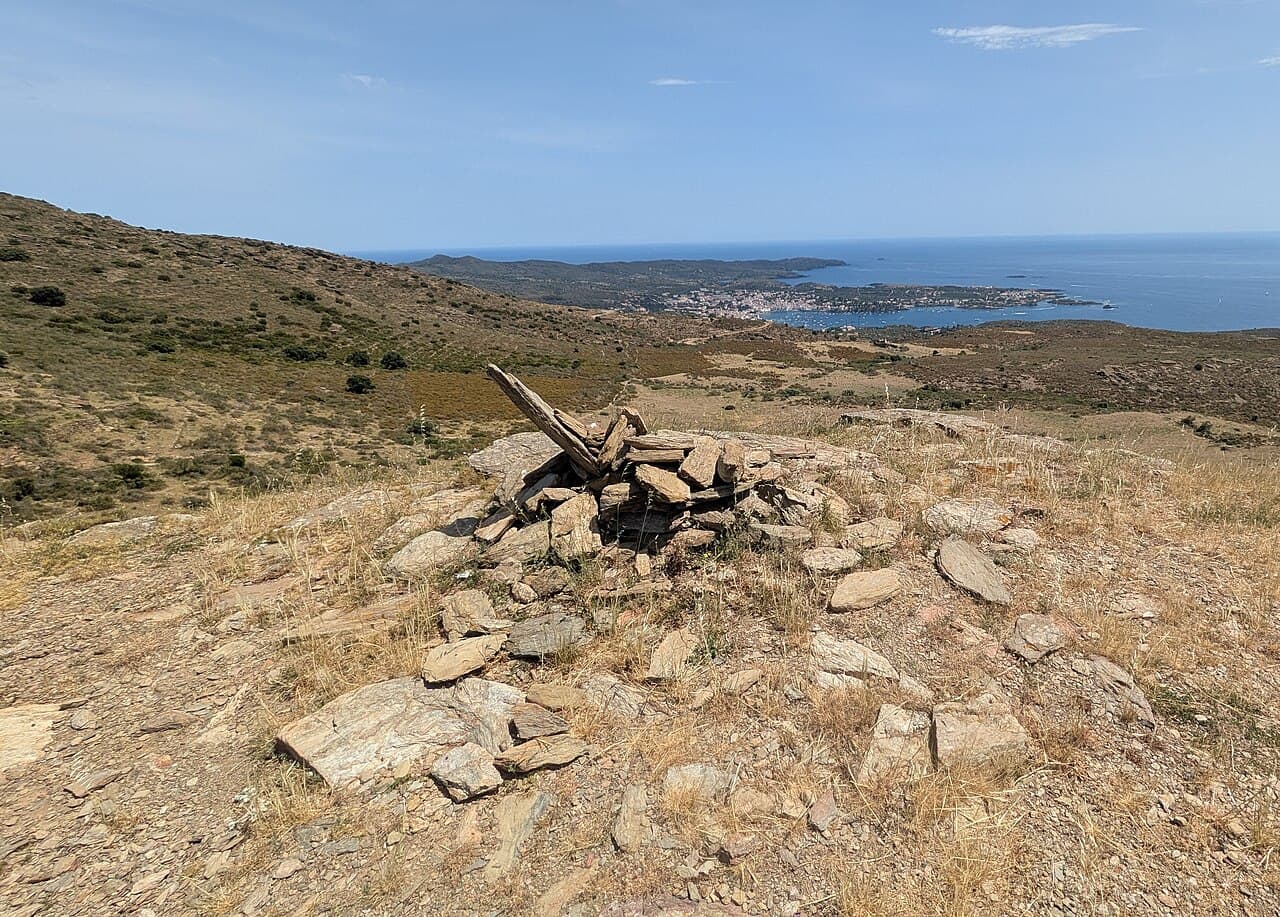
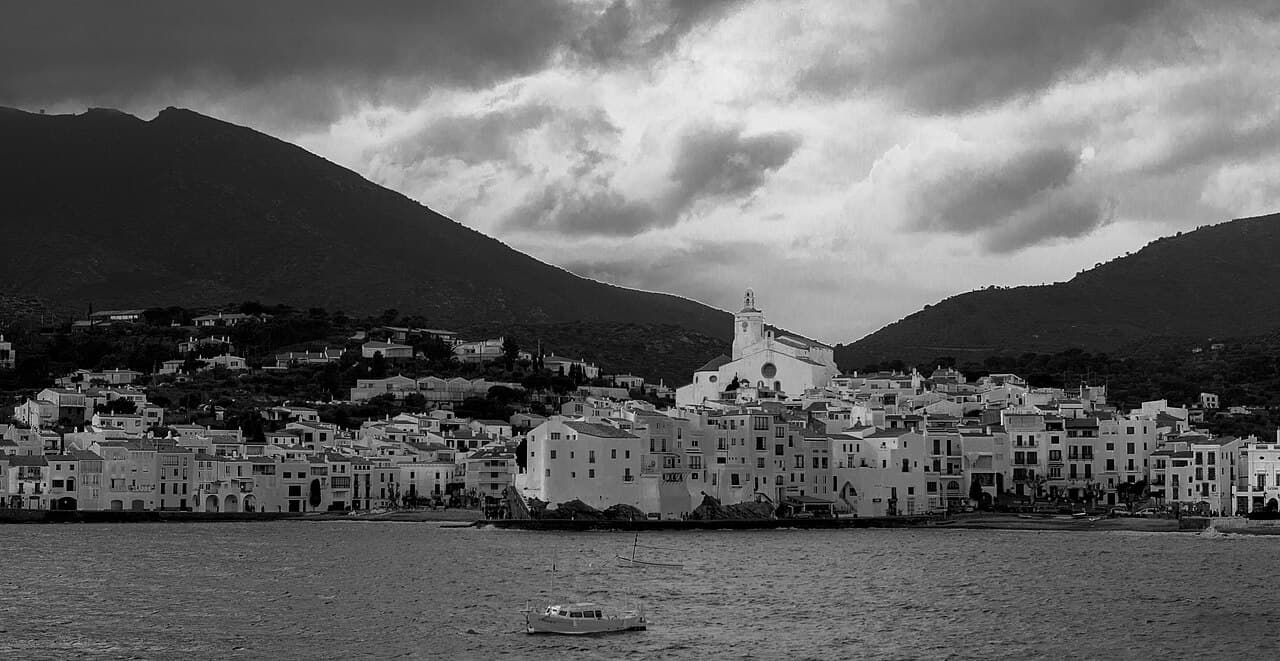
Cadaqués

Luis Buñuel was among the artists who joined Salvador Dalí in Cadaqués during the decisive summer of 1929.

Royal Museums of Fine Arts of Belgium — Dalí & Magritte exhibition

Met · 1922

Salvador Dalí

Also at the Residencia. Seven years later they wrote Un Chien Andalou together in six days at Figueres, and followed it with L'Âge d'Or; the collaboration did not survive the thirties.

Ian Gibson, The Shameful Life of Salvador Dalí (1997)

Met · 1922

Federico García Lorca

At the Residencia de Estudiantes in Madrid, with Dalí. The friendship cooled after Un Chien Andalou, which Lorca took to be aimed at him; Buñuel denied it.

Ian Gibson, The Shameful Life of Salvador Dalí (1997)

Clashed with

Gala Dalí

The MNAC's 2018 exhibition describes Buñuel's hostility toward Gala. This was an antagonistic connection within the Surrealist circle, not a close friendship.

Estrella de Diego, Gala Salvador Dalí: A Room of One's Own in Púbol (2018), p. 2