Starring — Film
- Actor
Catherine Deneuve
French actress who became an international star as the umbrella-shop girl in Jacques Demy's sung-through The Umbrellas of Cherbourg (1964), and went on to one of the longest careers in European cinema.
In images
Details
- 1943–
- 22 October 1943
- Paris, France
- French
- Film actor
- The Umbrellas of Cherbourg, Repulsion, Belle de jour, The Young Girls of Rochefort, The Last Metro, Indochine
- Christian Vadim, Chiara Mastroianni
- Actor
- Catherine Fabienne Dorléac
About Catherine Deneuve
Catherine Deneuve was twenty when Jacques Demy cast her as Geneviève, the umbrella-seller's daughter, in The Umbrellas of Cherbourg. The film — a melodrama in which every line is sung — won the top prize at Cannes in 1964 and made her a star; her singing voice was dubbed by Danielle Licari, but the face, the poise, and the pale blonde composure were hers, and they defined a screen presence she would keep for decades.
She worked with Demy again on The Young Girls of Rochefort (1967) and moved between the art house and the mainstream on both sides of the Atlantic, in films by Luis Buñuel, Roman Polanski, François Truffaut, and many others. Rooted in the New Wave's second wave, she became one of the enduring faces of French cinema.
She was born Catherine Fabienne Dorléac in Paris, the daughter of actors Maurice Dorléac and Renée Simonot. Her elder sister Françoise Dorléac entered films first; Catherine followed and took their mother's family name, Deneuve, so the two young actors would not work under the same name. They appeared together as the singing, dancing twins of The Young Girls of Rochefort — sisters playing sisters, with Gene Kelly crossing Jacques Demy's candy-colored Atlantic bridge to the Hollywood musical.
The apparent coolness that made Deneuve a star proved unusually flexible. Roman Polanski turned it claustrophobic in Repulsion (1965), casting her as a young woman coming apart alone in a London flat. Luis Buñuel made the same reserve mysterious in Belle de Jour (1967), where she played a doctor's wife living a hidden afternoon life. The two performances could scarcely be more different from Geneviève in The Umbrellas of Cherbourg, yet all three depend on how much Deneuve can hold back while the camera studies her face.
The year of Belle de Jour was also the year Françoise Dorléac died in a car crash, only months after The Young Girls of Rochefort opened. She was twenty-five. The radiant film became, without meaning to, the sisters' permanent image together. Deneuve continued with Buñuel in Tristana (1970), with François Truffaut in Mississippi Mermaid (1969) and The Last Metro (1980), and repeatedly with André Téchiné, building a career around directors rather than a single screen type.
Her Paris story also belongs to fashion history. Deneuve met Yves Saint Laurent in 1965 when she asked him to dress her for a presentation to Queen Elizabeth II, then suggested that Buñuel hire him for Belle de Jour. Saint Laurent's black dress, vinyl trench, and square-buckled Roger Vivier pumps helped define Séverine; the shoes became known by the film's name. What began as a costume collaboration became a friendship that lasted for decades.[1][2]
In The Last Metro, Deneuve played an actor keeping a Paris theatre alive during the German occupation while concealing her Jewish husband beneath the stage. The role brought her first César for best actress in 1981. Her second came for Indochine (1992), in which she played a French plantation owner watching colonial rule collapse; the performance also earned her an Academy Award nomination, while the film won the Oscar for foreign-language film.
Deneuve never allowed those honors to turn her into a monument. She worked with Lars von Trier in Dancer in the Dark (2000), François Ozon in 8 Women (2002) and Potiche (2010), Arnaud Desplechin in A Christmas Tale (2008), and Hirokazu Kore-eda in The Truth (2019). The through-line is not glamour alone but appetite: a Paris-born actor repeatedly lending a famous, composed face to filmmakers who want to test what may be happening behind it.
The Dorléac sisters, and the name Deneuve
She was born Catherine Fabienne Dorléac in Paris on 22 October 1943, into a family that already spoke the language of performance. Her father, Maurice Dorléac, acted on screen and dubbed foreign films; her mother, Renée Simonot, had worked on the stage. Catherine followed her older sister Françoise into films, but took their mother's maiden name so that two young Dorléacs would not arrive on the same credits. The screen name was practical before it became iconic.[3]
The sisters made a useful contrast. Françoise was quick, extroverted, and already visibly ambitious; Catherine's reserve could read as calm, mystery, or refusal depending on the director. She appeared in her first film as a teenager and worked with Roger Vadim, but she was not yet the finished image later audiences would call “Deneuve.” That image was built through performance, costume, hair, camera placement, and an unusual ability to let stillness carry a scene.
Cherbourg: the face becomes a star
Jacques Demy gave that stillness its first great part. In The Umbrellas of Cherbourg, Deneuve plays Geneviève, a shopkeeper's daughter whose first love is broken apart by the Algerian War, pregnancy, and time. Every line is sung to Michel Legrand's score; Danielle Licari supplied Geneviève's singing voice, leaving Deneuve to make the emotion legible through her body and face. The saturated wallpaper and rain-bright streets look like a fairy tale. The decisions inside them are adult and irreversible.[4]
The film won the Palme d'Or in 1964 and launched its twenty-year-old lead internationally. What survived the publicity was not simply beauty. Deneuve makes Geneviève's change of mind believable without simplifying it: hope, fear, calculation, and resignation can occupy the same close-up. It became the durable pattern of her best performances — an apparently composed woman whose inner life the viewer has to work to read.
1967: two films, two sisters, one rupture
Three years later she seemed to split the screen image in two. For Luis Buñuel, Belle de jour made her Séverine, a wealthy Paris wife whose fantasies and afternoon life refuse a neat boundary between desire and reality. Yves Saint Laurent dressed her in clothes precise enough to seem like armor. Buñuel asked for restraint; Deneuve gave him a performance whose opacity is active, not empty. It remains one of the defining portraits of Parisian bourgeois life in postwar cinema.
Demy's The Young Girls of Rochefort, released the same year, let Catherine and Françoise Dorléac play musical twins in a pastel port city, dancing around the possibility of departure. The pleasure of seeing the real sisters together became inseparable from loss when Françoise died in a car crash in June 1967, only months after the film opened. Catherine rarely turned that grief into public performance. The film carries it anyway: two sisters forever crossing the square together, held in the present tense of cinema.
A Paris career, director by director
Deneuve never belonged to a single movement or auteur. Roman Polanski used her reserve as the terrifying center of Repulsion; Buñuel returned to it in Tristana; Demy turned it playful and fantastic again in Donkey Skin. In François Truffaut's Mississippi Mermaid, she played opposite Jean-Paul Belmondo as a woman who repeatedly changes the story of who she is. A decade later Truffaut built The Last Metro around her as Marion Steiner, the actor-manager of a Paris theatre hiding its Jewish director during the Occupation. The performance won Deneuve her first César for best actress.
The roles form a map of French cinema rather than a single type: musicals and thrillers, Buñuelian enigmas, Truffaut melodramas, comedies with Gérard Depardieu, and later work for André Téchiné, Arnaud Desplechin, François Ozon, and Hirokazu Kore-eda. The famous coolness is only the surface continuity. Under it, Deneuve has played romantic naïveté, panic, cruelty, farce, maternal power, political compromise, and old age without asking the audience to forget the earlier faces.
Indochine and the long second act
Régis Wargnier's Indochine gave Deneuve another career summit in 1992. As Éliane, a French plantation owner raising a Vietnamese daughter in the final decades of colonial rule, she holds private love and imperial power in the same character. The film won the Academy Award for international feature, Deneuve received an Oscar nomination for best actress, and her performance brought a second César. The role also shows the question her mature career kept returning to: what does composure conceal, and what does it enable?
She did not settle into ceremonial status afterward. Dancer in the Dark, 8 Women, A Christmas Tale, Potiche, The Midwife, The Truth, and Marcello Mio placed her inside radically different tones and generations of filmmaking. Her daughter Chiara Mastroianni became an actor too, sometimes appearing with her. In 2008 Cannes gave Deneuve a special prize for her career; in 2025 she presided over the fiftieth César ceremony. The festival and academy records continue into 2026 — a working filmography, not a monument sealed in the 1960s.
What the image leaves out
Deneuve's public image is unusually easy to mistake for the acting itself: blonde hair, Saint Laurent tailoring, a voice held low, and the impression that nothing has disturbed the surface. Her strongest films use that expectation against the viewer. Geneviève grows practical; Séverine's fantasies exceed anyone's diagnosis; Marion keeps a theatre alive under occupation. The restraint is not an absence of feeling. It is the instrument that makes us look for feeling in smaller changes.
That is why her Paris connection is larger than birthplace. Deneuve's career records how the city imagined women across seven decades — shop girl, bourgeois wife, stage manager, mother, star — while her performances keep resisting the labels each image invites. Paris supplied the studios, theatres, designers, directors, and mythology. She supplied the friction that made the mythology interesting.
Life events
Born Catherine Fabienne Dorléac in Paris on 22 October.
Makes her first credited screen appearance while still a teenager.
The Umbrellas of Cherbourg wins the Palme d'Or and makes its twenty-year-old lead an international star.
Plays the isolated Carol in Roman Polanski's Repulsion and meets Yves Saint Laurent, beginning a collaboration and friendship that will last for decades.
Belle de jour and The Young Girls of Rochefort open; her sister and Rochefort co-star Françoise Dorléac dies that June.
Wins her first César for François Truffaut's The Last Metro.
Wins a second César for Indochine and receives an Academy Award nomination for best actress.
Indochine wins the Academy Award for foreign-language film, and Deneuve attends as a best-actress nominee.
Appears with Björk in Dancer in the Dark, winner of the Palme d'Or at Cannes.
Joins the all-star musical mystery 8 Women, continuing a career that moves freely between popular and auteur cinema.
Receives a special career prize at the Festival de Cannes.
Presides over the fiftieth César ceremony in Paris.
Catherine Deneuve quotes
I've always thought of The Umbrellas of Cherbourg as a fairytale, at once poetic and cruel.
In the credits
Starring — Film
The Young Girls of Rochefort
People Catherine Deneuve Knew
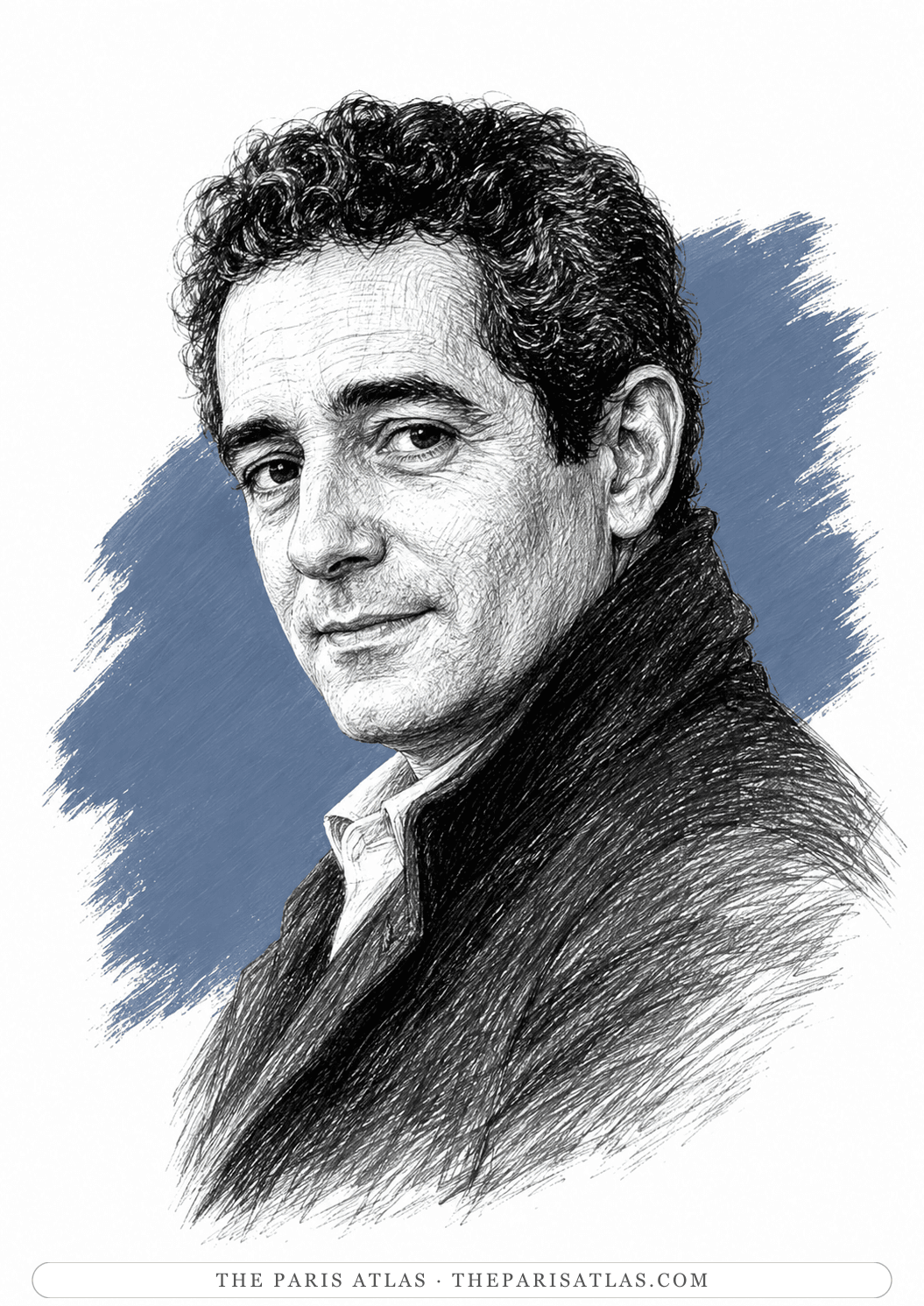
Jacques Demy
- Filmmaker
Collaborated with · 1964
Demy made Deneuve a star as Geneviève in The Umbrellas of Cherbourg (1964) and cast her again in The Young Girls of Rochefort (1967).
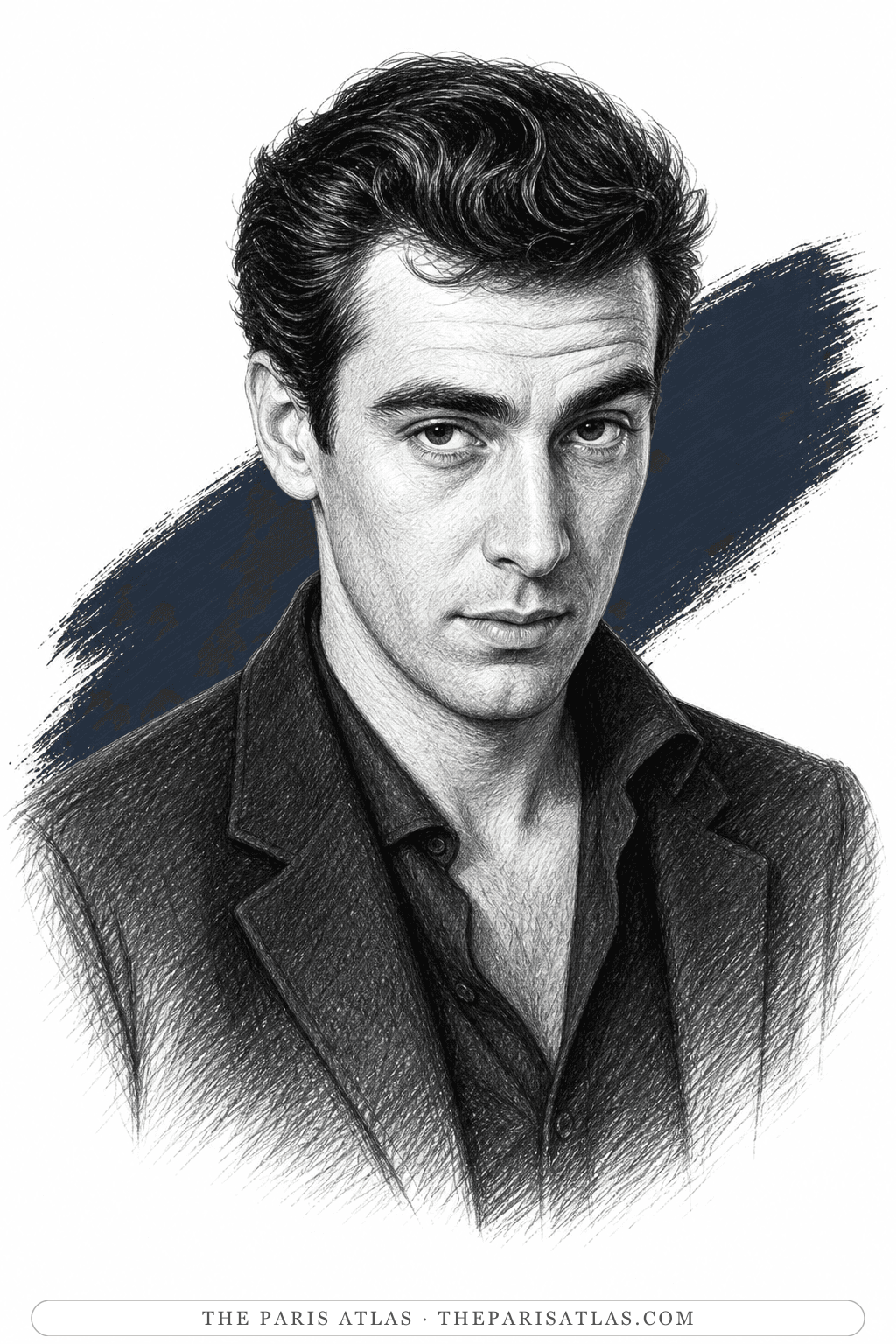
Roger Vadim
- Filmmaker
- Author
- Actor
Collaborated with · 1961–1963
Vadim directed Deneuve in Vice and Virtue after they began a personal relationship; they had a son, Christian Vadim.
Movements
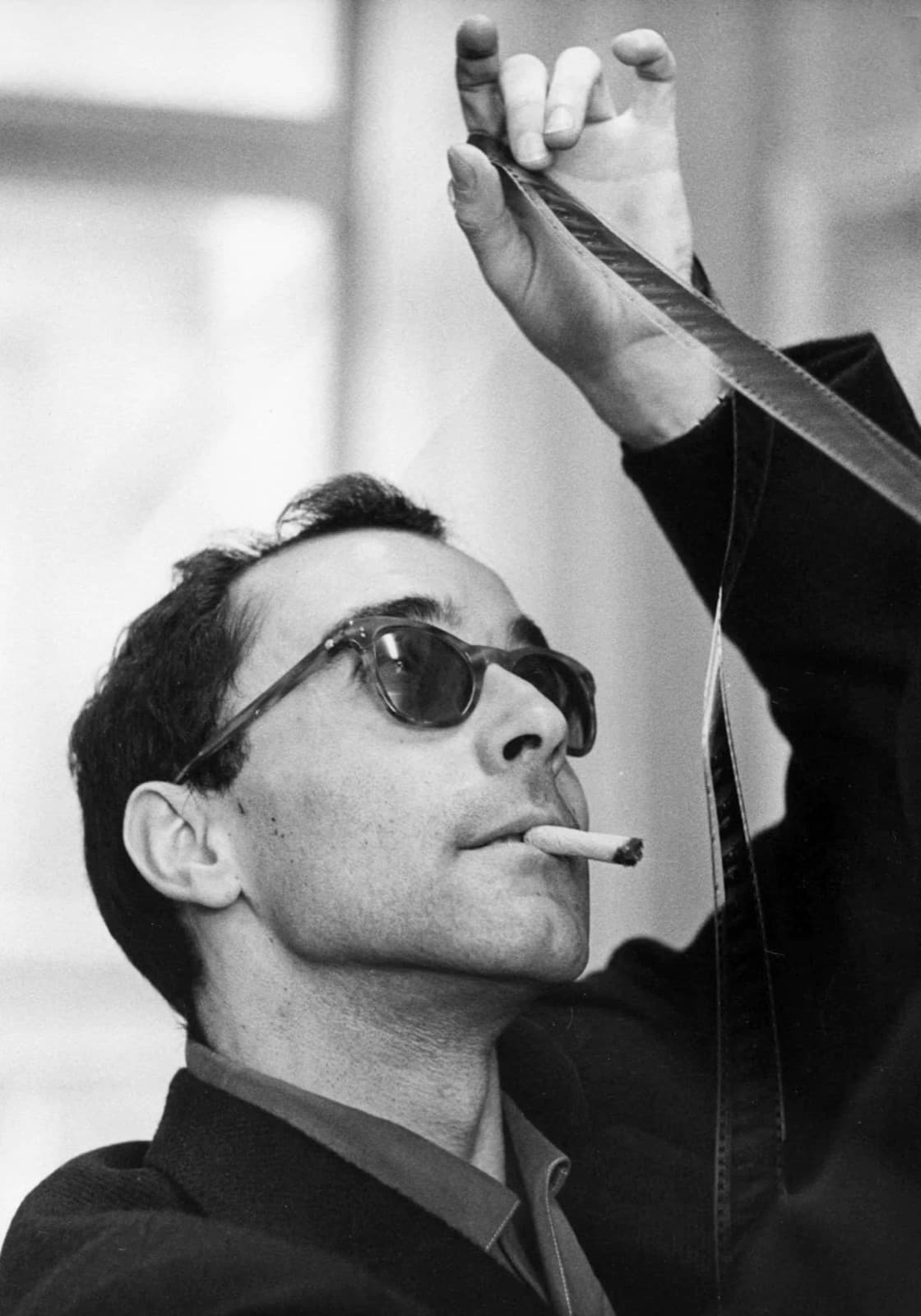
Film movement · c. 1958–1968
The French New Wave
Deneuve came up through the movement's second wave rather than its criticism, but her breakthrough was Demy's Umbrellas of Cherbourg (1964), and she remained a face of the cinema the New Wave produced.
Questions about Catherine Deneuve
What made Catherine Deneuve famous?
The Umbrellas of Cherbourg made her an international star in 1964. Jacques Demy's entirely sung-through musical won the Palme d'Or, and Deneuve's performance as Geneviève established the composed but emotionally complex screen presence that later directors transformed.
Was Catherine Deneuve's singing voice used in The Umbrellas of Cherbourg?
No. Danielle Licari sang Geneviève's part, while Catherine Deneuve performed the role on screen. The film was recorded to Michel Legrand's score and every line of dialogue is sung.
Why did Catherine Deneuve change her name?
She was born Catherine Dorléac and took her mother's maiden name, Deneuve, when she followed her older sister Françoise Dorléac into films. It kept the two acting sisters from working under the same surname.
Did Catherine Deneuve and her sister appear in a film together?
Yes. Catherine Deneuve and Françoise Dorléac played musical twins in Jacques Demy's The Young Girls of Rochefort (1967). Dorléac died in a car crash only months after the film opened.
Which Catherine Deneuve films are most important?
A useful starting group is The Umbrellas of Cherbourg, Repulsion, Belle de jour, The Young Girls of Rochefort, The Last Metro, and Indochine. Together they show how directors used — and how Deneuve complicated — her famous image of cool composure.
What was Catherine Deneuve's connection to Yves Saint Laurent?
Deneuve first asked Yves Saint Laurent to dress her in 1965, then proposed that he design her costumes for Belle de Jour. Their collaboration shaped the film's fashion and began a close friendship that lasted for decades.
Did Catherine Deneuve win an Oscar?
No. She was nominated for best actress for Indochine at the 1993 Academy Awards. The film itself won the Oscar for foreign-language film.
How many César awards has Catherine Deneuve won?
She has won two competitive Césars for best actress: for The Last Metro in 1981 and Indochine in 1993. The Académie des César lists fourteen competitive nominations across her career.
Connections and Sources
Associated with · 1964
The French New Wave
Deneuve came up through the movement's second wave rather than its criticism, but her breakthrough was Demy's Umbrellas of Cherbourg (1964), and she remained a face of the cinema the New Wave produced.
Collaborated with · 1964
Jacques Demy
Demy made Deneuve a star as Geneviève in The Umbrellas of Cherbourg (1964) and cast her again in The Young Girls of Rochefort (1967).
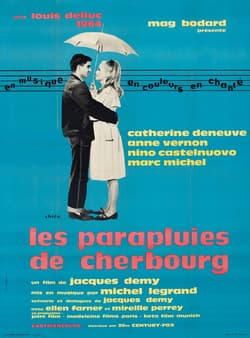
Collaborated with · 1961–1963
Roger Vadim
Vadim directed Deneuve in Vice and Virtue after they began a personal relationship; they had a son, Christian Vadim.
References
References
The sources below include biographies, scholarly essays, interviews, and primary materials that informed this page. They reflect both the historical record and ongoing critical conversations about Catherine Deneuve and their work.


1↑Meeting Catherine Deneuve
WebsiteMusée Yves Saint Laurent ParisUsed forMuseum account of her first meeting and long friendship with Yves Saint Laurent.
2↑Belle de Jour — Yves Saint Laurent's Costumes for Catherine Deneuve
WebsiteMusée Yves Saint Laurent ParisUsed forCostume history and Deneuve's own assessment of Saint Laurent's Belle de Jour image.
3↑Catherine Deneuve: Theatre of Complicity
WebsiteBFI Sight and SoundUsed forCareer study, family background, and the origin of her professional name.
3↑Catherine Deneuve: Theatre of Complicity
WebsiteBFI Sight and SoundUsed forWeb source consulted for documented facts and historical context presented on the Catherine Deneuve page.
4↑Catherine Deneuve — Films in the Criterion Collection
WebsiteThe Criterion CollectionUsed forFilm records for her Demy, Polanski, Buñuel, Truffaut, and Desplechin collaborations.
5Rendez-vous with Catherine Deneuve
WebsiteFestival de Cannes, 2005Used forFestival account of her major directors, César wins, and later international work.

6Catherine Deneuve — César Awards, Nominations, and Filmography
Official recordAcadémie des Arts et Techniques du CinémaUsed forOfficial César record: two wins and fourteen nominations.
7The 65th Academy Awards — 1993
WebsiteAcademy of Motion Picture Arts and Sciences, 1993Used forOfficial record of her Indochine nomination and the film's foreign-language-film win.
8The Criterion Collection — The Umbrellas of Cherbourg: A Finite Forever
WebsiteThe Criterion CollectionUsed forWeb source consulted for documented facts and historical context presented on the Catherine Deneuve page.
9Belle de jour: Tough Love
WebsiteThe Criterion CollectionUsed forWeb source consulted for documented facts and historical context presented on the Catherine Deneuve page.
10Catherine Deneuve
Official recordFestival de CannesUsed forOfficial record used to verify names, dates, institutional details, or other factual information on this page.
11The Umbrellas of Cherbourg — Restoration Dossier
Official recordFestival de Cannes / Ciné-TamarisUsed forOfficial record used to verify names, dates, institutional details, or other factual information on this page.
12Catherine Deneuve: A non-conformist
PeriodicalUnited Press InternationalUsed forContemporary reporting or criticism used to document the historical reception and context of Catherine Deneuve.
i
Why these sources are here
These references anchor the page in the documented record and in the scholarly conversations around Catherine Deneuve. Every claim on this page traces back to one or more of the works listed here.
 Explore more resources