Associated with · 1967
The French New Wave
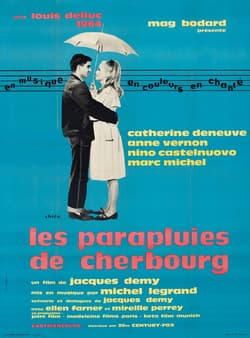
Jacques Demy's song-and-dance tribute to the Hollywood musical, completing his trilogy with Lola and The Umbrellas of Cherbourg; a Left Bank film that reaches, like Umbrellas, for pure color and feeling.
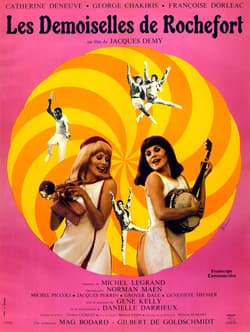
by Jacques Demy
The Young Girls of Rochefort is Jacques Demy's love letter to the Hollywood musical. Twin sisters — a dance teacher and a composer, played by the real-life sisters Catherine Deneuve and Françoise Dorléac — dream of love and of leaving their port town for Paris, while a travelling fair, a sailor-painter, and a visiting American composer weave a set of near-miss romances around them. Unlike the sung-through Umbrellas of Cherbourg, this one has spoken dialogue and full song-and-dance numbers, with Gene Kelly himself in the cast and a celebrated Michel Legrand score. It completes Demy's loose trilogy, and beneath its bright surface runs a thread of melancholy.
Demy took the real port town of Rochefort and repainted its square in pastels, then filled it with dancing. Where The Umbrellas of Cherbourg had been sung from first line to last, Rochefort mixes spoken scenes with big song-and-dance numbers, an open homage to the MGM musicals Demy loved. The casting makes the tribute literal: Gene Kelly plays the visiting American composer, and George Chakiris, of West Side Story, is one of the fair's showmen.
Michel Legrand's jazz-inflected score carries it, and the sisters at its center were sisters in life — Catherine Deneuve and Françoise Dorléac, playing the twins Delphine and Solange.
The plot is built from coincidence. Maxence, a sailor and painter, has painted his ideal woman without ever meeting her; the face is essentially Delphine's, hanging in a local gallery. Solange, a composer, crosses paths with Andy, the American, and the two are drawn together but part without exchanging names. Their mother, Yvonne, turns out to have long ago left the man who still loves her, the music-shop owner Simon.
By the end the couples align — but obliquely, and often just out of frame: Demy pointedly does not show Delphine and Maxence finally meet. Happiness arrives, but the film keeps it at the edge of the picture.
For all its brightness the film carries a darker thread — a running subplot about a murder committed by a mild, unremarkable regular of the town, deliberately jarring against the sunny numbers. It is the melancholy that runs under all of Demy's work, kept just legible beneath the color.
The film completes the loose trilogy that began with Lola (1961) and The Umbrellas of Cherbourg (1964), reuniting Demy with Deneuve and with Legrand. Its bittersweet undertow is why critics have always taken it as more than a pastel pastiche.
The film was shadowed by tragedy soon after its release: Françoise Dorléac died in a car crash in June 1967, only months after the premiere, at twenty-five. Years later Agnès Varda, Demy's wife, returned to the film in her documentary The Young Girls Turn 25 (1993) and, through her company Ciné-Tamaris, restored Demy's work.
Rochefort has since been claimed by a new generation of filmmakers — Damien Chazelle among them cites Demy's musicals as a direct model for La La Land — and remains the fullest expression of Demy's belief that a film could be pure color, music, and longing.
1966
Demy films in Rochefort, repainting the town square in pastels, with a Michel Legrand score and Gene Kelly in the cast.
March 1967
Released in France — a song-and-dance musical completing Demy's trilogy after Lola and The Umbrellas of Cherbourg.
June 1967
Françoise Dorléac, who plays Solange, dies in a car crash at twenty-five, months after the premiere.
1993
Agnès Varda revisits the film in her documentary The Young Girls Turn 25.
2010s
Restored by Varda's Ciné-Tamaris and cited as a direct influence on later musicals, including La La Land.
Twin sisters in the port town of Rochefort — a dance teacher and a composer — dream of love and of leaving for Paris, while a travelling fair, a sailor-painter, and a visiting American composer weave a set of near-miss romances around them. Jacques Demy directed it in 1967 as a song-and-dance musical, with Catherine Deneuve and Françoise Dorléac as the sisters.
The Umbrellas of Cherbourg is sung from first line to last, with no spoken dialogue. Rochefort is a conventional musical with spoken scenes and full song-and-dance numbers — an open homage to the Hollywood musical, complete with Gene Kelly in the cast.
Yes. Catherine Deneuve and Françoise Dorléac were sisters in real life, playing the twins Delphine and Solange. Dorléac died in a car crash in June 1967, only months after the film's premiere, at the age of twenty-five.
It completes his loose trilogy with Lola (1961) and The Umbrellas of Cherbourg (1964), reuniting him with Catherine Deneuve and composer Michel Legrand. Demy belonged to the New Wave's Left Bank, and the film is his fullest tribute to the American musical.
Yes. Damien Chazelle has repeatedly named Demy's musicals — Rochefort and The Umbrellas of Cherbourg — as direct models for La La Land, from the pastel color to the bittersweet romance.
Associated with · 1967
Jacques Demy's song-and-dance tribute to the Hollywood musical, completing his trilogy with Lola and The Umbrellas of Cherbourg; a Left Bank film that reaches, like Umbrellas, for pure color and feeling.
Explore directors from the same movements and circles.
The Cahiers du cinéma critic who reached the screen first: his 1958 debut Le Beau Serge was the first feature from the group that made the New Wave. Over fifty years he became the 'French Hitchcock,' anatomist of the provincial bourgeoisie.
View artist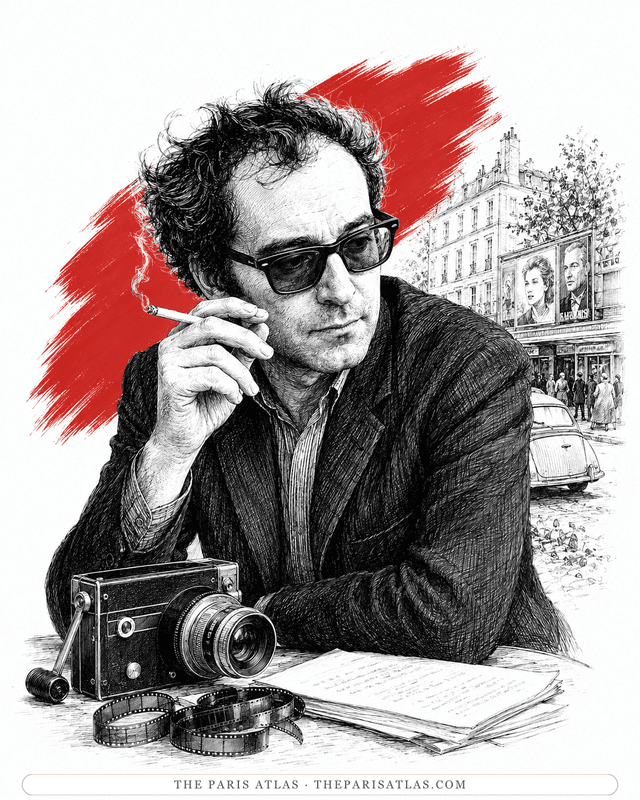
The Cahiers du cinéma critic who became the French New Wave's most recognizable director, then spent six decades taking apart and rebuilding the language of film.
View artist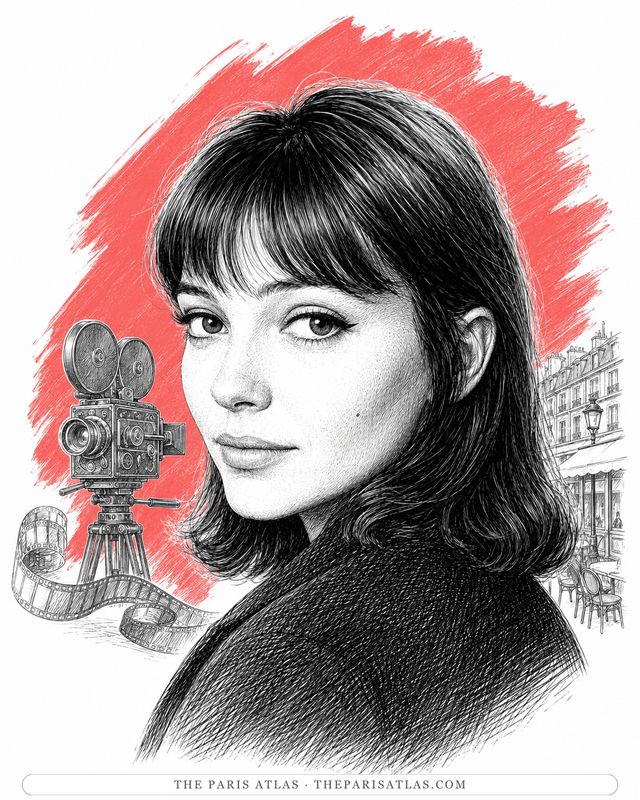
The Danish-born actor at the center of Jean-Luc Godard's 1960s features — the French New Wave's defining female lead, whose performances carry their own authorship.
View artistThe sources below include collection records, catalogues, scholarly research, and primary materials that informed this page. They document The Young Girls of Rochefort, its making, and its place in cultural history.


Web source consulted for documented facts and historical context presented on the The Young Girls of Rochefort page.
Web source consulted for documented facts and historical context presented on the The Young Girls of Rochefort page.

Contemporary reporting or criticism used to document the historical reception and context of The Young Girls of Rochefort.
Official record used to verify names, dates, institutional details, or other factual information on this page.
These references provide the documented foundation for this work's history and interpretation. Claim-level citations remain attached to the specific claims they support.
 Explore more resources