Associated with · 1964
The French New Wave
Jacques Demy's contribution to the movement's Left Bank wing — an entirely sung color melodrama often called the New Wave's anti-musical, and its Palme d'Or winner of 1964.
by Jacques Demy
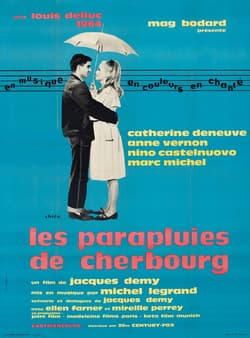
Jacques Demy's The Umbrellas of Cherbourg is a melodrama in which nobody speaks — every line, from a declaration of love to a question about an umbrella, is sung, over a continuous Michel Legrand score. Catherine Deneuve, twenty, plays a shop girl separated from her mechanic sweetheart when he is called up for the Algerian War; pregnant and pressed by her mother, she marries another man, and the two lovers meet again years later by chance. It won the Palme d'Or at Cannes in 1964. Demy belonged to the New Wave's Left Bank, and here he answered the Hollywood musical with a French film in a minor key: saturated color, no dancing, and an ending of quiet realism rather than romance.
En-chanté
There is no spoken dialogue in The Umbrellas of Cherbourg. Every line is sung, set to Michel Legrand's continuous, jazz-inflected score — not just the love songs but the ordinary talk of a garage and an umbrella shop. Demy called the form a film en-chanté, and it sits somewhere between the American musical and opera, though nobody dances.
The look matches the method. Jean Rabier shot it in saturated Eastmancolor, with wallpaper and coats chosen to rhyme with the umbrellas, so that a provincial French town becomes as bright as a painting. The recurring main theme became the pop standard known in English as "I Will Wait for You."
Cherbourg, the late 1950s. Geneviève Émery, seventeen, works in her widowed mother's failing umbrella shop and is in love with Guy Foucher, a young garage mechanic. They plan to marry. Then Guy is conscripted for two years' service in the Algerian War, and on their last night together Geneviève becomes pregnant.
His letters grow rare. Her mother, short of money, encourages a match with Roland Cassard, a wealthy diamond dealer who loves Geneviève and will accept another man's child. Geneviève marries him and leaves Cherbourg. Guy returns from Algeria wounded to find her gone; steadied in time by the death of his godmother and the kindness of Madeleine, he marries Madeleine and opens a service station.
Years later, on a snowy Christmas Eve, Geneviève pulls into Guy's station by chance. They speak briefly and carefully. She has their daughter in the car; he declines to see the child. She drives on, and Guy plays in the snow with his own son. Neither life is ruined and neither is what was promised — the ending is bittersweet, not tragic.
Demy is grouped with the New Wave's Left Bank — the more literary, art-world wing around Agnès Varda, his wife, and Alain Resnais and Chris Marker. Where Godard and Truffaut chased a rough, handheld realism, Demy did the opposite: a lavishly stylized, entirely sung color melodrama. Critics have called it the movement's anti-musical.
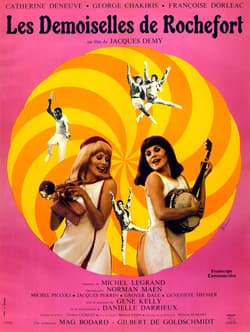
He loved the MGM musicals of Gene Kelly and Vincente Minnelli and borrowed their color and sweep, but applied them to unglamorous working-class life — a garage, an unwed pregnancy, a colonial war — and withheld the genre's happy ending. The result is a French, minor-key answer to Hollywood, and the middle panel of Demy's loose trilogy with Lola (1961) and The Young Girls of Rochefort (1967).
The Umbrellas of Cherbourg won the Palme d'Or at Cannes in 1964 and made Catherine Deneuve, whose singing was dubbed by Danielle Licari, an international star at twenty. In the United States it drew five Academy Award nominations across two ceremonies — for its foreign-language standing, its screenplay, its song, and its score — though it won none.
The film has stayed in the repertory ever since, restored and re-released, and its influence runs down to recent musicals that cite it directly. It remains the clearest case of the New Wave reaching toward pure feeling and pure color rather than documentary truth.
1963
Demy shoots the film in Cherbourg with a continuous Michel Legrand score; it wins the Prix Louis Delluc.
February 1964
Released in France — a melodrama sung from first line to last, in saturated Eastmancolor.
May 1964
Wins the Palme d'Or at the Cannes Film Festival.
1965
Released in the United States; nominated for the Academy Award for Best Foreign Language Film.
1966
Receives four further Academy Award nominations — screenplay, song, and two scoring categories — winning none.
2010s–2020s
Restored in 4K and re-released; cited as a direct influence on later screen musicals.
A young shop girl in Cherbourg, Geneviève, is separated from her sweetheart Guy when he is conscripted for the Algerian War. Pregnant and pressed by her mother, she marries a wealthy suitor; Guy returns wounded, marries another woman, and the former lovers meet again by chance years later. Jacques Demy directed it in 1964, and every line of it is sung.
Yes. There is no spoken dialogue at all. Every line — including ordinary talk about cars and umbrellas — is sung, set to Michel Legrand's continuous score. Demy called it a film en-chanté. Catherine Deneuve's singing was dubbed by Danielle Licari.
It won the Palme d'Or, the top prize at the Cannes Film Festival, in 1964, and earned five Academy Award nominations across two ceremonies — for foreign-language film, screenplay, song, and score — winning none.
Jacques Demy belonged to the movement's Left Bank wing, with Agnès Varda, Alain Resnais, and Chris Marker. But where Godard and Truffaut pursued rough realism, Demy made a stylized, entirely sung color melodrama — often called the New Wave's anti-musical, a French answer to the Hollywood musical that denies the audience a happy ending.
It is the English title of the film's recurring main theme by Michel Legrand, which became a pop standard covered by Frank Sinatra, Louis Armstrong, and many others. In the film the melody carries French lyrics, most memorably in Geneviève and Guy's parting at the station.
The Umbrellas of Cherbourg — 4K restoration trailer (Janus Films)
Associated with · 1964
Jacques Demy's contribution to the movement's Left Bank wing — an entirely sung color melodrama often called the New Wave's anti-musical, and its Palme d'Or winner of 1964.
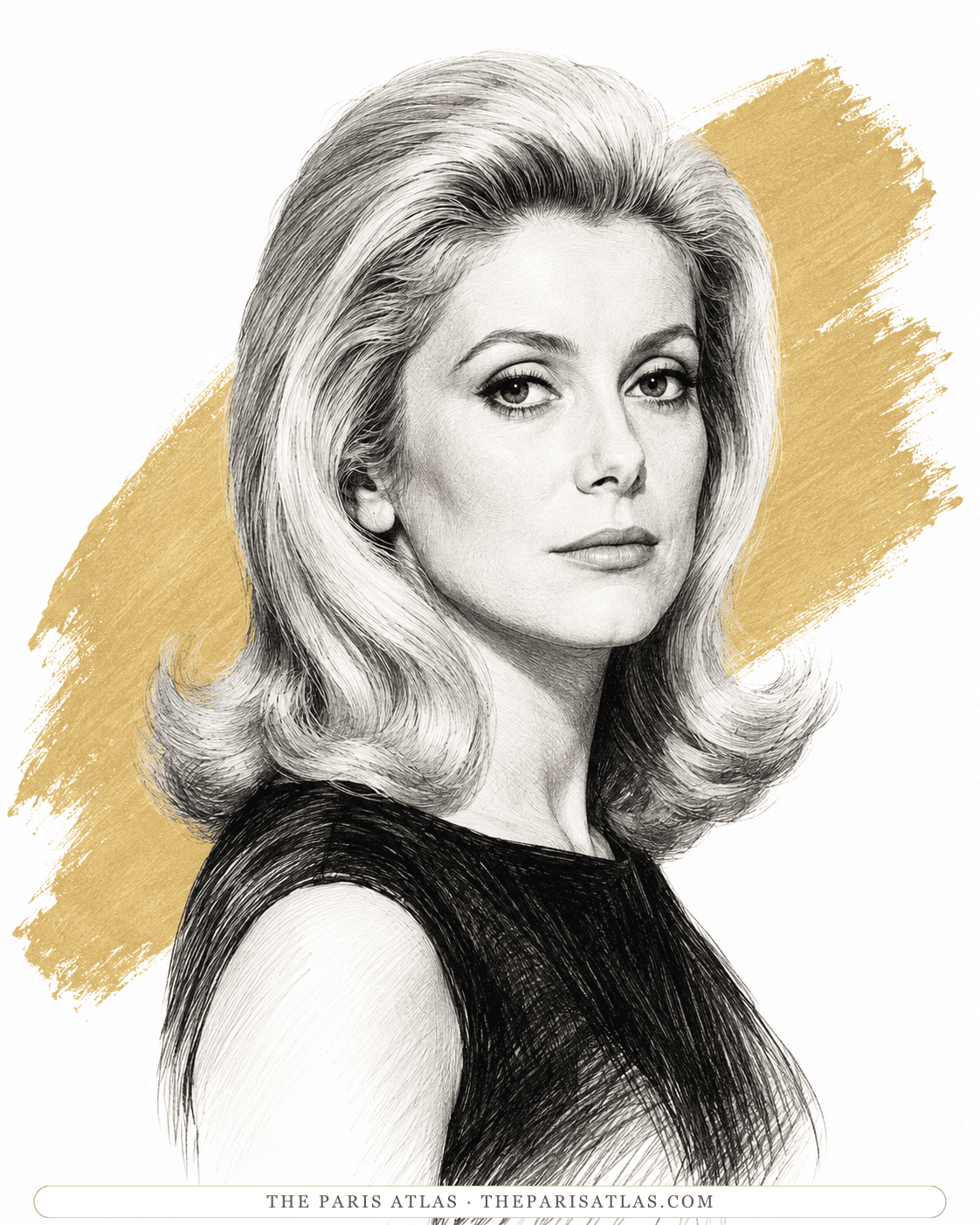
Explore directors from the same movements and circles.
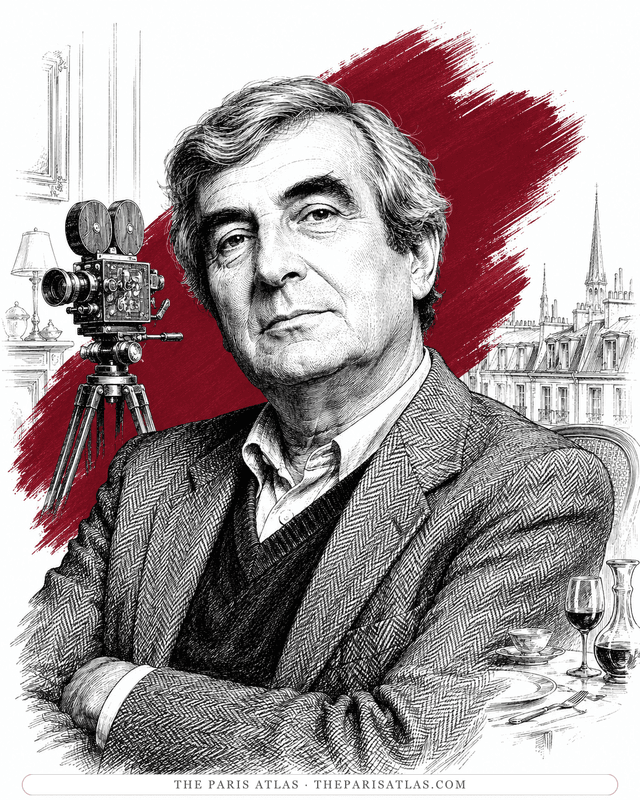
The Cahiers du cinéma critic who reached the screen first: his 1958 debut Le Beau Serge was the first feature from the group that made the New Wave. Over fifty years he became the 'French Hitchcock,' anatomist of the provincial bourgeoisie.
View artist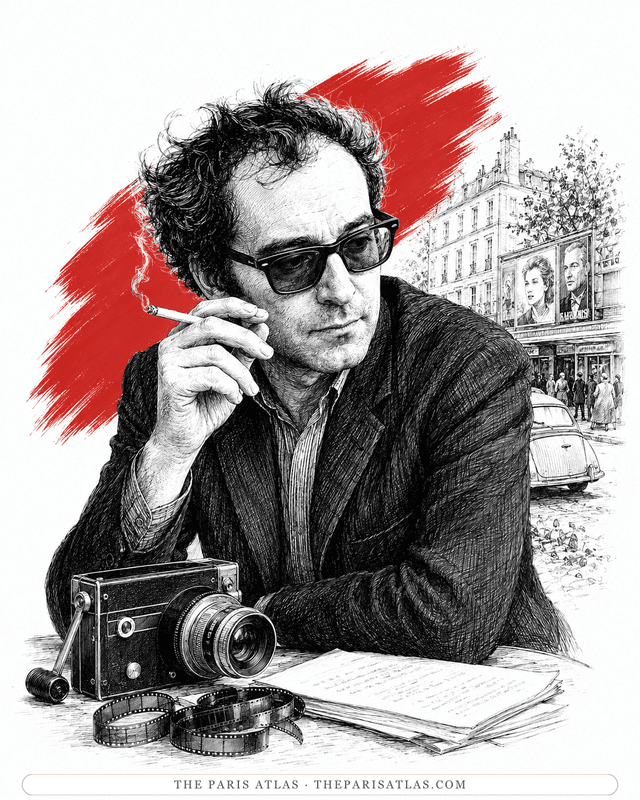
The Cahiers du cinéma critic who became the French New Wave's most recognizable director, then spent six decades taking apart and rebuilding the language of film.
View artist
The Danish-born actor at the center of Jean-Luc Godard's 1960s features — the French New Wave's defining female lead, whose performances carry their own authorship.
View artistThe sources below include collection records, catalogues, scholarly research, and primary materials that informed this page. They document The Umbrellas of Cherbourg, its making, and its place in cultural history.


Web source consulted for documented facts and historical context presented on the The Umbrellas of Cherbourg page.
Web source consulted for documented facts and historical context presented on the The Umbrellas of Cherbourg page.

Official record used to verify names, dates, institutional details, or other factual information on this page.
Official record used to verify names, dates, institutional details, or other factual information on this page.
These references provide the documented foundation for this work's history and interpretation. Claim-level citations remain attached to the specific claims they support.
 Explore more resources