The Paris AtlasCharting the artists, works, and places worth returning to.
  • Filmmaker
· French · 1922–2014

Alain Resnais

French director at the centre of the New Wave's Left Bank group; his 1959 debut feature Hiroshima mon amour, written by Marguerite Duras, made memory and time the material of modern cinema.

Details

Lived
1922–2014
Born
3 June 1922
Birthplace
Vannes, France
Died
1 March 2014 · aged 91
Place of death
Paris, France
Nationality
French
Roles
Filmmaker

About Alain Resnais

Alain Resnais came to the feature film through the documentary. Across the 1950s he made a series of short films on art and history — most lastingly Night and Fog (1956), a thirty-minute confrontation with the Nazi camps that remains one of the defining documentaries on the subject. Editing was his first craft, and it stayed the centre of his work: his films think by cutting between times.

His first feature, Hiroshima mon amour (1959), written by the novelist Marguerite Duras, set a French actress's wartime memory against the atomic destruction of the Japanese city and arrived at Cannes the same season as the Cahiers du cinéma directors' debuts. With Last Year at Marienbad (1961) he pressed further into memory and uncertainty. Resnais belonged to the New Wave's Left Bank wing — older, more literary, and closer to the novel than the Cahiers group around François Truffaut and Jean-Luc Godard — and kept directing into his nineties.

Selected works

Cataloged from the holding institutions' records. Reproductions appear only where the rights are verified.

Cinema

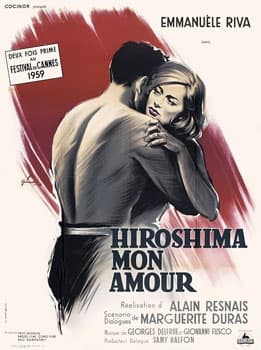
Release poster for Hiroshima mon amour (1959): the title over the intertwined figures of the French actress and the Japanese architect

Archival photograph

Film

Hiroshima mon amour

1959 · 35 mm feature film, black and white

Alain Resnais's first feature, written by the novelist Marguerite Duras, follows a French actress and a Japanese architect through a brief affair in Hiroshima, where she has come to film a picture about peace. Their encounter draws out a wartime memory she has never told: a German lover in Nevers, killed at the Liberation, for which the town shaved her head. Against the destroyed city the film makes memory and forgetting its real subject — and, arriving at Cannes in 1959 alongside the Cahiers directors' debuts, it opened the New Wave's Left Bank wing onto literature and modern time.
Alain Resnais, Hiroshima mon amour, 1959. Image © the rights holder, shown under fair use.

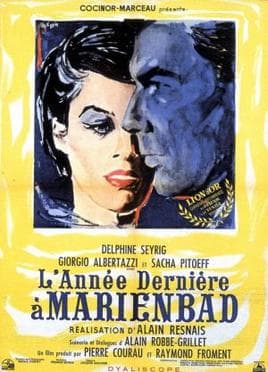
Poster for Last Year at Marienbad (1961): a figure in the baroque hotel's mirrored corridors

Archival photograph

Film

Last Year at Marienbad

1961 · 94-minute feature, black and white — Dyaliscope widescreen

Last Year at Marienbad is Alain Resnais's second feature, written by the nouveau roman novelist Alain Robbe-Grillet. In an enormous baroque hotel, a man tries to persuade a woman that they met the year before — perhaps at Marienbad — began a love affair, and agreed to leave together now. She does not remember, or denies it. The film never confirms whether any of it happened: scenes repeat with changes, the narration contradicts the images, and past, present, and imagination dissolve into one another. With Hiroshima mon amour it is the landmark of the New Wave's Left Bank, and one of the most influential experiments in the history of narrative film.

Alain Resnais, Last Year at Marienbad, 1961. Image © the rights holder, shown under fair use.

People they knew

Documented connections — every one carries its source.

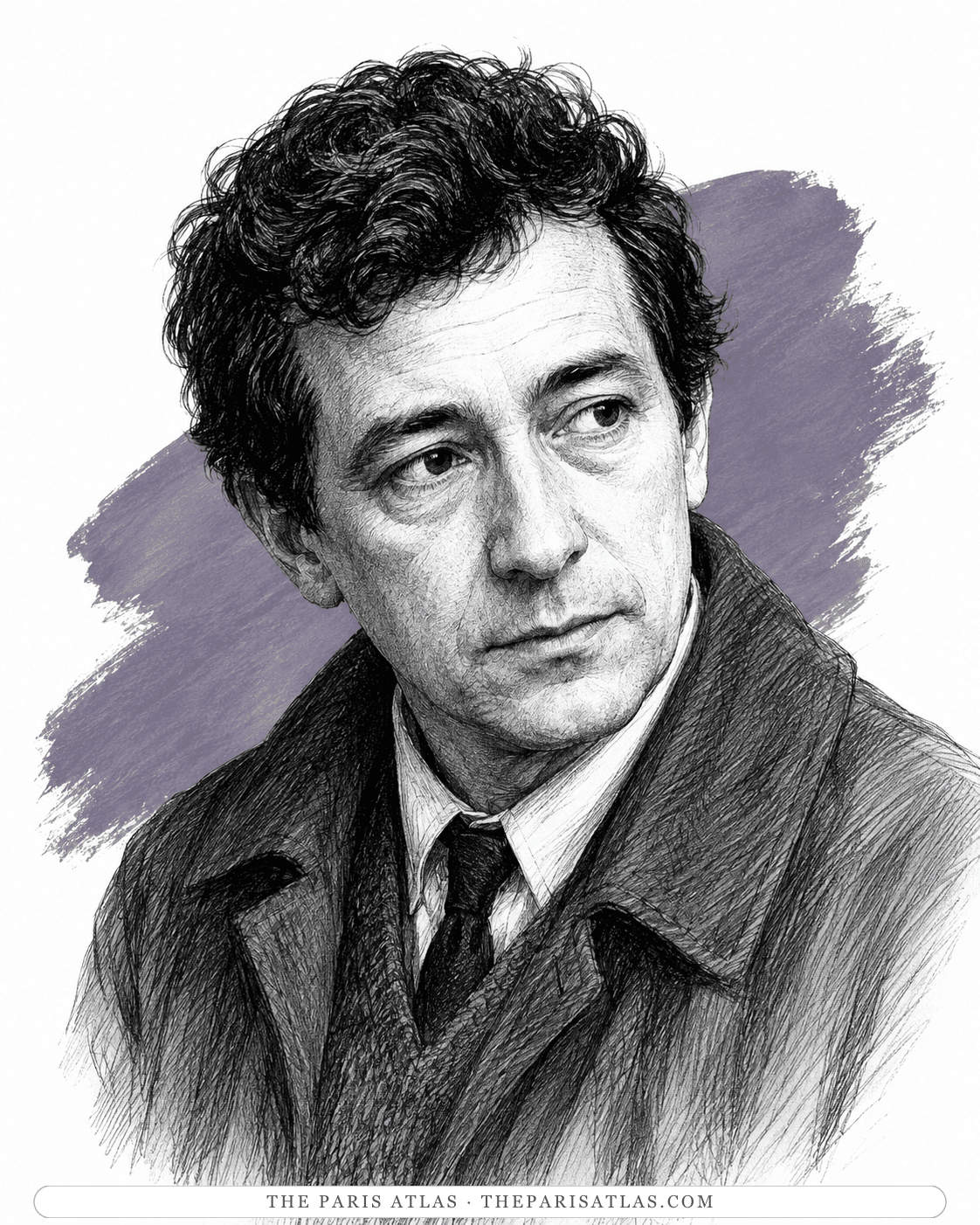
Illustrated portrait of Chris Marker

Chris Marker

  • Filmmaker
  • Photographer

Collaborated with · 1953

Marker and Resnais co-directed the anticolonial short Statues Also Die (Les statues meurent aussi, 1953), an early bond among the New Wave's Left Bank filmmakers.

The Criterion Collection — La Jetée; Encyclopaedia Britannica — New Wave (French film movement)

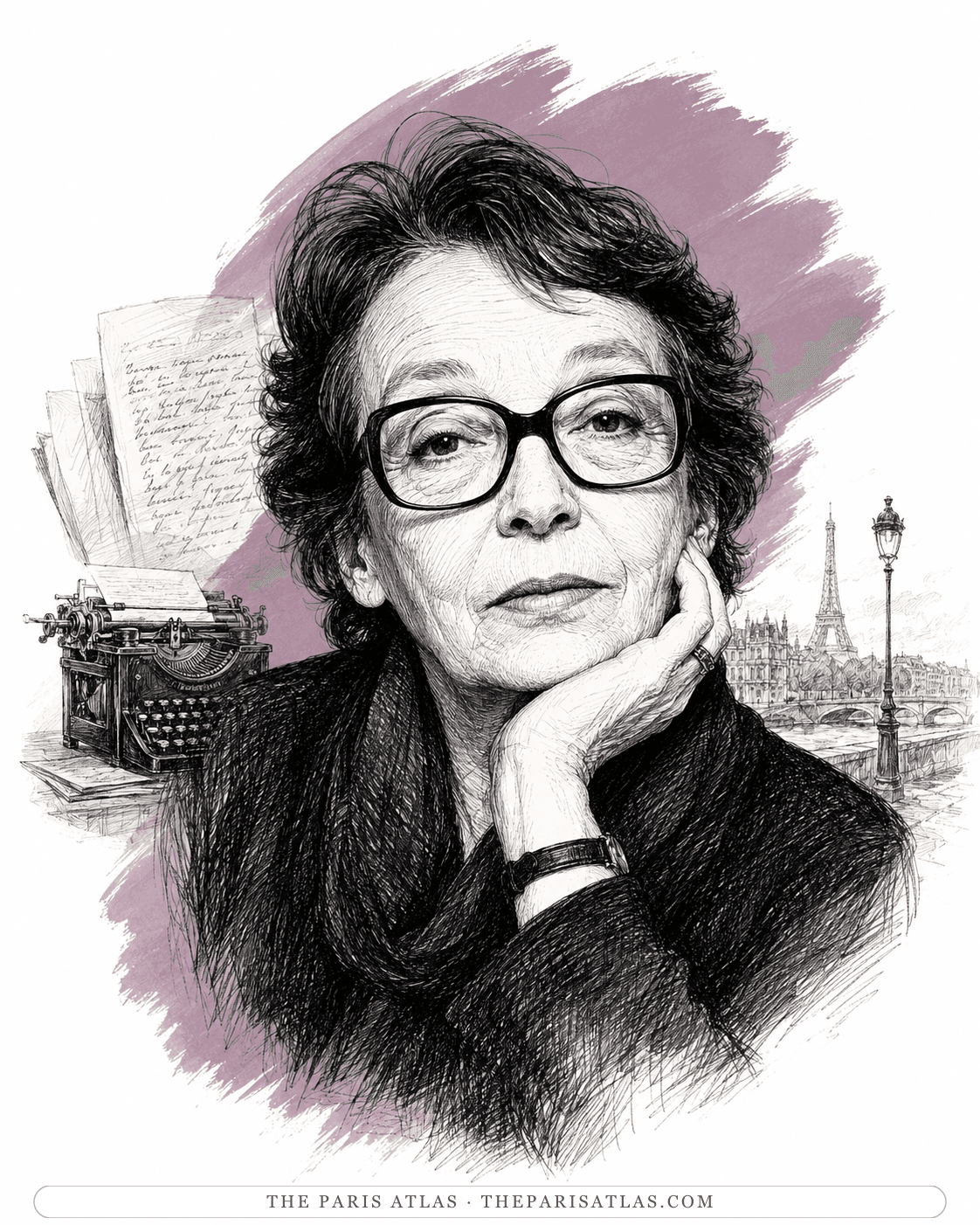
Illustrated portrait of Marguerite Duras

Marguerite Duras

  • Author
  • Filmmaker

Collaborated with · 1958–1959

Resnais asked Duras, then known as a novelist, to write Hiroshima mon amour. The screenplay was nominated for an Academy Award and was published as a book in its own right.

The Criterion Collection — Hiroshima mon amour; Encyclopaedia Britannica — New Wave (French film movement)

Sourced claims

Every connection the graph holds for Alain, with the evidence behind it.

Collaborated with · 1953

Chris Marker

Marker and Resnais co-directed the anticolonial short Statues Also Die (Les statues meurent aussi, 1953), an early bond among the New Wave's Left Bank filmmakers.

The Criterion Collection — La Jetée; Encyclopaedia Britannica — New Wave (French film movement)

Collaborated with · 1958–1959

Marguerite Duras

Resnais asked Duras, then known as a novelist, to write Hiroshima mon amour. The screenplay was nominated for an Academy Award and was published as a book in its own right.

The Criterion Collection — Hiroshima mon amour; Encyclopaedia Britannica — New Wave (French film movement)