The Paris AtlasCharting the artists, works, and places worth returning to.
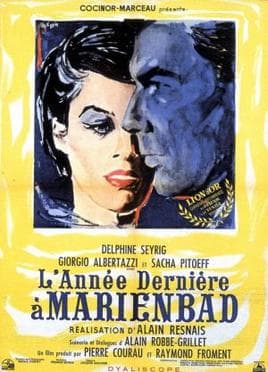
Poster for Last Year at Marienbad (1961): a figure in the baroque hotel's mirrored corridors

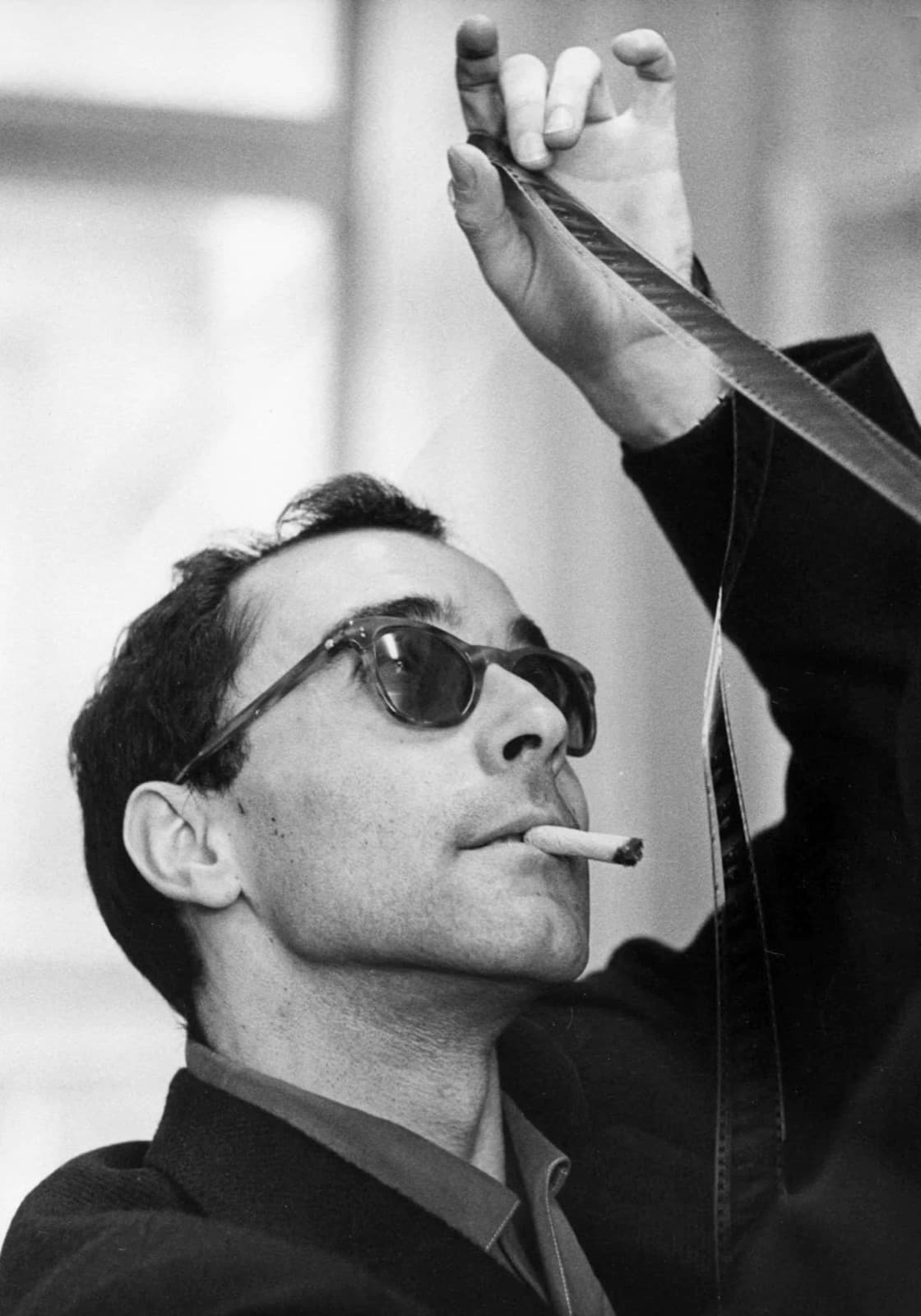
Archival photograph

Film

Last Year at Marienbad

L'Année dernière à Marienbad

by Alain Resnais

Last Year at Marienbad is Alain Resnais's second feature, written by the nouveau roman novelist Alain Robbe-Grillet. In an enormous baroque hotel, a man tries to persuade a woman that they met the year before — perhaps at Marienbad — began a love affair, and agreed to leave together now. She does not remember, or denies it. The film never confirms whether any of it happened: scenes repeat with changes, the narration contradicts the images, and past, present, and imagination dissolve into one another. With Hiroshima mon amour it is the landmark of the New Wave's Left Bank, and one of the most influential experiments in the history of narrative film.

Created
1961
Form
94-minute feature, black and white — Dyaliscope widescreen

The hotel

The film unfolds in a vast, ornate hotel of mirrored corridors, coffered ceilings, and statuary, with a formal garden of geometric hedges outside. A man, identified only as X, repeatedly approaches a woman, A, and insists that they met here — or somewhere like here — the previous year, that they loved each other, and that she promised to go away with him after a year had passed.

A does not remember. A third figure, M, who may be her husband, moves through the rooms and wins, again and again, at a mathematical game of matchsticks. The camera glides down the corridors in long, hypnotic tracking shots, over Francis Seyrig's organ score, as X's voice repeats his account of a past that may not exist.

A story that will not settle

Marienbad supplies no stable reality. The same encounter is played more than once, differently each time; X's narration describes things the images do not show, or contradicts them outright. A possible affair, a possible refusal, a possible violence, a possible death are all offered and withdrawn.

The film refuses to say whether the affair happened, whether last year existed, or whether the two leave together at the end. The uncertainty is not a puzzle to be solved but the subject itself — memory and persuasion turned into the material of the film.

Resnais and Robbe-Grillet

The screenplay is by Alain Robbe-Grillet, a leading novelist of the nouveau roman, who wrote a complete shooting script that Resnais then filmed largely on his own terms — the two worked, by their own account, almost separately. The collaboration joined two avant-gardes, the new novel and the new cinema, and Robbe-Grillet's script was nominated for an Academy Award.

The film is the second pillar of Resnais's Left Bank cinema, after Hiroshima mon amour. Both make memory and time their real subject; Marienbad pushes furthest, abandoning even the certainty that its events took place.

Influence

Marienbad won the Golden Lion at Venice in 1961 and became one of the most argued-over films ever made — admired as a masterpiece and dismissed as an empty exercise, often by the same critics. Its dissolving of time and its unreliable narration shaped decades of art cinema, and are frequently cited behind films from The Shining to Inland Empire.

Its images reached beyond the cinema too: Delphine Seyrig's Chanel gowns and the film's cool geometry have been revisited by the fashion house that made them. Few films of the New Wave have travelled further from their moment.

Timeline

  1. 1960

    Resnais films for about ten weeks in the baroque palaces around Munich, from Robbe-Grillet's shooting script.

  2. August 1961

    Premieres at the Venice Film Festival, where it wins the Golden Lion.

  3. September 1961

    Released in France — Resnais's second feature.

  4. 1963

    Robbe-Grillet is nominated for the Academy Award for Best Original Screenplay.

  5. 2018–2019

    A 4K restoration returns the film to cinemas; it remains a fixture of the art-cinema canon.

Frequently asked questions

What is Last Year at Marienbad about?

In a vast baroque hotel, a man tries to convince a woman that they met the previous year, began a love affair, and agreed to leave together now. She does not remember, or denies it. The film never confirms whether any of it happened. Alain Resnais directed it in 1961 from a screenplay by the novelist Alain Robbe-Grillet.

What actually happens in the film?

Deliberately, that cannot be answered. Scenes repeat with variations, the narration contradicts the images, and past, present, and imagination merge. Whether the affair occurred, whether 'last year' existed, and whether the couple leaves together are all left unresolved — the uncertainty is the point.

Who wrote Last Year at Marienbad?

Alain Robbe-Grillet, a leading novelist of the nouveau roman, wrote the full screenplay; Alain Resnais directed. The two worked largely separately, and Robbe-Grillet's script was nominated for an Academy Award.

Is it a French New Wave film?

Yes — it is a landmark of the movement's Left Bank wing, the group around Resnais, Agnès Varda, and Chris Marker. With Hiroshima mon amour it defines Resnais's cinema of memory and time, and it pushes furthest into narrative uncertainty.

Why is Last Year at Marienbad so famous?

It is one of the most influential and most debated films ever made — praised as a masterpiece and dismissed as an empty exercise. Its dissolving of time and unreliable narration shaped decades of art cinema, and it won the Golden Lion at Venice in 1961.

Related videos

Official uploads only: trailers, performances, and works this one inspired.

Last Year at Marienbad — restoration trailer (Studiocanal)

The rights holder's trailer for the restored film's re-release.

In the atlas

What the graph records about this work — every claim carries its citation.

Associated with · 1961

The French New Wave

A landmark of the movement's Left Bank wing: Resnais's second feature, written by the nouveau roman novelist Alain Robbe-Grillet, pushes furthest into memory, time, and narrative uncertainty, and won the Golden Lion at Venice.
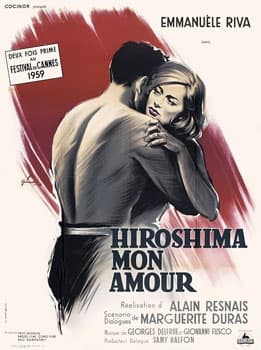

The Criterion Collection — Last Year at Marienbad; Encyclopaedia Britannica — New Wave (French film movement)

More by Alain Resnais

