The Paris AtlasCharting the artists, works, and places worth returning to.
  • Fashion designer
  • Illustrator
  • Collector
· French · 1936–2008

Yves Saint Laurent

Couturier who was handed the house of Christian Dior at twenty-one when Dior died in 1957, opened his own house on 4 December 1961 with Pierre Bergé, and over the next forty years put women into the tuxedo, the trouser suit and the trench coat. His last workrooms, at 5 avenue Marceau, are now the Musée Yves Saint Laurent Paris.

Details

Lived
1936–2008
Born
1 August 1936
Birthplace
Oran, Algeria
Birth name
Yves Mathieu-Saint-Laurent
Died
1 June 2008 · aged 71
Place of death
Paris
Nationality
French
Profession
Couturier
Major works
The Trapeze line for Dior (1958), the Mondrian dresses (1965), Le Smoking (1966), SAINT LAURENT rive gauche (1966)
Partner
Pierre Bergé · 1958–2008
Roles
Fashion designerIllustratorCollector

About Yves Saint Laurent

French couturier who inherited Christian Dior's house at twenty-one, opened his own at twenty-five, and spent forty years cutting women's clothes from men's wardrobes

Yves Saint Laurent came to Paris at eighteen from Oran, a port on the coast of French Algeria, with a folder of drawings and a prize from a wool-industry design competition. Michel de Brunhoff, the editor of French Vogue, looked at about fifty of the sketches and sent him round to Christian Dior at 30 avenue Montaigne in June 1955; Dior hired him into the studio that day. When Dior died of a heart attack in October 1957, the house — 1,400 employees, and, by the reckoning of the Musée Yves Saint Laurent Paris, the museum now devoted to his work, close to half of France's couture exports — was handed to an assistant of twenty-one. His first collection for it, the loose Trapeze line of 30 January 1958, got a standing ovation and made him famous overnight.

It did not last: called up for military service in September 1960, hospitalised for depression, and then replaced at Dior, he started again with Pierre Bergé, the man who was his partner in life and business for the next fifty years. Their house opened on 4 December 1961. What followed is most of the modern woman's wardrobe — the 1965 dresses built from Piet Mondrian's grids, the 1966 tuxedo he called simply le smoking, the trouser suit, the safari jacket, the trench coat — and, in September 1966, a shop on the rue de Tournon that sold ready-made clothes designed as their own collection rather than as cheap copies of couture. He retired on 7 January 2002 and died in Paris on 1 June 2008.

Oran: a cardboard theatre and eleven paper dolls

He was born Yves Mathieu-Saint-Laurent on 1 August 1936 at the Jarsaillon clinic in Oran, in what was then French Algeria, the eldest child of Charles, an insurance manager who also owned a chain of cinemas, and Lucienne. Two sisters followed, Michèle in 1942 and Brigitte in 1945; the family lived at 11 rue Stora in the Plateau Saint-Michel district and spent summers at Trouville on the Normandy coast. At fourteen he built L'Illustre Théâtre — a wooden crate fitted out as a stage, with cardboard characters dressed in scraps cut from his mother's clothes — and performed with it for his sisters and cousins.

Between 1953 and 1955 he made eleven paper dolls and gave them more than five hundred garments and accessories, modelled on the mannequins — the fashion models — he followed in the fashion magazines. The drawing turned into a career at seventeen: in 1953 he took third prize in the dress category of a Paris competition run by the International Wool Secretariat, and the following year first and third prizes in the same category. In the autumn of 1954 he moved to Paris to study at the school of the Chambre Syndicale de la Couture, the trade body that trains and regulates the couture houses, and Michel de Brunhoff of French Vogue took up his case.

The youngest couturier in the world

De Brunhoff arranged the meeting at 30 avenue Montaigne in June 1955, and Christian Dior hired the nineteen-year-old into his studio immediately. Dior said of him afterwards that he was 'young, but an immense talent', and that he considered him the father of thirty-four of the 180 designs in his most recent collection. On 24 October 1957 Dior died in Italy, and on 15 November the house named Saint Laurent his successor: at twenty-one, having never run anything, he was running a business of 1,400 people that the Musée Yves Saint Laurent describes as accounting for nearly half of France's exports of haute couture — made-to-measure fashion.

His first collection was shown on 30 January 1958. Where Dior's clothes had gripped the waist, the Trapeze line hung from the shoulders and widened to the hem, so that the body vanished under it — less fabric, a lighter build. The room stood and applauded, and the press called him the little prince of fashion. Six collections followed in three years; the last of them, all dark tones and leather, divided the buyers. On 1 September 1960 he was conscripted into the French army for the war in Algeria — France's war against Algerian independence — broke down within weeks, and was hospitalised at the Val-de-Grâce military hospital in Paris; while he was there, the house of Dior replaced him with the designer Marc Bohan. Pierre Bergé, whom he had met in 1958, proposed that they open a house of their own.

4 December 1961: a house of his own

Bergé sold his apartment and found the rest of the money in Atlanta: J. Mack Robinson, an American businessman, became the first American to invest in a Paris couture house, and stayed anonymous for two years. The house opened on 4 December 1961 in borrowed premises — the former studios of the couture house Manguin at 11 rue Jean-Goujon — while the permanent address at 30 bis rue Spontini, in the 16th arrondissement, was fitted out. The first garment, labelled 00001, went to Madame Patricia Lopez-Willshaw. The first collection was shown on 29 January 1962.

1965 and 1966: Mondrian, the tuxedo, and the rue de Tournon

His mother had given him a Christmas present in the 1950s: the art critic Michel Seuphor's 1956 book on Piet Mondrian, the Dutch painter of the black-lined grids filled with red, yellow and blue. On 6 August 1965 Saint Laurent showed an autumn–winter collection of 106 designs, twenty-six of them dresses that reproduced those grids in cloth. They were collarless and sleeveless, and the trick was in the construction: blocks of coloured wool jersey inlaid and joined from the inside, so that no seam shows and the black lines are the joins themselves. The newspaper Combat called it a resounding success the next morning; the weekly Candide used the word revolution a week later. The dresses were copied everywhere, especially in the United States, and they did as much for the painter as for the couturier — Mondrian's first Paris retrospective followed in 1969.

In the autumn–winter collection of 1966 he showed the garment that became his signature: a tuxedo for women, cut to the rules of the men's original and fitted to a woman's body. In French a dinner jacket is un smoking, and the piece has been called Le Smoking ever since. His couture clients wanted nothing to do with it — exactly one was sold — but the ready-to-wear version found younger customers, and he put a version of it in every collection he designed until he retired in 2002. His own explanation was that it was not fashion at all: 'For a woman, the tuxedo is an indispensable garment in which she will always feel in style, for it is a stylish garment and not a fashionable garment. Fashions fade, style is eternal.'

On 26 September 1966 he opened a shop at 21 rue de Tournon, in the 6th arrondissement near the Luxembourg gardens, and called the line SAINT LAURENT rive gauche — 'left bank', after the side of the Seine it stood on and the young, unstuffy Paris it meant. The clothes were ready-made and sold off the rail, but they were designed as a collection in their own right rather than as discounted couture, which was new. 'I had had enough of making dresses for jaded billionaires,' he said. New York followed in 1968, London and a men's shop in 1969.

5 avenue Marceau, and the farewell

In 1974 the house moved to 5 avenue Marceau, a hôtel particulier — a private mansion — built under the Second Empire, the reign of Napoleon III in the 1850s and 1860s, a few streets from the Champs-Élysées. Saint Laurent worked upstairs with six or seven collaborators; nearly two hundred tailors and seamstresses made the clothes in the ateliers; downstairs, in the salons, each client was received by her own saleswoman. He designed there for close to thirty years.

On 7 January 2002 he announced at a press conference that he was closing the couture house. 'I am proud that women all over the world wear pantsuits, tuxedoes, pea coats, and trench coats,' he said. 'I tell myself that I have created the contemporary woman's wardrobe.' A retrospective opened at the Centre Pompidou, Paris's modern-art centre, on 22 January 2002. Two years later, after the building was renovated, the Fondation Pierre Bergé–Yves Saint Laurent opened in the same rooms at 5 avenue Marceau, and since October 2017 the address has been the Musée Yves Saint Laurent Paris — the studio, the archive of drawings, and the clothes, in the house where they were made.

He died in Paris on 1 June 2008, at seventy-one. The funeral was held at the church of Saint-Roch on the rue Saint-Honoré, with President Nicolas Sarkozy among the mourners and screens outside for the crowd that could not get in. Pierre Bergé, his companion of over fifty years, spoke: the ashes, he said, would join the resting place waiting in the gardens at Marrakesh in Morocco, the city where he and Saint Laurent had long kept a home.

Life events

  1. 1936

    Born on 1 August at the Jarsaillon clinic in Oran, French Algeria, the eldest child of Charles and Lucienne Mathieu-Saint-Laurent.

    Yves Saint Laurent's Early Years — Musée Yves Saint Laurent Paris

  2. 1953–1954

    Wins third prize, then first and third prizes, in the dress category of the International Wool Secretariat competition in Paris, and moves to Paris in the autumn of 1954 to study at the school of the Chambre Syndicale de la Couture.

    Yves Saint Laurent's Early Years — Musée Yves Saint Laurent Paris

  3. 1955

    Michel de Brunhoff of French Vogue sends him to Christian Dior at 30 avenue Montaigne in June with about fifty sketches; Dior hires him into the studio the same day.

    June 1955: Debut at Dior — Musée Yves Saint Laurent Paris; The Dior Years — Musée Yves Saint Laurent Paris

  4. 1957

    Christian Dior dies on 24 October; on 15 November the house names Saint Laurent, aged twenty-one, its designer — the youngest couturier in the world.

    Interactive Biographies (dated chronology) — Musée Yves Saint Laurent Paris; The Dior Years — Musée Yves Saint Laurent Paris

  5. 1958

    Shows the Trapeze line for Dior on 30 January — a silhouette that hangs from the shoulders — to a standing ovation.

    The Dior Years — Musée Yves Saint Laurent Paris

  6. 1960

    Conscripted on 1 September, hospitalised at the Val-de-Grâce, and replaced at Dior by Marc Bohan; Pierre Bergé proposes founding a house of their own.

    The Dior Years — Musée Yves Saint Laurent Paris

  7. 1961

    The Yves Saint Laurent couture house opens on 4 December, funded by Bergé and the Atlanta investor J. Mack Robinson, in temporary premises at 11 rue Jean-Goujon while 30 bis rue Spontini is prepared. Gown 00001 goes to Madame Patricia Lopez-Willshaw.

    4 December 1961: Creation of the Yves Saint Laurent Haute Couture House — Musée Yves Saint Laurent Paris

  8. 1962

    Presents the first collection under his own name on 29 January.

    Interactive Biographies (dated chronology) — Musée Yves Saint Laurent Paris

  9. 1965

    Shows the autumn–winter collection on 6 August: twenty-six of its 106 designs are dresses built from Piet Mondrian's grids in inlaid wool jersey with no visible seams.

    The Mondrian Revolution — Musée Yves Saint Laurent Paris

  10. 1966

    Introduces Le Smoking, a tuxedo cut for women, in the autumn–winter couture collection — only one is sold — and opens the first SAINT LAURENT rive gauche ready-to-wear shop at 21 rue de Tournon on 26 September. New York follows in 1968, London and menswear in 1969.

    1966: First Tuxedo — Musée Yves Saint Laurent Paris; 1966: SAINT LAURENT rive gauche — Musée Yves Saint Laurent Paris

  11. 1974

    The house moves to 5 avenue Marceau, a Second Empire mansion where a studio of six or seven works above ateliers of nearly two hundred tailors and seamstresses.

    1974: The Move to 5 avenue Marceau — Musée Yves Saint Laurent Paris

  12. 2002

    Announces his retirement and the closing of the couture house on 7 January; a retrospective opens at the Centre Pompidou on 22 January.

    7 January 2002: The Farewell — Musée Yves Saint Laurent Paris

  13. 2004–2017

    The Fondation Pierre Bergé–Yves Saint Laurent opens at 5 avenue Marceau two years after the house closed; since October 2017 the building has housed the Musée Yves Saint Laurent Paris.

    1974: The Move to 5 avenue Marceau — Musée Yves Saint Laurent Paris

  14. 2008

    Dies in Paris on 1 June, aged seventy-one; the funeral is held at Saint-Roch, and his ashes go to the garden at Marrakesh.

    1 June 2008: Death of Yves Saint Laurent — Musée Yves Saint Laurent Paris

People they knew

Documented connections — every one carries its source.

Christian Dior

  • Fashion designer
  • Art dealer
  • Illustrator

Mentored by · 1955–1957

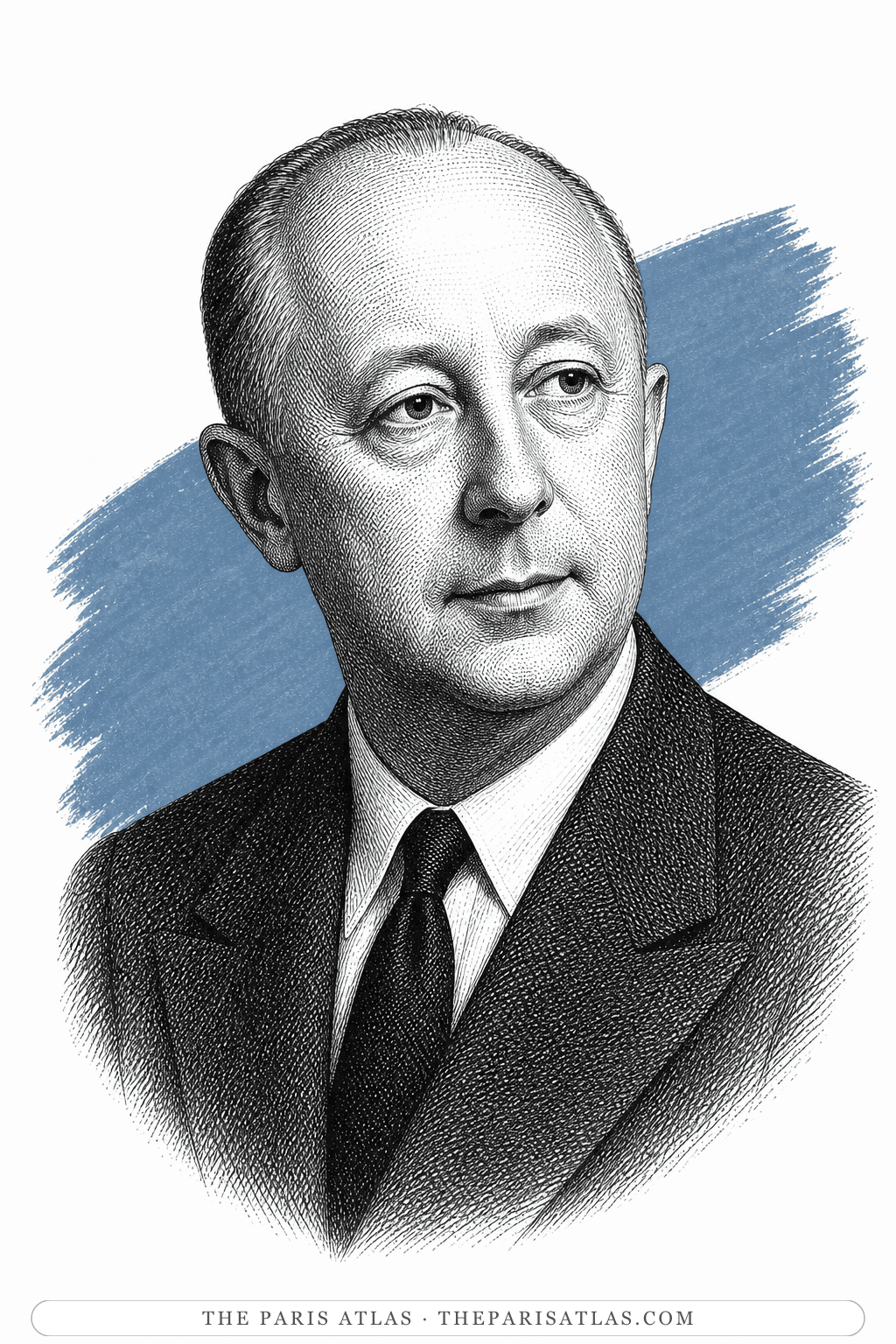
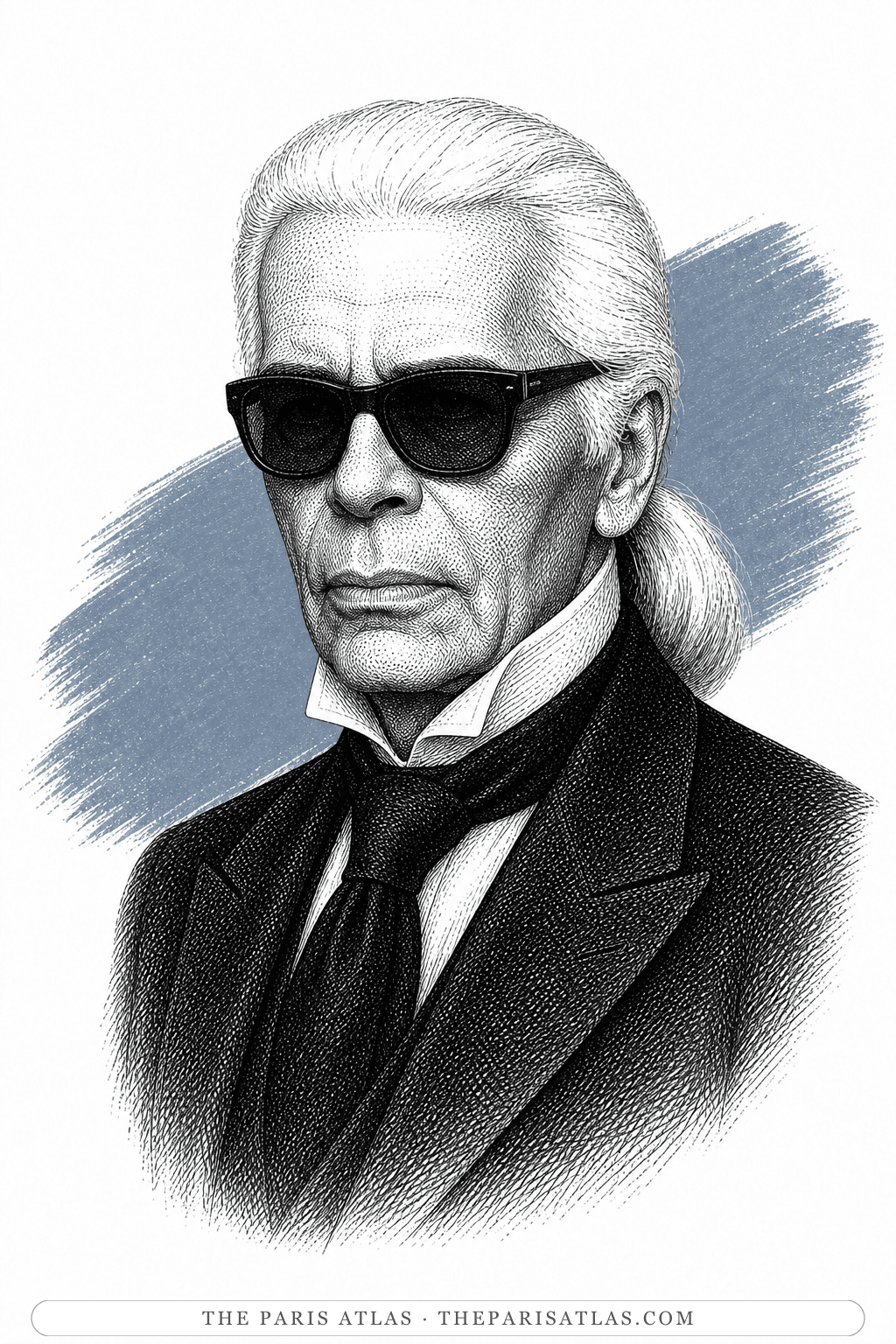
Dior hired Saint Laurent, then nineteen, into the studio at 30 avenue Montaigne in June 1955 after Michel de Brunhoff of French Vogue sent him round with about fifty sketches, and said of him that he was 'young, but an immense talent' and the father of thirty-four of the 180 designs in his last collection. When Dior died on 24 October 1957 the house named Saint Laurent his successor, at twenty-one, by Dior's own wish.
The Dior Years — Musée Yves Saint Laurent Paris; History — La Galerie Dior

Who they drew from

Influence running inward — the writers and artists whose work fed theirs. Admiration is not acquaintance; these edges claim neither a meeting nor a friendship.

Coco Chanel

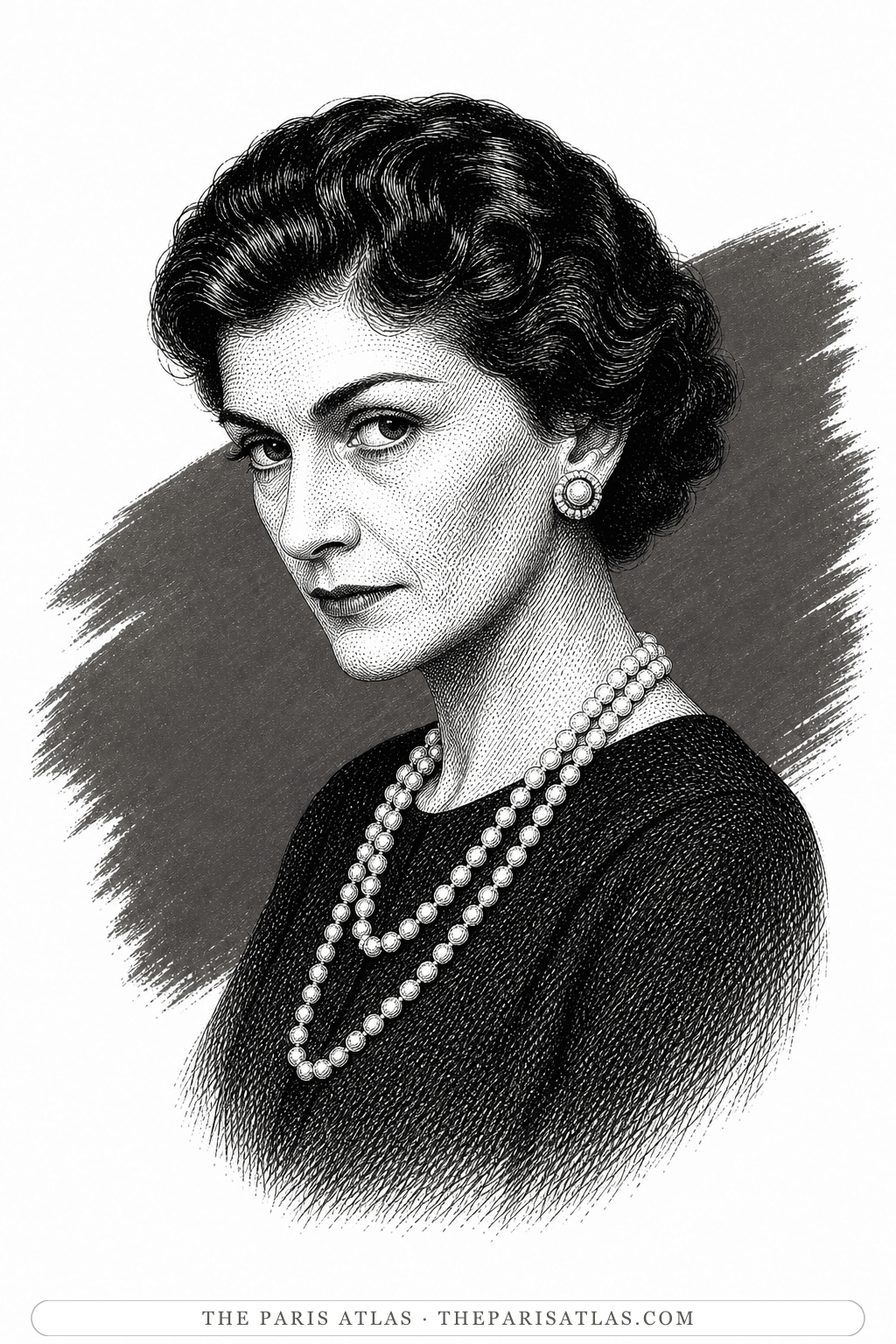
The Musée Yves Saint Laurent Paris records that Chanel named Saint Laurent as the couturier she expected to succeed her — 'since someone will have to succeed me one day' — and sets the two careers on one line, both aimed at clothes a woman can move in. Pierre Bergé's summary is the museum's: 'Chanel gave women freedom. Yves Saint Laurent gave them power.'

1971: Death of Gabrielle Chanel — Musée Yves Saint Laurent Paris

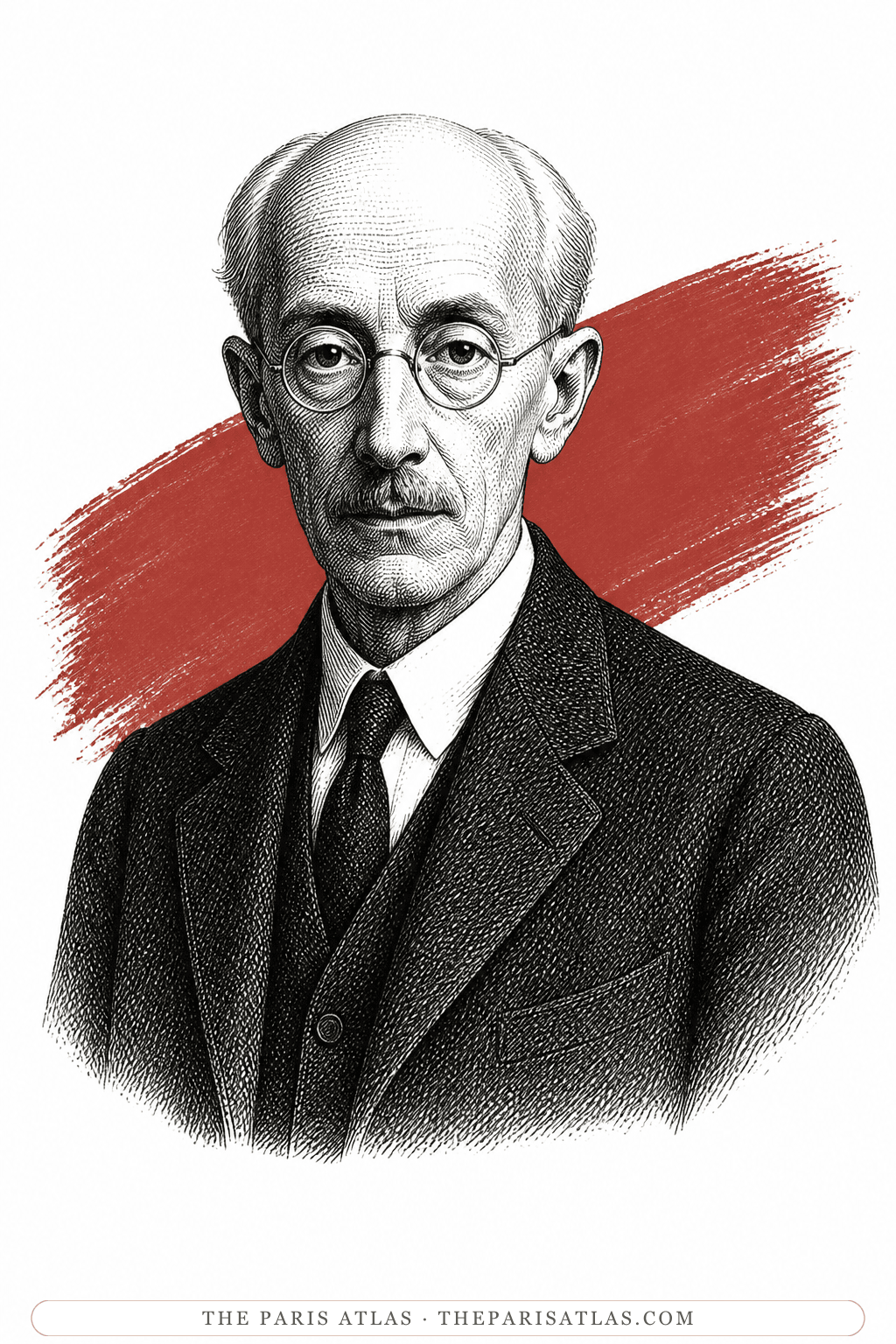
Illustrated portrait of Piet Mondrian

Piet Mondrian

Saint Laurent met Mondrian's work in Michel Seuphor's 1956 monograph, a Christmas present from his mother, and on 6 August 1965 showed an autumn–winter collection of 106 designs in which twenty-six dresses reproduced the painter's grids in wool jersey — colour blocks inlaid and joined from inside so that the black lines are the seams. The influence ran back the other way commercially: the dresses were copied worldwide and carried Mondrian's name far outside art circles before his first Paris retrospective in 1969. The painter died in 1944 and the two never met.

The Mondrian Revolution — Musée Yves Saint Laurent Paris

Questions about Yves Saint Laurent

Who was Yves Saint Laurent?

A French couturier, born in Oran in French Algeria in 1936, who was hired by Christian Dior at nineteen and took over Dior's house at twenty-one when Dior died in 1957. In 1961 he founded his own house in Paris with Pierre Bergé, and over the next four decades produced much of what a modern woman's wardrobe is made of: the tuxedo, the trouser suit, the safari jacket, the trench coat. He retired in 2002 and died in 2008.

How old was Yves Saint Laurent when he took over Dior?

Twenty-one. Christian Dior died on 24 October 1957 and the house named Saint Laurent its designer on 15 November — an assistant of two years put in charge of 1,400 employees and, by the Musée Yves Saint Laurent's account, close to half of France's haute couture exports. His debut collection, the Trapeze line, was shown on 30 January 1958.

What was the Trapeze line?

Saint Laurent's first collection for Dior, shown on 30 January 1958. Christian Dior's clothes had been built around a tightly held waist; the Trapeze dress hung from the shoulders and flared to the hem, using less fabric and letting the body move freely underneath. It got a standing ovation and the press named him the little prince of fashion.

What are the Mondrian dresses?

Twenty-six dresses in the autumn–winter collection Saint Laurent showed on 6 August 1965, which reproduced Piet Mondrian's paintings — black lines around blocks of red, yellow and blue — as clothing. They are collarless, sleeveless wool jersey shifts, and the coloured blocks are inlaid and joined from the inside, so the black lines are the seams and nothing shows on the surface. He had discovered Mondrian in a book his mother gave him for Christmas. They were copied worldwide and helped make the painter famous outside art circles.

What is Le Smoking?

The tuxedo Saint Laurent cut for women in his autumn–winter 1966 couture collection — un smoking is French for a dinner jacket. It used the codes of men's evening dress on a woman's body, and his couture clients rejected it: only one was sold. The cheaper ready-to-wear version sold to younger customers, and he included a version in every collection until he retired in 2002, on the argument that a tuxedo is style rather than fashion, and style does not fade.

What was SAINT LAURENT rive gauche?

His ready-to-wear line, launched with a shop at 21 rue de Tournon on Paris's left bank on 26 September 1966 — 'rive gauche' means left bank. The point was that the clothes were designed as their own collection, made with the same care as couture prototypes rather than sold as discounted copies of the couture line, and priced for women who could never buy couture. 'I had had enough of making dresses for jaded billionaires,' he said. Shops followed in New York in 1968 and London in 1969.

Can you visit Yves Saint Laurent's Paris studio?

Yes. The couture house moved in 1974 to 5 avenue Marceau in the 16th arrondissement, a private mansion of the Second Empire, and worked there until it closed in 2002. The Fondation Pierre Bergé–Yves Saint Laurent opened in the renovated building two years later, and since October 2017 it has been the Musée Yves Saint Laurent Paris, showing the studio itself along with clothes, drawings and the house archive.

How did Yves Saint Laurent die, and where is he buried?

He died in Paris on 1 June 2008 at the age of seventy-one. The funeral was held at the church of Saint-Roch on the rue Saint-Honoré, attended by President Nicolas Sarkozy, with screens set up outside for the crowd. Pierre Bergé, his partner for more than fifty years, gave the address and said that his ashes would join the resting place prepared for him in the gardens at Marrakesh in Morocco, where the two men had long kept a home.

Sourced claims

Every connection the graph holds for Yves, with the evidence behind it.

Mentored by · 1955–1957

Christian Dior

Dior hired Saint Laurent, then nineteen, into the studio at 30 avenue Montaigne in June 1955 after Michel de Brunhoff of French Vogue sent him round with about fifty sketches, and said of him that he was 'young, but an immense talent' and the father of thirty-four of the 180 designs in his last collection. When Dior died on 24 October 1957 the house named Saint Laurent his successor, at twenty-one, by Dior's own wish.
The Dior Years — Musée Yves Saint Laurent Paris; History — La Galerie Dior

Influenced by

Coco Chanel

The Musée Yves Saint Laurent Paris records that Chanel named Saint Laurent as the couturier she expected to succeed her — 'since someone will have to succeed me one day' — and sets the two careers on one line, both aimed at clothes a woman can move in. Pierre Bergé's summary is the museum's: 'Chanel gave women freedom. Yves Saint Laurent gave them power.'

1971: Death of Gabrielle Chanel — Musée Yves Saint Laurent Paris

Influenced by · 1965

Piet Mondrian

Saint Laurent met Mondrian's work in Michel Seuphor's 1956 monograph, a Christmas present from his mother, and on 6 August 1965 showed an autumn–winter collection of 106 designs in which twenty-six dresses reproduced the painter's grids in wool jersey — colour blocks inlaid and joined from inside so that the black lines are the seams. The influence ran back the other way commercially: the dresses were copied worldwide and carried Mondrian's name far outside art circles before his first Paris retrospective in 1969. The painter died in 1944 and the two never met.

The Mondrian Revolution — Musée Yves Saint Laurent Paris

References

References

The sources below include biographies, scholarly essays, interviews, and primary materials that informed this page. They reflect both the historical record and ongoing critical conversations about Yves Saint Laurent and their work.

  1. 1Interactive Biographies (dated chronology) — Musée Yves Saint Laurent Paris

    Musée Yves Saint Laurent Paris
    View source
  2. 2Yves Saint Laurent's Early Years — Musée Yves Saint Laurent Paris

    Musée Yves Saint Laurent Paris
    View source
  3. 3June 1955: Debut at Dior — Musée Yves Saint Laurent Paris

    Musée Yves Saint Laurent Paris
    View source
  4. 4The Dior Years — Musée Yves Saint Laurent Paris

    Musée Yves Saint Laurent Paris
    View source
  5. 54 December 1961: Creation of the Yves Saint Laurent Haute Couture House — Musée Yves Saint Laurent Paris

    Musée Yves Saint Laurent Paris
    View source
  6. 6The Mondrian Revolution — Musée Yves Saint Laurent Paris

    Musée Yves Saint Laurent Paris
    View source
  1. 71966: First Tuxedo — Musée Yves Saint Laurent Paris

    Musée Yves Saint Laurent Paris
    View source
  2. 81966: SAINT LAURENT rive gauche — Musée Yves Saint Laurent Paris

    Musée Yves Saint Laurent Paris
    View source
  3. 91974: The Move to 5 avenue Marceau — Musée Yves Saint Laurent Paris

    Musée Yves Saint Laurent Paris
    View source
  4. 107 January 2002: The Farewell — Musée Yves Saint Laurent Paris

    Musée Yves Saint Laurent Paris
    View source
  5. 111 June 2008: Death of Yves Saint Laurent — Musée Yves Saint Laurent Paris

    Musée Yves Saint Laurent Paris
    View source
  6. 12Yves Saint Laurent

    Éditions Grasset, 1993
i
Why these sources are here

These references anchor the page in the documented record and in the scholarly conversations around Yves Saint Laurent. Every claim on this page traces back to one or more of the works listed here.

Explore more resources