The Paris AtlasCharting the artists, works, and places worth returning to.
  • Illustrator
  • Photographer
  • Publisher
· German · 1933–2019

Karl Lagerfeld

German couturier — a designer of made-to-measure clothes — who arrived in Paris as a teenager and won a wool-industry design prize in 1954 alongside Yves Saint Laurent, the designer who would become his lifelong rival. From 1983 he spent thirty-six years remaking Chanel, the Paris house whose founder had died twelve years before he took it on, while also designing for the Roman house of Fendi, running his own label, photographing his own advertising, and keeping a bookshop at 7 rue de Lille.

Details

Lived
1933–2019
Born
10 September 1933
Birthplace
Hamburg, Germany
Died
19 February 2019 · aged 85
Place of death
Neuilly-sur-Seine, France
Nationality
German
Profession
Couturier, photographer and bookseller
Major works
Thirty-six years of collections for Chanel, fifty-four for Fendi, the Chloé collections of the 1970s, and the Chanel advertising campaigns he photographed himself
Roles
IllustratorPhotographerPublisher

About Karl Lagerfeld

Karl Lagerfeld designed clothes in Paris for more than sixty years, most famously for Chanel, the couture house at 31 rue Cambon founded by Gabrielle 'Coco' Chanel, who had been dead twelve years when he took it over in 1983. What he inherited was a name with a museum's reputation and almost no business in clothes. What he did with it — cutting up the house's inherited signatures and putting them back together, several collections a year, for thirty-six years — became the standard model for how a fashion house survives its founder. Those signatures were a short, fixed list: the braided tweed jacket, the quilted handbag on a chain, the interlocking double-C monogram, the white camellia flower worn as a brooch, and rope after rope of pearls.

He was born in Hamburg in 1933 and came to Paris as a teenager. In 1954 he was one of the winners of a design competition run by the International Wool Secretariat, the wool industry's promotional body; another was Yves Saint Laurent, then eighteen and newly arrived from Algeria. The two would spend the next thirty years as the twin poles of Paris fashion. Lagerfeld also photographed his own advertising campaigns, published art and photography books, drew constantly, and in 1999 opened a bookshop called 7L on the rue de Lille in the 7th arrondissement, where his own library and his own imprint still are. He died at the American Hospital of Paris in Neuilly-sur-Seine on 19 February 2019, and four months later the fashion industry filled the Grand Palais — the glass-vaulted exhibition hall off the Champs-Élysées where he had staged the Chanel shows — to say goodbye.

A prize, and a rival

Lagerfeld was born on 10 September 1933 in Hamburg, the port city in northern Germany, the son of a businessman. He arrived in Paris as a teenager and entered the design competition run each year by the International Wool Secretariat, the body that promoted wool to the clothing trade — the contest that later became the International Woolmark Prize. He won in 1954, for a coat.

The dress category that year went to Yves Saint Laurent, an eighteen-year-old who had come to Paris from Oran in French Algeria and who took both the first and the third prize in his class. The photographs of the two winners together are the first images of a relationship that ran for the rest of both their lives: friends, then rivals, then rival houses. Saint Laurent was inside Christian Dior's studio within a year and running the house at twenty-one. Lagerfeld's route was slower and stranger — an assistant's job at the couture house of Pierre Balmain, then the couture collections at another established Paris house, Jean Patou, then, from the 1960s, the arrangement he would keep to the end: designing for houses that were not his own, under his own terms, for as many of them at once as he could hold.

He joined the Roman house of Fendi, then a fur and leather business run by five sisters, and stayed with it for fifty-four years — one of the longest tenures any designer has had at a fashion house. Through the 1970s he made his reputation at Chloé, the Paris label that sold prêt-à-porter — ready-to-wear, clothes cut in standard sizes and sold off the rail rather than fitted to one customer — with garments that were fluid, printed and light at a moment when Paris was still arguing about whether ready-to-wear could be serious at all. He was, by then, one of the two most talked-about designers in the city. The other was Saint Laurent.

Chanel, 1983

Gabrielle Chanel died in 1971 in her rooms at the Hôtel Ritz, the grand hotel on the place Vendôme where she had lived for decades, a few hundred metres from her salon — the showroom in which a couture house presents its clothes — at 31 rue Cambon. For the next twelve years her house sold perfume with great success and clothes with almost none. When Lagerfeld was brought in as designer in 1983, the trade's verdict was that the job could not be done: the founder was too famous, and the clothes were a period costume nobody was buying.

His method was not restoration. He treated Chanel's inventions — the braided tweed suit, the chain-strapped quilted bag, the white camellia brooch, the pearls, the interlocking Cs of her monogram — as a set of parts that could be recombined into anything, including things their inventor would have refused. The Victoria and Albert Museum in London holds a suit he designed for the house in 1994 and describes it exactly this way: black wool bouclé — a looped, nubbly tweed — 'reminiscent of Chanel's cardigan suit formula, only breaking convention by using plastic braid instead of traditional silk trimming.' He kept that up for thirty-six years, at a rate of several collections a year, and the clothing side of the house, dormant when he arrived, became a major business again.

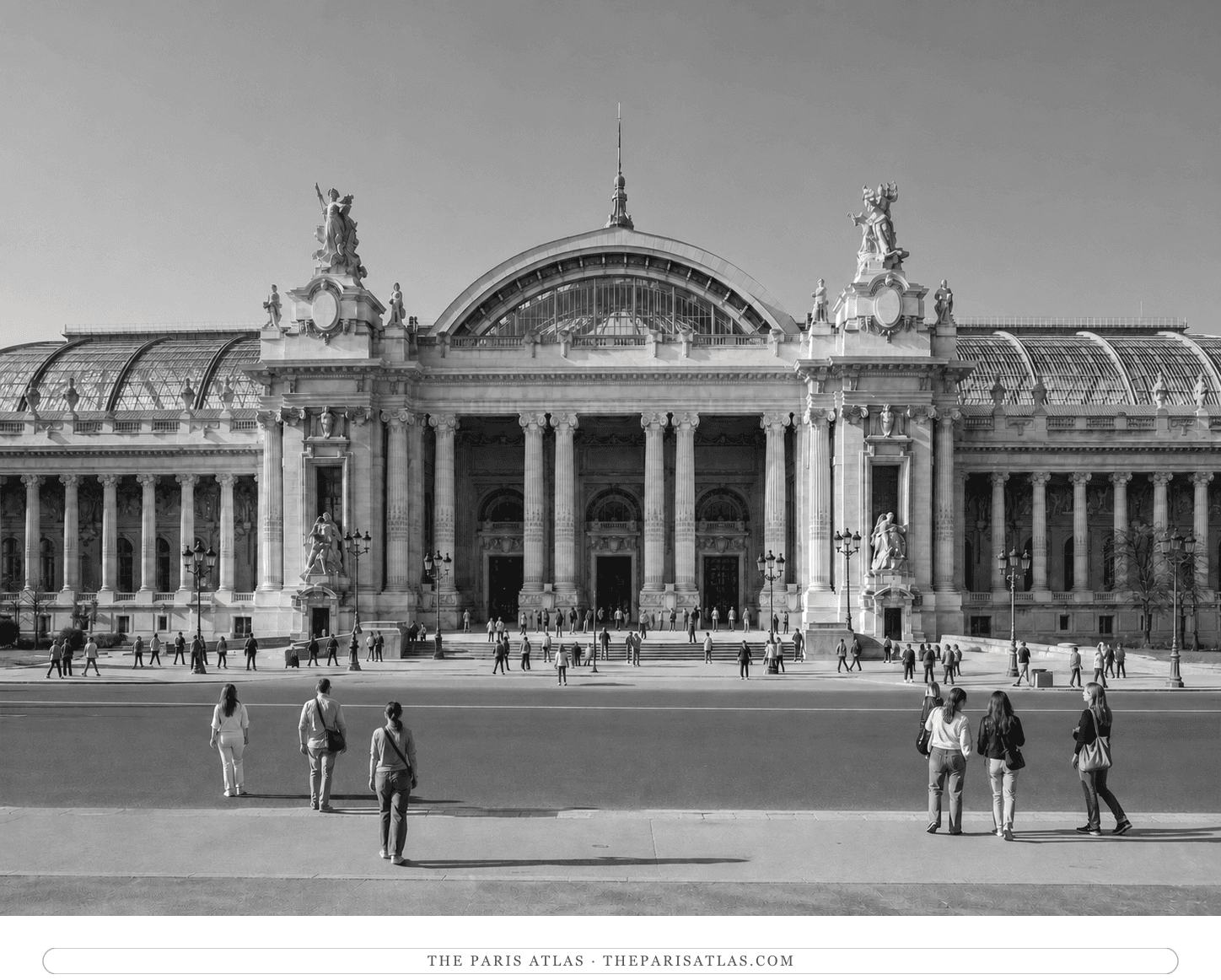
The shows became the other half of the argument. From the 1990s Chanel took over the Grand Palais — the glass-vaulted exhibition hall on the avenue Winston-Churchill in the 8th arrondissement, built for the 1900 World's Fair — and filled it, season after season, with a supermarket, an aeroplane cabin, a rocket, a beach with real sand. The clothes were shown by walking them through a stage set the size of a railway station.

The camera, the books, the shop on the rue de Lille

Lagerfeld photographed Chanel's advertising campaigns himself, which is unusual: houses hire photographers, and the designer is not normally one of them. He also drew every day — the collections went to the workrooms as sketches, hundreds of them, in coloured marker — and he published. Éditions 7L, his own publishing imprint, put out books on photography, architecture and art.

In 1999 he opened the bookshop that gave the imprint its name: 7L, at 7 rue de Lille in the 7th arrondissement, a few streets from the Musée d'Orsay, the former railway station that holds France's national collection of Impressionist painting. It sold, and still sells, art, photography, architecture and design books, with booksellers on hand to recommend them. Lagerfeld's own library, which ran to many thousands of volumes, was the possession he discussed most readily. The shop outlived him — Chanel owns it now — and opens Tuesday to Saturday, 10.30am to 7pm.

The public figure was a costume he never took off — white ponytail, black sunglasses, high starched collar, fingerless gloves, a fan in the 1980s — and a supply of aphorisms delivered in French, English or German with the same shrug. 'You have what you see,' he told an interviewer who asked about his psychological motivations, 'there's nothing behind.' He also made a long run of public remarks about other people's bodies and other people's politics that drew complaints and headlines through the last two decades of his career.

Neuilly, and the Grand Palais

He was ill through the winter of 2018 into 2019. He died on 19 February 2019 at the American Hospital of Paris in Neuilly-sur-Seine, the suburb just west of the city, at eighty-five. He had asked for no funeral.

The memorial was held on 20 June 2019 at the Grand Palais, in the hall where he had staged the Chanel shows, and was called Karl For Ever. The opera director Robert Carsen staged it. The walls carried black-and-white portraits running from his arrival in Paris as the young German prizewinner of 1954 through Chloé, Fendi, Chanel and his own label; the actors Tilda Swinton and Helen Mirren and the model Cara Delevingne read; the American musician Pharrell Williams sang and the Chinese concert pianist Lang Lang played; tango dancers danced, because tango turned out to have been a private enthusiasm. The evening ended with unused footage of Lagerfeld failing to record a solemn voiceover and laughing at himself.

Life events

  1. 1933

    Born on 10 September in Hamburg.

    William Middleton, Paradise Now: The Extraordinary Life of Karl Lagerfeld (2023)

  2. 1954

    Wins a prize in the International Wool Secretariat's design competition in Paris, for a coat; Yves Saint Laurent, eighteen, takes first and third prize in the dress category.

    Alicia Drake, The Beautiful Fall: Fashion, Genius, and Glorious Excess in 1970s Paris (2006); Yves Saint Laurent's Early Years — Musée Yves Saint Laurent Paris; Sarah Mower, Karl For Ever: In Paris, the Fashion Industry Pays Tribute to Karl Lagerfeld (2019)

  3. 1950s

    Works as an assistant at the couture house of Pierre Balmain, then designs the couture collections at Jean Patou.

    William Middleton, Paradise Now: The Extraordinary Life of Karl Lagerfeld (2023)

  4. 1965

    Begins designing for Fendi in Rome — a relationship that lasts fifty-four years, the longest of any designer at a fashion house.

    William Middleton, Paradise Now: The Extraordinary Life of Karl Lagerfeld (2023)

  5. 1970s

    Makes his name at Chloé in Paris, and becomes, with Saint Laurent, one of the two designers the city argues about.

    Alicia Drake, The Beautiful Fall: Fashion, Genius, and Glorious Excess in 1970s Paris (2006); Sarah Mower, Karl For Ever: In Paris, the Fashion Industry Pays Tribute to Karl Lagerfeld (2019)

  6. 1983

    Takes charge of design at Chanel, twelve years after Gabrielle Chanel's death, and begins recombining the house's codes season by season.

    William Middleton, Paradise Now: The Extraordinary Life of Karl Lagerfeld (2023); Skirt suit, designed by Karl Lagerfeld for Chanel, Paris, Spring/Summer 1994 (T.139, 140-1995)

  7. 1980s

    Launches a label under his own name, alongside the Chanel and Fendi collections.

    Sarah Mower, Karl For Ever: In Paris, the Fashion Industry Pays Tribute to Karl Lagerfeld (2019)

  8. 1994

    Designs the black bouclé suit with white plastic braid now in the Victoria and Albert Museum — Chanel's cardigan-suit formula with the trimming swapped.

    Skirt suit, designed by Karl Lagerfeld for Chanel, Paris, Spring/Summer 1994 (T.139, 140-1995)

  9. 1999

    Opens the bookshop 7L at 7 rue de Lille in the 7th arrondissement, and the imprint Éditions 7L with it.

    Librairie 7L, 7 rue de Lille, Paris — bookshop founded in 1999 by Karl Lagerfeld

  10. 2019

    Dies on 19 February at the American Hospital of Paris in Neuilly-sur-Seine, aged 85, having asked for no funeral.

    William Middleton, Paradise Now: The Extraordinary Life of Karl Lagerfeld (2023)

  11. 2019

    Karl For Ever, the memorial staged by Robert Carsen, fills the Grand Palais on 20 June — the hall where he had staged the Chanel shows.

    Sarah Mower, Karl For Ever: In Paris, the Fashion Industry Pays Tribute to Karl Lagerfeld (2019)

People they knew

Documented connections — every one carries its source.

Yves Saint Laurent

  • Fashion designer
  • Illustrator
  • Collector

Met · 1954

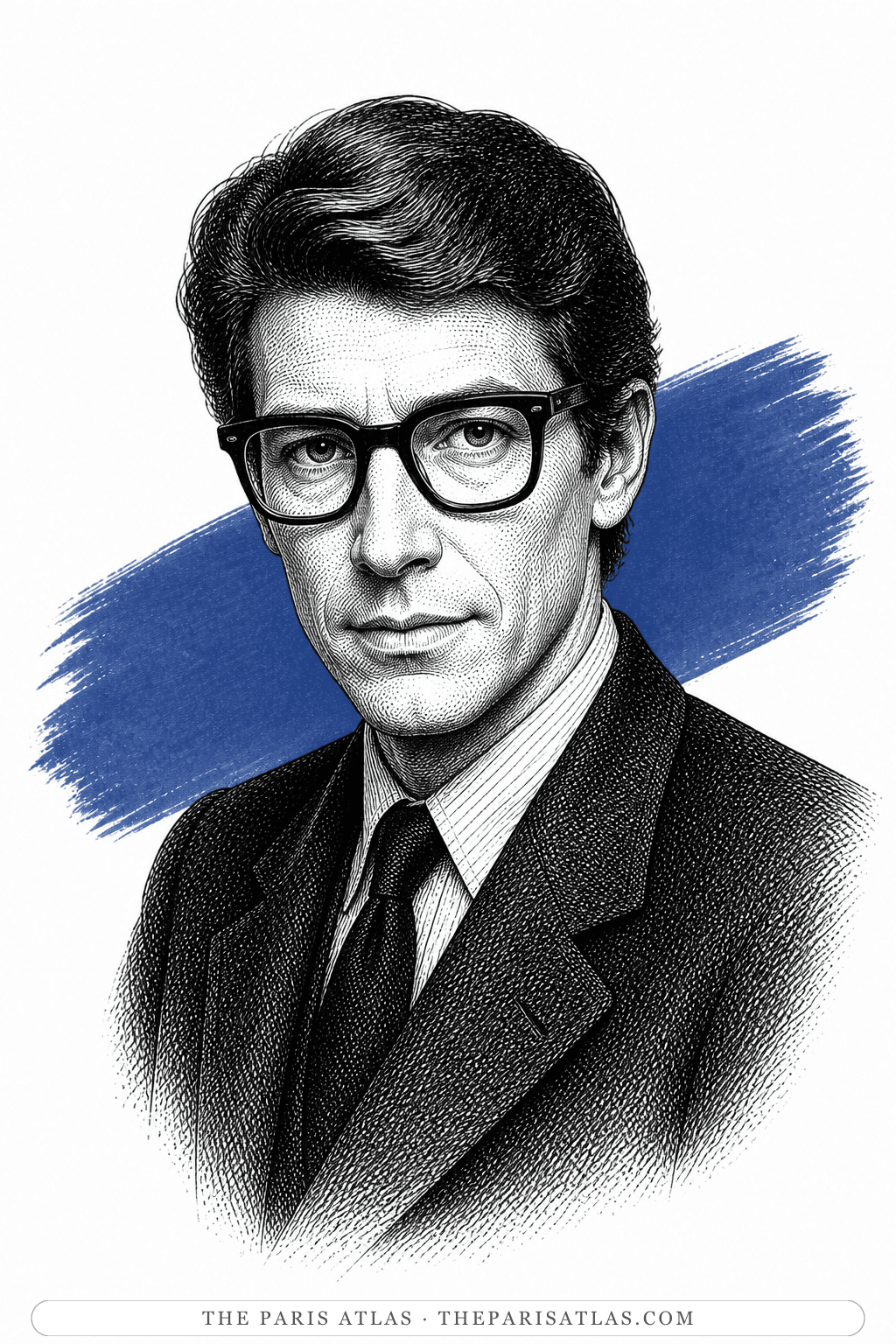
The two met as teenage prizewinners in the International Wool Secretariat's design competition in Paris in 1954 — Lagerfeld took a coat prize, Saint Laurent the dress category, which the Musée Yves Saint Laurent Paris records as first and third prize in the same class. Alicia Drake's history of 1970s Paris fashion follows the friendship into two decades of rivalry between their houses.
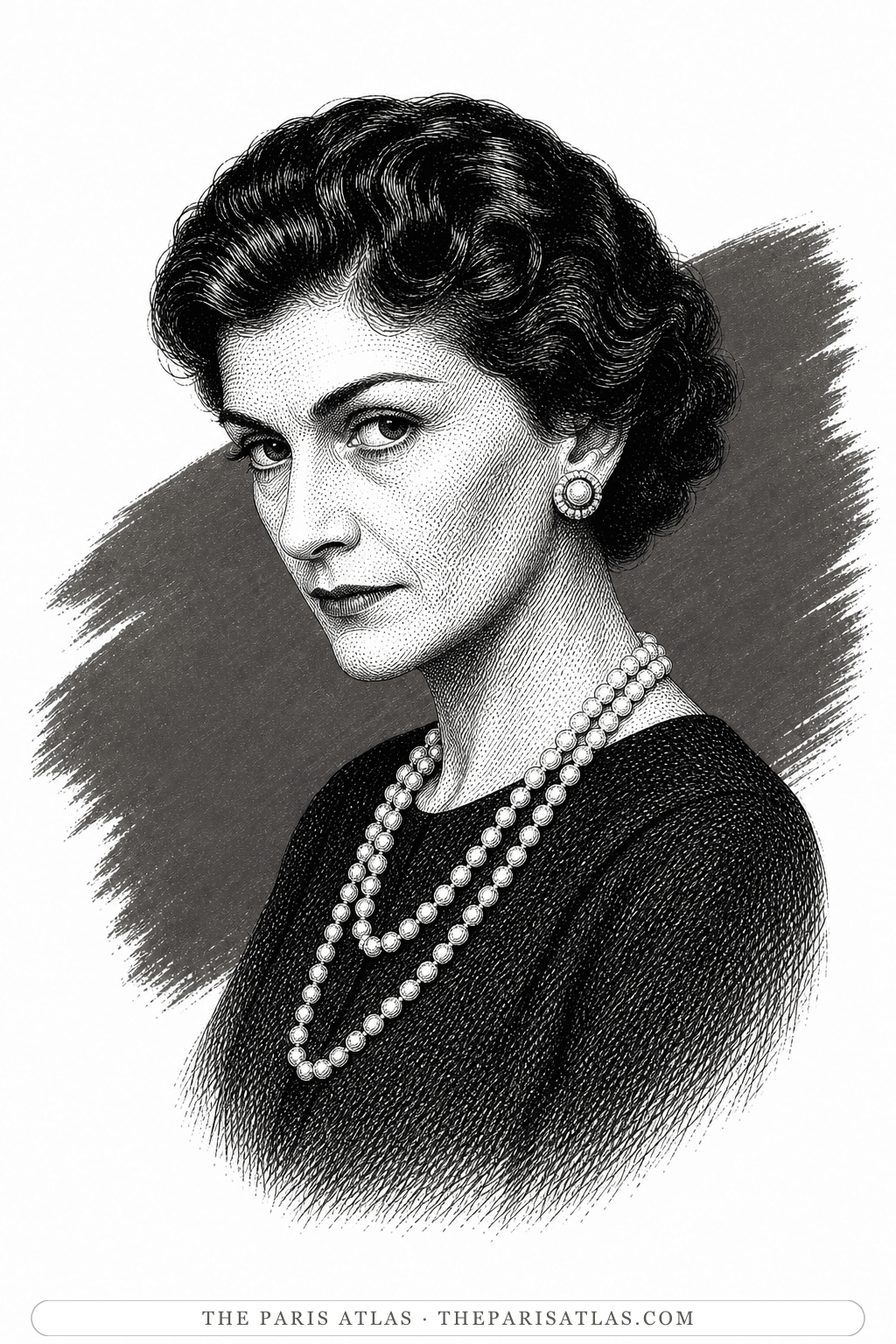
Alicia Drake, The Beautiful Fall: Fashion, Genius, and Glorious Excess in 1970s Paris (2006); Yves Saint Laurent's Early Years — Musée Yves Saint Laurent Paris; Sarah Mower, Karl For Ever: In Paris, the Fashion Industry Pays Tribute to Karl Lagerfeld (2019)

Andy Warhol

  • Painter
  • Filmmaker
  • Publisher

Met · 1970

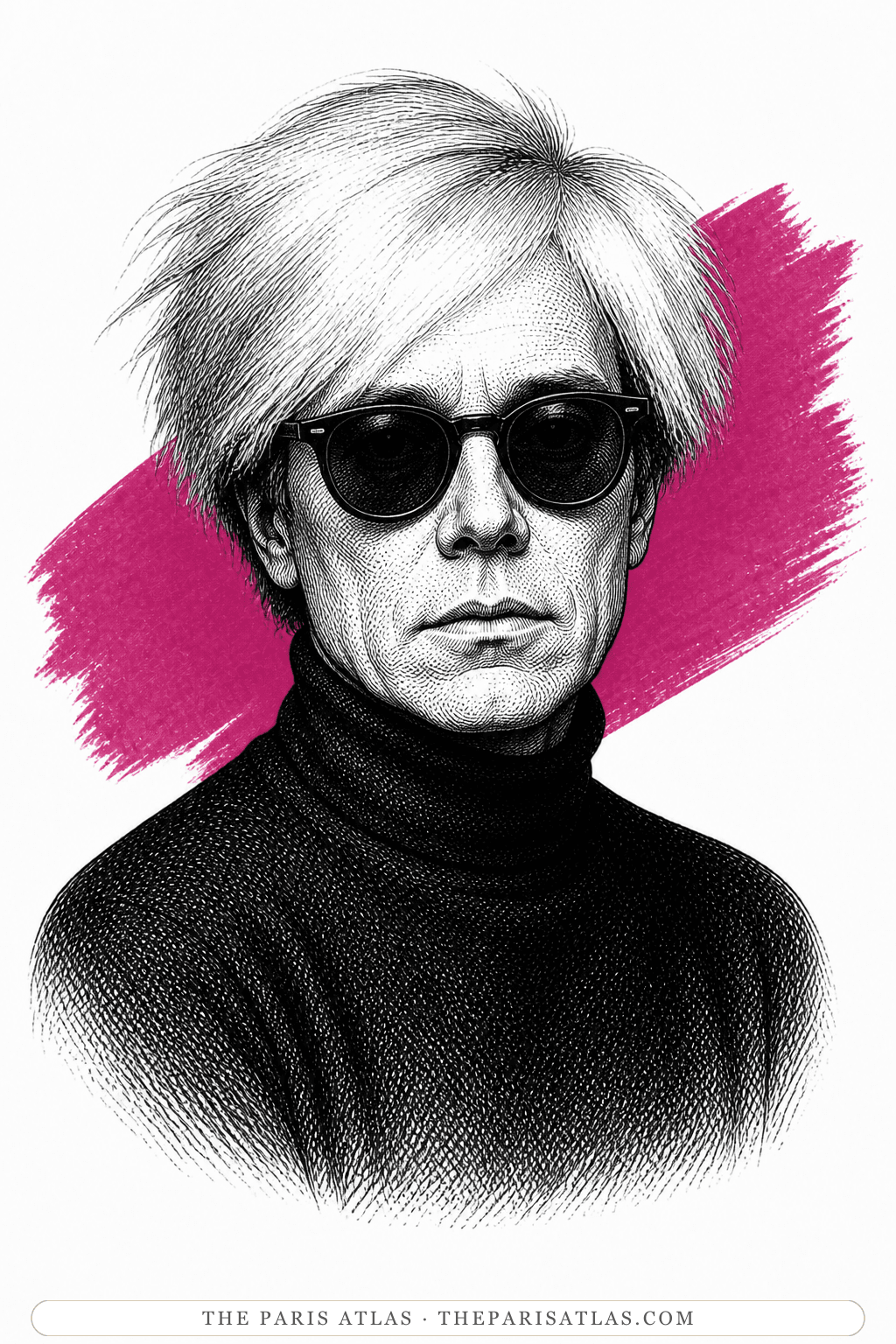
Warhol kept a Left Bank apartment on the rue du Cherche-Midi in the 1970s and moved through the same Paris circle as Lagerfeld and Yves Saint Laurent — the milieu Alicia Drake's history of the decade reconstructs, and the one Warhol's own diaries record from the other side.

Alicia Drake, The Beautiful Fall: Fashion, Genius, and Glorious Excess in 1970s Paris (2006); Andy Warhol, edited by Pat Hackett, The Andy Warhol Diaries (1989)

Who they drew from

Influence running inward — the writers and artists whose work fed theirs. Admiration is not acquaintance; these edges claim neither a meeting nor a friendship.

Coco Chanel

Lagerfeld took charge of the house Gabrielle Chanel had founded twelve years after her death and worked from her design vocabulary for the rest of his life. The Victoria and Albert Museum describes a suit he designed for Chanel in 1994 as 'reminiscent of Chanel's cardigan suit formula, only breaking convention by using plastic braid instead of traditional silk trimming' — the method in one object.

Skirt suit, designed by Karl Lagerfeld for Chanel, Paris, Spring/Summer 1994 (T.139, 140-1995); William Middleton, Paradise Now: The Extraordinary Life of Karl Lagerfeld (2023)

Karl Lagerfeld’s Places

The cataloged places connected to Karl Lagerfeld — through the books, and through the documented record.

Places you can enter today appear first, followed by addresses to see from outside and sites that have vanished.

Questions about Karl Lagerfeld

Who was Karl Lagerfeld?

A German fashion designer, born in Hamburg in 1933, who spent his career in Paris. He designed for Balmain, Jean Patou, Chloé and his own label, ran the Roman house of Fendi for fifty-four years, and from 1983 until his death in 2019 was the designer of Chanel. He also photographed Chanel's advertising campaigns himself, published books through his imprint Éditions 7L, and kept a bookshop at 7 rue de Lille in Paris.

Did Karl Lagerfeld know Coco Chanel?

No. Gabrielle 'Coco' Chanel died in 1971, and Lagerfeld only took over her house in 1983 — twelve years later. He never worked with her, and said more than once that he had not been interested in her as a person. What he inherited was a set of design ideas: the braided tweed suit, the quilted bag on a chain, the camellia, the pearls, the interlocking Cs. He rebuilt the house by taking those apart and reassembling them, several collections a year, for thirty-six years.

Was Karl Lagerfeld a rival of Yves Saint Laurent?

Yes. Saint Laurent was the French couturier, raised in Algeria, who took over Christian Dior's house at twenty-one and then founded his own — and the two of them started as fellow prizewinners. Both won in the International Wool Secretariat's Paris design competition in 1954 — Lagerfeld for a coat, the eighteen-year-old Saint Laurent taking first and third prize in the dress category. They were friends in the 1950s and rivals for the next thirty years, at the head of competing houses and competing social circles, a rivalry sharpened in the 1970s by Jacques de Bascher, the young Paris dandy who was Lagerfeld's companion and who had an affair with Saint Laurent.

How long was Karl Lagerfeld at Chanel?

Thirty-six years, from 1983 until his death on 19 February 2019 — through several collections a year: haute couture, made to measure for individual clients; ready-to-wear in standard sizes; cruise, the mid-season resort collection shown between the main ones; and the Métiers d'art shows, French for 'craft trades', staged each year to display the work of the specialist embroidery, feather and millinery workshops Chanel had bought up. He also designed for Fendi in Rome for fifty-four years, from 1965, and kept a label under his own name from the 1980s. He never gave any of them up.

What is 7L, and can you visit it?

7L is the bookshop Lagerfeld founded in 1999 at 7 rue de Lille, in the 7th arrondissement near the Musée d'Orsay — the address is the name. It sells art, photography, architecture and design books, and it lends its name to Éditions 7L, his publishing imprint. It survived him and is now owned by Chanel; the shop's own site gives its hours as Tuesday to Saturday, 10.30am to 7pm.

How did Karl Lagerfeld die?

He died on 19 February 2019 at the American Hospital of Paris in Neuilly-sur-Seine, just west of the city, at the age of eighty-five, after months of illness. He requested no funeral ceremony.

What was the Karl For Ever memorial?

A public tribute held on 20 June 2019 at the Grand Palais in Paris, staged by the opera director Robert Carsen for Chanel, Fendi and the Karl Lagerfeld label. It was held in the same glass-roofed hall where Lagerfeld had built his Chanel sets. The actors Tilda Swinton and Helen Mirren and the model Cara Delevingne read; the musician Pharrell Williams sang; the pianist Lang Lang played; and the evening closed on unused film of Lagerfeld fluffing a voiceover and laughing.

Where did Karl Lagerfeld live in Paris?

In a series of apartments and houses across the city over six decades, furnished and emptied and refurnished as his enthusiasms changed — eighteenth-century French antiques, then the brash coloured furniture of the Italian Memphis group of the 1980s, then near-empty modern rooms. The Paris address most reliably associated with him is not a home but the bookshop at 7 rue de Lille, which he opened in 1999 and which is still trading.

Sourced claims

Every connection the graph holds for Karl, with the evidence behind it.

Met · 1954

Yves Saint Laurent

The two met as teenage prizewinners in the International Wool Secretariat's design competition in Paris in 1954 — Lagerfeld took a coat prize, Saint Laurent the dress category, which the Musée Yves Saint Laurent Paris records as first and third prize in the same class. Alicia Drake's history of 1970s Paris fashion follows the friendship into two decades of rivalry between their houses.
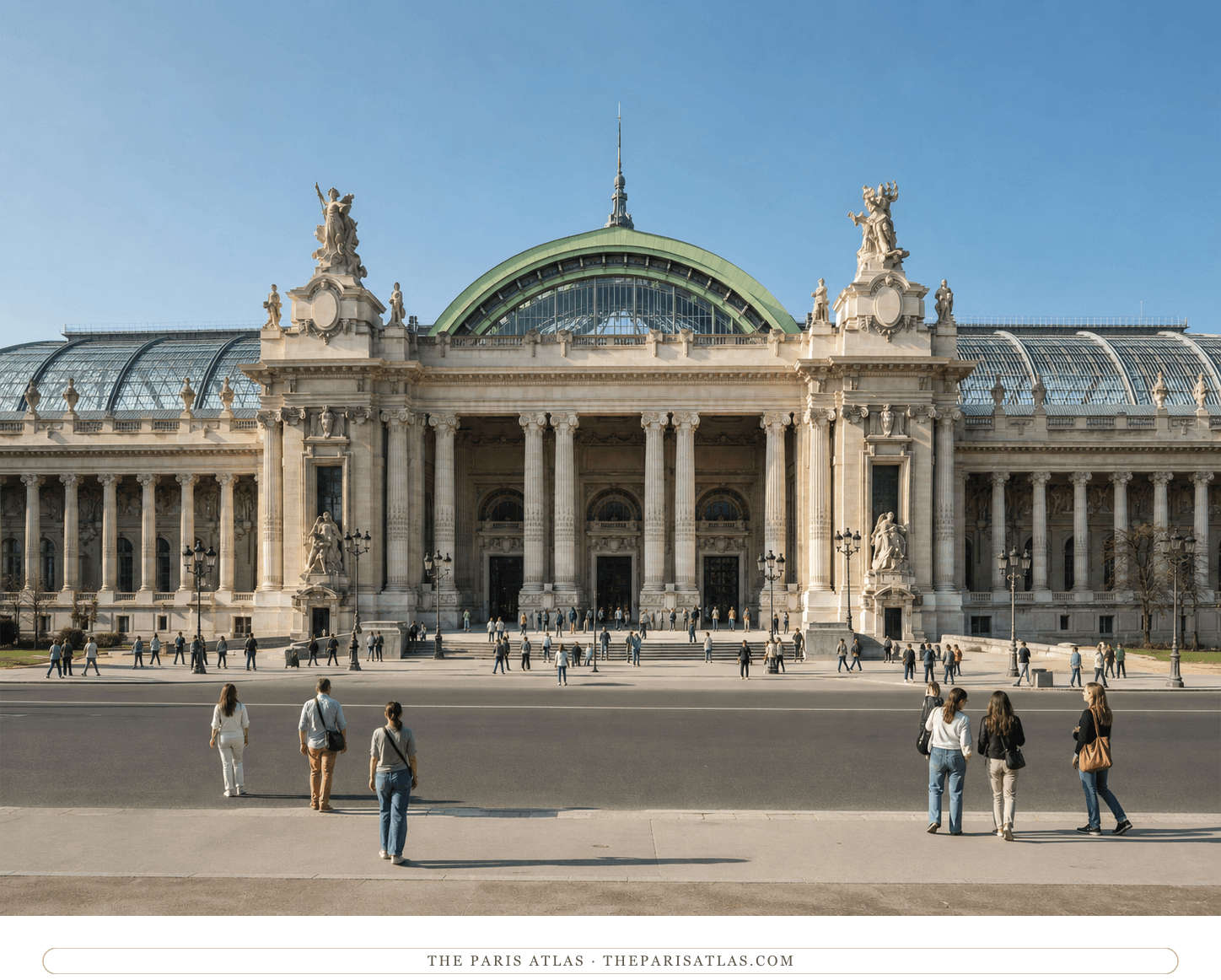
Alicia Drake, The Beautiful Fall: Fashion, Genius, and Glorious Excess in 1970s Paris (2006); Yves Saint Laurent's Early Years — Musée Yves Saint Laurent Paris; Sarah Mower, Karl For Ever: In Paris, the Fashion Industry Pays Tribute to Karl Lagerfeld (2019)

Worked at · 1990–2019

Grand Palais

Karl Lagerfeld staged the Chanel collections in the nave of the Grand Palais from the 1990s until his death, building a supermarket, a rocket and a beach inside the hall for the shows. Vogue's report on the memorial held for him there on 20 June 2019 calls it the place where he treated so many to his spectacular transports of imagination with his Chanel shows. The end year is his death on 19 February 2019 and the memorial that followed; the start is approximate, since the collaboration was a run of seasons rather than a dated appointment.

Sarah Mower, Karl For Ever: In Paris, the Fashion Industry Pays Tribute to Karl Lagerfeld (2019); The Grand Palais — history of the building and its present programme

Met · 1970

Andy Warhol

Warhol kept a Left Bank apartment on the rue du Cherche-Midi in the 1970s and moved through the same Paris circle as Lagerfeld and Yves Saint Laurent — the milieu Alicia Drake's history of the decade reconstructs, and the one Warhol's own diaries record from the other side.

Alicia Drake, The Beautiful Fall: Fashion, Genius, and Glorious Excess in 1970s Paris (2006); Andy Warhol, edited by Pat Hackett, The Andy Warhol Diaries (1989)

Influenced by · 1983

Coco Chanel

Lagerfeld took charge of the house Gabrielle Chanel had founded twelve years after her death and worked from her design vocabulary for the rest of his life. The Victoria and Albert Museum describes a suit he designed for Chanel in 1994 as 'reminiscent of Chanel's cardigan suit formula, only breaking convention by using plastic braid instead of traditional silk trimming' — the method in one object.

Skirt suit, designed by Karl Lagerfeld for Chanel, Paris, Spring/Summer 1994 (T.139, 140-1995); William Middleton, Paradise Now: The Extraordinary Life of Karl Lagerfeld (2023)

References

References

The sources below include biographies, scholarly essays, interviews, and primary materials that informed this page. They reflect both the historical record and ongoing critical conversations about Karl Lagerfeld and their work.

  1. 1Paradise Now: The Extraordinary Life of Karl Lagerfeld

    Harper, 2023

    The full-length biography — Hamburg, the arrival in Paris, the houses, and the working life behind the persona.

  2. 2The Beautiful Fall: Fashion, Genius, and Glorious Excess in 1970s Paris

    Little, Brown, 2006

    The history of 1970s Paris fashion built around Lagerfeld and Saint Laurent, from the 1954 wool competition onward.

  3. 3Karl For Ever: In Paris, the Fashion Industry Pays Tribute to Karl Lagerfeld

    Vogue, 2019

    Sarah Mower's report from the Karl For Ever memorial at the Grand Palais, 20 June 2019, including the career told on its walls.

    View source
  1. 4Skirt suit, designed by Karl Lagerfeld for Chanel, Paris, Spring/Summer 1994 (T.139, 140-1995)

    Victoria and Albert Museum, London

    The V&A's record for a Chanel suit he designed in 1994, which describes his method against Chanel's own formula.

    View source
  2. 5Librairie 7L, 7 rue de Lille, Paris — bookshop founded in 1999 by Karl Lagerfeld

    Librairie 7L

    The bookshop's own site — founded in 1999 by Lagerfeld, at 7 rue de Lille in the 7th arrondissement.

    View source
  3. 6Yves Saint Laurent's Early Years — Musée Yves Saint Laurent Paris

    Musée Yves Saint Laurent Paris

    The Musée Yves Saint Laurent Paris on Saint Laurent's youth, including his prizes in the 1954 wool competition.

    View source
i
Why these sources are here

These references anchor the page in the documented record and in the scholarly conversations around Karl Lagerfeld. Every claim on this page traces back to one or more of the works listed here.

Explore more resources