The Paris AtlasCharting the artists, works, and places worth returning to.
  • Fashion designer
  • Art dealer
  • Illustrator
· French · 1905–1957

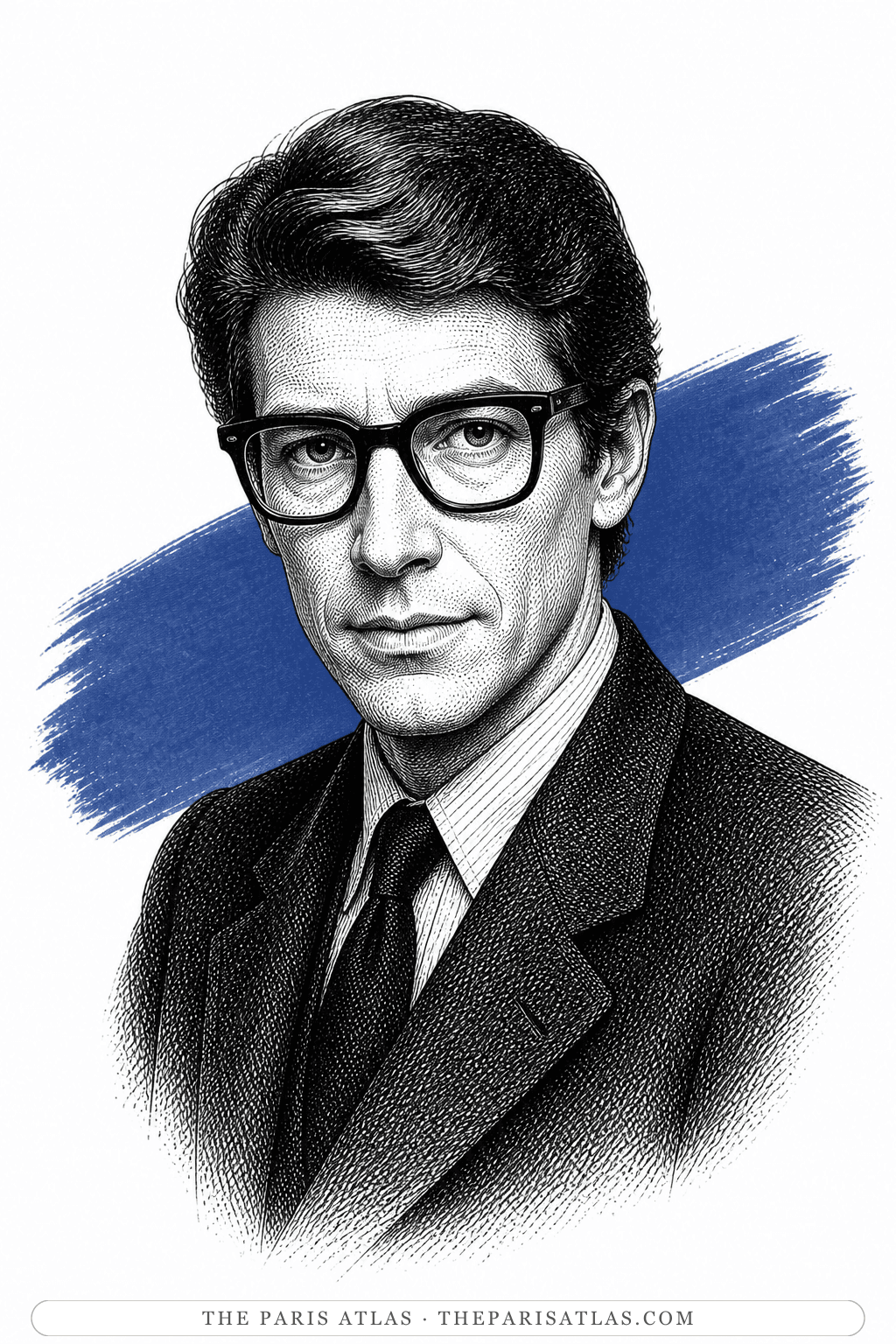
Christian Dior

Couturier whose first Paris career was as an art dealer: his galleries on the rue La Boétie and the rue Cambacérès showed Picasso, Matisse and his friend Salvador Dalí before his family's money ran out. He opened a couture house at 30 avenue Montaigne in December 1946, and the collection he showed there on 12 February 1947 was named the New Look by an American editor before the applause had finished.

Details

Lived
1905–1957
Born
21 January 1905
Birthplace
Granville, Normandy
Died
24 October 1957 · aged 52
Place of death
Montecatini, Italy
Nationality
French
Profession
Couturier; before that, a Paris art dealer
Major works
The New Look collection (12 February 1947), the Bar suit, the perfume Miss Dior (1947)
Roles
Fashion designerArt dealerIllustrator

About Christian Dior

French couturier who spent his first Paris career selling modern painting, and whose 1947 debut collection — christened the New Look — reset the shape of women's clothes

Christian Dior sold paintings before he sold dresses. From 1928 he ran a gallery at 34 rue La Boétie in the 8th arrondissement with his friend Jacques Bonjean, showing the artists he most admired — Picasso, Braque, Matisse, Raoul Dufy — and the ones he actually knew, among them the painter and stage designer Christian Bérard, the poet-painter Max Jacob and Salvador Dalí. When his father's fertiliser business collapsed in 1931 and the money went, he opened a second gallery with Pierre Colle at 29 rue Cambacérès, which staged a Surrealism exhibition in 1933 — and then that closed too, and he began selling fashion drawings to milliners and couture houses to eat.

The second career started at forty-one. On 16 December 1946 he opened a couture house — a workshop making clothes to order for individual clients — at 30 avenue Montaigne, backed by the textile industrialist Marcel Boussac, with three workrooms and eighty-five staff. On 12 February 1947 he showed his first collection there, in lines he called Corolle, after the ring of petals around the centre of a flower, and En 8, after the figure eight: soft shoulders, a cinched waist, and skirts with enough cloth in them to be shocking two years after wartime rationing. Carmel Snow, editor of the American magazine Harper's Bazaar, told him his dresses had 'such a New Look', the name stuck to the whole silhouette, and Dior spent the ten years left to him running the most successful house in French fashion.

Pink walls and grey gravel at Granville

He was born on 21 January 1905 at Granville, a port on the Normandy coast, a son of Alexandre Louis Maurice Dior and Marie-Madeleine Dior. The family money came from fertiliser and chemicals, a business running since 1832, and in 1906 they moved into Les Rhumbs, a clifftop villa above the sea. Dior later traced his entire colour sense to it: 'My childhood home was rendered in a very soft pink, combined with gray gravel, and these two shades have remained my favorite colors in couture.' The family moved to Paris, to the 16th arrondissement, in 1910; the villa is now the Musée Christian Dior, which opened in 1997 and carries the French state's 'Museum of France' label, and its garden still looks out at the Channel.

His parents wanted a diplomat and sent him to the École des Sciences Politiques, the Paris school of political science; what he actually joined was a circle of young artists. He described it later without any grandeur — a simple gathering of painters, writers, musicians and designers under the wing of the poet and playwright Jean Cocteau and of Max Jacob, the poet and painter who was one of the great connectors of Paris between the wars.

The galleries: rue La Boétie and rue Cambacérès

In 1928, on family money, he opened a gallery at 34 rue La Boétie with Jacques Bonjean — a street in the 8th arrondissement that was then the centre of the Paris art trade. The programme, in Dior's own account, ran to shows 'centred on the masters we admired most: Picasso, Braque, Matisse, and Dufy, and the painters we knew personally and already held in high esteem: Christian Bérard, Salvador Dalí, Max Jacob, the Berman brothers'. He was, in other words, Dalí's dealer and friend nearly twenty years before he was a couturier.

The run ended fast. His mother died in 1931 and his father's business collapsed in the same period, taking the family fortune with it; the gallery could not survive without it. He started again in 1932 with Pierre Colle at 29 rue Cambacérès, near the Élysée Palace — the French president's residence — and in 1933 the two of them mounted an exhibition there of Surrealism — the movement of dream imagery and chance that André Breton had launched in Paris in 1924. That gallery closed as well, and by 1935 Dior was selling his drawings to milliners and couture houses and working as an illustrator for the newspaper Le Figaro and the magazine Jardin des Modes.

Learning the trade at Piguet and Lelong

Drawing dresses got him into the workrooms. In 1938 he joined the house of Robert Piguet, where, he said, he came to 'get to know the mysterious means by which an idea is transformed into a dress' — the part of couture that happens between a sketch and a body. From 1941 to 1946, through the German occupation of Paris and the first year after it, he designed for Lucien Lelong, one of the largest houses in the city, and said afterwards that he learned a tremendous amount more about his new profession there. He was forty in 1945 and had never had a house of his own.

16 December 1946: 30 avenue Montaigne

The money came from Marcel Boussac, a cotton magnate who wanted a couture house and expected Dior to revive an existing one; Dior insisted on his own name and address. The house opened on 16 December 1946 at 30 avenue Montaigne, a townhouse off the Champs-Élysées, with three ateliers — the workrooms where a couture house cuts and sews — and a staff of eighty-five.

The first collection, spring–summer 1947, was shown in the salons of the house on 12 February 1947. Dior called its two lines Corolle and En 8 — the flower's ring of petals, and the figure eight — and both meant the same thing in cloth: rounded shoulders, a narrow waist, and long full skirts that used yards of fabric in a city where clothing had been rationed until the year before. Carmel Snow of Harper's Bazaar said, 'My dear Christian, your dresses have such a New Look!' and the phrase became the name of the silhouette. Its emblem is the Bar suit — a jacket of cream shantung silk, nipped and flared over the hips, above a black pleated wool skirt — which the house still treats as its founding object. Not everyone applauded: as Marie-France Pochna's biography records, the yardage drew attacks from politicians and press in austerity-era Europe and America, and in some cities women protested against the long skirts in the street.

Ten years, and a nineteen-year-old from Oran

The house grew at a speed no couture business had managed before: Christian Dior-New York in 1948, a staff of nine hundred by 1951, Christian Dior London in 1952, a boutique on the corner of the avenue Montaigne in 1955 selling accessories to people who could not buy the clothes. The first perfume, Miss Dior, was launched in December 1947. On 4 March 1957 Dior appeared on the cover of Time magazine.

In June 1955 Michel de Brunhoff, editor of French Vogue, sent him a nineteen-year-old from Oran in French Algeria with a folder of about fifty sketches. Dior hired Yves Saint Laurent into the studio on the spot and, two years later, told an interviewer that the young man was 'an immense talent' and that he considered him the father of thirty-four of the 180 designs in his last collection. Dior died of a heart attack at Montecatini in Italy during the night of 24 October 1957, at fifty-two; by his own wish, Saint Laurent — then twenty-one — took over the house. The address is still 30 avenue Montaigne, and the building now also holds La Galerie Dior, the house's own museum of its history.

Life events

  1. 1905

    Born on 21 January at Granville in Normandy, into a family whose money came from fertiliser and chemicals.

    History — La Galerie Dior

  2. 1906–1910

    The family takes the clifftop villa Les Rhumbs at Granville — pink walls, grey gravel, the colours he said he kept for couture — then moves to Paris in 1910.

    History — La Galerie Dior; The Museum — Musée Christian Dior, villa Les Rhumbs, Granville

  3. 1928

    Opens the Galerie Jacques Bonjean at 34 rue La Boétie, showing Picasso, Braque, Matisse and Dufy alongside friends including Christian Bérard and Salvador Dalí.

    History — La Galerie Dior

  4. 1931

    His mother dies and the family business collapses; the gallery goes with the money.

    History — La Galerie Dior

  5. 1932–1933

    Opens a second gallery with Pierre Colle at 29 rue Cambacérès, which mounts an exhibition of Surrealism in 1933.

    History — La Galerie Dior

  6. 1935

    Broke, he sells fashion drawings to milliners and couture houses and illustrates for Le Figaro and Jardin des Modes.

    History — La Galerie Dior

  7. 1938

    Joins the couture house of Robert Piguet, and learns how a drawing becomes a dress.

    History — La Galerie Dior

  8. 1941–1946

    Designs for Lucien Lelong through the occupation of Paris and the first year after it.

    History — La Galerie Dior

  9. 1946

    Opens his own house at 30 avenue Montaigne on 16 December, financed by the industrialist Marcel Boussac, with three ateliers and eighty-five staff.

    History — La Galerie Dior

  10. 1947

    Shows the first collection on 12 February in the salons of 30 avenue Montaigne — the Corolle and En 8 lines, which Carmel Snow of Harper's Bazaar christens the New Look. The perfume Miss Dior follows in December.

    History — La Galerie Dior

  11. 1948–1955

    Christian Dior-New York opens in 1948, the staff reaches nine hundred by 1951, Christian Dior London follows in 1952, and a boutique opens on the corner of the avenue Montaigne in 1955.

    History — La Galerie Dior

  12. 1955

    Hires the nineteen-year-old Yves Saint Laurent into the studio after Michel de Brunhoff of French Vogue sends him round with a folder of sketches.

    The Dior Years — Musée Yves Saint Laurent Paris

  13. 1957

    Appears on the cover of Time on 4 March; dies of a heart attack at Montecatini in Italy during the night of 24 October, aged fifty-two. Saint Laurent, twenty-one, succeeds him by his wish.

    History — La Galerie Dior; The Dior Years — Musée Yves Saint Laurent Paris

People they knew

Documented connections — every one carries its source.

Yves Saint Laurent

  • Fashion designer
  • Illustrator
  • Collector

Mentored · 1955–1957

Dior hired Saint Laurent, then nineteen, into the studio at 30 avenue Montaigne in June 1955 after Michel de Brunhoff of French Vogue sent him round with about fifty sketches, and said of him that he was 'young, but an immense talent' and the father of thirty-four of the 180 designs in his last collection. When Dior died on 24 October 1957 the house named Saint Laurent his successor, at twenty-one, by Dior's own wish.

The Dior Years — Musée Yves Saint Laurent Paris; History — La Galerie Dior

Illustrated portrait of Salvador Dalí

Salvador Dalí

  • Painter
  • Filmmaker
  • Sculptor

Met · 1928

Nearly twenty years before he was a couturier, Dior was an art dealer. Describing the programme of the gallery he opened at 34 rue La Boétie in 1928 with Jacques Bonjean, he separated the artists he admired from the ones he knew: shows centred on 'the masters we admired most: Picasso, Braque, Matisse, and Dufy, and the painters we knew personally and already held in high esteem: Christian Bérard, Salvador Dalí, Max Jacob, the Berman brothers'. His second gallery, with Pierre Colle at 29 rue Cambacérès, mounted a Surrealism exhibition in 1933.

History — La Galerie Dior

Questions about Christian Dior

Who was Christian Dior?

A French couturier, born in Normandy in 1905, who opened a couture house at 30 avenue Montaigne in Paris in December 1946 and showed his first collection there on 12 February 1947. That collection — rounded shoulders, tiny waist, long full skirts — was named the New Look by the American editor Carmel Snow and made him the most influential designer of the post-war decade. He died in 1957, ten years after the first show.

What was the New Look?

The silhouette of Dior's first collection, shown on 12 February 1947 in two lines he called Corolle — the ring of petals around a flower — and En 8, for the figure eight. Both produced the same shape: soft shoulders, a cinched waist, and a long skirt carrying yards of fabric. Its emblem is the Bar suit, a cream jacket flared over the hips above a black pleated skirt. Carmel Snow of Harper's Bazaar told Dior his dresses had 'such a New Look', and the phrase named the style.

Why was the New Look controversial?

Because of how much cloth it used. It appeared two years after a war during which clothing was rationed across Europe and America, and Marie-France Pochna's biography records the attacks that followed from politicians and the press, and street protests against the long skirts. The objection was never to the beauty of the clothes but to their extravagance at a moment when fabric was still scarce.

Did Christian Dior really run an art gallery?

Yes — two of them, and they were his first career. From 1928 he ran a gallery at 34 rue La Boétie with Jacques Bonjean, showing Picasso, Braque, Matisse and Dufy along with friends such as Christian Bérard and Salvador Dalí. After his family's fortune collapsed in 1931 he opened a second gallery with Pierre Colle at 29 rue Cambacérès, which staged an exhibition of Surrealism in 1933. Only when that closed too did he turn to selling fashion drawings, and eventually to couture.

Where is the Christian Dior house in Paris?

At 30 avenue Montaigne, in the 8th arrondissement, where Dior opened it on 16 December 1946 with three workrooms and eighty-five staff, and where every collection of his lifetime was shown. The house is still there, and the building now also holds La Galerie Dior, a museum of the house's own history.

How did Christian Dior die, and who took over?

He died of a heart attack at Montecatini in Italy during the night of 24 October 1957, aged fifty-two. Yves Saint Laurent, who had joined the studio as a nineteen-year-old assistant in 1955 and was twenty-one when Dior died, succeeded him as the house's designer — by Dior's own wish, according to the Musée Yves Saint Laurent Paris.

Can you visit Christian Dior's childhood home?

Yes. Les Rhumbs, the clifftop villa above the sea at Granville in Normandy where the Dior family lived from 1906, is now the Musée Christian Dior. It opened in 1997 and holds the 'Museum of France' designation, awarded in 2002, and mounts a new exhibition each year in the rooms and garden Dior credited with forming his taste — down to the pink render and grey gravel he called his favourite colours in couture.

Sourced claims

Every connection the graph holds for Christian, with the evidence behind it.

Mentored · 1955–1957

Yves Saint Laurent

Dior hired Saint Laurent, then nineteen, into the studio at 30 avenue Montaigne in June 1955 after Michel de Brunhoff of French Vogue sent him round with about fifty sketches, and said of him that he was 'young, but an immense talent' and the father of thirty-four of the 180 designs in his last collection. When Dior died on 24 October 1957 the house named Saint Laurent his successor, at twenty-one, by Dior's own wish.

The Dior Years — Musée Yves Saint Laurent Paris; History — La Galerie Dior

Met · 1928

Salvador Dalí

Nearly twenty years before he was a couturier, Dior was an art dealer. Describing the programme of the gallery he opened at 34 rue La Boétie in 1928 with Jacques Bonjean, he separated the artists he admired from the ones he knew: shows centred on 'the masters we admired most: Picasso, Braque, Matisse, and Dufy, and the painters we knew personally and already held in high esteem: Christian Bérard, Salvador Dalí, Max Jacob, the Berman brothers'. His second gallery, with Pierre Colle at 29 rue Cambacérès, mounted a Surrealism exhibition in 1933.

History — La Galerie Dior

References

References

The sources below include biographies, scholarly essays, interviews, and primary materials that informed this page. They reflect both the historical record and ongoing critical conversations about Christian Dior and their work.

  1. 1History — La Galerie Dior

    La Galerie Dior, 30 avenue Montaigne, Paris
    View source
  2. 230 avenue Montaigne — La Galerie Dior

    La Galerie Dior, 30 avenue Montaigne, Paris
    View source
  3. 3The Museum — Musée Christian Dior, villa Les Rhumbs, Granville

    Musée Christian Dior, Granville
    View source
  1. 4Christian Dior: The Man Who Made the World Look New

    Arcade Publishing, 1996
  2. 5The Dior Years — Musée Yves Saint Laurent Paris

    Musée Yves Saint Laurent Paris
    View source
i
Why these sources are here

These references anchor the page in the documented record and in the scholarly conversations around Christian Dior. Every claim on this page traces back to one or more of the works listed here.

Explore more resources