The Paris AtlasCharting the artists, works, and places worth returning to.
  • Fashion designer
· French · 1889–1958

Lucien Lelong

French couturier who transformed his parents' Paris dressmaking business into a major house, led the couture trade body from 1937 to 1945, and employed designers including Christian Dior and Hubert de Givenchy.

In images

Details

Lived
1889–1958
Born
11 October 1889
Birthplace
Paris, France
Birth name
Lucien-Célestin Lelong
Died
11 May 1958 · aged 68
Place of death
Anglet, France
Nationality
French
Profession
Couturier and president of the Chambre Syndicale de la Couture Parisienne
Major works
Sphinx ensemble (1925), Indiscret perfume (1935), leadership of the Théâtre de la Mode (1945)
Married
Anne-Marie Audoy · 1919–1927Natalie Paley · 1927–1937Sanda Dancovici · 1954–1958
Roles
Fashion designer

About Lucien Lelong

A couture house inherited and remade

Lucien Lelong grew up inside the trade. His parents, Éléonore Marie Lambelet and Arthur Camille Joseph Lelong, operated the modest couture house A. E. Lelong from the end of the nineteenth century. He studied business at the École des Hautes Études Commerciales in Paris rather than attending a fashion school, then took charge of the family firm after the First World War. By 1921 it carried his own name.

The house became known for rigorous, classical elegance: supple crepes, black lace, controlled drapery, and evening clothes whose effect depended on cut and movement rather than novelty alone. Museum collections preserve the label across the interwar years and into the 1940s, when the business was one of the largest design houses in Paris.

A house full of future names

Lelong organized the house around talented assistants rather than presenting every design as the work of one isolated hand. Christian Dior joined in 1941 and became the principal designer for four years. He remained through the German occupation and the first year after it, learning the large-house couture system before opening under his own name in 1946.

The young Hubert de Givenchy also worked at Lelong for six months in 1946, after Robert Piguet and before Elsa Schiaparelli. The two careers show why Lelong's legacy is larger than a surviving group of dresses: his workrooms helped train designers who would define Paris fashion after the war.

Keeping the couture trade in Paris

Lelong was elected president of the Chambre Syndicale de la Couture Parisienne in 1937 and served through 1945. During the occupation, German officials planned to transfer the couture industry and its skilled labor to Berlin. As the trade body's president, Lelong negotiated against the move and argued that the craft depended on the network of Paris workshops, suppliers, and specialist makers that supported the houses.

In 1945 the trade body organized the Théâtre de la Mode, a touring display of miniature mannequins dressed by the Paris houses and staged with sets made by artists and decorators. The project, mounted under Lelong's impetus, advertised the survival of French couture at a moment when fabric remained scarce and full collections were difficult to produce.

The house closes, the influence continues

Lelong closed his couture house in 1948. Its reputation now rests on two connected records: the garments preserved by fashion museums and the designers who passed through its workrooms. The clothes document a restrained interwar and wartime elegance; the careers of Dior and Givenchy carry the house's methods into the next generation of Paris couture.

Life events

  1. 1889

    Born into the family that operated the Paris couture house A. E. Lelong.

    Evening dress, Lucien Lelong, spring/summer 1938

  2. 1920–1921

    Takes creative control of the family business and renames the house after himself.

    Evening dress, Lucien Lelong, spring/summer 1938

  3. 1925–1927

    Builds the international profile of his Paris house through fashion plates, press photography, and an expanding perfume business.

    Sphinx, a Lucien Lelong design published in Très Parisien in 1925, during the house's interwar expansion. (Très Parisien, Rijksmuseum)

    Evening dress, Lucien Lelong, spring/summer 1938

  4. 1937

    Is unanimously elected president of the Chambre Syndicale de la Couture Parisienne.

    Evening dress, Lucien Lelong, spring/summer 1938

  5. 1941–1946

    Employs Christian Dior, who becomes the house's principal designer before opening under his own name.

    Christian Dior (1905–1957); Dior, jardins enchanteurs: Dossier de presse

  6. 1945

    Helps initiate the Théâtre de la Mode to present the work of Paris couture houses after the occupation.

    Une histoire en images: Les Arts Décoratifs

  7. 1946

    Employs Hubert de Givenchy for six months early in the younger designer's Paris career.

    The Givenchiaga Family — exhibition press kit, with the museum's chronology of Cristóbal Balenciaga and Hubert de Givenchy and its account of their friendship

  8. 1948

    Closes the Lucien Lelong couture house.

    Evening dress, Lucien Lelong, spring/summer 1938

  9. 1958

    Dies at sixty-nine.

    Lucien Lelong (1889–1958)

People they knew

Documented connections — every one carries its source.

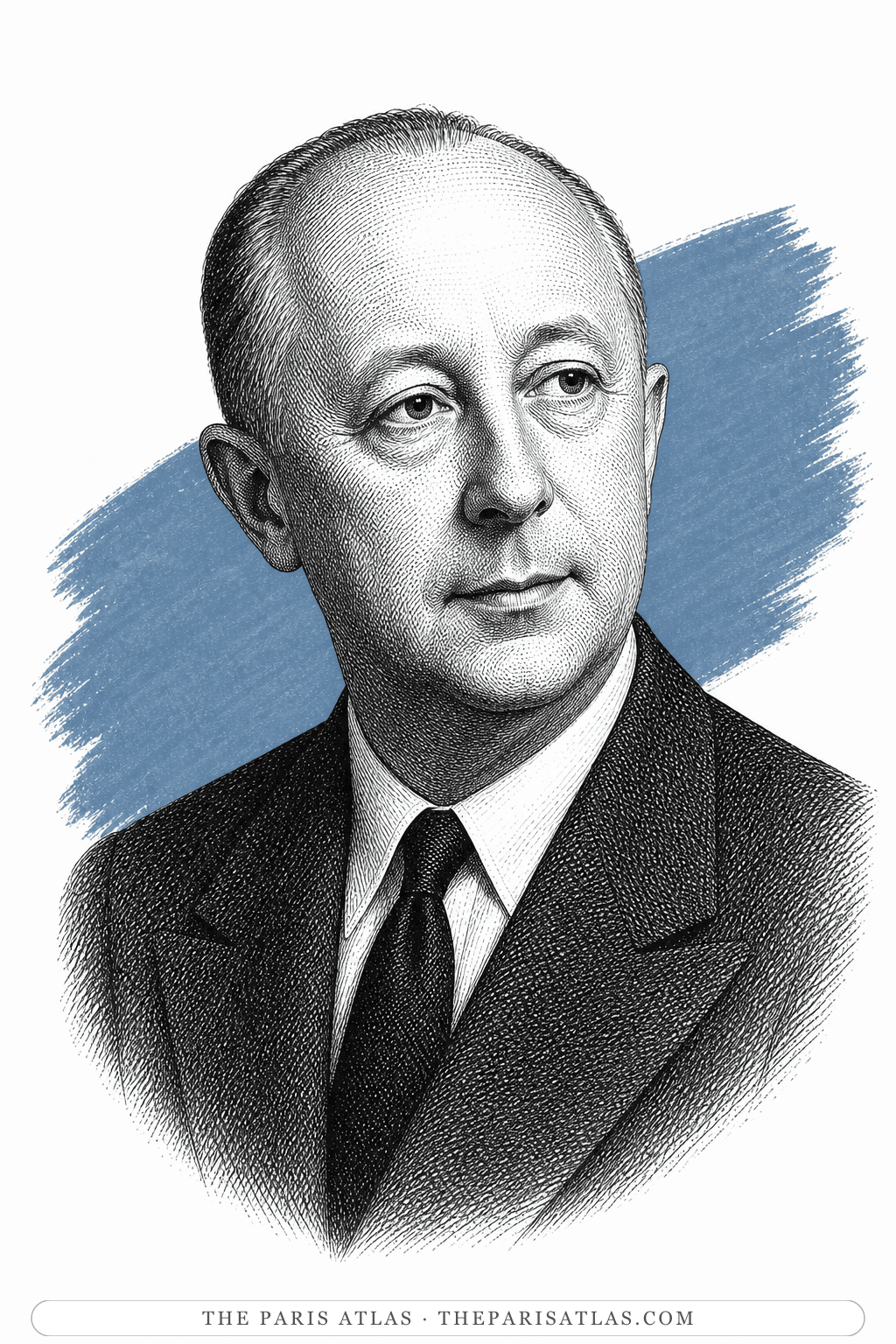
Illustrated portrait of Hubert de Givenchy

Hubert de Givenchy

  • Collector

Collaborated with · 1946

The Cristóbal Balenciaga Museoa's Givenchy chronology records six months working for Lucien Lelong in 1946, after Robert Piguet and before Elsa Schiaparelli. The relationship is limited to that documented employment and does not imply a longer partnership.
The Givenchiaga Family — exhibition press kit, with the museum's chronology of Cristóbal Balenciaga and Hubert de Givenchy and its account of their friendship

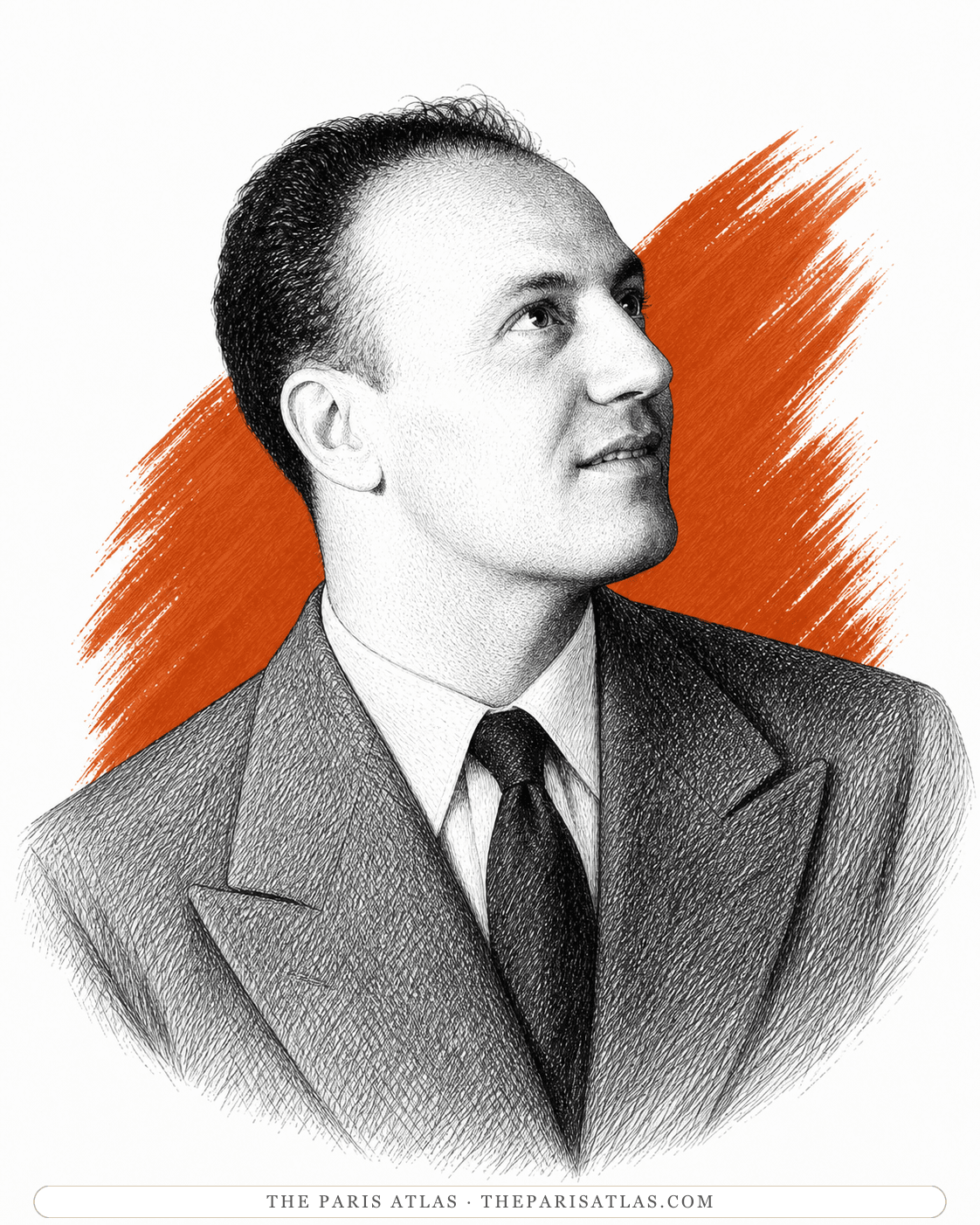
Illustrated portrait of Christian Dior

Christian Dior

  • Fashion designer
  • Art dealer
  • Illustrator

Mentored · 1941–1946

The employment is direct evidence; the mentorship is an editorial assessment. The Metropolitan Museum of Art records that Dior returned to Paris in 1941 to work at Lelong's large design house, while the Musée Christian Dior identifies him as Lelong's principal designer for four years. Dior's later account described how much he learned there before opening his own house.

Christian Dior (1905–1957); Dior, jardins enchanteurs: Dossier de presse

Pierre Balmain

  • Fashion designer

Mentored · 1939–1945

Balmain worked in Lelong's large Paris design studio before opening his own couture house in 1945.

The 'golden age' of couture

Sourced claims

Every connection the graph holds for Lucien, with the evidence behind it.

Collaborated with · 1946

Hubert de Givenchy

The Cristóbal Balenciaga Museoa's Givenchy chronology records six months working for Lucien Lelong in 1946, after Robert Piguet and before Elsa Schiaparelli. The relationship is limited to that documented employment and does not imply a longer partnership.
The Givenchiaga Family — exhibition press kit, with the museum's chronology of Cristóbal Balenciaga and Hubert de Givenchy and its account of their friendship

Mentored · 1941–1946

Christian Dior

The employment is direct evidence; the mentorship is an editorial assessment. The Metropolitan Museum of Art records that Dior returned to Paris in 1941 to work at Lelong's large design house, while the Musée Christian Dior identifies him as Lelong's principal designer for four years. Dior's later account described how much he learned there before opening his own house.

Christian Dior (1905–1957); Dior, jardins enchanteurs: Dossier de presse

Mentored · 1939–1945

Pierre Balmain

Balmain worked in Lelong's large Paris design studio before opening his own couture house in 1945.

The 'golden age' of couture

References

References

The sources below include biographies, scholarly essays, interviews, and primary materials that informed this page. They reflect both the historical record and ongoing critical conversations about Lucien Lelong and their work.

  1. 1Evening dress, Lucien Lelong, spring/summer 1938

    Website
    The Metropolitan Museum of Art
    Used for

    Web source consulted for documented facts and historical context presented on the Lucien Lelong page.

    View source
  2. 2Alaïa before Alaïa: Press kit

    Exhibition catalogue
    Palais Galliera, Fashion Museum of the City of Paris
    Used for

    Catalogue scholarship used to verify attribution, provenance, chronology, and interpretive context for Lucien Lelong.

    View source
  3. 3The 'golden age' of couture

    Website
    Victoria and Albert Museum
    Used for

    Web source consulted for documented facts and historical context presented on the Lucien Lelong page.

    View source
  4. 4Une histoire en images: Les Arts Décoratifs

    Website
    Musée des Arts Décoratifs, Paris
    Used for

    Web source consulted for documented facts and historical context presented on the Lucien Lelong page.

    View source
  1. 5Christian Dior (1905–1957)

    Website
    The Metropolitan Museum of Art
    Used for

    Web source consulted for documented facts and historical context presented on the Lucien Lelong page.

    View source
  2. 6Dior, jardins enchanteurs: Dossier de presse

    Exhibition catalogue
    Musée Christian Dior, Granville
    Used for

    Catalogue scholarship used to verify attribution, provenance, chronology, and interpretive context for Lucien Lelong.

    View source
  3. 7The Givenchiaga Family — exhibition press kit, with the museum's chronology of Cristóbal Balenciaga and Hubert de Givenchy and its account of their friendship

    Website
    Cristóbal Balenciaga Museoa, Getaria
    Used for

    Web source consulted for documented facts and historical context presented on the Lucien Lelong page.

    View source
  4. 8Lucien Lelong (1889–1958)

    Official record
    Bibliothèque nationale de France
    Used for

    Official record used to verify names, dates, institutional details, or other factual information on this page.

    View source
i
Why these sources are here

These references anchor the page in the documented record and in the scholarly conversations around Lucien Lelong. Every claim on this page traces back to one or more of the works listed here.

Explore more resources