The Paris AtlasCharting the artists, works, and places worth returning to.
  • Collector
· French · 1927–2018

Hubert de Givenchy

Couturier — a designer of clothes made to measure by hand for individual clients — who opened his house in Paris in 1952 at twenty-five with a collection of separates and a blouse named after a model, then met the Spanish couturier Cristóbal Balenciaga a year later and organised the rest of his life around him, moving in 1959 to 3 avenue George V, directly opposite his master's showrooms. He dressed the actress Audrey Hepburn from the 1954 film Sabrina onward, and died in 2018.

Details

Lived
1927–2018
Born
20 February 1927
Birthplace
Beauvais, France
Birth name
Hubert James Taffin de Givenchy
Died
10 March 2018 · aged 91
Place of death
Neuilly-sur-Seine
Nationality
French
Profession
Couturier
Major works
The Bettina blouse (1952), Audrey Hepburn's wardrobe from Sabrina (1954) onward, the Breakfast at Tiffany's black dress
Roles
Collector

About Hubert de Givenchy

French couturier — a designer of made-to-measure clothes — who opened his own house at twenty-five, dressed the film star Audrey Hepburn for four decades, and spent the second half of his life protecting the work of Cristóbal Balenciaga, the older Spanish couturier he called his religion

Hubert de Givenchy opened a couture house — a workshop making clothes to order, by hand, for individual clients — at 8 rue Alfred de Vigny in Paris in 1952, when he was twenty-five. He showed the first collection outside the official fashion calendar — the schedule, set by the couture trade body, that fixed when each Paris house was allowed to present — which is to say he showed without permission, and called it Separates: pieces meant to be worn in combination rather than as a single costume. It contained a white cotton blouse with ruffled sleeves that he named after the model who wore it, Bettina Graziani, and he regarded the Bettina blouse ever after as his first best-seller.

Two relationships then shaped everything else. In 1953 he met Cristóbal Balenciaga, the Spanish couturier whose Paris house was the most exclusive in the city, and became — in the words of the museum in Balenciaga's home town — his closest protégé, his most favoured pupil, though he never worked a day in his workroom. In 1954 a young actress came to his atelier, the workshop where a couture house cuts and sews, looking for clothes for a film called Sabrina: Audrey Hepburn, whom he then dressed on screen and off for the rest of her life. He sold his house to LVMH — the French luxury group that owns Louis Vuitton, Dior and much of the trade — in 1988, retired in 1995, and spent his last decades keeping Balenciaga's work from being scattered.

Beauvais to Paris, by way of four couture houses

He was born Hubert James Taffin de Givenchy on 20 February 1927 at Beauvais, a cathedral town about eighty kilometres north of Paris. He moved to the city in 1944, at seventeen, to study at the École des Beaux-Arts — France's national fine-art school — and to learn the fashion trade at the same time. He spent a year apprenticed in the workrooms of the couturier Jacques Fath. In 1946, on the recommendation of the painter and stage designer Christian Bérard, he was hired by the couturier Robert Piguet, and he worked for six months after that with a third couturier, Lucien Lelong — three established Paris houses before he turned twenty.

Then came four years that mattered more than the rest. Elsa Schiaparelli — the Italian-born couturière whose place Vendôme house had been the Paris headquarters of Surrealist fashion, made with the painters of the movement that built art out of dream logic and chance, all lobster-printed dresses and hats shaped like shoes — took him on in 1947 as her first assistant and made him creative director of her boutique. He was twenty. He held the post for four years, which meant that the man who would become the most restrained designer in Paris learned the business inside its least restrained house.

1952: 8 rue Alfred de Vigny

He opened Maison Givenchy in 1952 at 8 rue Alfred de Vigny, a quiet street beside the Parc Monceau in the 8th arrondissement, and showed the first collection outside the official calendar that governed when Paris houses were permitted to present. The critics were enthusiastic. The collection was called Separates, and its emblem was the Bettina blouse — white cotton, wide ruffled sleeves, named for the model Bettina Graziani — which he later called his first best-seller. The Metropolitan Museum of Art in New York, which holds the house's clothes, dates the House of Givenchy from that year.

The early collections earned him a reputation as fashion's enfant terrible — the French phrase for a young talent whose work is admired precisely because it misbehaves. It did not last long as a description. Within a few years the clothes had settled into the pared-back manner he kept for four decades, and the clients arriving at the door included Jacqueline Kennedy, wife of the American president John F. Kennedy; the Duchess of Windsor, the American divorcee Wallis Simpson, for whom Edward VIII had given up the British throne; and Princess Caroline of Monaco.

Balenciaga, and the house across the street

In 1953, a year after opening, he was introduced in New York to Cristóbal Balenciaga by Patricia López Willshaw, a Chilean socialite who bought from both of them. Balenciaga was thirty-two years his senior, almost silent in public, and the couturier every other couturier deferred to. Givenchy's own account of the meeting leaves nothing ambiguous: if he had not met Balenciaga, he said, he might never have discovered the essence of fashion. Years later he put it to the trade paper Women's Wear Daily more bluntly still — Balenciaga was his religion; there was Balenciaga, and then there was God.

What followed was an alliance rather than an apprenticeship. From 1956 the two houses staggered their shows a month apart, issued their own photographs and sketches to the press instead of accepting the magazines' terms, and presented their summer collections together at the Ambassador Hotel in New York. In 1959 Givenchy moved his house to 3 avenue George V — directly opposite Balenciaga's salons at number 10. The British journalist Katharine Whitehorn, writing in the Observer, the London Sunday newspaper, in 1960, gave the pair of them a name spliced from their two surnames: the Givenchiaga family, whose clothes she called the most beautiful dresses in the world.

Audrey Hepburn

In 1954 Audrey Hepburn came to his atelier to ask him to design the wardrobe for a new film, Sabrina, directed by Billy Wilder. She was twenty-five and newly famous; he was twenty-seven and had been in business for two years. What began as one film's costumes became the longest-running collaboration between a couturier and an actress in the twentieth century — she wore his clothes on screen and in her own life for the rest of her career, and he described her as the perfect woman for his designs.

The garments outlived the films. The gown she wears in Wilder's Love in the Afternoon and the black dress in the opening scene of Breakfast at Tiffany's, the later Hepburn film in which she eats a pastry outside the New York jeweller's window — the dress now held by the Museo del Traje in Madrid, Spain's national museum of costume — are the two most recognisable pieces of clothing he ever cut, and neither reads as costume. Their friendship was as durable as the working relationship, and it is the reason his name is attached, more than any other couturier's, to a single face.

Keeper of another man's work

When Balenciaga retired in 1968 he sent some of his most trusted staff and several of his best clients across the road to Givenchy, and personally introduced him to Rachel 'Bunny' Mellon, the American philanthropist and garden designer who became a client and close friend for decades. Balenciaga died in March 1972, and Givenchy presented that August's collection as Hommage à Cristóbal Balenciaga — 'homage to Cristóbal Balenciaga'. From 1982 the honours arrived — beginning with an exhibition devoted to him at the Fashion Institute of Technology, the New York college that trains designers and keeps a museum of costume — and in 2014 the Museo Nacional Thyssen-Bornemisza, one of Madrid's three great art museums, mounted the first major retrospective of his work, which he curated himself.

He sold the brand in 1988 to LVMH, the French luxury conglomerate that owns Louis Vuitton, Dior and much of the trade, and stayed on as its creative director until 1995, when he retired from fashion at sixty-eight. The work that occupied him afterwards was somebody else's. He had spent years assembling a private collection of Balenciaga garments for a stated reason — to keep material evidence of the couturier's work from being dispersed or lost — and he helped establish the Cristóbal Balenciaga Foundation, which opened in 2011 in Getaria, Balenciaga's Basque home town. He gave it his collection of garments and his historic fashion magazines, 450 items in all. He died at Neuilly-sur-Seine, just west of Paris, on 10 March 2018, at ninety-one.

Life events

  1. 1927

    Born Hubert James Taffin de Givenchy on 20 February at Beauvais, north of Paris.

    The Givenchiaga Family — exhibition press kit, with the museum's chronology of Cristóbal Balenciaga and Hubert de Givenchy and its account of their friendship
  2. 1944

    Moves to Paris at seventeen to study at the École des Beaux-Arts and learn the fashion trade, spending a year apprenticed to Jacques Fath.

    The Givenchiaga Family — exhibition press kit, with the museum's chronology of Cristóbal Balenciaga and Hubert de Givenchy and its account of their friendship
  3. 1946

    Hired by Robert Piguet on the painter Christian Bérard's recommendation, then works with Lucien Lelong for six months.

    The Givenchiaga Family — exhibition press kit, with the museum's chronology of Cristóbal Balenciaga and Hubert de Givenchy and its account of their friendship
  4. 1947–1951

    Elsa Schiaparelli takes him on as her first assistant and makes him creative director of her boutique — four years inside the most inventive house in Paris.

    Shocking ! Les mondes surréalistes d'Elsa Schiaparelli — exhibition, 6 July 2022 to 22 January 2023, with the house chronology (2022); The Givenchiaga Family — exhibition press kit, with the museum's chronology of Cristóbal Balenciaga and Hubert de Givenchy and its account of their friendship
  5. 1952

    Opens Maison Givenchy at 8 rue Alfred de Vigny, aged twenty-five, and shows Separates outside the official calendar; the Bettina blouse is his first best-seller.

    The Givenchiaga Family — exhibition press kit, with the museum's chronology of Cristóbal Balenciaga and Hubert de Givenchy and its account of their friendship

  6. 1953

    Meets Cristóbal Balenciaga in New York, introduced by their shared client Patricia López Willshaw — the turning point of his career.

    The Givenchiaga Family — exhibition press kit, with the museum's chronology of Cristóbal Balenciaga and Hubert de Givenchy and its account of their friendship

  7. 1954

    Audrey Hepburn visits his atelier to ask him to design the wardrobe for Sabrina, directed by Billy Wilder, beginning a lifelong collaboration.

    The Givenchiaga Family — exhibition press kit, with the museum's chronology of Cristóbal Balenciaga and Hubert de Givenchy and its account of their friendship; Hubert de Givenchy — retrospective curated by the couturier himself, 22 October 2014 to 18 January 2015 (2014)

  8. 1959

    Moves the house to 3 avenue George V, directly opposite Balenciaga's salons; the press names the two houses the Givenchiaga family.

    The Givenchiaga Family — exhibition press kit, with the museum's chronology of Cristóbal Balenciaga and Hubert de Givenchy and its account of their friendship

  9. 1968

    Balenciaga retires, sends him trusted staff and clients, and introduces him to Rachel 'Bunny' Mellon.

    The Givenchiaga Family — exhibition press kit, with the museum's chronology of Cristóbal Balenciaga and Hubert de Givenchy and its account of their friendship

  10. 1972

    After Balenciaga's death in March, presents his August collection as Hommage à Cristóbal Balenciaga.

    The Givenchiaga Family — exhibition press kit, with the museum's chronology of Cristóbal Balenciaga and Hubert de Givenchy and its account of their friendship

  11. 1982

    The recognition begins with an exhibition devoted to his work at the Fashion Institute of Technology in New York.

    The Givenchiaga Family — exhibition press kit, with the museum's chronology of Cristóbal Balenciaga and Hubert de Givenchy and its account of their friendship

  12. 1988–1995

    Sells the brand to LVMH in 1988 and stays on as creative director until 1995, when he retires from fashion.

    The Givenchiaga Family — exhibition press kit, with the museum's chronology of Cristóbal Balenciaga and Hubert de Givenchy and its account of their friendship

  13. 2011

    The Cristóbal Balenciaga Foundation he helped establish opens at Getaria; he donates his Balenciaga garments and historic fashion magazines, 450 items in all.

    The Givenchiaga Family — exhibition press kit, with the museum's chronology of Cristóbal Balenciaga and Hubert de Givenchy and its account of their friendship

  14. 2014

    Curates the first major retrospective of his own work himself, at the Museo Thyssen-Bornemisza in Madrid, from 22 October to 18 January 2015.

    Hubert de Givenchy — retrospective curated by the couturier himself, 22 October 2014 to 18 January 2015 (2014)

  15. 2018

    Dies at Neuilly-sur-Seine on 10 March, aged ninety-one.

    The Givenchiaga Family — exhibition press kit, with the museum's chronology of Cristóbal Balenciaga and Hubert de Givenchy and its account of their friendship

People they knew

Documented connections — every one carries its source.

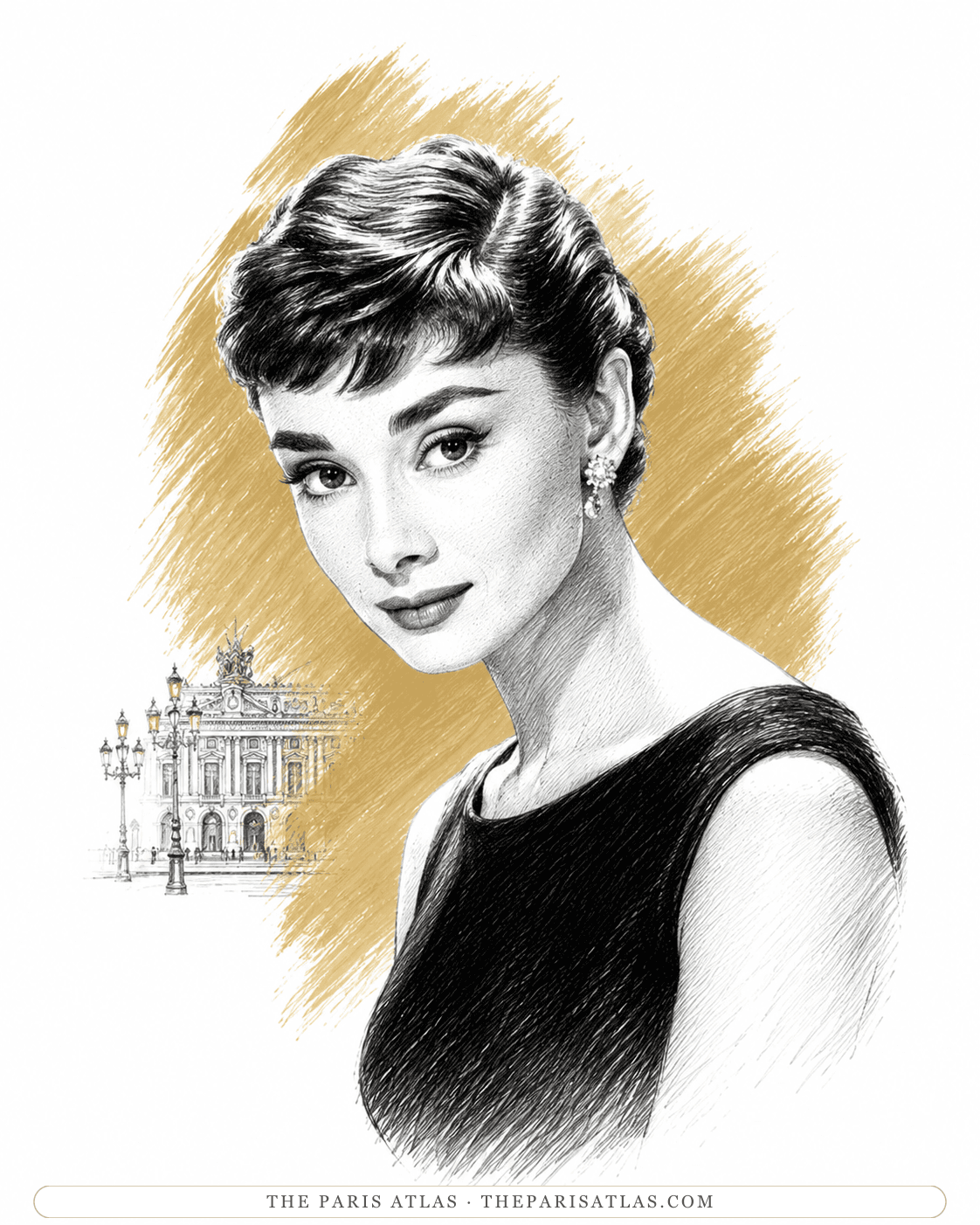
Illustrated portrait of Audrey Hepburn

Audrey Hepburn

  • Actor

Collaborated with · 1954

It began as one film's costume order and lasted the rest of her life. In 1954 Hepburn came to Givenchy's Paris atelier to ask him to design the wardrobe for Sabrina, directed by Billy Wilder; he had opened his house two years earlier. She then wore his clothes on screen and off for the rest of her career — the gown in Wilder's Love in the Afternoon, and the black dress in the opening scene of Breakfast at Tiffany's, now held by the Museo del Traje in Madrid. The Cristóbal Balenciaga Museoa calls it one of the most iconic collaborations between fashion and film in the twentieth century, and records that beyond the professional relationship the two shared a close friendship.

The Givenchiaga Family — exhibition press kit, with the museum's chronology of Cristóbal Balenciaga and Hubert de Givenchy and its account of their friendship; Hubert de Givenchy — retrospective curated by the couturier himself, 22 October 2014 to 18 January 2015 (2014)

Cristóbal Balenciaga

  • Tailor

Mentored by · 1953–1972

The Cristóbal Balenciaga Museoa states it directly, and states its limits: Givenchy's admiration for Balenciaga, 'combined with the keen attention he paid to the advice of his reserved yet generous mentor, made him Balenciaga's closest protégé despite never having worked in his atelier'. They were introduced in New York in 1953 by Patricia López Willshaw, a client of both. From 1956 the two houses staggered their show dates a month apart, issued their own photographs and sketches to the press, and presented summer collections together at New York's Ambassador Hotel; from 1959 Givenchy worked at 3 avenue George V, directly opposite Balenciaga's salons at number 10. When Balenciaga retired in 1968 he moved trusted staff and important clients to Maison Givenchy and introduced Givenchy to Rachel 'Bunny' Mellon. Givenchy's own summary, to Women's Wear Daily: 'Balenciaga was my religion. There was Balenciaga, and then there was God.'

The Givenchiaga Family — exhibition press kit, with the museum's chronology of Cristóbal Balenciaga and Hubert de Givenchy and its account of their friendship; About the Balenciaga: Shaping Fashion exhibition — 27 May 2017 to 18 February 2018 (2017)

Elsa Schiaparelli

  • Patron
  • Author

Mentored by · 1947–1951

What the sources state directly is employment, not mentorship: the Musée des Arts Décoratifs records that Schiaparelli hired the young Givenchy as her first assistant in 1947, and the Cristóbal Balenciaga Museoa that he became creative director of her boutique, 'a position he held for four years before founding his own fashion house in 1952'. He was twenty when she took him on, it was the last and longest of his four apprenticeships — after Jacques Fath, Robert Piguet and Lucien Lelong — and he left it to open his own house. The formative reading is ours; the four years, the title and the dates are the museums'.

Shocking ! Les mondes surréalistes d'Elsa Schiaparelli — exhibition, 6 July 2022 to 22 January 2023, with the house chronology (2022); The Givenchiaga Family — exhibition press kit, with the museum's chronology of Cristóbal Balenciaga and Hubert de Givenchy and its account of their friendship

Questions about Hubert de Givenchy

Who was Hubert de Givenchy?

A French couturier, born at Beauvais in 1927, who opened his own couture house in Paris in 1952 at twenty-five and ran it until 1995. He is best known for dressing Audrey Hepburn from the 1954 film Sabrina onward, for the Bettina blouse of his first collection, and for a long friendship with Cristóbal Balenciaga, whose work he spent his later life preserving. He died at Neuilly-sur-Seine in 2018.

Where was Givenchy's first Paris couture house?

At 8 rue Alfred de Vigny, beside the Parc Monceau in the 8th arrondissement, opened in 1952. In 1959 he moved the house to 3 avenue George V — directly across the street from Cristóbal Balenciaga's salons at number 10, which was the point of the move.

What is the Bettina blouse?

A white cotton blouse with wide ruffled sleeves from Givenchy's first collection in 1952, named after Bettina Graziani, the model who wore it. He considered it his first best-seller. The collection it came from was called Separates — pieces designed to be combined rather than worn as one outfit — and he showed it outside the official Paris fashion calendar.

How did Givenchy meet Audrey Hepburn?

She came to his atelier — the workroom where a couture house cuts and sews — in 1954 to ask him to design the wardrobe for her new film, Sabrina, directed by Billy Wilder. He was twenty-seven and two years into running his own house. The collaboration lasted the rest of her career and her life: she wore his clothes on screen and off, and the black dress from the opening scene of Breakfast at Tiffany's — now held by the Museo del Traje, Spain's national costume museum, in Madrid — remains the most recognisable garment either of them is associated with.

What was Givenchy's relationship with Balenciaga?

Balenciaga was the older Spanish couturier he revered. They met in New York in 1953 through a client they shared, and the museum in Balenciaga's home town describes Givenchy as his closest protégé, meaning his most favoured pupil — while stating precisely that he never worked in Balenciaga's workroom. What passed between them was advice, example and a close friendship, plus a joint business front: staggered show dates from 1956, their own press photographs, shared New York presentations, and from 1959 two houses facing each other on the avenue George V. Givenchy told Women's Wear Daily that Balenciaga was his religion.

Did Hubert de Givenchy work for Elsa Schiaparelli?

Yes, for four years. Schiaparelli hired him in 1947, when he was twenty, as her first assistant, and he became creative director of her boutique. It was his last job before opening his own house in 1952. He had already passed through the workrooms of Jacques Fath, Robert Piguet and Lucien Lelong.

When did Givenchy retire, and what happened to the house?

He sold the brand in 1988 to LVMH, the French luxury conglomerate that owns Louis Vuitton and Dior, and stayed on as creative director until 1995, when he retired from fashion at sixty-eight. The house continued under other designers; he spent his own remaining years curating exhibitions and protecting Balenciaga's legacy.

What did Givenchy do after he stopped designing?

He became the guardian of Cristóbal Balenciaga's work. He had assembled a private collection of Balenciaga garments for a deliberate reason — to keep the evidence of the couturier's technique from being dispersed or lost — and he helped set up the Cristóbal Balenciaga Foundation, which opened in 2011 at Getaria in the Basque Country, giving it his garments and his historic fashion magazines, 450 items in total. He also curated the first major retrospective of his own work, at the Museo Thyssen-Bornemisza, one of Madrid's great art museums, in 2014.

Sourced claims

Every connection the graph holds for Hubert, with the evidence behind it.

Collaborated with · 1954

Audrey Hepburn

It began as one film's costume order and lasted the rest of her life. In 1954 Hepburn came to Givenchy's Paris atelier to ask him to design the wardrobe for Sabrina, directed by Billy Wilder; he had opened his house two years earlier. She then wore his clothes on screen and off for the rest of her career — the gown in Wilder's Love in the Afternoon, and the black dress in the opening scene of Breakfast at Tiffany's, now held by the Museo del Traje in Madrid. The Cristóbal Balenciaga Museoa calls it one of the most iconic collaborations between fashion and film in the twentieth century, and records that beyond the professional relationship the two shared a close friendship.

The Givenchiaga Family — exhibition press kit, with the museum's chronology of Cristóbal Balenciaga and Hubert de Givenchy and its account of their friendship; Hubert de Givenchy — retrospective curated by the couturier himself, 22 October 2014 to 18 January 2015 (2014)

Mentored by · 1953–1972

Cristóbal Balenciaga

The Cristóbal Balenciaga Museoa states it directly, and states its limits: Givenchy's admiration for Balenciaga, 'combined with the keen attention he paid to the advice of his reserved yet generous mentor, made him Balenciaga's closest protégé despite never having worked in his atelier'. They were introduced in New York in 1953 by Patricia López Willshaw, a client of both. From 1956 the two houses staggered their show dates a month apart, issued their own photographs and sketches to the press, and presented summer collections together at New York's Ambassador Hotel; from 1959 Givenchy worked at 3 avenue George V, directly opposite Balenciaga's salons at number 10. When Balenciaga retired in 1968 he moved trusted staff and important clients to Maison Givenchy and introduced Givenchy to Rachel 'Bunny' Mellon. Givenchy's own summary, to Women's Wear Daily: 'Balenciaga was my religion. There was Balenciaga, and then there was God.'

The Givenchiaga Family — exhibition press kit, with the museum's chronology of Cristóbal Balenciaga and Hubert de Givenchy and its account of their friendship; About the Balenciaga: Shaping Fashion exhibition — 27 May 2017 to 18 February 2018 (2017)

Mentored by · 1947–1951

Elsa Schiaparelli

What the sources state directly is employment, not mentorship: the Musée des Arts Décoratifs records that Schiaparelli hired the young Givenchy as her first assistant in 1947, and the Cristóbal Balenciaga Museoa that he became creative director of her boutique, 'a position he held for four years before founding his own fashion house in 1952'. He was twenty when she took him on, it was the last and longest of his four apprenticeships — after Jacques Fath, Robert Piguet and Lucien Lelong — and he left it to open his own house. The formative reading is ours; the four years, the title and the dates are the museums'.

Shocking ! Les mondes surréalistes d'Elsa Schiaparelli — exhibition, 6 July 2022 to 22 January 2023, with the house chronology (2022); The Givenchiaga Family — exhibition press kit, with the museum's chronology of Cristóbal Balenciaga and Hubert de Givenchy and its account of their friendship

References

References

The sources below include biographies, scholarly essays, interviews, and primary materials that informed this page. They reflect both the historical record and ongoing critical conversations about Hubert de Givenchy and their work.

  1. 1The Givenchiaga Family — exhibition press kit, with the museum's chronology of Cristóbal Balenciaga and Hubert de Givenchy and its account of their friendship

    Cristóbal Balenciaga Museoa, Getaria
    View source
  2. 2Hubert de Givenchy — retrospective curated by the couturier himself, 22 October 2014 to 18 January 2015

    Museo Nacional Thyssen-Bornemisza, Madrid, 2014
    View source
  1. 3Shocking ! Les mondes surréalistes d'Elsa Schiaparelli — exhibition, 6 July 2022 to 22 January 2023, with the house chronology

    Musée des Arts Décoratifs, Paris, 2022
    View source
  2. 4About the Balenciaga: Shaping Fashion exhibition — 27 May 2017 to 18 February 2018

    Victoria and Albert Museum, London, 2017
    View source
i
Why these sources are here

These references anchor the page in the documented record and in the scholarly conversations around Hubert de Givenchy. Every claim on this page traces back to one or more of the works listed here.

Explore more resources