The Paris AtlasCharting the artists, works, and places worth returning to.
  • Patron
  • Author
· Italian · 1890–1973

Elsa Schiaparelli

Couturière — a designer of made-to-measure clothes, cut and sewn by hand for one client at a time — who turned a Paris couture house into a workshop for the Surrealists, the artists who built their work out of dream logic and chance. From 21 place Vendôme she commissioned the painter Salvador Dalí, the poet and film-maker Jean Cocteau and the sculptor Alberto Giacometti to help make her clothes — a dress printed with a lobster, a hat shaped like a shoe, a colour she named shocking pink — then closed the house in 1954 and never designed again.

Details

Lived
1890–1973
Born
10 September 1890
Birthplace
Rome
Died
13 November 1973 · aged 83
Place of death
Paris
Nationality
Italian
Profession
Couturière
Major works
The trompe-l'œil sweater (1927), the Lobster Dress and Shoe Hat with Salvador Dalí (1937), shocking pink, the perfume Shocking (1937)
Roles
PatronAuthor

About Elsa Schiaparelli

Italian-born couturière — a designer who makes clothes to order, by hand, for individual clients — who ran her Paris house as a workshop for the Surrealist painters and made clothes that behaved like artworks

Elsa Schiaparelli made clothes that argued with the idea of clothes. A hat cut in the shape of a woman's shoe, worn upside down on the head. An evening dress printed with a single enormous lobster. A jacket whose embroidered pockets imitate the drawers of a chest. She did not invent these images alone: she hired the painters who were inventing them, above all the Spanish Surrealist Salvador Dalí, and had her workrooms turn their pictures into things a woman could wear to dinner.

The house that produced them stood at 21 place Vendôme — the square of jewellers and grand hotels, among them the Ritz, in the 1st arrondissement, the innermost of the twenty numbered districts that make up Paris — and she moved into it in 1935 at the height of her fame. She was Italian, born in Rome in 1890 to a family the Musée des Arts Décoratifs, the Paris museum of decorative arts and fashion that holds much of her archive, describes as Italian intellectuals and aristocrats, and she came to fashion sideways — through a hand-knitted sweater with a bow knitted into it in black and white so that the bow looked tied on. That sweater, in 1927, started the business. Twenty-seven years later she showed a last collection and, on 13 December 1954, shut the salon — the showroom where a couture house presents each season's clothes to its clients — and stopped.

Rome, a bad marriage, and a sweater

She was born in Rome on 10 September 1890. She found Paris and London in 1913, married Count William de Wendt de Kerlor in 1914, and the marriage did not last; by 1920 she was in Paris meeting Marcel Duchamp, the Frenchman who had begun exhibiting ordinary manufactured objects as sculpture, and the American photographer Man Ray — two of the artists then dismantling the idea that art had to be painted at all. After the separation she settled into Paris properly in 1922 and fell in with the Dadaists — the movement, born in wartime Zurich, that answered a world at war with deliberate nonsense. She had no training as a dressmaker and no house behind her.

What she had was one good idea, executed in wool. In 1927 she put a trompe-l'œil motif — French for 'deceives the eye', a picture painted or, here, knitted so convincingly that it reads as a real object — onto a hand-knitted sweater. The house's own history describes the run that followed: black and white trompe-l'œils that hinted at a bow, a pierced heart, a skeleton, or a sailor's tattoo. A jumper that appeared to have a bow tied at the throat, and did not, sold well enough to start a couture house. Her first fragrance, called simply 'S', followed in 1929, and in 1934 she became the first woman designer on the cover of Time magazine.

21 place Vendôme

In 1935 she moved the salon into the Hôtel de Fontpertuis at 21 place Vendôme. It is not a hotel: an hôtel particulier is a private mansion built for one family, and this one stands on the octagonal square in central Paris that holds the Hôtel Ritz and the great jewellery houses — the most expensive address a Paris couturière could take. She had the interiors done by Jean-Michel Frank, the designer whose severe, luxurious rooms defined 1930s Paris taste, working with the sculptor Alberto Giacometti, who at that date was making lamps and furniture as readily as sculpture. Giacometti also made jewellery for her, and a lighting piece she called the Colonne Luminaire — the 'luminous column'.

The address is the point. A couture house is a private workshop that fits clothes to individual clients by hand, and Schiaparelli ran hers as an open door for the Paris avant-garde — the loose alliance of painters, poets and photographers then remaking European art. Man Ray photographed for her and designed spiral spectacles; the painter Leonor Fini drew the bottle for her perfume; the Swiss artist Meret Oppenheim, whose fur-lined teacup and saucer was one of the most notorious Surrealist objects of the decade, made her a bracelet of metal and fur. The house was a place where an idea from a painting could be cut, embroidered and delivered to a customer within the season.

Dalí, Cocteau, and the year of the lobster

Her first collaboration with Salvador Dalí, the Catalan painter whose melting clocks had made Surrealism famous, came in 1936. Surrealism was the movement launched in Paris in 1924 around dream logic, chance and the unconscious, and Dalí was its most theatrical member. Together they produced the objects the house is still known for: a white evening dress printed with a single scarlet lobster; a hat in the exact shape of a woman's high-heeled shoe, worn crown-down; a skeleton dress with the ribs quilted up in relief; and a suit whose pockets imitate the drawers of a chest of drawers, a joke lifted straight out of Dalí's paintings. He later drew her perfume bottle for Le Roy Soleil — 'the Sun King', the nickname of Louis XIV, whose court set the standard for French luxury.

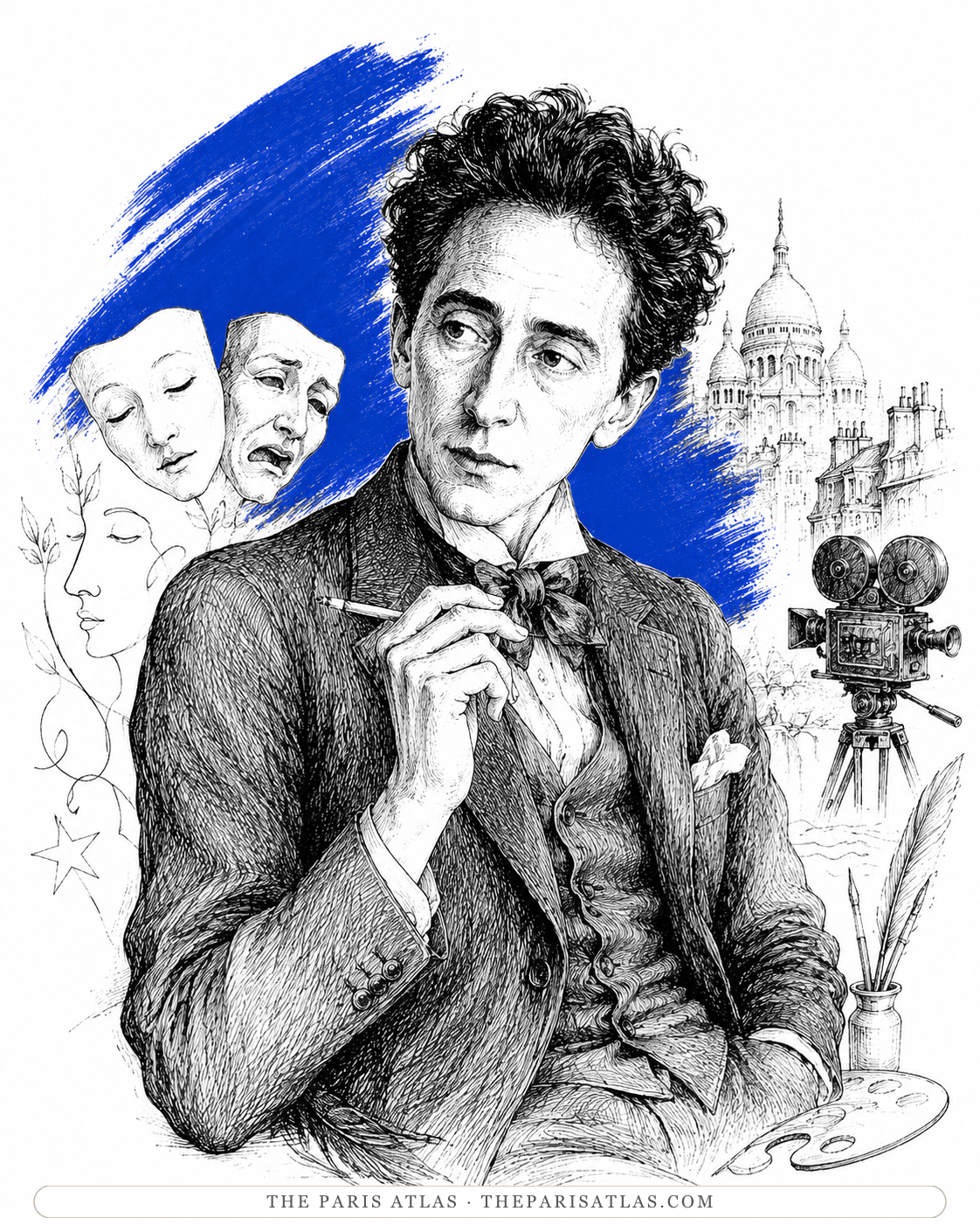
The lobster dress went to the most watched customer in the world. The Philadelphia Museum of Art, which holds the garment, records that the lobster motif on Schiaparelli's dress came out of the collaboration with Dalí, and that Wallis Simpson — the American divorcee whose marriage to the former King Edward VIII had just cost him the British throne — included a Schiaparelli dinner dress of February 1937 in her trousseau, the wardrobe a bride assembles for her marriage, bought before that wedding. In the same year Jean Cocteau, the poet, film-maker and draughtsman who moved through every Paris art world at once, gave her a design that reads two ways at once: an embroidered coat on which two faces in profile, drawn in trompe-l'œil, also read as a vase of shocking pink roses.

Shocking pink, and a perfume named for it

In 1937 she introduced the colour she called shocking pink — a hot, saturated magenta with no softness in it — and, on 29 April, a perfume named Shocking to go with it. The bottle was drawn by Leonor Fini, and it is not shaped like a bottle: it is shaped like a dressmaker's tailor's dummy, a torso with a measuring tape at the neck. The colour became the house's signature and outlived the house by decades. She used the same word for her memoir, Shocking Life, published in 1954.

The Second World War broke the run. She left for the United States in 1940, while Paris was under German occupation, and returned to France in 1945, showing her first post-war collection that year. In 1947 she hired a twenty-year-old from Beauvais, the cathedral town north of Paris, as her first assistant and, in time, put him in charge of her boutique: Hubert de Givenchy, who would open his own couture house five years later and become one of the defining French designers of the century. But the post-war years belonged to a different silhouette — the New Look of 1947, the tightly cinched waist and heavy, full skirt with which the younger couturier Christian Dior took over Paris fashion — and her wit did not sell into it.

The closing, and the reopening she never saw

She presented her final couture collection in 1954 and closed the salon on 13 December of that year. She was sixty-four, and she designed no more clothes; the memoir came out in the same year, and she lived another nineteen years, dying in Paris on 13 November 1973 at eighty-three. The Victoria and Albert Museum in London, which holds her work, calls her one of the most remarkable couturiers of the twentieth century, known for her subversive, sometimes overtly surreal designs — a summary that puts the strangeness first, which is how she would have wanted it.

The name came back without her. In 2012 the house reopened at 21 place Vendôme, the same address she took in 1935; in 2017 it was granted the official haute couture label; and in 2019 the designer Daniel Roseberry became its creative director. Haute couture means made-to-measure clothes fitted to a single client, and in France the phrase is protected by law: only the handful of houses that meet the state's conditions on hand-work and workroom staff are allowed to use it. The line the revived house quotes from her is the one that explains the whole career: 'La création de robes n'est pas pour moi une profession mais un art' — dress-making, for me, is not a profession but an art.

Life events

  1. 1890

    Born in Rome on 10 September, into a family of Italian intellectuals and aristocrats.

    Shocking ! Les mondes surréalistes d'Elsa Schiaparelli — exhibition, 6 July 2022 to 22 January 2023, with the house chronology (2022)

  2. 1913–1914

    Discovers Paris and London, then marries Count William de Wendt de Kerlor in 1914; the marriage does not hold.

    Shocking ! Les mondes surréalistes d'Elsa Schiaparelli — exhibition, 6 July 2022 to 22 January 2023, with the house chronology (2022)

  3. 1920–1922

    Meets Marcel Duchamp and Man Ray in Paris, and after the separation settles there for good, falling in with the Dadaists.

    Shocking ! Les mondes surréalistes d'Elsa Schiaparelli — exhibition, 6 July 2022 to 22 January 2023, with the house chronology (2022)

  4. 1927

    Knits a trompe-l'œil bow into a black-and-white sweater. The sweaters sell, and the couture house starts from them.

    L'histoire de la Maison — the house's own history of Elsa Schiaparelli; Shocking ! Les mondes surréalistes d'Elsa Schiaparelli — exhibition, 6 July 2022 to 22 January 2023, with the house chronology (2022)

  5. 1929

    Launches her first fragrance, called simply 'S'.

    L'histoire de la Maison — the house's own history of Elsa Schiaparelli

  6. 1934

    Appears on the cover of Time — the first woman designer to do so.

    L'histoire de la Maison — the house's own history of Elsa Schiaparelli

  7. 1935

    Moves the salon to the Hôtel de Fontpertuis at 21 place Vendôme, with interiors by Jean-Michel Frank and the sculptor Alberto Giacometti.

    L'histoire de la Maison — the house's own history of Elsa Schiaparelli; Shocking ! Les mondes surréalistes d'Elsa Schiaparelli — exhibition, 6 July 2022 to 22 January 2023, with the house chronology (2022)

  8. 1936

    First collaboration with Salvador Dalí.

    Shocking ! Les mondes surréalistes d'Elsa Schiaparelli — exhibition, 6 July 2022 to 22 January 2023, with the house chronology (2022)

  9. 1937

    The Lobster Dress with Dalí, Cocteau's trompe-l'œil embroidered coat, the colour shocking pink, and — on 29 April — the perfume Shocking in Leonor Fini's dressmaker's-dummy bottle.

    L'histoire de la Maison — the house's own history of Elsa Schiaparelli; Shocking ! Les mondes surréalistes d'Elsa Schiaparelli — exhibition, 6 July 2022 to 22 January 2023, with the house chronology (2022); Introducing Elsa Schiaparelli

  10. 1940–1945

    Leaves for the United States for the war years, and returns to France in 1945 with her first post-war collection.

    Shocking ! Les mondes surréalistes d'Elsa Schiaparelli — exhibition, 6 July 2022 to 22 January 2023, with the house chronology (2022)

  11. 1947

    Hires the young Hubert de Givenchy as her first assistant; he goes on to run her boutique.

    Shocking ! Les mondes surréalistes d'Elsa Schiaparelli — exhibition, 6 July 2022 to 22 January 2023, with the house chronology (2022); The Givenchiaga Family — exhibition press kit, with the museum's chronology of Cristóbal Balenciaga and Hubert de Givenchy and its account of their friendship

  12. 1954

    Shows a final couture collection, publishes the memoir Shocking Life, and closes the salon on 13 December.

    Shocking ! Les mondes surréalistes d'Elsa Schiaparelli — exhibition, 6 July 2022 to 22 January 2023, with the house chronology (2022); L'histoire de la Maison — the house's own history of Elsa Schiaparelli

  13. 1973

    Dies in Paris on 13 November, aged eighty-three, having designed nothing for nineteen years.

    Shocking ! Les mondes surréalistes d'Elsa Schiaparelli — exhibition, 6 July 2022 to 22 January 2023, with the house chronology (2022)

  14. 2012

    The house reopens at 21 place Vendôme; it receives the official haute couture label in 2017 and Daniel Roseberry becomes creative director in 2019.

    L'histoire de la Maison — the house's own history of Elsa Schiaparelli

People they knew

Documented connections — every one carries its source.

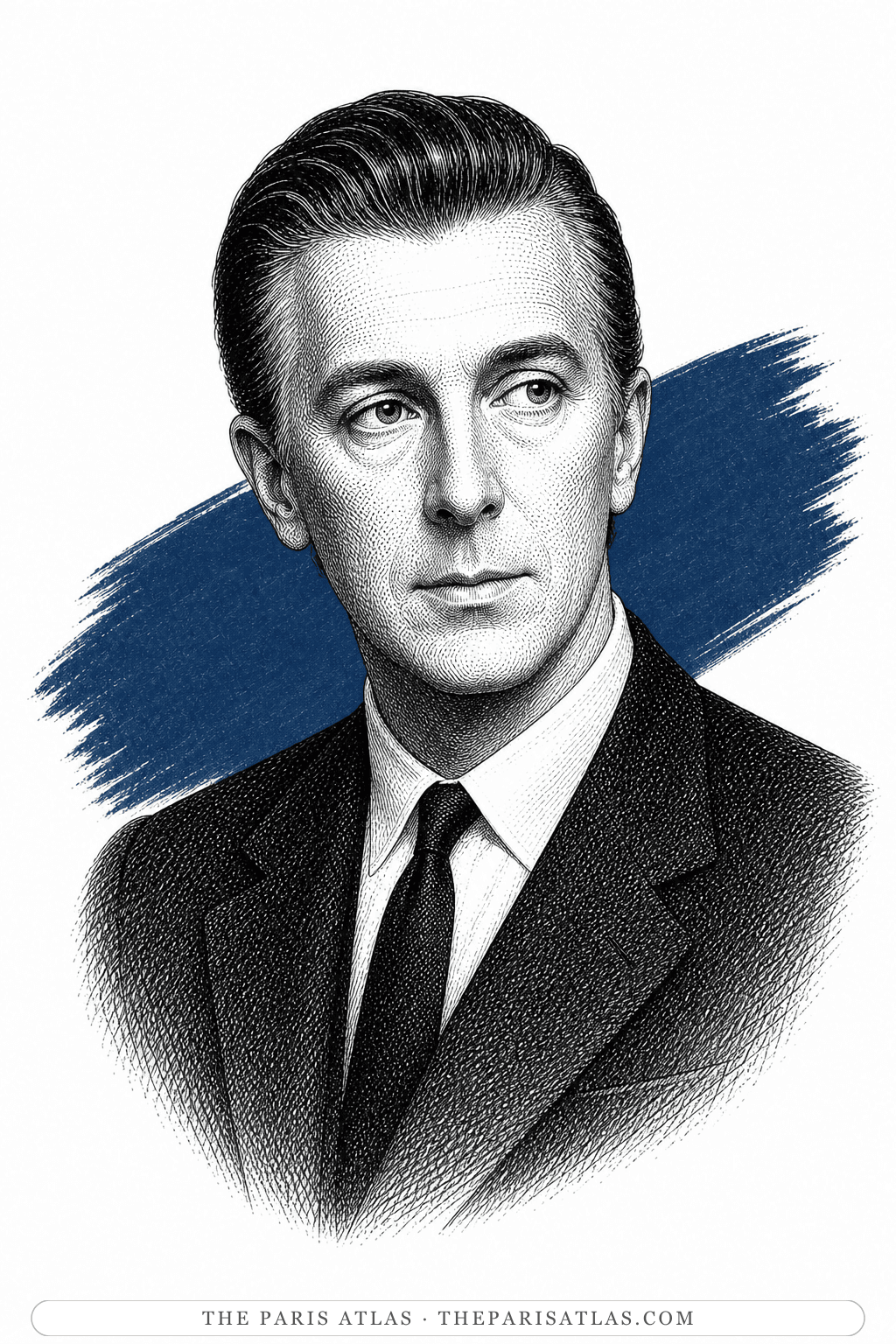
Illustrated portrait of Alberto Giacometti

Alberto Giacometti

  • Sculptor
  • Painter

Collaborated with · 1935

Before the tall thin figures made him famous, Giacometti made lamps, furniture and decorative objects. When Schiaparelli moved her salon into the Hôtel de Fontpertuis at 21 place Vendôme in 1935, the interiors were designed by Jean-Michel Frank working with Giacometti, and the house's catalogue of its artist collaborations lists jewellery by Giacometti and a lighting piece, the Colonne Luminaire. The Musée des Arts Décoratifs names him among her key collaborators alongside Man Ray, Cocteau, Dalí, Oppenheim and Bérard.
L'histoire de la Maison — the house's own history of Elsa Schiaparelli; Schiaparelli et les artistes — the house's catalogue of Elsa Schiaparelli's collaborations with Dalí, Cocteau, Giacometti, Man Ray, Fini and Oppenheim; Shocking ! Les mondes surréalistes d'Elsa Schiaparelli — exhibition, 6 July 2022 to 22 January 2023, with the house chronology (2022)

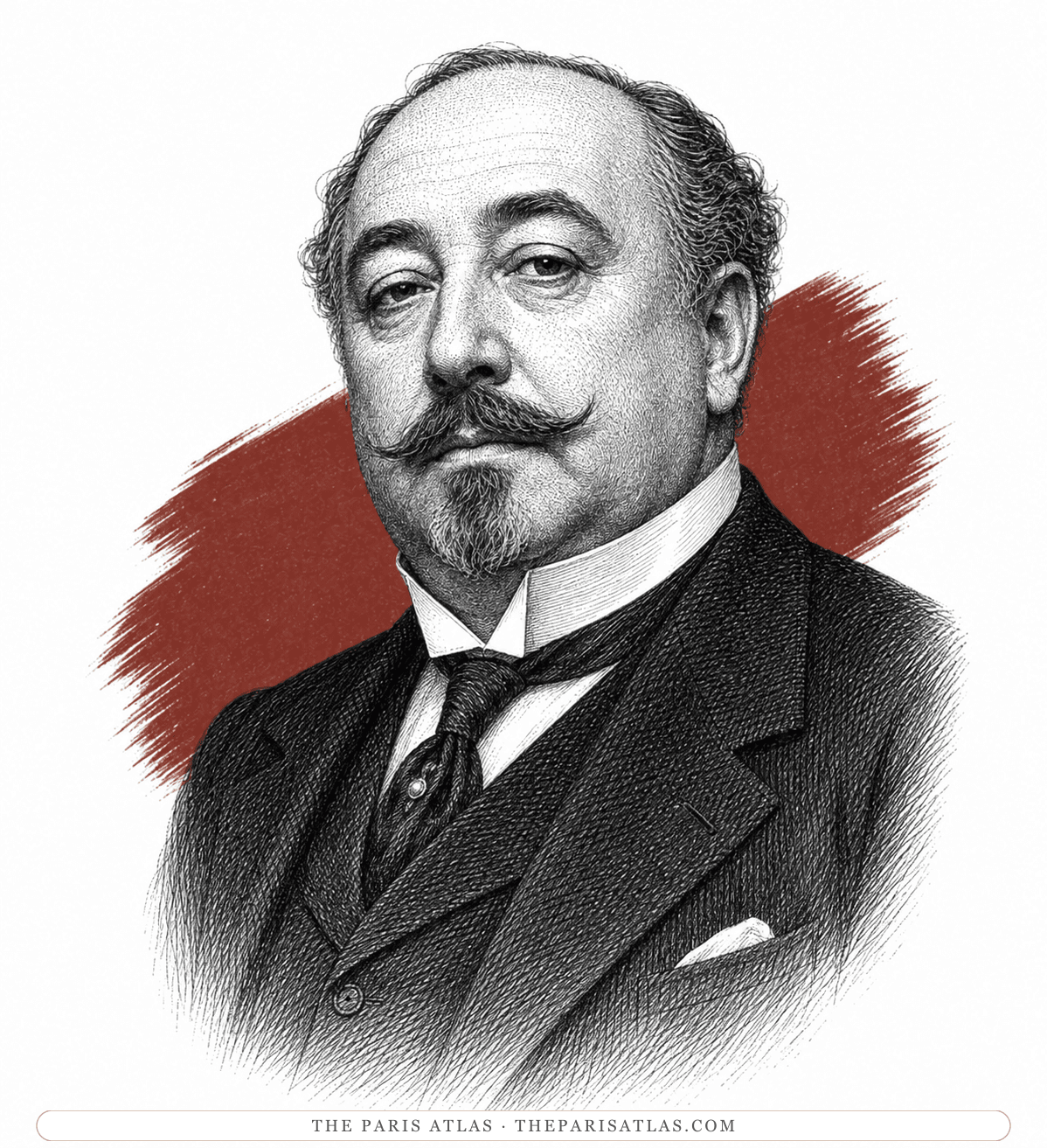
Illustrated portrait of Jean Cocteau

Jean Cocteau

  • Poet
  • Playwright
  • Illustrator
  • +1

Collaborated with · 1937

The house's catalogue of Schiaparelli's artist collaborations files three works under Cocteau's name, among them an embroidered coat on which two faces drawn in trompe-l'œil also read as a vase of shocking pink roses, and an eye-shaped brooch. The V&A dates the embroidered couture coat to 1937 and calls it iconic. The drawing was Cocteau's; the embroidery and construction were the house's.

Schiaparelli et les artistes — the house's catalogue of Elsa Schiaparelli's collaborations with Dalí, Cocteau, Giacometti, Man Ray, Fini and Oppenheim; Introducing Elsa Schiaparelli

Illustrated portrait of Man Ray

Man Ray

  • Photographer
  • Painter
  • Filmmaker

Collaborated with

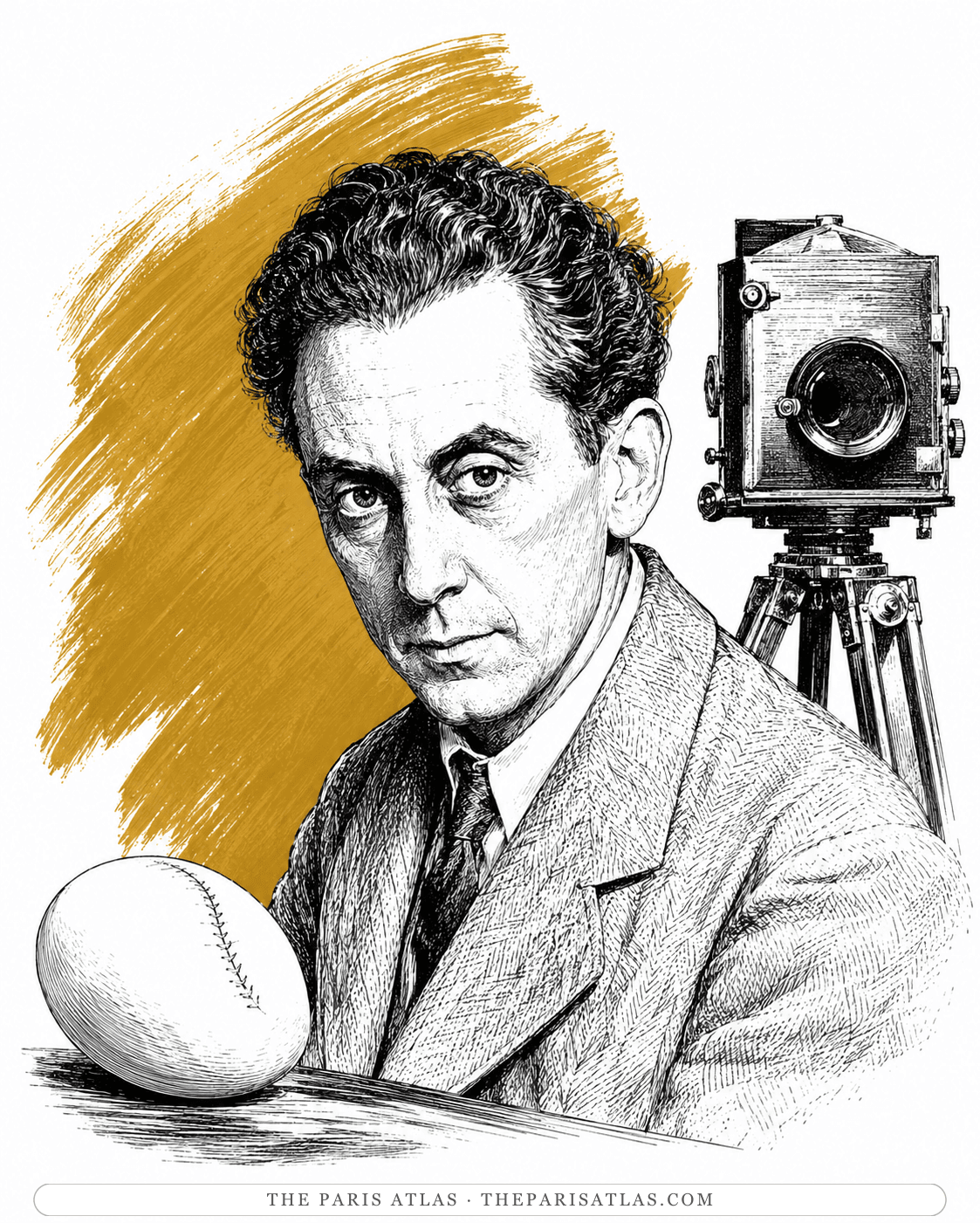
They had met in Paris in 1920, before either was famous for the work they are now known for. The house's catalogue of Schiaparelli's artist collaborations files six or seven works under Man Ray's name, including the spiral spectacles made for her and portraits of the couturière; the Musée des Arts Décoratifs lists him first among her key collaborators.

Schiaparelli et les artistes — the house's catalogue of Elsa Schiaparelli's collaborations with Dalí, Cocteau, Giacometti, Man Ray, Fini and Oppenheim; Shocking ! Les mondes surréalistes d'Elsa Schiaparelli — exhibition, 6 July 2022 to 22 January 2023, with the house chronology (2022)

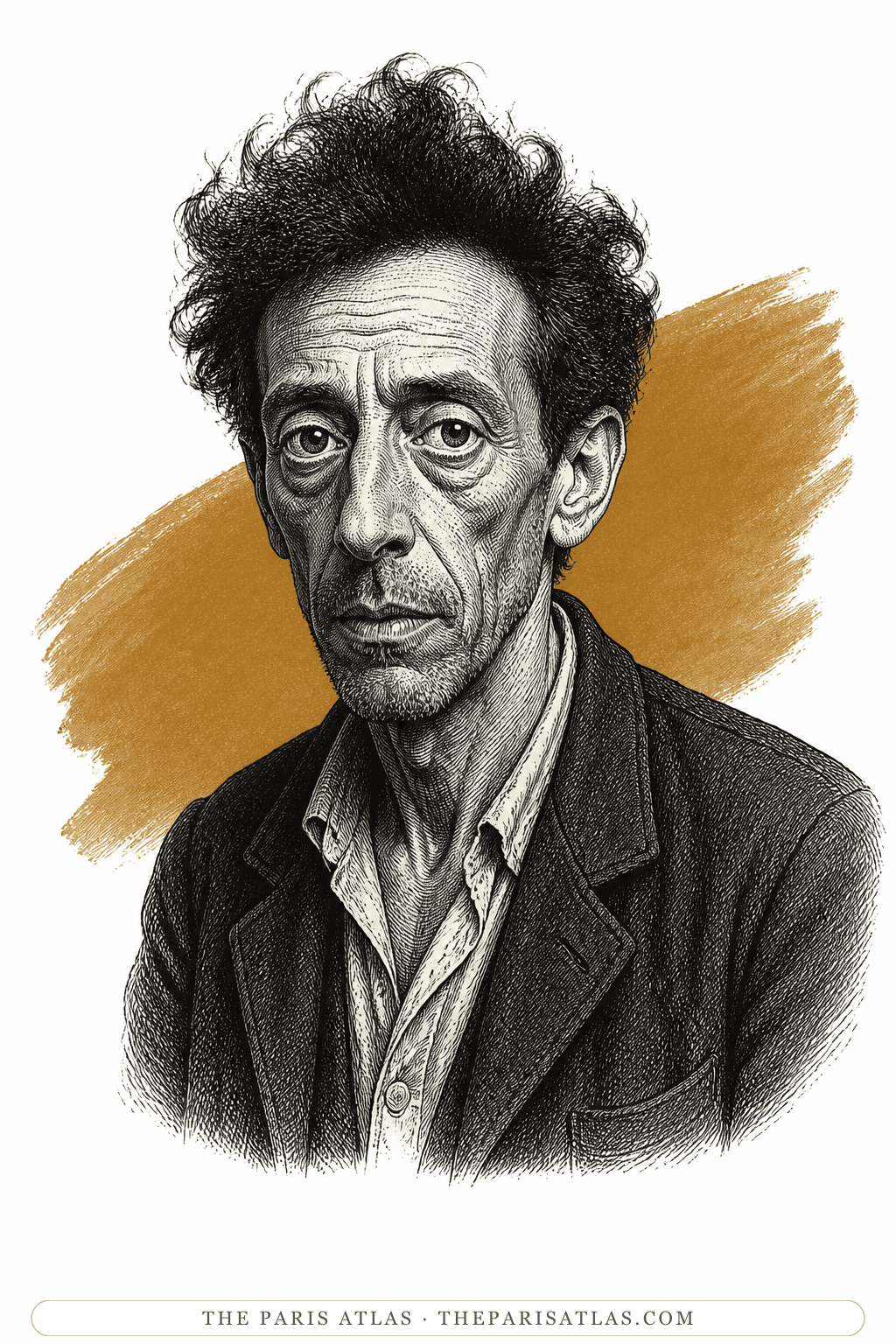
Illustrated portrait of Salvador Dalí

Salvador Dalí

  • Painter
  • Filmmaker
  • Sculptor

Collaborated with · 1936

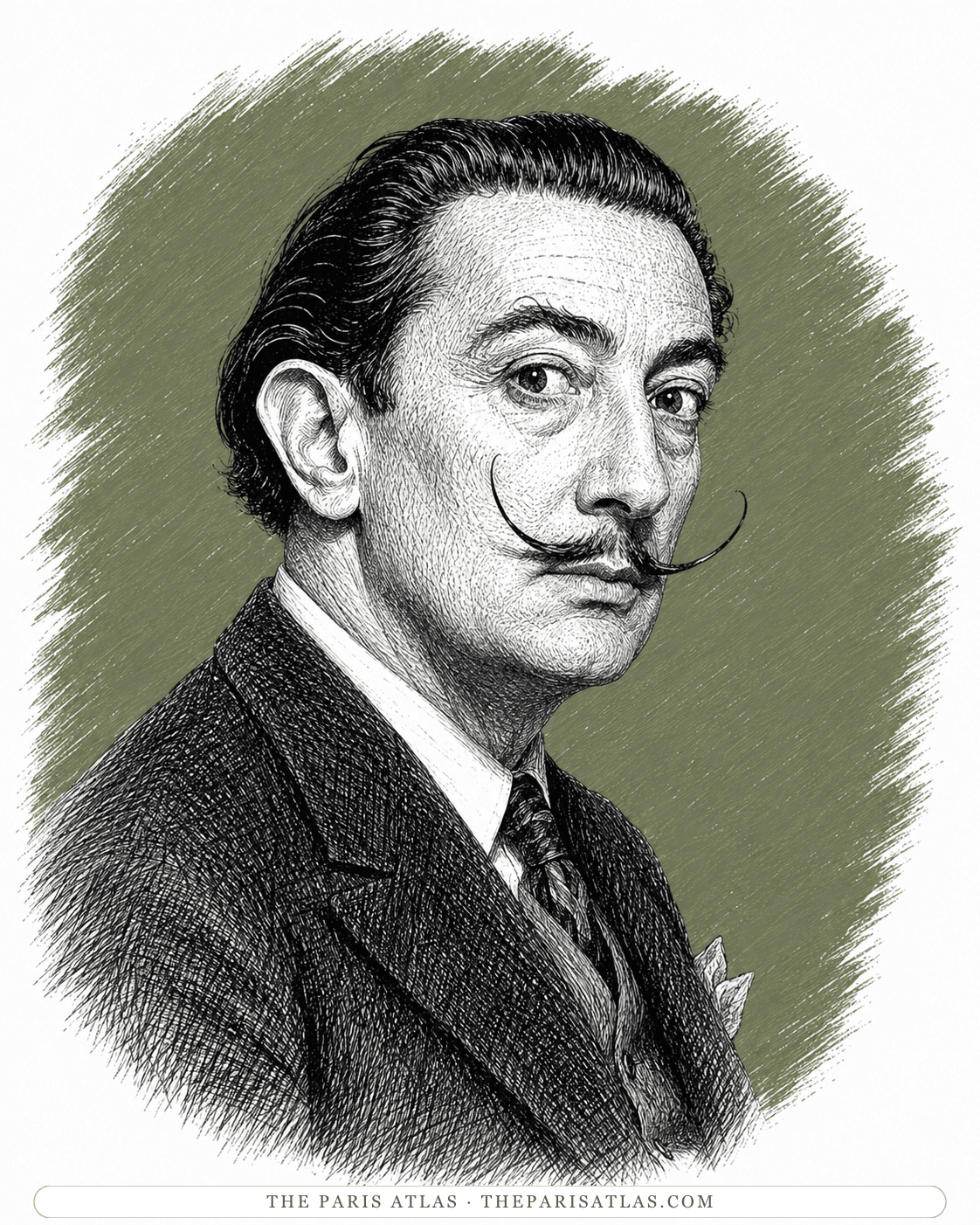
The Musée des Arts Décoratifs dates their first collaboration to 1936. The house's own catalogue of Schiaparelli's work with artists lists the results under Dalí's name: the Skeleton Dress, the lobster-print dress, the Shoe Hat, the suit with drawer-shaped pockets, and the bottle for the perfume Le Roy Soleil. The Philadelphia Museum of Art, which holds the dress, records that the lobster motif was the result of the collaboration with Dalí. The direction of work ran from painting into cloth: Dalí supplied the images, Schiaparelli's workrooms made them wearable.

Schiaparelli et les artistes — the house's catalogue of Elsa Schiaparelli's collaborations with Dalí, Cocteau, Giacometti, Man Ray, Fini and Oppenheim; Shocking ! Les mondes surréalistes d'Elsa Schiaparelli — exhibition, 6 July 2022 to 22 January 2023, with the house chronology (2022); Elsa Schiaparelli, Woman's Dinner Dress, February 1937 — collection object

Hubert de Givenchy

  • Collector

Mentored · 1947–1951

What the sources state directly is employment, not mentorship: the Musée des Arts Décoratifs records that Schiaparelli hired the young Givenchy as her first assistant in 1947, and the Cristóbal Balenciaga Museoa that he became creative director of her boutique, 'a position he held for four years before founding his own fashion house in 1952'. He was twenty when she took him on, it was the last and longest of his four apprenticeships — after Jacques Fath, Robert Piguet and Lucien Lelong — and he left it to open his own house. The formative reading is ours; the four years, the title and the dates are the museums'.

Shocking ! Les mondes surréalistes d'Elsa Schiaparelli — exhibition, 6 July 2022 to 22 January 2023, with the house chronology (2022); The Givenchiaga Family — exhibition press kit, with the museum's chronology of Cristóbal Balenciaga and Hubert de Givenchy and its account of their friendship

Movements

The artistic and literary currents this life ran through.

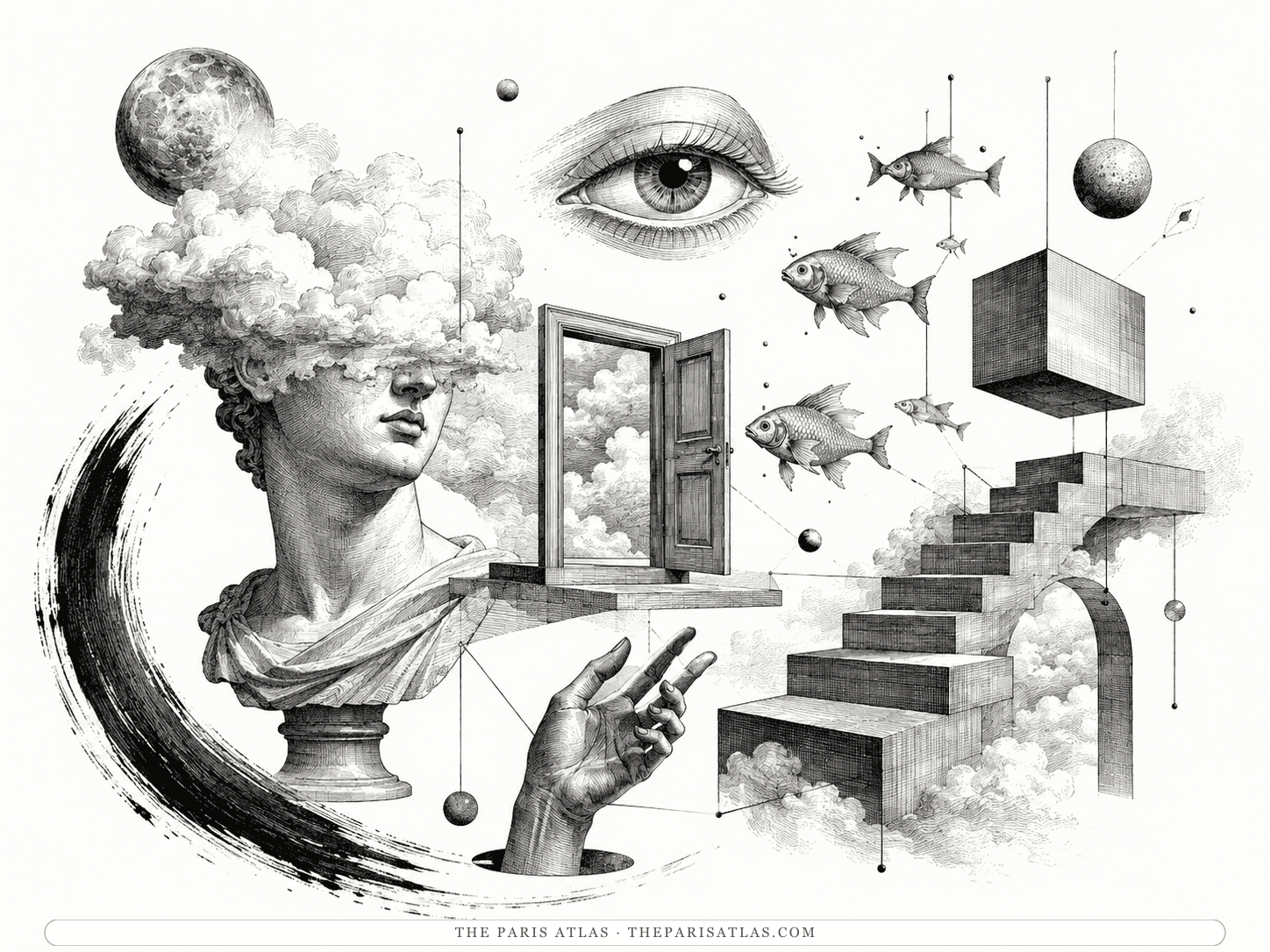
Pen-and-ink dream collage — a classical bust with clouds for eyes, a floating eye, a door opening onto sky, fish swimming through air, and an impossible staircase

Art & literary movement · 1924–1966

Surrealism

She is the one couturière the movement's own artists worked for. The V&A calls her 'one of the most remarkable couturiers of the 20th century, known for her subversive, sometimes overtly surreal designs'; the Musée des Arts Décoratifs titled its 2022 retrospective Shocking! Les mondes surréalistes d'Elsa Schiaparelli — 'the Surrealist worlds of Elsa Schiaparelli' — and traces her Paris circle from the Dadaists she met in 1922 to the first Dalí collaboration in 1936. She signed no manifesto and belonged to no group; what she did was commission the movement's members and put the results into production.

Shocking ! Les mondes surréalistes d'Elsa Schiaparelli — exhibition, 6 July 2022 to 22 January 2023, with the house chronology (2022); Introducing Elsa Schiaparelli

Questions about Elsa Schiaparelli

Who was Elsa Schiaparelli?

An Italian-born couturière — a designer of made-to-order clothes — who worked in Paris between 1927 and 1954. She built her house on a knitted sweater with a trompe-l'œil bow, moved it to 21 place Vendôme in 1935, and made her name by commissioning the Surrealists — the Paris movement that built art out of dream logic, chance and the unconscious — above all the painter Salvador Dalí, to supply the images her workrooms then turned into wearable clothes. She invented the colour shocking pink, closed the house in 1954, and died in Paris in 1973.

What is the Lobster Dress?

A white evening dress printed with a single large red lobster, made in 1937. The lobster came from Salvador Dalí, who had been using the animal in his work; Schiaparelli's house printed it across the skirt of a dinner dress. The Philadelphia Museum of Art holds the dress and records that the lobster motif was the result of the collaboration with Dalí. The museum also notes that Wallis Simpson — the American divorcee for whom Edward VIII gave up the British throne in 1936 — bought a Schiaparelli dinner dress of February 1937 for her trousseau, the wardrobe a bride assembles for her marriage, before her wedding to the man who by then was titled the Duke of Windsor.

What did Schiaparelli and Salvador Dalí make together?

Their collaboration began in 1936 and produced the strangest garments in twentieth-century fashion: the Lobster Dress; the Shoe Hat, cut in the shape of a woman's high-heeled shoe and worn upside down on the head; a skeleton dress with the ribs raised in quilting; and a suit whose pockets are made to look like the drawers of a chest of drawers. Dalí also designed the bottle for her perfume Le Roy Soleil.

Where was Schiaparelli's Paris house?

At 21 place Vendôme, in the 1st arrondissement — the square that holds the Hôtel Ritz and the city's great jewellers. The building is the Hôtel de Fontpertuis, which despite the name is not a hotel but an hôtel particulier, a private mansion built for a single family. She moved in during 1935 and had the interiors designed by Jean-Michel Frank working with the sculptor Alberto Giacometti. The revived house returned to the same address in 2012.

What is shocking pink?

A hot, unsoftened magenta that Schiaparelli introduced in 1937 and named herself. She used it as the signature colour of the house and gave the same name to the perfume she launched on 29 April 1937, whose bottle — drawn by the painter Leonor Fini — is shaped like a dressmaker's tailor's dummy rather than a conventional flask. The colour is still the first thing most people associate with her name.

Which artists did Elsa Schiaparelli work with?

Salvador Dalí and Jean Cocteau most famously, and also the sculptor Alberto Giacometti, who made jewellery and a lighting column for her and worked on her salon interiors; Man Ray, who photographed for the house and designed spiral spectacles; the painter Leonor Fini, who drew the Shocking bottle; and Meret Oppenheim, who made a bracelet of metal and fur. Her house functioned less like a design studio than a commissioning workshop for the Paris avant-garde.

Why did Elsa Schiaparelli close her house?

She showed her last couture collection in 1954 and closed the salon on 13 December that year, at sixty-four. She had spent the war years in the United States, returning to France in 1945, and came back to a Paris whose new direction was Christian Dior's New Look of 1947 — a heavy, hourglass silhouette with little use for her jokes. She published her memoir, Shocking Life, in the same year she closed, and never designed again.

Does the house of Schiaparelli still exist?

Yes, though it was shut for fifty-eight years. It reopened in 2012 at 21 place Vendôme, the address Elsa Schiaparelli took in 1935. In 2017 it was granted the official haute couture label — the right to describe its clothes as made to measure for individual clients, a phrase French law restricts to the small number of houses that meet the state's conditions — and Daniel Roseberry became its creative director in 2019.

Sourced claims

Every connection the graph holds for Elsa, with the evidence behind it.

Associated with · 1936–1954

Surrealism

She is the one couturière the movement's own artists worked for. The V&A calls her 'one of the most remarkable couturiers of the 20th century, known for her subversive, sometimes overtly surreal designs'; the Musée des Arts Décoratifs titled its 2022 retrospective Shocking! Les mondes surréalistes d'Elsa Schiaparelli — 'the Surrealist worlds of Elsa Schiaparelli' — and traces her Paris circle from the Dadaists she met in 1922 to the first Dalí collaboration in 1936. She signed no manifesto and belonged to no group; what she did was commission the movement's members and put the results into production.

Shocking ! Les mondes surréalistes d'Elsa Schiaparelli — exhibition, 6 July 2022 to 22 January 2023, with the house chronology (2022); Introducing Elsa Schiaparelli

Collaborated with · 1935

Alberto Giacometti

Before the tall thin figures made him famous, Giacometti made lamps, furniture and decorative objects. When Schiaparelli moved her salon into the Hôtel de Fontpertuis at 21 place Vendôme in 1935, the interiors were designed by Jean-Michel Frank working with Giacometti, and the house's catalogue of its artist collaborations lists jewellery by Giacometti and a lighting piece, the Colonne Luminaire. The Musée des Arts Décoratifs names him among her key collaborators alongside Man Ray, Cocteau, Dalí, Oppenheim and Bérard.
L'histoire de la Maison — the house's own history of Elsa Schiaparelli; Schiaparelli et les artistes — the house's catalogue of Elsa Schiaparelli's collaborations with Dalí, Cocteau, Giacometti, Man Ray, Fini and Oppenheim; Shocking ! Les mondes surréalistes d'Elsa Schiaparelli — exhibition, 6 July 2022 to 22 January 2023, with the house chronology (2022)

Collaborated with · 1937

Jean Cocteau

The house's catalogue of Schiaparelli's artist collaborations files three works under Cocteau's name, among them an embroidered coat on which two faces drawn in trompe-l'œil also read as a vase of shocking pink roses, and an eye-shaped brooch. The V&A dates the embroidered couture coat to 1937 and calls it iconic. The drawing was Cocteau's; the embroidery and construction were the house's.

Schiaparelli et les artistes — the house's catalogue of Elsa Schiaparelli's collaborations with Dalí, Cocteau, Giacometti, Man Ray, Fini and Oppenheim; Introducing Elsa Schiaparelli

Collaborated with

Man Ray

They had met in Paris in 1920, before either was famous for the work they are now known for. The house's catalogue of Schiaparelli's artist collaborations files six or seven works under Man Ray's name, including the spiral spectacles made for her and portraits of the couturière; the Musée des Arts Décoratifs lists him first among her key collaborators.

Schiaparelli et les artistes — the house's catalogue of Elsa Schiaparelli's collaborations with Dalí, Cocteau, Giacometti, Man Ray, Fini and Oppenheim; Shocking ! Les mondes surréalistes d'Elsa Schiaparelli — exhibition, 6 July 2022 to 22 January 2023, with the house chronology (2022)

Collaborated with · 1936

Salvador Dalí

The Musée des Arts Décoratifs dates their first collaboration to 1936. The house's own catalogue of Schiaparelli's work with artists lists the results under Dalí's name: the Skeleton Dress, the lobster-print dress, the Shoe Hat, the suit with drawer-shaped pockets, and the bottle for the perfume Le Roy Soleil. The Philadelphia Museum of Art, which holds the dress, records that the lobster motif was the result of the collaboration with Dalí. The direction of work ran from painting into cloth: Dalí supplied the images, Schiaparelli's workrooms made them wearable.

Schiaparelli et les artistes — the house's catalogue of Elsa Schiaparelli's collaborations with Dalí, Cocteau, Giacometti, Man Ray, Fini and Oppenheim; Shocking ! Les mondes surréalistes d'Elsa Schiaparelli — exhibition, 6 July 2022 to 22 January 2023, with the house chronology (2022); Elsa Schiaparelli, Woman's Dinner Dress, February 1937 — collection object

Mentored · 1947–1951

Hubert de Givenchy

What the sources state directly is employment, not mentorship: the Musée des Arts Décoratifs records that Schiaparelli hired the young Givenchy as her first assistant in 1947, and the Cristóbal Balenciaga Museoa that he became creative director of her boutique, 'a position he held for four years before founding his own fashion house in 1952'. He was twenty when she took him on, it was the last and longest of his four apprenticeships — after Jacques Fath, Robert Piguet and Lucien Lelong — and he left it to open his own house. The formative reading is ours; the four years, the title and the dates are the museums'.

Shocking ! Les mondes surréalistes d'Elsa Schiaparelli — exhibition, 6 July 2022 to 22 January 2023, with the house chronology (2022); The Givenchiaga Family — exhibition press kit, with the museum's chronology of Cristóbal Balenciaga and Hubert de Givenchy and its account of their friendship

References

References

The sources below include biographies, scholarly essays, interviews, and primary materials that informed this page. They reflect both the historical record and ongoing critical conversations about Elsa Schiaparelli and their work.

  1. 1L'histoire de la Maison — the house's own history of Elsa Schiaparelli

    Maison Schiaparelli, Paris
    View source
  2. 2Shocking ! Les mondes surréalistes d'Elsa Schiaparelli — exhibition, 6 July 2022 to 22 January 2023, with the house chronology

    Musée des Arts Décoratifs, Paris, 2022
    View source
  3. 3Schiaparelli et les artistes — the house's catalogue of Elsa Schiaparelli's collaborations with Dalí, Cocteau, Giacometti, Man Ray, Fini and Oppenheim

    Maison Schiaparelli, Paris
    View source
  1. 4Introducing Elsa Schiaparelli

    Victoria and Albert Museum, London
    View source
  2. 5Elsa Schiaparelli, Woman's Dinner Dress, February 1937 — collection object

    Philadelphia Museum of Art
    View source
i
Why these sources are here

These references anchor the page in the documented record and in the scholarly conversations around Elsa Schiaparelli. Every claim on this page traces back to one or more of the works listed here.

Explore more resources
Browse all authors