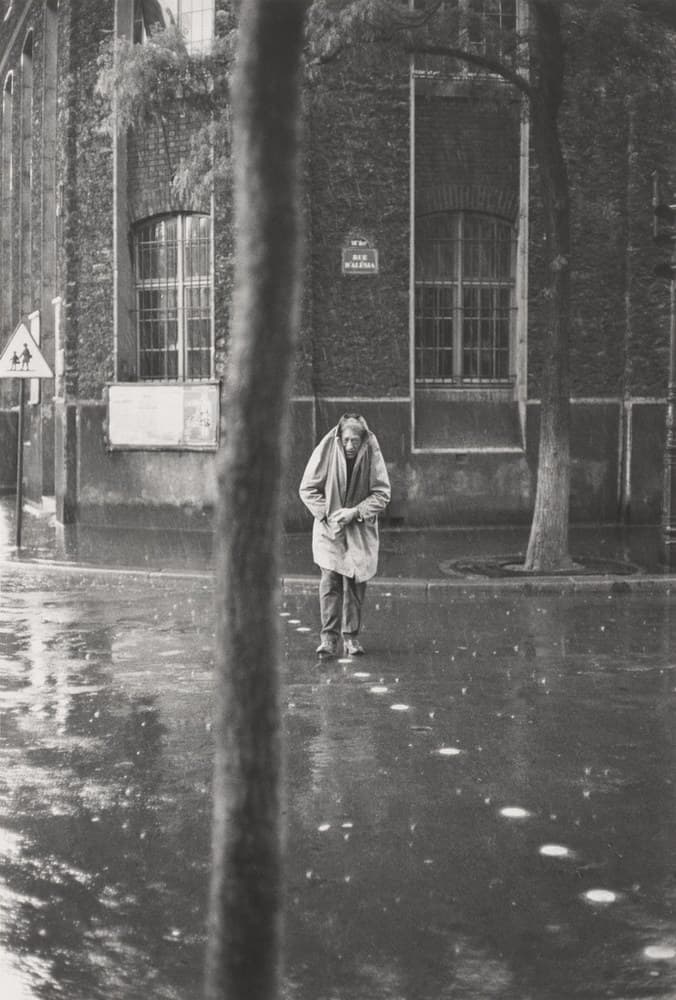
Alberto Giacometti worked for forty years in one small room at 46 rue Hippolyte-Maindron in Montparnasse — about 23 square metres, no running water for years, every surface caked in plaster — and refused all his life to move out of it, even as the figures made there entered every major museum in the world. 'The longer I stayed, the bigger it grew,' he said of it.
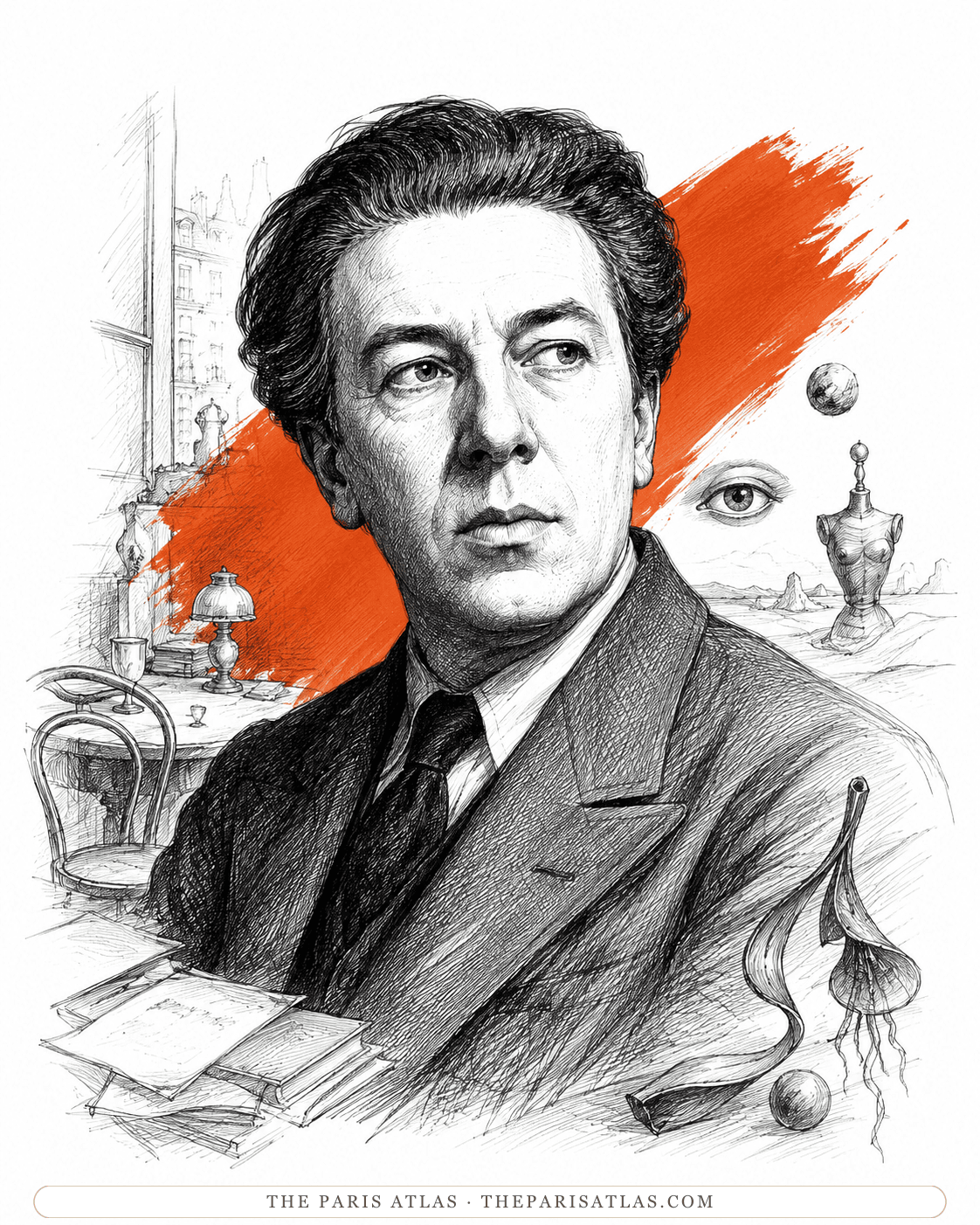
What was made there changed shape twice. The Surrealist decade produced enigmatic objects — The Palace at 4 a.m., Suspended Ball — before André Breton's movement expelled him in 1935 for the heresy of working from a live model. The war years shrank his figures to matchbox size, an entire output carried back from Geneva in six matchboxes; and from 1947 came the opposite and the icon: the wire-thin, rough-surfaced walking men and standing women, life-size presences worn down to what remains when everything removable is removed. Jean-Paul Sartre framed them as existentialism in bronze; Jean Genet, sitting for him, wrote the little book about the studio that many consider the best thing ever written about a working artist.